Core Competencies – not a
separate event but the way we
teach
Faye Brownlie
Prince George Early Learning Conference 2019
Slideshare.net/fayebrownlie.earlylearning.core competencies
• Embedded in day-to-day learning
• Developing the language and thinking of the CC with children
• Classroom applications
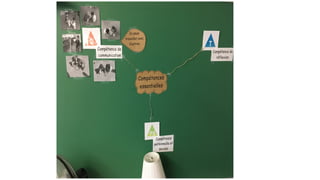
Core Competencies
• Communica)on
• Thinking
• Crea)ve
• Cri)cal
• Personal
• Posi)ve personal & cultural iden)ty
• Personal awareness & responsibility
• Social responsibility
Strengths-based!!!
We are NOT searching for what kids are NOT good
at.
We build on strengths, not fill in holes.
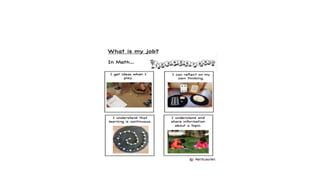
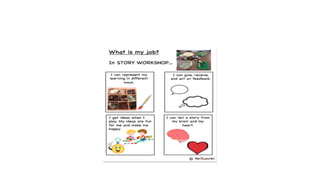
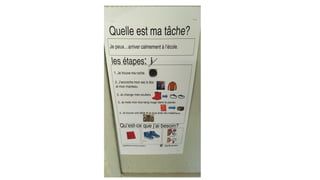
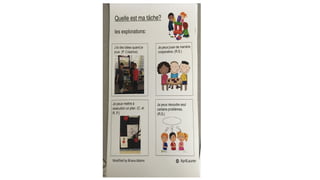
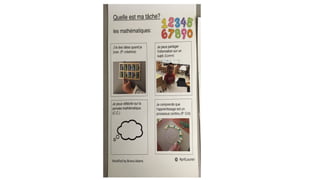
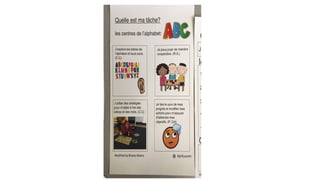
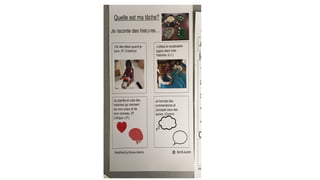
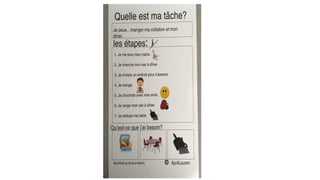
What is my job? -K
Lauren Maclean and
April Pikkarainen, Richmond
(Coquitlam)
Critical thinking
Communication
Personal awareness and responsibility
How do I know I’m doing a green light job?
seed – sprout - flower
Pikkarainen – K class
• Students providing peer feedback
• Developing metacogni/ve
strategies through peer
documenta/on and dialogue
Students share their drawing/story, and ask
peers to give feedback or ask ques/on.
Teacher writes student feedback on a post-
it.
Post-it feedback
& questions
Owning Your Learning:
making the implicit, explicit
Collaborative Inquiry Project
Whiteside Elementary
Grade K EFI
Carrie Bourne
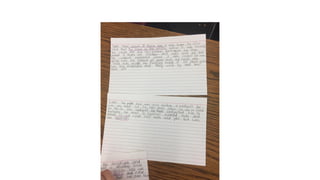
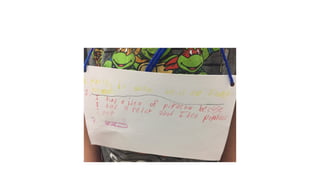
Story Necklace Writing
• Day 1 – read the story
• Day 2 – reread the story
• Introduce the frame of first, then, finally
• Each child receives 3 recipe cards to write a retelling (or an expansion) of the
story with first, then, finally
• String the recipe cards on a piece of wool to make a necklace and shareJ
• Samples from Lord Kitchener in Vancouver
• Collaboration of principal, Catherine Feniak, with classroom teachers
• 1 hour co-teaching per week
• Lessons can be taught again, alone
• Writers’ Workshop
• What do we want?
• How do we get there?
Narrative Writing – Gr 2/3
with Marnie Manners, Burnaby
• Students have been reading and retelling Lars, the polar bear stories
by Hans de Beer
• The story plot is that Lars, the polar bear, is bored/lonely in his home
at the North Pole. Something unexpected happens (an iceberg floats
away, he gets caught in a fishing net/trap and travels by
boat/plane/train) and is taken to another place (jungle/city). He
meets another animal in the new seGng. The new friend takes him to
meet another animal who helps him to get home by some sort of
transportaIon. Lars safely arrives home, is reunited with his family
and tells them about his adventure.
• Goal: move beyond retelling to create a story following his recipe
• Class had identified the recipe
• Review recipe
• Introduce the ‘story necklace’ – 3-4 recipe cards, 1 for each chunk
• Model, with their help, the writing
• Students leave the carpet, having identified:
• The new animal
• The new setting
• The method of transportation
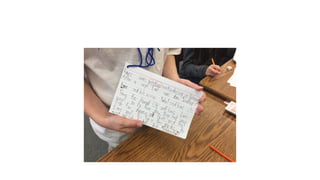
• After writing:
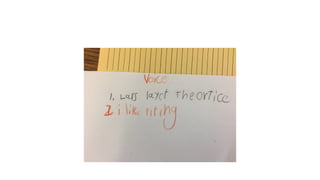
• Voice: Provide evidence of how your writing sounds like you
• PPCI: How did you keep on writing? What did you say or do to show such
stamina?
• Circle 2 words that are unique or specialized in your writing
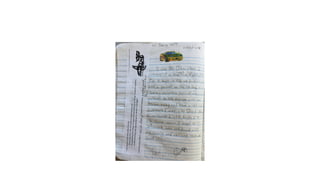
Homework Journals
• Ideas and samples from Cedar Stream,
grades 3-6, Whonnock Elementary,
Maple Ridge
• Multi-age, place-based, co-taught classes
• Spend 90 minutes/day ‘beyond the fence’ in the local forest
• Teachers:
• Heather Chapman
• Renae Pennell
The Six Cedar Trees - Orca
Digital Portfolios
• Louesa Byrne, K/1
How to get started?
• explore on your own before going “live”
• you don’t need to go all , you can:
• start with one subject area
• think of adding one sample per
month/term
• start with one student
• consider what your purpose will be
• use the documenting AS your assessment and
planning, not as an extra
Start SLOW Start SMALL
Tips
• keep your smartphone, digital camera or iPad handy during
learning activities
• video recordings are great for quickly capturing student
observations, questions and comments
• if you use an iPad/iPhone/Android to take photos you can
upload photos directly to the FreshGrade app
• you can upload work from 30 Hands, Pic Collage to
FreshGrade
Teachers can include guiding
questions for parents to use
when spending time with their
child
Can you find frost in
your back yard?
What happens when
you bring frost inside?
What happens when
the sun hits the frost?
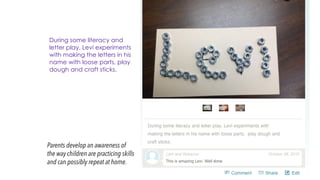
Parents develop an awareness of
the way children are practicing skills
and can possibly repeat at home.
During some literacy and
letter play, Levi experiments
with making the letters in his
name with loose parts, play
dough and craft sticks.
Learning Intentions as core competencies:
Gr. 3/4, with Lisa Schwartz, Richmond
• I can use different materials (loose parts) to show my thinking (critical
competency)
• Using the materials helped me get my ideas (creative competency)
• I was able to make a connection to humans and energy and represent
my ideas (communication competency)
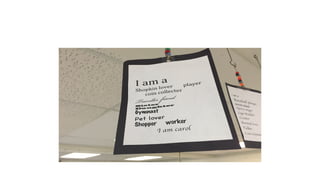
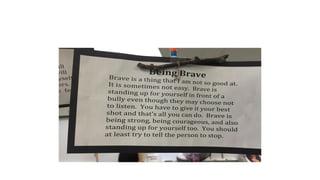
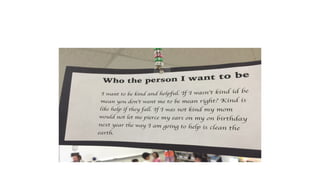
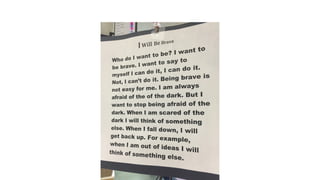
Belonging – Gr 2/3
Michelle Hikida, Richmond
• Structured Inquiry
• All teacher questions
• Essential questions
• What is the best part of you?
• What are your gifts?
• Who is the person you want to be?
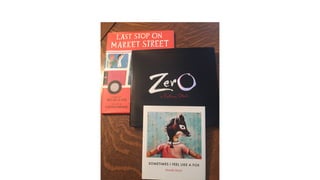
• Each day read a new book, collected characteristics of characters and
made lists.
• Watched Utube videos, read music lyrics – collected characteristics of
characters and added to the lists.
• Daily students chose a book from the basket and read.
• Sharing circle at end of reading – connections to the characteristics of
characters in the book –
• What is the best part of you?
• What are your gifts?
• Who is the person you want to be?
Core Competencies
• Communica)on
• Thinking
• Crea)ve
• Cri)cal
• Personal
• Posi)ve personal & cultural iden)ty
• Personal awareness & responsibility
• Social responsibility
• What will you try?
• With whom will you work?
• What student(s) will you keep in mind as you try something new to
gauge the impact of your ac:ons?

Prince George Core Competencies

  • 1.
    Core Competencies –not a separate event but the way we teach Faye Brownlie Prince George Early Learning Conference 2019 Slideshare.net/fayebrownlie.earlylearning.core competencies
  • 2.
    • Embedded inday-to-day learning • Developing the language and thinking of the CC with children • Classroom applications
  • 3.
    Core Competencies • Communica)on •Thinking • Crea)ve • Cri)cal • Personal • Posi)ve personal & cultural iden)ty • Personal awareness & responsibility • Social responsibility
  • 4.
    Strengths-based!!! We are NOTsearching for what kids are NOT good at. We build on strengths, not fill in holes.
  • 5.
    What is myjob? -K Lauren Maclean and April Pikkarainen, Richmond (Coquitlam) Critical thinking Communication Personal awareness and responsibility How do I know I’m doing a green light job? seed – sprout - flower
  • 9.
    Pikkarainen – Kclass • Students providing peer feedback
  • 10.
    • Developing metacogni/ve strategiesthrough peer documenta/on and dialogue Students share their drawing/story, and ask peers to give feedback or ask ques/on. Teacher writes student feedback on a post- it. Post-it feedback & questions
  • 12.
    Owning Your Learning: makingthe implicit, explicit Collaborative Inquiry Project Whiteside Elementary Grade K EFI Carrie Bourne
  • 22.
    Story Necklace Writing •Day 1 – read the story • Day 2 – reread the story • Introduce the frame of first, then, finally • Each child receives 3 recipe cards to write a retelling (or an expansion) of the story with first, then, finally • String the recipe cards on a piece of wool to make a necklace and shareJ
  • 23.
    • Samples fromLord Kitchener in Vancouver • Collaboration of principal, Catherine Feniak, with classroom teachers • 1 hour co-teaching per week • Lessons can be taught again, alone • Writers’ Workshop • What do we want? • How do we get there?
  • 24.
    Narrative Writing –Gr 2/3 with Marnie Manners, Burnaby • Students have been reading and retelling Lars, the polar bear stories by Hans de Beer • The story plot is that Lars, the polar bear, is bored/lonely in his home at the North Pole. Something unexpected happens (an iceberg floats away, he gets caught in a fishing net/trap and travels by boat/plane/train) and is taken to another place (jungle/city). He meets another animal in the new seGng. The new friend takes him to meet another animal who helps him to get home by some sort of transportaIon. Lars safely arrives home, is reunited with his family and tells them about his adventure.
  • 25.
    • Goal: movebeyond retelling to create a story following his recipe • Class had identified the recipe • Review recipe • Introduce the ‘story necklace’ – 3-4 recipe cards, 1 for each chunk • Model, with their help, the writing • Students leave the carpet, having identified: • The new animal • The new setting • The method of transportation
  • 26.
    • After writing: •Voice: Provide evidence of how your writing sounds like you • PPCI: How did you keep on writing? What did you say or do to show such stamina? • Circle 2 words that are unique or specialized in your writing
  • 39.
    Homework Journals • Ideasand samples from Cedar Stream, grades 3-6, Whonnock Elementary, Maple Ridge • Multi-age, place-based, co-taught classes • Spend 90 minutes/day ‘beyond the fence’ in the local forest • Teachers: • Heather Chapman • Renae Pennell
  • 41.
    The Six CedarTrees - Orca
  • 45.
  • 46.
    How to getstarted? • explore on your own before going “live” • you don’t need to go all , you can: • start with one subject area • think of adding one sample per month/term • start with one student • consider what your purpose will be • use the documenting AS your assessment and planning, not as an extra Start SLOW Start SMALL
  • 47.
    Tips • keep yoursmartphone, digital camera or iPad handy during learning activities • video recordings are great for quickly capturing student observations, questions and comments • if you use an iPad/iPhone/Android to take photos you can upload photos directly to the FreshGrade app • you can upload work from 30 Hands, Pic Collage to FreshGrade
  • 48.
    Teachers can includeguiding questions for parents to use when spending time with their child Can you find frost in your back yard? What happens when you bring frost inside? What happens when the sun hits the frost?
  • 49.
    Parents develop anawareness of the way children are practicing skills and can possibly repeat at home. During some literacy and letter play, Levi experiments with making the letters in his name with loose parts, play dough and craft sticks.
  • 50.
    Learning Intentions ascore competencies: Gr. 3/4, with Lisa Schwartz, Richmond • I can use different materials (loose parts) to show my thinking (critical competency) • Using the materials helped me get my ideas (creative competency) • I was able to make a connection to humans and energy and represent my ideas (communication competency)
  • 55.
    Belonging – Gr2/3 Michelle Hikida, Richmond • Structured Inquiry • All teacher questions • Essential questions • What is the best part of you? • What are your gifts? • Who is the person you want to be?
  • 56.
    • Each dayread a new book, collected characteristics of characters and made lists. • Watched Utube videos, read music lyrics – collected characteristics of characters and added to the lists. • Daily students chose a book from the basket and read. • Sharing circle at end of reading – connections to the characteristics of characters in the book – • What is the best part of you? • What are your gifts? • Who is the person you want to be?
  • 68.
    Core Competencies • Communica)on •Thinking • Crea)ve • Cri)cal • Personal • Posi)ve personal & cultural iden)ty • Personal awareness & responsibility • Social responsibility
  • 69.
    • What willyou try? • With whom will you work? • What student(s) will you keep in mind as you try something new to gauge the impact of your ac:ons?