Writing in Early Years and
Middle Years Classrooms-
building from our lessons
Faye Brownlie
MRLC, January 22-25, 2019
Neepawa and Selkirk
Writers’ Workshop – Student Diversity 3rd ed
• The foundation of your literacy programming
• Establish this first!!!!
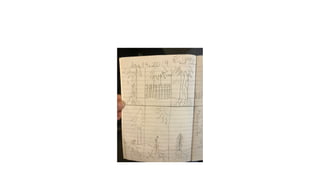
• K/1 – begin with interactive writing, writing/drawing/creating text in
front of your learners, representing thinking with drawing, adding
letters and sounds
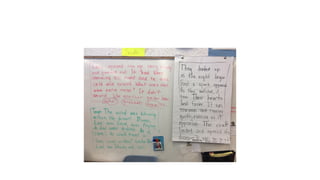
• 2-9 – write in front of your students, at least 2 whole class writing in
response to experiences, read alouds, content, classroom inquiries
each week
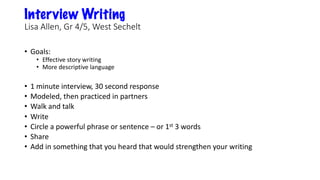
Interview Writing
Lisa Allen, Gr 4/5, West Sechelt
• Goals:
• Effective story writing
• More descriptive language
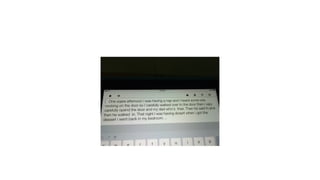
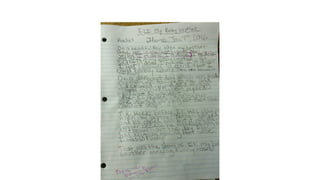
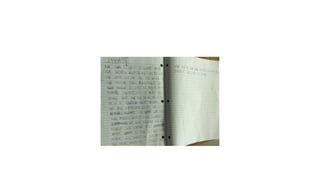
• 1 minute interview, 30 second response
• Modeled, then practiced in partners
• Walk and talk
• Write
• Circle a powerful phrase or sentence – or 1st 3 words
• Share
• Add in something that you heard that would strengthen your writing
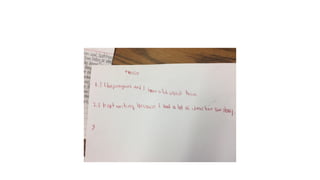
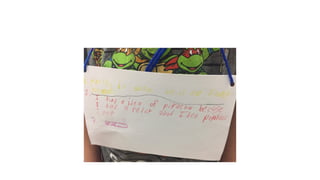
Quick Writes – Grade 3
Robin Martens, Altona
• 15 seconds to think about how they would start
• 3-4 minutes to write
• Wrote for an hour with different prompt words
• Pizza, soaring, puddle
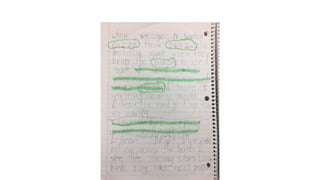
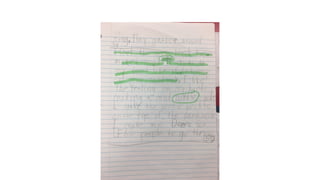
• Kids highlighted their gems after each write and shared them with the
class
• Created criteria:
• Using our senses to describe what was happening
• Using descriptive words
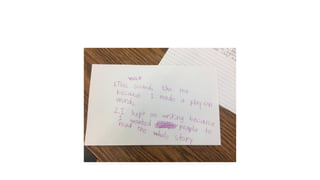
Robin’s Reflections
• Kids loved this
• Very focused on their writing
• Some of the developing writers listened to what others shared as
their gems, then incorporated these into their own writing
• The next day in Work on Writing time, several asked for a ‘word’
•When students write, they generate deeper
thinking in any content area.
• Kelly Gallagher “The Writing Journey” EL, Feb 17
• Improvement in writing is grounded in practice, in
getting words on the page – lots of them. There are
no shortcuts.
• …a “four big essays approach” stifles young writers.
Worse, it ensures they will never become excellent
writers.”
• Gallagher & Kittle, EL, April 18
• “…if you want to revolutionize your reading
instruction, invite writing back into the fold. Give
your students time to write during class, and given
them feedback that responds to their craft and their
composition. Great writing is a communication of
great thinking, so strengthen reading and writing in
tandem, not in isolation.”
• Bambrick-Santoyo & Chiger, “”Until I Write It Down”,
EL, Feb 17
Power Paragraphs
• Model: build together
• Same topic and one ‘2nd’ power
• Students choose 2 ‘2nd’ powers from the brainstormed list
• Walk and talk about what you will say
• Co-construct the power structure
• Write together
• Share
• Practice in similar way until students have internalized the structure
and can expand upon it independently
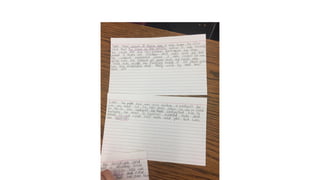
Story Necklace Writing
• Day 1 – read the story
• Day 2 – reread the story
• Introduce the frame of first, then, finally
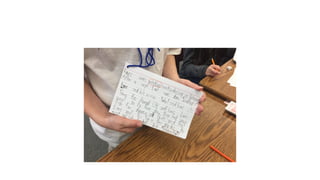
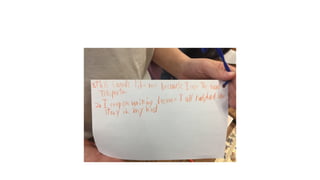
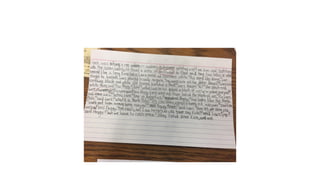
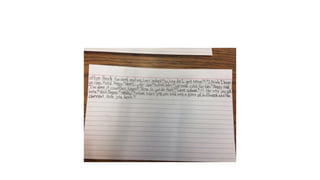
• Each child receives 3 recipe cards to write a retelling (or an expansion) of the
story with first, then, finally
• String the recipe cards on a piece of wool to make a necklace and shareJ
• Samples from Lord Kitchener in Vancouver
• Collaboration of principal, Catherine Feniak, with classroom teachers
• 1 hour co-teaching per week
• Lessons can be taught again, alone
• Writers’ Workshop
• What do we want?
• How do we get there?
Narrative Writing – Gr 2/3
with Marnie Manners, Burnaby
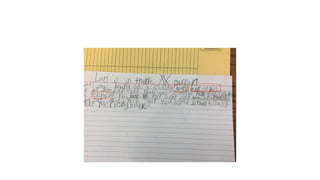
• Students have been reading and retelling Lars, the polar bear stories
by Hans de Beer
• The story plot is that Lars, the polar bear, is bored/lonely in his home
at the North Pole. Something unexpected happens (an iceberg floats
away, he gets caught in a fishing net/trap and travels by
boat/plane/train) and is taken to another place (jungle/city). He
meets another animal in the new setting. The new friend takes him to
meet another animal who helps him to get home by some sort of
transportation. Lars safely arrives home, is reunited with his family
and tells them about his adventure.
• Goal: move beyond retelling to create a story following his recipe
• Class had identified the recipe
• Review recipe
• Introduce the ‘story necklace’ – 3-4 recipe cards, 1 for each chunk
• Model, with their help, the writing
• Students leave the carpet, having identified:
• The new animal
• The new setting
• The method of transportation
• After writing:
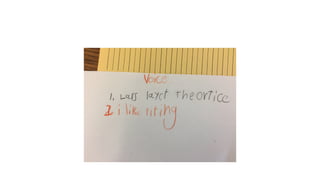
• Voice: Provide evidence of how your writing sounds like you
• PPCI: How did you keep on writing? What did you say or do to show such stamina?
• Circle 2 words that are unique or specialized in your writing
Language of Pictures – developing oral
language, big ideas and detail
• Students work in partners, either facing each other or back to back.
• One student is facing the projected picture, the other does not see it.
• The student describes the picture to his partner; the partner draws what
he is being told.
• After a minute, those drawing can pose questions.
• *It is more challenging if the partner who is describing can NOT see his
partner’s work.
• Review with the class ‘what worked’ and ‘what did you need to hear’.
• As independence is gained, students can write to describe their picture.
Questioning from Pictures
• Present an image.
• Each student poses a question, something they wonder, about the
picture. Encourage all voices to be heard, piggybacking on one and
other’s thinking, no second questions until all have had an initial
question.
• Questions are NOT answered in the group, but students will begin to
form their stories as they answer the questions in their heads.
• Students write the story behind the picture (or up to 3 pictures).
MRLC Jan 2019 EY/MY
MRLC Jan 2019 EY/MY

MRLC Jan 2019 EY/MY

  • 1.
    Writing in EarlyYears and Middle Years Classrooms- building from our lessons Faye Brownlie MRLC, January 22-25, 2019 Neepawa and Selkirk
  • 2.
    Writers’ Workshop –Student Diversity 3rd ed • The foundation of your literacy programming • Establish this first!!!! • K/1 – begin with interactive writing, writing/drawing/creating text in front of your learners, representing thinking with drawing, adding letters and sounds • 2-9 – write in front of your students, at least 2 whole class writing in response to experiences, read alouds, content, classroom inquiries each week
  • 8.
    Interview Writing Lisa Allen,Gr 4/5, West Sechelt • Goals: • Effective story writing • More descriptive language • 1 minute interview, 30 second response • Modeled, then practiced in partners • Walk and talk • Write • Circle a powerful phrase or sentence – or 1st 3 words • Share • Add in something that you heard that would strengthen your writing
  • 12.
    Quick Writes –Grade 3 Robin Martens, Altona • 15 seconds to think about how they would start • 3-4 minutes to write • Wrote for an hour with different prompt words • Pizza, soaring, puddle • Kids highlighted their gems after each write and shared them with the class • Created criteria: • Using our senses to describe what was happening • Using descriptive words
  • 13.
    Robin’s Reflections • Kidsloved this • Very focused on their writing • Some of the developing writers listened to what others shared as their gems, then incorporated these into their own writing • The next day in Work on Writing time, several asked for a ‘word’
  • 16.
    •When students write,they generate deeper thinking in any content area. • Kelly Gallagher “The Writing Journey” EL, Feb 17
  • 17.
    • Improvement inwriting is grounded in practice, in getting words on the page – lots of them. There are no shortcuts. • …a “four big essays approach” stifles young writers. Worse, it ensures they will never become excellent writers.” • Gallagher & Kittle, EL, April 18
  • 18.
    • “…if youwant to revolutionize your reading instruction, invite writing back into the fold. Give your students time to write during class, and given them feedback that responds to their craft and their composition. Great writing is a communication of great thinking, so strengthen reading and writing in tandem, not in isolation.” • Bambrick-Santoyo & Chiger, “”Until I Write It Down”, EL, Feb 17
  • 19.
    Power Paragraphs • Model:build together • Same topic and one ‘2nd’ power • Students choose 2 ‘2nd’ powers from the brainstormed list • Walk and talk about what you will say • Co-construct the power structure • Write together • Share • Practice in similar way until students have internalized the structure and can expand upon it independently
  • 20.
    Story Necklace Writing •Day 1 – read the story • Day 2 – reread the story • Introduce the frame of first, then, finally • Each child receives 3 recipe cards to write a retelling (or an expansion) of the story with first, then, finally • String the recipe cards on a piece of wool to make a necklace and shareJ
  • 21.
    • Samples fromLord Kitchener in Vancouver • Collaboration of principal, Catherine Feniak, with classroom teachers • 1 hour co-teaching per week • Lessons can be taught again, alone • Writers’ Workshop • What do we want? • How do we get there?
  • 22.
    Narrative Writing –Gr 2/3 with Marnie Manners, Burnaby • Students have been reading and retelling Lars, the polar bear stories by Hans de Beer • The story plot is that Lars, the polar bear, is bored/lonely in his home at the North Pole. Something unexpected happens (an iceberg floats away, he gets caught in a fishing net/trap and travels by boat/plane/train) and is taken to another place (jungle/city). He meets another animal in the new setting. The new friend takes him to meet another animal who helps him to get home by some sort of transportation. Lars safely arrives home, is reunited with his family and tells them about his adventure.
  • 23.
    • Goal: movebeyond retelling to create a story following his recipe • Class had identified the recipe • Review recipe • Introduce the ‘story necklace’ – 3-4 recipe cards, 1 for each chunk • Model, with their help, the writing • Students leave the carpet, having identified: • The new animal • The new setting • The method of transportation
  • 24.
    • After writing: •Voice: Provide evidence of how your writing sounds like you • PPCI: How did you keep on writing? What did you say or do to show such stamina? • Circle 2 words that are unique or specialized in your writing
  • 37.
    Language of Pictures– developing oral language, big ideas and detail • Students work in partners, either facing each other or back to back. • One student is facing the projected picture, the other does not see it. • The student describes the picture to his partner; the partner draws what he is being told. • After a minute, those drawing can pose questions. • *It is more challenging if the partner who is describing can NOT see his partner’s work. • Review with the class ‘what worked’ and ‘what did you need to hear’. • As independence is gained, students can write to describe their picture.
  • 38.
    Questioning from Pictures •Present an image. • Each student poses a question, something they wonder, about the picture. Encourage all voices to be heard, piggybacking on one and other’s thinking, no second questions until all have had an initial question. • Questions are NOT answered in the group, but students will begin to form their stories as they answer the questions in their heads. • Students write the story behind the picture (or up to 3 pictures).