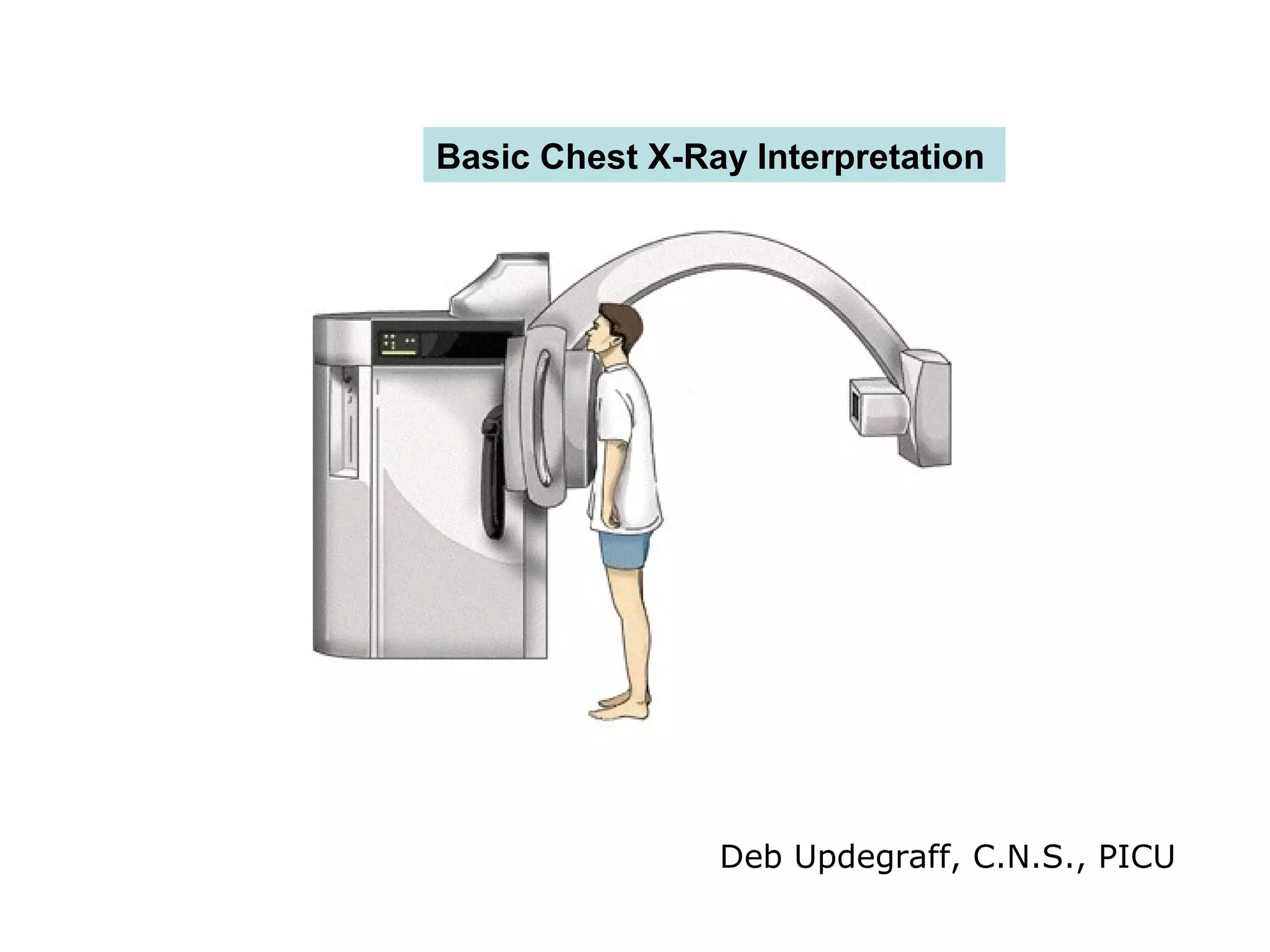
Basic Chest X-Ray Interpretation
Deb Updegraff, C.N.S., PICU
X-rays- describe radiation which is part of the
spectrum which includes visible light, gamma
rays and cosmic radiation.
Unlike visible light, radiation passes through
stuff.
When you shine a beam of X-Ray at a person
and put a film on the other side of them a
shadow is produced of the inside of their body.
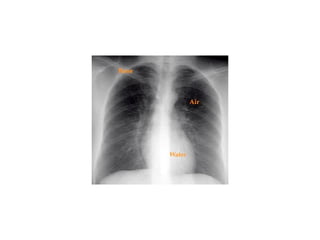
Different tissues in our body absorb X-rays at
different extents:
•Bone- high absorption (white)
•Tissue- somewhere in the middle absorption (grey)
•Air- low absorption (black)
Be
systematic
:
1) Check the quality of the film
Film Quality
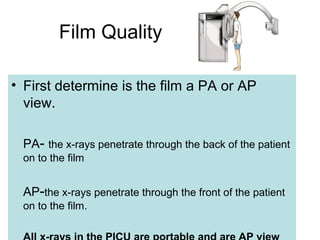
• First determine is the film a PA or AP
view.
PA- the x-rays penetrate through the back of the patient
on to the film
AP-the x-rays penetrate through the front of the patient
on to the film.
Film Quality (cont)
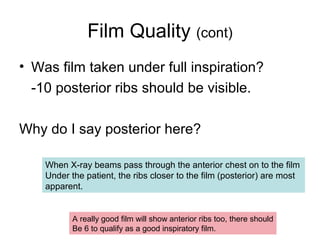
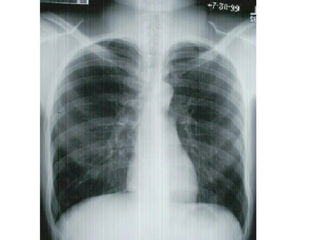
• Was film taken under full inspiration?
-10 posterior ribs should be visible.
Why do I say posterior here?
When X-ray beams pass through the anterior chest on to the film
Under the patient, the ribs closer to the film (posterior) are most
apparent.
A really good film will show anterior ribs too, there should
Be 6 to qualify as a good inspiratory film.
Quality (cont.)
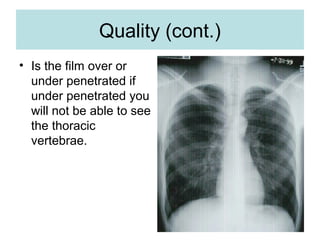
• Is the film over or
under penetrated if
under penetrated you
will not be able to see
the thoracic
vertebrae.
Quality (cont)
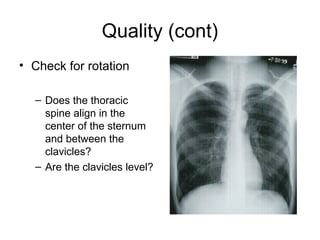
• Check for rotation
– Does the thoracic
spine align in the
center of the sternum
and between the
clavicles?
– Are the clavicles level?
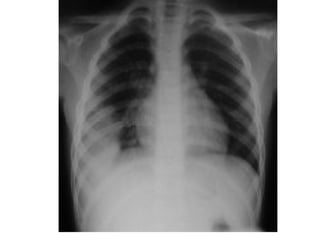
Verify Right and Left sides
• Gastric bubble should be on the left
Now you are ready
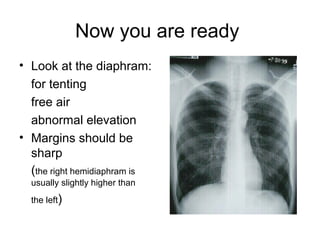
• Look at the diaphram:
for tenting
free air
abnormal elevation
• Margins should be
sharp
(the right hemidiaphram is
usually slightly higher than
the left)
Check the Heart
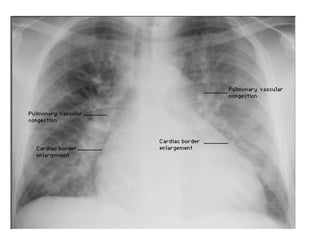
• Size
• Shape
• Silhouette-margins should be sharp
• Diameter (>1/2 thoracic diameter is
enlarged heart)
Remember: AP views make heart appear larger than it
actually is.
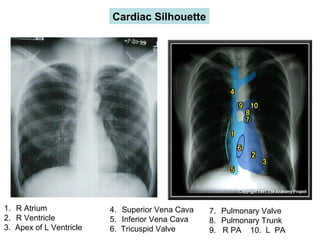
Cardiac Silhouette
1. R Atrium
2. R Ventricle
3. Apex of L Ventricle
4. Superior Vena Cava
5. Inferior Vena Cava
6. Tricuspid Valve
7. Pulmonary Valve
8. Pulmonary Trunk
9. R PA 10. L PA
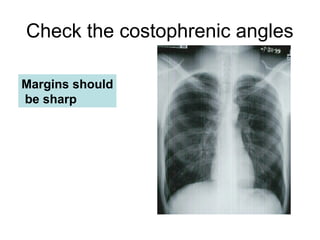
Check the costophrenic angles
Margins should
be sharp
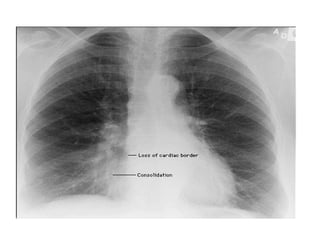
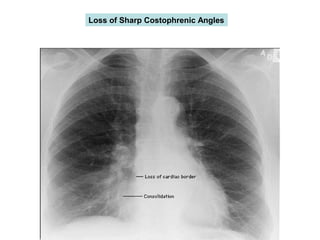
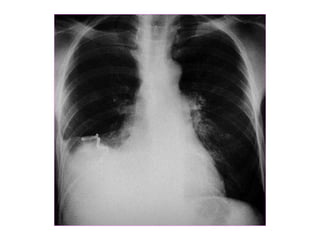
Loss of Sharp Costophrenic Angles
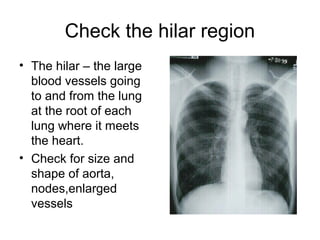
Check the hilar region
• The hilar – the large
blood vessels going
to and from the lung
at the root of each
lung where it meets
the heart.
• Check for size and
shape of aorta,
nodes,enlarged
vessels
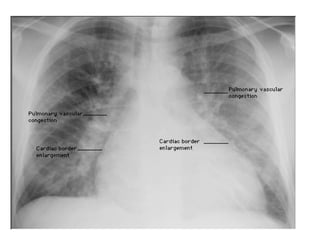
Finally, Check the Lung Fields
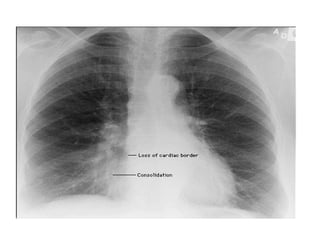
• Infiltrates
• Increased interstitial markings
• Masses
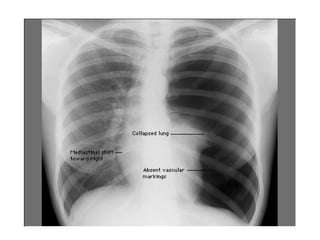
• Absence of normal margins
• Air bronchograms
• Increased vascularity
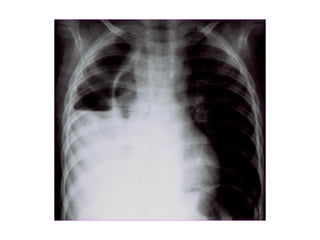
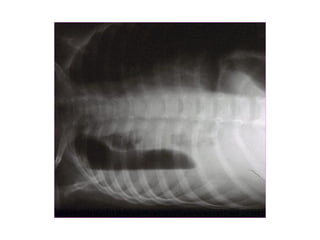
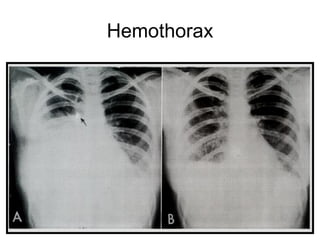
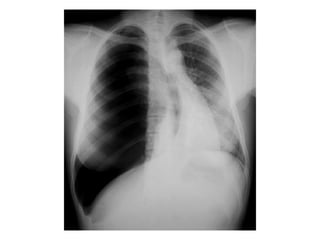
Hemothorax
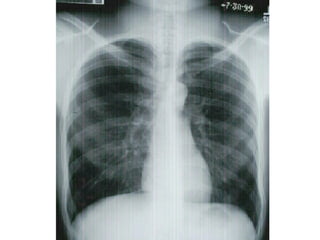
Chest x ray
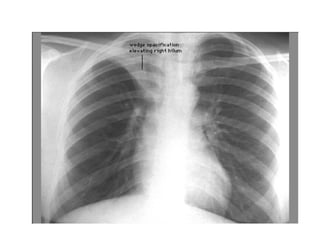
Chest x ray
Chest x ray
Chest x ray

Chest x ray

  • 1.
    Basic Chest X-RayInterpretation Deb Updegraff, C.N.S., PICU
  • 2.
    X-rays- describe radiationwhich is part of the spectrum which includes visible light, gamma rays and cosmic radiation. Unlike visible light, radiation passes through stuff. When you shine a beam of X-Ray at a person and put a film on the other side of them a shadow is produced of the inside of their body.
  • 3.
    Different tissues inour body absorb X-rays at different extents: •Bone- high absorption (white) •Tissue- somewhere in the middle absorption (grey) •Air- low absorption (black)
  • 4.
    Be systematic : 1) Check thequality of the film
  • 5.
    Film Quality • Firstdetermine is the film a PA or AP view. PA- the x-rays penetrate through the back of the patient on to the film AP-the x-rays penetrate through the front of the patient on to the film.
  • 6.
    Film Quality (cont) •Was film taken under full inspiration? -10 posterior ribs should be visible. Why do I say posterior here? When X-ray beams pass through the anterior chest on to the film Under the patient, the ribs closer to the film (posterior) are most apparent. A really good film will show anterior ribs too, there should Be 6 to qualify as a good inspiratory film.
  • 8.
    Quality (cont.) • Isthe film over or under penetrated if under penetrated you will not be able to see the thoracic vertebrae.
  • 9.
    Quality (cont) • Checkfor rotation – Does the thoracic spine align in the center of the sternum and between the clavicles? – Are the clavicles level?
  • 10.
    Verify Right andLeft sides • Gastric bubble should be on the left
  • 13.
    Now you areready • Look at the diaphram: for tenting free air abnormal elevation • Margins should be sharp (the right hemidiaphram is usually slightly higher than the left)
  • 14.
    Check the Heart •Size • Shape • Silhouette-margins should be sharp • Diameter (>1/2 thoracic diameter is enlarged heart) Remember: AP views make heart appear larger than it actually is.
  • 15.
    Cardiac Silhouette 1. RAtrium 2. R Ventricle 3. Apex of L Ventricle 4. Superior Vena Cava 5. Inferior Vena Cava 6. Tricuspid Valve 7. Pulmonary Valve 8. Pulmonary Trunk 9. R PA 10. L PA
  • 18.
    Check the costophrenicangles Margins should be sharp
  • 19.
    Loss of SharpCostophrenic Angles
  • 20.
    Check the hilarregion • The hilar – the large blood vessels going to and from the lung at the root of each lung where it meets the heart. • Check for size and shape of aorta, nodes,enlarged vessels
  • 22.
    Finally, Check theLung Fields • Infiltrates • Increased interstitial markings • Masses • Absence of normal margins • Air bronchograms • Increased vascularity
  • 35.