Characterization
Definitions
Characterization is the process by
which the author reveals the
personality of the characters.

There are two types of
characterization: direct and indirect.
Direct Characterization
  Direct characterization is when the
  author TELLS the audience what the
  personality of the character is.

Example: “The patient boy and quiet girl
 were both at the game.”

The author is telling us that the boy is
 patient and the girl is kind.
Indirect Characterization
Indirect characterization is when the
 author SHOWS things that reveal the
 personality of the character.

There are FIVE different methods of
indirect characterization: speech,
thoughts, effect on other characters,
actions, and looks. (STEAL)
Indirect Characterization
Speech- What does the character say?
 How does the character speak?

Example: “Hey, we can have lots of fun
 at camp this summer! I love being
 outside!”

 This shows us the character is upbeat
 and happy.
Indirect Characterization
Thoughts- What is revealed through the
 character’s thoughts and feelings?


Example: I wish it would stop raining. I
 am tired of sitting inside!

This shows us the character is not
 happy about the situation.
Indirect Characterization
Effect on Others- What is revealed through the
  character’s effect on other people? How do
  other characters feel or behave in reaction
  to the character?

Example: The boy glared at his sister as she
  ate his dessert.

This shows us that the character is upset
  about his sister’s behavior and inability to
  think of others.
Indirect Characterization
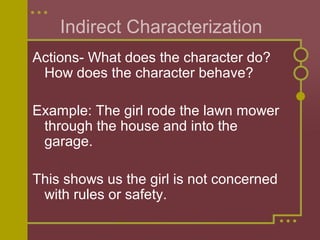
Actions- What does the character do?
 How does the character behave?

Example: The girl rode the lawn mower
 through the house and into the
 garage.

This shows us the girl is not concerned
 with rules or safety.
Indirect Characterization
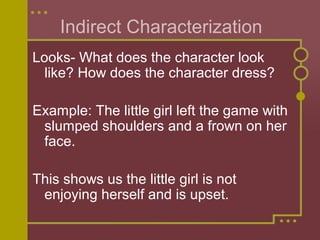
Looks- What does the character look
  like? How does the character dress?

Example: The little girl left the game with
 slumped shoulders and a frown on her
 face.

This shows us the little girl is not
 enjoying herself and is upset.
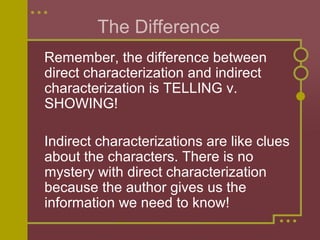
The Difference
Remember, the difference between
direct characterization and indirect
characterization is TELLING v.
SHOWING!

Indirect characterizations are like clues
about the characters. There is no
mystery with direct characterization
because the author gives us the
information we need to know!

Characterization

  • 1.
  • 2.
    Definitions Characterization is theprocess by which the author reveals the personality of the characters. There are two types of characterization: direct and indirect.
  • 3.
    Direct Characterization Direct characterization is when the author TELLS the audience what the personality of the character is. Example: “The patient boy and quiet girl were both at the game.” The author is telling us that the boy is patient and the girl is kind.
  • 4.
    Indirect Characterization Indirect characterizationis when the author SHOWS things that reveal the personality of the character. There are FIVE different methods of indirect characterization: speech, thoughts, effect on other characters, actions, and looks. (STEAL)
  • 5.
    Indirect Characterization Speech- Whatdoes the character say? How does the character speak? Example: “Hey, we can have lots of fun at camp this summer! I love being outside!” This shows us the character is upbeat and happy.
  • 6.
    Indirect Characterization Thoughts- Whatis revealed through the character’s thoughts and feelings? Example: I wish it would stop raining. I am tired of sitting inside! This shows us the character is not happy about the situation.
  • 7.
    Indirect Characterization Effect onOthers- What is revealed through the character’s effect on other people? How do other characters feel or behave in reaction to the character? Example: The boy glared at his sister as she ate his dessert. This shows us that the character is upset about his sister’s behavior and inability to think of others.
  • 8.
    Indirect Characterization Actions- Whatdoes the character do? How does the character behave? Example: The girl rode the lawn mower through the house and into the garage. This shows us the girl is not concerned with rules or safety.
  • 9.
    Indirect Characterization Looks- Whatdoes the character look like? How does the character dress? Example: The little girl left the game with slumped shoulders and a frown on her face. This shows us the little girl is not enjoying herself and is upset.
  • 10.
    The Difference Remember, thedifference between direct characterization and indirect characterization is TELLING v. SHOWING! Indirect characterizations are like clues about the characters. There is no mystery with direct characterization because the author gives us the information we need to know!