What Is Characterization? 
Feature Menu 
Character Traits and Characterization 
Character Traits 
Characterization 
Elements of Characterization 
Your Turn
Character Traits 
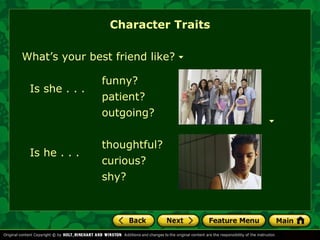
What’s your best friend like? 
Is she . . . 
Is he . . . 
funny? 
patient? 
outgoing? 
thoughtful? 
curious? 
shy?
Character Traits 
The words you use to describe your friend are 
his or her character traits. 
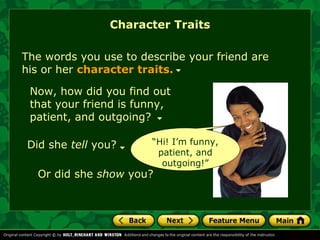
Now, how did you find out 
that your friend is funny, 
patient, and outgoing? 
Did she tell you? 
“Hi! I’m funny, 
patient, and 
outgoing!” 
Or did she show you?
Characterization 
In a story, the process of revealing a character’s 
traits is called characterization. 
Writers use two methods to delineate, or carefully 
describe, their characters. 
Writers who tell 
you what a 
character is like are 
using direct 
characterization. 
Writers who show 
you what a 
character is like are 
using indirect 
characterization.
Characterization 
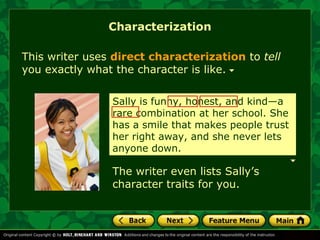
This writer uses direct characterization to tell 
you exactly what the character is like. 
Sally is funny, honest, and kind—a 
rare combination at her school. She 
has a smile that makes people trust 
her right away, and she never lets 
anyone down. 
The writer even lists Sally’s 
character traits for you.
Characterization 
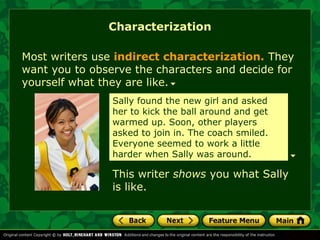
Most writers use indirect characterization. They 
want you to observe the characters and decide for 
yourself what they are like. 
Sally found the new girl and asked 
her to kick the ball around and get 
warmed up. Soon, other players 
asked to join in. The coach smiled. 
Everyone seemed to work a little 
harder when Sally was around. 
This writer shows you what Sally 
is like.
Characterization 
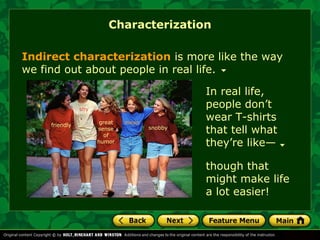
Indirect characterization is more like the way 
we find out about people in real life. 
great 
sense 
of 
humor 
snobby 
though that 
might make life 
a lot easier! 
friendly 
shy 
mean 
In real life, 
people don’t 
wear T-shirts 
that tell what 
they’re like—
Characterization 
Is this an example 
of direct 
characterization, 
or is it indirect 
characterization? 
Quick Check 
Tony stared down at the slip of 
paper in his hand. Several times he 
picked up the phone, then set it 
down again. Finally he dialed the 
number, then waited while it rang 
and rang. He was clearing his 
throat just as someone picked up 
on the other end. “Is Kendra 
there?” Tony blurted without a 
hello. 
[End of Section]
Elements of Characterization 
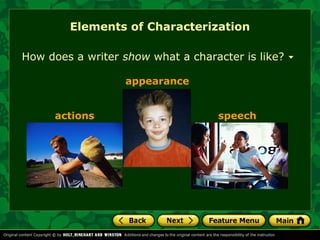
How does a writer show what a character is like? 
appearance 
actions speech
Elements of Characterization 
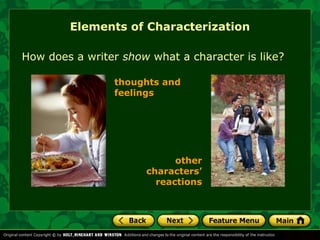
How does a writer show what a character is like? 
thoughts and 
feelings 
other 
characters’ 
reactions
Elements of Characterization 
Appearance is often your first clue to character. 
The new boy slouched against the lockers, his 
brown eyes blazing What at Mr. can Martinez. you guess He about 
was 
tall and thin, with this neatly character combed based hair. on His 
his 
crisp white shirt was appearance? 
tucked into slacks that 
were just a little too short, showing black 
socks. His shoes were scuffed brown leather 
—but showed signs of a recent polishing. 
What can you guess about “the new boy” based 
on this description of his appearance?
Elements of Characterization 
Actions give us another clue to character. What 
does the character do? 
Luis danced into the kitchen, singing along 
with the song on the radio. He paused just 
long enough to give his mother a loud kiss on 
the cheek, then danced out the door. 
Which of these words would you use to describe 
Luis as a character? (You may pick more than one.) 
shy depressed affectionate cheerful
Elements of Characterization 
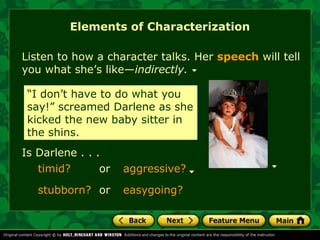
Listen to how a character talks. Her speech will tell 
you what she’s like—indirectly. 
“I don’t have to do what you 
say!” screamed Darlene as she 
kicked the new baby sitter in 
the shins. 
Is Darlene . . . 
timid? 
stubborn? easygoing? 
or aggressive? 
or
Elements of Characterization 
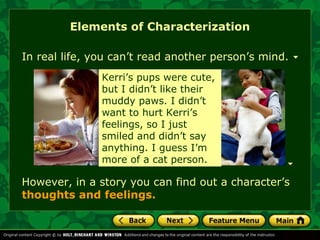
In real life, you can’t read another person’s mind. 
Kerri’s When Kevin pups were cut his 
cute, 
hand but I didn’t in art class, like their 
it 
muddy looked so paws. gross. I didn’t 
He 
want shouldn’t to hurt have Kerri’s 
been 
feelings, playing around so I just 
like 
smiled that. For and one didn’t thing, say 
he 
anything. ruined my I appetite guess I’m 
for 
more a week! 
of a cat person. 
However, in a story you can find out a character’s 
thoughts and feelings.
Elements of Characterization 
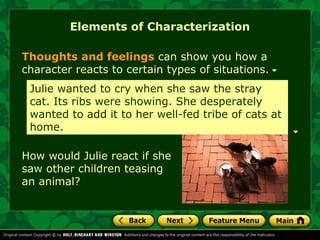
Thoughts and feelings can show you how a 
character reacts to certain types of situations. 
Julie wanted to cry when she saw the stray 
cat. Its ribs were showing. She desperately 
wanted to add it to her well-fed tribe of cats at 
home. 
How would Julie react if she 
saw other children teasing 
an animal?
Elements of Characterization 
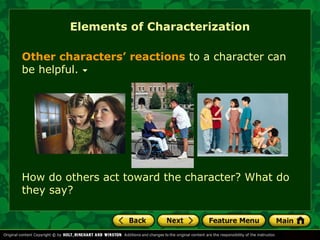
Other characters’ reactions to a character can 
be helpful. 
How do others act toward the character? What do 
they say?
Elements of Characterization 
Just as in real life, you have to consider the source. 
Can you trust another character’s reactions? 
“Yeah, 
right.” 
If a character is insulting 
to everyone, her 
comments probably tell 
you more about her than 
the others. 
[End of Section]
Elements of Characterization 
Which elements of 
characterization 
are used? 
Quick Check 
Jackson spent the first day of 
summer vacation in his room reading 
comic books. Several times, when his 
little brother stopped by and asked if 
he wanted to play a game or go to the 
park, Jackson said no. 
“But Jackson, it’s the FIRST DAY of 
vacation,” Devon whined. “How can 
you sit in here and read?!!” 
“Listen, squirt, quit bugging me!” 
Jackson felt a twinge of guilt, but he 
didn’t take back his words. 
• Appearance 
• Actions 
• Speech 
• Thoughts and 
feelings 
• Others’ reactions 
[End of Section]
Your Turn 
Analyze Characterization 
1. Explain the difference between direct and indirect 
characterization.
Your Turn 
Analyze Characterization 
1. Explain the difference between direct and indirect 
characterization. 
2. Think of a favorite character from a story or novel. 
Write down two or three words that describe the 
character. Then, provide an example of how the 
writer reveals each characteristic. 
You might want to use a graphic like the one on the 
next slide.
Your Turn 
Analyze Characterization 
character 
trait 
example of 
how writer 
revealed 
the trait 
[End of Section] 
name of 
character
The End

Chapter 2 characterization powernotes

  • 1.
    What Is Characterization? Feature Menu Character Traits and Characterization Character Traits Characterization Elements of Characterization Your Turn
  • 2.
    Character Traits What’syour best friend like? Is she . . . Is he . . . funny? patient? outgoing? thoughtful? curious? shy?
  • 3.
    Character Traits Thewords you use to describe your friend are his or her character traits. Now, how did you find out that your friend is funny, patient, and outgoing? Did she tell you? “Hi! I’m funny, patient, and outgoing!” Or did she show you?
  • 4.
    Characterization In astory, the process of revealing a character’s traits is called characterization. Writers use two methods to delineate, or carefully describe, their characters. Writers who tell you what a character is like are using direct characterization. Writers who show you what a character is like are using indirect characterization.
  • 5.
    Characterization This writeruses direct characterization to tell you exactly what the character is like. Sally is funny, honest, and kind—a rare combination at her school. She has a smile that makes people trust her right away, and she never lets anyone down. The writer even lists Sally’s character traits for you.
  • 6.
    Characterization Most writersuse indirect characterization. They want you to observe the characters and decide for yourself what they are like. Sally found the new girl and asked her to kick the ball around and get warmed up. Soon, other players asked to join in. The coach smiled. Everyone seemed to work a little harder when Sally was around. This writer shows you what Sally is like.
  • 7.
    Characterization Indirect characterizationis more like the way we find out about people in real life. great sense of humor snobby though that might make life a lot easier! friendly shy mean In real life, people don’t wear T-shirts that tell what they’re like—
  • 8.
    Characterization Is thisan example of direct characterization, or is it indirect characterization? Quick Check Tony stared down at the slip of paper in his hand. Several times he picked up the phone, then set it down again. Finally he dialed the number, then waited while it rang and rang. He was clearing his throat just as someone picked up on the other end. “Is Kendra there?” Tony blurted without a hello. [End of Section]
  • 10.
    Elements of Characterization How does a writer show what a character is like? appearance actions speech
  • 11.
    Elements of Characterization How does a writer show what a character is like? thoughts and feelings other characters’ reactions
  • 12.
    Elements of Characterization Appearance is often your first clue to character. The new boy slouched against the lockers, his brown eyes blazing What at Mr. can Martinez. you guess He about was tall and thin, with this neatly character combed based hair. on His his crisp white shirt was appearance? tucked into slacks that were just a little too short, showing black socks. His shoes were scuffed brown leather —but showed signs of a recent polishing. What can you guess about “the new boy” based on this description of his appearance?
  • 13.
    Elements of Characterization Actions give us another clue to character. What does the character do? Luis danced into the kitchen, singing along with the song on the radio. He paused just long enough to give his mother a loud kiss on the cheek, then danced out the door. Which of these words would you use to describe Luis as a character? (You may pick more than one.) shy depressed affectionate cheerful
  • 14.
    Elements of Characterization Listen to how a character talks. Her speech will tell you what she’s like—indirectly. “I don’t have to do what you say!” screamed Darlene as she kicked the new baby sitter in the shins. Is Darlene . . . timid? stubborn? easygoing? or aggressive? or
  • 15.
    Elements of Characterization In real life, you can’t read another person’s mind. Kerri’s When Kevin pups were cut his cute, hand but I didn’t in art class, like their it muddy looked so paws. gross. I didn’t He want shouldn’t to hurt have Kerri’s been feelings, playing around so I just like smiled that. For and one didn’t thing, say he anything. ruined my I appetite guess I’m for more a week! of a cat person. However, in a story you can find out a character’s thoughts and feelings.
  • 16.
    Elements of Characterization Thoughts and feelings can show you how a character reacts to certain types of situations. Julie wanted to cry when she saw the stray cat. Its ribs were showing. She desperately wanted to add it to her well-fed tribe of cats at home. How would Julie react if she saw other children teasing an animal?
  • 17.
    Elements of Characterization Other characters’ reactions to a character can be helpful. How do others act toward the character? What do they say?
  • 18.
    Elements of Characterization Just as in real life, you have to consider the source. Can you trust another character’s reactions? “Yeah, right.” If a character is insulting to everyone, her comments probably tell you more about her than the others. [End of Section]
  • 19.
    Elements of Characterization Which elements of characterization are used? Quick Check Jackson spent the first day of summer vacation in his room reading comic books. Several times, when his little brother stopped by and asked if he wanted to play a game or go to the park, Jackson said no. “But Jackson, it’s the FIRST DAY of vacation,” Devon whined. “How can you sit in here and read?!!” “Listen, squirt, quit bugging me!” Jackson felt a twinge of guilt, but he didn’t take back his words. • Appearance • Actions • Speech • Thoughts and feelings • Others’ reactions [End of Section]
  • 20.
    Your Turn AnalyzeCharacterization 1. Explain the difference between direct and indirect characterization.
  • 21.
    Your Turn AnalyzeCharacterization 1. Explain the difference between direct and indirect characterization. 2. Think of a favorite character from a story or novel. Write down two or three words that describe the character. Then, provide an example of how the writer reveals each characteristic. You might want to use a graphic like the one on the next slide.
  • 22.
    Your Turn AnalyzeCharacterization character trait example of how writer revealed the trait [End of Section] name of character
  • 23.