Downloaded 291 times

There are two main types of conflict: internal and external. Internal conflict involves a character struggling with their own emotions, choices, or past troubles. External conflict involves a character struggling against outside forces such as other characters, nature, or society. Conflict is crucial to any story as it creates drama, tension, and drives the plot forward.
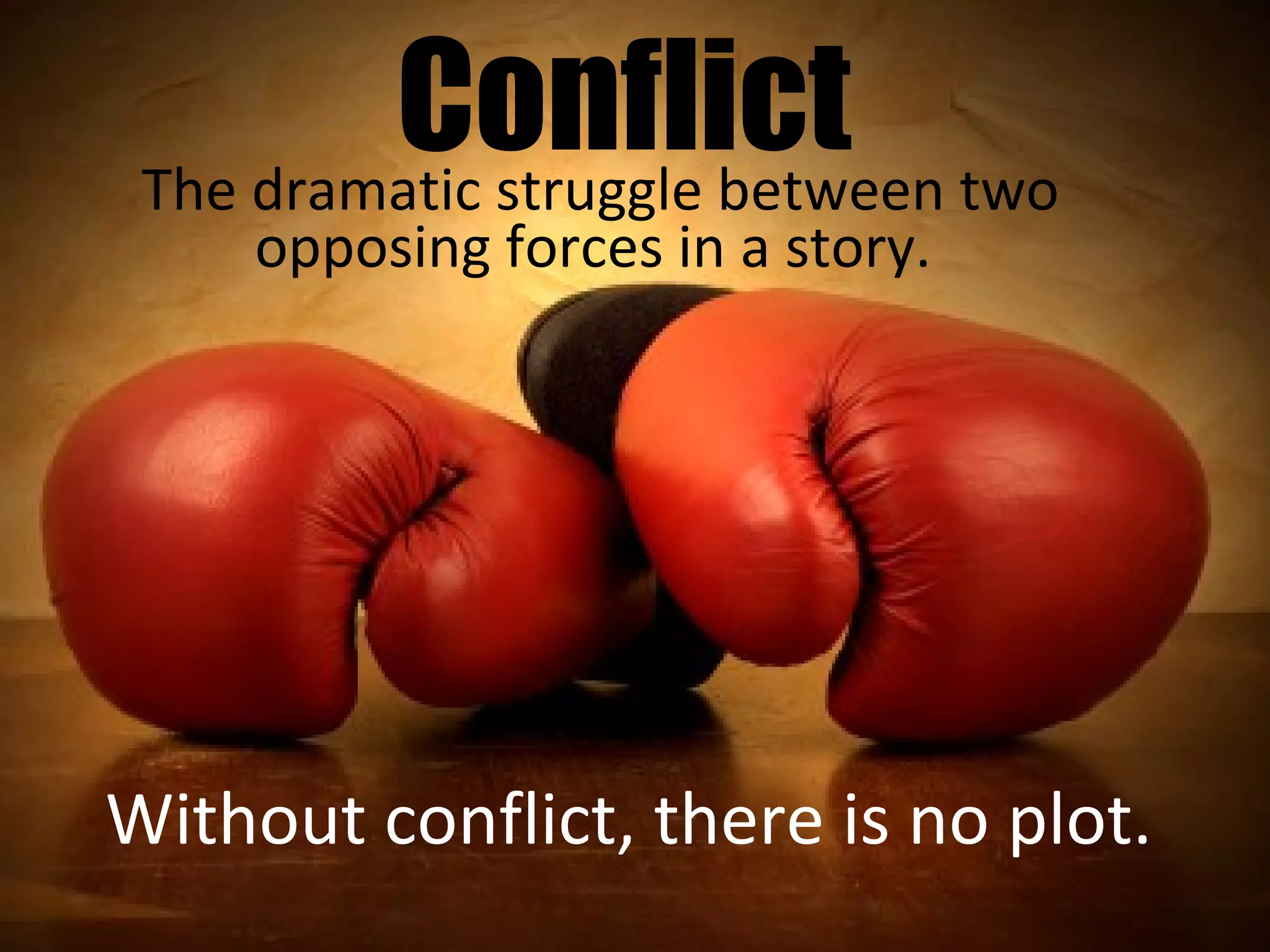
Conflict is crucial for plot development, highlighting the struggle between opposing forces in a story.
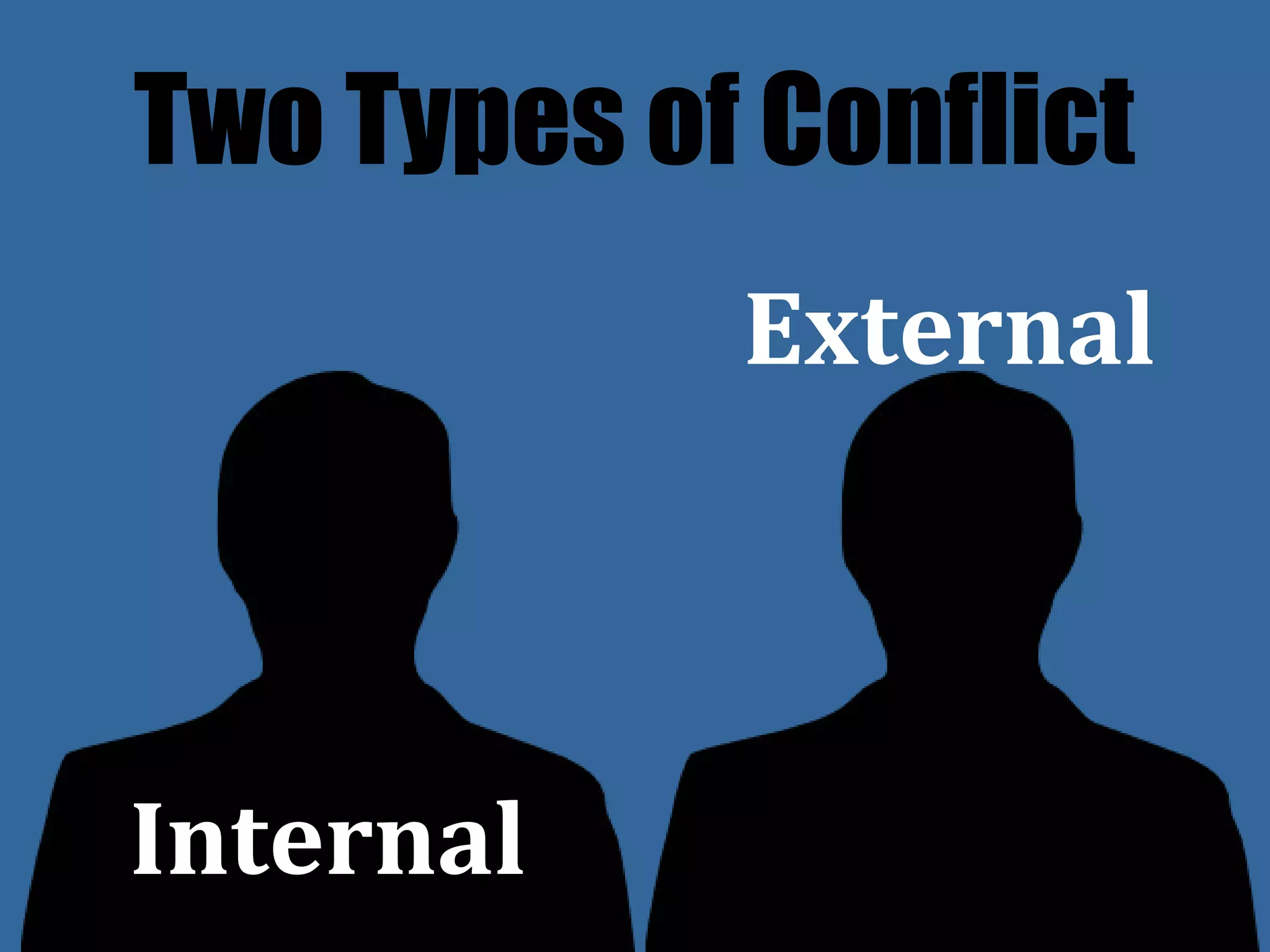
Conflict is categorized into two types: External and Internal, essential for narrative progression.
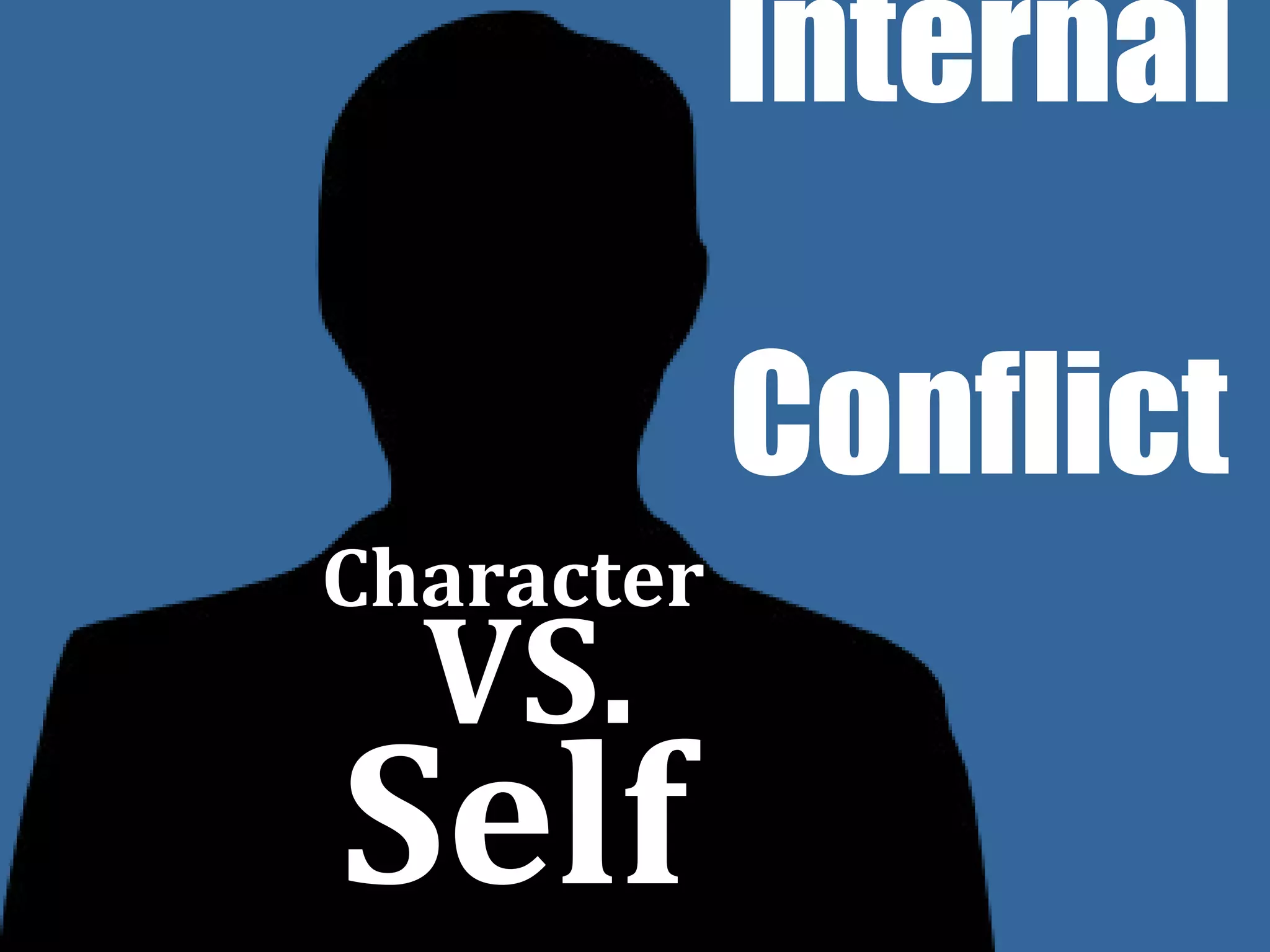
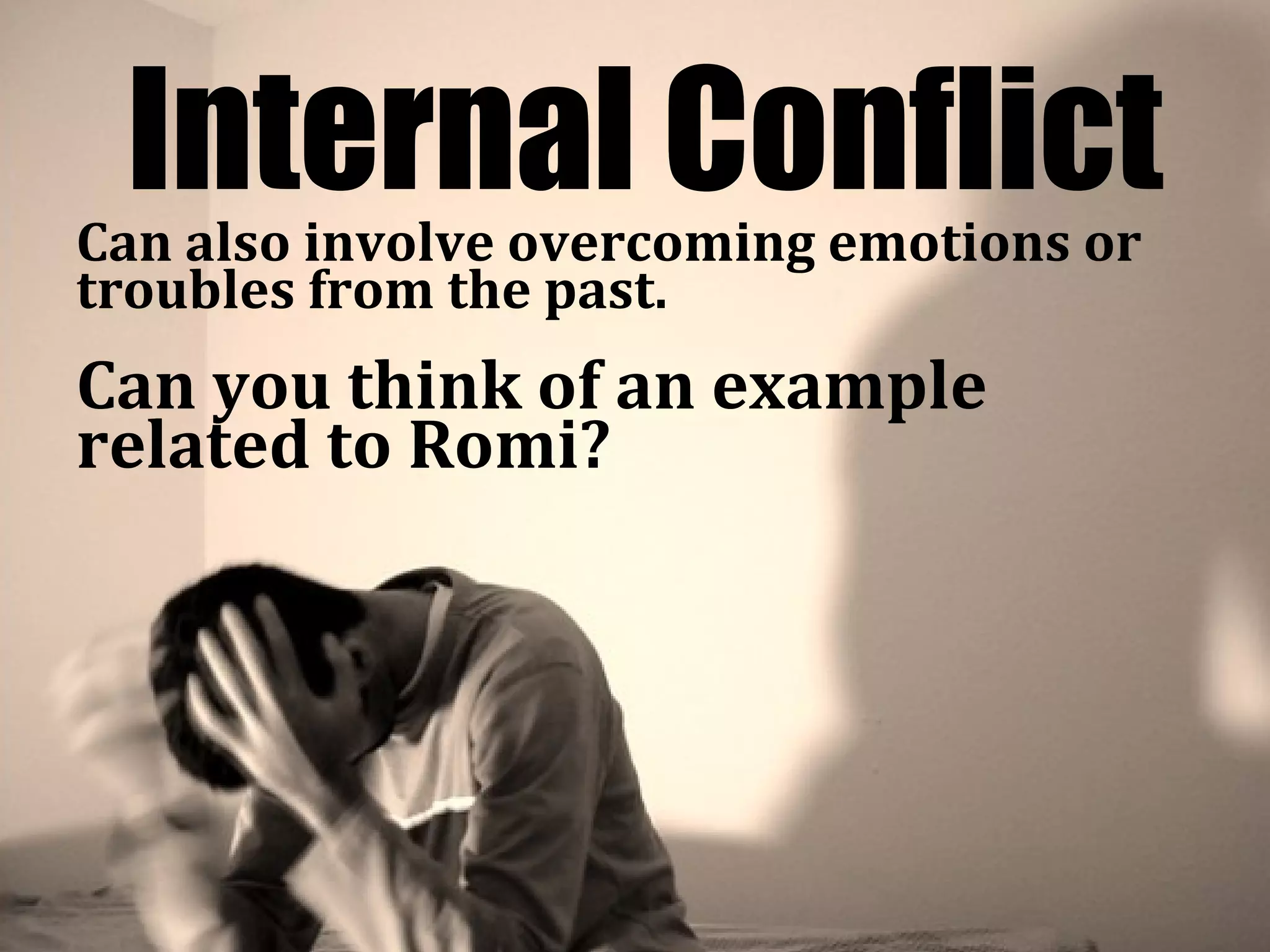
Internal conflict occurs when a character struggles with personal dilemmas, often against their own self.
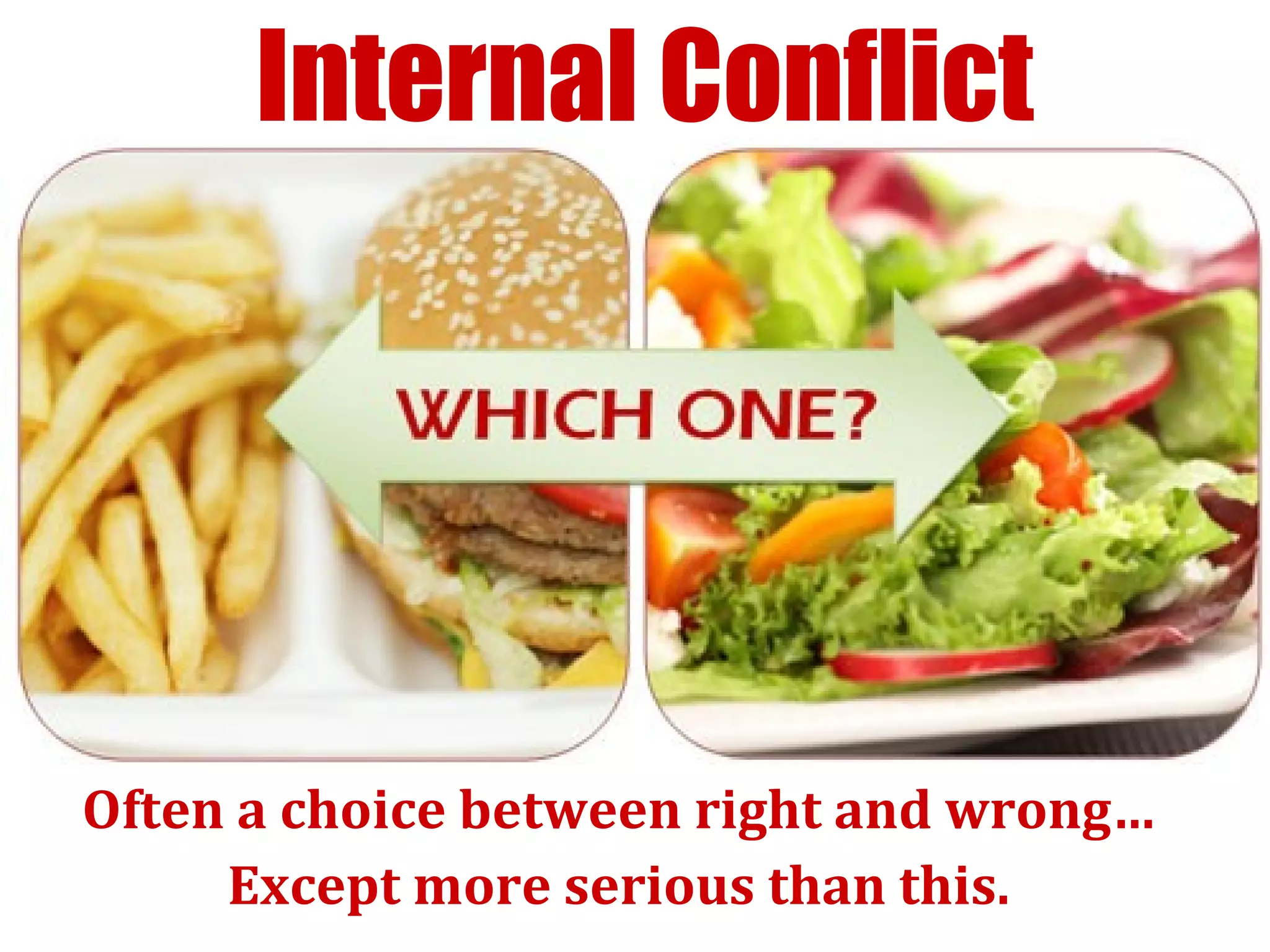
Internal conflicts often involve moral choices and deeper emotional struggles beyond simple right and wrong.
Internal conflict might also refer to overcoming past issues; personal examples can illustrate this idea.
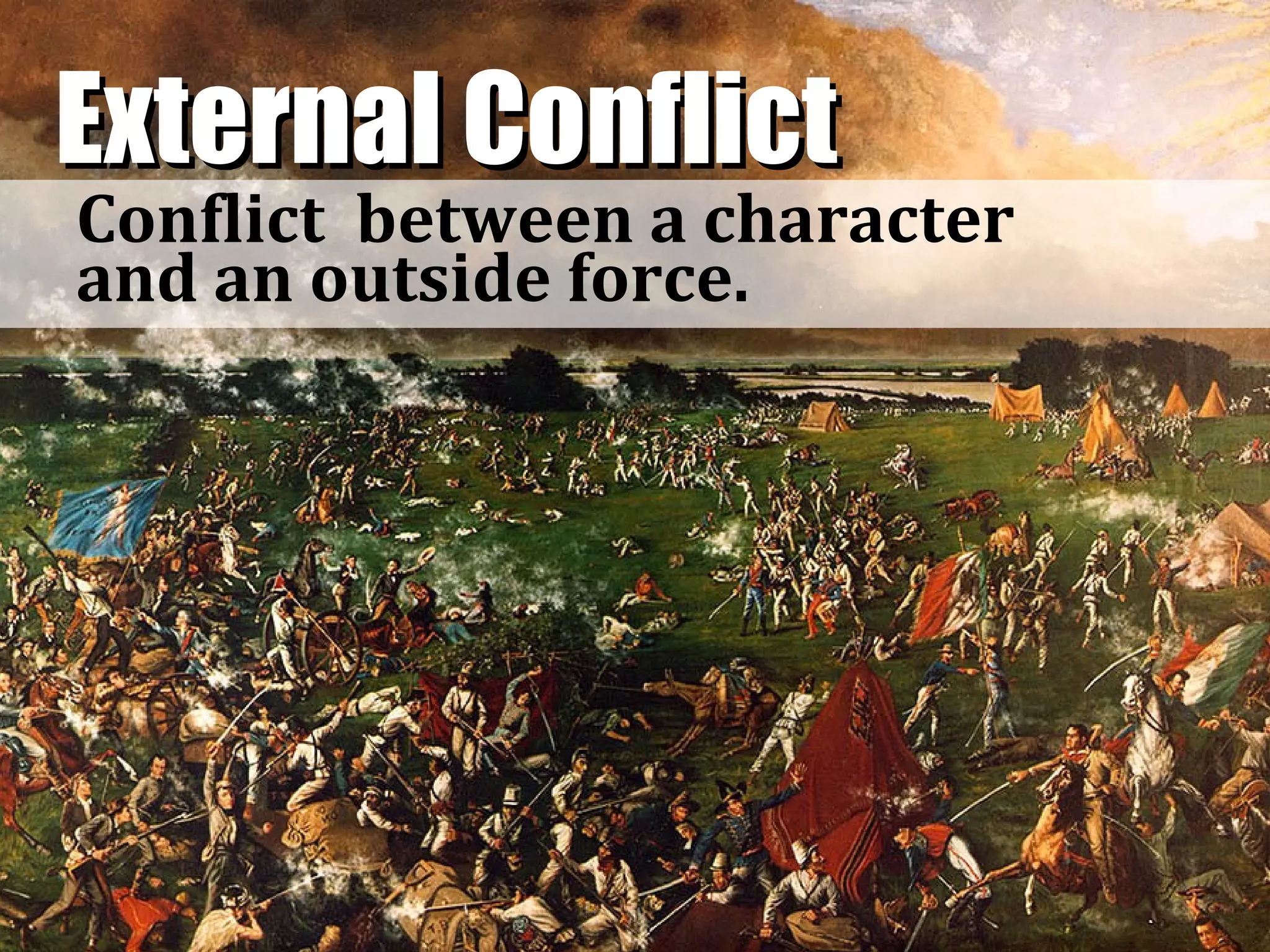
External conflict arises from a character's struggle with outside forces, impacting the narrative.
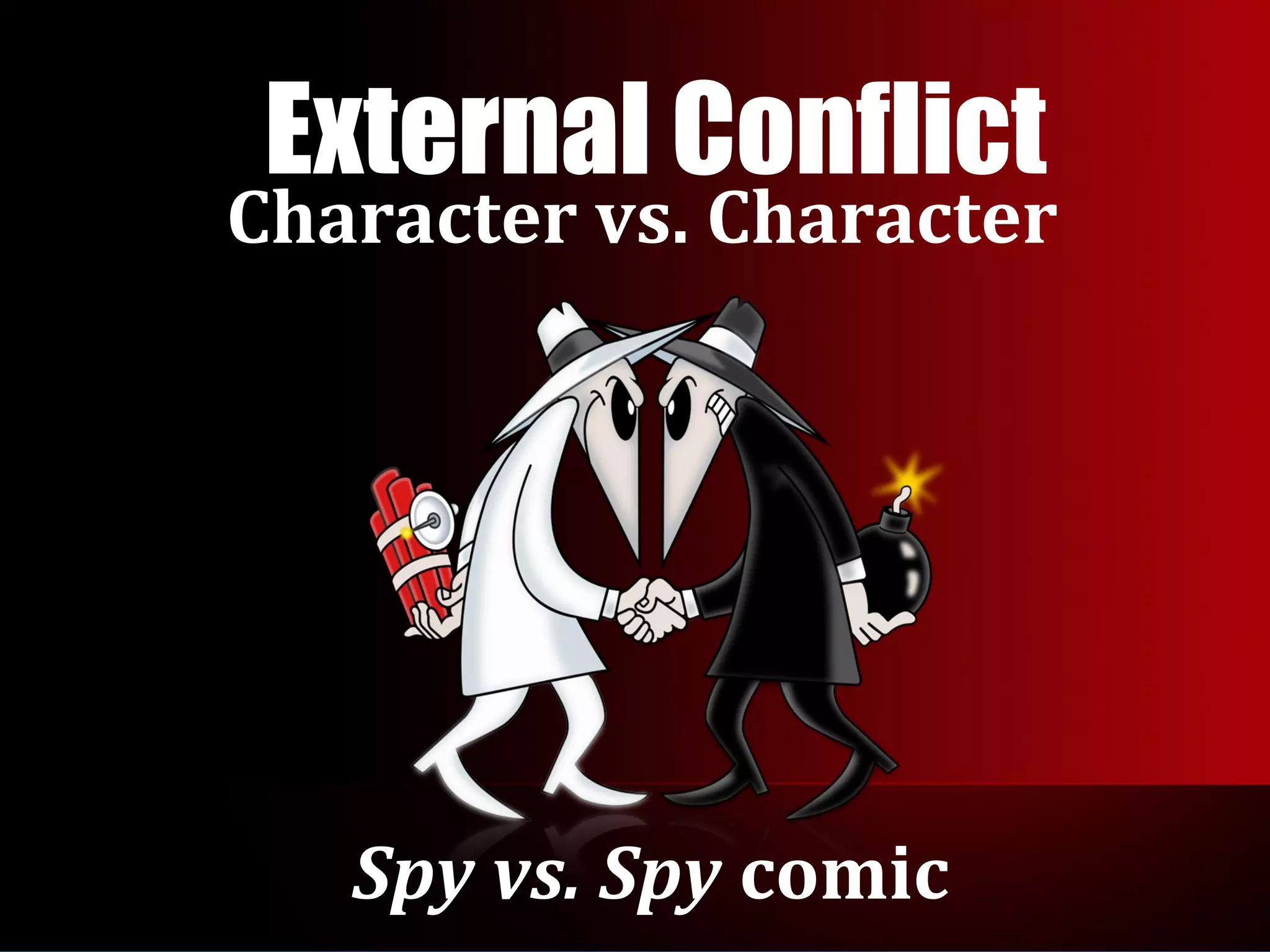
One form of external conflict is Character vs. Character, exemplified by situations like 'Spy vs. Spy'.
Another type of external conflict is Character vs. Nature, where characters face natural challenges.
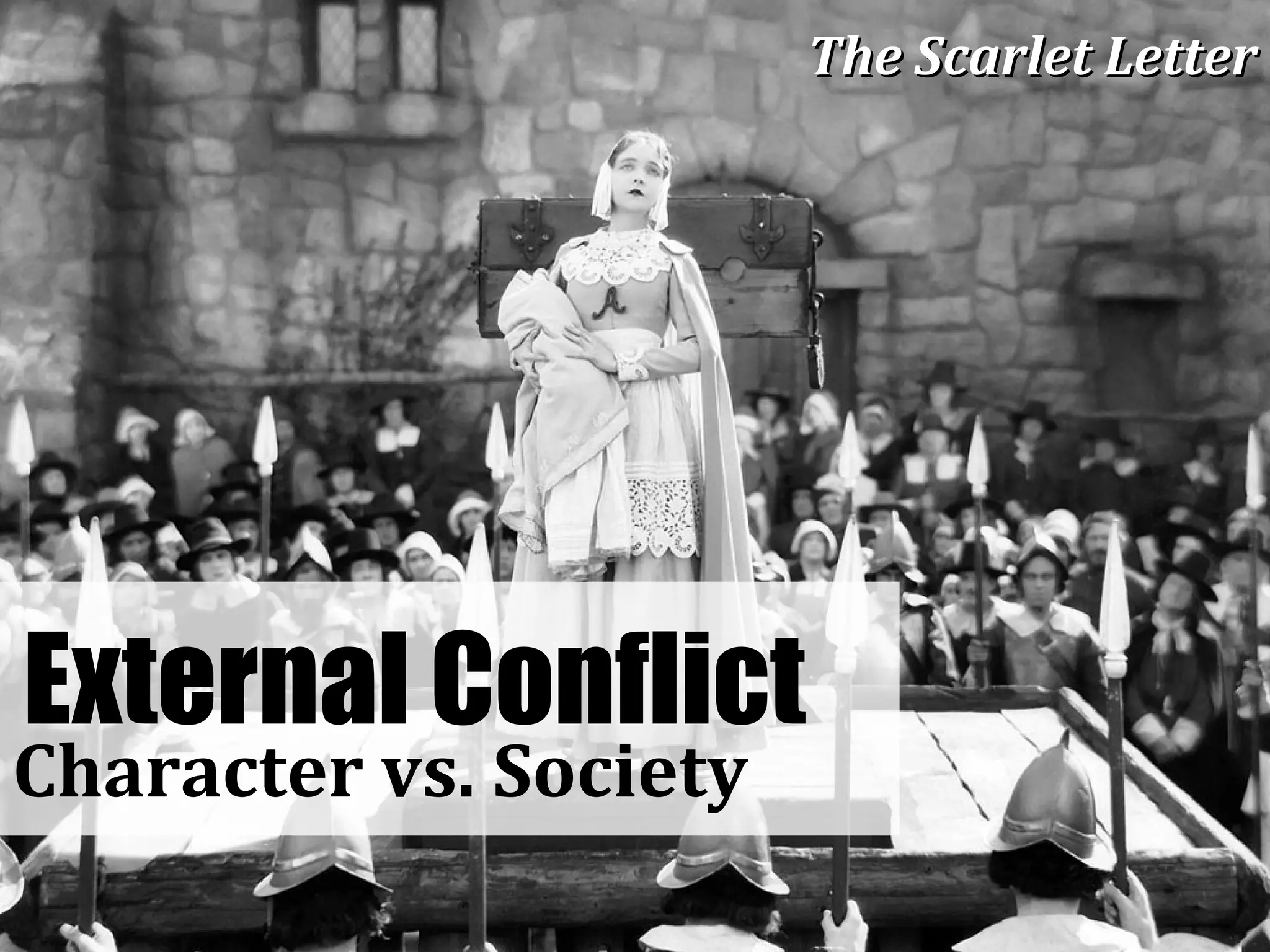
The external conflict of Character vs. Society can be illustrated through works like 'The Scarlet Letter'.
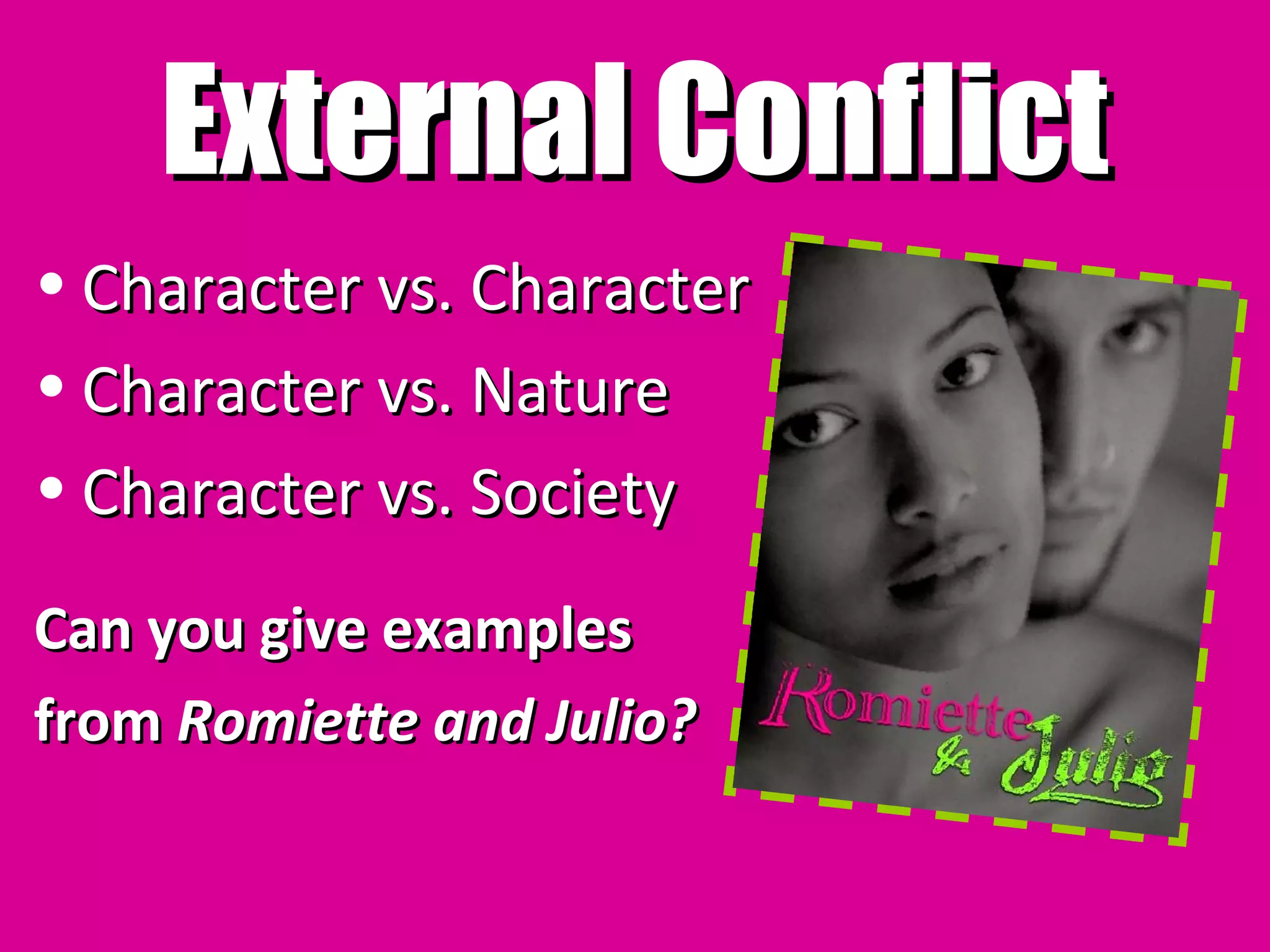
External conflict includes Character vs. Character, Nature, and Society; prompts for example identification.


