Characterization
Characterization
The process by which authors create
memorable characters.
There are two types of characterization:
Direct characterization
Indirect characterization
Characterization
Direct characterization
 When the author tells you what a character
is like.
 It is explicit.
 Examples:
 Kat was popular but snobby.
 Tim was a nice, honest boy.
Characterization
Indirect characterization
 When the author shows a character’s
personality through his or her appearance,
words, actions, thoughts, and effects on
others.
 It is implicit.
 Examples:
 Jess left the pizza crust on her floor.
 Tim helped old Ms. Jones with her bags.
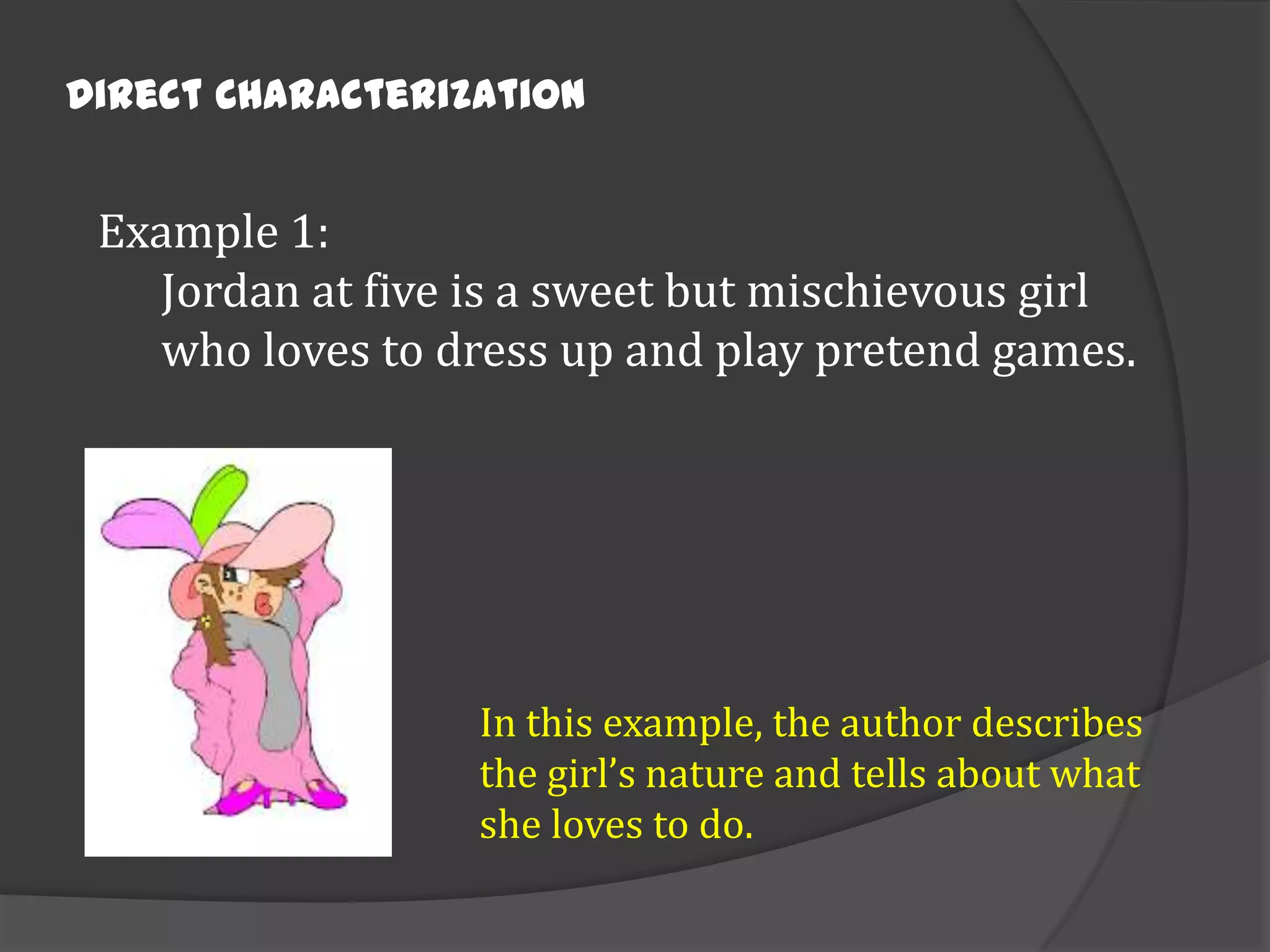
Direct Characterization

Example 1:
Jordan at five is a sweet but mischievous girl
who loves to dress up and play pretend games.

In this example, the author describes
the girl’s nature and tells about what
she loves to do.
Indirect Characterization through the character’s
words

Example 2:
The husband was fussing at his wife. “That bag
of lettuce is half empty. Why didn’t you try to
get one that had more in it? I can’t believe you
didn’t look at the bag more carefully at the
grocery store.”
Through his words, the
husband is characterized
as picky and critical.
Indirect Characterization through the character’s
thoughts
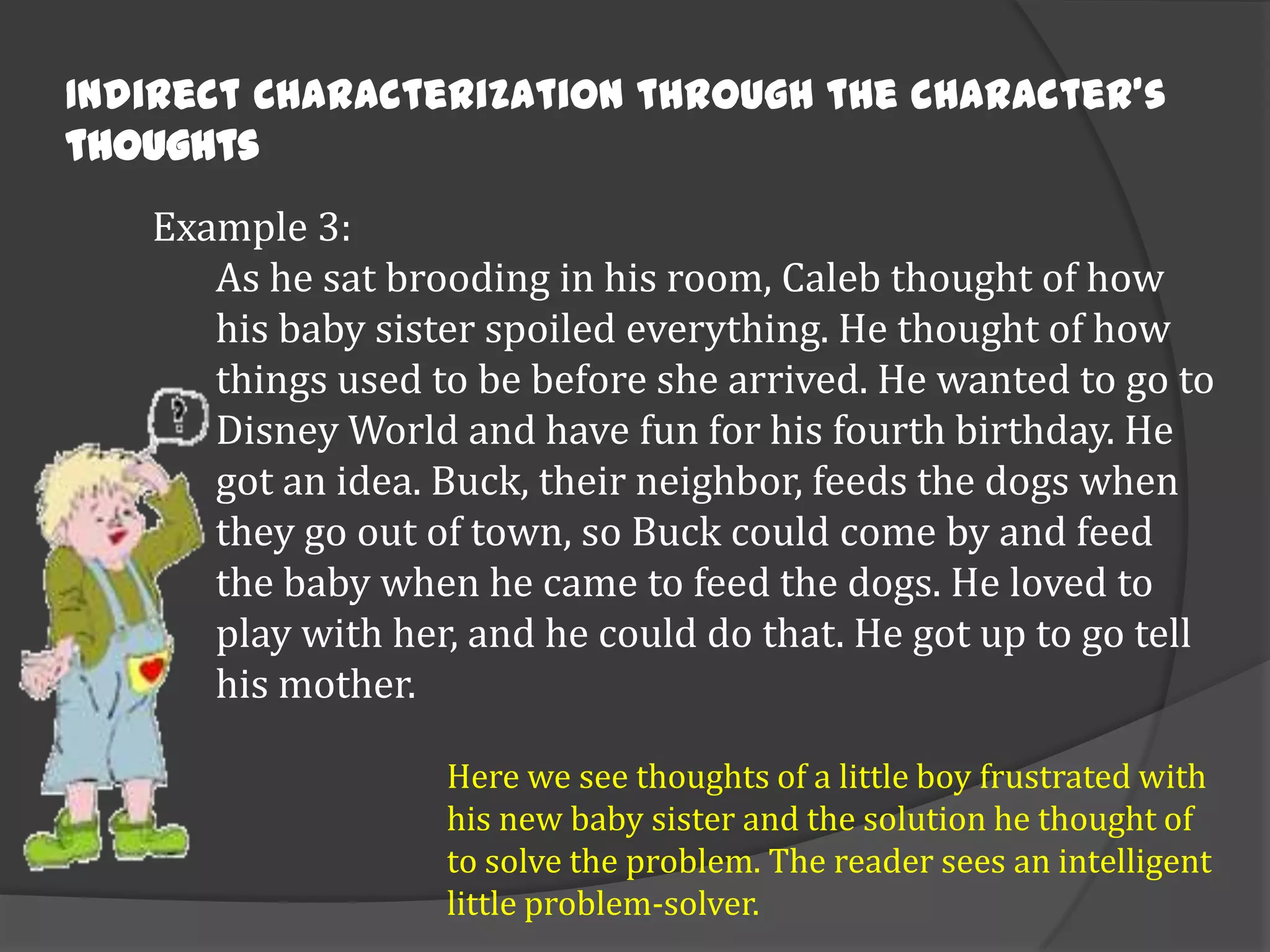
Example 3:
As he sat brooding in his room, Caleb thought of how
his baby sister spoiled everything. He thought of how
things used to be before she arrived. He wanted to go to
Disney World and have fun for his fourth birthday. He
got an idea. Buck, their neighbor, feeds the dogs when
they go out of town, so Buck could come by and feed
the baby when he came to feed the dogs. He loved to
play with her, and he could do that. He got up to go tell
his mother.
Here we see thoughts of a little boy frustrated with
his new baby sister and the solution he thought of
to solve the problem. The reader sees an intelligent
little problem-solver.
Indirect Characterization through the character’s
actions
Actions can tell the reader the most about an
individual because people may say one thing but
do another.

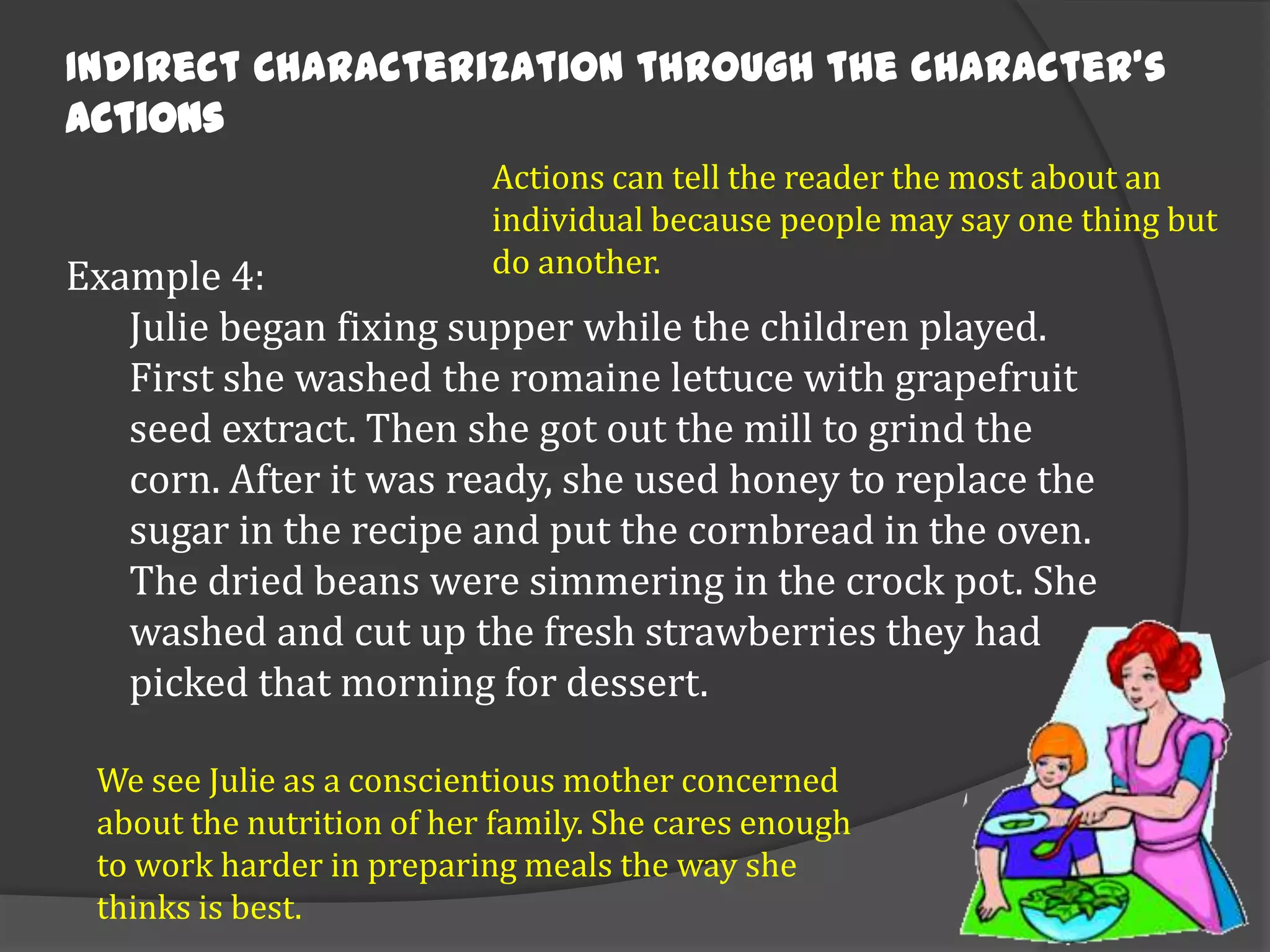
Example 4:
Julie began fixing supper while the children played.
First she washed the romaine lettuce with grapefruit
seed extract. Then she got out the mill to grind the
corn. After it was ready, she used honey to replace the
sugar in the recipe and put the cornbread in the oven.
The dried beans were simmering in the crock pot. She
washed and cut up the fresh strawberries they had
picked that morning for dessert.
We see Julie as a conscientious mother concerned
about the nutrition of her family. She cares enough
to work harder in preparing meals the way she
thinks is best.
Indirect Characterization through the other
character’s words
Example 5:
After visiting my sister Jean, Frances said, “She really
knows how to get a lot of storage into every space, doesn’t
she?”
“Yes,” I answered. “Organizing is a fun challenge for her and
is what she enjoys. She never stops but keeps reorganizing
in better ways.”

From the conversation between Frances and Jean’s
sister, the reader gets a picture of Jean’s
organizational skills.
Practice
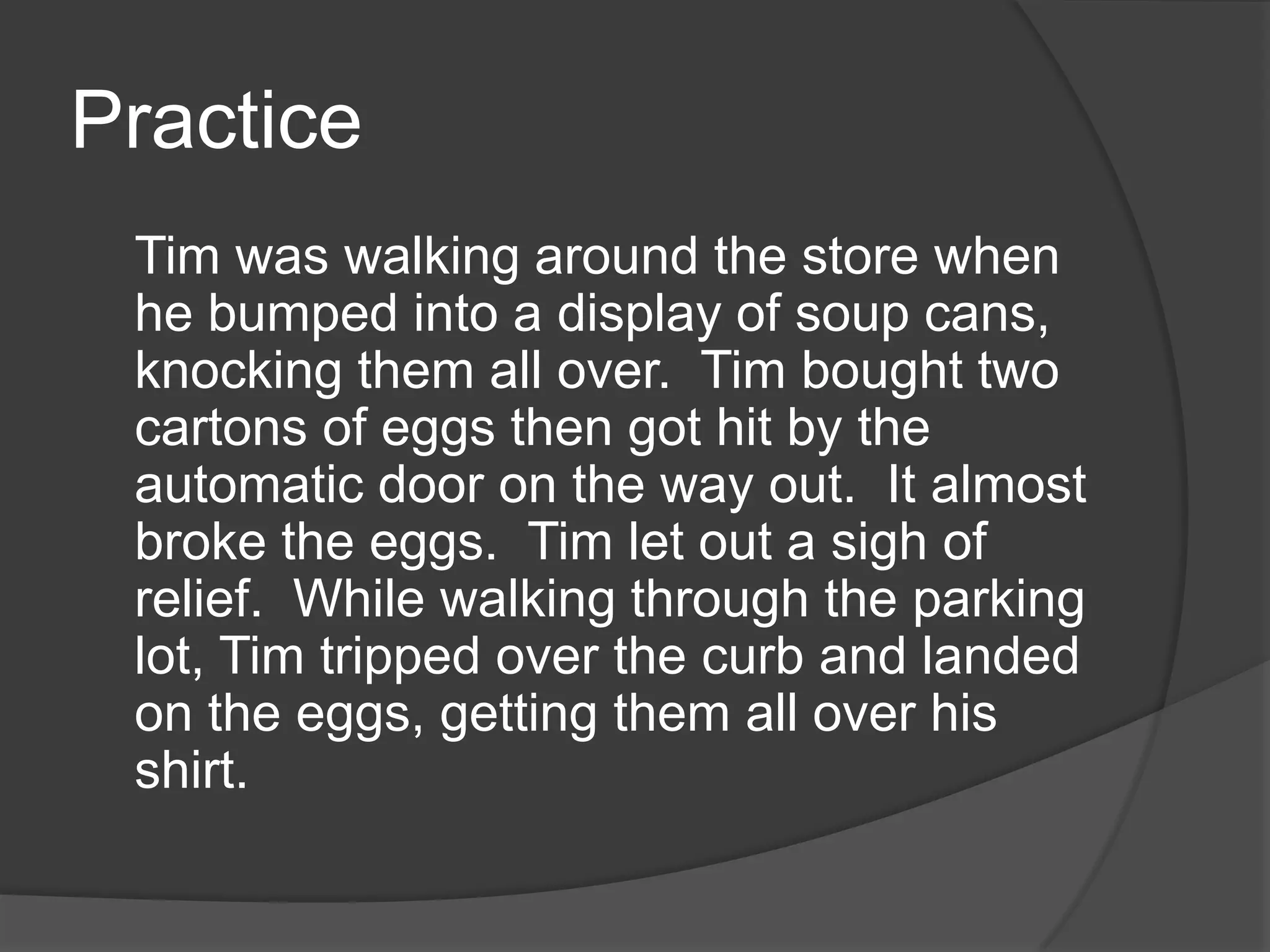
Tim was walking around the store when
he bumped into a display of soup cans,
knocking them all over. Tim bought two
cartons of eggs then got hit by the
automatic door on the way out. It almost
broke the eggs. Tim let out a sigh of
relief. While walking through the parking
lot, Tim tripped over the curb and landed
on the eggs, getting them all over his
shirt.
Practice
Sometimes Susan felt polite with them,
sorting attendance cards during her free
period. And other times she felt she could
run out of the building yelling.
Practice
While playing football with his friends,
Evan overthrew the ball and accidently
broke his mom’s picture window. Nobody
was home, but all of the other boys soon
found excuses to leave. When Evan’s
mom came home, she asked what had
happened. Evan looked her in the face
and said, “A bird smashed into the
window, Mom.”
Reader’s strategy: Identify
with a character
To fully understand literary characters
you must read with your heart as well as
your head.
 When you identify with a character you
experience that character’s joy and
sorrows as if they were your own.
 You may compare situations in which
the characters find themselves with
similar situations from your own life.


Short story characterization

  • 1.
  • 2.
    Characterization The process bywhich authors create memorable characters. There are two types of characterization: Direct characterization Indirect characterization
  • 3.
    Characterization Direct characterization  Whenthe author tells you what a character is like.  It is explicit.  Examples:  Kat was popular but snobby.  Tim was a nice, honest boy.
  • 4.
    Characterization Indirect characterization  Whenthe author shows a character’s personality through his or her appearance, words, actions, thoughts, and effects on others.  It is implicit.  Examples:  Jess left the pizza crust on her floor.  Tim helped old Ms. Jones with her bags.
  • 5.
    Direct Characterization Example 1: Jordanat five is a sweet but mischievous girl who loves to dress up and play pretend games. In this example, the author describes the girl’s nature and tells about what she loves to do.
  • 6.
    Indirect Characterization throughthe character’s words Example 2: The husband was fussing at his wife. “That bag of lettuce is half empty. Why didn’t you try to get one that had more in it? I can’t believe you didn’t look at the bag more carefully at the grocery store.” Through his words, the husband is characterized as picky and critical.
  • 7.
    Indirect Characterization throughthe character’s thoughts Example 3: As he sat brooding in his room, Caleb thought of how his baby sister spoiled everything. He thought of how things used to be before she arrived. He wanted to go to Disney World and have fun for his fourth birthday. He got an idea. Buck, their neighbor, feeds the dogs when they go out of town, so Buck could come by and feed the baby when he came to feed the dogs. He loved to play with her, and he could do that. He got up to go tell his mother. Here we see thoughts of a little boy frustrated with his new baby sister and the solution he thought of to solve the problem. The reader sees an intelligent little problem-solver.
  • 8.
    Indirect Characterization throughthe character’s actions Actions can tell the reader the most about an individual because people may say one thing but do another. Example 4: Julie began fixing supper while the children played. First she washed the romaine lettuce with grapefruit seed extract. Then she got out the mill to grind the corn. After it was ready, she used honey to replace the sugar in the recipe and put the cornbread in the oven. The dried beans were simmering in the crock pot. She washed and cut up the fresh strawberries they had picked that morning for dessert. We see Julie as a conscientious mother concerned about the nutrition of her family. She cares enough to work harder in preparing meals the way she thinks is best.
  • 9.
    Indirect Characterization throughthe other character’s words Example 5: After visiting my sister Jean, Frances said, “She really knows how to get a lot of storage into every space, doesn’t she?” “Yes,” I answered. “Organizing is a fun challenge for her and is what she enjoys. She never stops but keeps reorganizing in better ways.” From the conversation between Frances and Jean’s sister, the reader gets a picture of Jean’s organizational skills.
  • 11.
    Practice Tim was walkingaround the store when he bumped into a display of soup cans, knocking them all over. Tim bought two cartons of eggs then got hit by the automatic door on the way out. It almost broke the eggs. Tim let out a sigh of relief. While walking through the parking lot, Tim tripped over the curb and landed on the eggs, getting them all over his shirt.
  • 12.
    Practice Sometimes Susan feltpolite with them, sorting attendance cards during her free period. And other times she felt she could run out of the building yelling.
  • 13.
    Practice While playing footballwith his friends, Evan overthrew the ball and accidently broke his mom’s picture window. Nobody was home, but all of the other boys soon found excuses to leave. When Evan’s mom came home, she asked what had happened. Evan looked her in the face and said, “A bird smashed into the window, Mom.”
  • 14.
    Reader’s strategy: Identify witha character To fully understand literary characters you must read with your heart as well as your head.  When you identify with a character you experience that character’s joy and sorrows as if they were your own.  You may compare situations in which the characters find themselves with similar situations from your own life. 

Editor's Notes

  • #5 Speech What does the character say? How does the character speak? Thoughts What is revealed through the character’s private thoughts and feelings? Effect on others What is revealed through the character’s effect on other people? How do other characters feel or behave in toward the character. reaction to the character? Actions What does the character do? How does the character behave? Looks What does the character look like? How does the character dress?