Soyinka’s Life
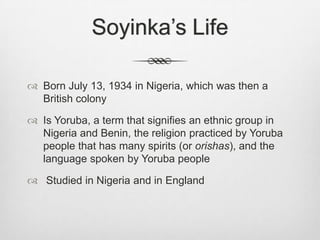
 Born July 13, 1934 in Nigeria, which was then a
British colony
 Is Yoruba, a term that signifies an ethnic group in
Nigeria and Benin, the religion practiced by Yoruba
people that has many spirits (or orishas), and the
language spoken by Yoruba people
 Studied in Nigeria and in England
Soyinka’s Life
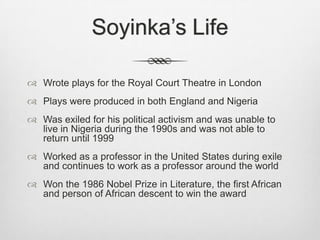
 Wrote plays for the Royal Court Theatre in London
 Plays were produced in both England and Nigeria
 Was exiled for his political activism and was unable to
live in Nigeria during the 1990s and was not able to
return until 1999
 Worked as a professor in the United States during exile
and continues to work as a professor around the world
 Won the 1986 Nobel Prize in Literature, the first African
and person of African descent to win the award
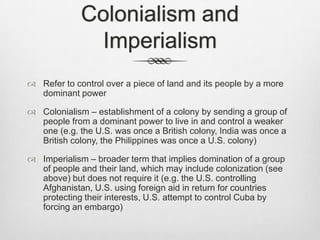
Colonialism and
Imperialism
 Refer to control over a piece of land and its people by a more
dominant power
 Colonialism – establishment of a colony by sending a group of
people from a dominant power to live in and control a weaker
one (e.g. the U.S. was once a British colony, India was once a
British colony, the Philippines was once a U.S. colony)
 Imperialism – broader term that implies domination of a group
of people and their land, which may include colonization (see
above) but does not require it (e.g. the U.S. controlling
Afghanistan, U.S. using foreign aid in return for countries
protecting their interests, U.S. attempt to control Cuba by
forcing an embargo)
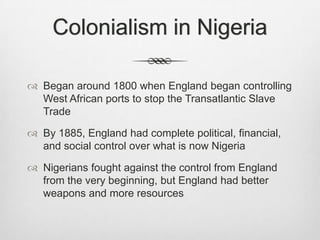
Colonialism in Nigeria
 Began around 1800 when England began controlling
West African ports to stop the Transatlantic Slave
Trade
 By 1885, England had complete political, financial,
and social control over what is now Nigeria
 Nigerians fought against the control from England
from the very beginning, but England had better
weapons and more resources
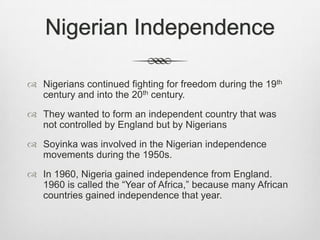
Nigerian Independence
 Nigerians continued fighting for freedom during the 19th
century and into the 20th century.
 They wanted to form an independent country that was
not controlled by England but by Nigerians

 Soyinka was involved in the Nigerian independence
movements during the 1950s.
 In 1960, Nigeria gained independence from England.
1960 is called the “Year of Africa,” because many African
countries gained independence that year.
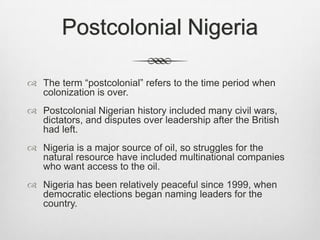
Postcolonial Nigeria
 The term “postcolonial” refers to the time period when
colonization is over.
 Postcolonial Nigerian history included many civil wars,
dictators, and disputes over leadership after the British
had left.
 Nigeria is a major source of oil, so struggles for the
natural resource have included multinational companies
who want access to the oil.
 Nigeria has been relatively peaceful since 1999, when
democratic elections began naming leaders for the
country.
Death and the King’s
Horseman
 Written in 1975
 One of Soyinka’s most famous plays
 Set in 1946, before Nigerian independence and
while the British were in control of Nigeria
 Based on a real story, in which the king’s horseman
wanted to commit ritual suicide as part of Yoruba
tradition but the British colonial authorities believed
the ritual was immoral and had to be prevented.
Context
 According to Yoruba tradition, when a king dies, his
horseman must commit ritual suicide so his spirit
can help guide the king’s spirit into the afterlife.
 If the horseman does not commit suicide, the king’s
spirit may wander the earth and disrupt life for the
living.
 British authorities viewed the practice as barbaric
and felt it their duty to stop it.

Wole Soyinka - Death and the King's Horseman

  • 2.
    Soyinka’s Life  BornJuly 13, 1934 in Nigeria, which was then a British colony  Is Yoruba, a term that signifies an ethnic group in Nigeria and Benin, the religion practiced by Yoruba people that has many spirits (or orishas), and the language spoken by Yoruba people  Studied in Nigeria and in England
  • 3.
    Soyinka’s Life  Wroteplays for the Royal Court Theatre in London  Plays were produced in both England and Nigeria  Was exiled for his political activism and was unable to live in Nigeria during the 1990s and was not able to return until 1999  Worked as a professor in the United States during exile and continues to work as a professor around the world  Won the 1986 Nobel Prize in Literature, the first African and person of African descent to win the award
  • 4.
    Colonialism and Imperialism  Referto control over a piece of land and its people by a more dominant power  Colonialism – establishment of a colony by sending a group of people from a dominant power to live in and control a weaker one (e.g. the U.S. was once a British colony, India was once a British colony, the Philippines was once a U.S. colony)  Imperialism – broader term that implies domination of a group of people and their land, which may include colonization (see above) but does not require it (e.g. the U.S. controlling Afghanistan, U.S. using foreign aid in return for countries protecting their interests, U.S. attempt to control Cuba by forcing an embargo)
  • 5.
    Colonialism in Nigeria Began around 1800 when England began controlling West African ports to stop the Transatlantic Slave Trade  By 1885, England had complete political, financial, and social control over what is now Nigeria  Nigerians fought against the control from England from the very beginning, but England had better weapons and more resources
  • 6.
    Nigerian Independence  Nigerianscontinued fighting for freedom during the 19th century and into the 20th century.  They wanted to form an independent country that was not controlled by England but by Nigerians  Soyinka was involved in the Nigerian independence movements during the 1950s.  In 1960, Nigeria gained independence from England. 1960 is called the “Year of Africa,” because many African countries gained independence that year.
  • 7.
    Postcolonial Nigeria  Theterm “postcolonial” refers to the time period when colonization is over.  Postcolonial Nigerian history included many civil wars, dictators, and disputes over leadership after the British had left.  Nigeria is a major source of oil, so struggles for the natural resource have included multinational companies who want access to the oil.  Nigeria has been relatively peaceful since 1999, when democratic elections began naming leaders for the country.
  • 8.
    Death and theKing’s Horseman  Written in 1975  One of Soyinka’s most famous plays  Set in 1946, before Nigerian independence and while the British were in control of Nigeria  Based on a real story, in which the king’s horseman wanted to commit ritual suicide as part of Yoruba tradition but the British colonial authorities believed the ritual was immoral and had to be prevented.
  • 9.
    Context  According toYoruba tradition, when a king dies, his horseman must commit ritual suicide so his spirit can help guide the king’s spirit into the afterlife.  If the horseman does not commit suicide, the king’s spirit may wander the earth and disrupt life for the living.  British authorities viewed the practice as barbaric and felt it their duty to stop it.