Downloaded 102 times
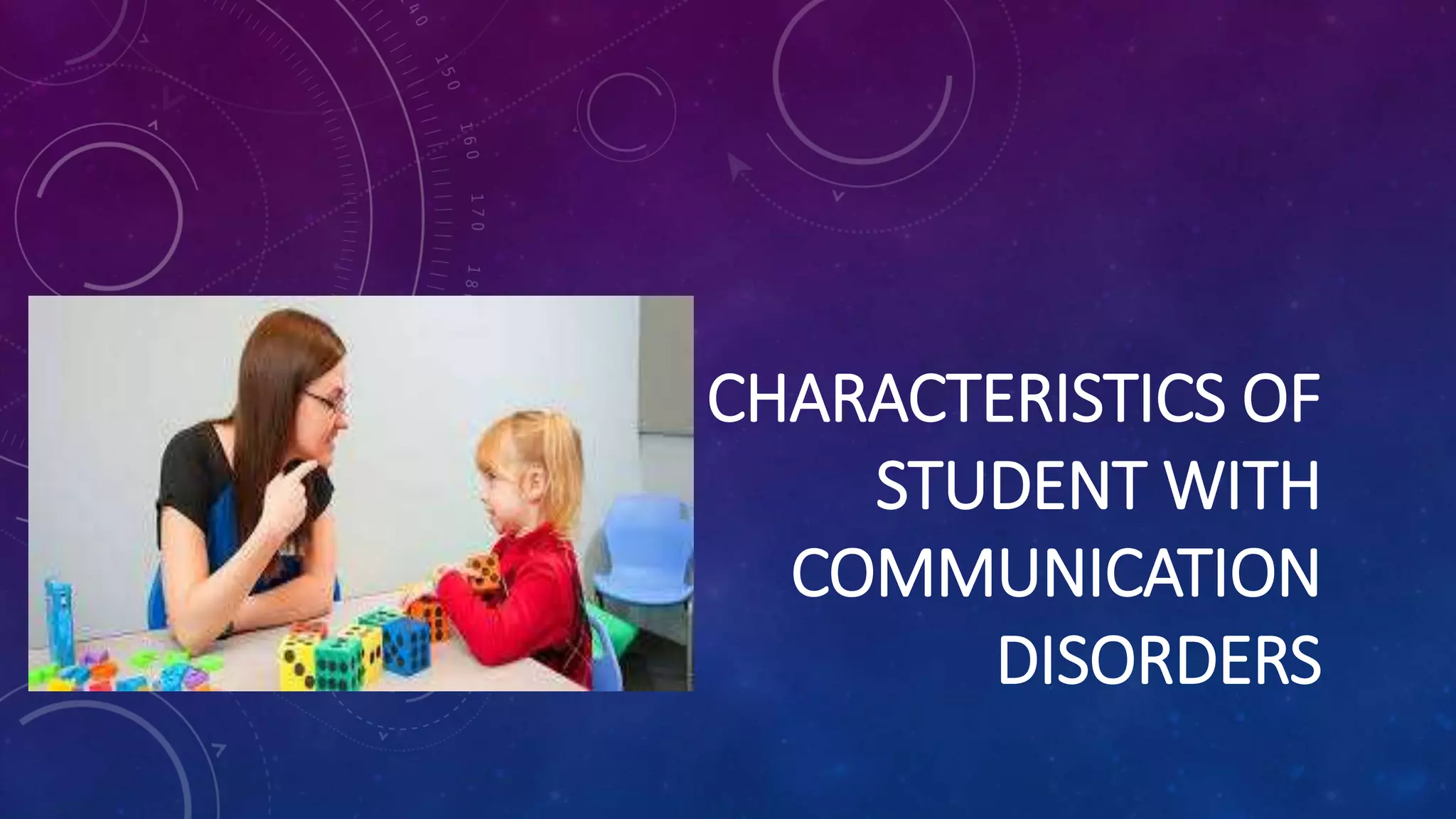
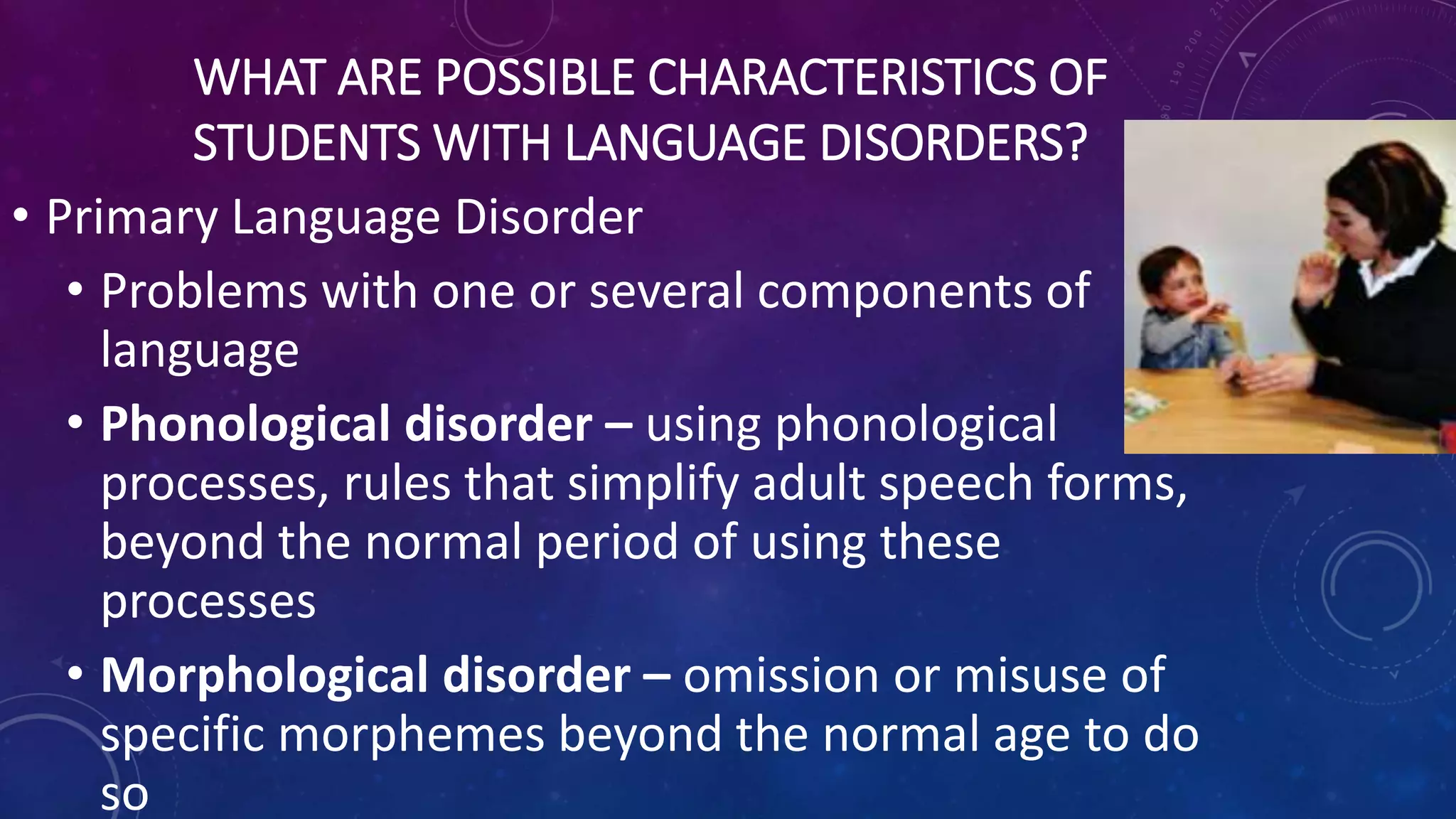
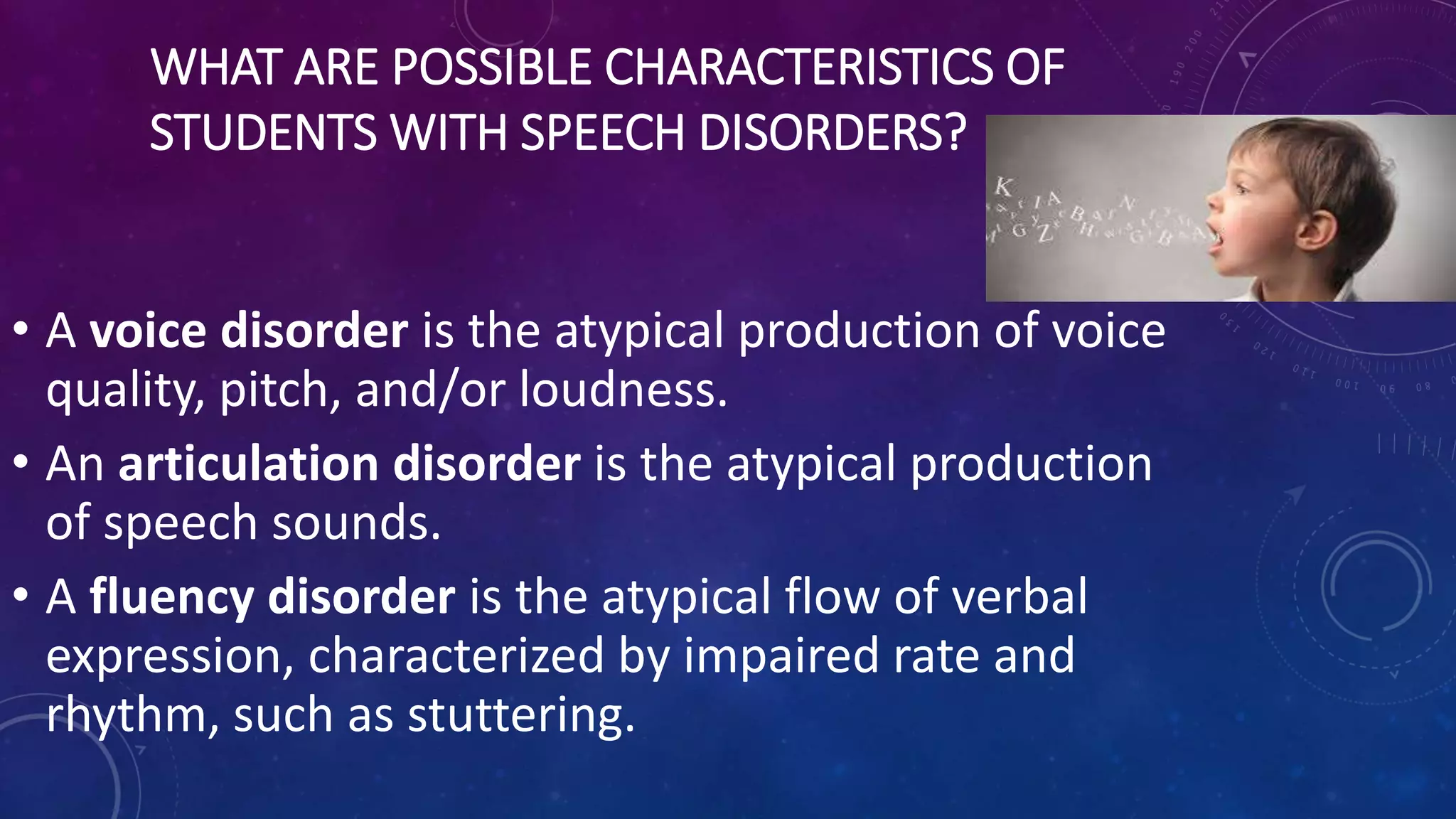


Students with communication disorders may have impairments in speech, language, or both. Speech involves the physical production of language through respiration, voicing, resonance, and articulation, while language refers to the system of symbols used to communicate. Characteristics of students with language disorders can include problems with phonology, morphology, semantics, or pragmatics. Students with speech disorders may have difficulties with voice, articulation, or fluency. Speech-language pathologists identify communication disorders through standardized tests, observations, interviews, and language samples. General education teachers should collaborate with other professionals, involve families, encourage peer interaction, model correct speech, and provide a motivating learning environment for students with communication disorders.


