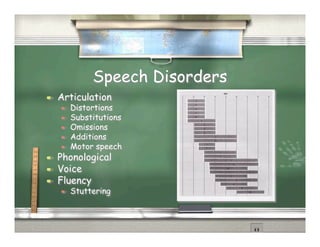
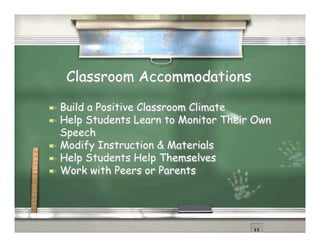
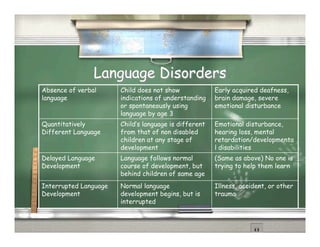
This document discusses communication disorders and strategies for working with students who have them. It defines communication, language, and speech and outlines common speech disorders like articulation issues, phonological disorders, and voice or fluency issues. It then provides classroom accommodations for speech disorders like building a positive environment, helping students monitor their speech, and modifying instruction. It also covers language disorders and assessment strategies. Suggestions are given to improve students' comprehension, language use, and conversational skills through activities like story reading, music, and play. Working with a speech language pathologist is recommended.