CHARACTERISTICS AND SELECTION OF SENSOR
Presented by
Hiran Gabriel D J
Sensors
A Sensor converts the physical parameter
into a signal which can be measured
electrically.
Sensors are sophisticated devices that are
frequently used to detect and respond to
electrical or optical signals.
Characteristics
of sensors
Accuracy
Precision
Errors
Sensitivity
Linearity
Hystheresis (backslash)
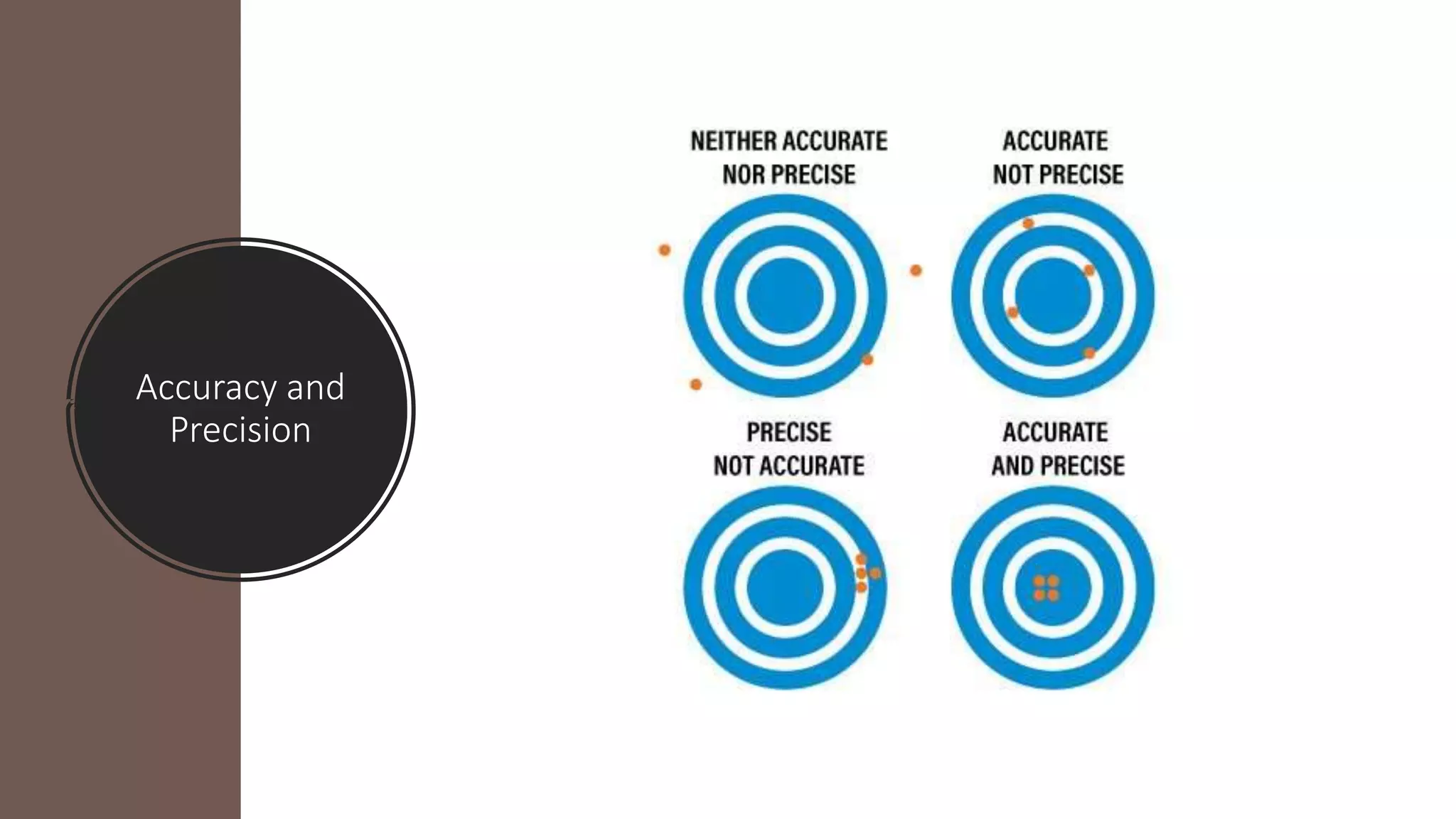
Accuracy and
Precision
ERRORS
Interfering or modifying variables (i.e., temperature)
Drift (i.e., changes in chemical structure or mechanical
stresses)
The measurement process changes the measurand
(i.e., loading errors)
The transmission process changes the signal (i.e.,
attenuation)
Human observers (i.e., parallax errors)
Noise
Sensitivity
An ideal sensor will have a large
and constant sensitivity
Sensitivity-related errors are
saturation and “dead-bands”
Linearity
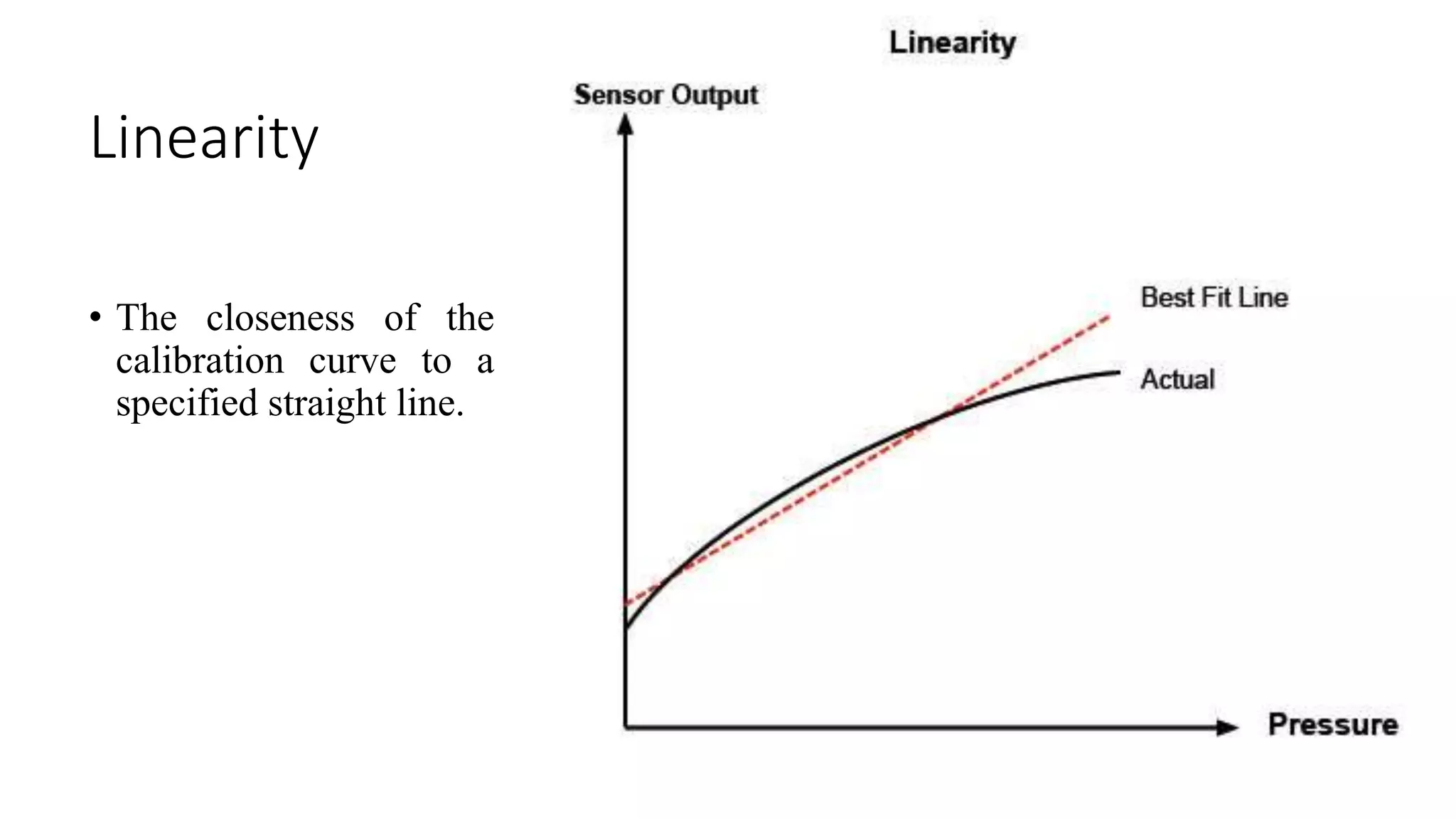
• The closeness of the
calibration curve to a
specified straight line.
Hystheresis
(backslash)
The difference between two output
values that correspond to the same input
depending on the trajectory followed by
the sensor (i.e., magnetization in
ferromagnetic materials).
Backslash: Hysteresis caused by looseness
in a mechanical joint.
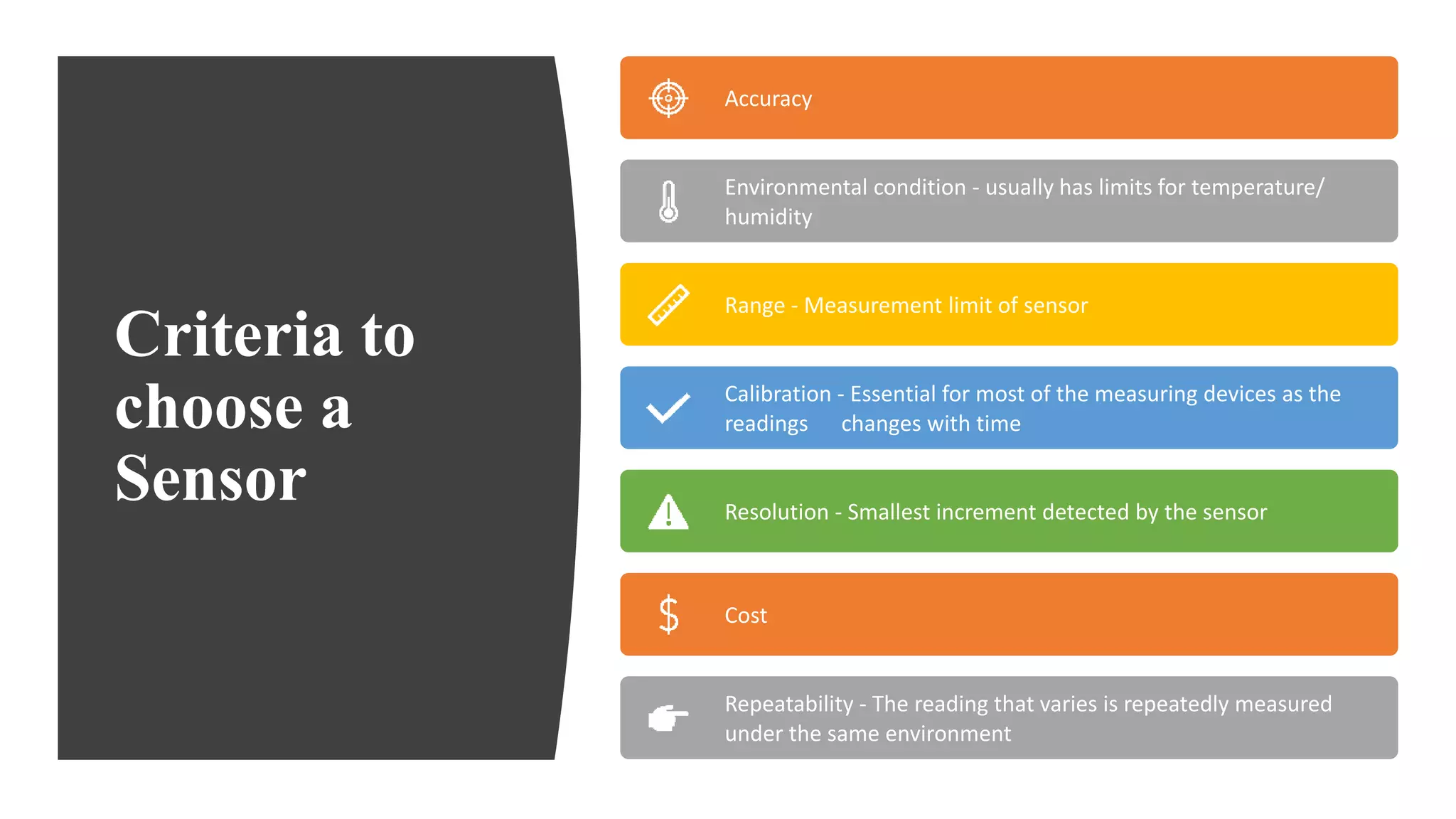
Criteria to
choose a
Sensor
Accuracy
Environmental condition - usually has limits for temperature/
humidity
Range - Measurement limit of sensor
Calibration - Essential for most of the measuring devices as the
readings changes with time
Resolution - Smallest increment detected by the sensor
Cost
Repeatability - The reading that varies is repeatedly measured
under the same environment
THANK YOU

Characteristics and selection of Sensors