Sensor
 Sensor are devices which produce a proportional
output signal (mechanical, electrical, magnetic etc.,)
when exposed to a physical phenomenon (pressure,
temperature, displacement , force etc.,).
Transducer
 Transducer are devices which converts an input of one
form of energy in to an output of another form of
energy.
Performance terminology
• Static characteristics
– Static characteristics of an instrument are the
parameters which are more or less constant or varying
very slowly with time.
• Dynamic characteristics
– Sensors and actuators respond to inputs that change
with time. Dynamic characteristics of an instrument are
the parameters which are varying with time.
Static characteristics
 Range –Every sensor is designed to work over a
specified range. e.g.: a thermocouple may have a range
of -100 to 1160°C
 Span : maximum value of input – minimum value of
input.
 Error : measured value – true input value
 Accuracy : is inversely proportional to error.
 Sensitivity: it is defined as the change in output per
change in input
Static characteristics
 Hysteresis: it is defined as the maximum difference in
output for a given input when this value is approached
from the opposite direction.
 Linearity: it is refer to the output that is directly
proportional to input over its entire range.
Static characteristics
• Repeatability: it is defined as the ability of the sensor
to give same output reading when the same input value
is applied repeatedly under the same operating
conditions.
• Reproducibility: it is defined as the degree of closeness
among the repeated measurements of the output for
the same value of input under the same operating
conditions at different times.
Static characteristics
 Stability : it means the ability of the sensor to indicate
the same output over a period of time for a constant
input.
 Resolution: it is defined as the smallest change that
can be detected by a sensor
Dynamic characteristics
 Response time
 Time constant
 Rise time
 Setting time
Displacement sensor
 Potentiometer sensor
 Strain gauge sensor
 Capacitive sensor
 Inductive sensors (LVDT)
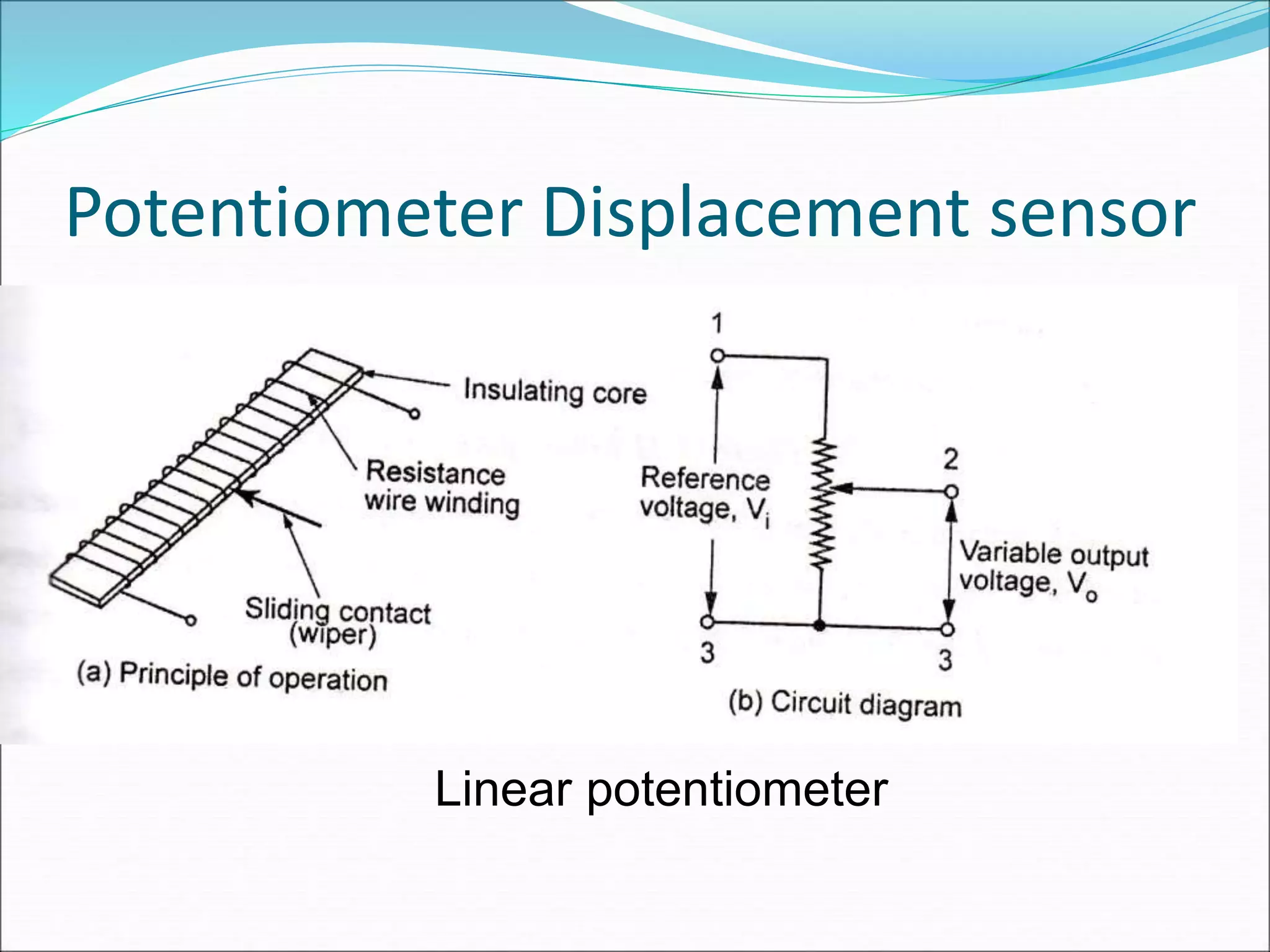
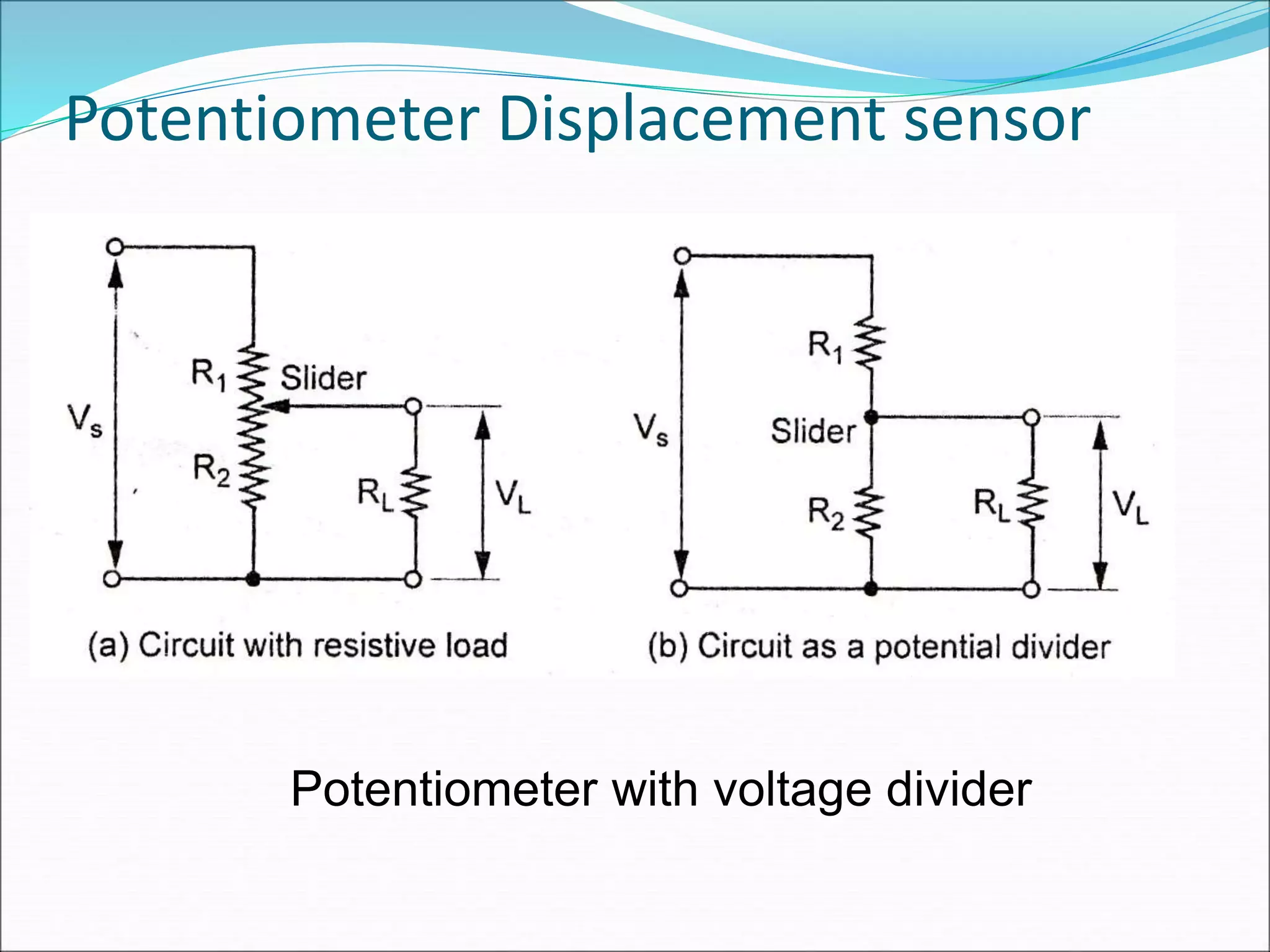
Potentiometer Displacement sensor
Linear potentiometer
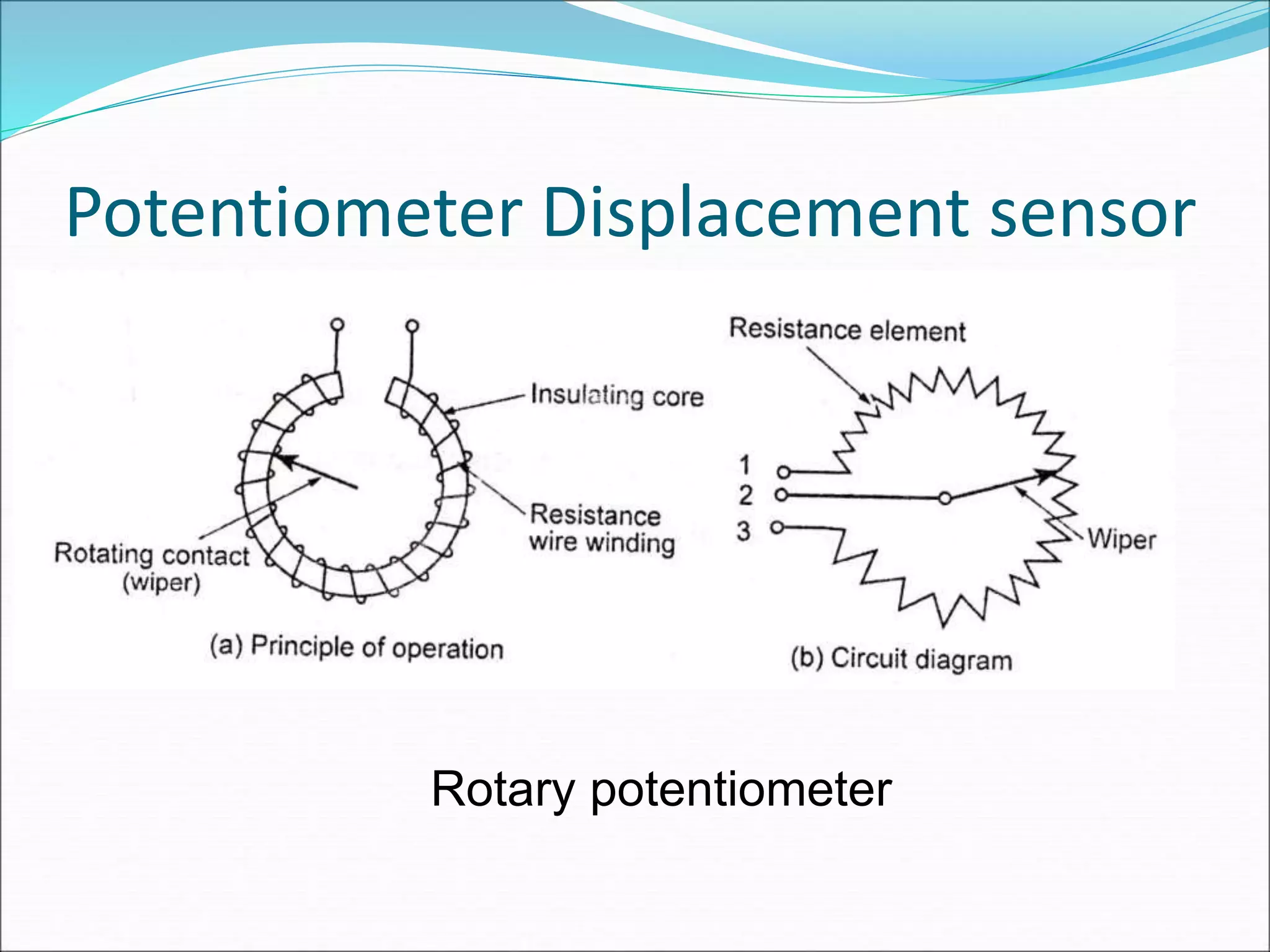
Potentiometer Displacement sensor
Rotary potentiometer
Potentiometer Displacement sensor
Potentiometer with voltage divider
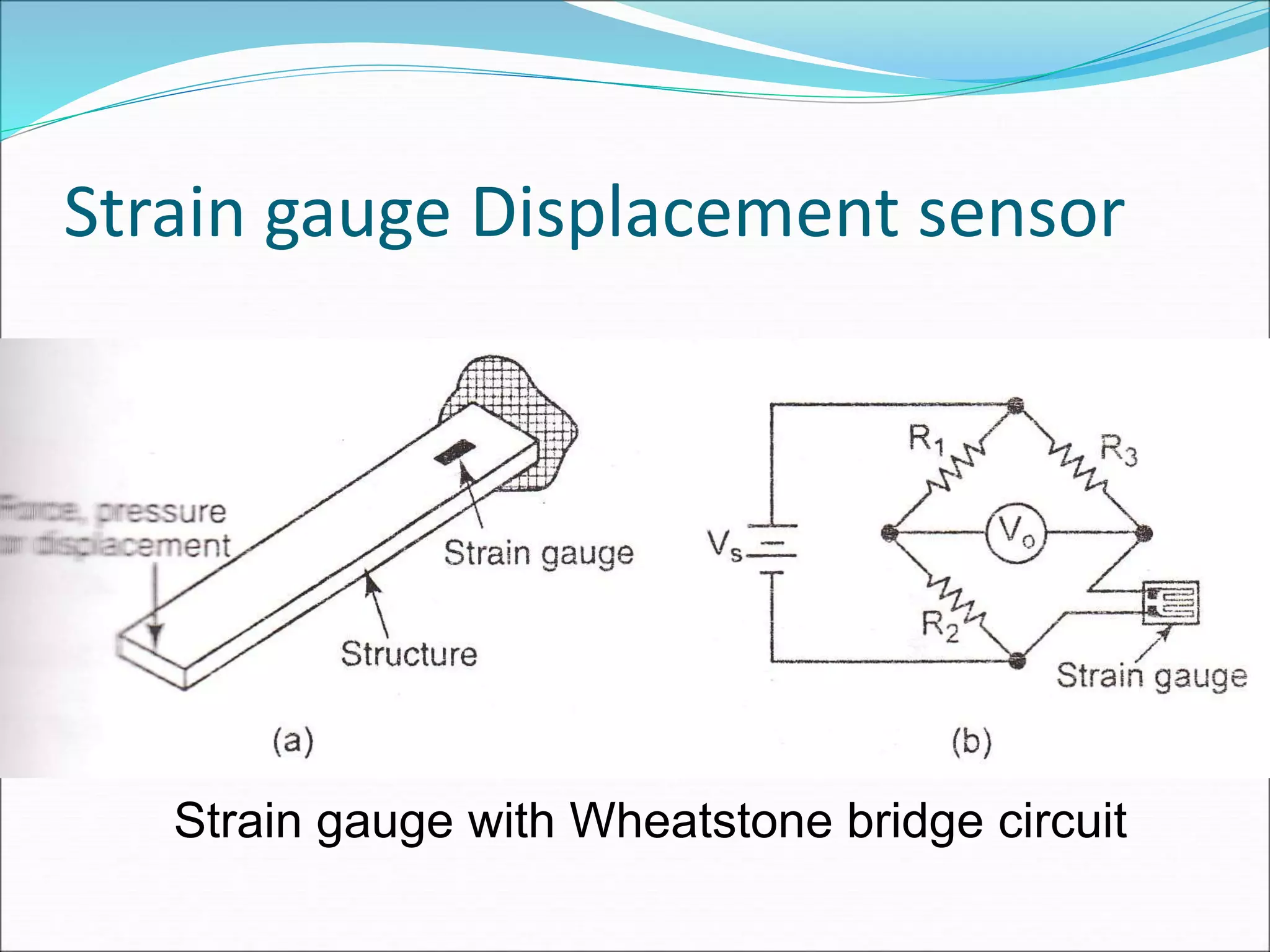
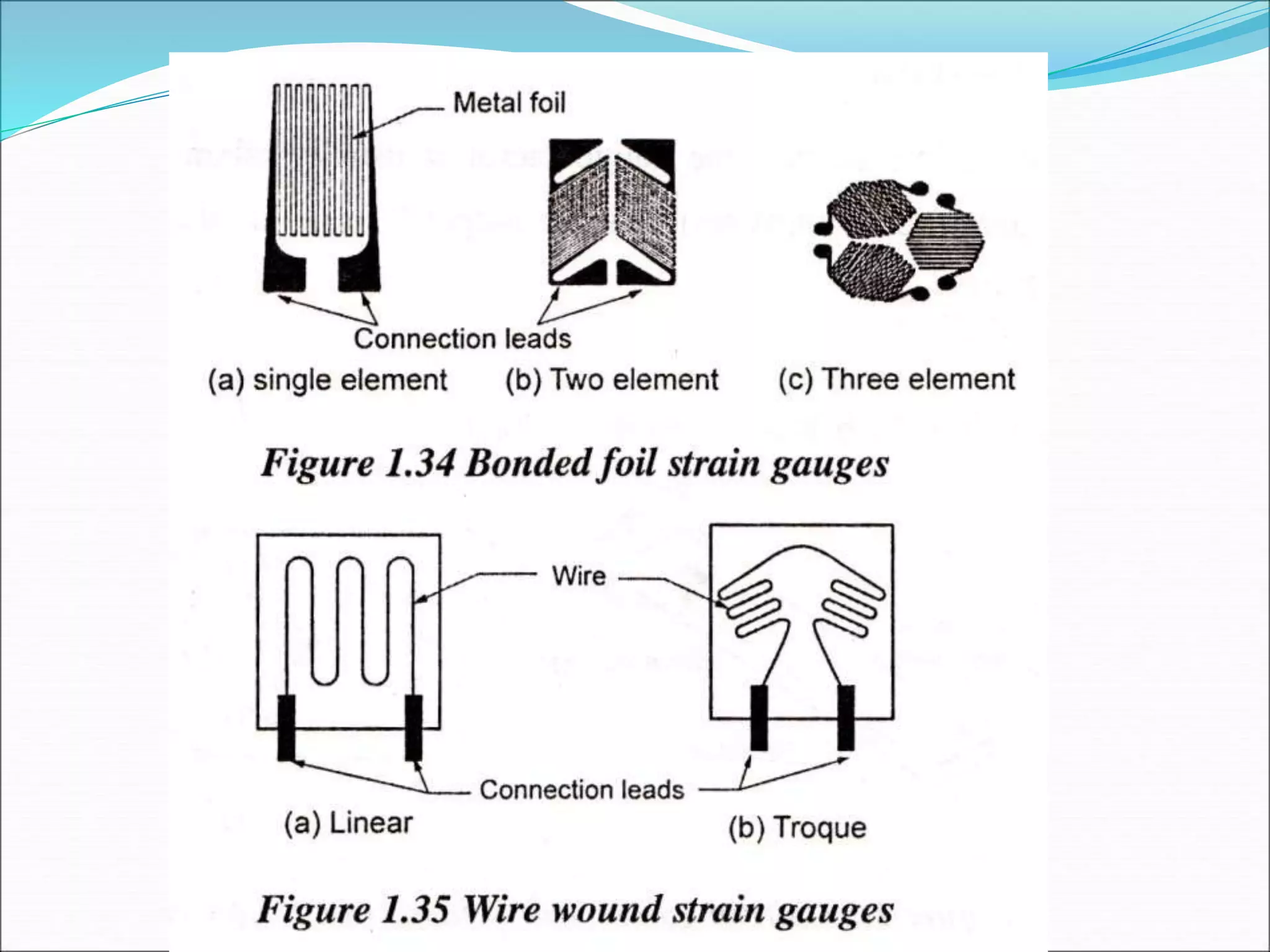
Strain gauge Displacement sensor
Strain gauge with Wheatstone bridge circuit
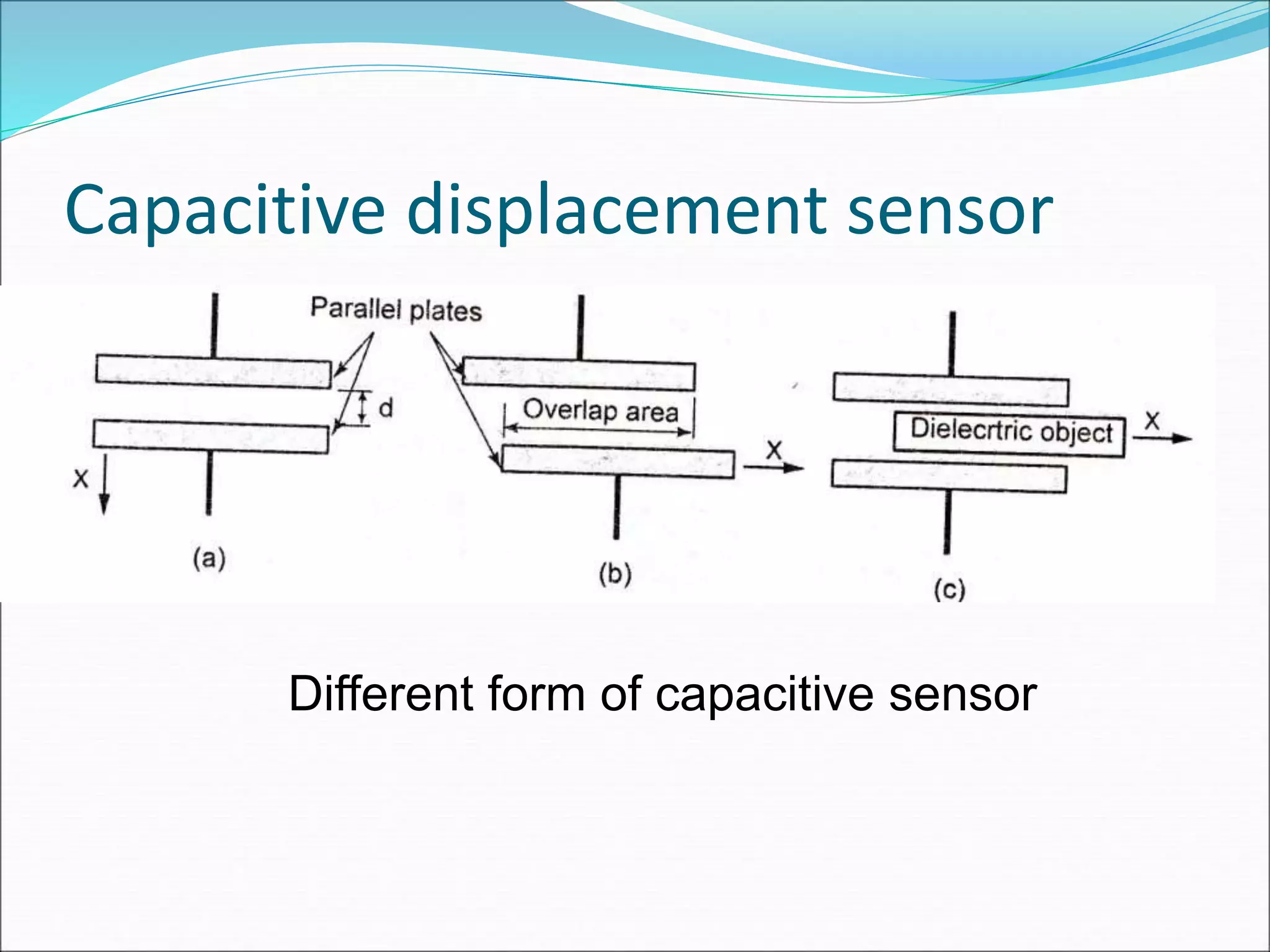
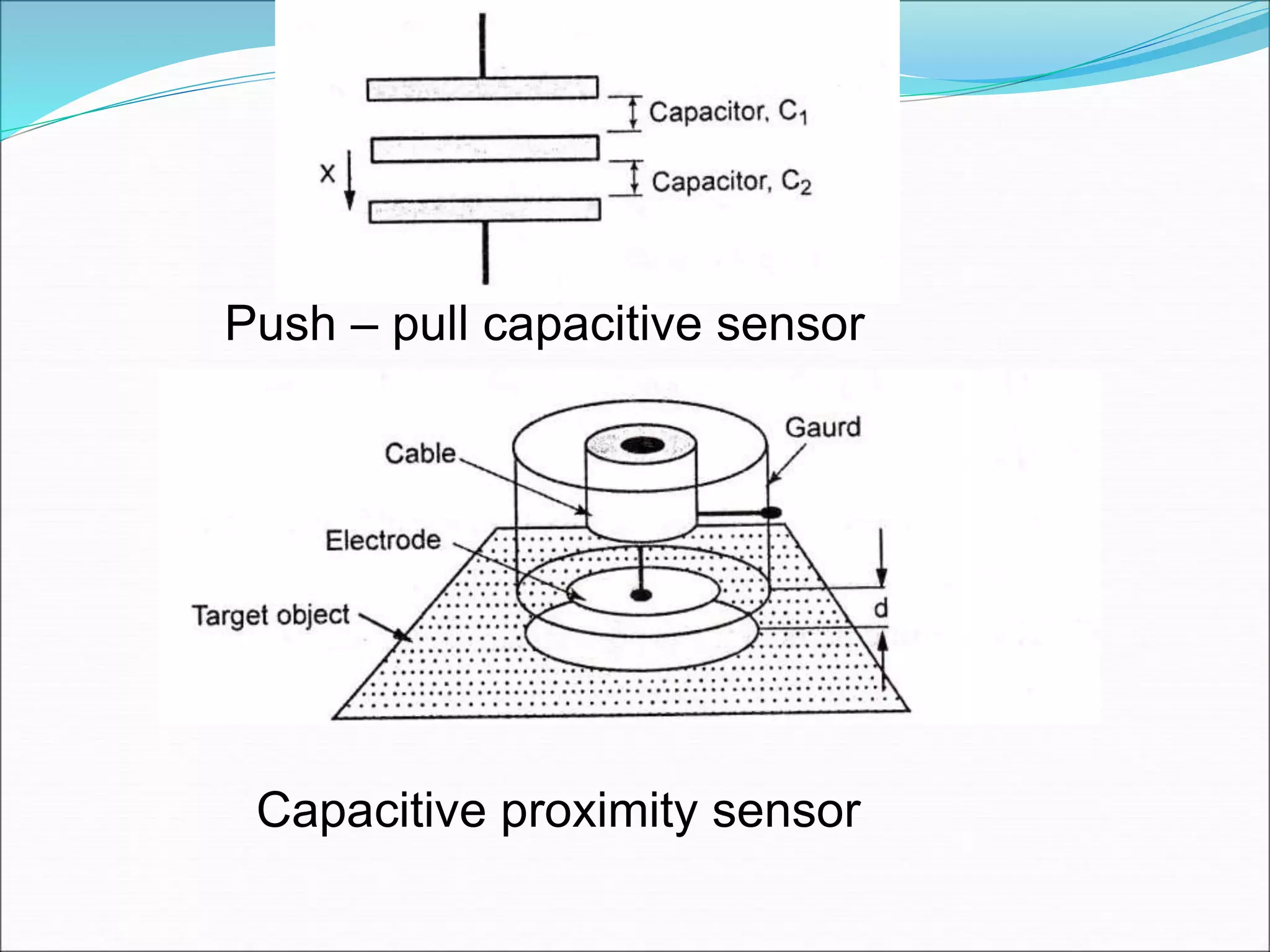
Capacitive displacement sensor
Different form of capacitive sensor
Push – pull capacitive sensor
Capacitive proximity sensor
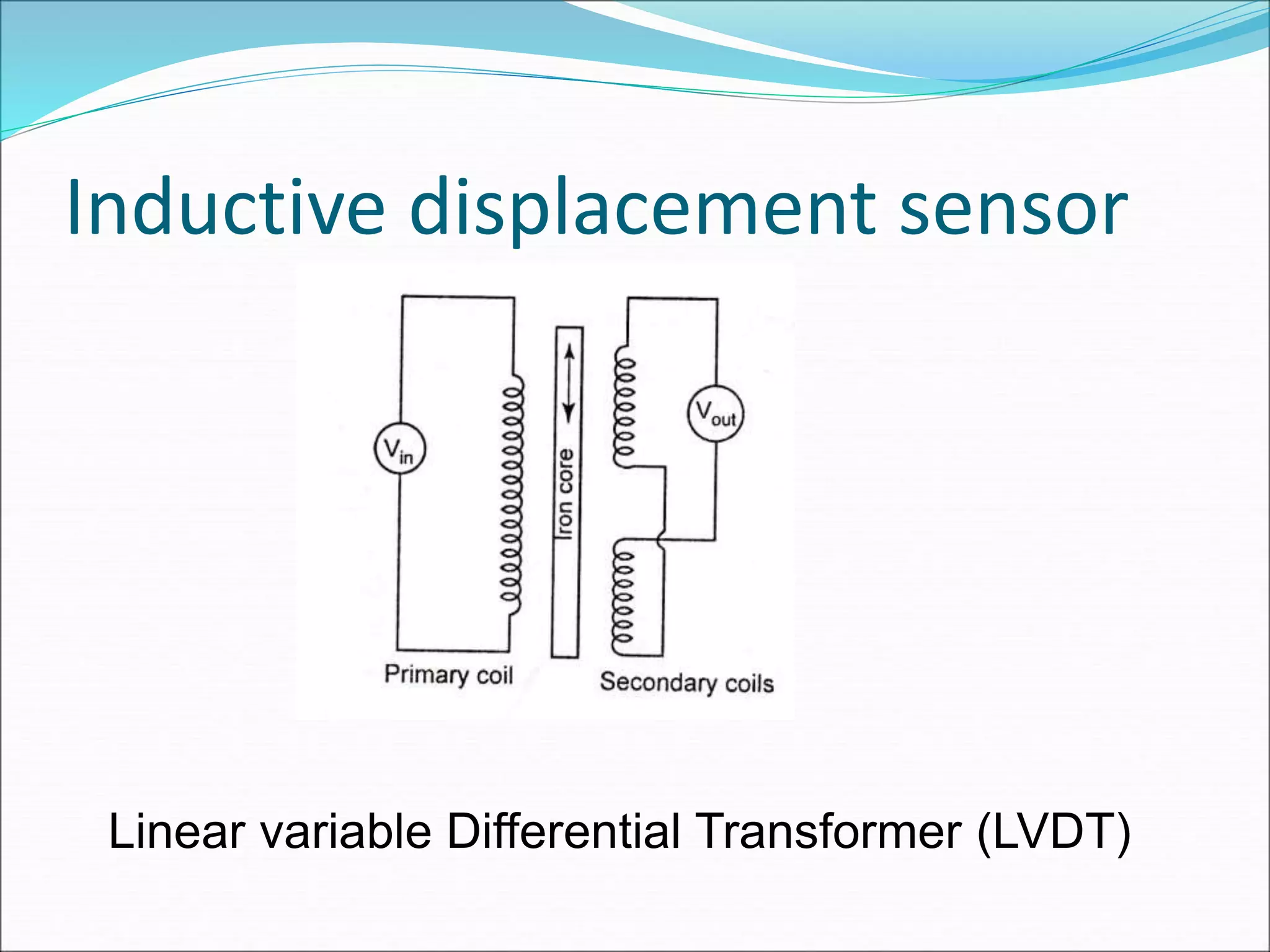
Inductive displacement sensor
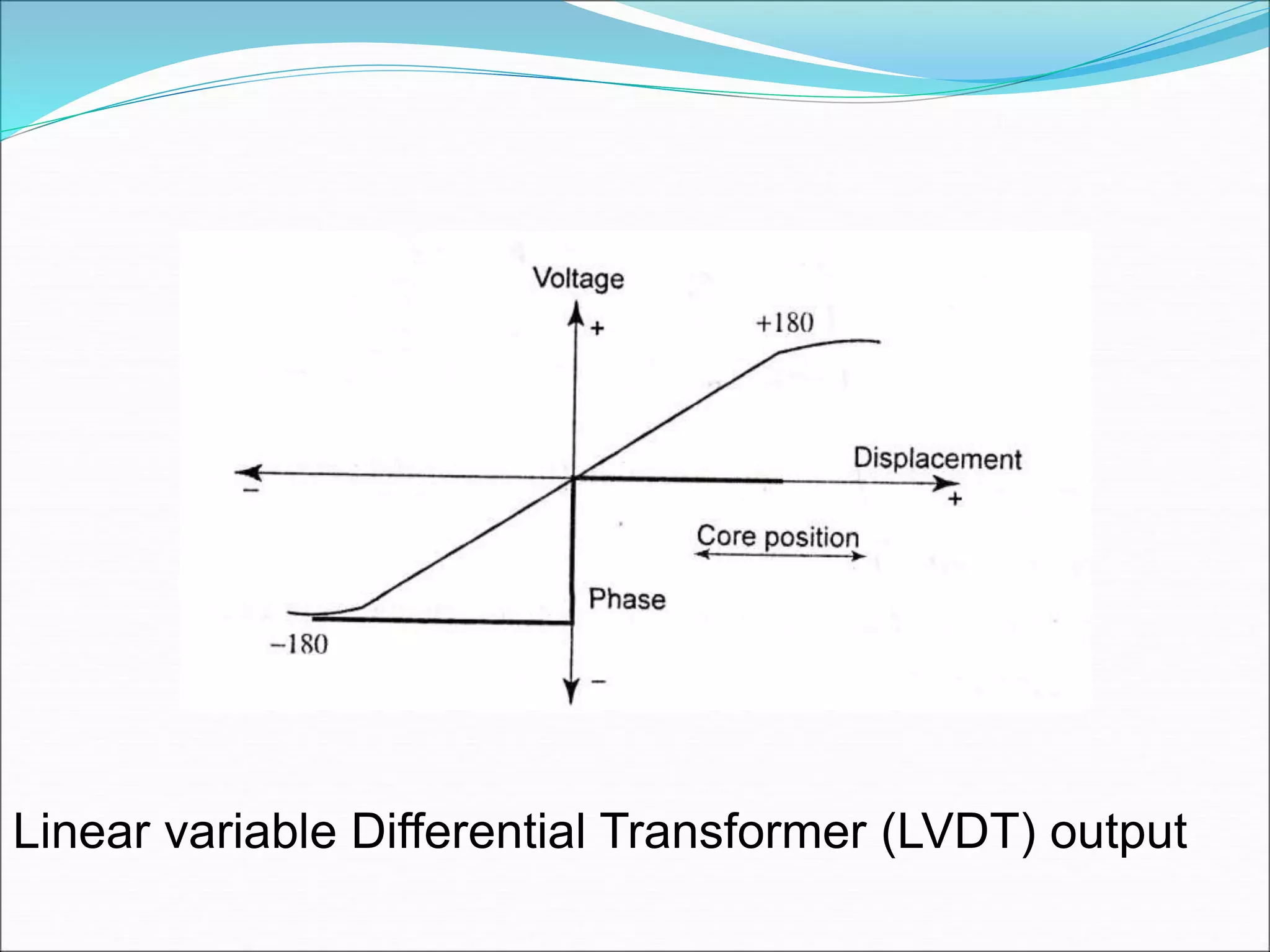
Linear variable Differential Transformer (LVDT)
Linear variable Differential Transformer (LVDT) output
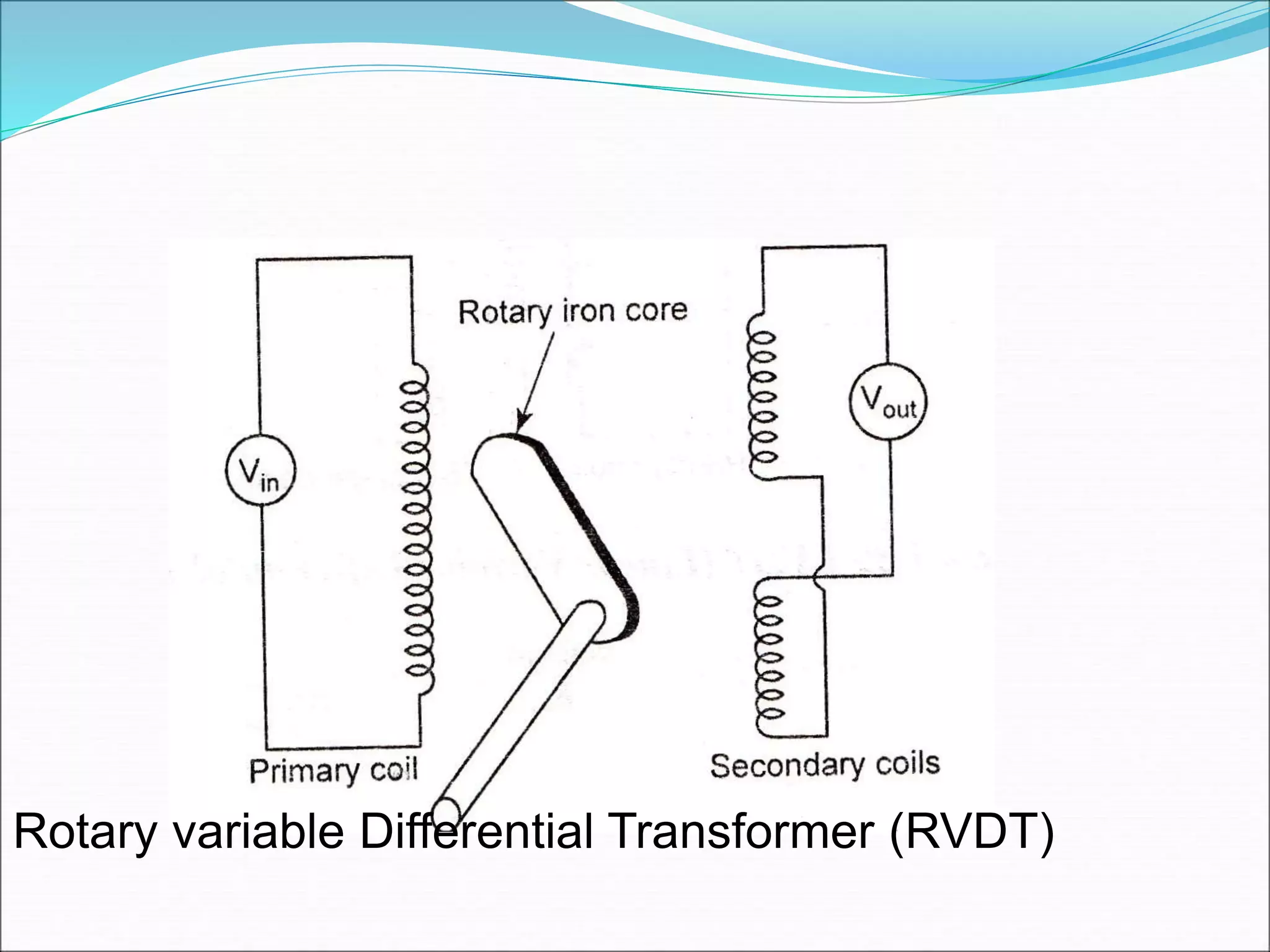
Rotary variable Differential Transformer (RVDT)
Position sensors
 potentiometer
 Capacitive sensor
 Inductive sensor
 Hall effect sensors
 Photoelectric sensor
 Optical encoder
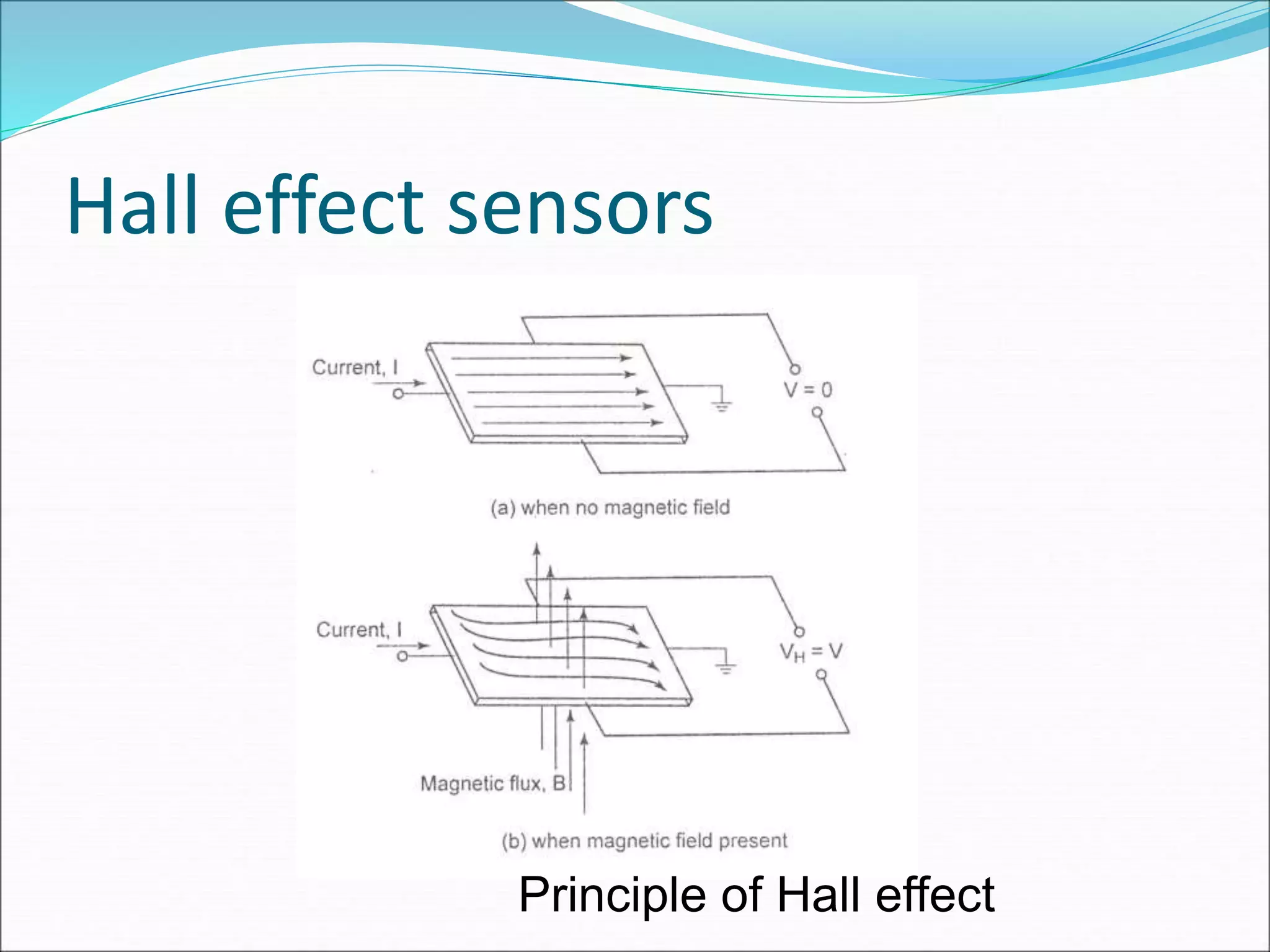
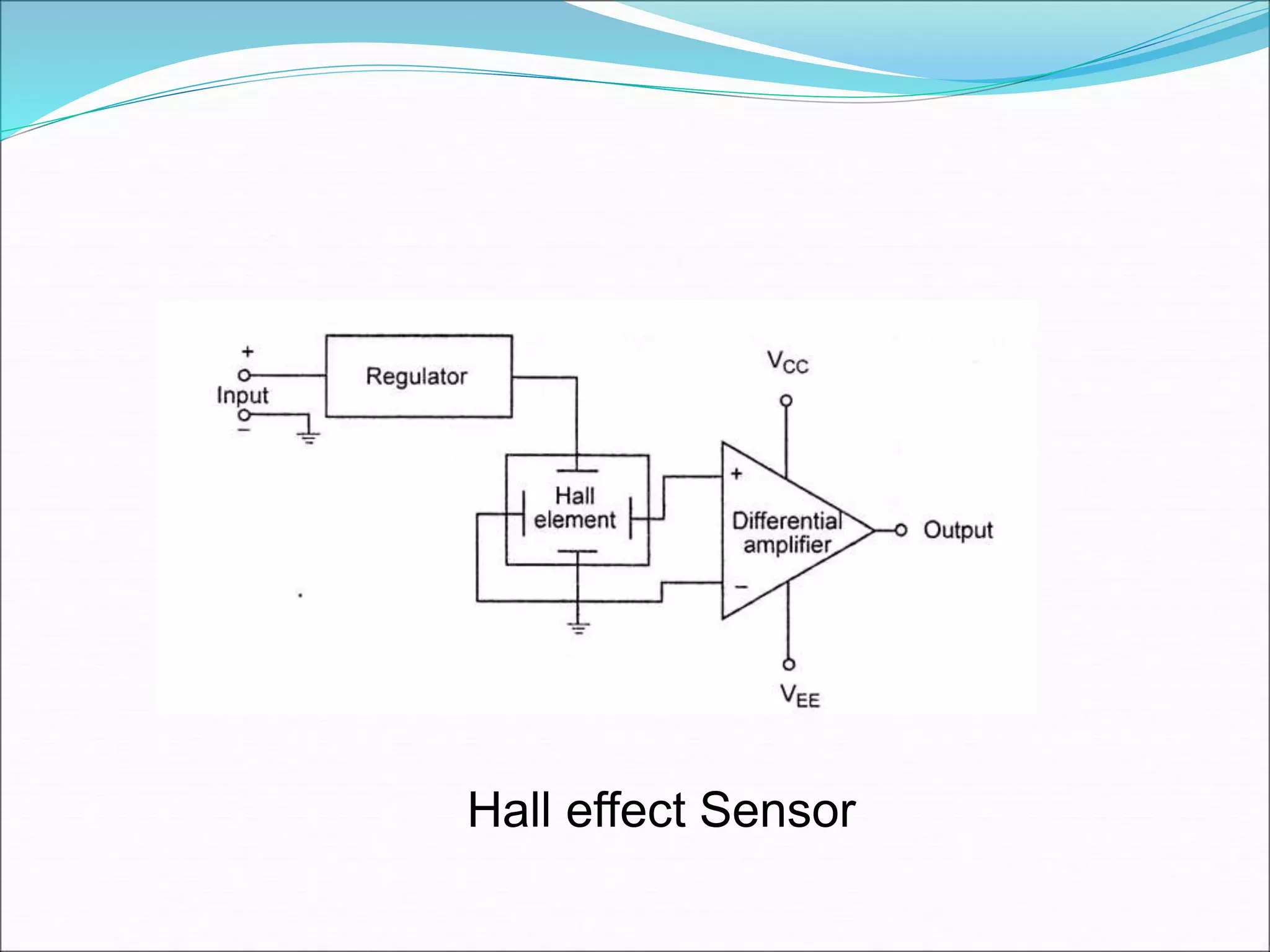
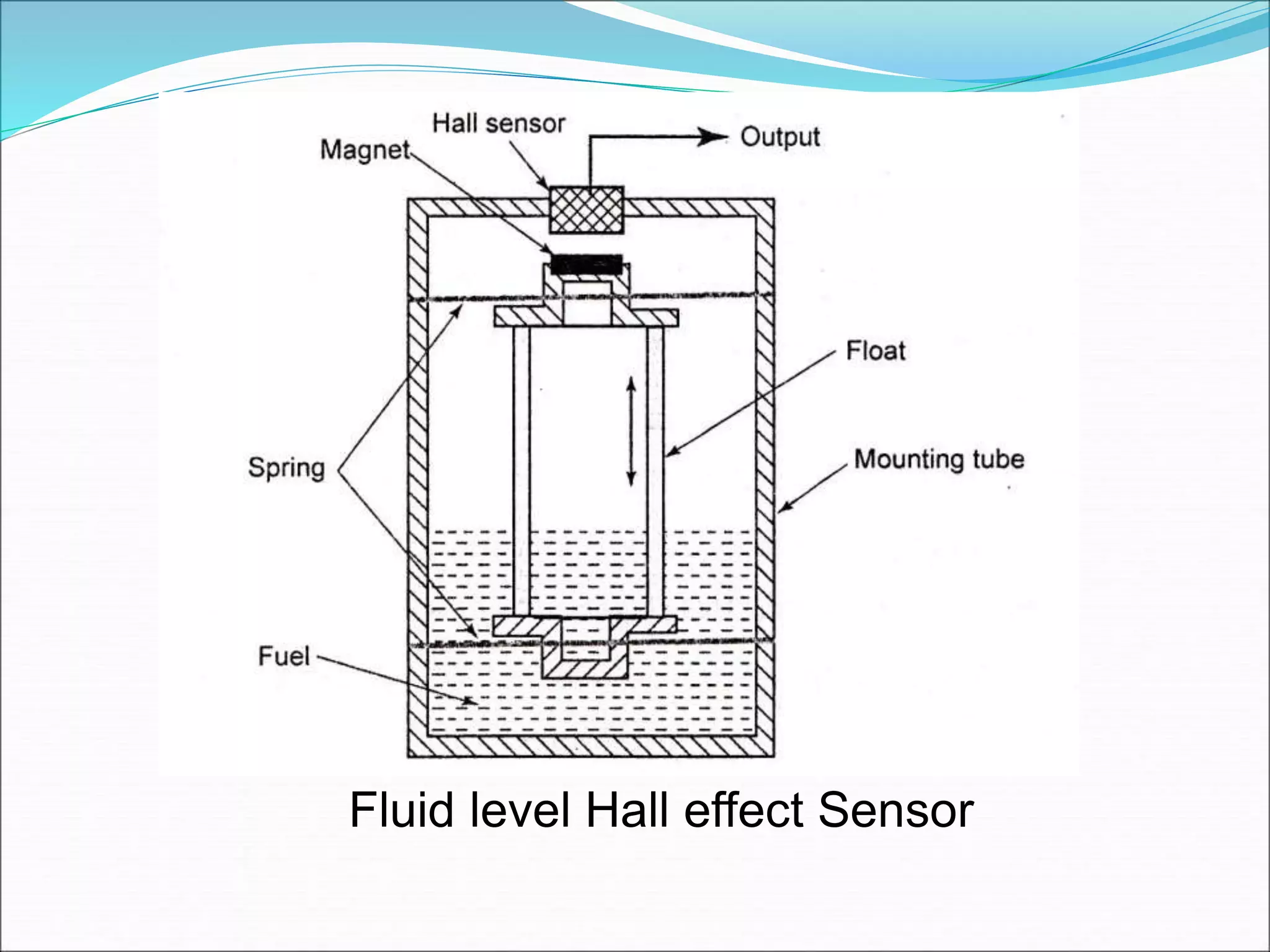
Hall effect sensors
Principle of Hall effect
Hall effect Sensor
Fluid level Hall effect Sensor
Temperature sensors
 Bimetallic strips
 Resistance temperature detectors (RTDs)
 Thermistors
 Thermocouples
 Thermodiodes and transistors
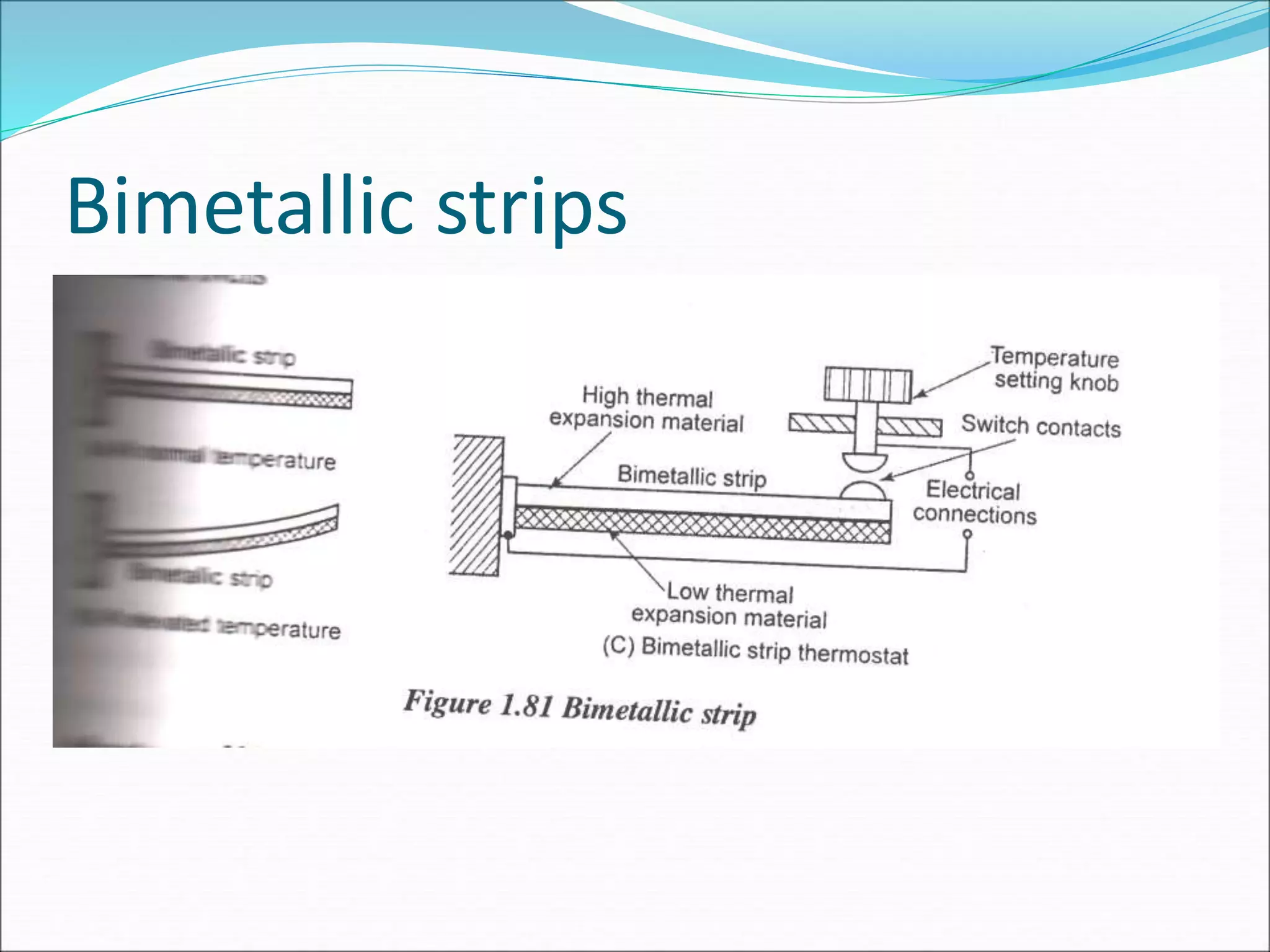
Bimetallic strips
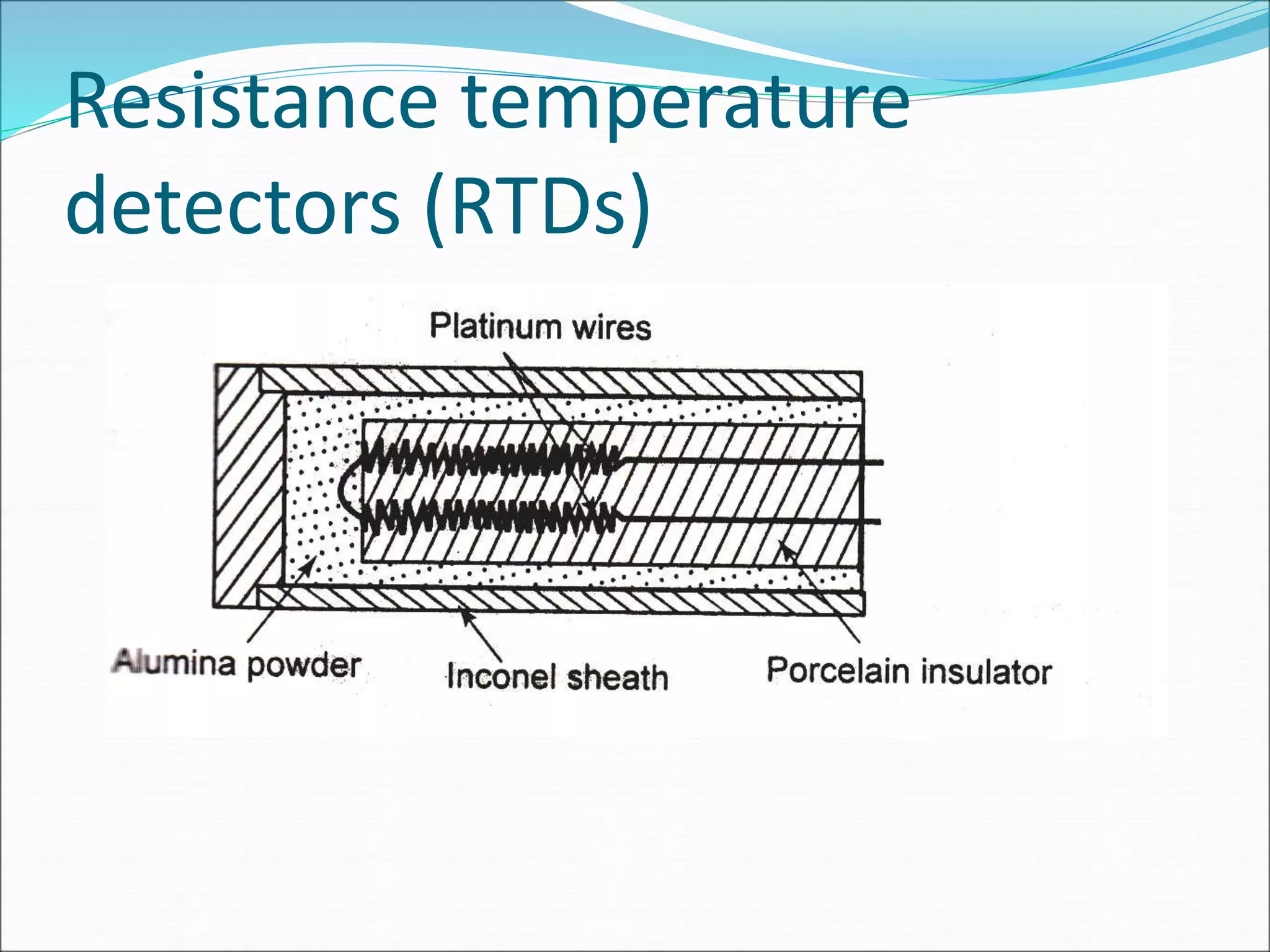
Resistance temperature
detectors (RTDs)
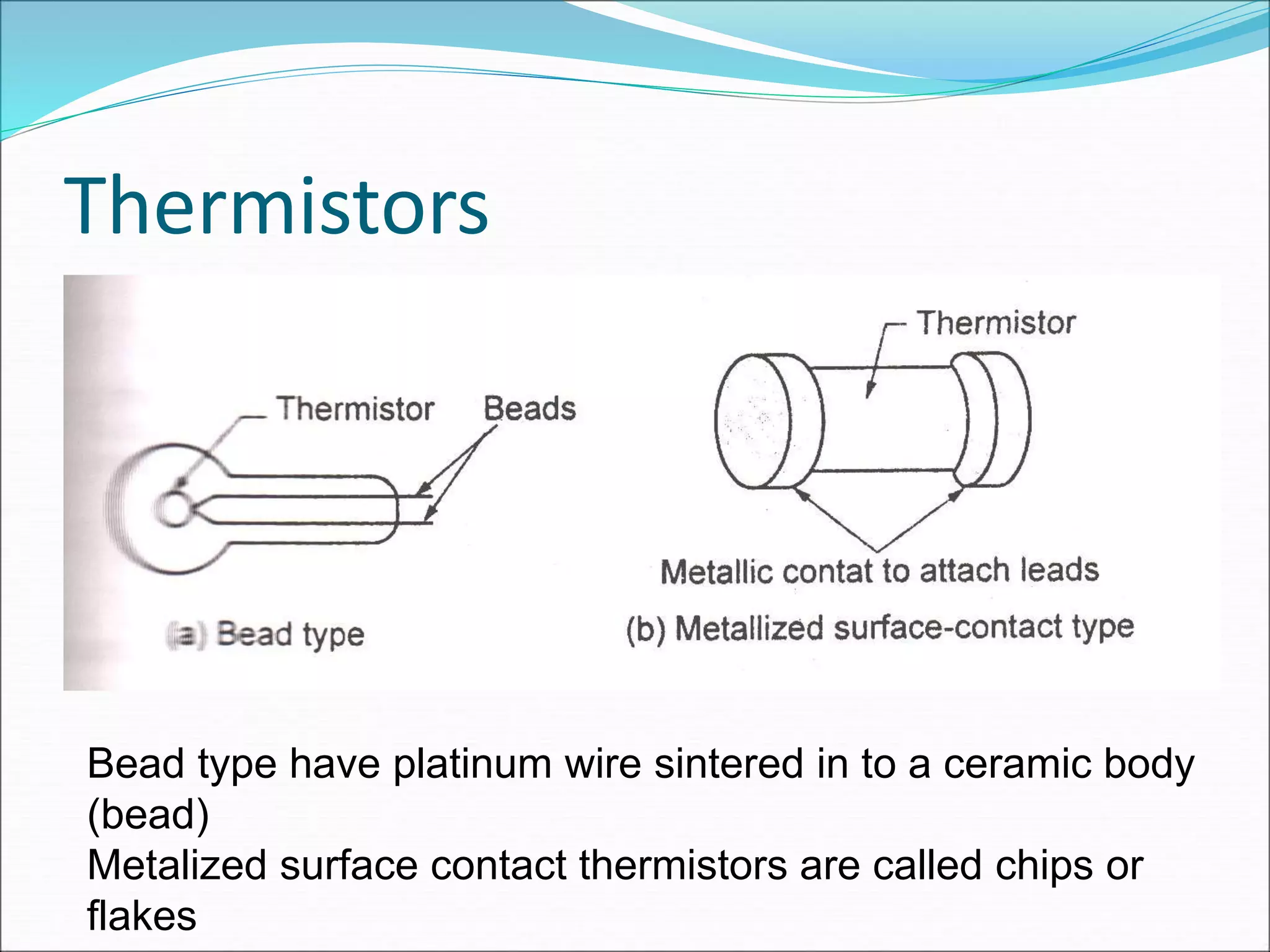
Thermistors
Bead type have platinum wire sintered in to a ceramic body
(bead)
Metalized surface contact thermistors are called chips or
flakes
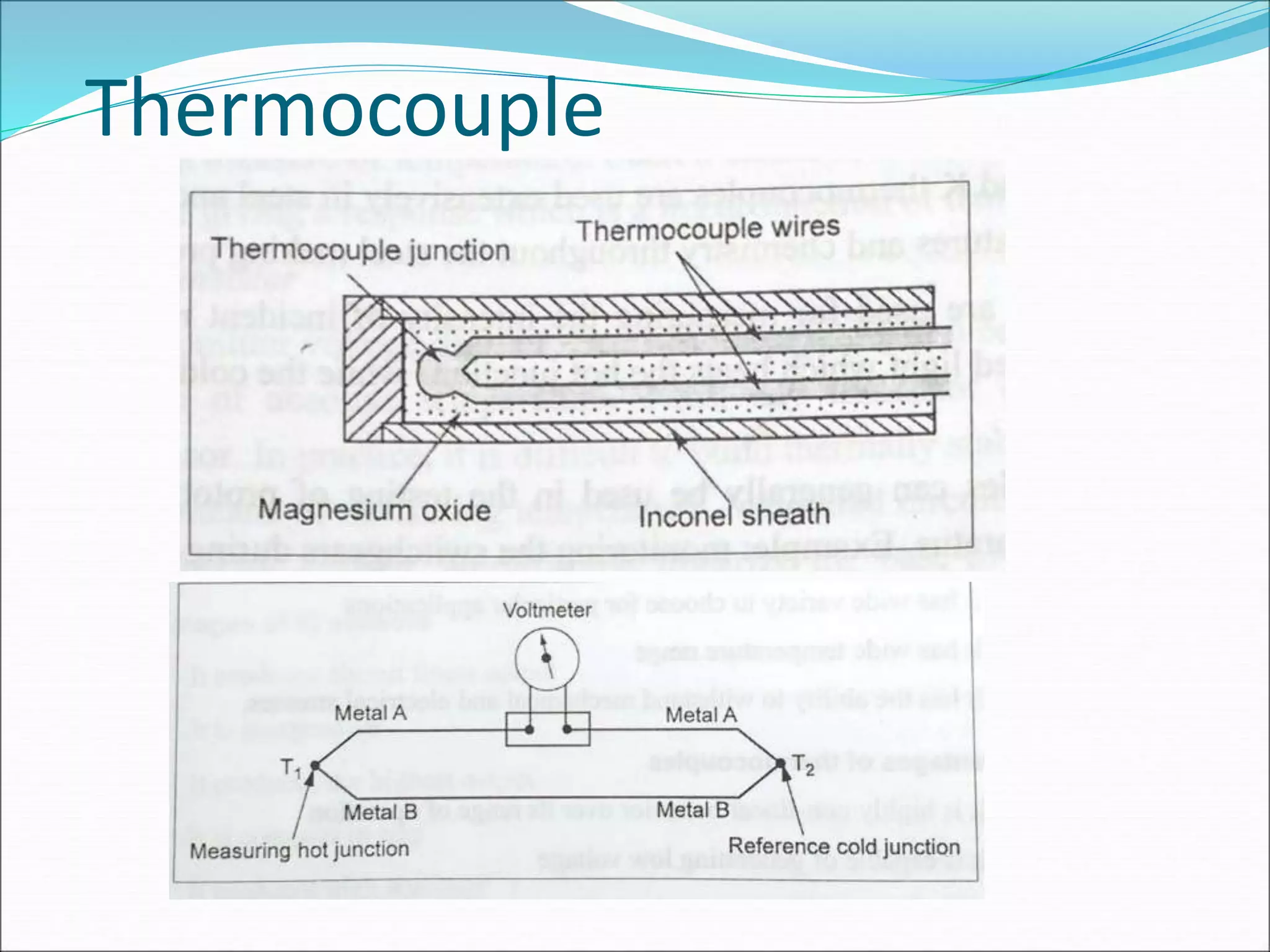
Thermocouple
Light sensors
 Photo resistors
 Photodiode
 phototransistors
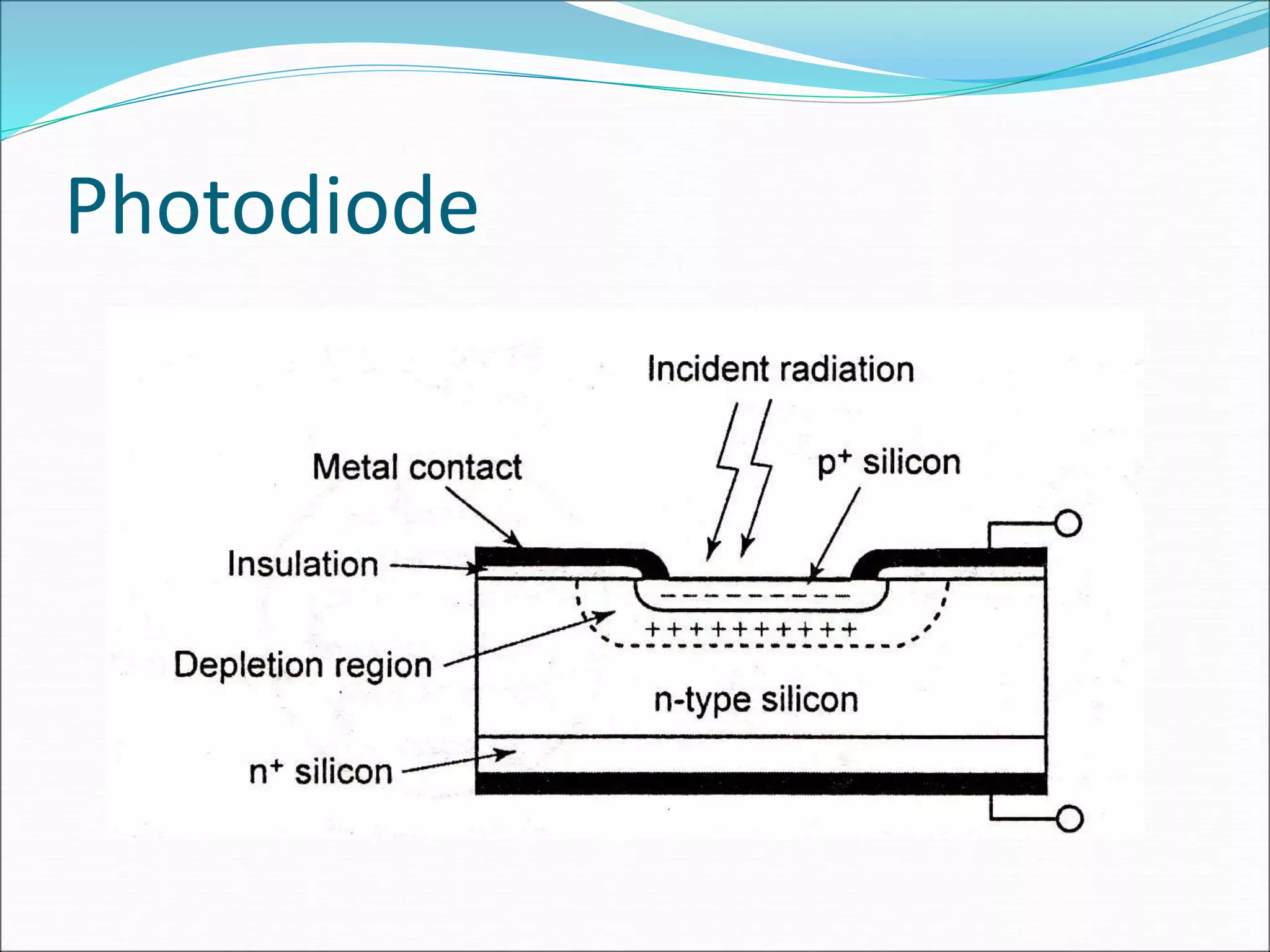
Photodiode
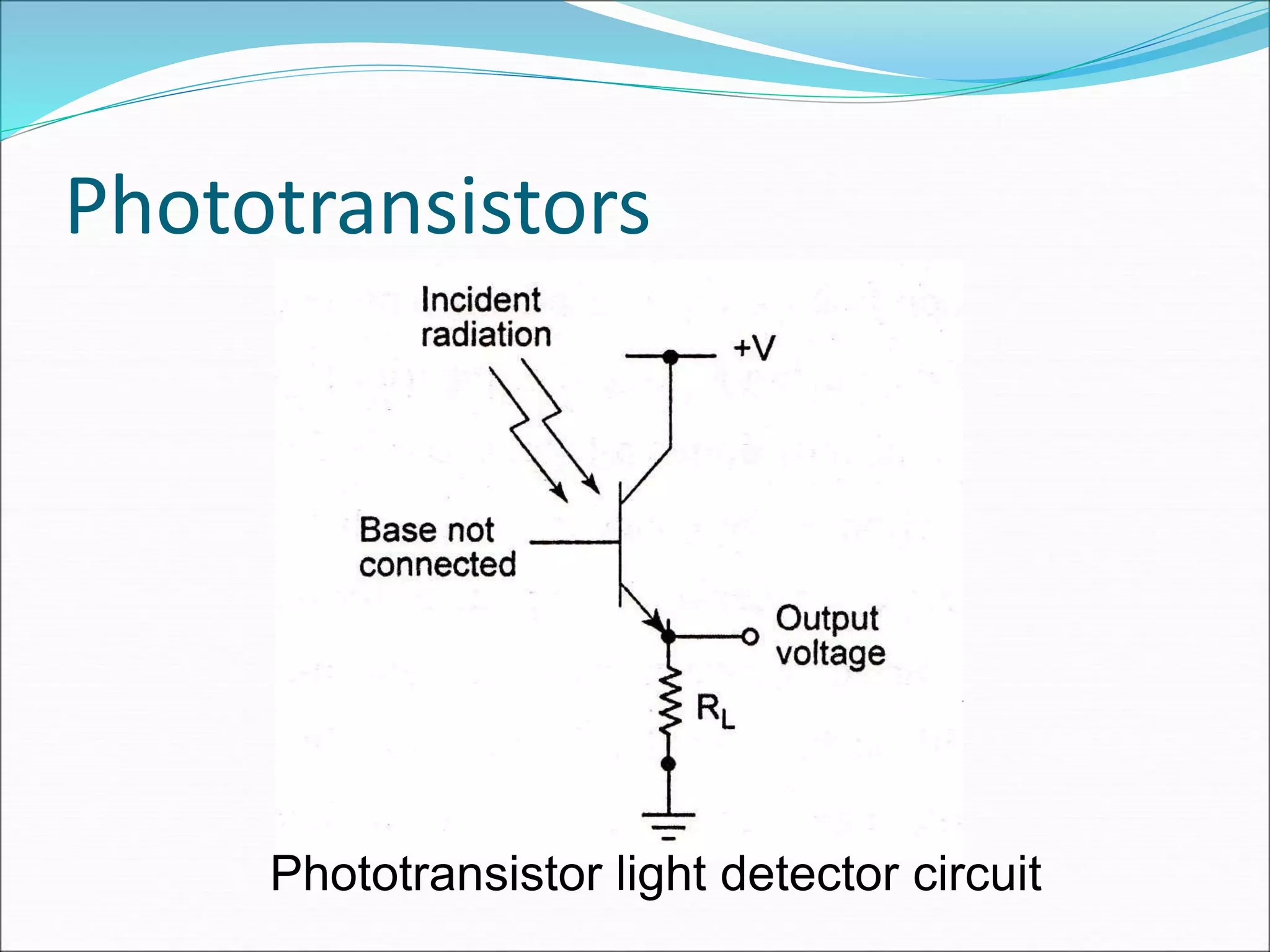
Phototransistors
Phototransistor light detector circuit
Proximity sensor
 Optical encoders
 Hall Effect sensors
 Capacitive sensors
 Eddy current proximity sensors
 Inductive proximity sensors
 Pneumatic proximity sensors
 Proximity switches
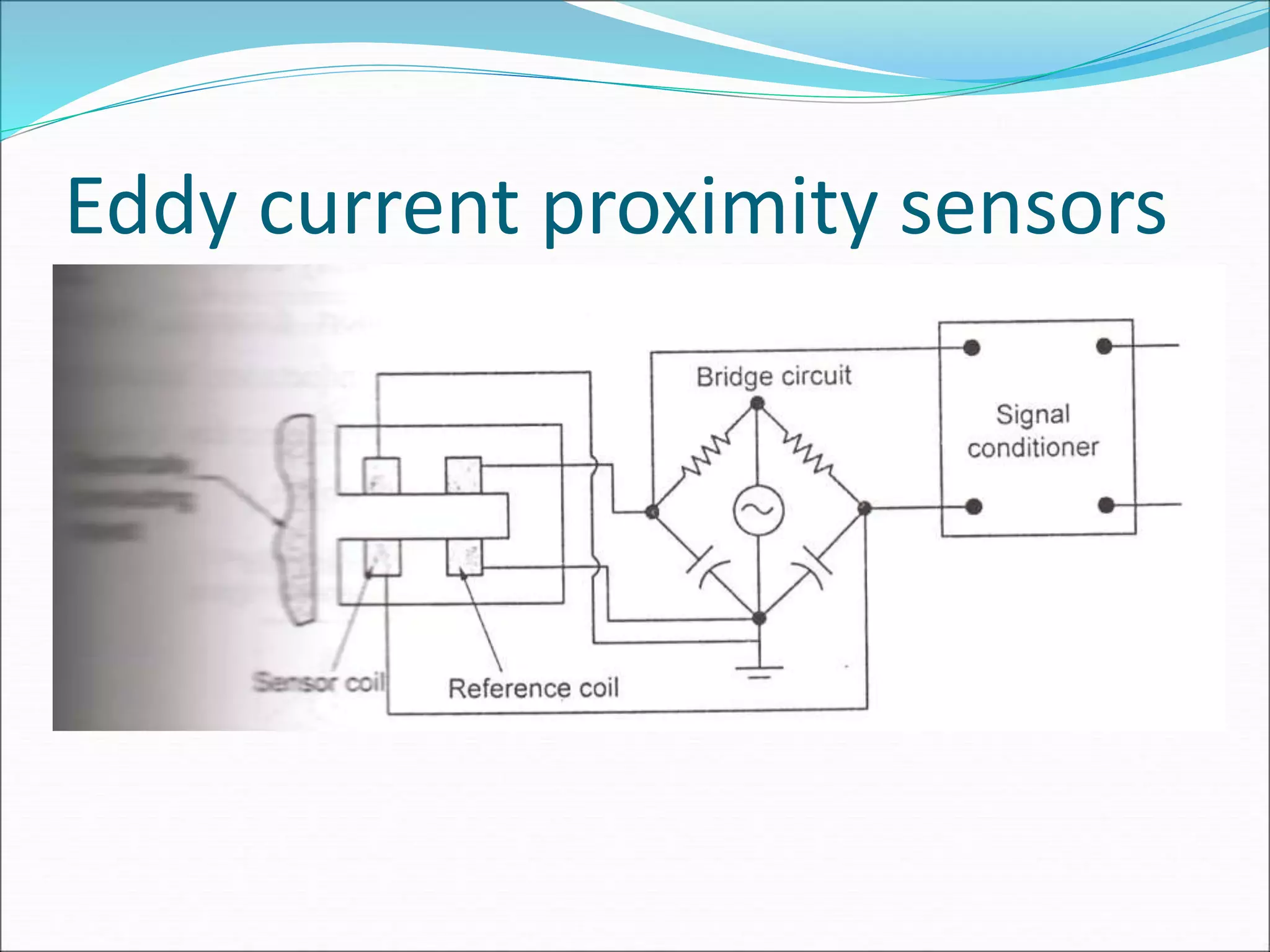
Eddy current proximity sensors
Selection of sensors
 Accuracy required
 Precision
 Sensitivity
 Operating range
 Resolution
 Speed response.
 Reliability
 Calibration and
maintenance.
 The nature of output
 Linearity
 Environmental
conditions
 Cost
 Size and weight

Sensor and transducers