Sensors
TABLE OF CONTENT
 Meaning and Definition.
 Classification and types of
sensors and its application.
 Summary.
MEANING AND DEFINITION
sensor
s ns /ˈ ɛ ə
noun
sensor; plural noun: sensors
A device which detects or measures a physical property and
records, indicates, or otherwise responds to it.
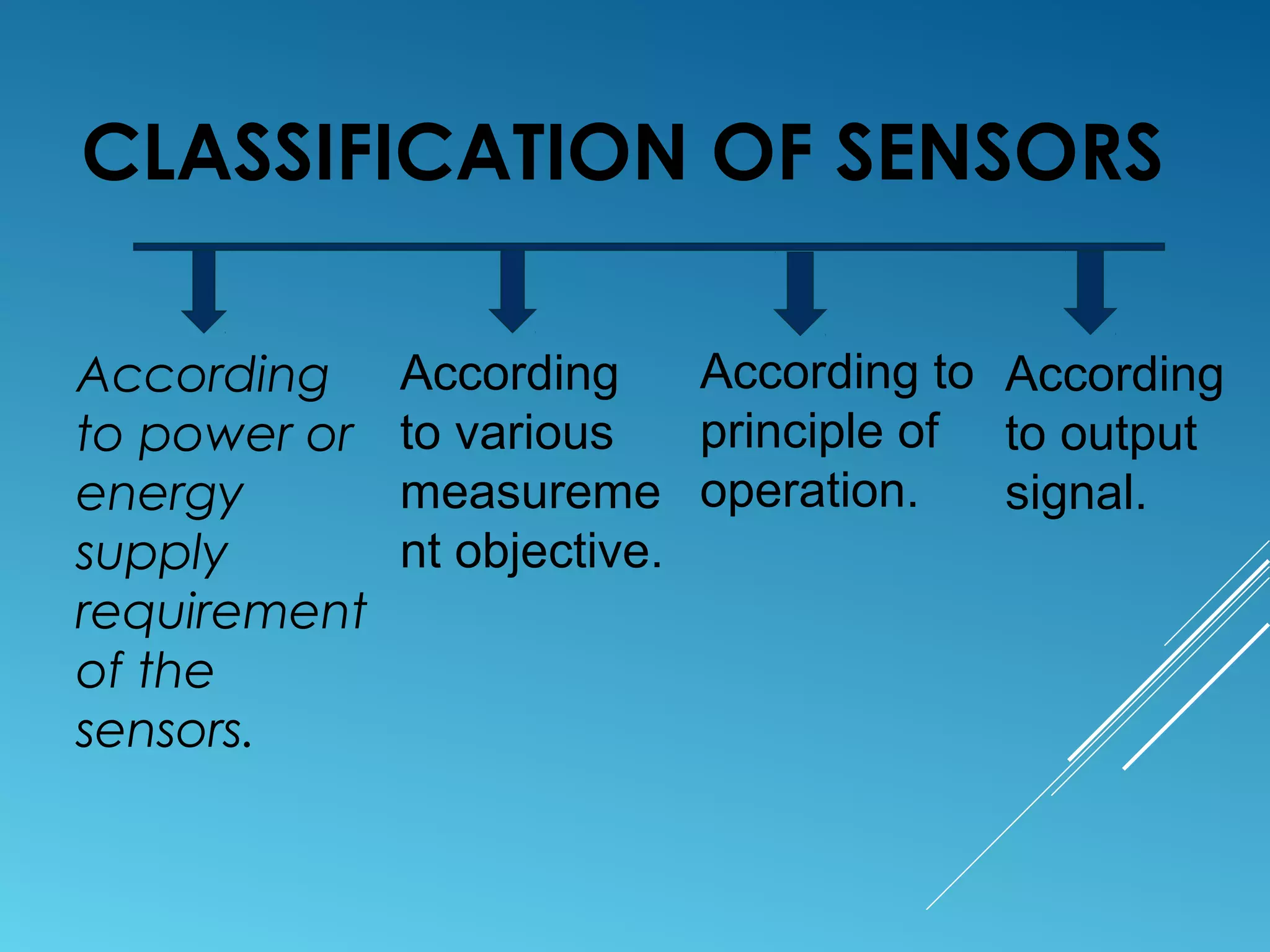
CLASSIFICATION OF SENSORS
According
to power or
energy
supply
requirement
of the
sensors.
According
to various
measureme
nt objective.
According to
principle of
operation.
According
to output
signal.
ACTIVE SENSOR
Sensors that require power supply are
called as Active Sensors
Example: LIDAR
(Light detection and
ranging),
photoconductive cell.
PASSIVE SENSOR
Sensors that do not require power supply
are called as Passive Sensors.
Example: Hg
thermometer etc.
ANALOG SENSOR
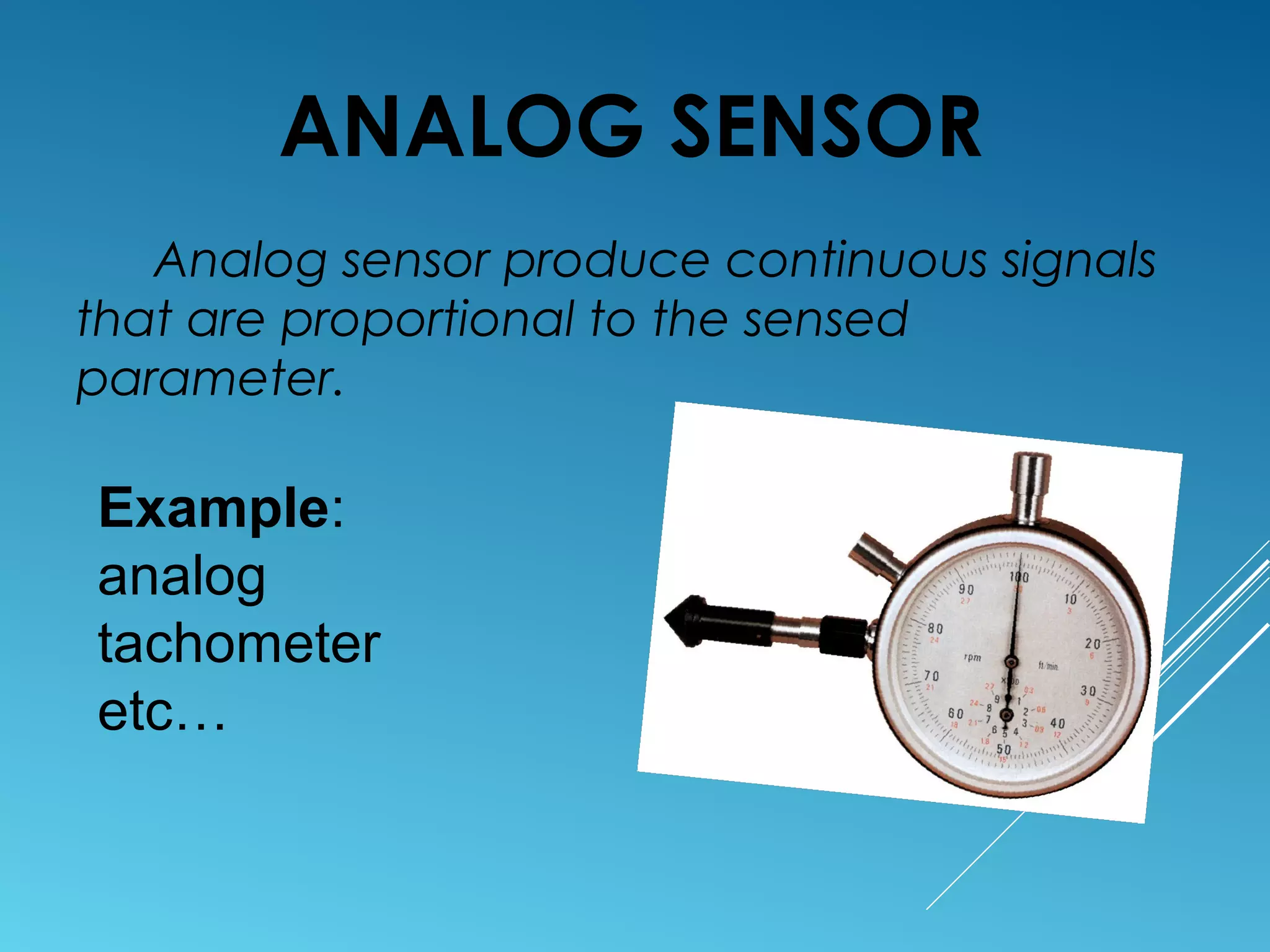
Analog sensor produce continuous signals
that are proportional to the sensed
parameter.
Example:
analog
tachometer
etc…
DIGITAL SENSOR
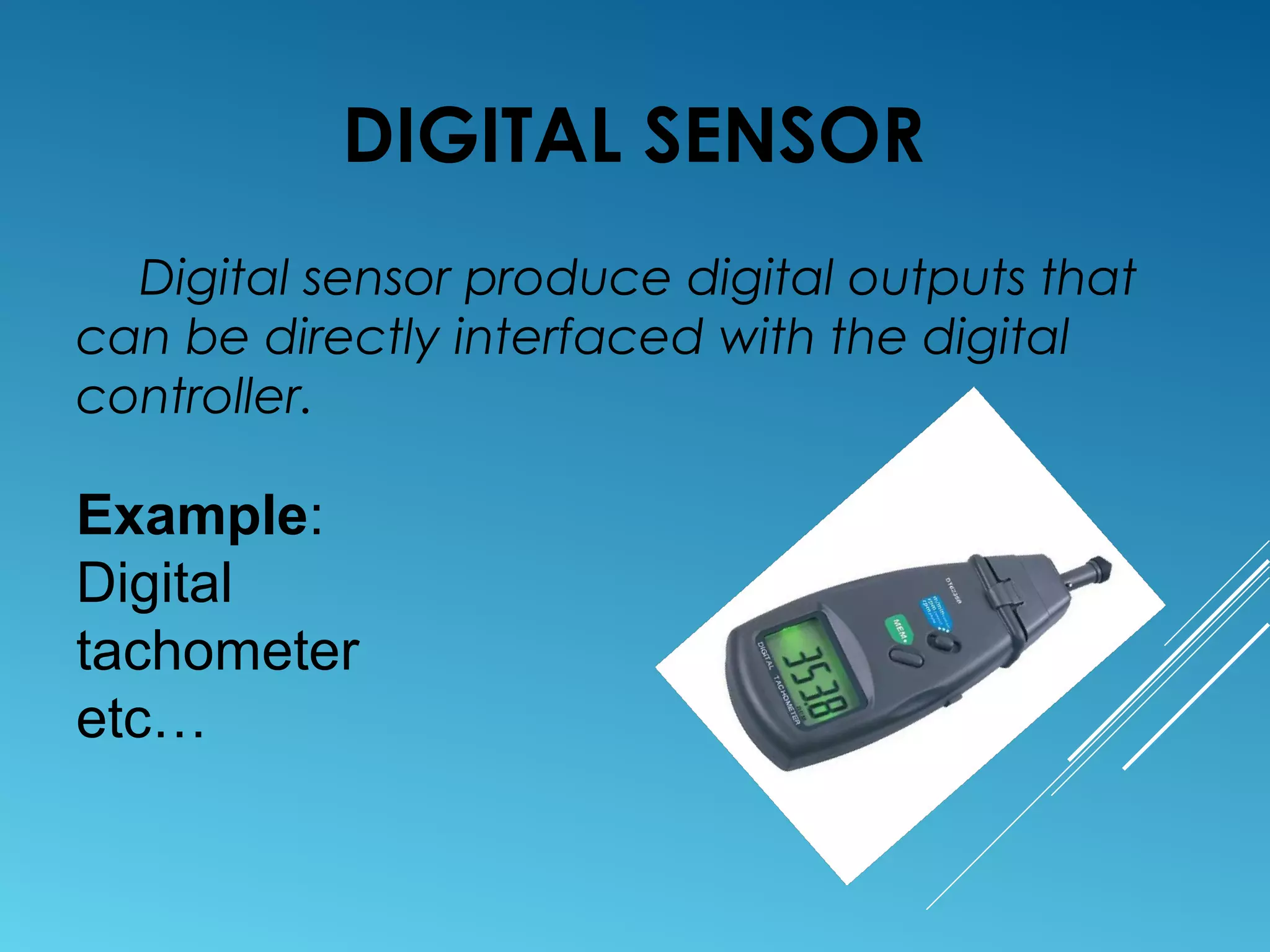
Digital sensor produce digital outputs that
can be directly interfaced with the digital
controller.
Example:
Digital
tachometer
etc…
ACCORDING TO VARIOUS
MEASUREMENT OBJECTIVE
Temperature sensor
Pressure sensor
Level sensor
displacement sensor
Flow sensor
Speed sensor
Biosensors
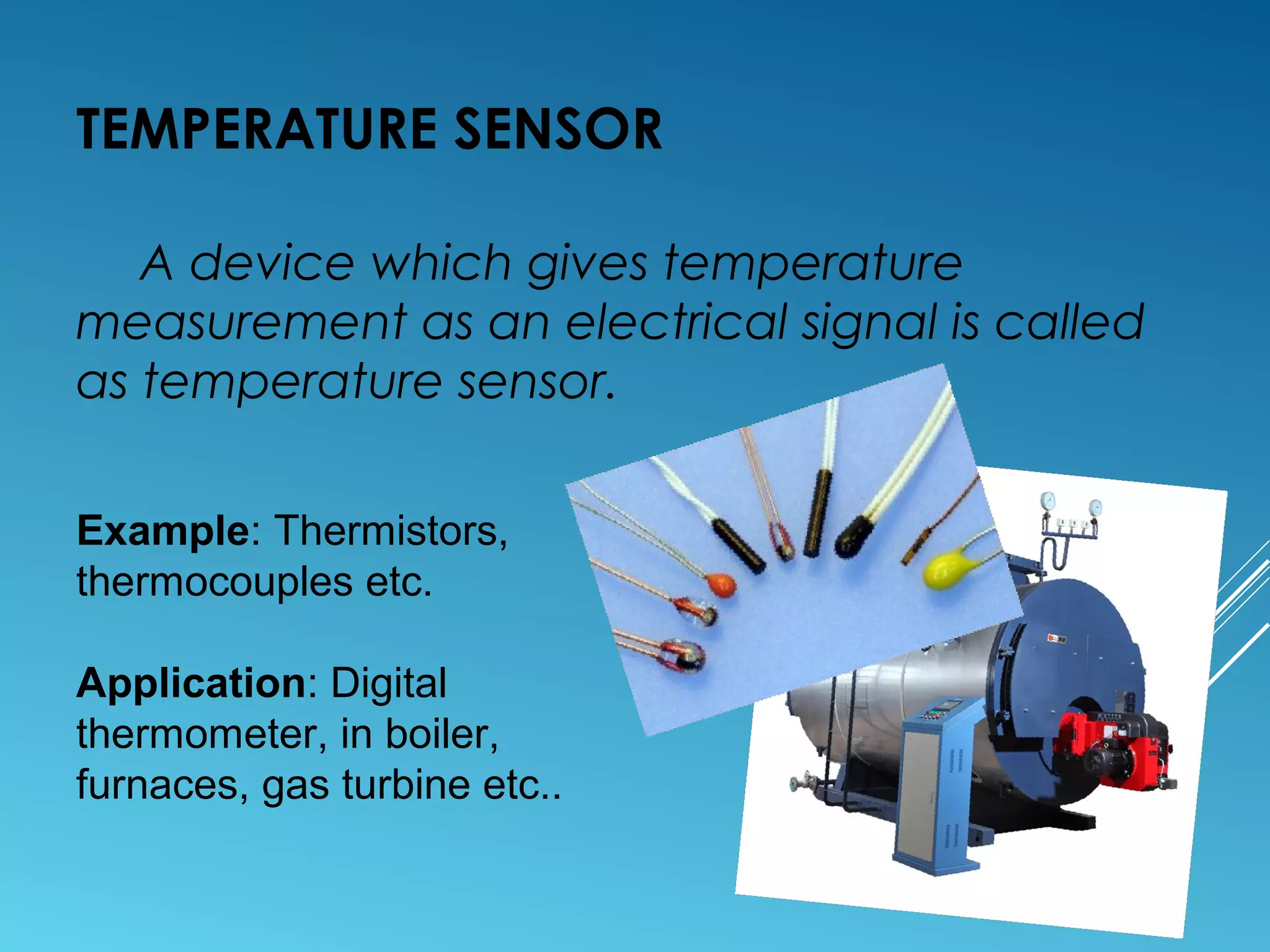
TEMPERATURE SENSOR
A device which gives temperature
measurement as an electrical signal is called
as temperature sensor.
Example: Thermistors,
thermocouples etc.
Application: Digital
thermometer, in boiler,
furnaces, gas turbine etc..
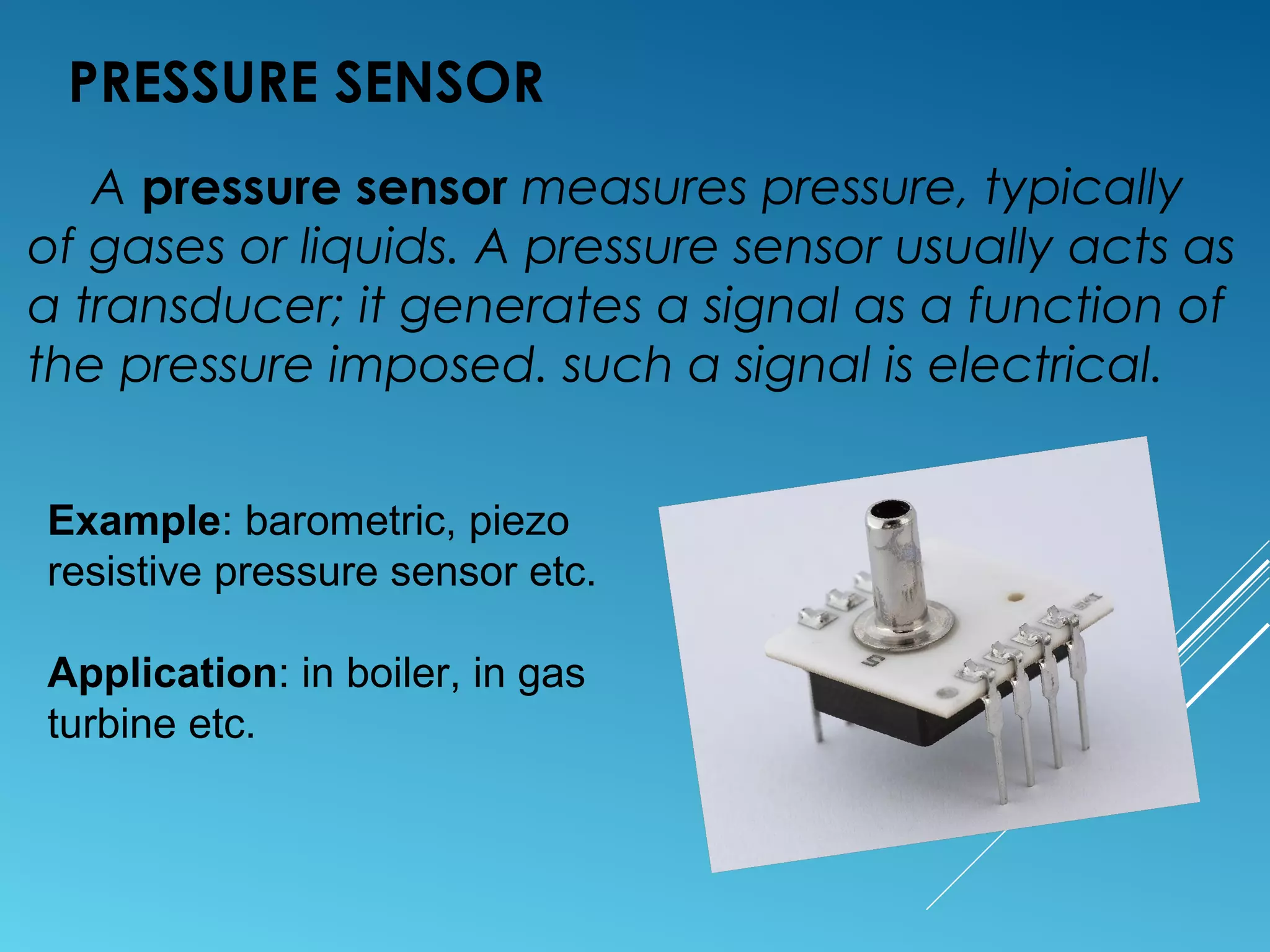
PRESSURE SENSOR
A pressure sensor measures pressure, typically
of gases or liquids. A pressure sensor usually acts as
a transducer; it generates a signal as a function of
the pressure imposed. such a signal is electrical.
Example: barometric, piezo
resistive pressure sensor etc.
Application: in boiler, in gas
turbine etc.
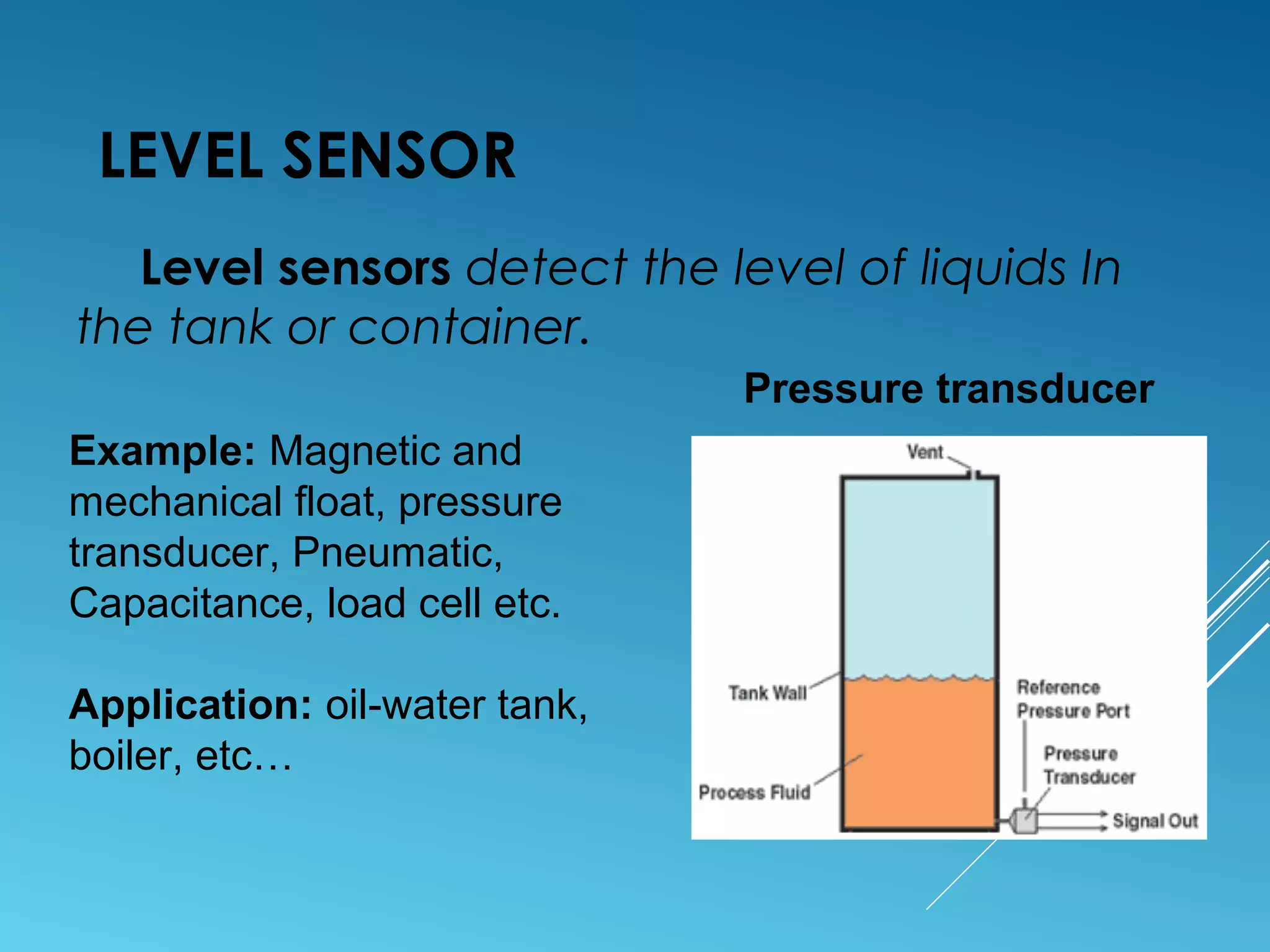
LEVEL SENSOR
Level sensors detect the level of liquids In
the tank or container.
Example: Magnetic and
mechanical float, pressure
transducer, Pneumatic,
Capacitance, load cell etc.
Application: oil-water tank,
boiler, etc…
Pressure transducer
DISPLACEMENT SENSOR
Displacement sensor is used to measure the
distance and position.
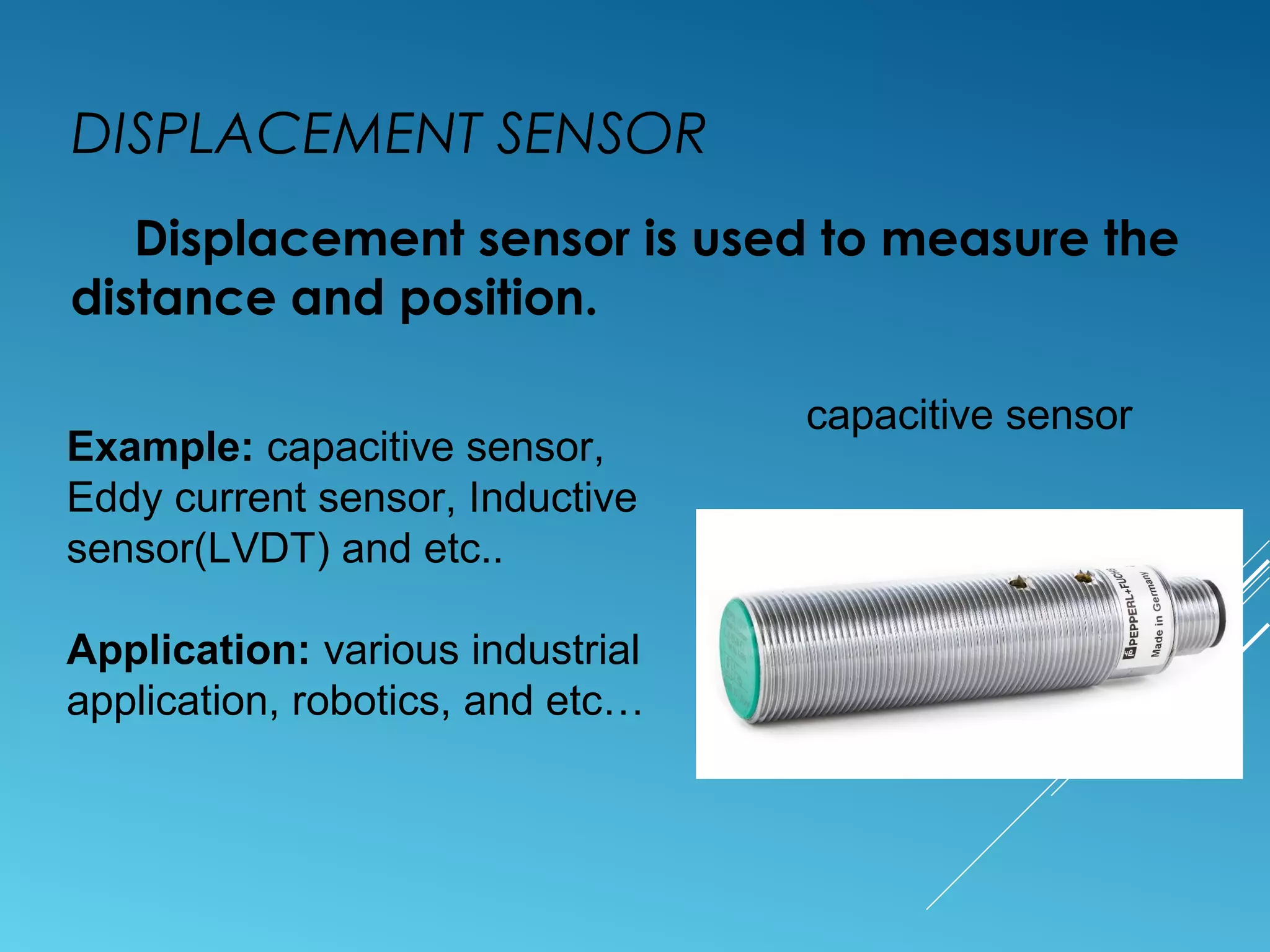
Example: capacitive sensor,
Eddy current sensor, Inductive
sensor(LVDT) and etc..
Application: various industrial
application, robotics, and etc…
capacitive sensor
FLOW SENSOR
A flow sensor is a device for sensing the rate
of fluid flow. Typically a flow sensor is the
sensing element used in a flow meter.
Example: velocimeters, Laser-
based sensor, Hall effect
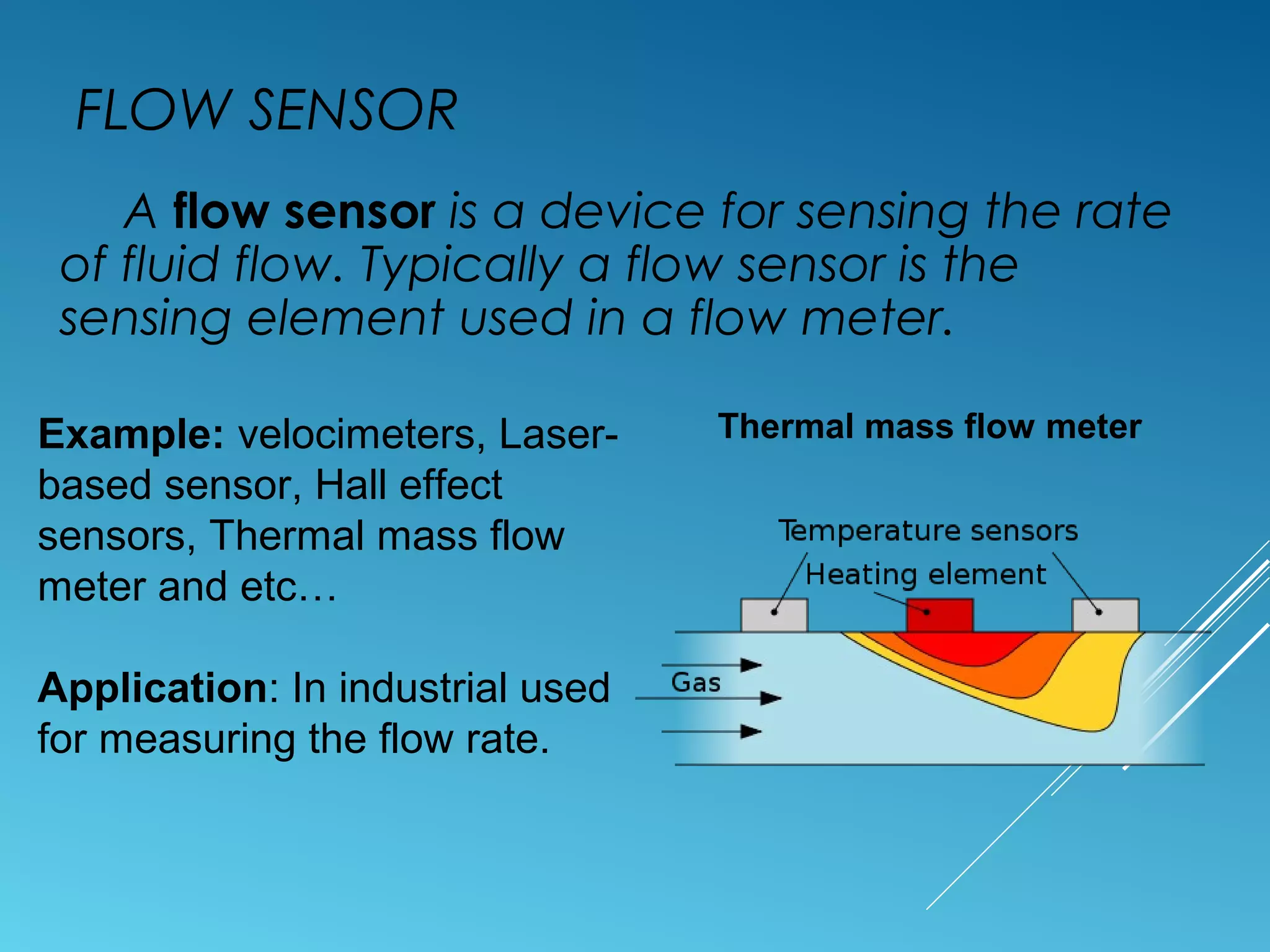
sensors, Thermal mass flow
meter and etc…
Application: In industrial used
for measuring the flow rate.
Thermal mass flow meter
SPEED SENSOR
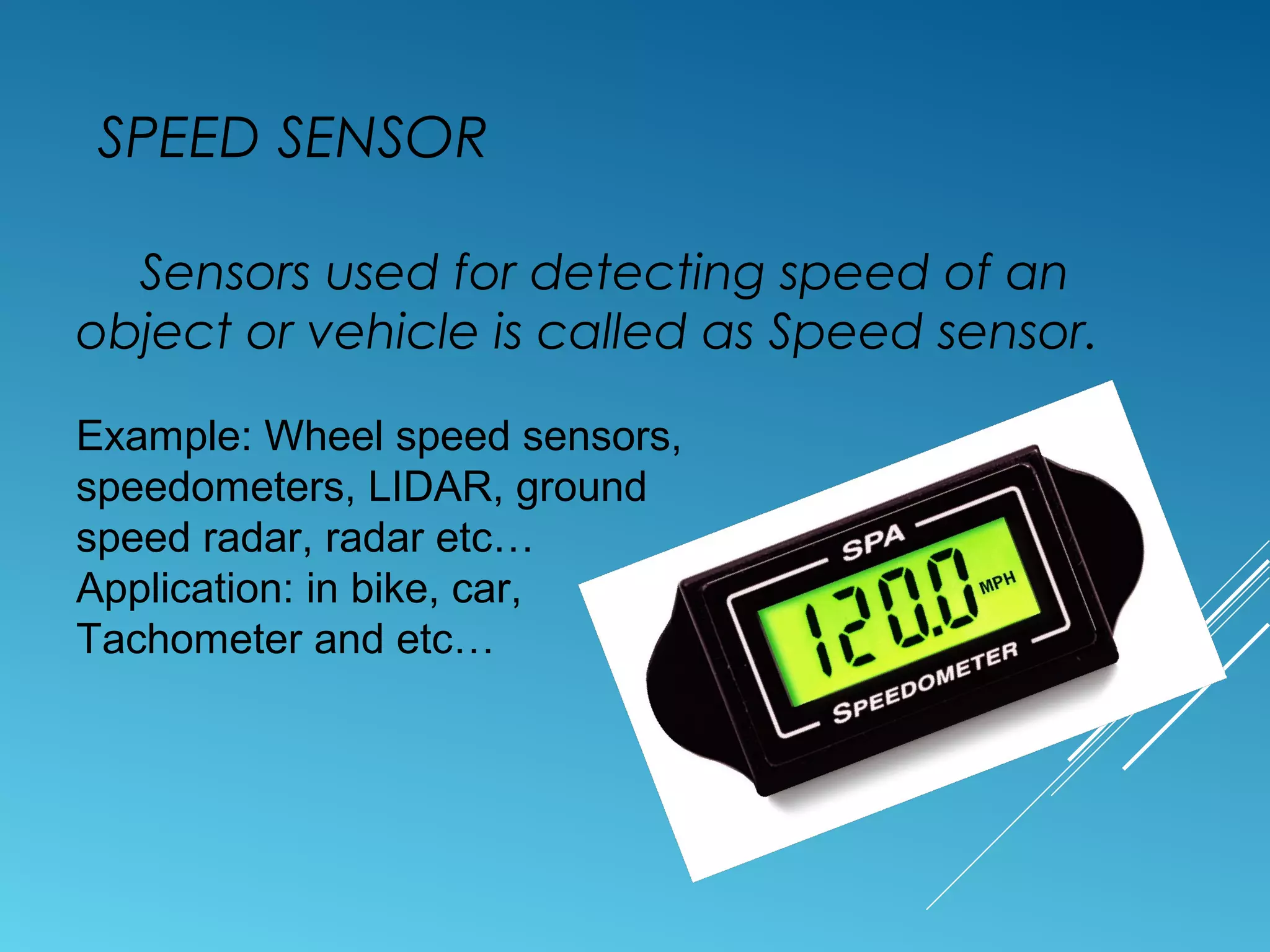
Sensors used for detecting speed of an
object or vehicle is called as Speed sensor.
Example: Wheel speed sensors,
speedometers, LIDAR, ground
speed radar, radar etc…
Application: in bike, car,
Tachometer and etc…
BIOSENSORS
A biosensor is an analytical device, used
for the detection of an analyte, that
combines a biological component with a
physicochemical detector.
Application: blood glucose biosensor, etc…
ACCORDING TO PRINCIPLE OF
OPERATION
Resistive sensor
Capacitive sensor
Inductive sensor
Ultrasonic sensor
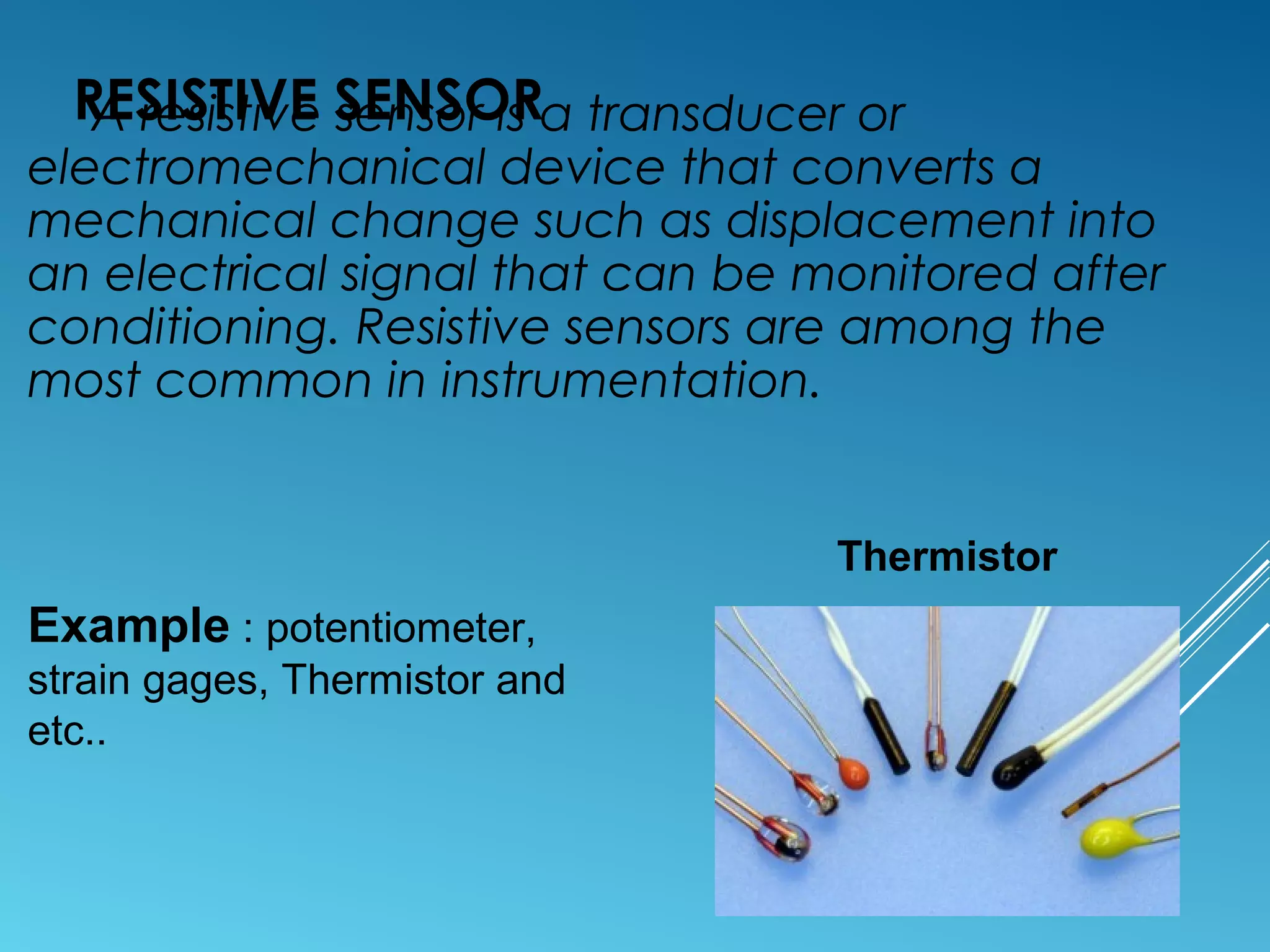
RESISTIVE SENSORA resistive sensor is a transducer or
electromechanical device that converts a
mechanical change such as displacement into
an electrical signal that can be monitored after
conditioning. Resistive sensors are among the
most common in instrumentation.
Example : potentiometer,
strain gages, Thermistor and
etc..
Thermistor
CAPACITIVE SENSOR
A capacitive sensor which generate a
electrical signal according to the input.
Capacitive sensors can directly sense a
variety of things motion, chemical composition,
electric field and, indirectly, sense many other
variables which can be converted into motion
or dielectric constant, such as pressure,
acceleration, fluid level, and fluid composition
INDUCTIVE SENSOR
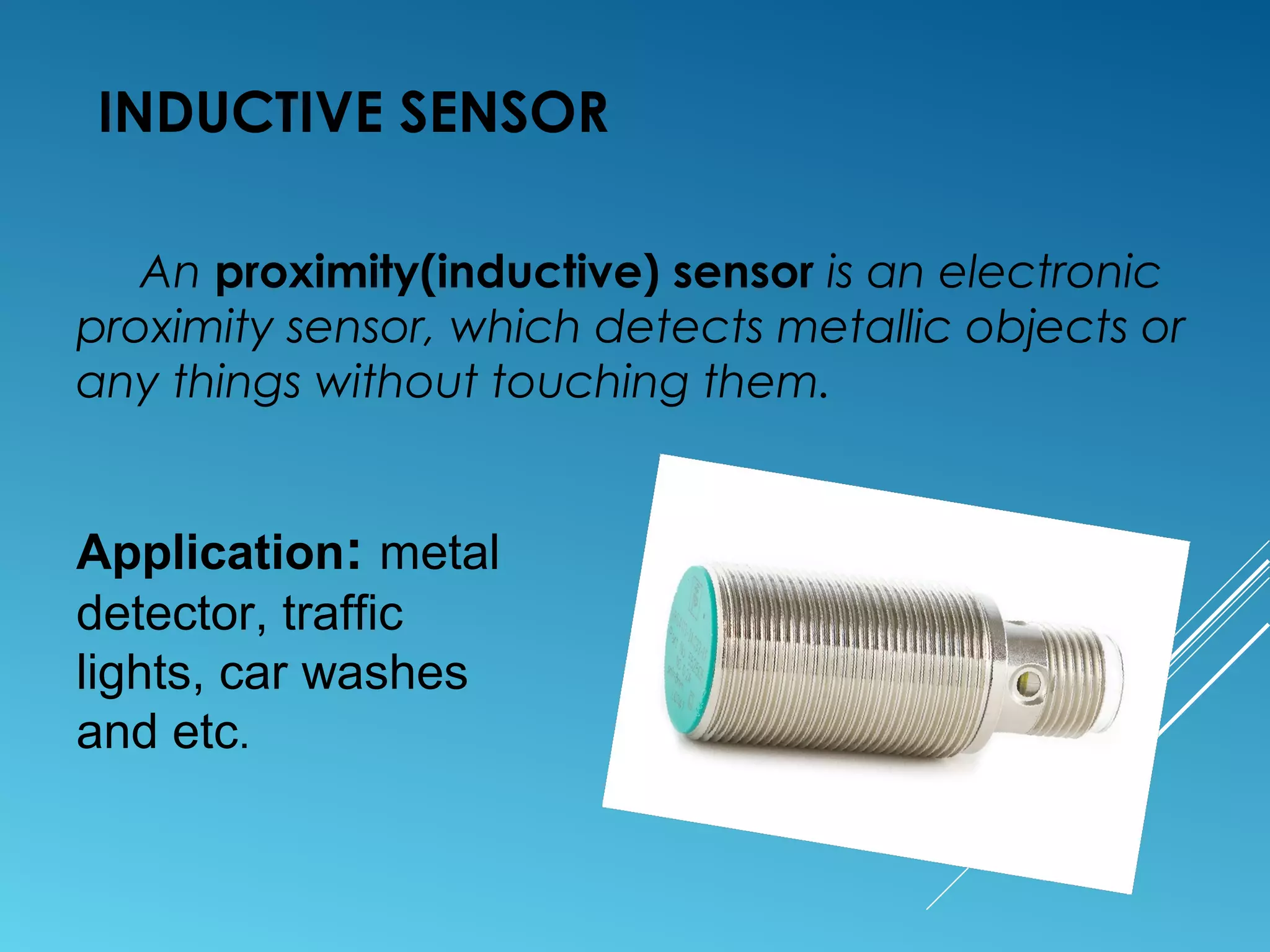
An proximity(inductive) sensor is an electronic
proximity sensor, which detects metallic objects or
any things without touching them.
Application: metal
detector, traffic
lights, car washes
and etc.
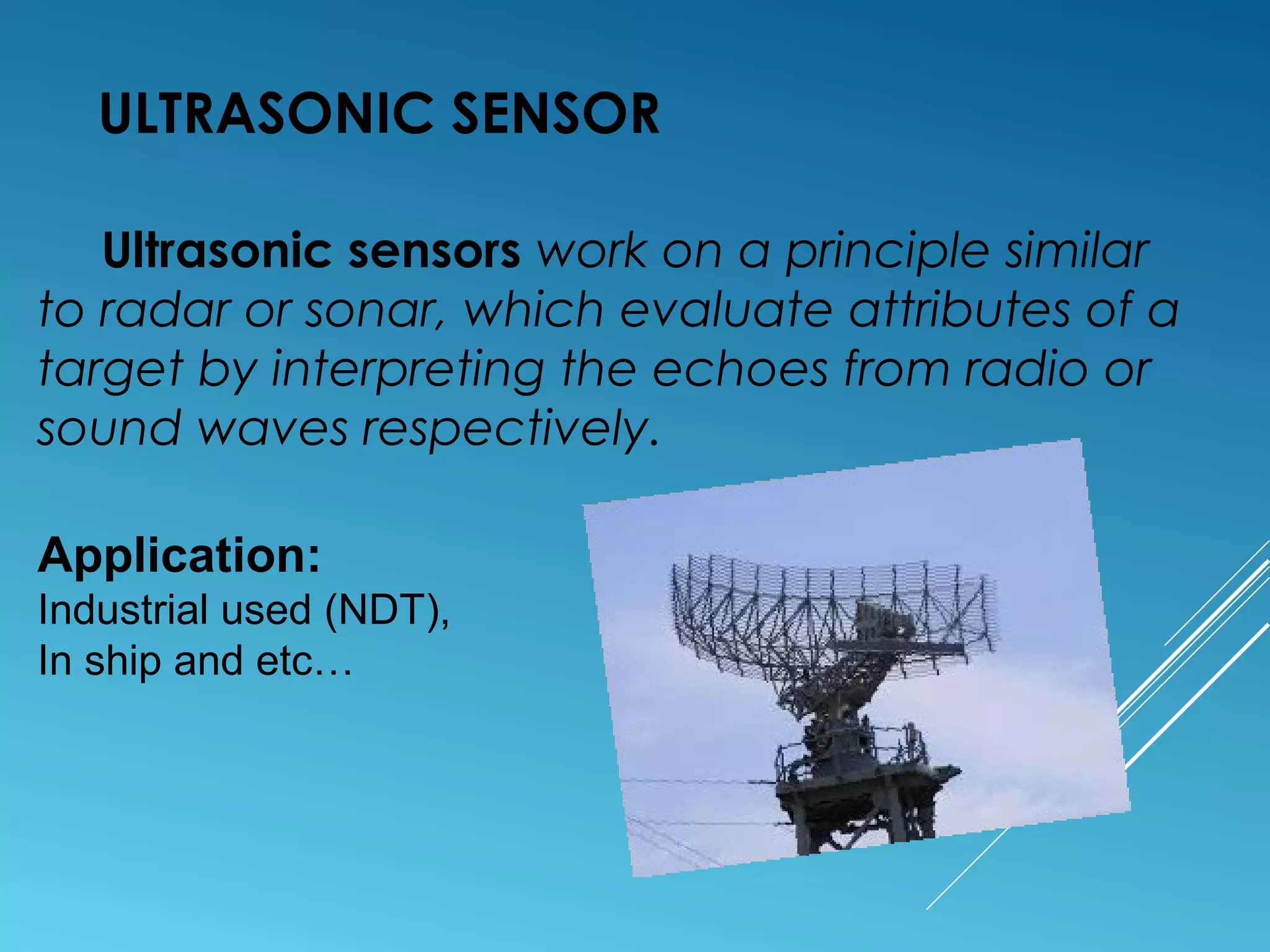
ULTRASONIC SENSOR
Ultrasonic sensors work on a principle similar
to radar or sonar, which evaluate attributes of a
target by interpreting the echoes from radio or
sound waves respectively.
Application:
Industrial used (NDT),
In ship and etc…
LIGHT SENSOR
A Light Sensor is something that a robot can
use to detect the current ambient light level i.e.
how bright/dark it is.
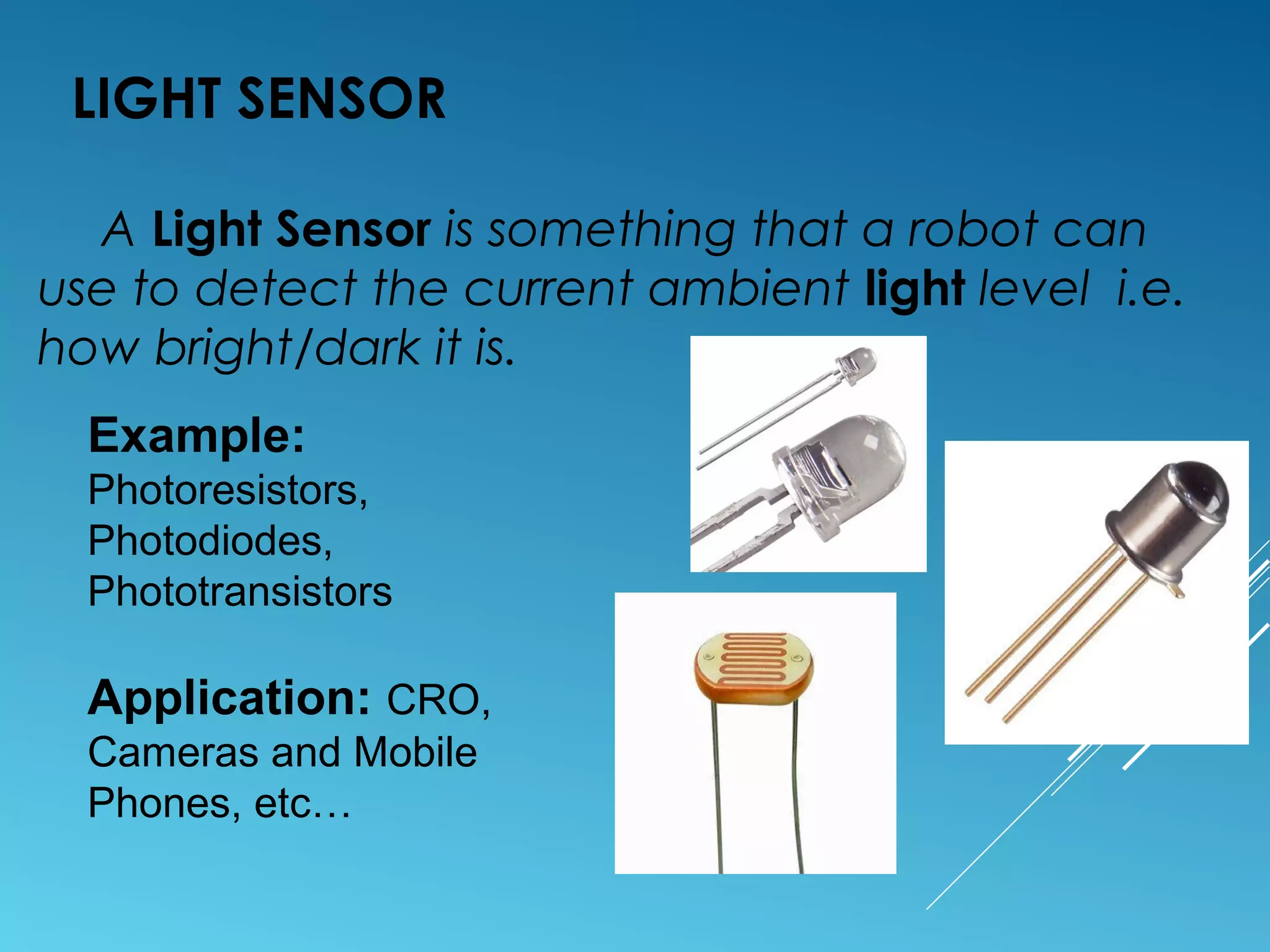
Example:
Photoresistors,
Photodiodes,
Phototransistors
Application: CRO,
Cameras and Mobile
Phones, etc…
THANK YOU
By;
Bhandava Narendra B.
1220005

sensors (It`s type)

  • 1.
  • 2.
    TABLE OF CONTENT Meaning and Definition.  Classification and types of sensors and its application.  Summary.
  • 3.
    MEANING AND DEFINITION sensor sns /ˈ ɛ ə noun sensor; plural noun: sensors A device which detects or measures a physical property and records, indicates, or otherwise responds to it.
  • 4.
    CLASSIFICATION OF SENSORS According topower or energy supply requirement of the sensors. According to various measureme nt objective. According to principle of operation. According to output signal.
  • 5.
    ACTIVE SENSOR Sensors thatrequire power supply are called as Active Sensors Example: LIDAR (Light detection and ranging), photoconductive cell.
  • 6.
    PASSIVE SENSOR Sensors thatdo not require power supply are called as Passive Sensors. Example: Hg thermometer etc.
  • 7.
    ANALOG SENSOR Analog sensorproduce continuous signals that are proportional to the sensed parameter. Example: analog tachometer etc…
  • 8.
    DIGITAL SENSOR Digital sensorproduce digital outputs that can be directly interfaced with the digital controller. Example: Digital tachometer etc…
  • 9.
    ACCORDING TO VARIOUS MEASUREMENTOBJECTIVE Temperature sensor Pressure sensor Level sensor displacement sensor Flow sensor Speed sensor Biosensors
  • 10.
    TEMPERATURE SENSOR A devicewhich gives temperature measurement as an electrical signal is called as temperature sensor. Example: Thermistors, thermocouples etc. Application: Digital thermometer, in boiler, furnaces, gas turbine etc..
  • 11.
    PRESSURE SENSOR A pressuresensor measures pressure, typically of gases or liquids. A pressure sensor usually acts as a transducer; it generates a signal as a function of the pressure imposed. such a signal is electrical. Example: barometric, piezo resistive pressure sensor etc. Application: in boiler, in gas turbine etc.
  • 12.
    LEVEL SENSOR Level sensorsdetect the level of liquids In the tank or container. Example: Magnetic and mechanical float, pressure transducer, Pneumatic, Capacitance, load cell etc. Application: oil-water tank, boiler, etc… Pressure transducer
  • 13.
    DISPLACEMENT SENSOR Displacement sensoris used to measure the distance and position. Example: capacitive sensor, Eddy current sensor, Inductive sensor(LVDT) and etc.. Application: various industrial application, robotics, and etc… capacitive sensor
  • 14.
    FLOW SENSOR A flowsensor is a device for sensing the rate of fluid flow. Typically a flow sensor is the sensing element used in a flow meter. Example: velocimeters, Laser- based sensor, Hall effect sensors, Thermal mass flow meter and etc… Application: In industrial used for measuring the flow rate. Thermal mass flow meter
  • 15.
    SPEED SENSOR Sensors usedfor detecting speed of an object or vehicle is called as Speed sensor. Example: Wheel speed sensors, speedometers, LIDAR, ground speed radar, radar etc… Application: in bike, car, Tachometer and etc…
  • 16.
    BIOSENSORS A biosensor isan analytical device, used for the detection of an analyte, that combines a biological component with a physicochemical detector. Application: blood glucose biosensor, etc…
  • 17.
    ACCORDING TO PRINCIPLEOF OPERATION Resistive sensor Capacitive sensor Inductive sensor Ultrasonic sensor
  • 18.
    RESISTIVE SENSORA resistivesensor is a transducer or electromechanical device that converts a mechanical change such as displacement into an electrical signal that can be monitored after conditioning. Resistive sensors are among the most common in instrumentation. Example : potentiometer, strain gages, Thermistor and etc.. Thermistor
  • 19.
    CAPACITIVE SENSOR A capacitivesensor which generate a electrical signal according to the input. Capacitive sensors can directly sense a variety of things motion, chemical composition, electric field and, indirectly, sense many other variables which can be converted into motion or dielectric constant, such as pressure, acceleration, fluid level, and fluid composition
  • 20.
    INDUCTIVE SENSOR An proximity(inductive)sensor is an electronic proximity sensor, which detects metallic objects or any things without touching them. Application: metal detector, traffic lights, car washes and etc.
  • 21.
    ULTRASONIC SENSOR Ultrasonic sensorswork on a principle similar to radar or sonar, which evaluate attributes of a target by interpreting the echoes from radio or sound waves respectively. Application: Industrial used (NDT), In ship and etc…
  • 22.
    LIGHT SENSOR A LightSensor is something that a robot can use to detect the current ambient light level i.e. how bright/dark it is. Example: Photoresistors, Photodiodes, Phototransistors Application: CRO, Cameras and Mobile Phones, etc…
  • 23.