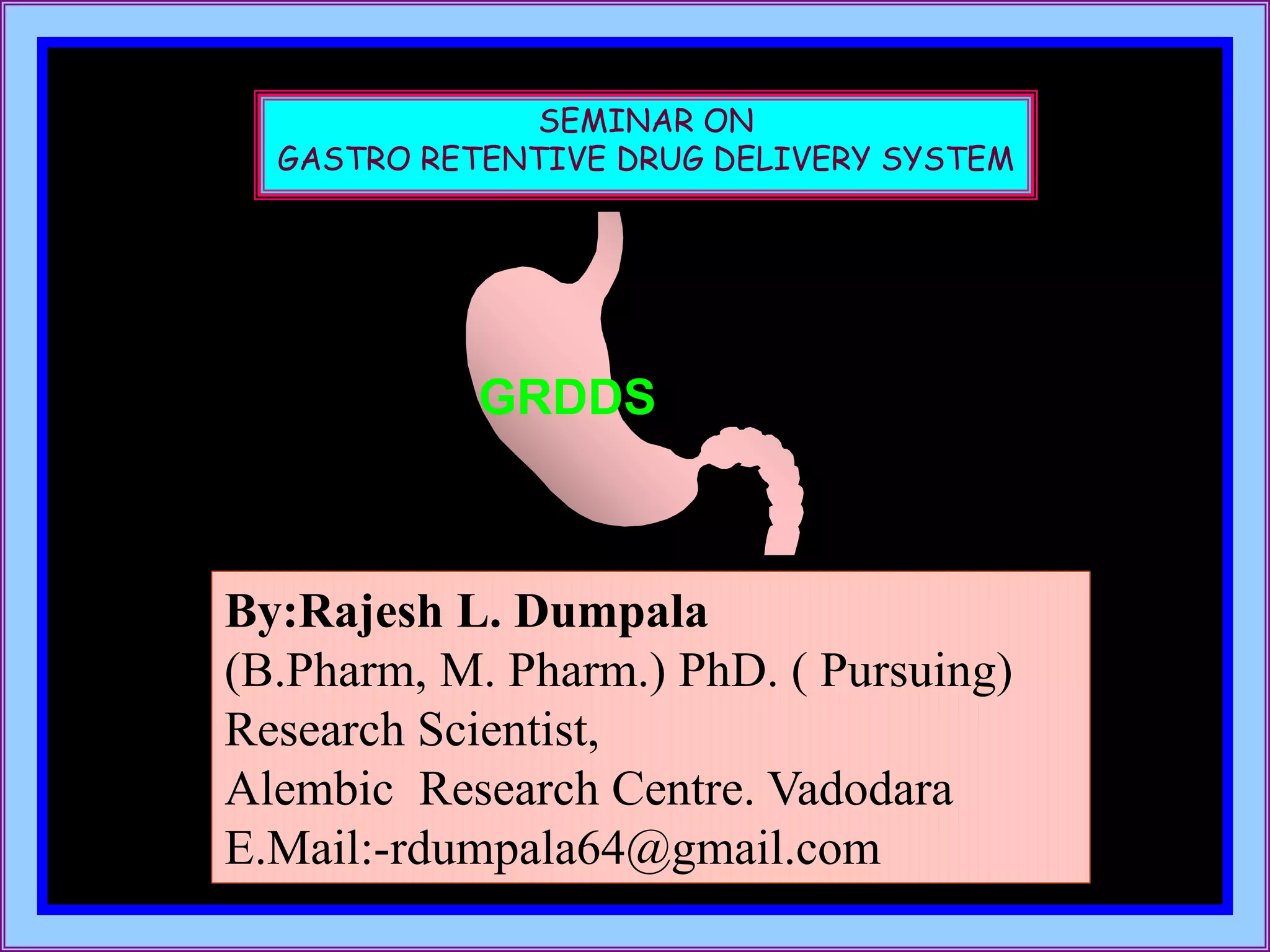
SEMINAR ON
GASTRO RETENTIVE DRUG DELIVERY SYSTEM
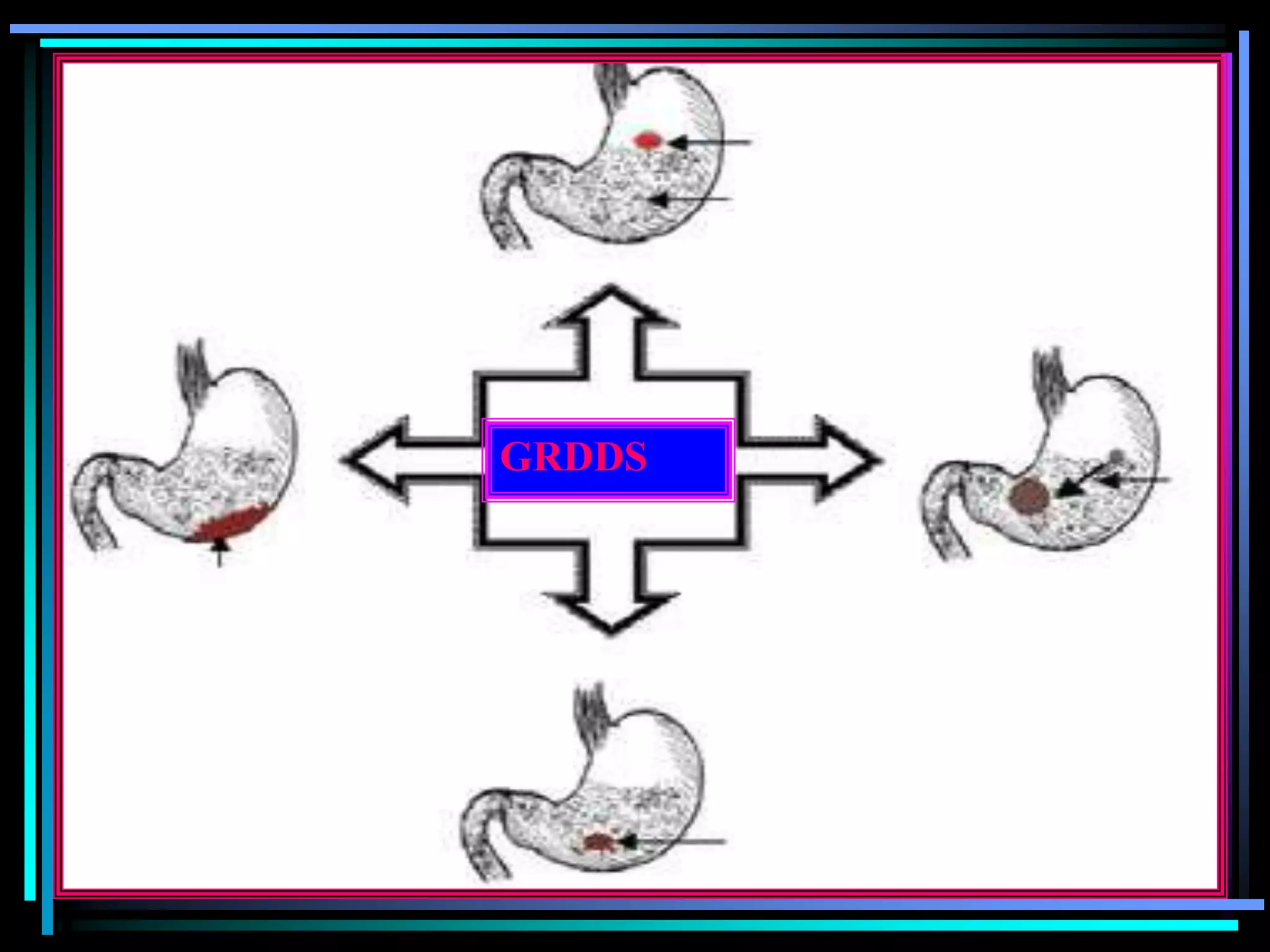
GRDDS
By:Rajesh L. Dumpala
(B.Pharm, M. Pharm.) PhD. ( Pursuing)
Research Scientist,
Alembic Research Centre. Vadodara
E.Mail:-rdumpala64@gmail.com
Presentation Outline
• Introduction
• Merits
• Physiology of stomach
• Gastro-retentive technologies
• Factors affecting GRDDS
• Evaluation of GRDDS
• Demerits
• Market Products
• References
Introduction
• Conventional oral delivery is widely used in
pharmaceutical field to treat diseases. However,
conventional delivery had many drawbacks and major
draw-back is non-site specificity.
• Some drugs are absorbed at specific site only. They require
release at specific site or a release such that maximum
amount of drug reaches to the specific site.
• Pharmaceutical field is now focusing towards such drugs
which require site specificity
Cont..
• Gastro-retentive delivery is one of the site
specific delivery for the delivery of drugs
either at stomach or at intestine. It is
obtained by retaining dosage form into
stomach and drug is being released at
controlled manner to specific site either in
stomach, duodenum and intestine.
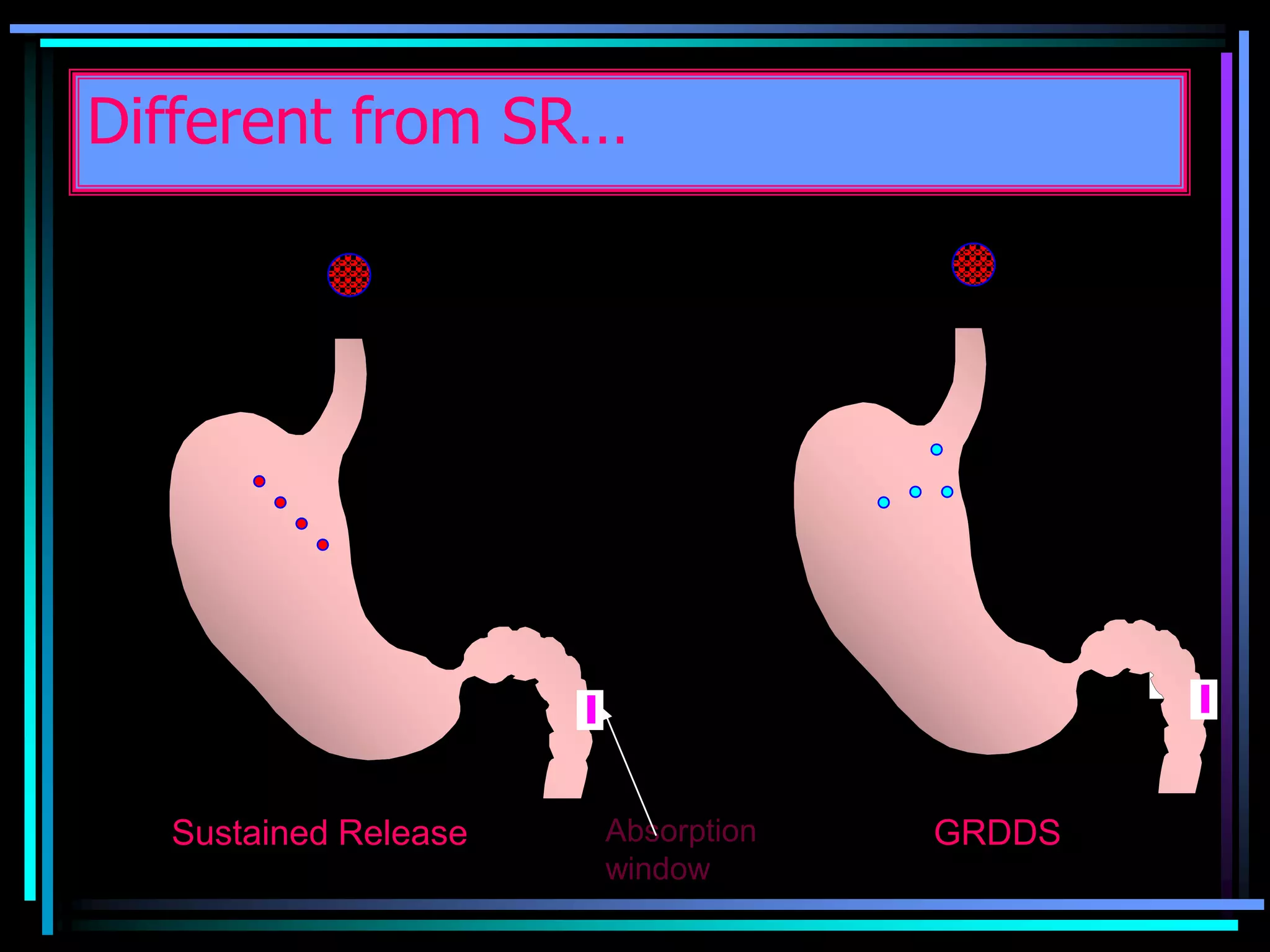
Different from SR…
Sustained Release GRDDSAbsorption
window
Merits…
• Delivery of drugs with narrow absorption window in the small intestine
region.
• Longer residence time in the stomach could be advantageous for local action
in the upper part of the small intestine, for example treatment of peptic ulcer
disease.
• Improved bio-availability is expected for drugs that are absorbed readily
upon release in the GI tract
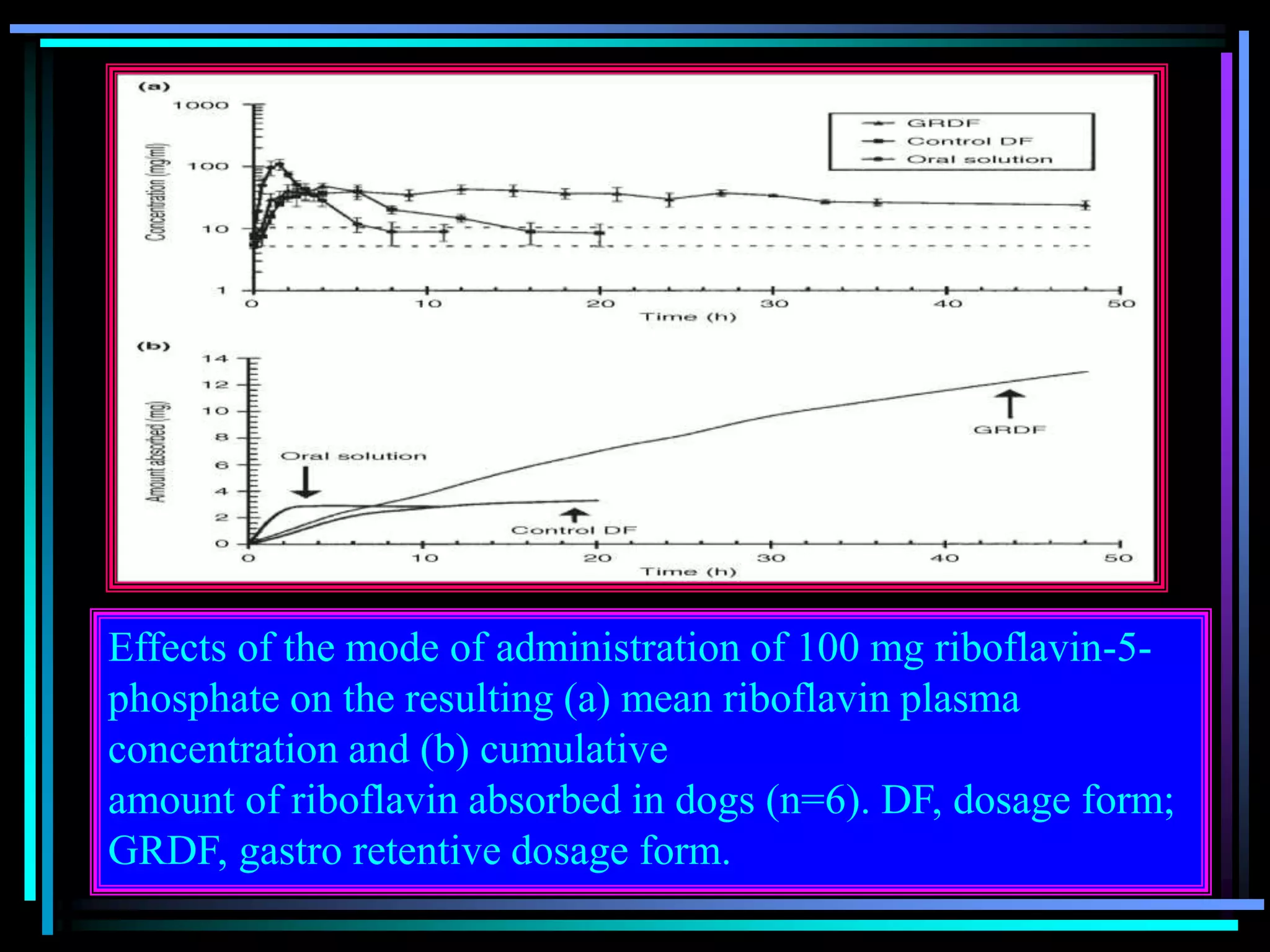
Effects of the mode of administration of 100 mg riboflavin-5-
phosphate on the resulting (a) mean riboflavin plasma
concentration and (b) cumulative
amount of riboflavin absorbed in dogs (n=6). DF, dosage form;
GRDF, gastro retentive dosage form.
Drugs benefited by GRDDS
• Drugs acting locally in the stomach E.g. Antacids
and drugs for H. Pylori
• Drugs that are principally absorbed in the stomach
• Drugs that are poorly soluble at the alkaline pH
• Drugs with a narrow window of absorption E.g.
Furosemide
• Drugs absorbed readily from the GI tract
• Drugs that degrade in the colon
Pharmacodynamic consideration:
• Reduce fluctuation in drug effect
• Improve selectivity in receptor activation
• Reduce counter activity of the body
• Extended time over effective concentration
• Minimized adverse effect at colon
Physiology of stomach:
• Under fasting conditions, the stomach is a
collapsed bag with a residual volume of
approximately 50 ml.
• The pH is 1-3 in the fasted state.
• Normal gastric retention time is 1.5-3 hrs.
• Diameter of the pyloric sphincter is 12.8 ±
7 mm.
Cont…
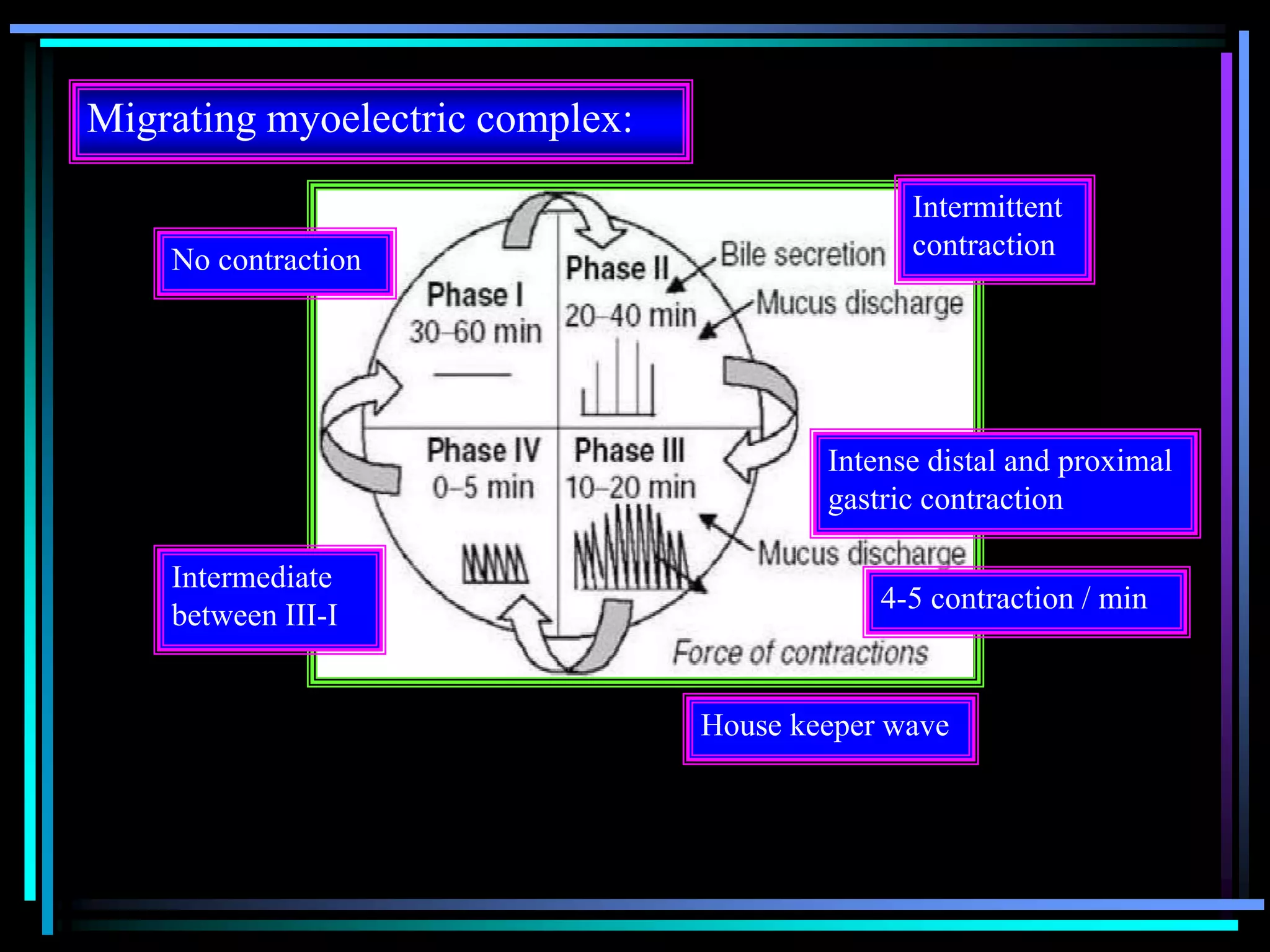
The GI tract is in a state of continuous motility
consisting of two modes:
– Interdigestive motility pattern
– Digestive motility pattern
The Interdigestive motility pattern is commonly
Called as “Migrating Motor Complex” (MMC) And
is organized in cycles of activity.
No contraction
Intermittent
contraction
Intense distal and proximal
gastric contraction
House keeper wave
4-5 contraction / min
Intermediate
between III-I
Migrating myoelectric complex:
Gastro-retentive technologies
A) Low-density systems (Floating drug
delivery)
B) Expandable/Swellable systems
C) Bio/Muco-adhesive systems
D) High density systems
E) Raft forming systems
GRDDS
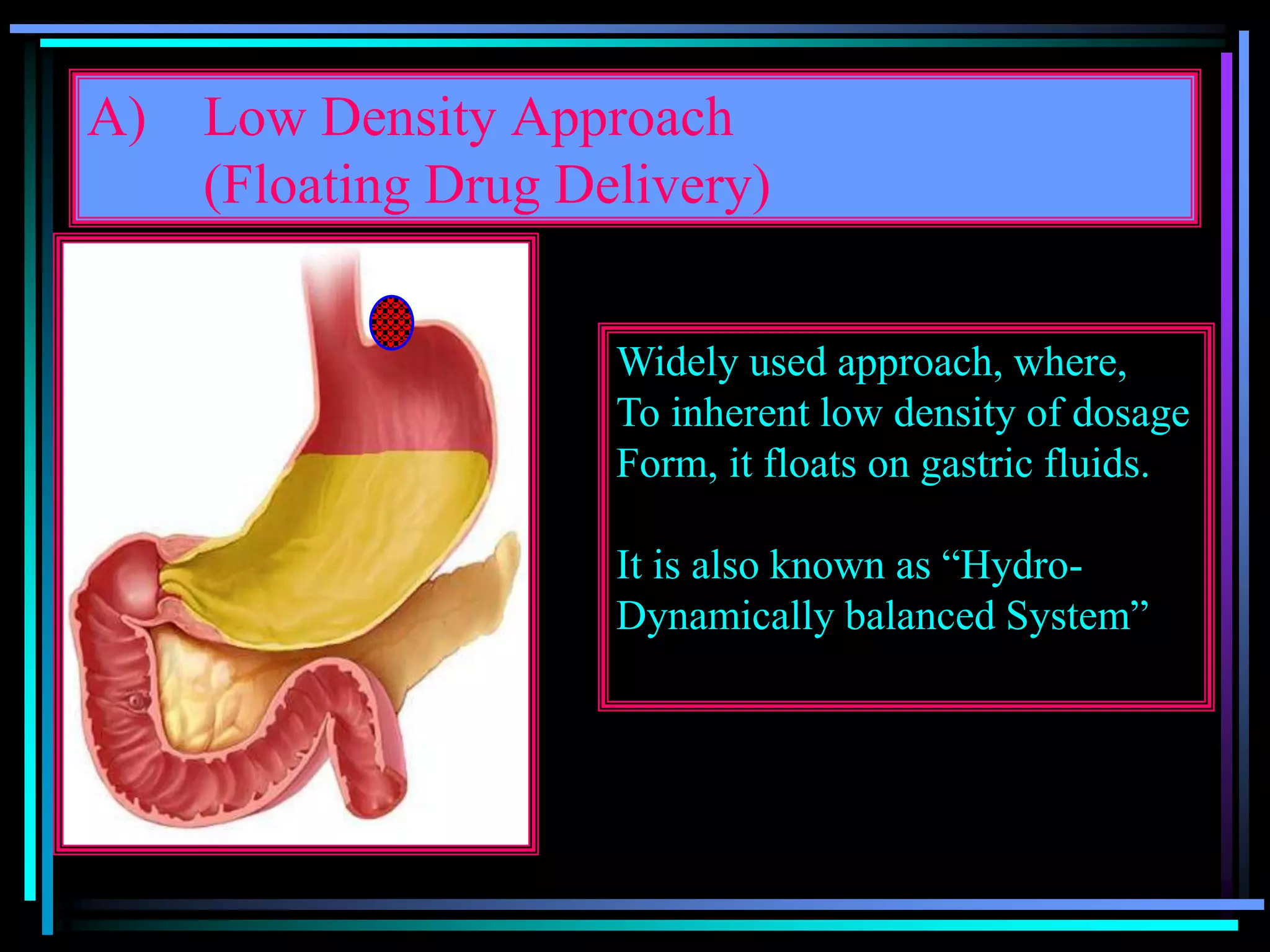
A) Low Density Approach
(Floating Drug Delivery)
Widely used approach, where,
To inherent low density of dosage
Form, it floats on gastric fluids.
It is also known as “Hydro-
Dynamically balanced System”
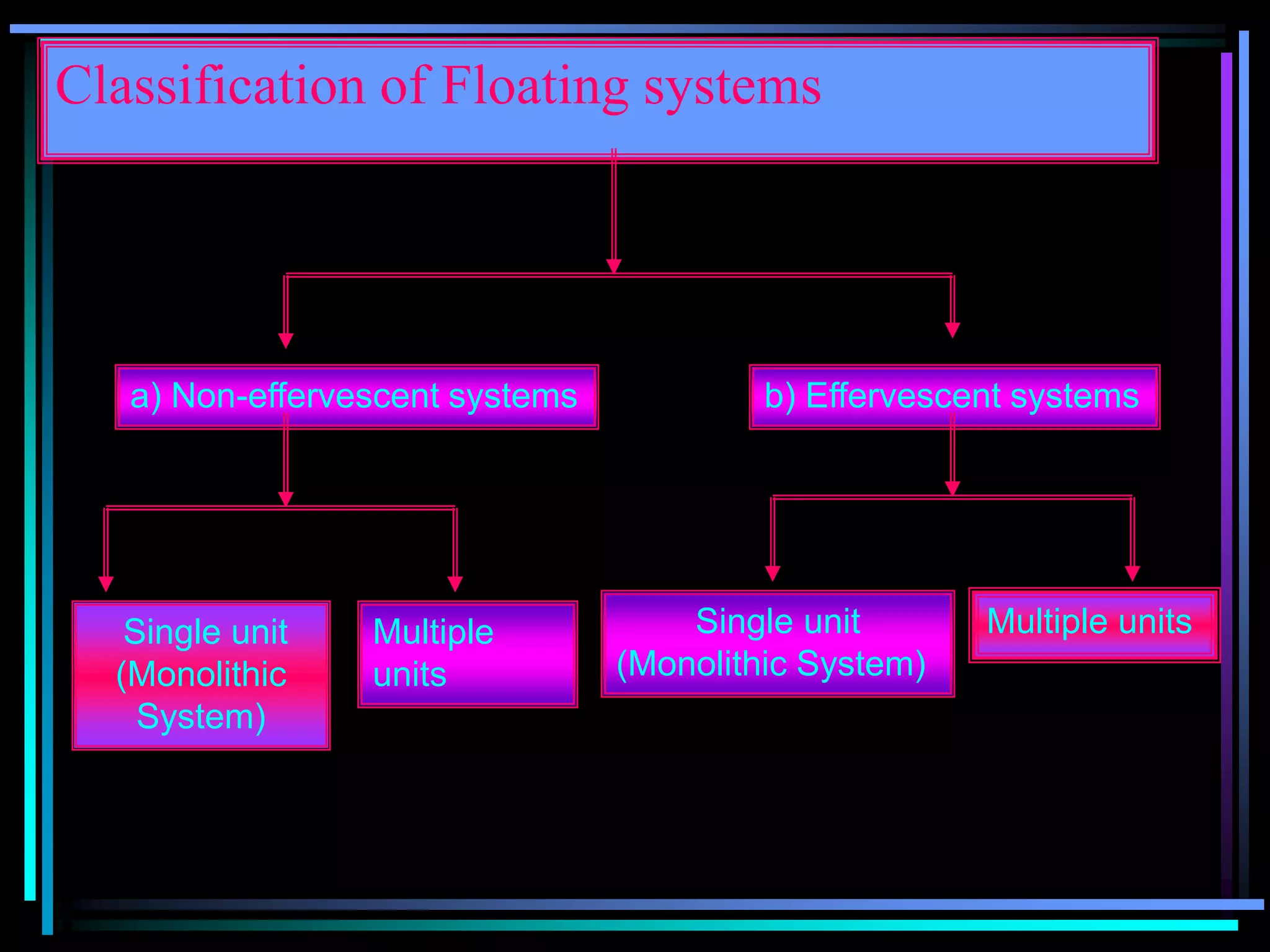
Classification of Floating systems
a) Non-effervescent systems b) Effervescent systems
Multiple
units
Single unit
(Monolithic
System)
Multiple unitsSingle unit
(Monolithic System)
a) Floating Non-effervescent Systems:
-Monolithic system
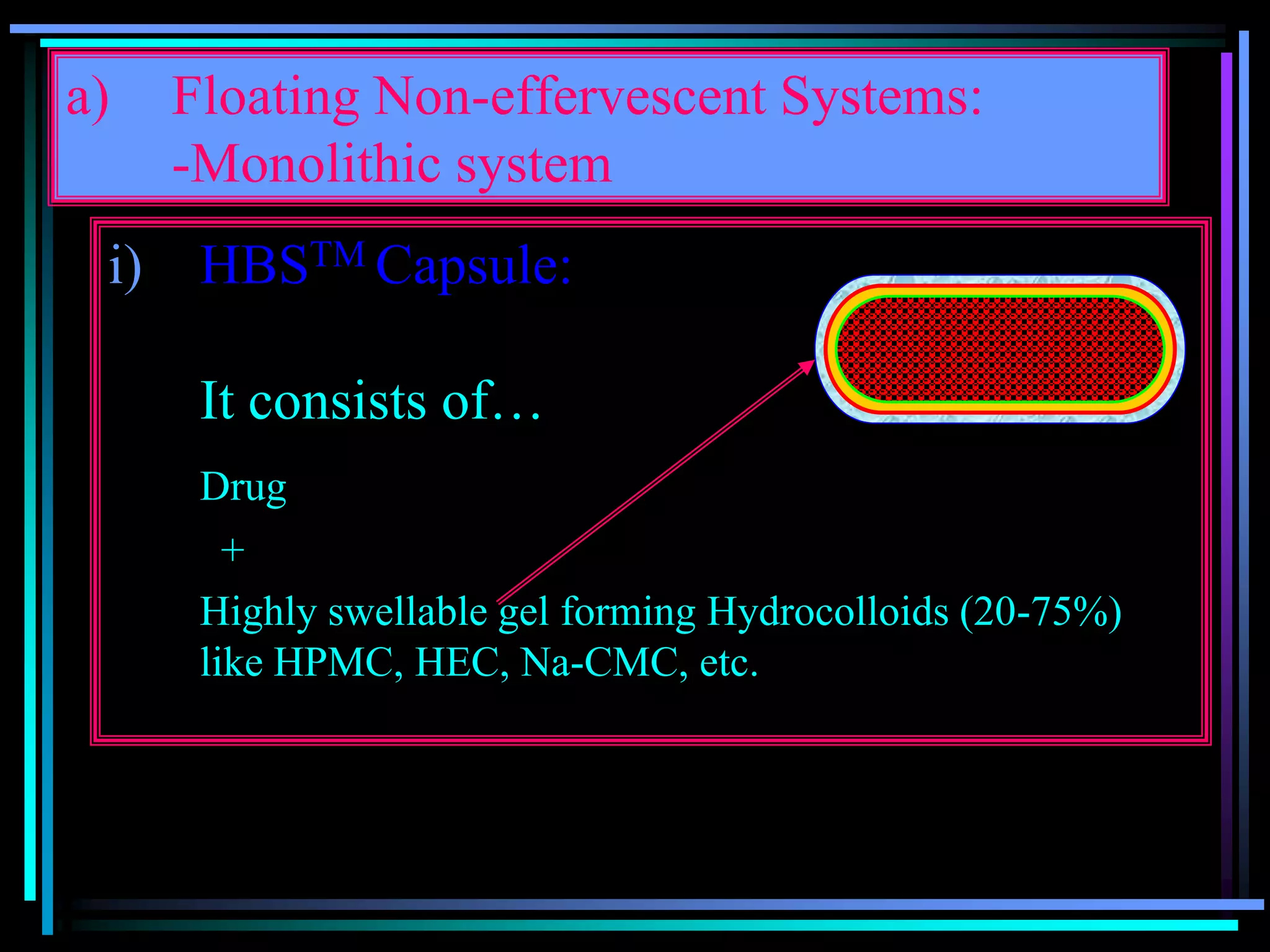
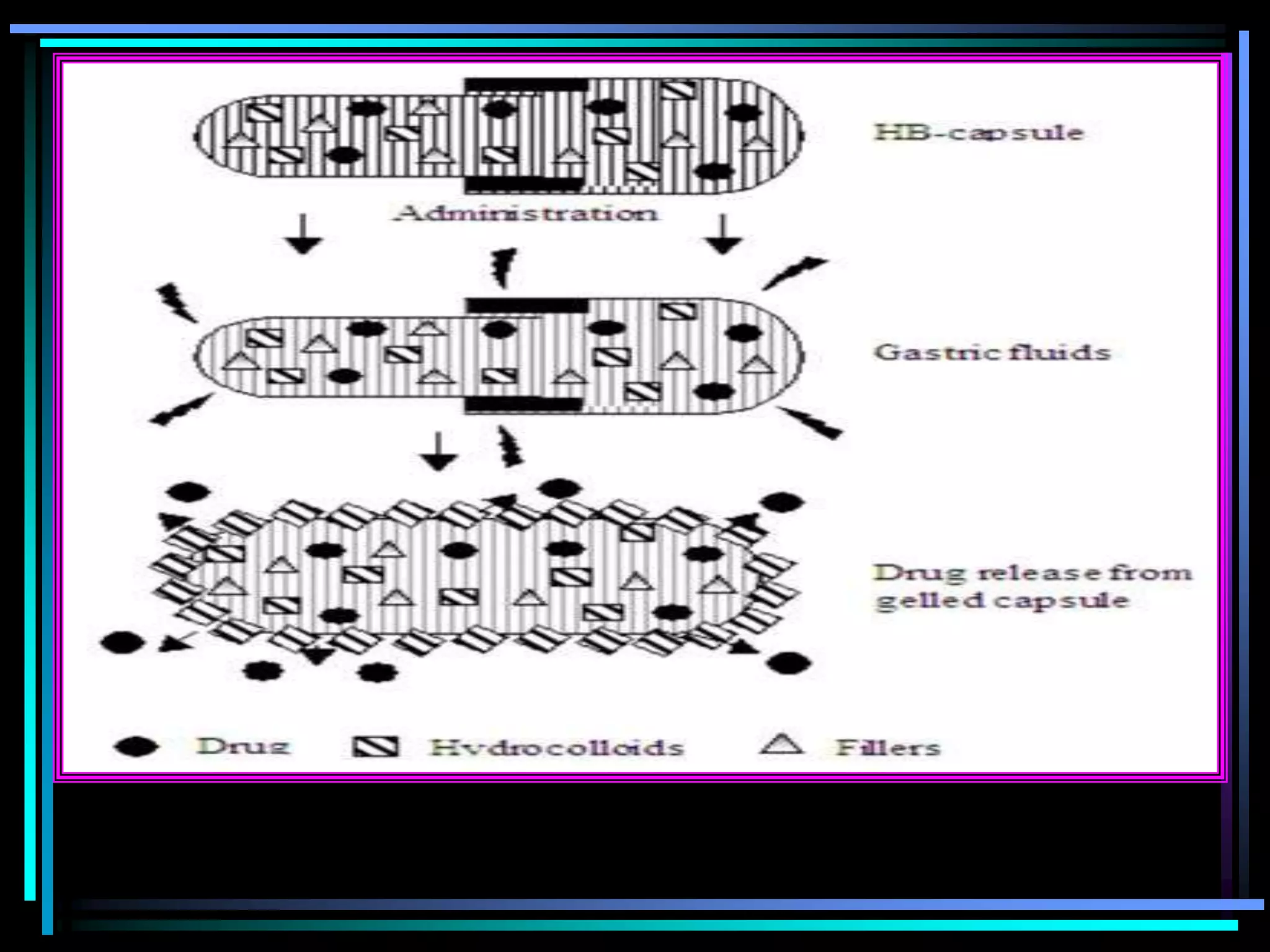
i) HBSTM Capsule:
It consists of…
Drug
+
Highly swellable gel forming Hydrocolloids (20-75%)
like HPMC, HEC, Na-CMC, etc.
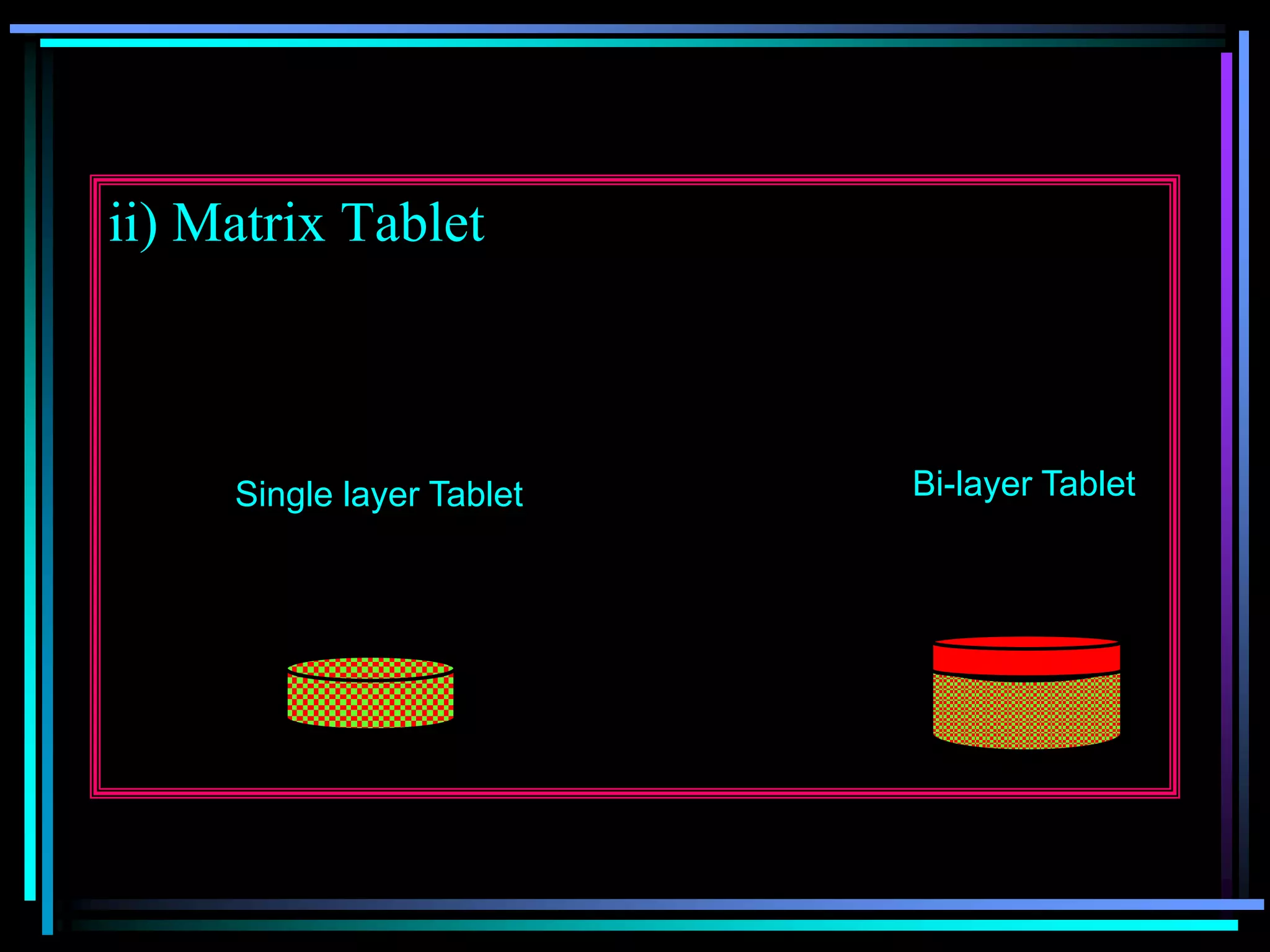
ii) Matrix Tablet
Single layer Tablet Bi-layer Tablet
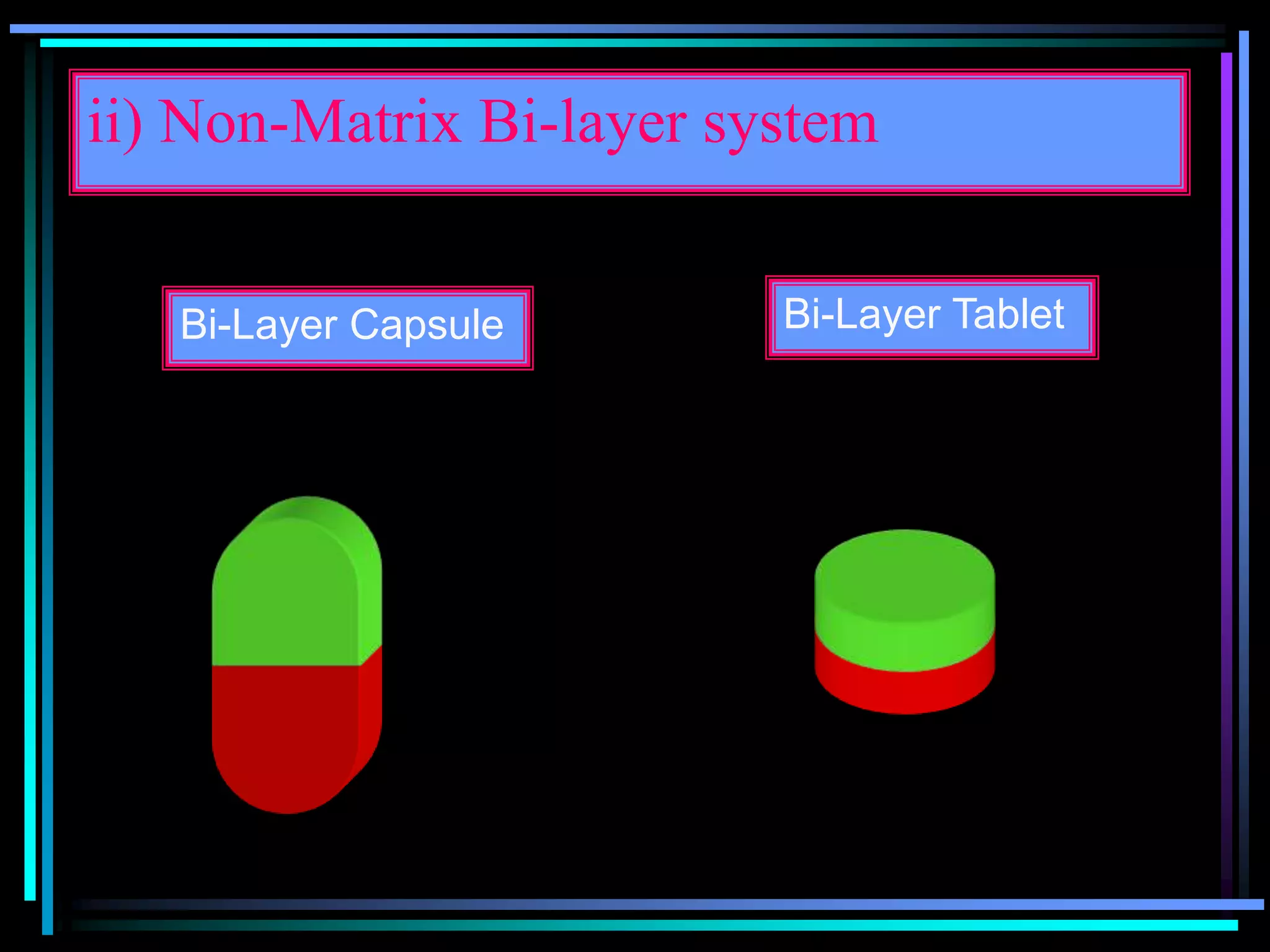
ii) Non-Matrix Bi-layer system
Bi-Layer Capsule Bi-Layer Tablet
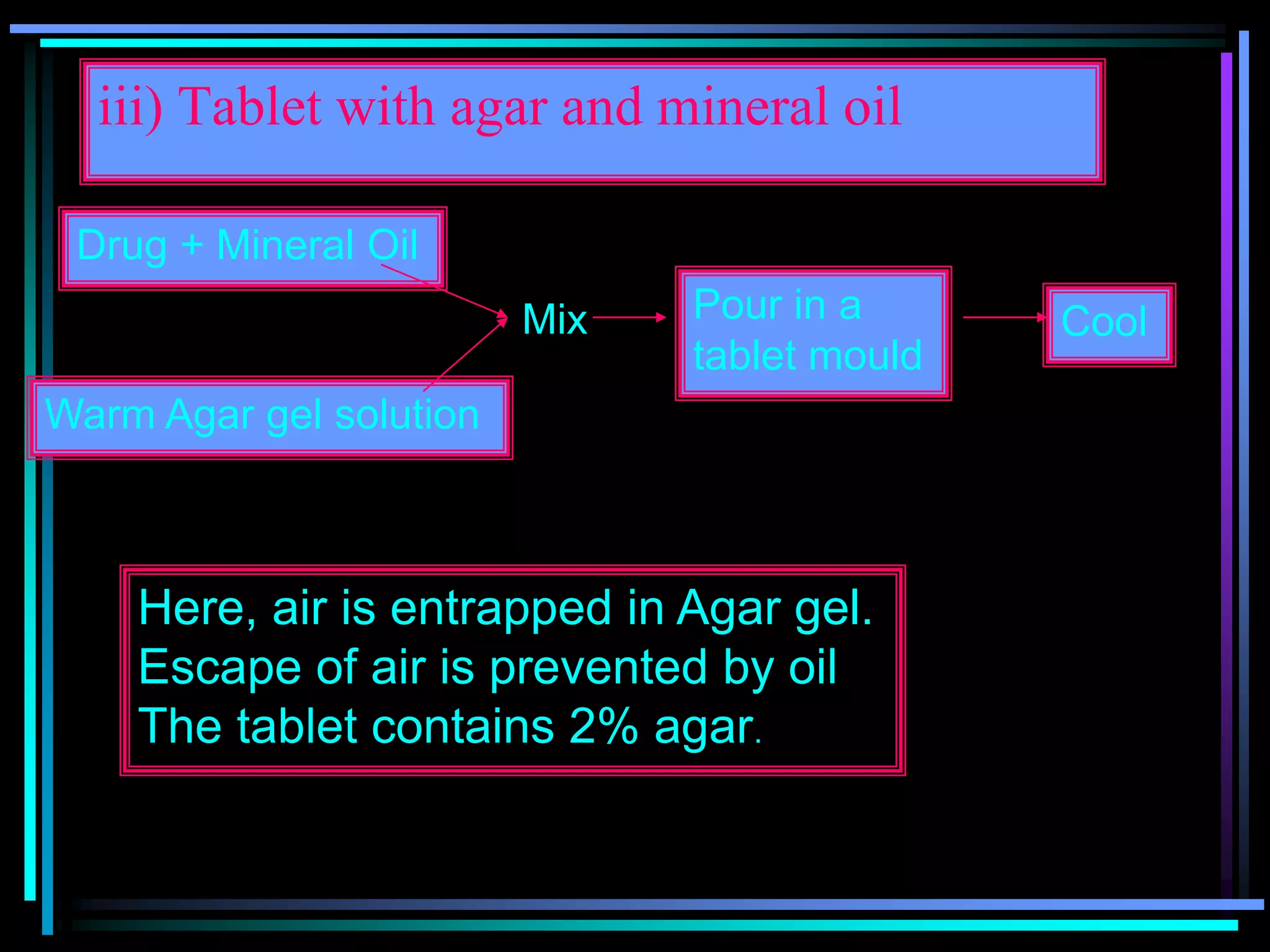
iii) Tablet with agar and mineral oil
Drug + Mineral Oil
Warm Agar gel solution
Mix Pour in a
tablet mould
Cool
Here, air is entrapped in Agar gel.
Escape of air is prevented by oil
The tablet contains 2% agar.
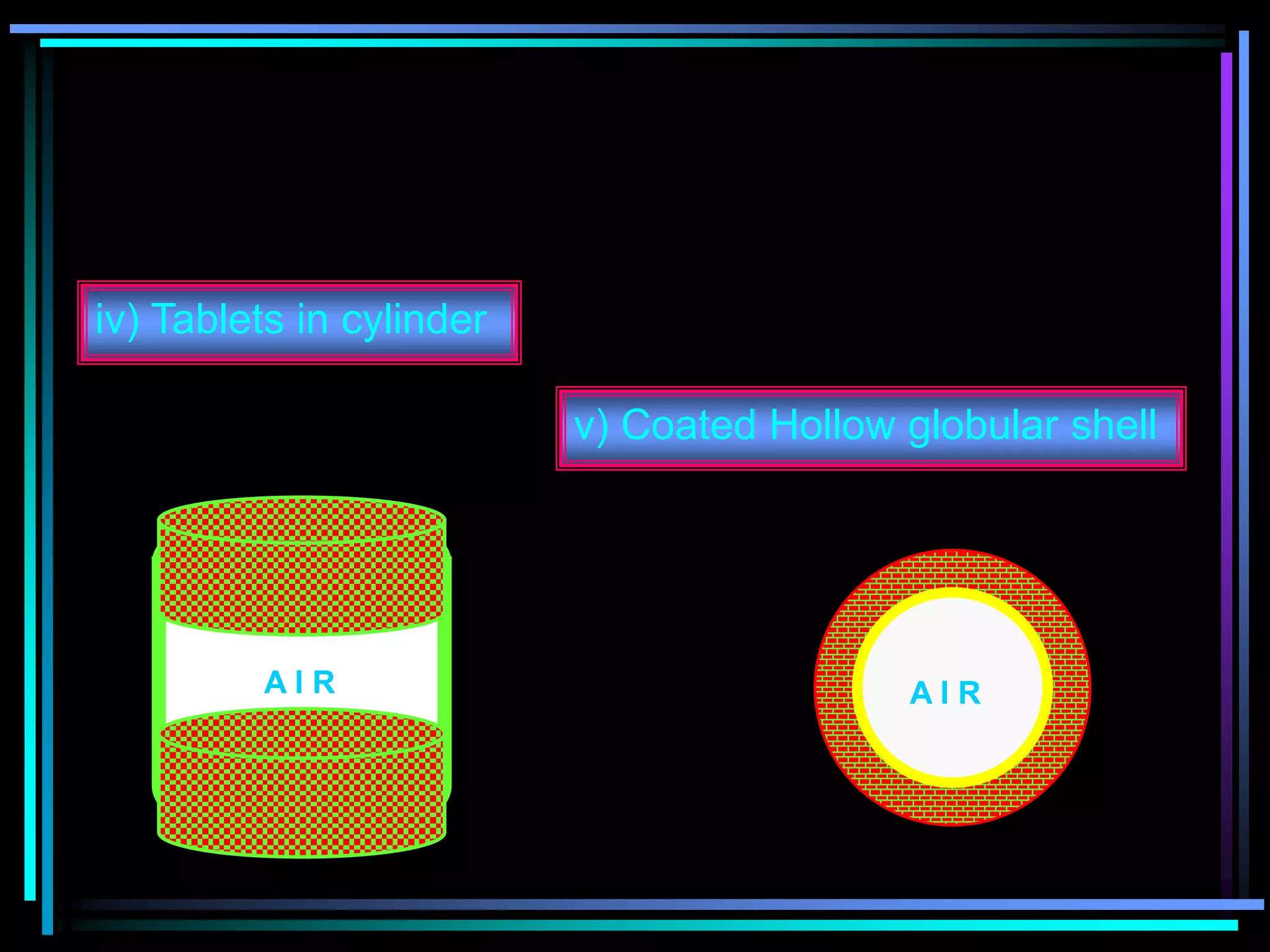
A I R A I R
iv) Tablets in cylinder
v) Coated Hollow globular shell
a) Floating Non-effervescent system
-Multiple units
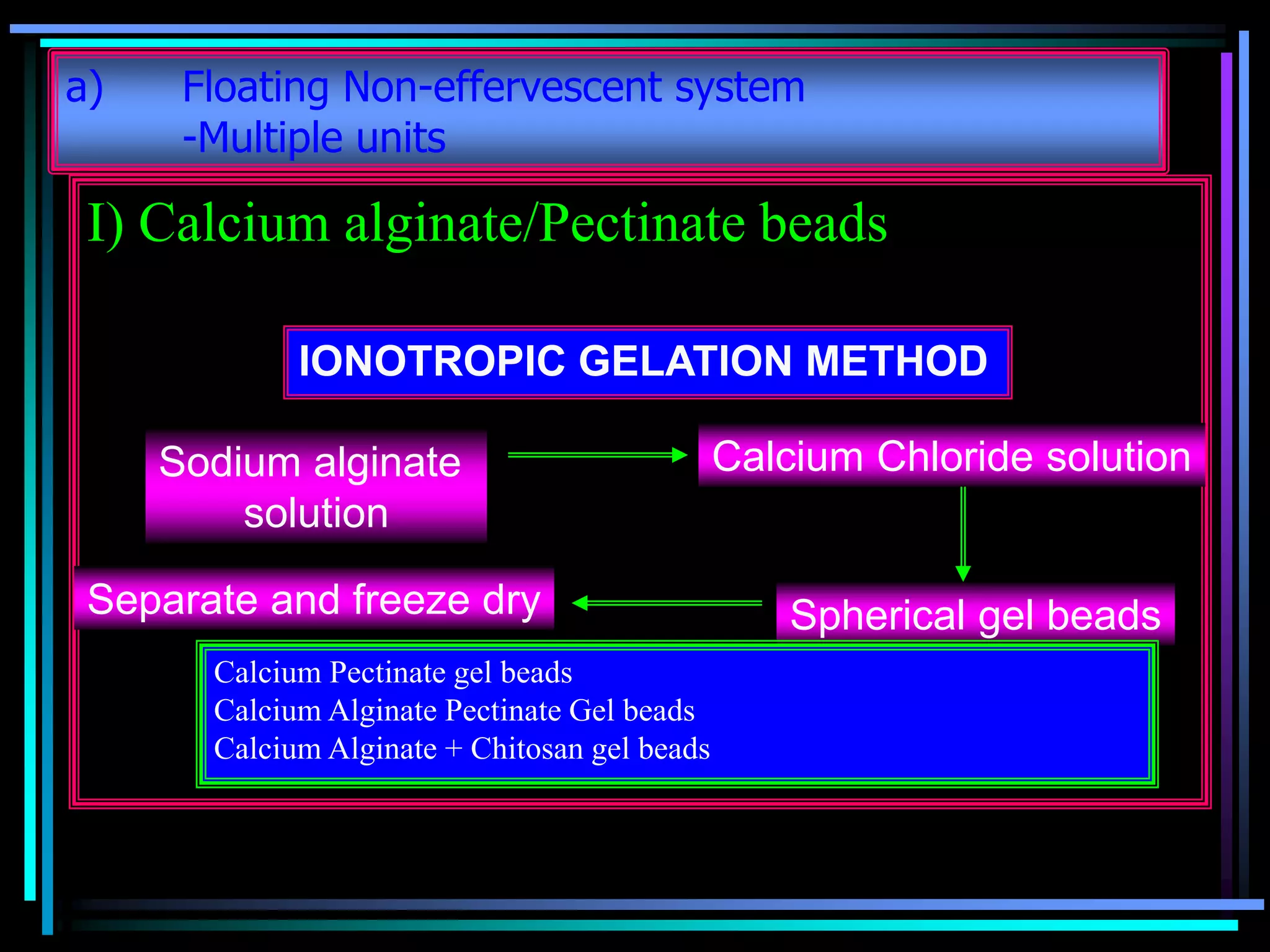
I) Calcium alginate/Pectinate beads
IONOTROPIC GELATION METHOD
Sodium alginate
solution
Calcium Chloride solution
Spherical gel beadsSeparate and freeze dry
Calcium Pectinate gel beads
Calcium Alginate Pectinate Gel beads
Calcium Alginate + Chitosan gel beads
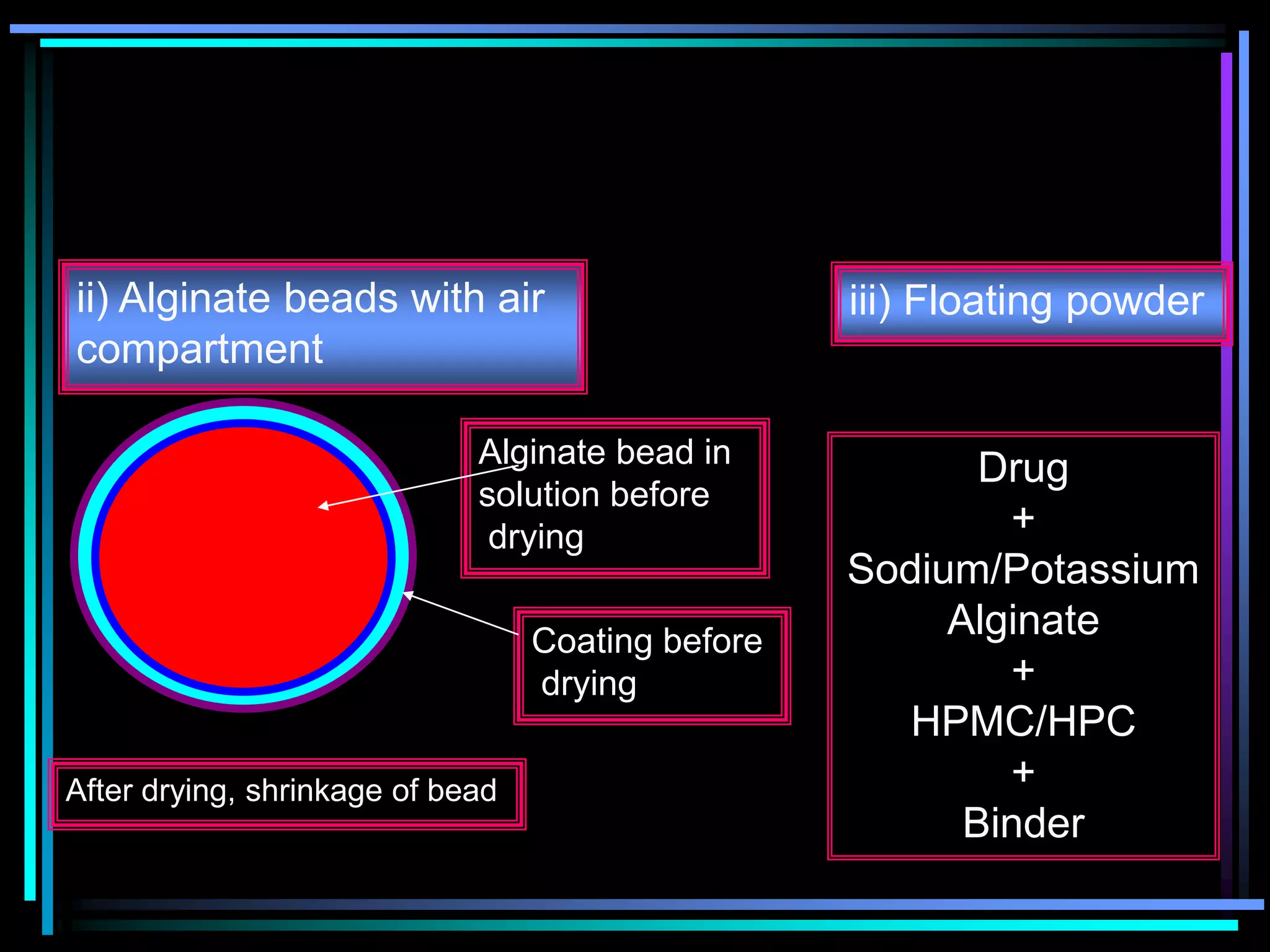
Alginate bead in
solution before
drying
Coating before
drying
After drying, shrinkage of bead
Drug
+
Sodium/Potassium
Alginate
+
HPMC/HPC
+
Binder
ii) Alginate beads with air
compartment
iii) Floating powder
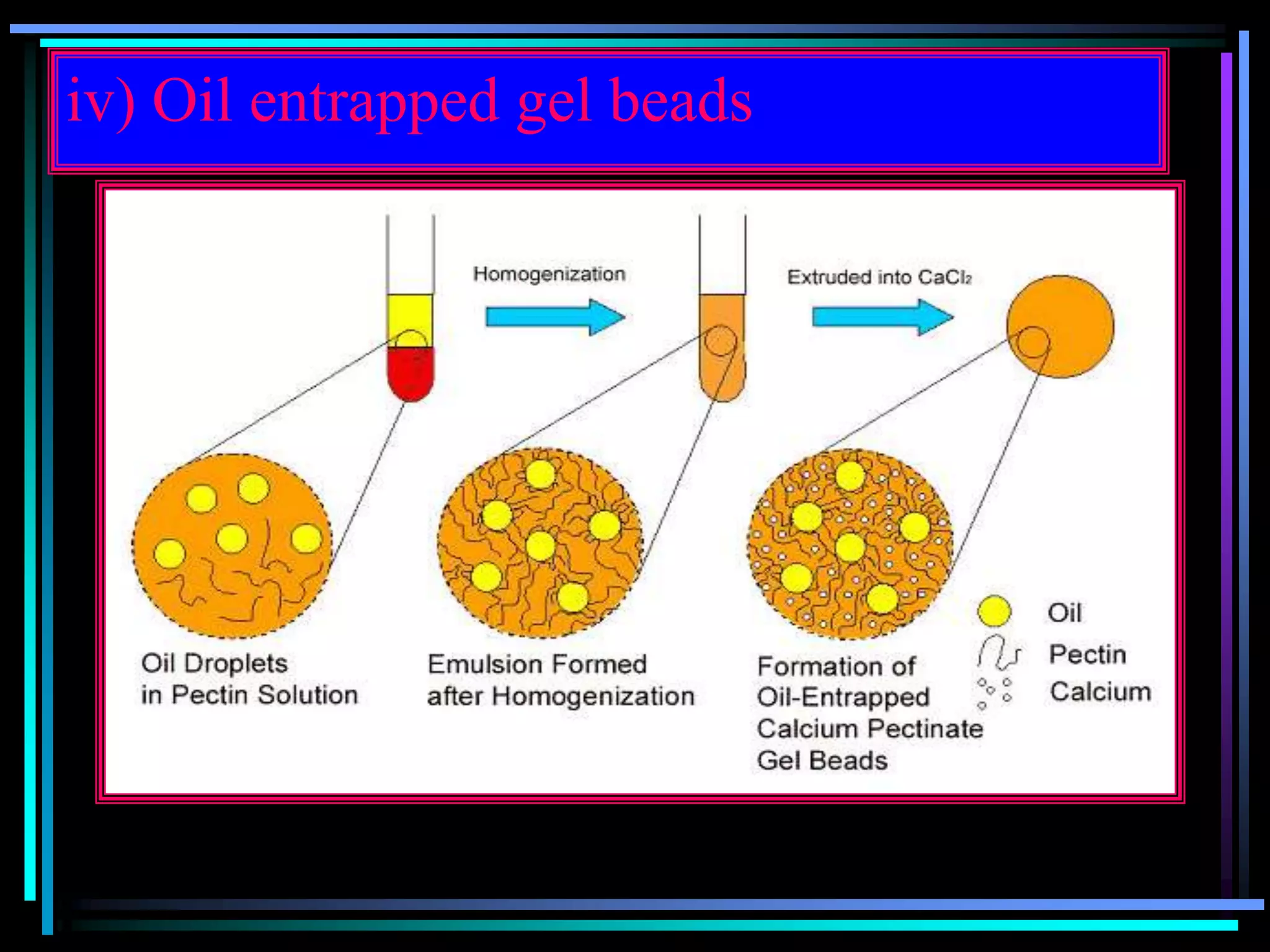
iv) Oil entrapped gel beads
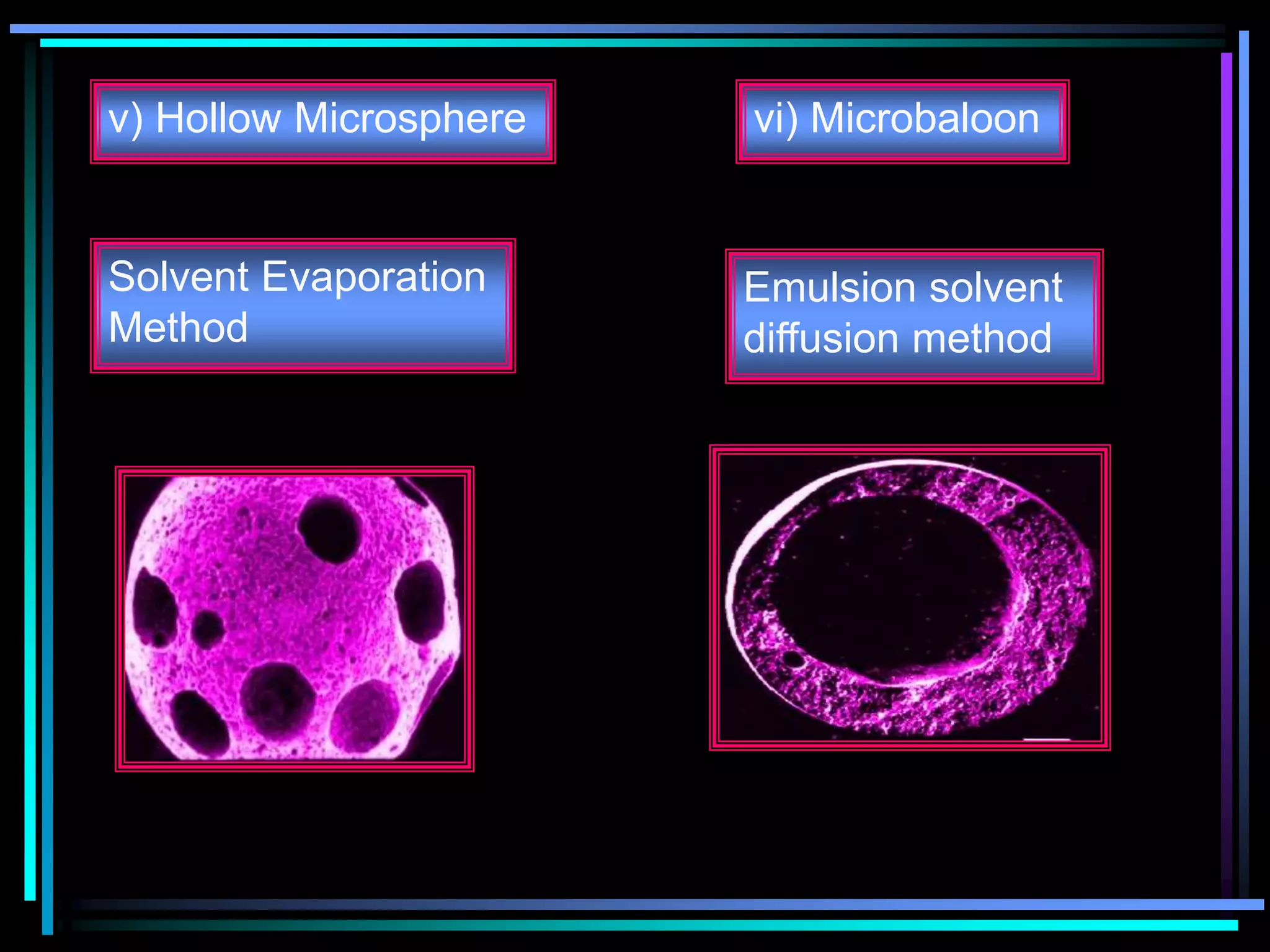
v) Hollow Microsphere vi) Microbaloon
Solvent Evaporation
Method
Emulsion solvent
diffusion method
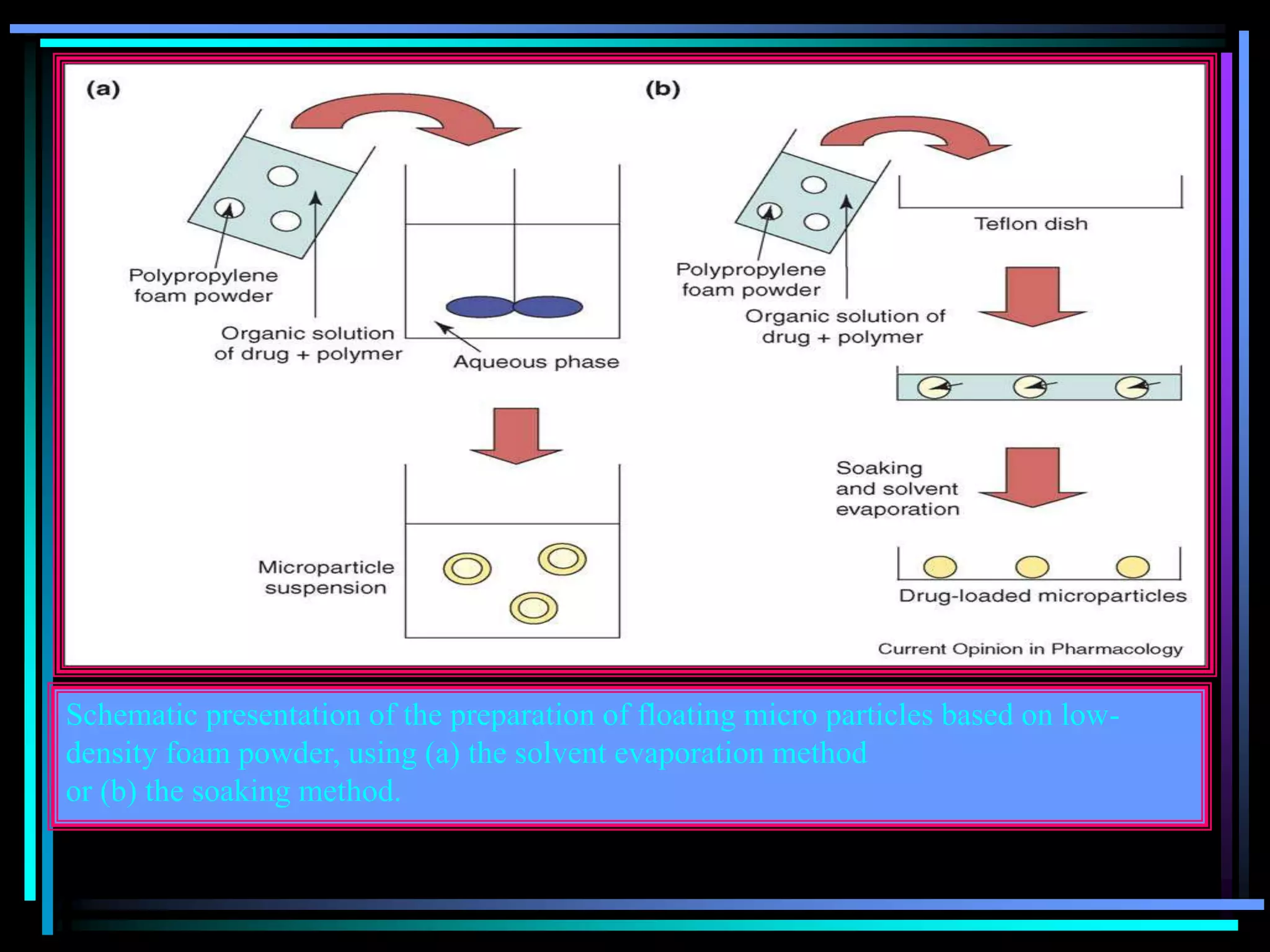
Schematic presentation of the preparation of floating micro particles based on low-
density foam powder, using (a) the solvent evaporation method
or (b) the soaking method.
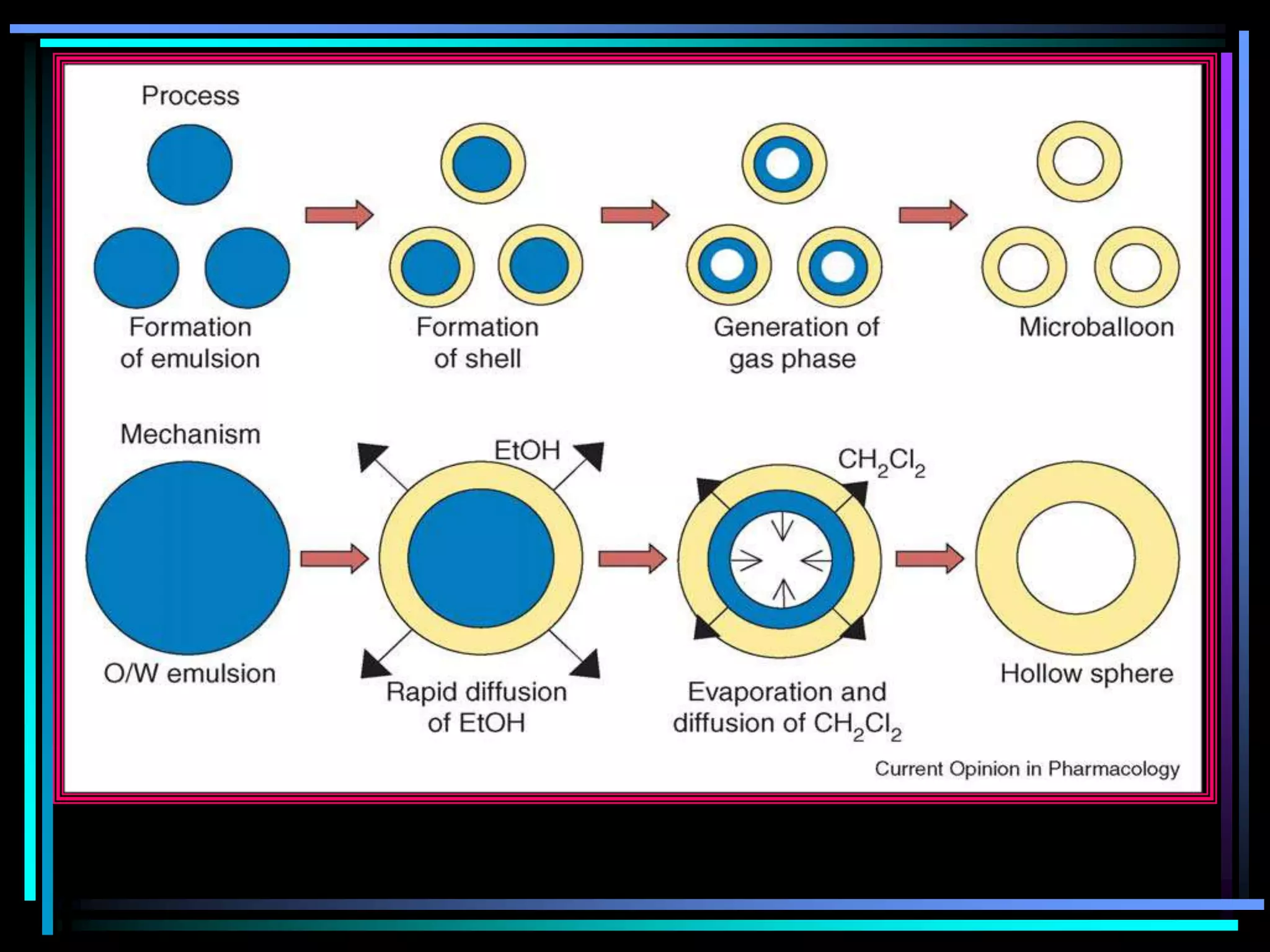
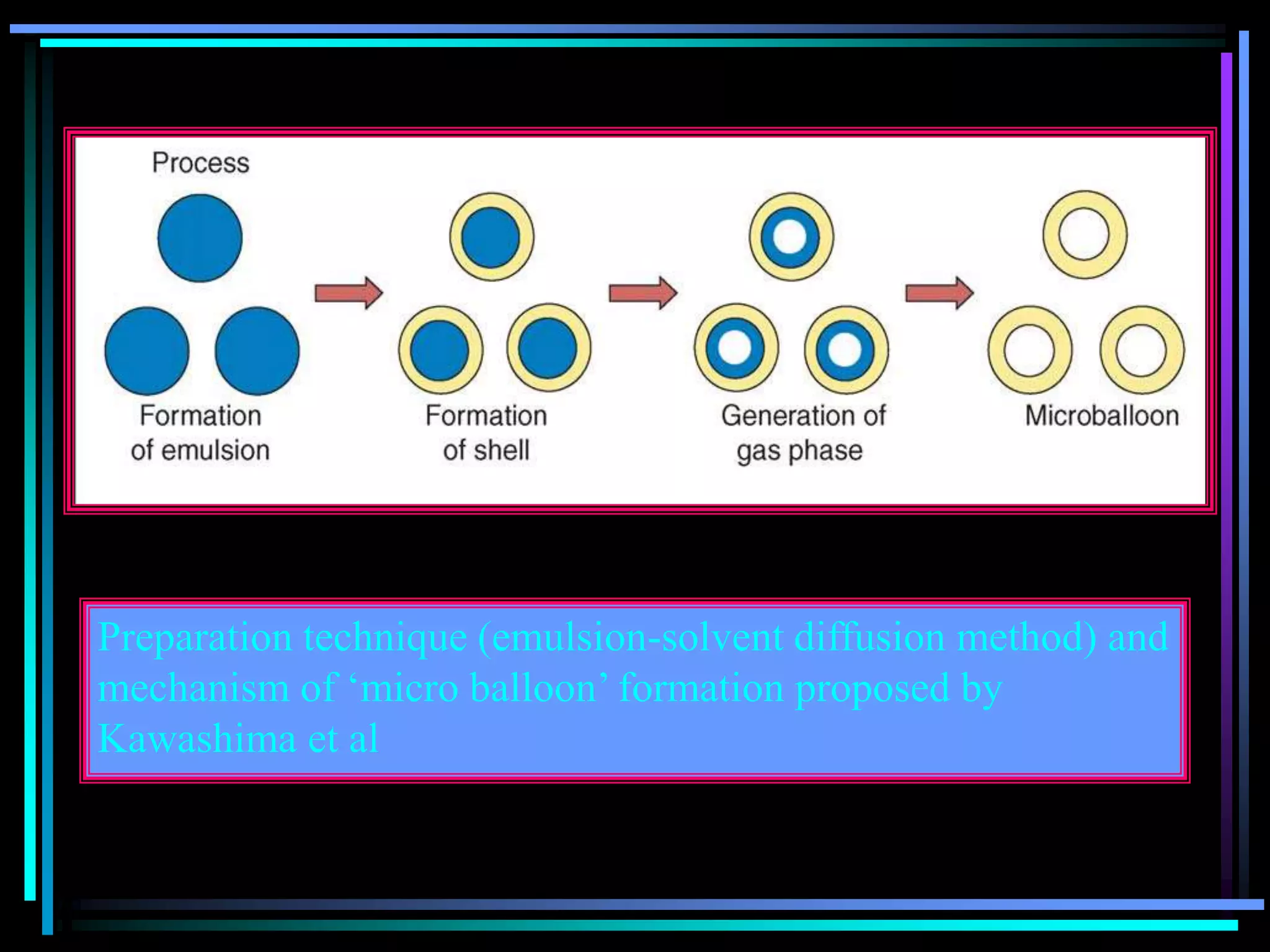
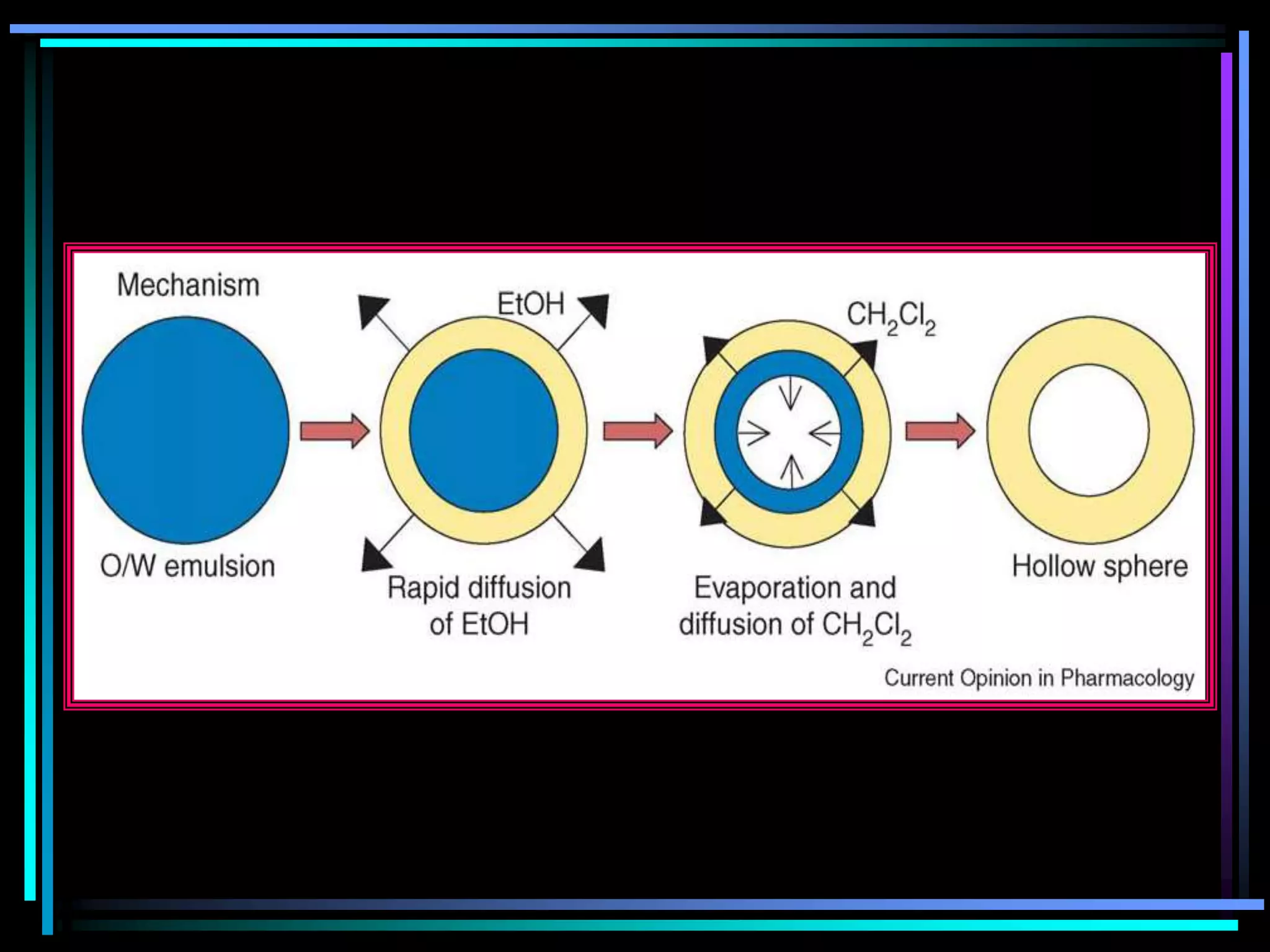
Preparation technique (emulsion-solvent diffusion method) and
mechanism of ‘micro balloon’ formation proposed by
Kawashima et al
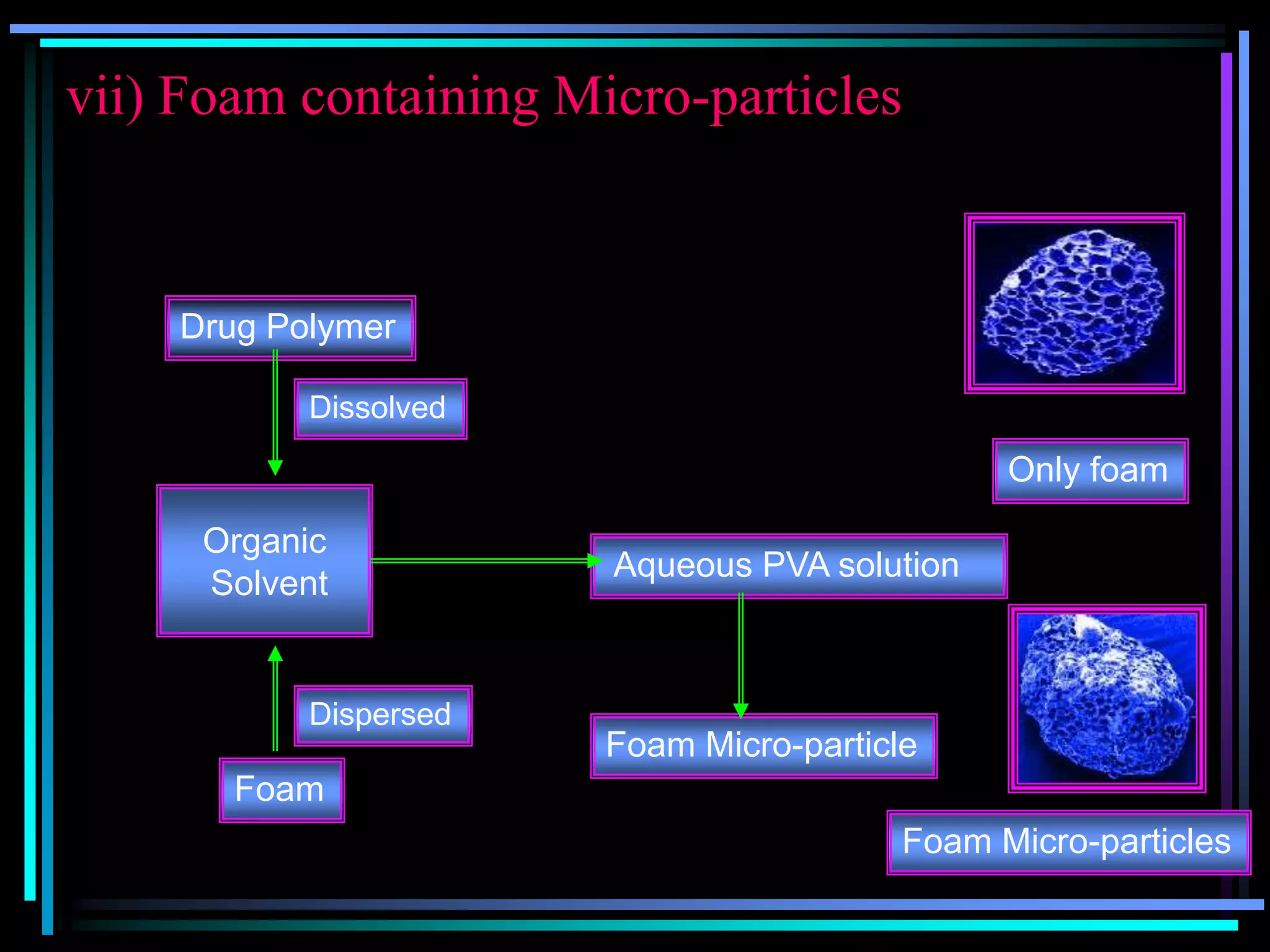
vii) Foam containing Micro-particles
Drug Polymer
Foam
Organic
Solvent
Aqueous PVA solution
Foam Micro-particle
Dissolved
Dispersed
Only foam
Foam Micro-particles
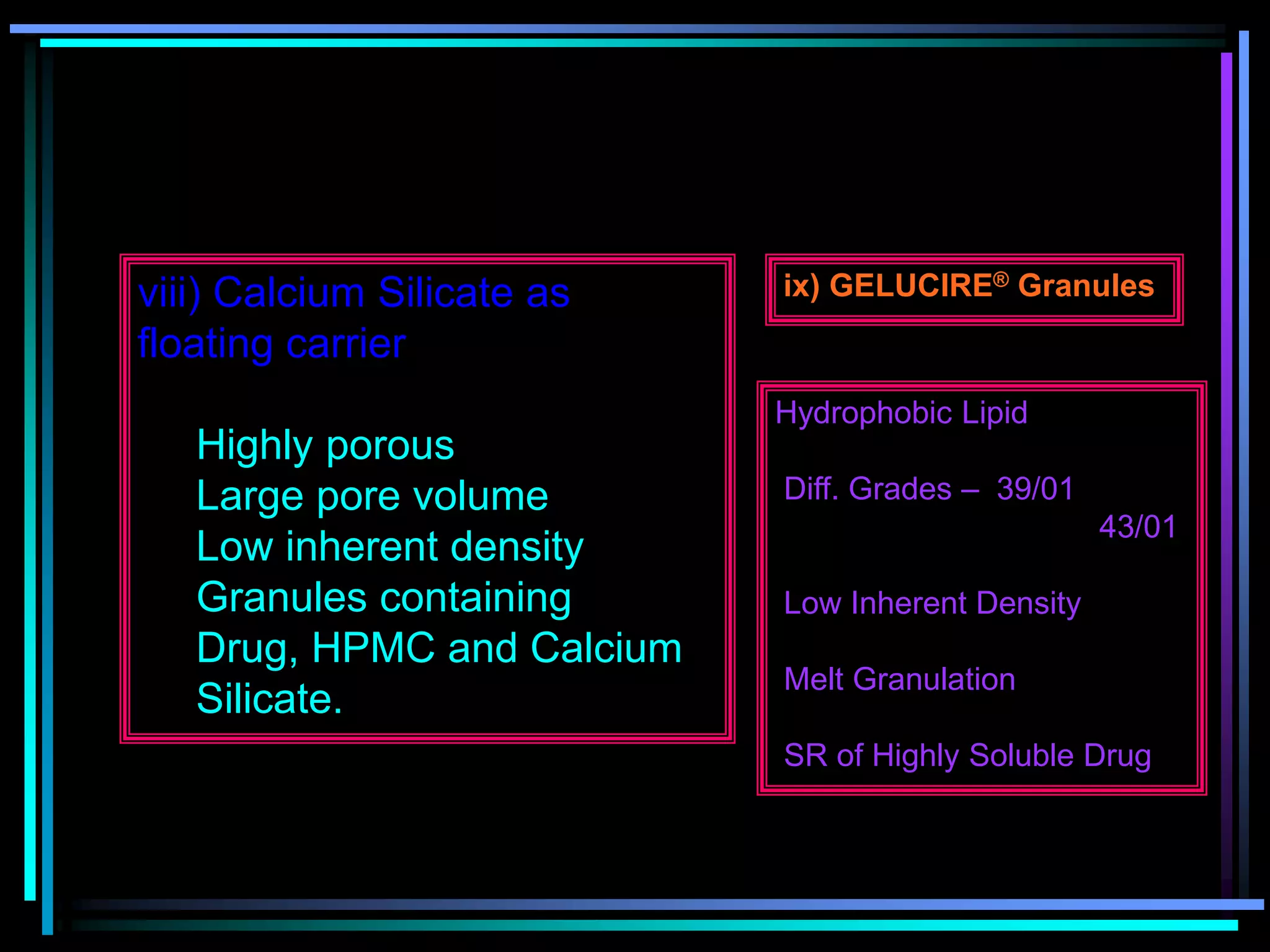
viii) Calcium Silicate as
floating carrier
Highly porous
Large pore volume
Low inherent density
Granules containing
Drug, HPMC and Calcium
Silicate.
ix) GELUCIRE® Granules
Hydrophobic Lipid
Diff. Grades – 39/01
43/01
Low Inherent Density
Melt Granulation
SR of Highly Soluble Drug
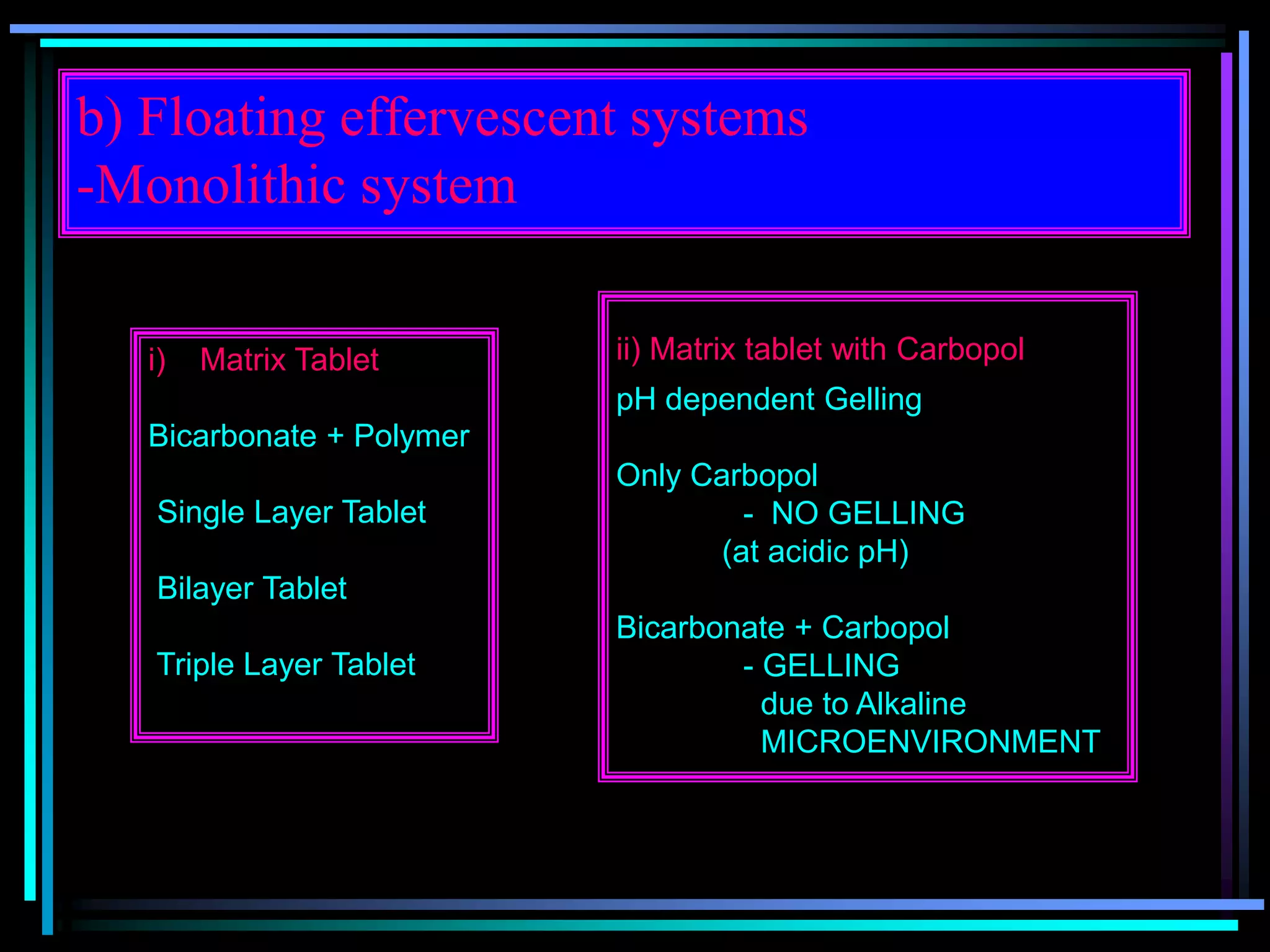
b) Floating effervescent systems
-Monolithic system
i) Matrix Tablet
Bicarbonate + Polymer
Single Layer Tablet
Bilayer Tablet
Triple Layer Tablet
ii) Matrix tablet with Carbopol
pH dependent Gelling
Only Carbopol
- NO GELLING
(at acidic pH)
Bicarbonate + Carbopol
- GELLING
due to Alkaline
MICROENVIRONMENT
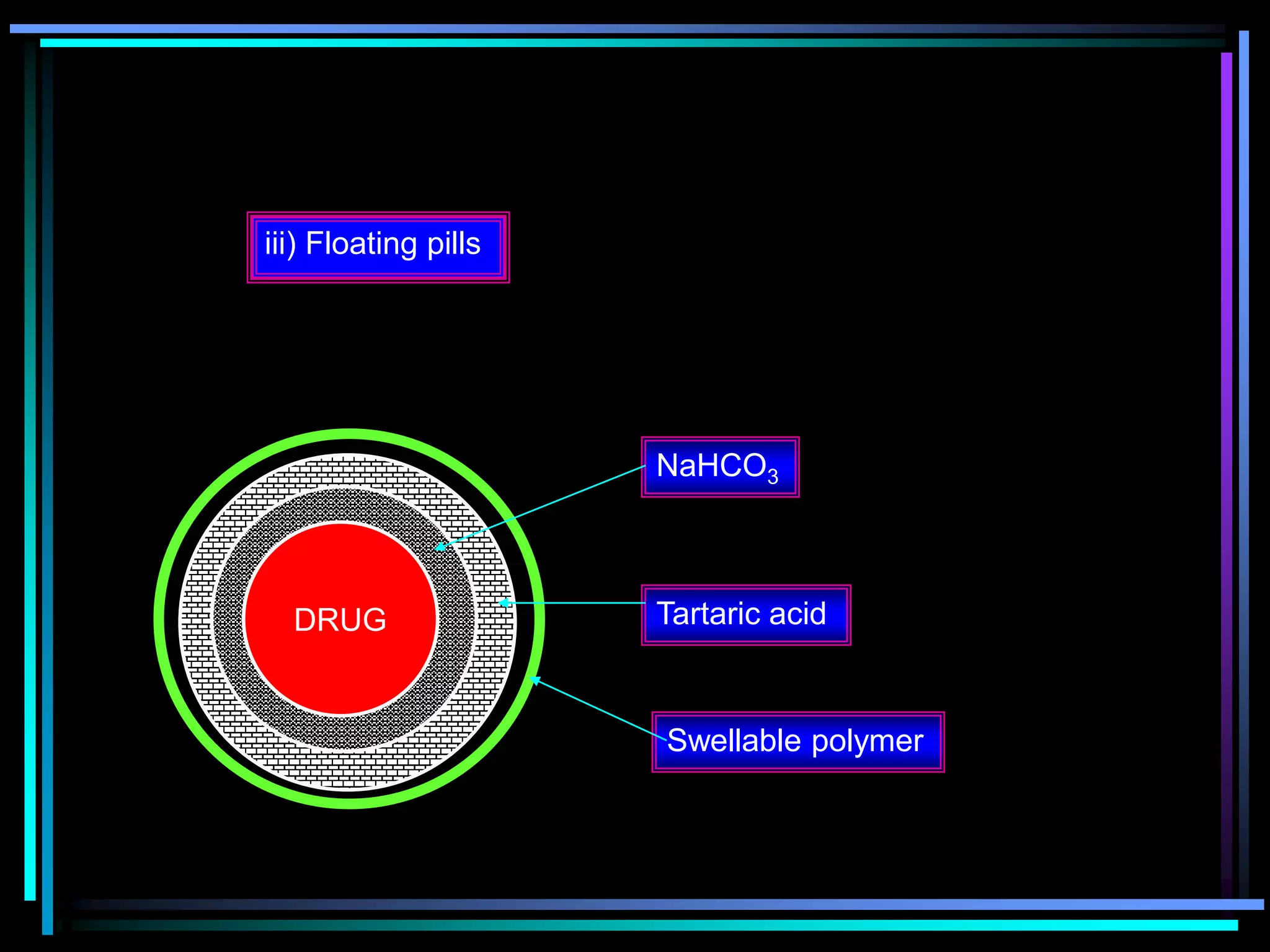
DRUG
NaHCO3
Tartaric acid
Swellable polymer
iii) Floating pills
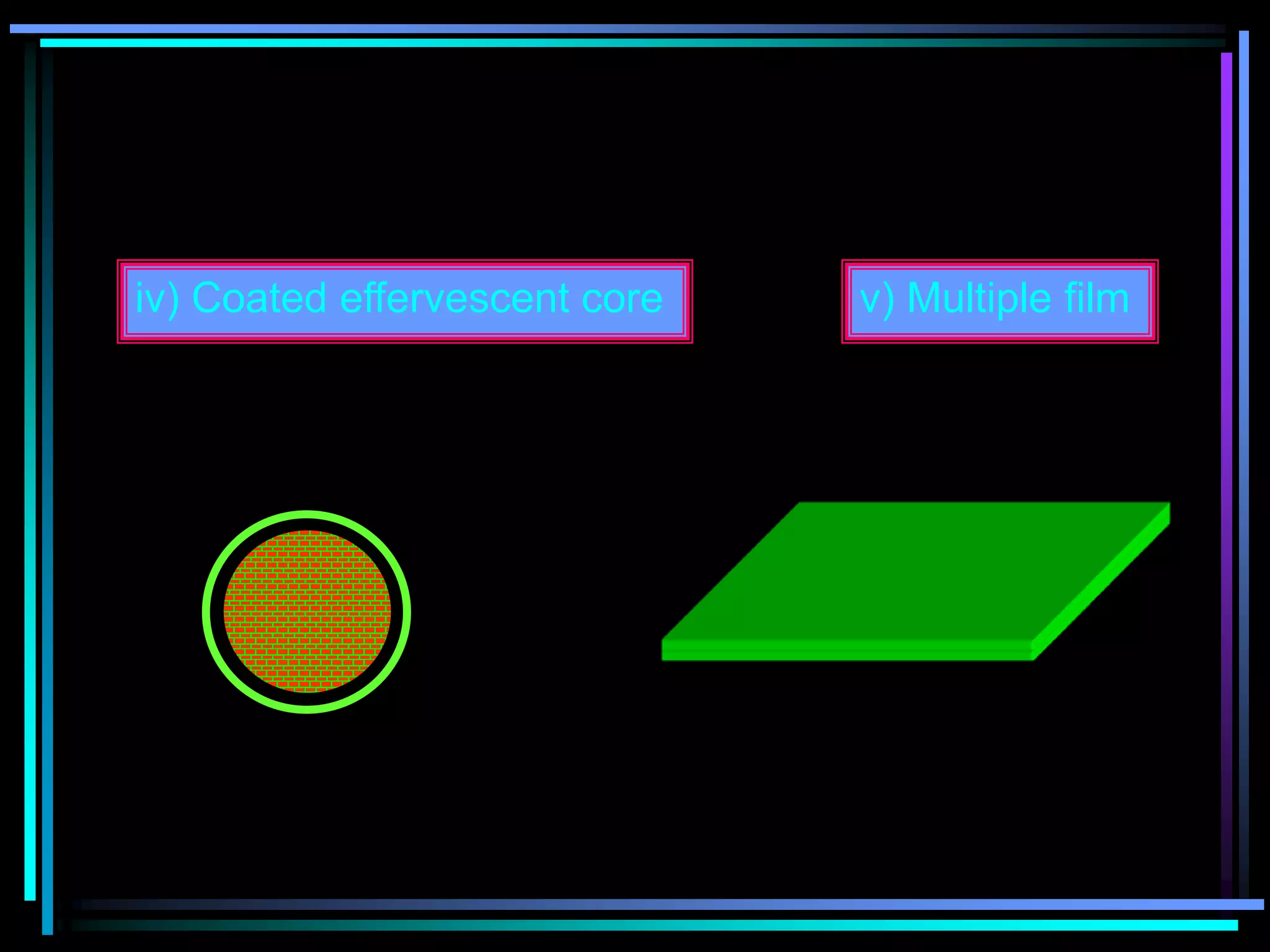
iv) Coated effervescent core v) Multiple film
Drug
NaHCO3
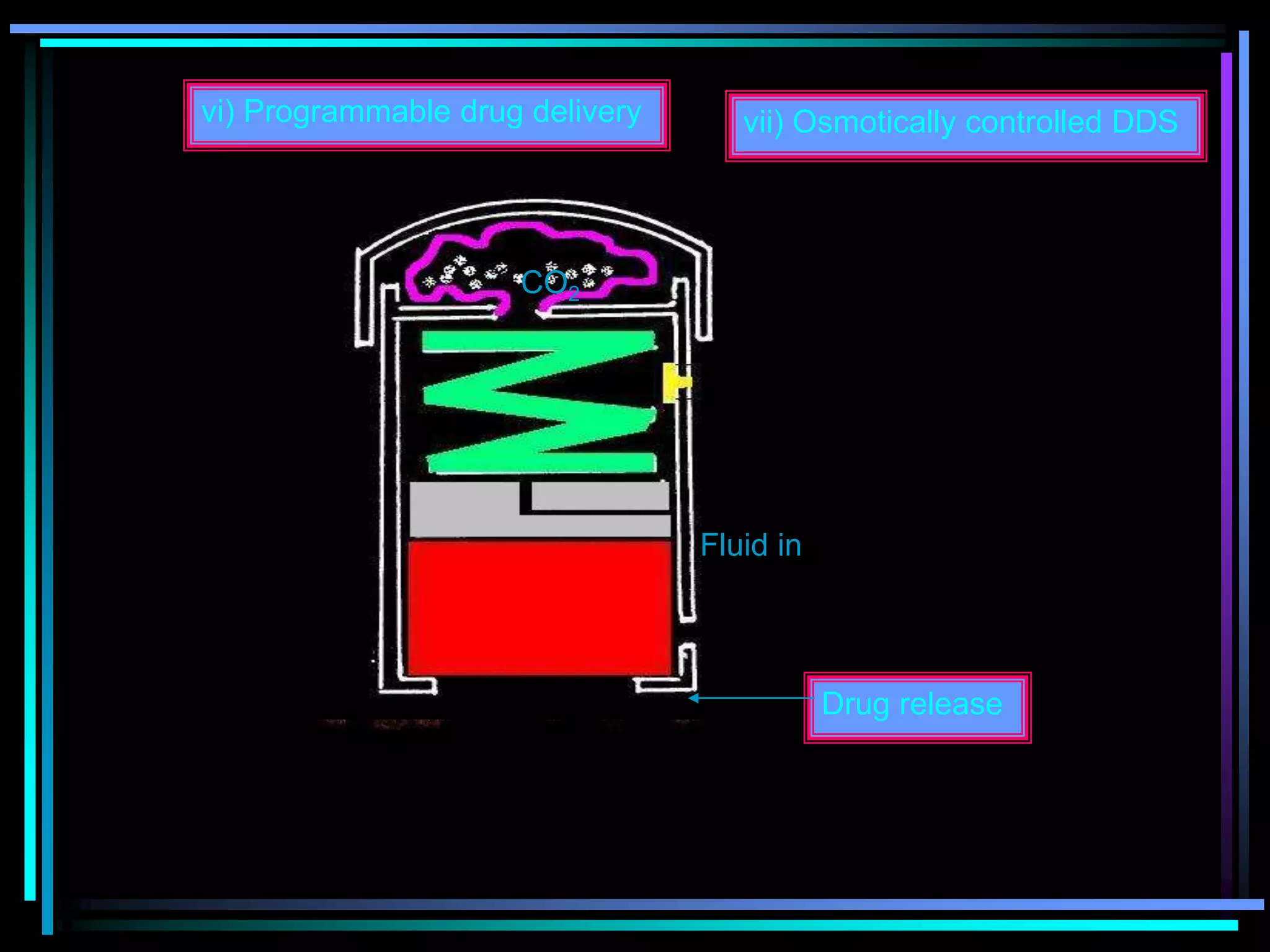
vi) Programmable drug delivery
Drug release
Fluid in
CO2
vii) Osmotically controlled DDS
b) Floating effervescent systems
-Multiple units
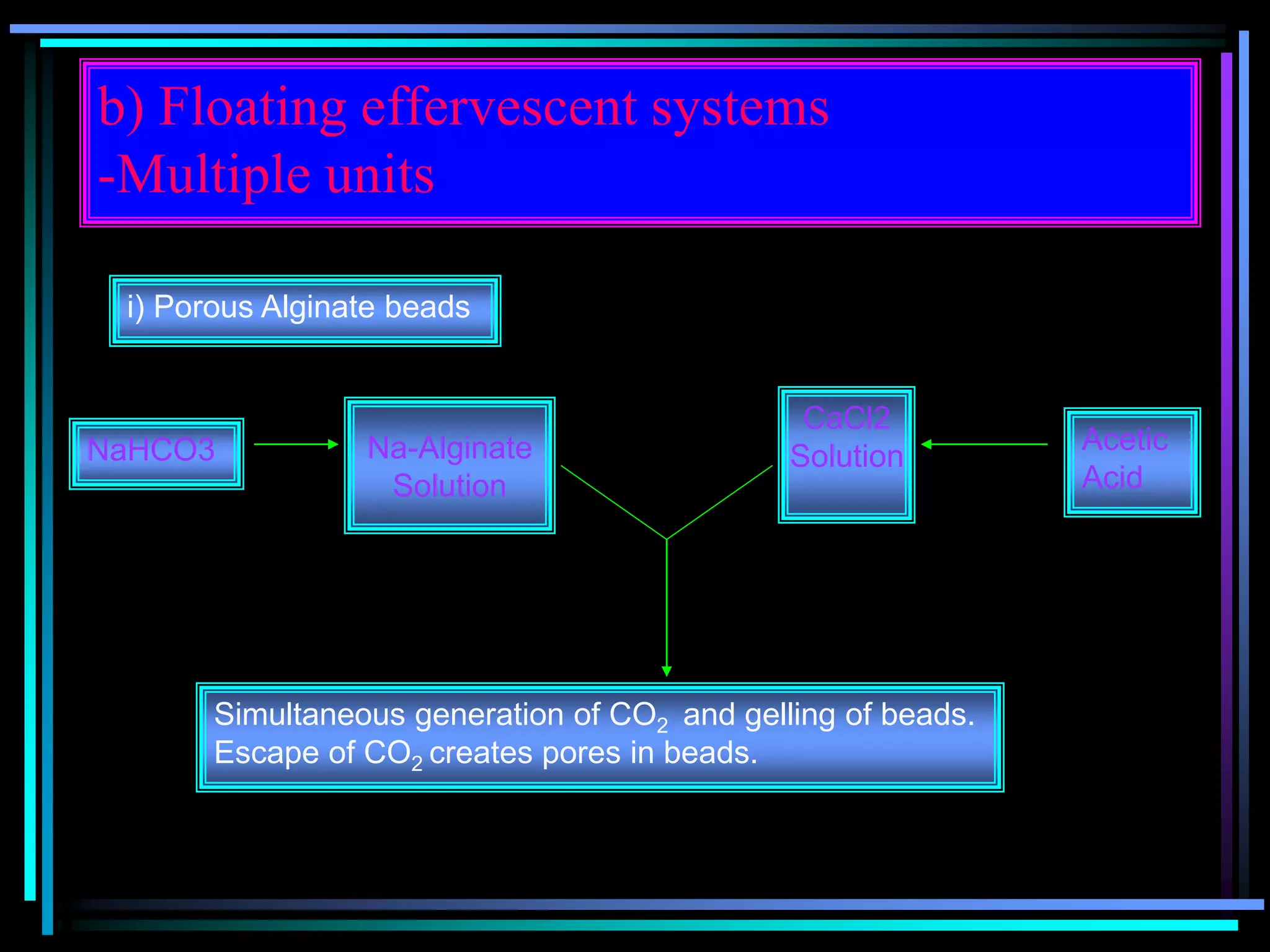
i) Porous Alginate beads
NaHCO3 Na-Alginate
Solution
CaCl2
Solution
Acetic
Acid
Simultaneous generation of CO2 and gelling of beads.
Escape of CO2 creates pores in beads.
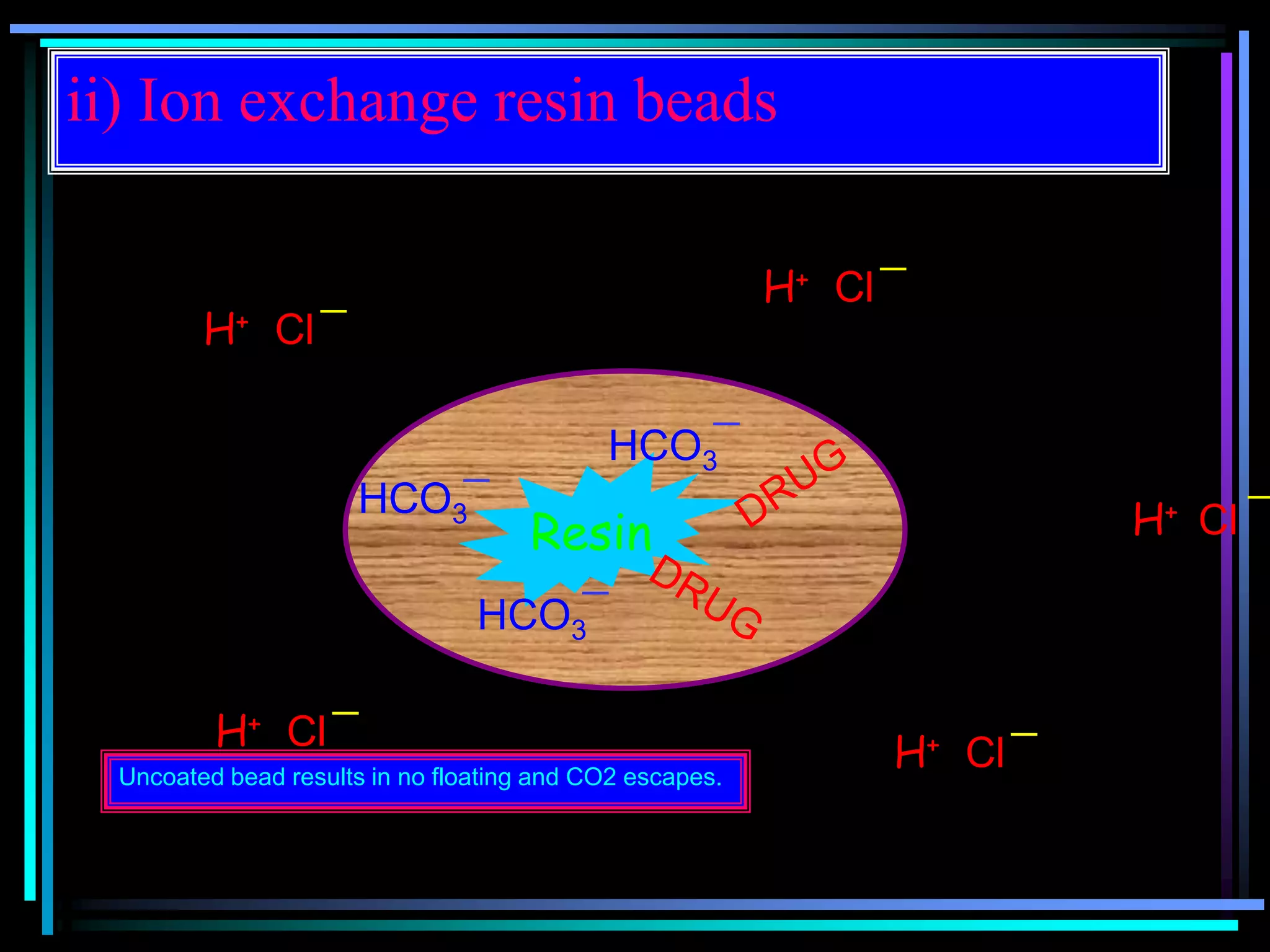
ii) Ion exchange resin beads
Resin
HCO3
HCO3
HCO3
H+ Cl
H+ Cl
H+ Cl
H+ Cl
H+ Cl
Uncoated bead results in no floating and CO2 escapes.
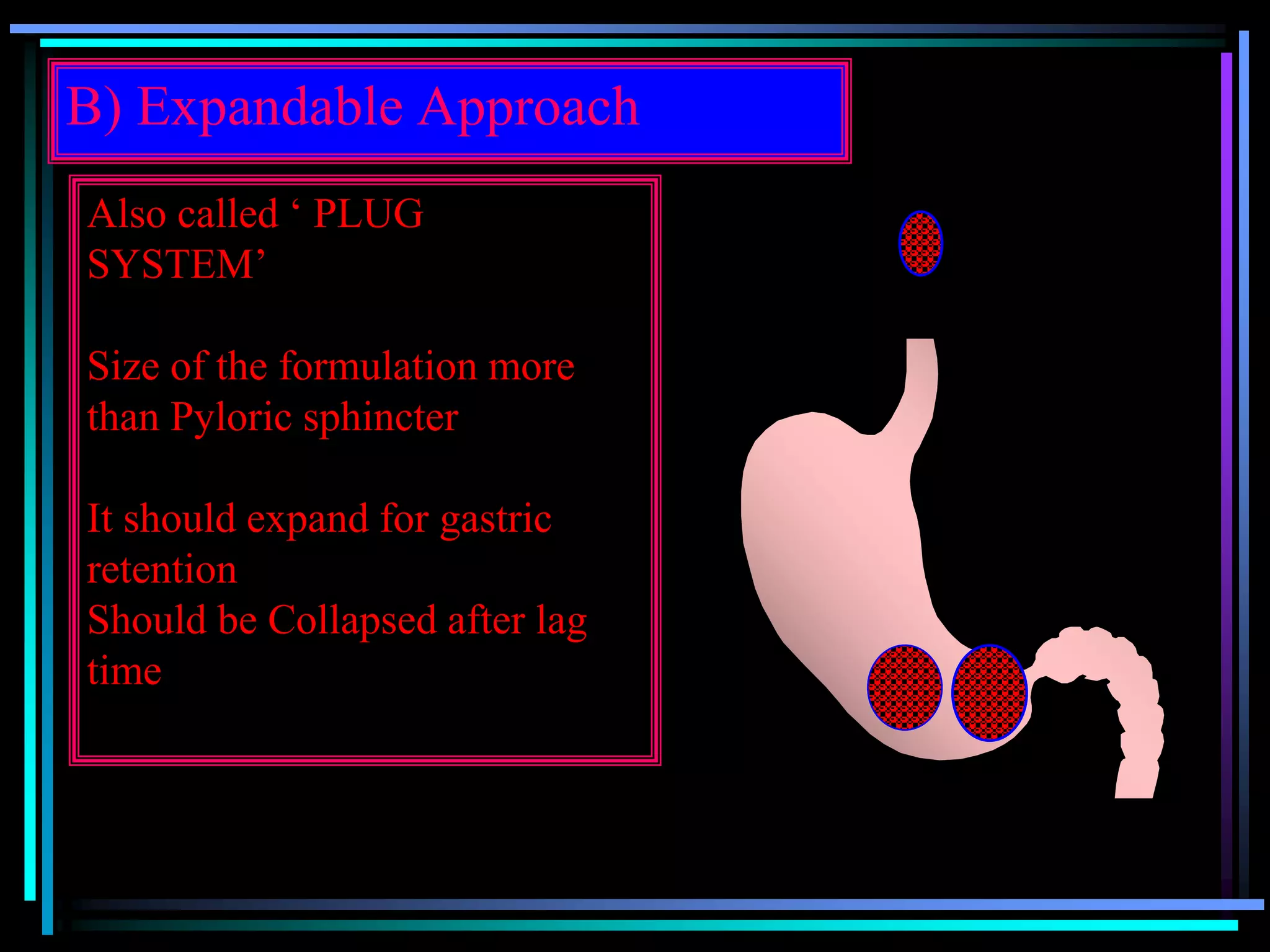
B) Expandable Approach
Also called ‘ PLUG
SYSTEM’
Size of the formulation more
than Pyloric sphincter
It should expand for gastric
retention
Should be Collapsed after lag
time
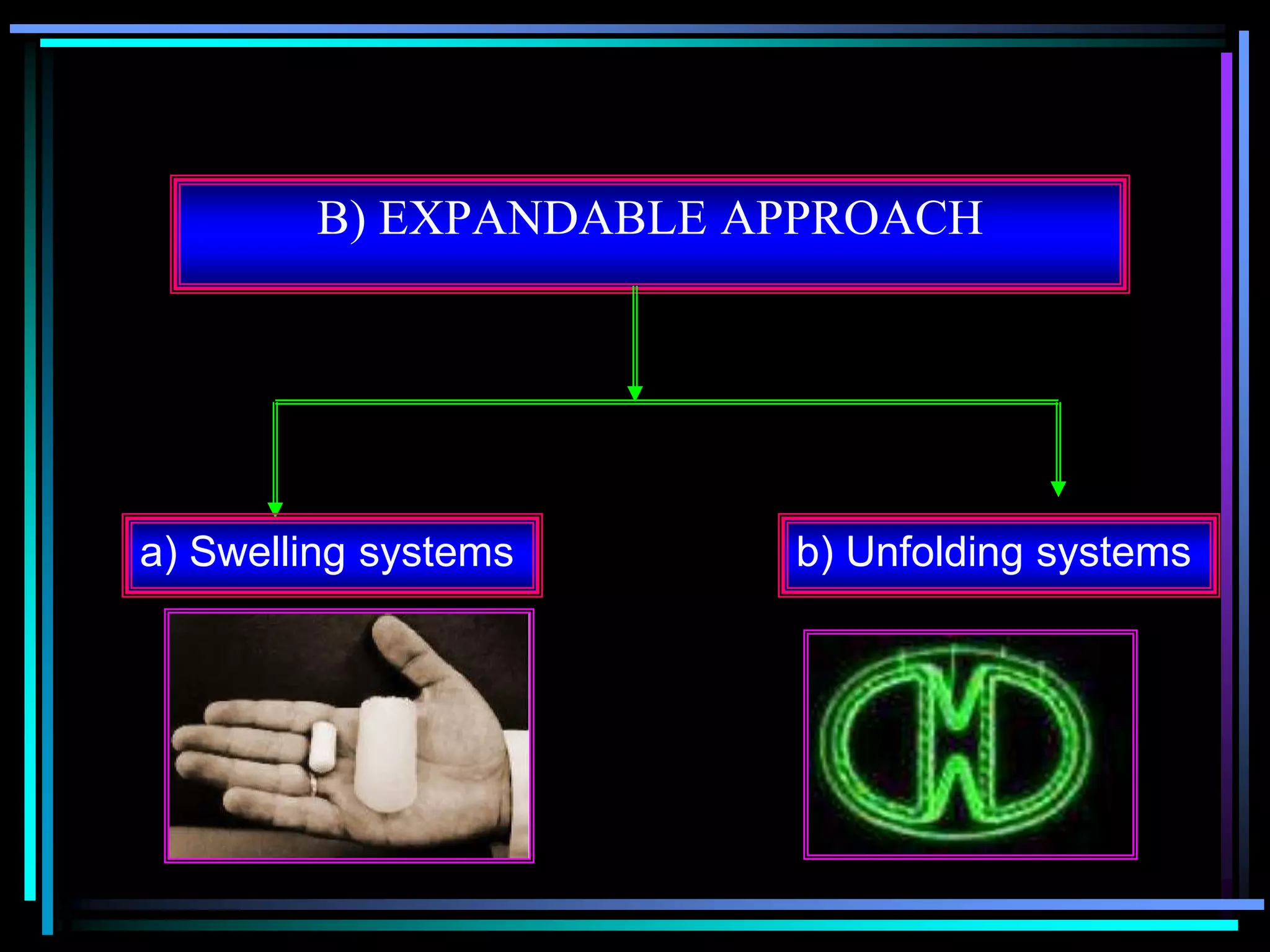
B) EXPANDABLE APPROACH
a) Swelling systems b) Unfolding systems
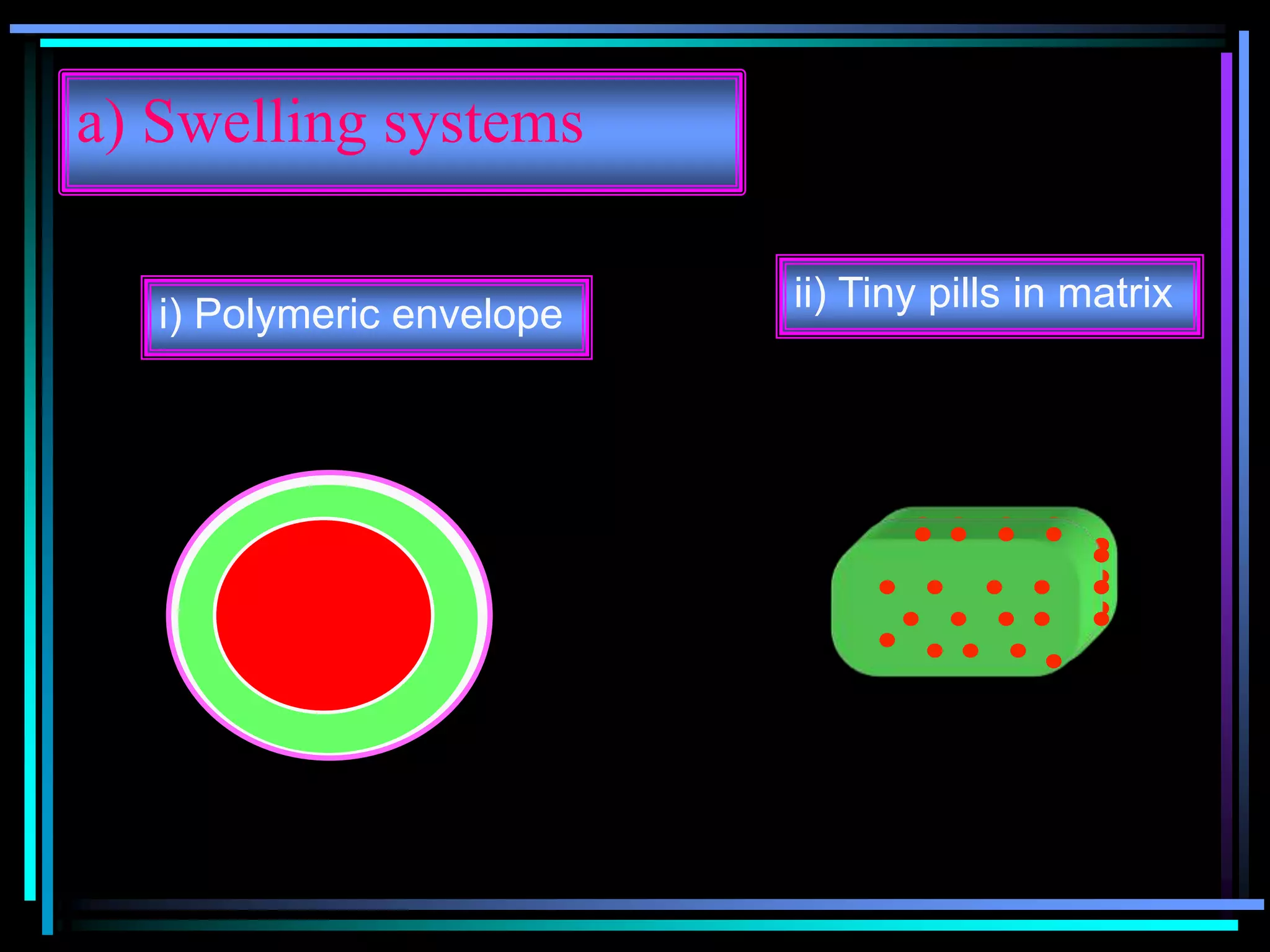
a) Swelling systems
i) Polymeric envelope
ii) Tiny pills in matrix
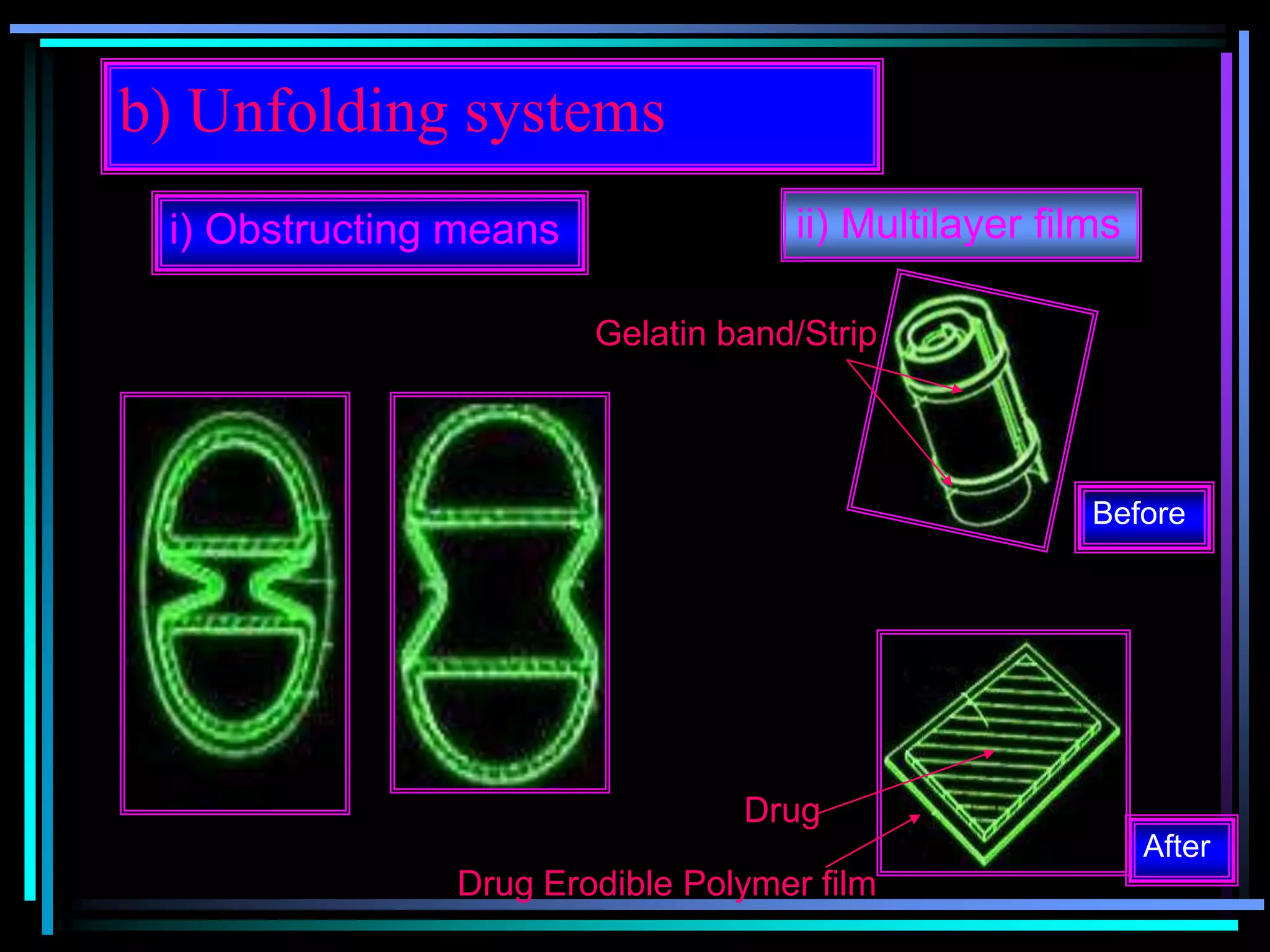
b) Unfolding systems
i) Obstructing means ii) Multilayer films
Before
After
Drug
Drug Erodible Polymer film
Gelatin band/Strip
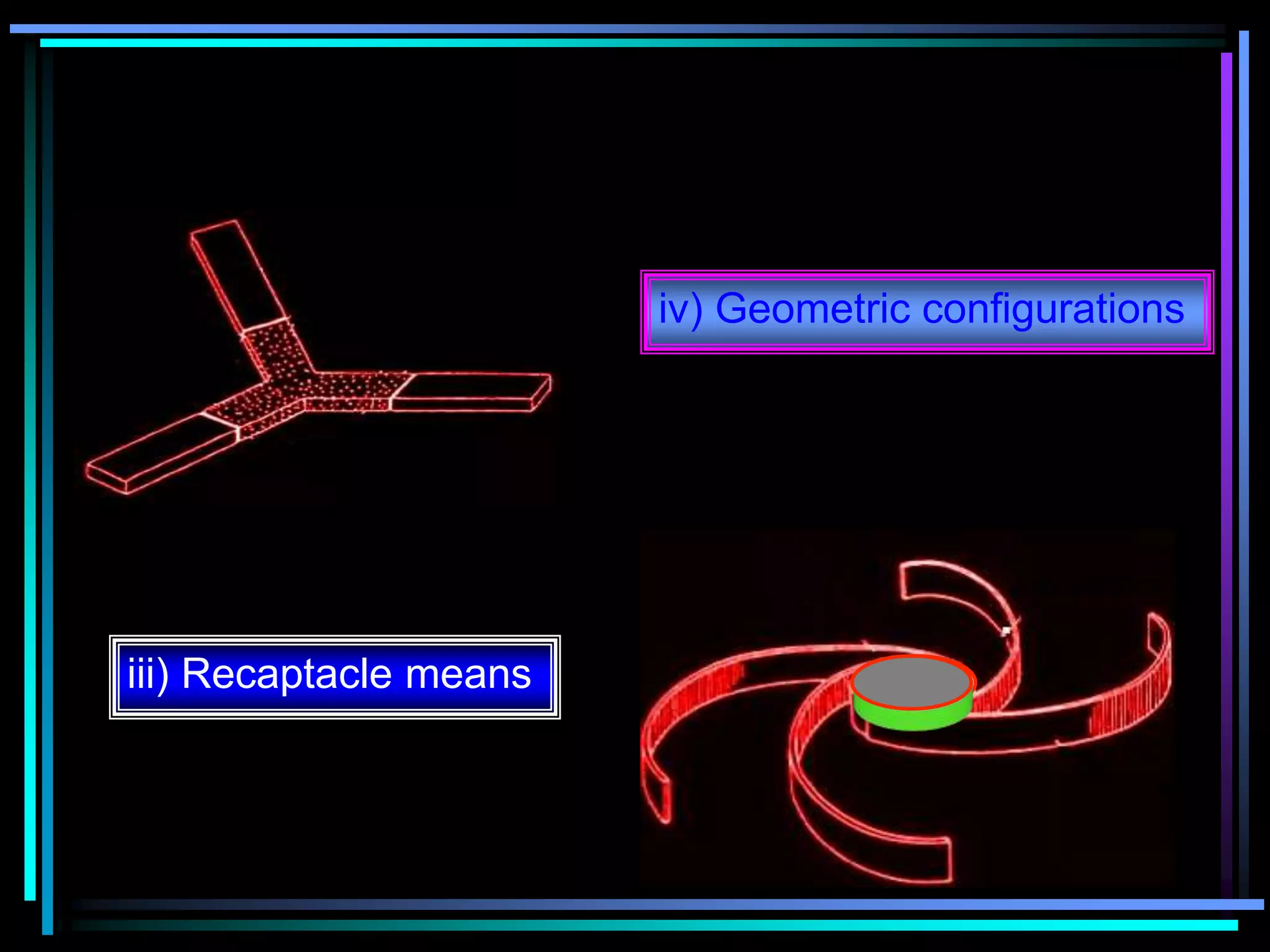
iv) Geometric configurations
iii) Recaptacle means
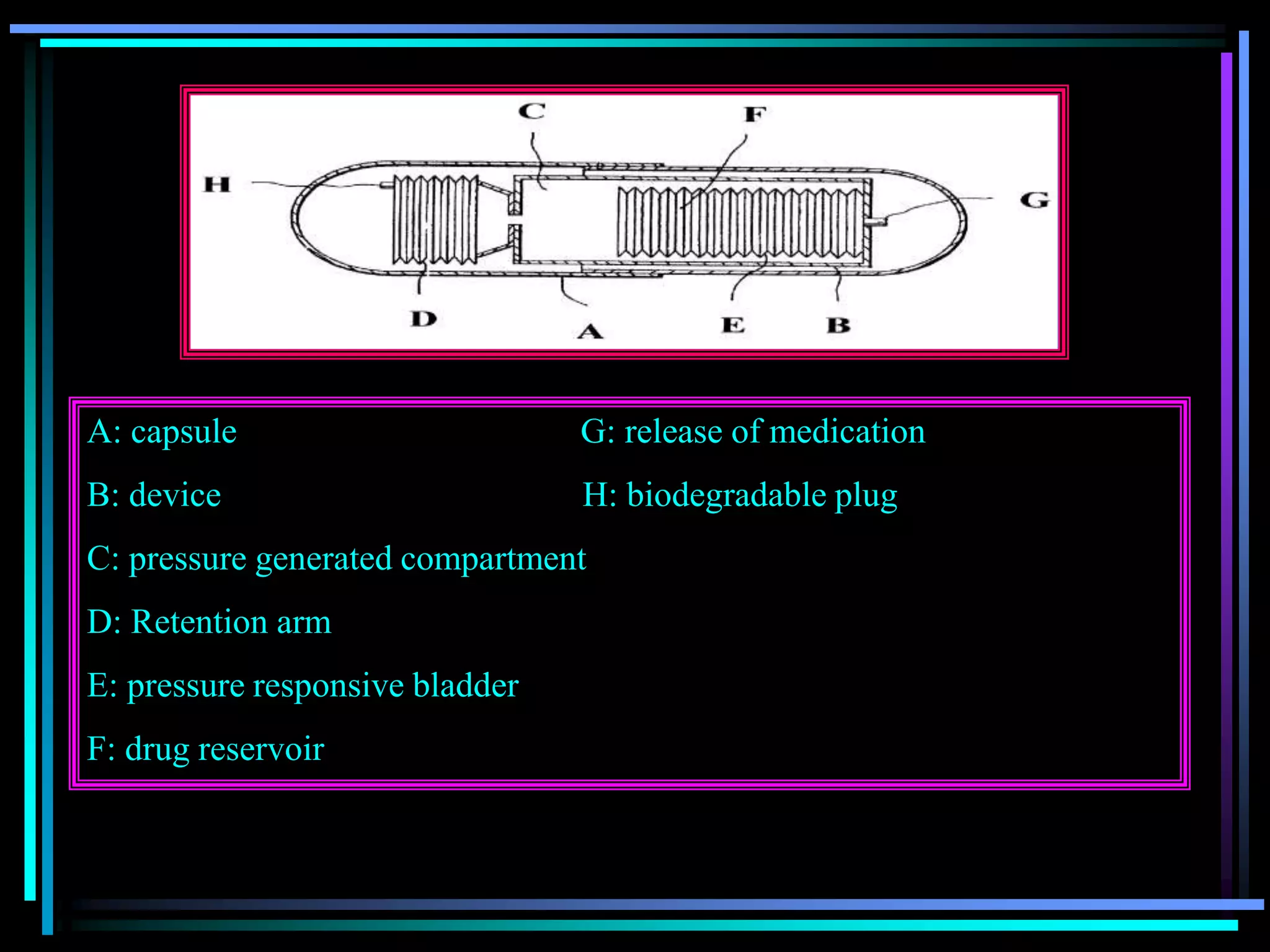
A: capsule G: release of medication
B: device H: biodegradable plug
C: pressure generated compartment
D: Retention arm
E: pressure responsive bladder
F: drug reservoir
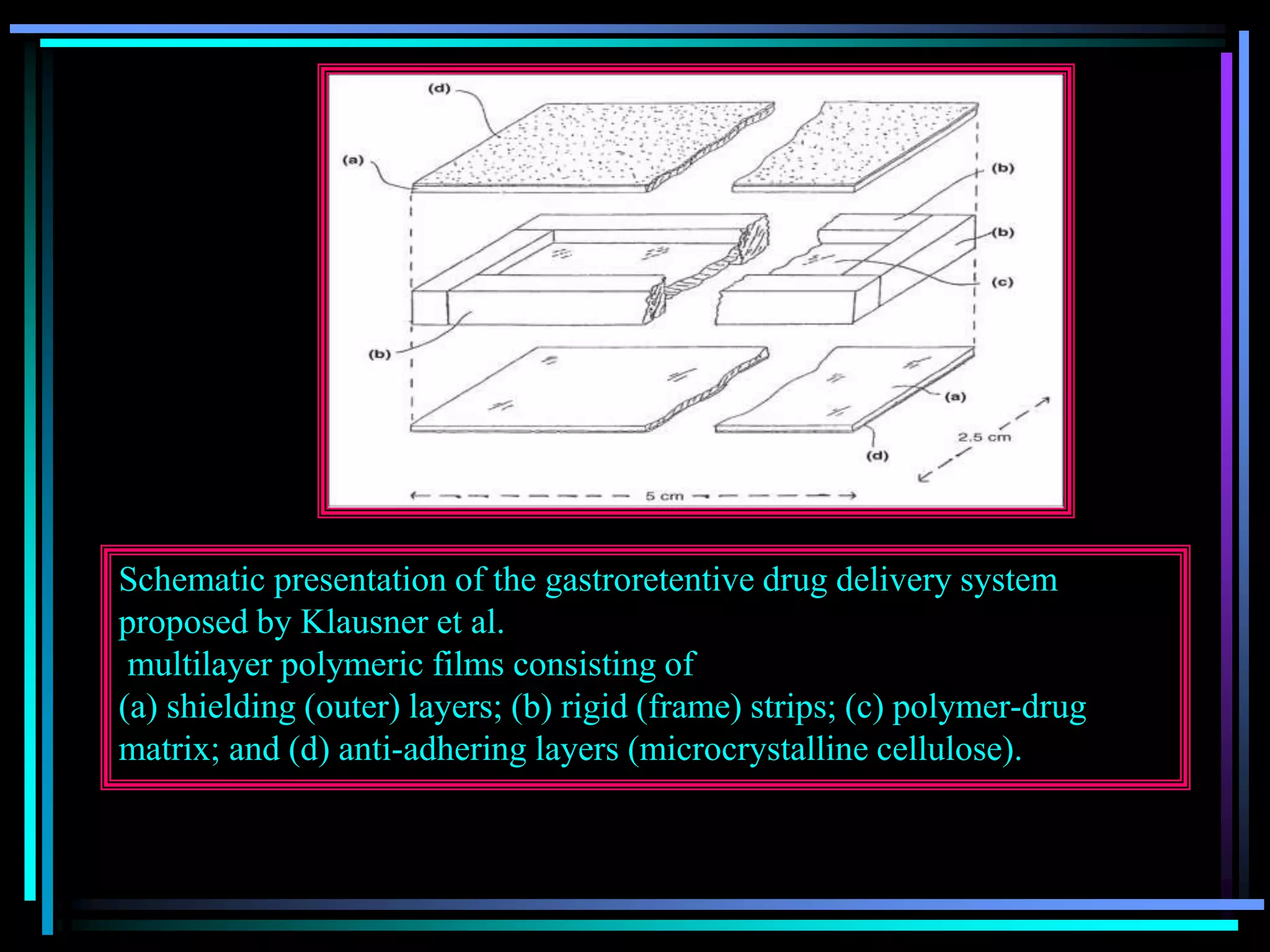
Schematic presentation of the gastroretentive drug delivery system
proposed by Klausner et al.
multilayer polymeric films consisting of
(a) shielding (outer) layers; (b) rigid (frame) strips; (c) polymer-drug
matrix; and (d) anti-adhering layers (microcrystalline cellulose).
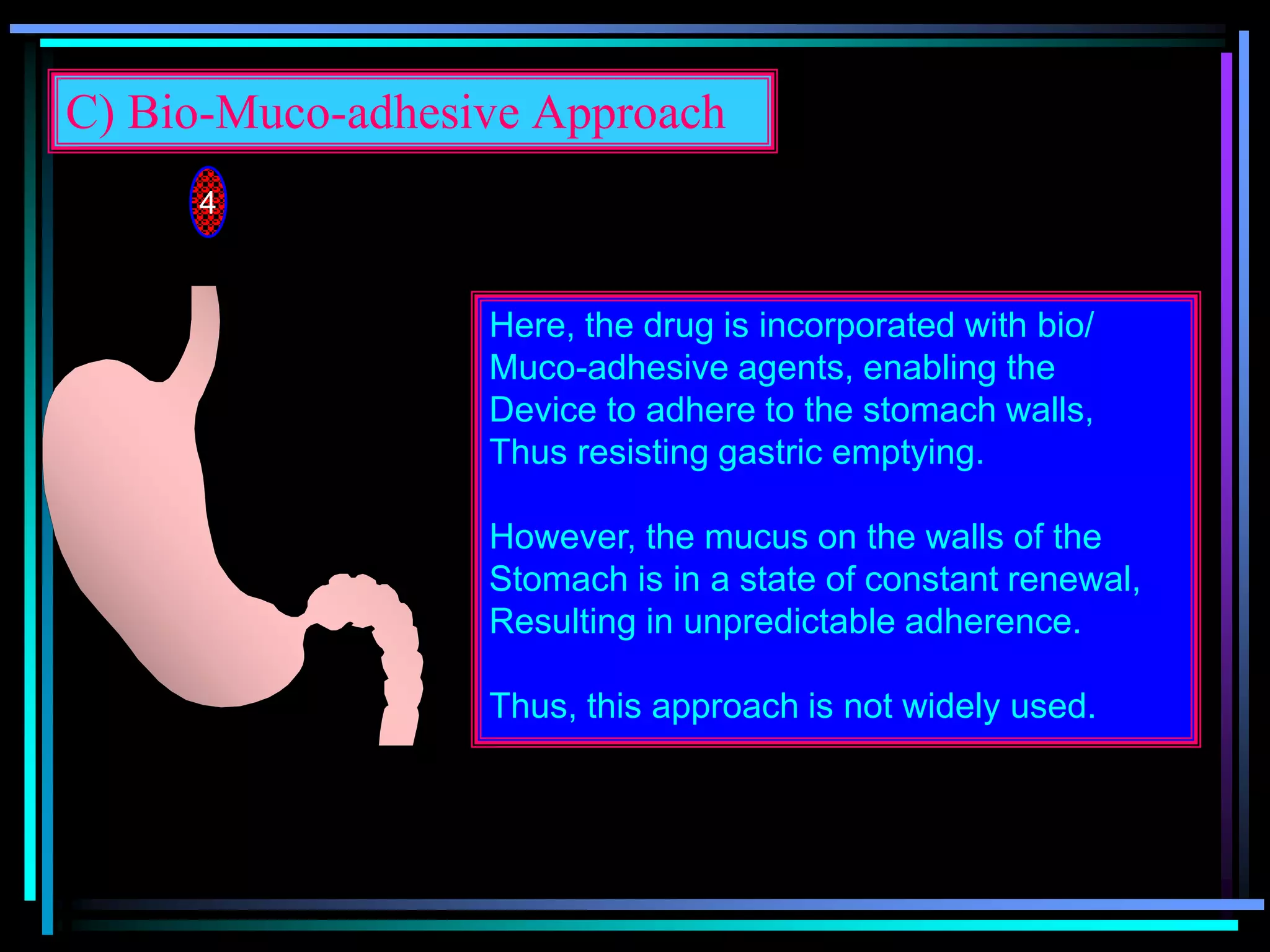
C) Bio-Muco-adhesive Approach
4
Here, the drug is incorporated with bio/
Muco-adhesive agents, enabling the
Device to adhere to the stomach walls,
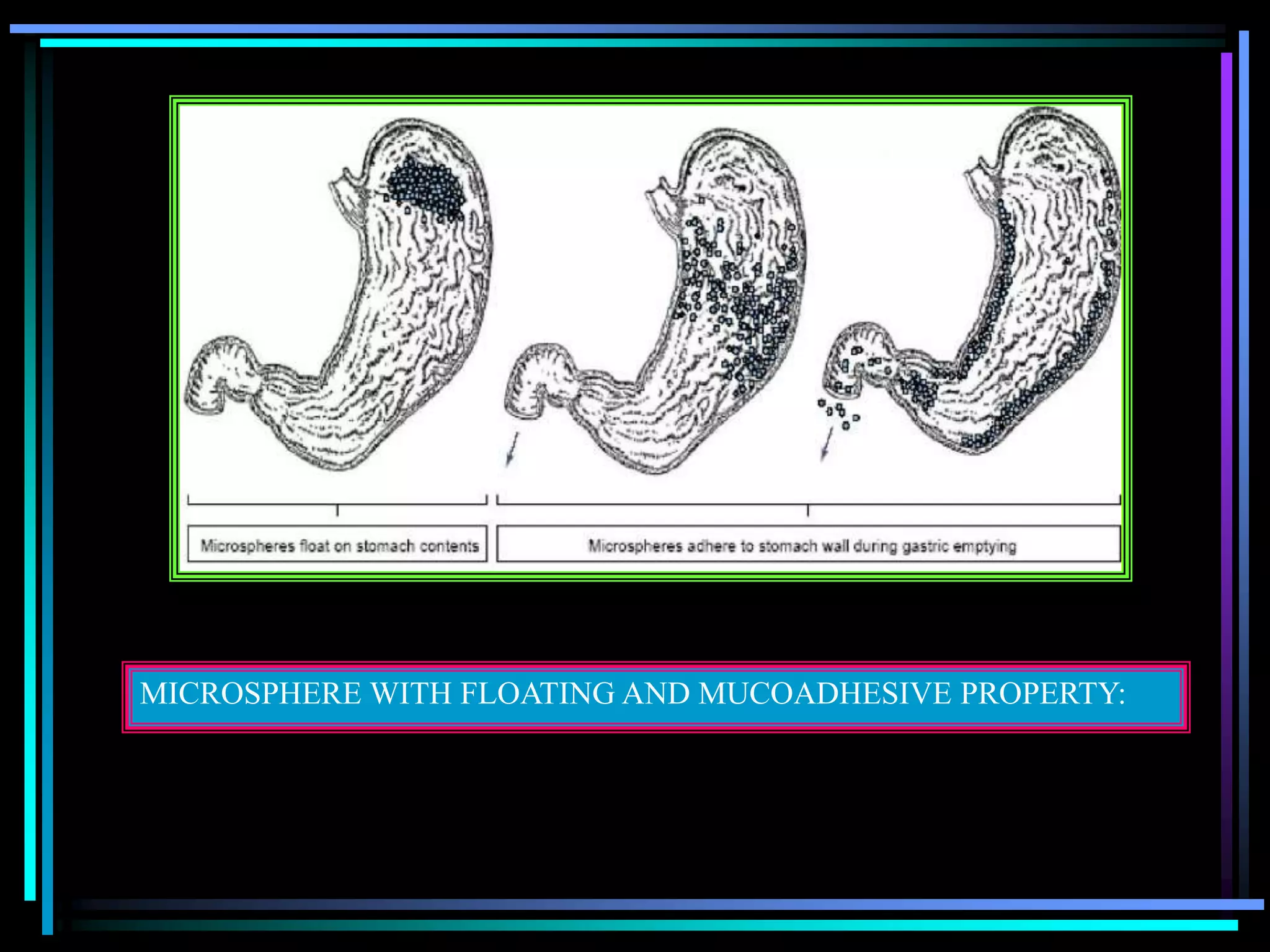
Thus resisting gastric emptying.
However, the mucus on the walls of the
Stomach is in a state of constant renewal,
Resulting in unpredictable adherence.
Thus, this approach is not widely used.
MICROSPHERE WITH FLOATING AND MUCOADHESIVE PROPERTY:
Mechanism of bioadhesion:
• Hydration-mediated adhesion
• Bonding-mediated adhesion
• Receptor-mediated adhesion.
Problem of muco adhesive system:
• Rapid removal of mucus.
• We are not sure weather the DF will adhere to the mucus
or epithelial cell layer
• DF may adhere to esophagus resulting in drug induced
injuries
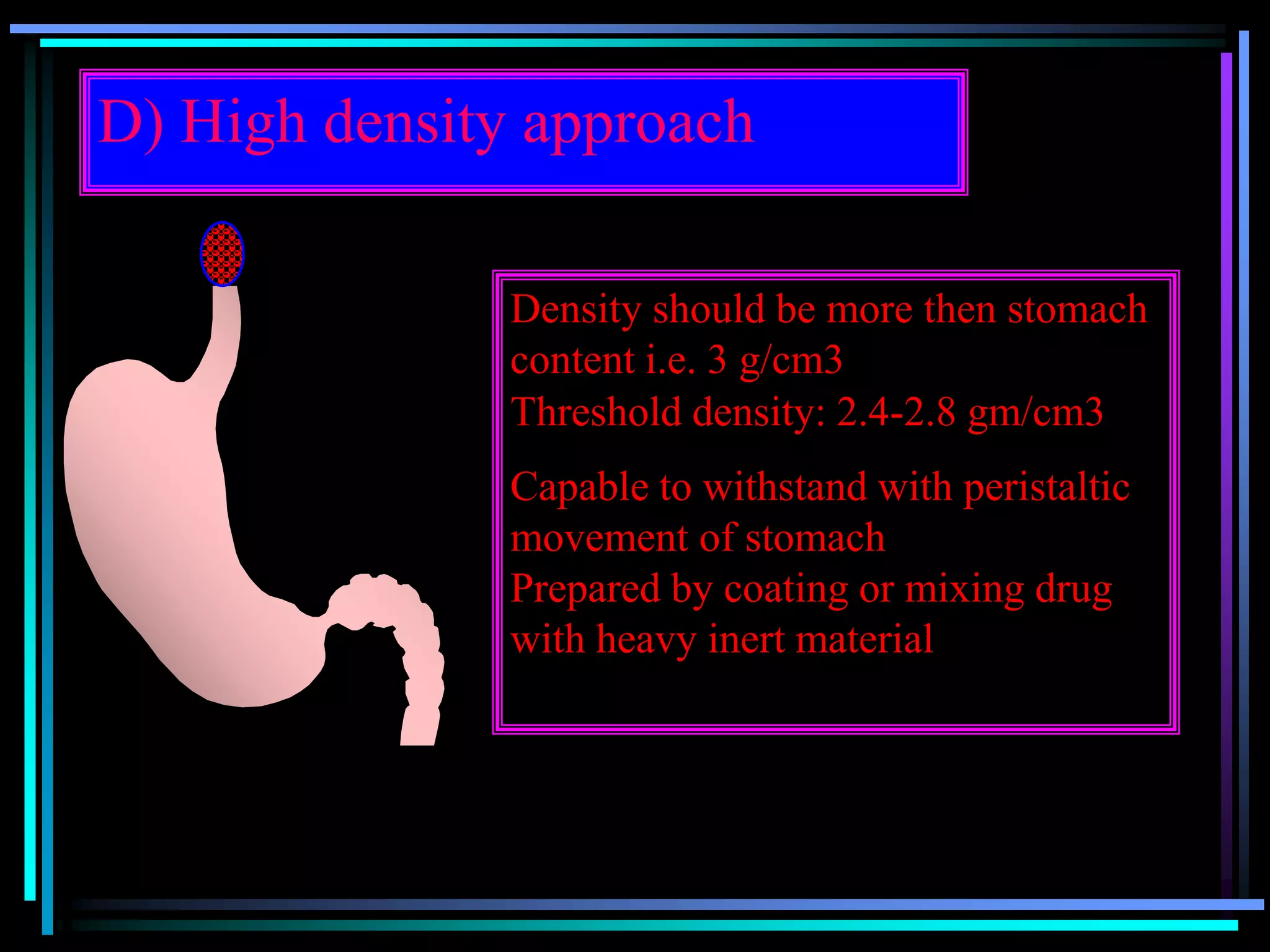
D) High density approach
Density should be more then stomach
content i.e. 3 g/cm3
Threshold density: 2.4-2.8 gm/cm3
Capable to withstand with peristaltic
movement of stomach
Prepared by coating or mixing drug
with heavy inert material
Diluents such as…
• barium sulphate (density = 4.9),
• zinc oxide,
• titanium dioxide,
• iron powder
must be used to manufacture such high-density
formulations.
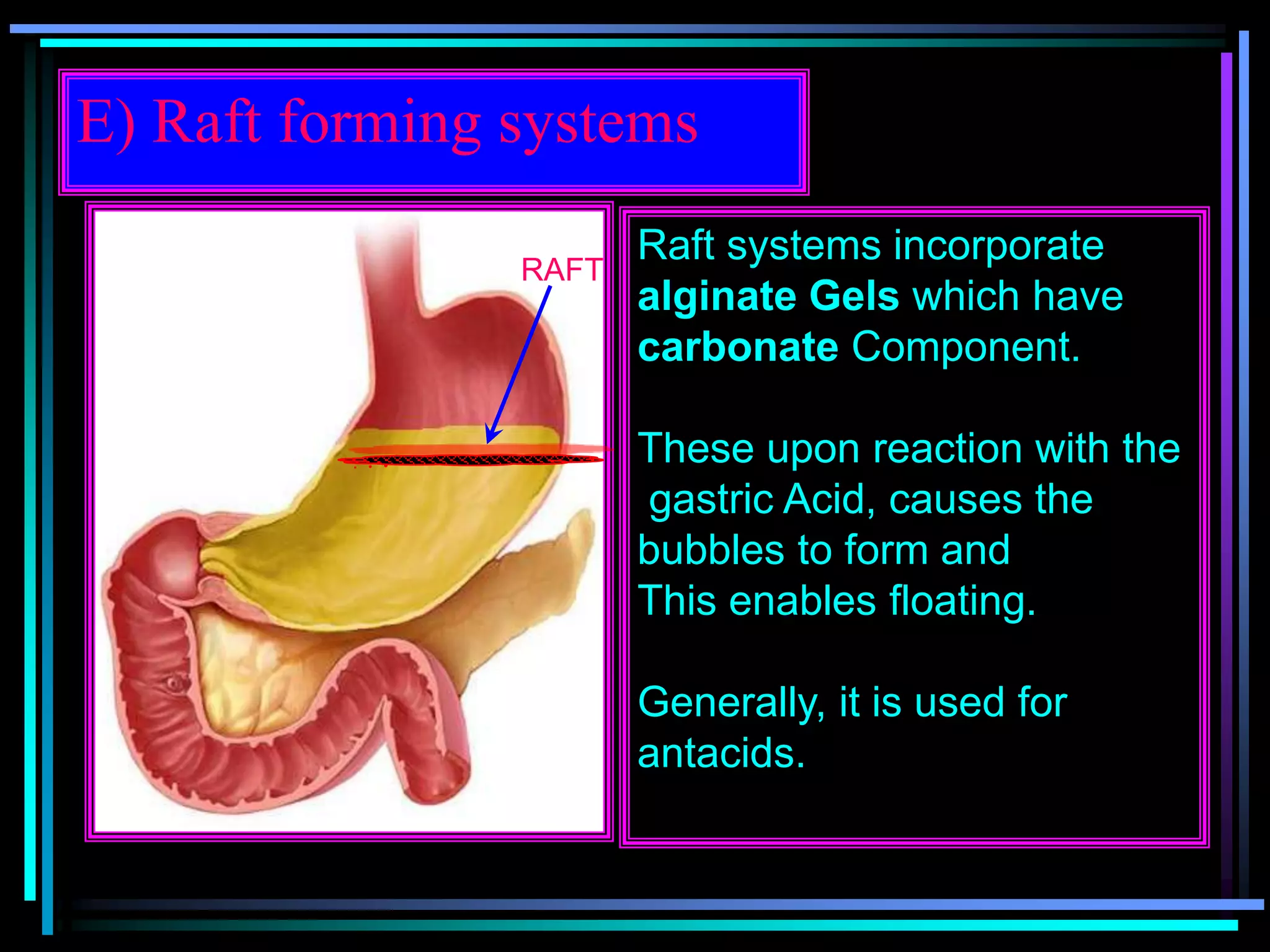
E) Raft forming systems
RAFT
Raft systems incorporate
alginate Gels which have
carbonate Component.
These upon reaction with the
gastric Acid, causes the
bubbles to form and
This enables floating.
Generally, it is used for
antacids.
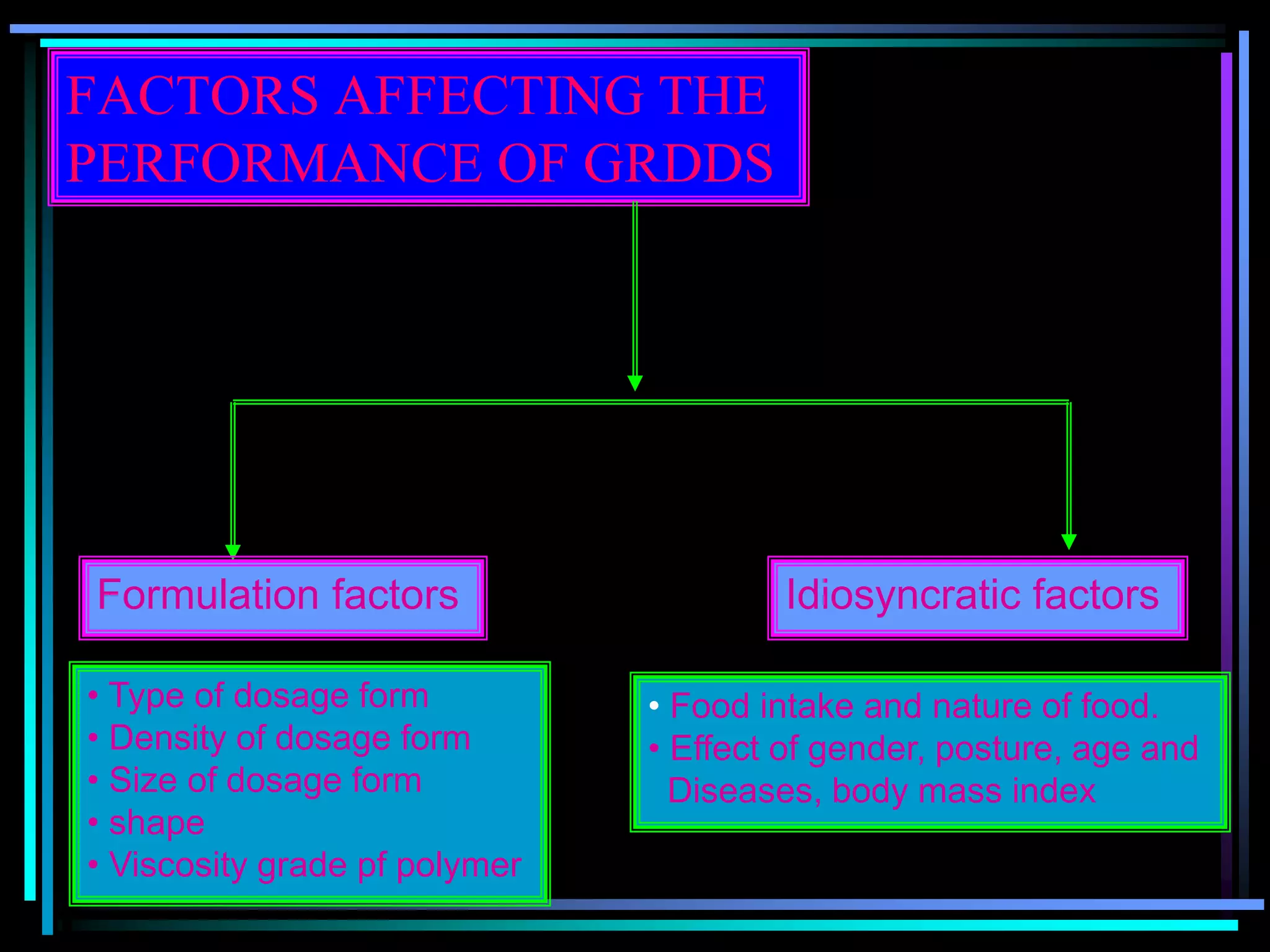
FACTORS AFFECTING THE
PERFORMANCE OF GRDDS
Formulation factors Idiosyncratic factors
• Type of dosage form
• Density of dosage form
• Size of dosage form
• shape
• Viscosity grade pf polymer
• Food intake and nature of food.
• Effect of gender, posture, age and
Diseases, body mass index
Evaluation of GRDDS
1) For floating system
• Buoyancy lag time:
• Floating time:
• Specific
gravity/density:
• Resultant weight:
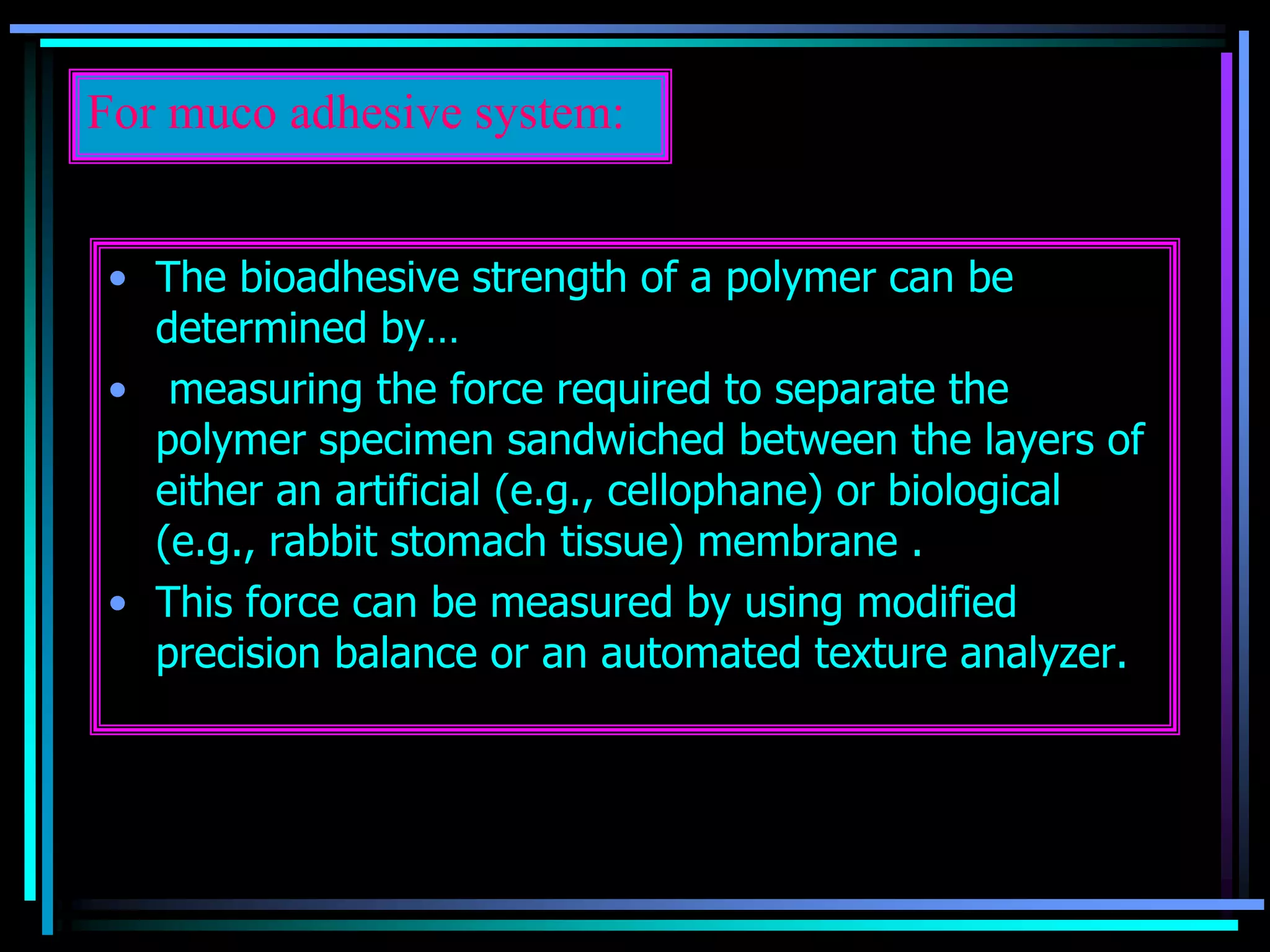
For muco adhesive system:
• The bioadhesive strength of a polymer can be
determined by…
• measuring the force required to separate the
polymer specimen sandwiched between the layers of
either an artificial (e.g., cellophane) or biological
(e.g., rabbit stomach tissue) membrane .
• This force can be measured by using modified
precision balance or an automated texture analyzer.
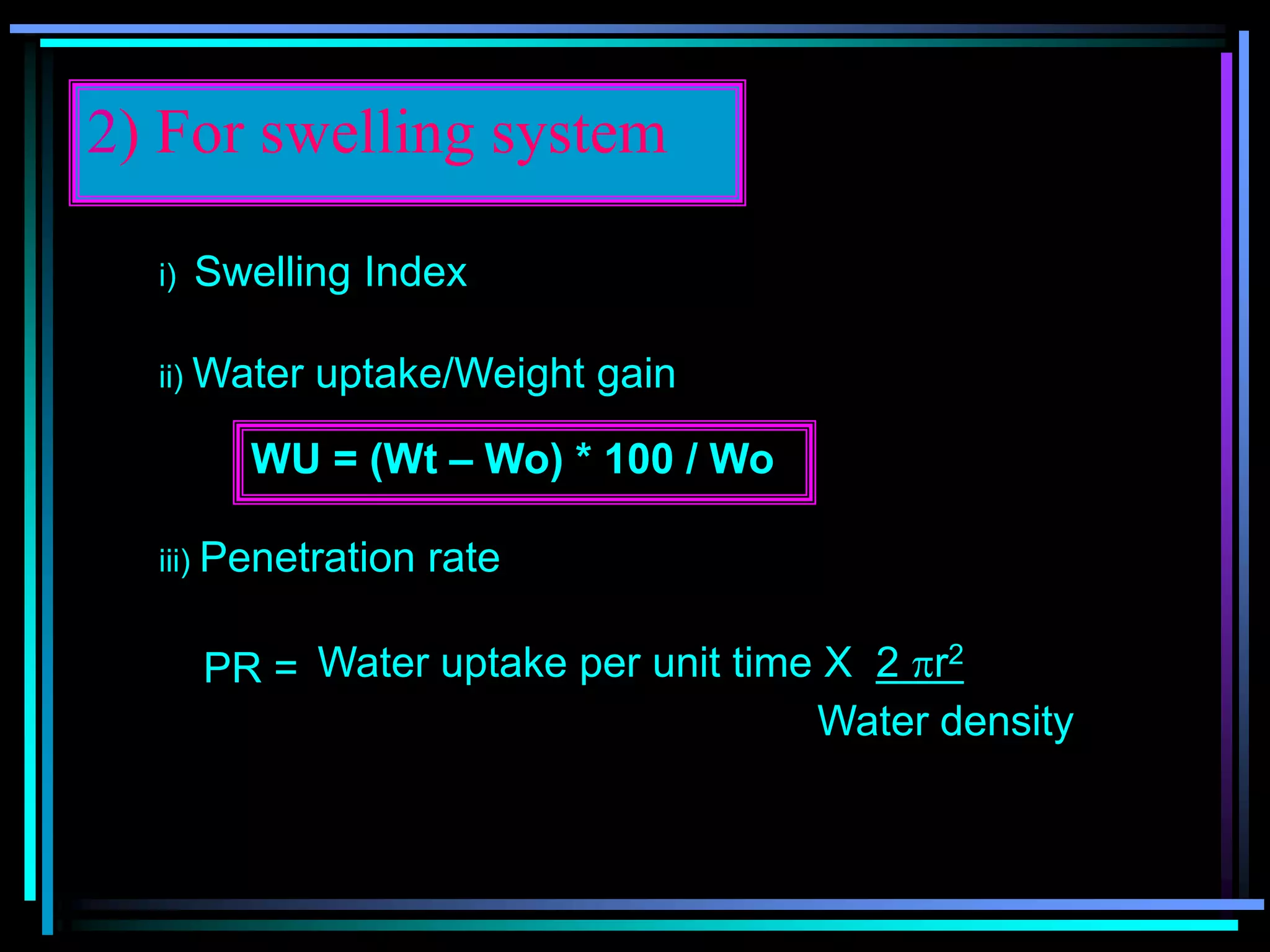
2) For swelling system
i) Swelling Index
ii) Water uptake/Weight gain
WU = (Wt – Wo) * 100 / Wo
iii) Penetration rate
PR = Water uptake per unit time X 2 r2
Water density
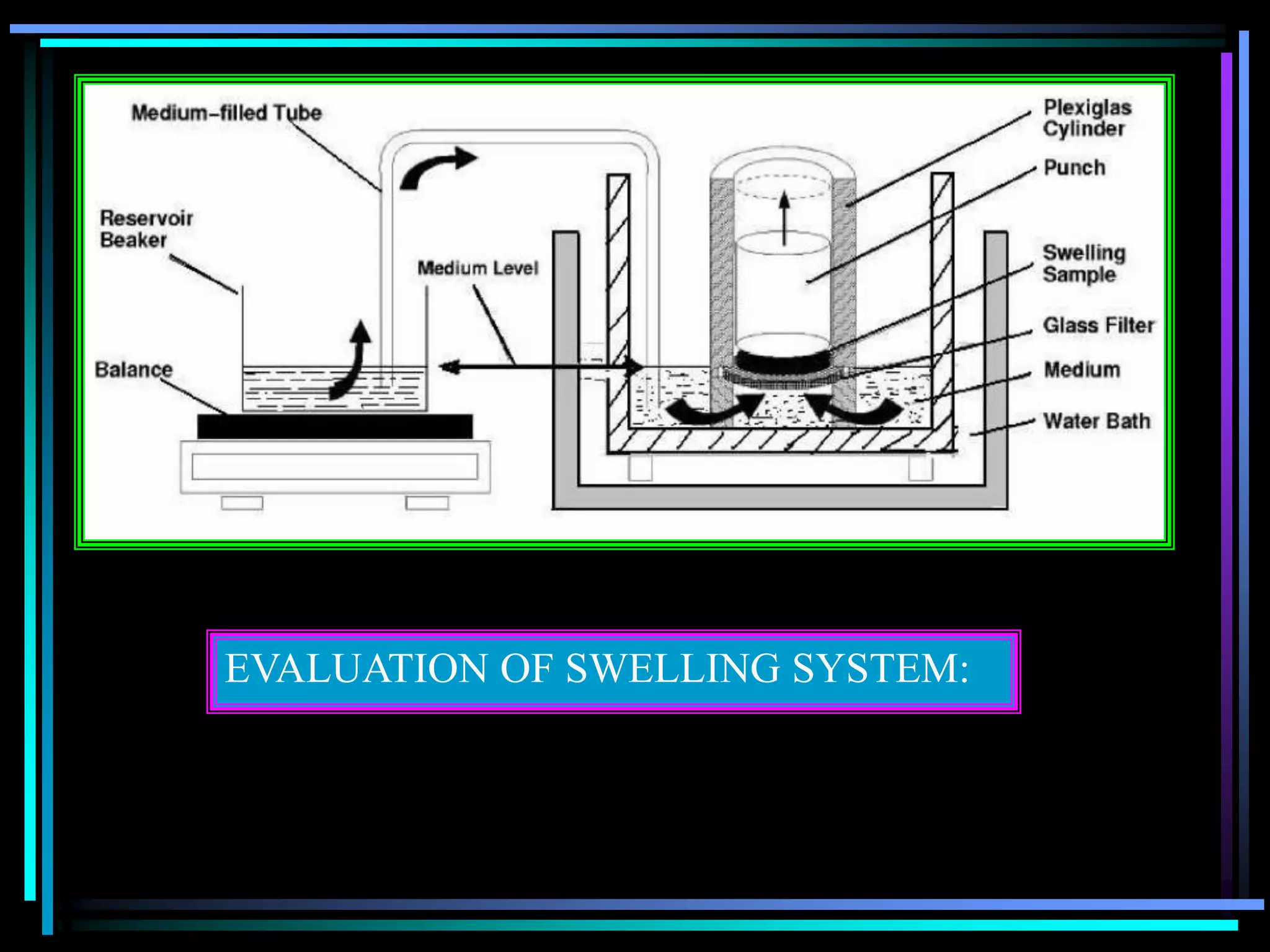
EVALUATION OF SWELLING SYSTEM:
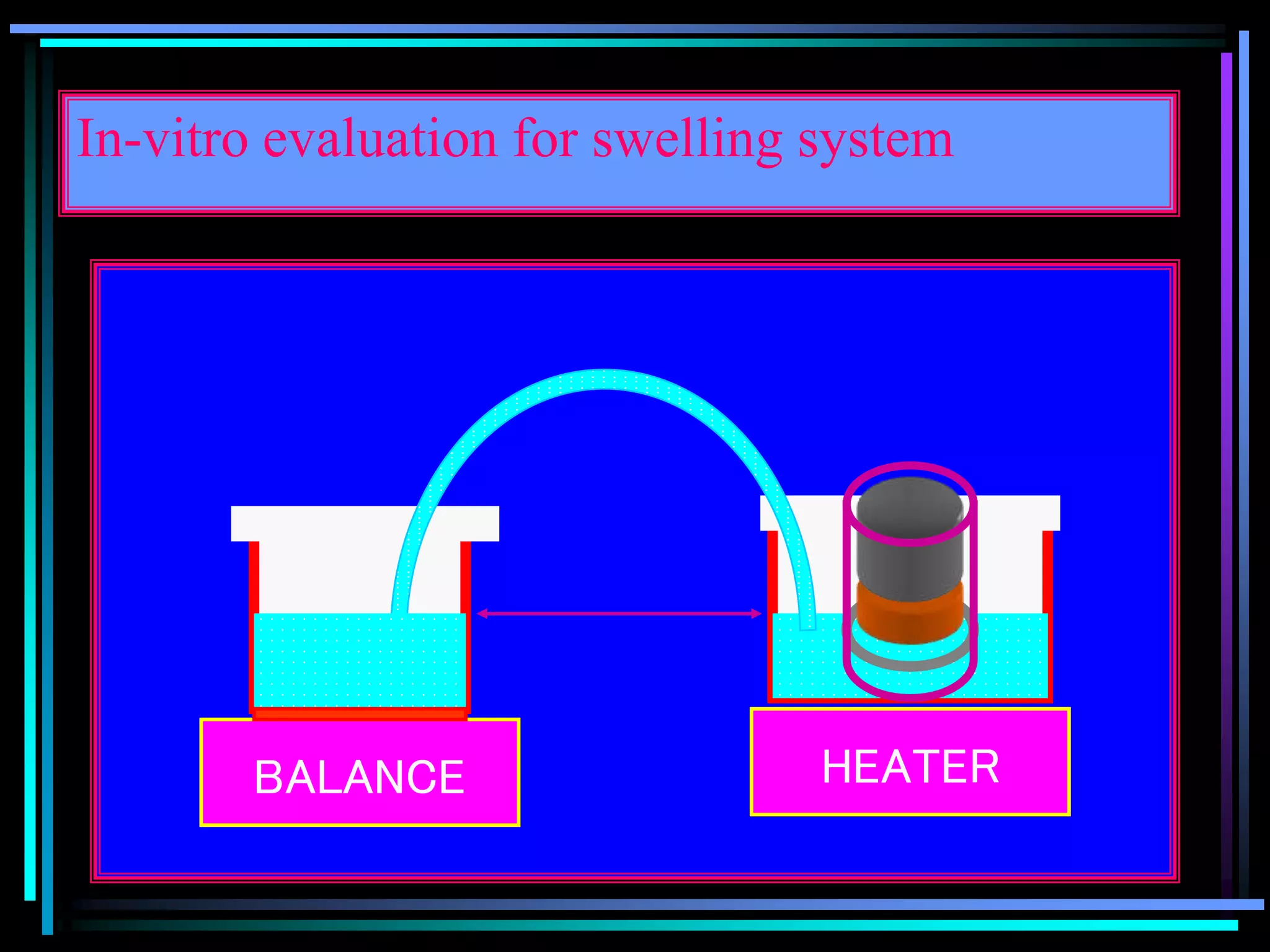
In-vitro evaluation for swelling system
HEATERBALANCE
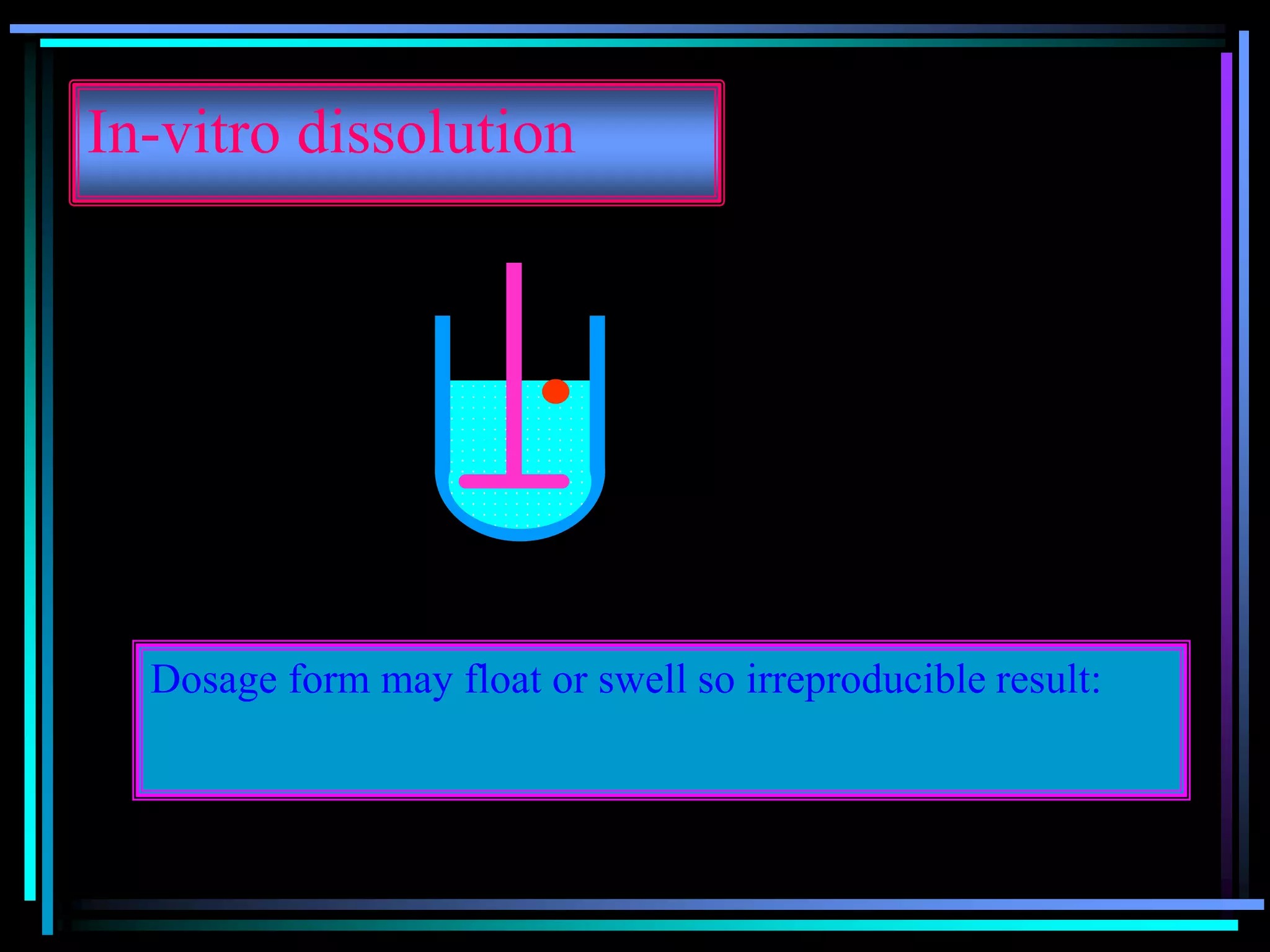
In-vitro dissolution
Dosage form may float or swell so irreproducible result:
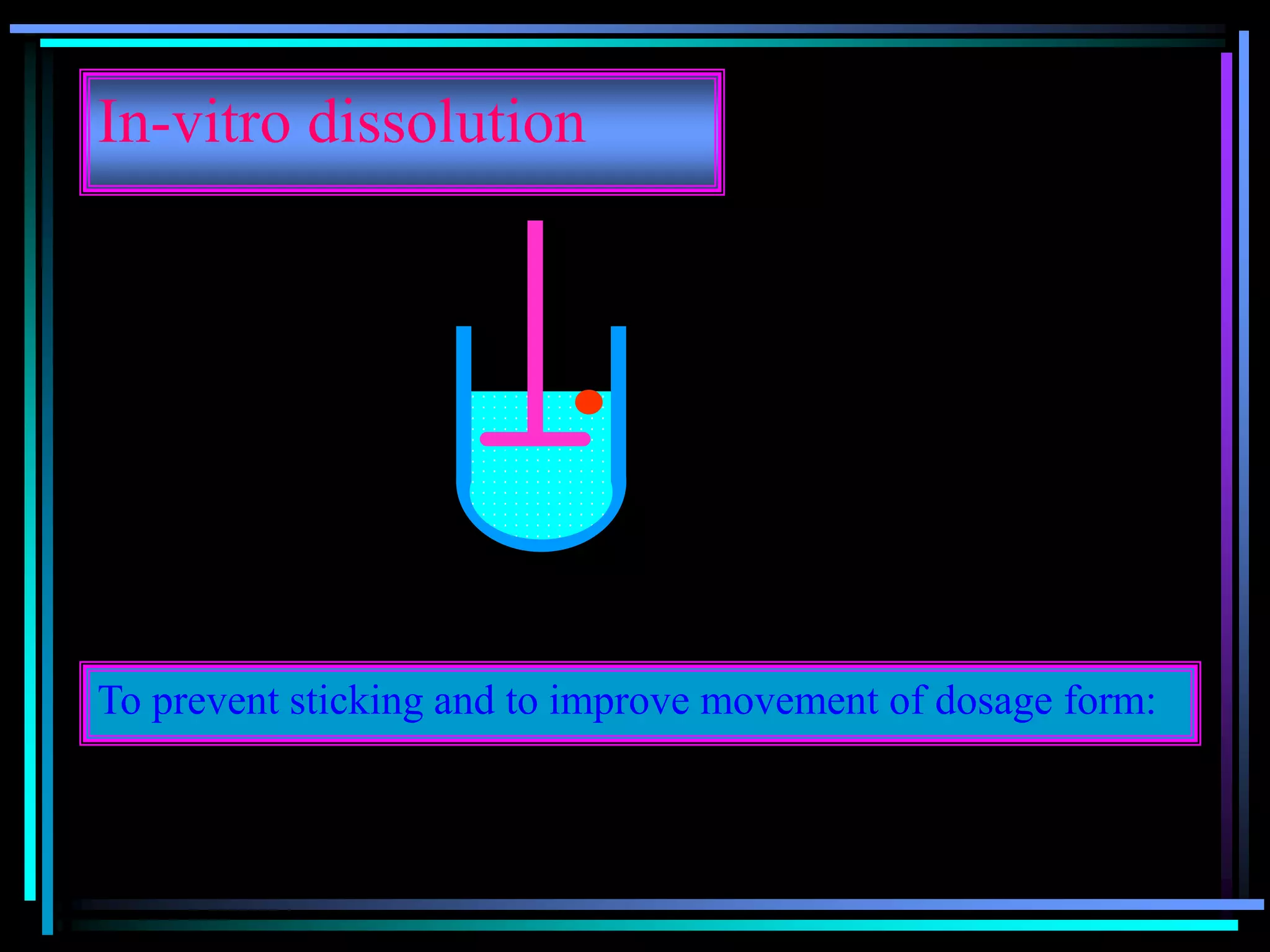
In-vitro dissolution
To prevent sticking and to improve movement of dosage form:
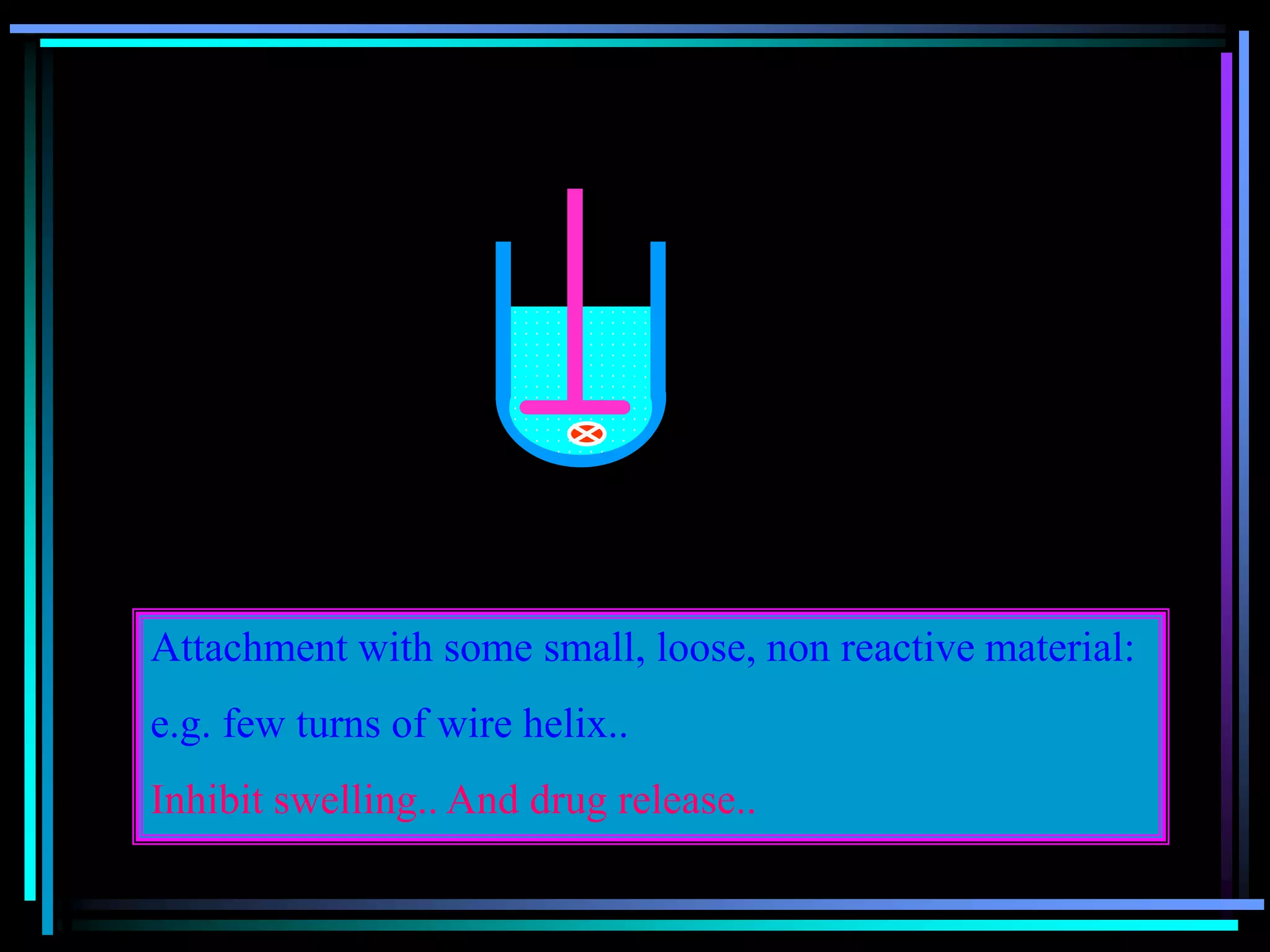
Attachment with some small, loose, non reactive material:
e.g. few turns of wire helix..
Inhibit swelling.. And drug release..
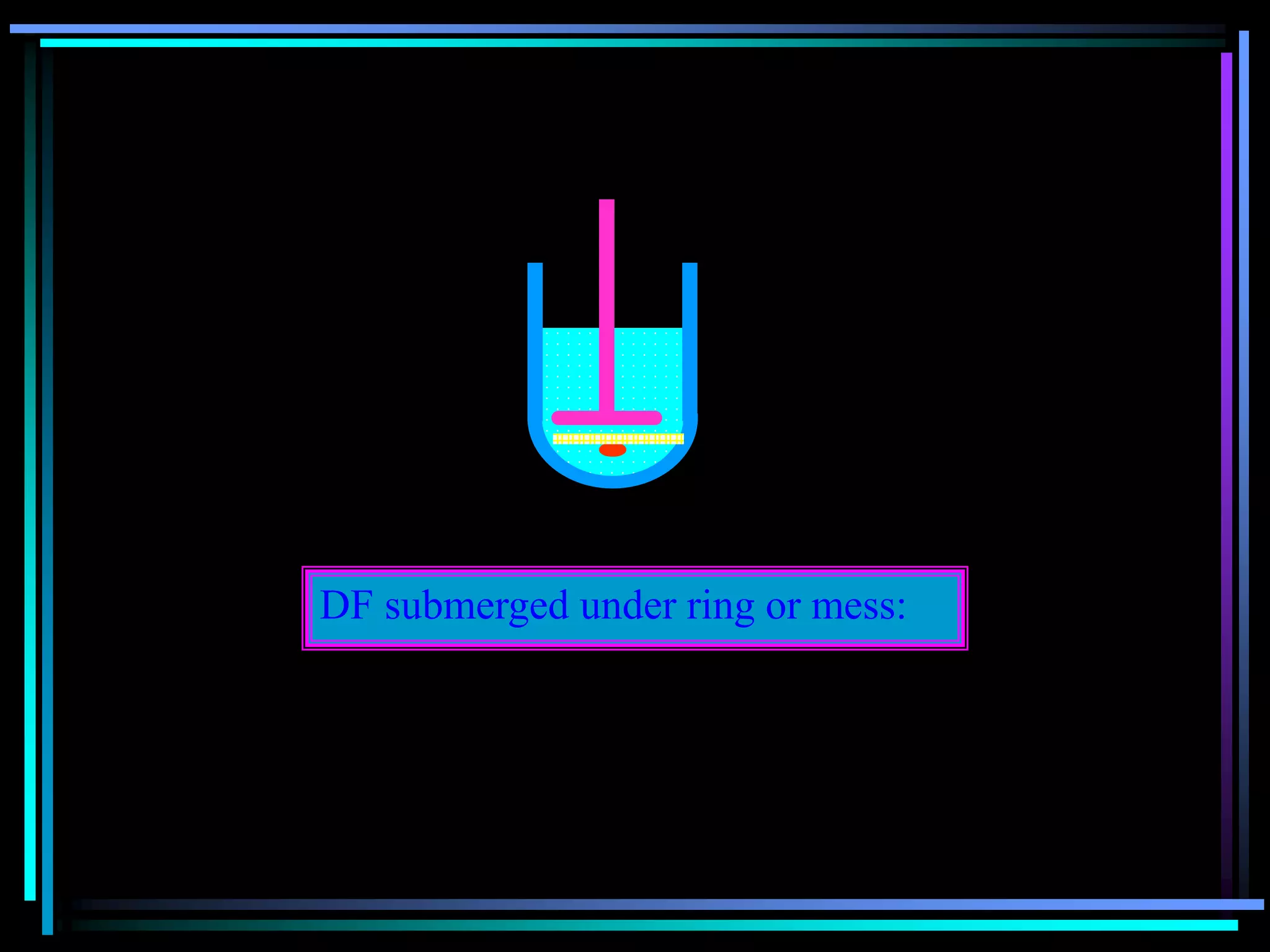
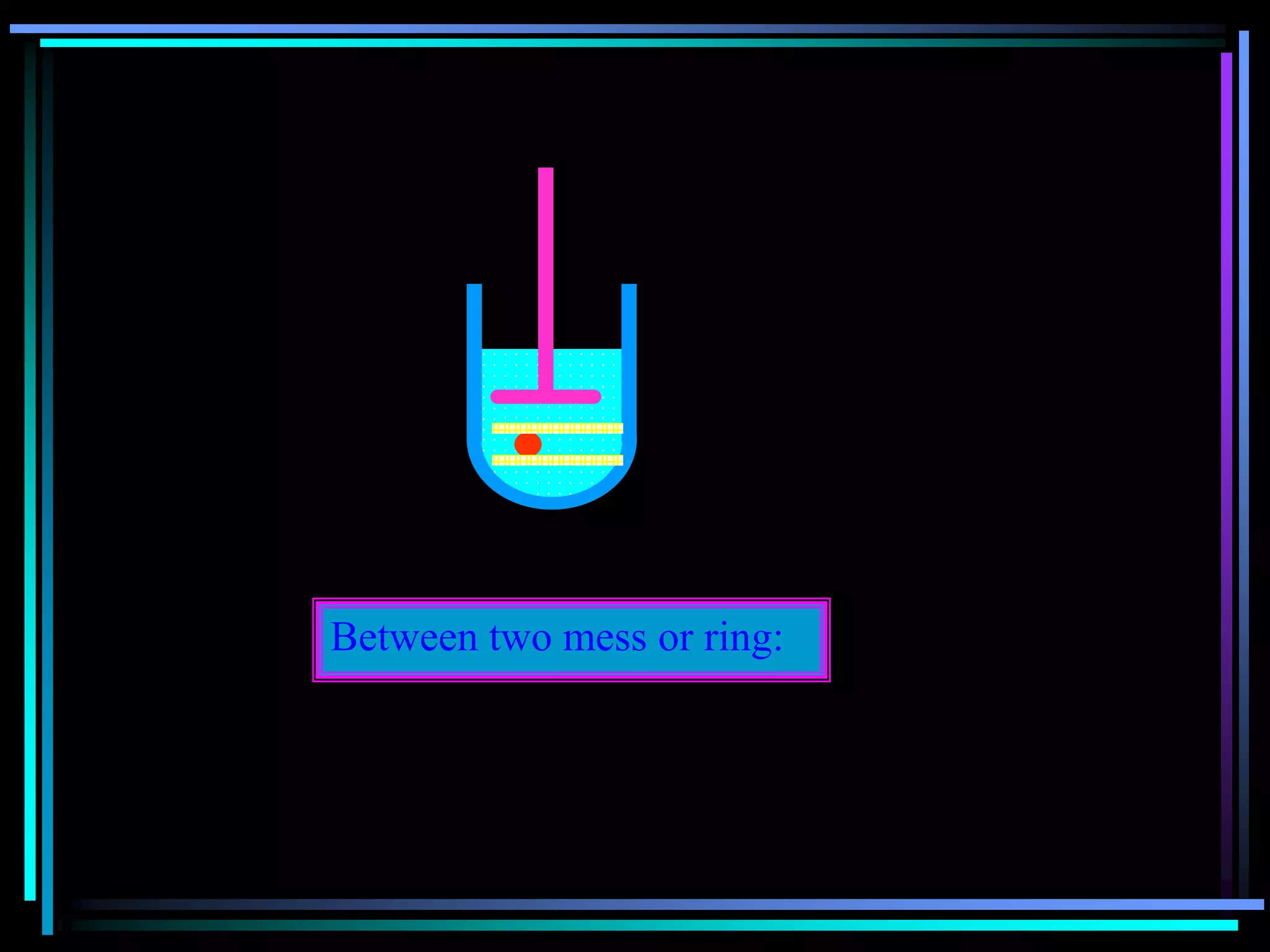
DF submerged under ring or mess:
Between two mess or ring:
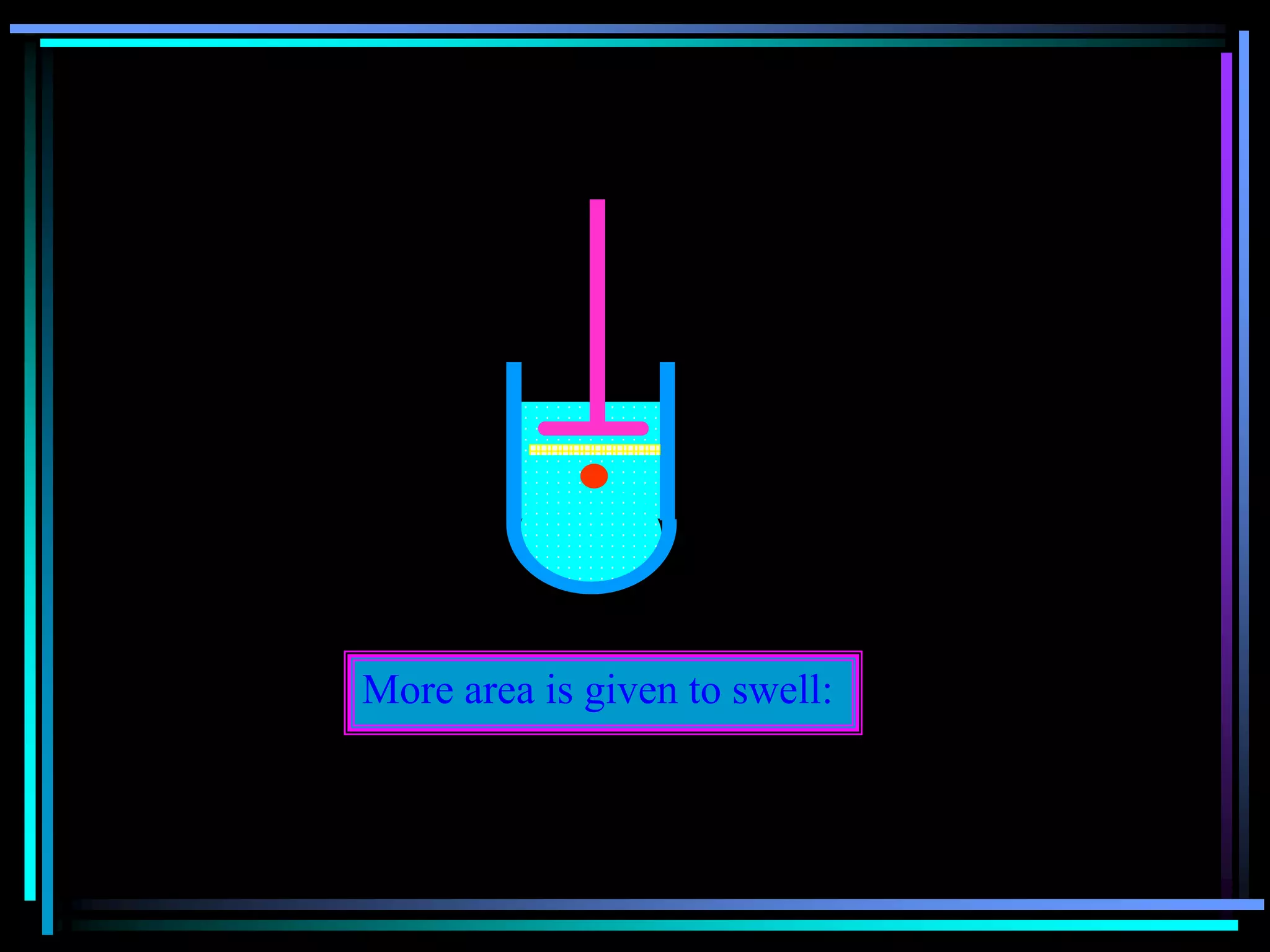
More area is given to swell:
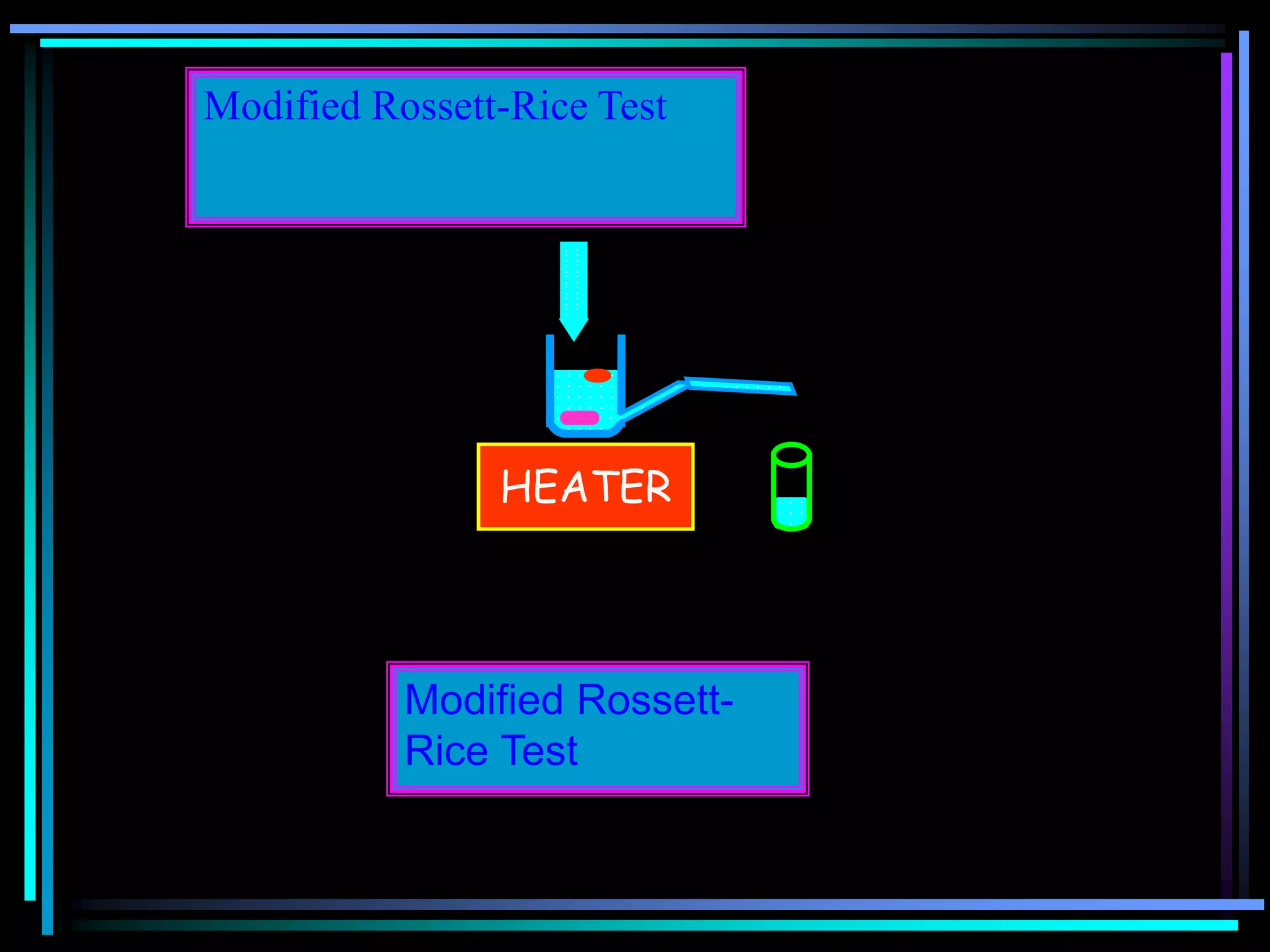
HEATER
Modified Rossett-
Rice Test
Modified Rossett-Rice Test
In-vivo evaluation
-Scintigraphy:
• A small amount of a stable isotope e.g.
Sm (152) is compounded into the DF
during its preparation. Prior to the study
the DF is irradiated in a neutron source
to convert the isotope into a  -emitting
material e.g. Sm (153)
Radiology:
• Its major advantages as compared to
 -Scintigraphy are simplicity and cost. However, use of X-
ray experiment in biopharmaceutical studies involving
healthy volunteers [130]
• Barium sulphate high concentration:
e.g. 40%
• Aluminum thread contrast medium
Gastroscopy:
•It is generally used for diagnosis purpose, endoscopy,used with
fiberoptic or video systems.
•No adverse effect.
Magnetic Marker Monitoring:
•Magnetically marked DF by magnetic source.
•Therefore require very sensitive biomagnetic measurement
instrument.
•No radiation
•Completely safe
Limitation of GRDDS:
1) It is not recommended for drugs which are unstable at
gastric/acidic pH, insoluble or very low soluble drugs and
drugs which causes gastric irritation.
2) For floating high level of fluid is required in GIT. Also
sleeping condition is favorable for the better results of
GRDDS.
3) Adhesive systems cannot prevail longer due to high turn-over
rate of mucus layer and presence of soluble mucin
4) For swelling systems, it is necessary that the formulation
should not exit before the appropriate swelling
Conclusions
• GRDDS, comprised mainly of floating, bioadhesive, and swellable
systems, have emerged as an efficient means of enhancing the BA and
controlled delivery of drugs that exhibit an absorption window.
• By prolonging the gastric emptying time of the dosage form, these
systems not only provide controlled release of the drug for a prolonged
period, but also present the drug in an absorbable form at regions of
optimal absorption.
• These systems achieve this by retaining the dosage form in the gastric
region, from where the drug is presented at the absorption window.
• This ensures maximal absorption of the drug for the desired period.
Continue…
• Designing GRDDS requires a thorough understanding
of the physicochemical properties of the drug, the
physiological events of the GIT, and formulation
strategies.
• A careful consideration of the interplay of these
parameters can help in designing a successful
GRDDS.
• Growth in the understanding of the effect of GI
physiology on drug delivery and the increasing
sophistication of delivery technology will ensure the
development of an increasing number of GRDDS to
optimize delivery of drug molecules that exhibit
regional variability in intestinal absorption.
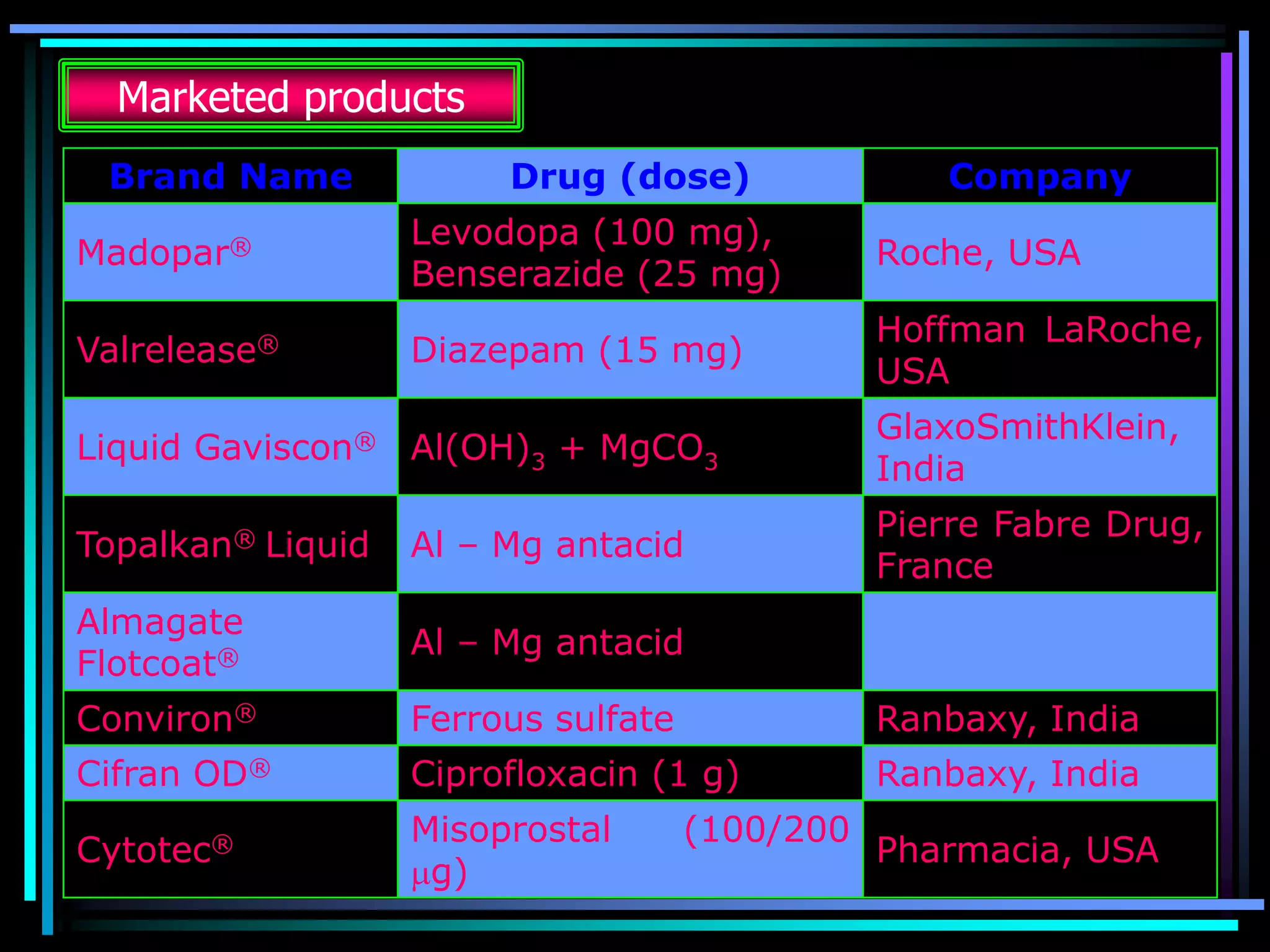
Marketed products
Brand Name Drug (dose) Company
Madopar® Levodopa (100 mg),
Benserazide (25 mg)
Roche, USA
Valrelease® Diazepam (15 mg)
Hoffman LaRoche,
USA
Liquid Gaviscon® Al(OH)3 + MgCO3
GlaxoSmithKlein,
India
Topalkan® Liquid Al – Mg antacid
Pierre Fabre Drug,
France
Almagate
Flotcoat® Al – Mg antacid
Conviron® Ferrous sulfate Ranbaxy, India
Cifran OD® Ciprofloxacin (1 g) Ranbaxy, India
Cytotec® Misoprostal (100/200
g)
Pharmacia, USA
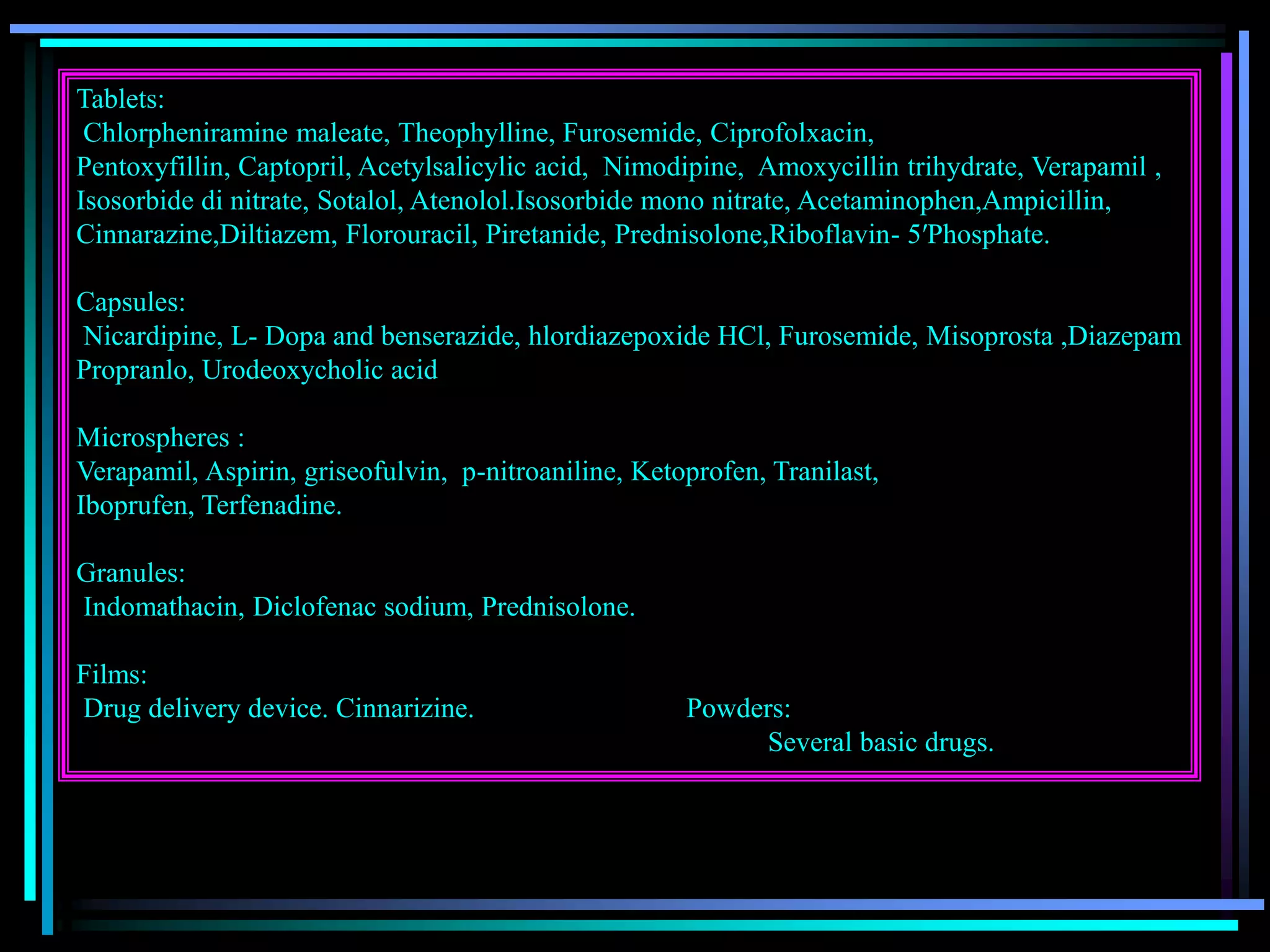
Tablets:
Chlorpheniramine maleate, Theophylline, Furosemide, Ciprofolxacin,
Pentoxyfillin, Captopril, Acetylsalicylic acid, Nimodipine, Amoxycillin trihydrate, Verapamil ,
Isosorbide di nitrate, Sotalol, Atenolol.Isosorbide mono nitrate, Acetaminophen,Ampicillin,
Cinnarazine,Diltiazem, Florouracil, Piretanide, Prednisolone,Riboflavin- 5′Phosphate.
Capsules:
Nicardipine, L- Dopa and benserazide, hlordiazepoxide HCl, Furosemide, Misoprosta ,Diazepam
Propranlo, Urodeoxycholic acid
Microspheres :
Verapamil, Aspirin, griseofulvin, p-nitroaniline, Ketoprofen, Tranilast,
Iboprufen, Terfenadine.
Granules:
Indomathacin, Diclofenac sodium, Prednisolone.
Films:
Drug delivery device. Cinnarizine. Powders:
Several basic drugs.
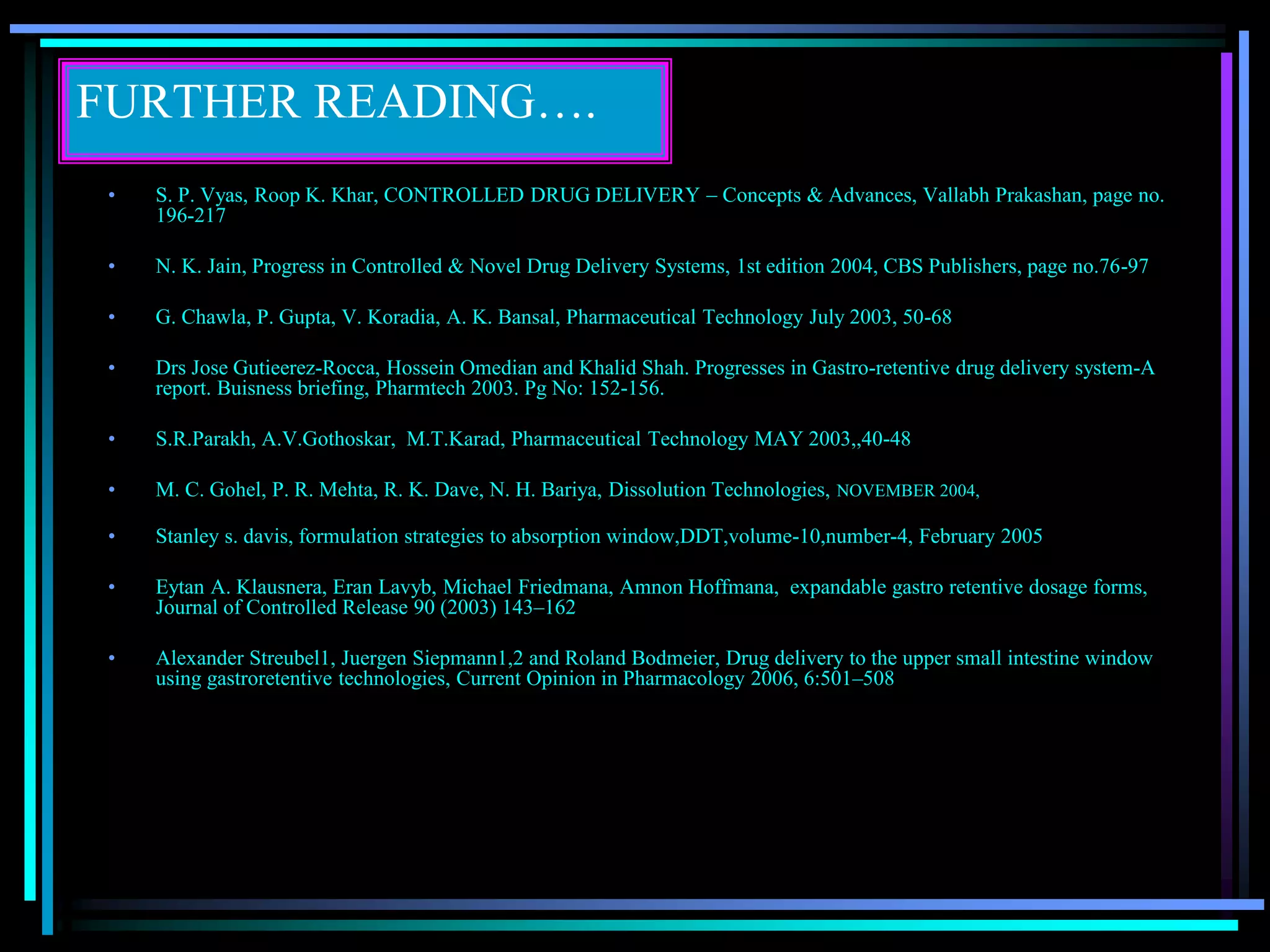
FURTHER READING….
• S. P. Vyas, Roop K. Khar, CONTROLLED DRUG DELIVERY – Concepts & Advances, Vallabh Prakashan, page no.
196-217
• N. K. Jain, Progress in Controlled & Novel Drug Delivery Systems, 1st edition 2004, CBS Publishers, page no.76-97
• G. Chawla, P. Gupta, V. Koradia, A. K. Bansal, Pharmaceutical Technology July 2003, 50-68
• Drs Jose Gutieerez-Rocca, Hossein Omedian and Khalid Shah. Progresses in Gastro-retentive drug delivery system-A
report. Buisness briefing, Pharmtech 2003. Pg No: 152-156.
• S.R.Parakh, A.V.Gothoskar, M.T.Karad, Pharmaceutical Technology MAY 2003,,40-48
• M. C. Gohel, P. R. Mehta, R. K. Dave, N. H. Bariya, Dissolution Technologies, NOVEMBER 2004,
• Stanley s. davis, formulation strategies to absorption window,DDT,volume-10,number-4, February 2005
• Eytan A. Klausnera, Eran Lavyb, Michael Friedmana, Amnon Hoffmana, expandable gastro retentive dosage forms,
Journal of Controlled Release 90 (2003) 143–162
• Alexander Streubel1, Juergen Siepmann1,2 and Roland Bodmeier, Drug delivery to the upper small intestine window
using gastroretentive technologies, Current Opinion in Pharmacology 2006, 6:501–508

Chapter on Search Results Web results Gastro retentive drug delivery system (GRDDS)

  • 1.
    SEMINAR ON GASTRO RETENTIVEDRUG DELIVERY SYSTEM GRDDS By:Rajesh L. Dumpala (B.Pharm, M. Pharm.) PhD. ( Pursuing) Research Scientist, Alembic Research Centre. Vadodara E.Mail:-rdumpala64@gmail.com
  • 2.
    Presentation Outline • Introduction •Merits • Physiology of stomach • Gastro-retentive technologies • Factors affecting GRDDS • Evaluation of GRDDS • Demerits • Market Products • References
  • 3.
    Introduction • Conventional oraldelivery is widely used in pharmaceutical field to treat diseases. However, conventional delivery had many drawbacks and major draw-back is non-site specificity. • Some drugs are absorbed at specific site only. They require release at specific site or a release such that maximum amount of drug reaches to the specific site. • Pharmaceutical field is now focusing towards such drugs which require site specificity
  • 4.
    Cont.. • Gastro-retentive deliveryis one of the site specific delivery for the delivery of drugs either at stomach or at intestine. It is obtained by retaining dosage form into stomach and drug is being released at controlled manner to specific site either in stomach, duodenum and intestine.
  • 5.
    Different from SR… SustainedRelease GRDDSAbsorption window
  • 6.
    Merits… • Delivery ofdrugs with narrow absorption window in the small intestine region. • Longer residence time in the stomach could be advantageous for local action in the upper part of the small intestine, for example treatment of peptic ulcer disease. • Improved bio-availability is expected for drugs that are absorbed readily upon release in the GI tract
  • 7.
    Effects of themode of administration of 100 mg riboflavin-5- phosphate on the resulting (a) mean riboflavin plasma concentration and (b) cumulative amount of riboflavin absorbed in dogs (n=6). DF, dosage form; GRDF, gastro retentive dosage form.
  • 8.
    Drugs benefited byGRDDS • Drugs acting locally in the stomach E.g. Antacids and drugs for H. Pylori • Drugs that are principally absorbed in the stomach • Drugs that are poorly soluble at the alkaline pH • Drugs with a narrow window of absorption E.g. Furosemide • Drugs absorbed readily from the GI tract • Drugs that degrade in the colon
  • 9.
    Pharmacodynamic consideration: • Reducefluctuation in drug effect • Improve selectivity in receptor activation • Reduce counter activity of the body • Extended time over effective concentration • Minimized adverse effect at colon
  • 10.
    Physiology of stomach: •Under fasting conditions, the stomach is a collapsed bag with a residual volume of approximately 50 ml. • The pH is 1-3 in the fasted state. • Normal gastric retention time is 1.5-3 hrs. • Diameter of the pyloric sphincter is 12.8 ± 7 mm.
  • 11.
    Cont… The GI tractis in a state of continuous motility consisting of two modes: – Interdigestive motility pattern – Digestive motility pattern The Interdigestive motility pattern is commonly Called as “Migrating Motor Complex” (MMC) And is organized in cycles of activity.
  • 12.
    No contraction Intermittent contraction Intense distaland proximal gastric contraction House keeper wave 4-5 contraction / min Intermediate between III-I Migrating myoelectric complex:
  • 13.
    Gastro-retentive technologies A) Low-densitysystems (Floating drug delivery) B) Expandable/Swellable systems C) Bio/Muco-adhesive systems D) High density systems E) Raft forming systems
  • 14.
  • 15.
    A) Low DensityApproach (Floating Drug Delivery) Widely used approach, where, To inherent low density of dosage Form, it floats on gastric fluids. It is also known as “Hydro- Dynamically balanced System”
  • 16.
    Classification of Floatingsystems a) Non-effervescent systems b) Effervescent systems Multiple units Single unit (Monolithic System) Multiple unitsSingle unit (Monolithic System)
  • 17.
    a) Floating Non-effervescentSystems: -Monolithic system i) HBSTM Capsule: It consists of… Drug + Highly swellable gel forming Hydrocolloids (20-75%) like HPMC, HEC, Na-CMC, etc.
  • 19.
    ii) Matrix Tablet Singlelayer Tablet Bi-layer Tablet
  • 20.
    ii) Non-Matrix Bi-layersystem Bi-Layer Capsule Bi-Layer Tablet
  • 21.
    iii) Tablet withagar and mineral oil Drug + Mineral Oil Warm Agar gel solution Mix Pour in a tablet mould Cool Here, air is entrapped in Agar gel. Escape of air is prevented by oil The tablet contains 2% agar.
  • 22.
    A I RA I R iv) Tablets in cylinder v) Coated Hollow globular shell
  • 23.
    a) Floating Non-effervescentsystem -Multiple units I) Calcium alginate/Pectinate beads IONOTROPIC GELATION METHOD Sodium alginate solution Calcium Chloride solution Spherical gel beadsSeparate and freeze dry Calcium Pectinate gel beads Calcium Alginate Pectinate Gel beads Calcium Alginate + Chitosan gel beads
  • 24.
    Alginate bead in solutionbefore drying Coating before drying After drying, shrinkage of bead Drug + Sodium/Potassium Alginate + HPMC/HPC + Binder ii) Alginate beads with air compartment iii) Floating powder
  • 25.
  • 26.
    v) Hollow Microspherevi) Microbaloon Solvent Evaporation Method Emulsion solvent diffusion method
  • 27.
    Schematic presentation ofthe preparation of floating micro particles based on low- density foam powder, using (a) the solvent evaporation method or (b) the soaking method.
  • 29.
    Preparation technique (emulsion-solventdiffusion method) and mechanism of ‘micro balloon’ formation proposed by Kawashima et al
  • 31.
    vii) Foam containingMicro-particles Drug Polymer Foam Organic Solvent Aqueous PVA solution Foam Micro-particle Dissolved Dispersed Only foam Foam Micro-particles
  • 32.
    viii) Calcium Silicateas floating carrier Highly porous Large pore volume Low inherent density Granules containing Drug, HPMC and Calcium Silicate. ix) GELUCIRE® Granules Hydrophobic Lipid Diff. Grades – 39/01 43/01 Low Inherent Density Melt Granulation SR of Highly Soluble Drug
  • 33.
    b) Floating effervescentsystems -Monolithic system i) Matrix Tablet Bicarbonate + Polymer Single Layer Tablet Bilayer Tablet Triple Layer Tablet ii) Matrix tablet with Carbopol pH dependent Gelling Only Carbopol - NO GELLING (at acidic pH) Bicarbonate + Carbopol - GELLING due to Alkaline MICROENVIRONMENT
  • 34.
  • 35.
    iv) Coated effervescentcore v) Multiple film Drug NaHCO3
  • 36.
    vi) Programmable drugdelivery Drug release Fluid in CO2 vii) Osmotically controlled DDS
  • 37.
    b) Floating effervescentsystems -Multiple units i) Porous Alginate beads NaHCO3 Na-Alginate Solution CaCl2 Solution Acetic Acid Simultaneous generation of CO2 and gelling of beads. Escape of CO2 creates pores in beads.
  • 38.
    ii) Ion exchangeresin beads Resin HCO3 HCO3 HCO3 H+ Cl H+ Cl H+ Cl H+ Cl H+ Cl Uncoated bead results in no floating and CO2 escapes.
  • 39.
    B) Expandable Approach Alsocalled ‘ PLUG SYSTEM’ Size of the formulation more than Pyloric sphincter It should expand for gastric retention Should be Collapsed after lag time
  • 40.
    B) EXPANDABLE APPROACH a)Swelling systems b) Unfolding systems
  • 41.
    a) Swelling systems i)Polymeric envelope ii) Tiny pills in matrix
  • 45.
    b) Unfolding systems i)Obstructing means ii) Multilayer films Before After Drug Drug Erodible Polymer film Gelatin band/Strip
  • 46.
  • 47.
    A: capsule G:release of medication B: device H: biodegradable plug C: pressure generated compartment D: Retention arm E: pressure responsive bladder F: drug reservoir
  • 48.
    Schematic presentation ofthe gastroretentive drug delivery system proposed by Klausner et al. multilayer polymeric films consisting of (a) shielding (outer) layers; (b) rigid (frame) strips; (c) polymer-drug matrix; and (d) anti-adhering layers (microcrystalline cellulose).
  • 49.
    C) Bio-Muco-adhesive Approach 4 Here,the drug is incorporated with bio/ Muco-adhesive agents, enabling the Device to adhere to the stomach walls, Thus resisting gastric emptying. However, the mucus on the walls of the Stomach is in a state of constant renewal, Resulting in unpredictable adherence. Thus, this approach is not widely used.
  • 50.
    MICROSPHERE WITH FLOATINGAND MUCOADHESIVE PROPERTY:
  • 51.
    Mechanism of bioadhesion: •Hydration-mediated adhesion • Bonding-mediated adhesion • Receptor-mediated adhesion.
  • 52.
    Problem of mucoadhesive system: • Rapid removal of mucus. • We are not sure weather the DF will adhere to the mucus or epithelial cell layer • DF may adhere to esophagus resulting in drug induced injuries
  • 53.
    D) High densityapproach Density should be more then stomach content i.e. 3 g/cm3 Threshold density: 2.4-2.8 gm/cm3 Capable to withstand with peristaltic movement of stomach Prepared by coating or mixing drug with heavy inert material
  • 54.
    Diluents such as… •barium sulphate (density = 4.9), • zinc oxide, • titanium dioxide, • iron powder must be used to manufacture such high-density formulations.
  • 55.
    E) Raft formingsystems RAFT Raft systems incorporate alginate Gels which have carbonate Component. These upon reaction with the gastric Acid, causes the bubbles to form and This enables floating. Generally, it is used for antacids.
  • 56.
    FACTORS AFFECTING THE PERFORMANCEOF GRDDS Formulation factors Idiosyncratic factors • Type of dosage form • Density of dosage form • Size of dosage form • shape • Viscosity grade pf polymer • Food intake and nature of food. • Effect of gender, posture, age and Diseases, body mass index
  • 57.
  • 58.
    1) For floatingsystem • Buoyancy lag time: • Floating time: • Specific gravity/density: • Resultant weight:
  • 59.
    For muco adhesivesystem: • The bioadhesive strength of a polymer can be determined by… • measuring the force required to separate the polymer specimen sandwiched between the layers of either an artificial (e.g., cellophane) or biological (e.g., rabbit stomach tissue) membrane . • This force can be measured by using modified precision balance or an automated texture analyzer.
  • 60.
    2) For swellingsystem i) Swelling Index ii) Water uptake/Weight gain WU = (Wt – Wo) * 100 / Wo iii) Penetration rate PR = Water uptake per unit time X 2 r2 Water density
  • 61.
  • 62.
    In-vitro evaluation forswelling system HEATERBALANCE
  • 63.
    In-vitro dissolution Dosage formmay float or swell so irreproducible result:
  • 64.
    In-vitro dissolution To preventsticking and to improve movement of dosage form:
  • 65.
    Attachment with somesmall, loose, non reactive material: e.g. few turns of wire helix.. Inhibit swelling.. And drug release..
  • 66.
    DF submerged underring or mess:
  • 67.
  • 68.
    More area isgiven to swell:
  • 69.
  • 70.
    In-vivo evaluation -Scintigraphy: • Asmall amount of a stable isotope e.g. Sm (152) is compounded into the DF during its preparation. Prior to the study the DF is irradiated in a neutron source to convert the isotope into a  -emitting material e.g. Sm (153)
  • 71.
    Radiology: • Its majoradvantages as compared to  -Scintigraphy are simplicity and cost. However, use of X- ray experiment in biopharmaceutical studies involving healthy volunteers [130] • Barium sulphate high concentration: e.g. 40% • Aluminum thread contrast medium
  • 72.
    Gastroscopy: •It is generallyused for diagnosis purpose, endoscopy,used with fiberoptic or video systems. •No adverse effect. Magnetic Marker Monitoring: •Magnetically marked DF by magnetic source. •Therefore require very sensitive biomagnetic measurement instrument. •No radiation •Completely safe
  • 73.
    Limitation of GRDDS: 1)It is not recommended for drugs which are unstable at gastric/acidic pH, insoluble or very low soluble drugs and drugs which causes gastric irritation. 2) For floating high level of fluid is required in GIT. Also sleeping condition is favorable for the better results of GRDDS. 3) Adhesive systems cannot prevail longer due to high turn-over rate of mucus layer and presence of soluble mucin 4) For swelling systems, it is necessary that the formulation should not exit before the appropriate swelling
  • 74.
    Conclusions • GRDDS, comprisedmainly of floating, bioadhesive, and swellable systems, have emerged as an efficient means of enhancing the BA and controlled delivery of drugs that exhibit an absorption window. • By prolonging the gastric emptying time of the dosage form, these systems not only provide controlled release of the drug for a prolonged period, but also present the drug in an absorbable form at regions of optimal absorption. • These systems achieve this by retaining the dosage form in the gastric region, from where the drug is presented at the absorption window. • This ensures maximal absorption of the drug for the desired period.
  • 75.
    Continue… • Designing GRDDSrequires a thorough understanding of the physicochemical properties of the drug, the physiological events of the GIT, and formulation strategies. • A careful consideration of the interplay of these parameters can help in designing a successful GRDDS. • Growth in the understanding of the effect of GI physiology on drug delivery and the increasing sophistication of delivery technology will ensure the development of an increasing number of GRDDS to optimize delivery of drug molecules that exhibit regional variability in intestinal absorption.
  • 76.
    Marketed products Brand NameDrug (dose) Company Madopar® Levodopa (100 mg), Benserazide (25 mg) Roche, USA Valrelease® Diazepam (15 mg) Hoffman LaRoche, USA Liquid Gaviscon® Al(OH)3 + MgCO3 GlaxoSmithKlein, India Topalkan® Liquid Al – Mg antacid Pierre Fabre Drug, France Almagate Flotcoat® Al – Mg antacid Conviron® Ferrous sulfate Ranbaxy, India Cifran OD® Ciprofloxacin (1 g) Ranbaxy, India Cytotec® Misoprostal (100/200 g) Pharmacia, USA
  • 77.
    Tablets: Chlorpheniramine maleate, Theophylline,Furosemide, Ciprofolxacin, Pentoxyfillin, Captopril, Acetylsalicylic acid, Nimodipine, Amoxycillin trihydrate, Verapamil , Isosorbide di nitrate, Sotalol, Atenolol.Isosorbide mono nitrate, Acetaminophen,Ampicillin, Cinnarazine,Diltiazem, Florouracil, Piretanide, Prednisolone,Riboflavin- 5′Phosphate. Capsules: Nicardipine, L- Dopa and benserazide, hlordiazepoxide HCl, Furosemide, Misoprosta ,Diazepam Propranlo, Urodeoxycholic acid Microspheres : Verapamil, Aspirin, griseofulvin, p-nitroaniline, Ketoprofen, Tranilast, Iboprufen, Terfenadine. Granules: Indomathacin, Diclofenac sodium, Prednisolone. Films: Drug delivery device. Cinnarizine. Powders: Several basic drugs.
  • 78.
    FURTHER READING…. • S.P. Vyas, Roop K. Khar, CONTROLLED DRUG DELIVERY – Concepts & Advances, Vallabh Prakashan, page no. 196-217 • N. K. Jain, Progress in Controlled & Novel Drug Delivery Systems, 1st edition 2004, CBS Publishers, page no.76-97 • G. Chawla, P. Gupta, V. Koradia, A. K. Bansal, Pharmaceutical Technology July 2003, 50-68 • Drs Jose Gutieerez-Rocca, Hossein Omedian and Khalid Shah. Progresses in Gastro-retentive drug delivery system-A report. Buisness briefing, Pharmtech 2003. Pg No: 152-156. • S.R.Parakh, A.V.Gothoskar, M.T.Karad, Pharmaceutical Technology MAY 2003,,40-48 • M. C. Gohel, P. R. Mehta, R. K. Dave, N. H. Bariya, Dissolution Technologies, NOVEMBER 2004, • Stanley s. davis, formulation strategies to absorption window,DDT,volume-10,number-4, February 2005 • Eytan A. Klausnera, Eran Lavyb, Michael Friedmana, Amnon Hoffmana, expandable gastro retentive dosage forms, Journal of Controlled Release 90 (2003) 143–162 • Alexander Streubel1, Juergen Siepmann1,2 and Roland Bodmeier, Drug delivery to the upper small intestine window using gastroretentive technologies, Current Opinion in Pharmacology 2006, 6:501–508

Editor's Notes

  • #3 Bharat pagi, L.M.C.P.
  • #27 Bharat pagi, L.M.C.P.
  • #37 Bharat pagi, L.M.C.P.
  • #42 Bharat pagi, L.M.C.P.
  • #46 Bharat pagi, L.M.C.P.
  • #48 Bharat pagi, L.M.C.P.
  • #58 Bharat pagi, L.M.C.P.
  • #74 Bharat pagi, L.M.C.P.