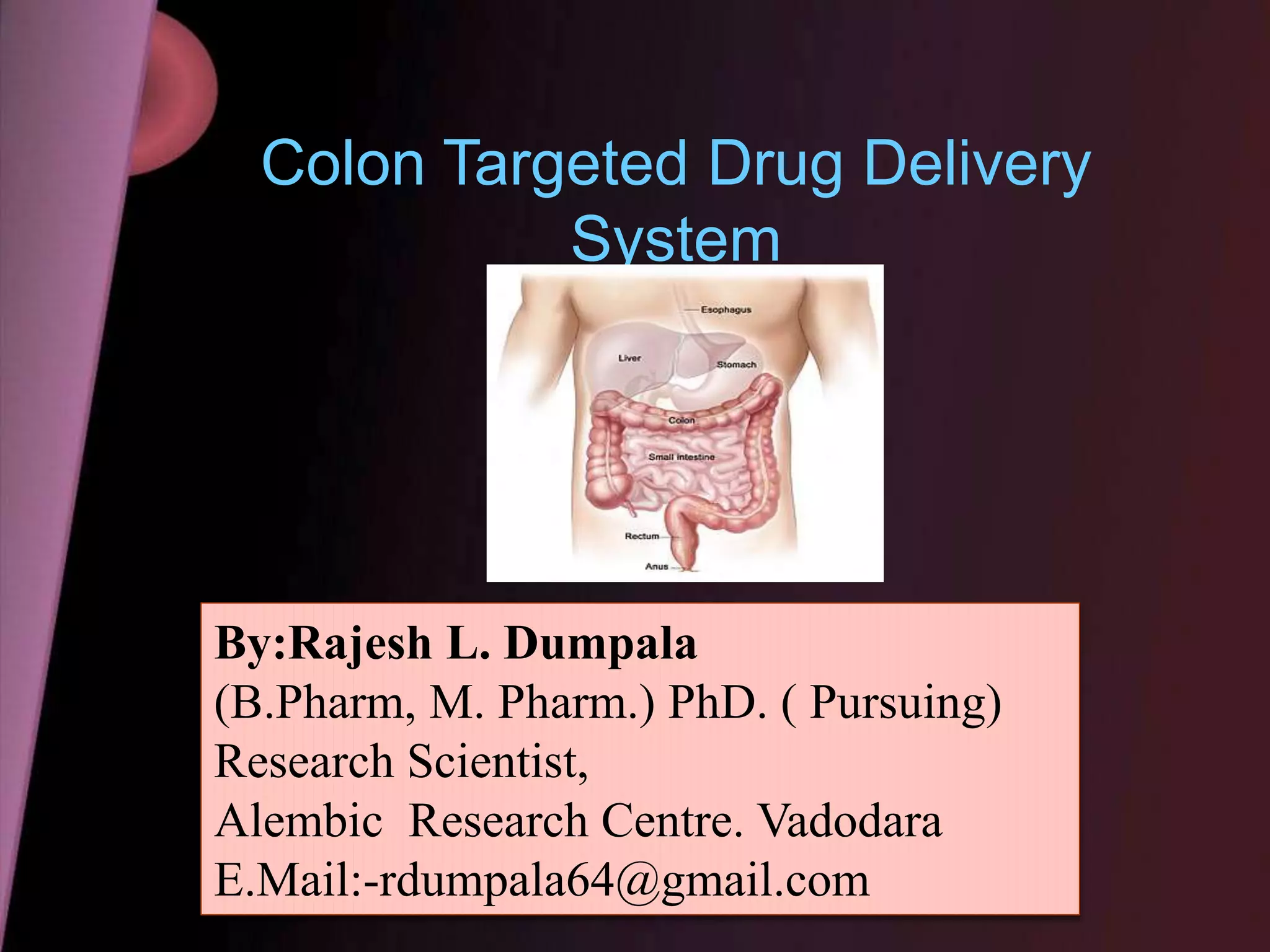
Colon Targeted Drug Delivery
System
By:Rajesh L. Dumpala
(B.Pharm, M. Pharm.) PhD. ( Pursuing)
Research Scientist,
Alembic Research Centre. Vadodara
E.Mail:-rdumpala64@gmail.com
Content
Anatomy of Colon
Challenges and problems
Factors affecting performance of CDDS
Pharmaceutical approaches
Evaluation
Market formulations
References
(2/75)
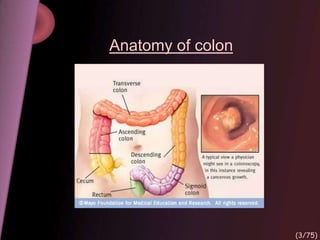
Anatomy of colon
(3/75)
Application
In local colonic pathologies
Systemic delivery of protein and peptide
Potential site for the treatment of diseases
sensitive to circadian rhythms (asthma, angina
and arthritis)
For the drugs that are absorbed through colon
such as steroids (….efficacy..)
For the treatment of disorders like IBS, colitis,
crohn’s disease (…where it is necessary to
attain high concentration of drugs)
(4/75)
Praful Vahoniya
Paper-421
L. M. College of Pharmacy
Ahmedabad
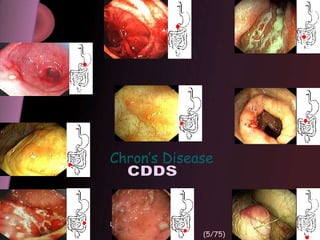
Chron’s Disease
(5/75)
Limitation and Challenges
Dissolution in luminal fluid.
Stability of drugs.
Binding of drugs to dietary residues, intestinal
secretions, mucus or fecal matter.
Metabolic degradation by colonic microflora.
Wide range of pH values
(6/75)
Lower surface area and relative “tightness”
of the tight junctions in the colon restrict drug transport.
Longer residence time
Requires protection against variety of the gastric enzymes.
Cytochrome P450 3A class of drug metabolizing
enzymes have lower activity in colon
(7/75)
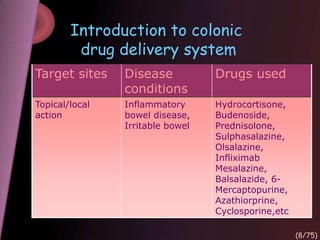
Target sites Disease
conditions
Drugs used
Topical/local
action
Inflammatory
bowel disease,
Irritable bowel
Hydrocortisone,
Budenoside,
Prednisolone,
Sulphasalazine,
Olsalazine,
Infliximab
Mesalazine,
Balsalazide, 6-
Mercaptopurine,
Azathiorprine,
Cyclosporine,etc
Introduction to colonic
drug delivery system
(8/75)
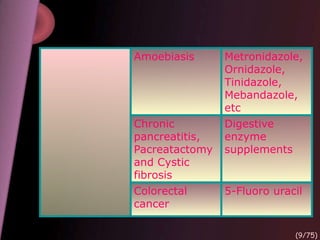
Amoebiasis Metronidazole,
Ornidazole,
Tinidazole,
Mebandazole,
etc
Chronic
pancreatitis,
Pacreatactomy
and Cystic
fibrosis
Digestive
enzyme
supplements
Colorectal
cancer
5-Fluoro uracil
(9/75)
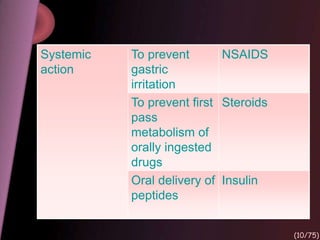
Systemic
action
To prevent
gastric
irritation
NSAIDS
To prevent first
pass
metabolism of
orally ingested
drugs
Steroids
Oral delivery of
peptides
Insulin
(10/75)
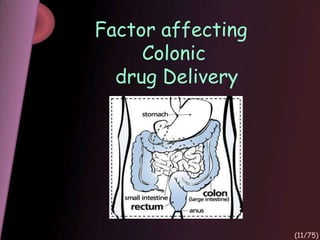
Factor affecting
Colonic
drug Delivery
(11/75)
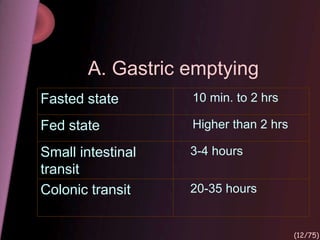
A. Gastric emptying
Fasted state 10 min. to 2 hrs
Fed state Higher than 2 hrs
Small intestinal
transit
3-4 hours
Colonic transit 20-35 hours
(12/75)
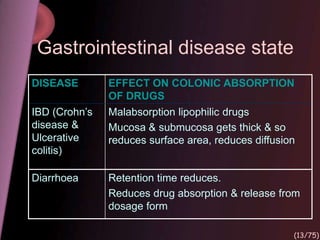
DISEASE EFFECT ON COLONIC ABSORPTION
OF DRUGS
IBD (Crohn’s
disease &
Ulcerative
colitis)
Malabsorption lipophilic drugs
Mucosa & submucosa gets thick & so
reduces surface area, reduces diffusion
Diarrhoea Retention time reduces.
Reduces drug absorption & release from
dosage form
Gastrointestinal disease state
(13/75)
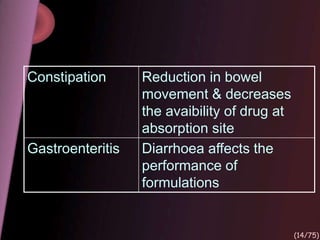
Constipation Reduction in bowel
movement & decreases
the avaibility of drug at
absorption site
Gastroenteritis Diarrhoea affects the
performance of
formulations
(14/75)
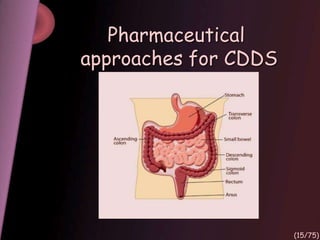
Pharmaceutical
approaches for CDDS
(15/75)
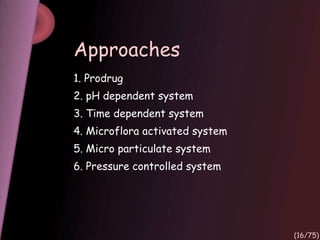
Approaches
1. Prodrug
2. pH dependent system
3. Time dependent system
4. Microflora activated system
5. Micro particulate system
6. Pressure controlled system
(16/75)
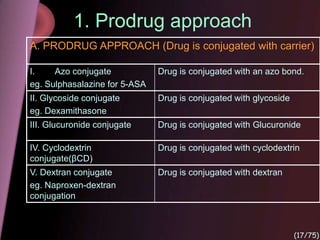
A. PRODRUG APPROACH (Drug is conjugated with carrier)
I. Azo conjugate
eg. Sulphasalazine for 5-ASA
Drug is conjugated with an azo bond.
II. Glycoside conjugate
eg. Dexamithasone
Drug is conjugated with glycoside
III. Glucuronide conjugate Drug is conjugated with Glucuronide
IV. Cyclodextrin
conjugate(βCD)
Drug is conjugated with cyclodextrin
V. Dextran conjugate
eg. Naproxen-dextran
conjugation
Drug is conjugated with dextran
1. Prodrug approach
(17/75)
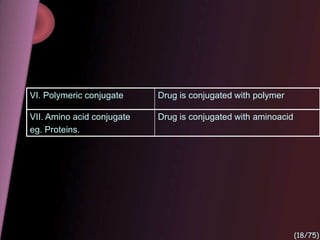
VI. Polymeric conjugate Drug is conjugated with polymer
VII. Amino acid conjugate
eg. Proteins.
Drug is conjugated with aminoacid
(18/75)
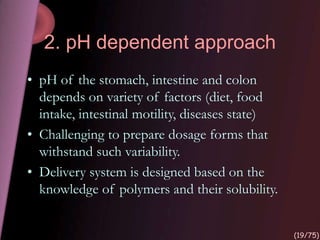
2. pH dependent approach
• pH of the stomach, intestine and colon
depends on variety of factors (diet, food
intake, intestinal motility, diseases state)
• Challenging to prepare dosage forms that
withstand such variability.
• Delivery system is designed based on the
knowledge of polymers and their solubility.
(19/75)
• Co-polymers of methacrylic acid and methyl
methacrylate are widely used.
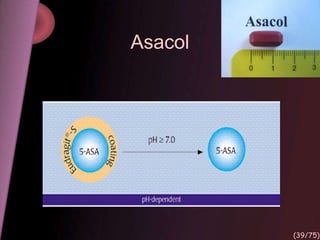
Eudragit L: pH 6
Eudragit S: pH 7
• Premature drug release observed.
• To overcome this problem Eudragit FS has
been developed.
Eudragit FS: pH 7-7.5: Slow dissolution rate
(20/75)
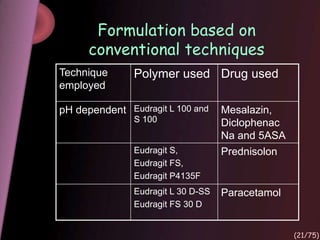
Formulation based on
conventional techniques
Technique
employed
Polymer used Drug used
pH dependent Eudragit L 100 and
S 100
Mesalazin,
Diclophenac
Na and 5ASA
Eudragit S,
Eudragit FS,
Eudragit P4135F
Prednisolon
Eudragit L 30 D-SS
Eudragit FS 30 D
Paracetamol
(21/75)
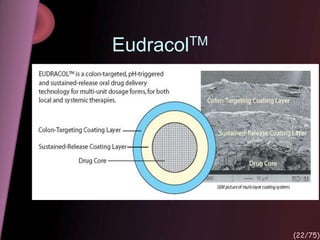
EudracolTM
(22/75)
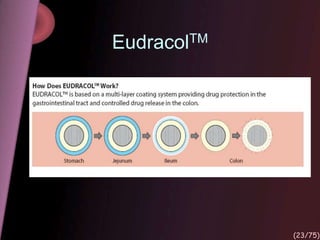
EudracolTM
(23/75)
3.Time dependent
delivery
• Difficult to predict in advance.
• Lag time of five hours is considered sufficient
provided that the intestinal transit time is
constant at three to four hours.
• Pulsincap is earliest system based on this
principle
(24/75)
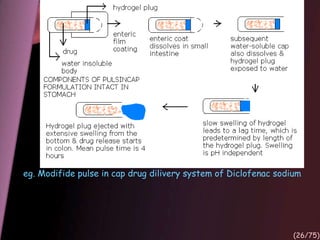
Pulsincap
• It consists of enteric coated capsule
containing water soluble cap and water
insoluble body.
• The body is loaded with Hydrogel plug and
drug layer.
• Enteric coat dissolves in small intestine and
the water soluble cap also dissolves.
• The Hydrogel plug absorbs water and swell
and release drug at a predetermined lag time
of 4 hours.
(25/75)
(26/75)
eg. Modifide pulse in cap drug dilivery system of Diclofenac sodium
Time clock
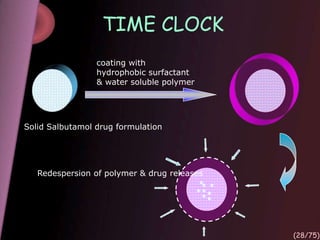
The Time Clock system consists of a solid dosage
form coated with lipidic barriers containing carnuba
wax and bee’s wax along with surfactants, such as
polyoxyethylene sorbitan mono oleate.
This coat erodes or emulsifies in the aqueous
environment in a time proportional to the thickness
of the film, and the core is then available for
dispersion.
The lag time increased with increasing coating
thickness. Such systems are better suited for water-
soluble drugs.
(27/75)
Solid Salbutamol drug formulation
coating with
hydrophobic surfactant
& water soluble polymer
Redespersion of polymer & drug releases
TIME CLOCK
(28/75)
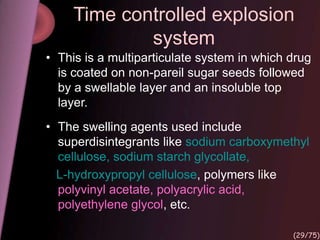
Time controlled explosion
system
• This is a multiparticulate system in which drug
is coated on non-pareil sugar seeds followed
by a swellable layer and an insoluble top
layer.
• The swelling agents used include
superdisintegrants like sodium carboxymethyl
cellulose, sodium starch glycollate,
L-hydroxypropyl cellulose, polymers like
polyvinyl acetate, polyacrylic acid,
polyethylene glycol, etc.
(29/75)
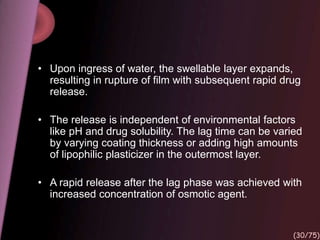
• Upon ingress of water, the swellable layer expands,
resulting in rupture of film with subsequent rapid drug
release.
• The release is independent of environmental factors
like pH and drug solubility. The lag time can be varied
by varying coating thickness or adding high amounts
of lipophilic plasticizer in the outermost layer.
• A rapid release after the lag phase was achieved with
increased concentration of osmotic agent.
(30/75)
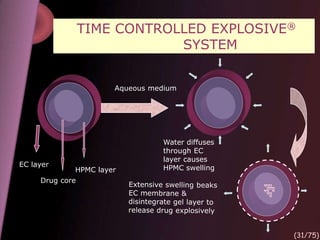
TIME CONTROLLED EXPLOSIVE®
SYSTEM
Drug core
HPMC layer
EC layer
Aqueous medium
Water diffuses
through EC
layer causes
HPMC swelling
(31/75)
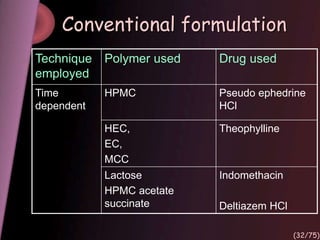
Technique
employed
Polymer used Drug used
Time
dependent
HPMC Pseudo ephedrine
HCl
HEC,
EC,
MCC
Theophylline
Lactose
HPMC acetate
succinate
Indomethacin
Deltiazem HCl
Conventional formulation
(32/75)
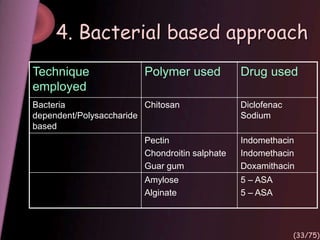
Technique
employed
Polymer used Drug used
Bacteria
dependent/Polysaccharide
based
Chitosan Diclofenac
Sodium
Pectin
Chondroitin salphate
Guar gum
Indomethacin
Indomethacin
Doxamithacin
Amylose
Alginate
5 – ASA
5 – ASA
4. Bacterial based approach
(33/75)
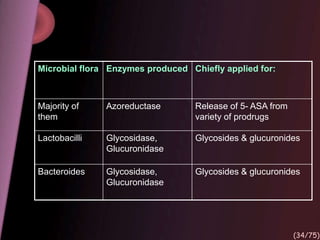
Microbial flora Enzymes produced Chiefly applied for:
Majority of
them
Azoreductase Release of 5- ASA from
variety of prodrugs
Lactobacilli Glycosidase,
Glucuronidase
Glycosides & glucuronides
Bacteroides Glycosidase,
Glucuronidase
Glycosides & glucuronides
(34/75)
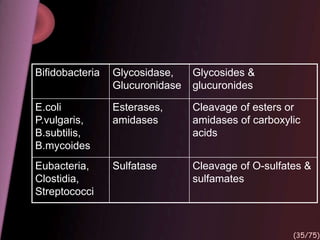
Bifidobacteria Glycosidase,
Glucuronidase
Glycosides &
glucuronides
E.coli
P.vulgaris,
B.subtilis,
B.mycoides
Esterases,
amidases
Cleavage of esters or
amidases of carboxylic
acids
Eubacteria,
Clostidia,
Streptococci
Sulfatase Cleavage of O-sulfates &
sulfamates
(35/75)
5. Pressure-controlled
drug-delivery systems
 Muscular contraction of the gut wall generate pressure
 Variable pressure generation
 Colon has higher luminal pressure
 System can be developed which withstand the
pressure in intestine and ruptures in response
to raised pressure in colon.
 Ethyl cellulose capsules have been used for this purpose.
(36/75)
Some market
formulations
(37/75)
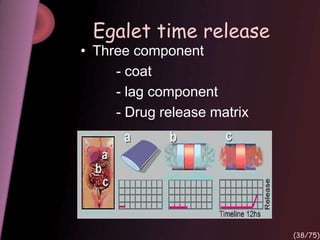
Egalet time release
• Three component
- coat
- lag component
- Drug release matrix
(38/75)
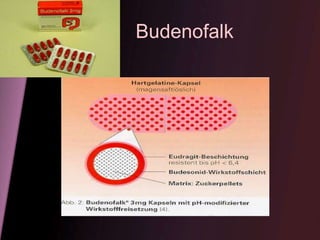
Budenofalk
Asacol
(39/75)
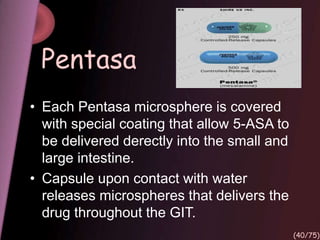
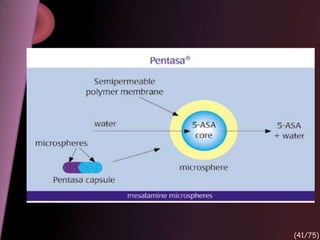
• Each Pentasa microsphere is covered
with special coating that allow 5-ASA to
be delivered derectly into the small and
large intestine.
• Capsule upon contact with water
releases microspheres that delivers the
drug throughout the GIT.
Pentasa
(40/75)
(41/75)
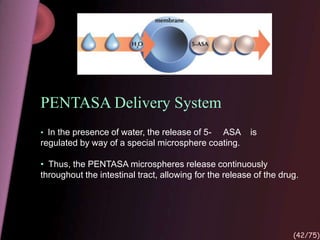
PENTASA Delivery System
• In the presence of water, the release of 5- ASA is
regulated by way of a special microsphere coating.
• Thus, the PENTASA microspheres release continuously
throughout the intestinal tract, allowing for the release of the drug.
(42/75)
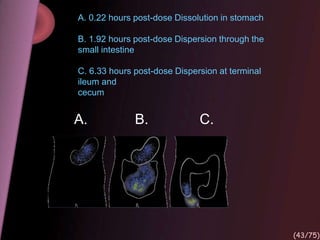
A. 0.22 hours post-dose Dissolution in stomach
B. 1.92 hours post-dose Dispersion through the
small intestine

C. 6.33 hours post-dose Dispersion at terminal
ileum and
cecum
A. B. C.
(43/75)
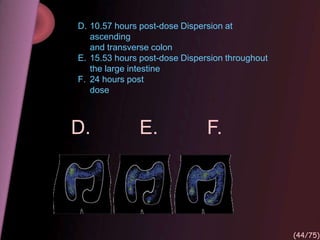
D. E. F.
D. 10.57 hours post-dose Dispersion at
ascending
and transverse colon
E. 15.53 hours post-dose Dispersion throughout
the large intestine
F. 24 hours post
dose
(44/75)
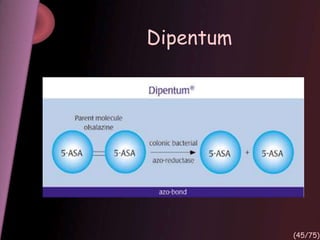
Dipentum
(45/75)
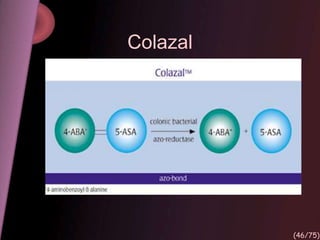
Colazal
(46/75)
COLAL
• COLAL involves coating of drug pellets, tablets or
capsules with Ethylcellulose and glassy amylose.
• The glassy amylose is digested by bacterial enzymes
of the colon only.
• When coated pellets reach the colon, the coating is
degraded, allowing the drug to be released.
• Developed to overcome variations between
individuals in transit times and conditions within the
G.I. Tract.
(47/75)
6. Multiparticulate system
Pellets
Granular matrix
Beads
Microspheres
Nano particles
(48/75)
Multiparticulate formulation
challenges
• Preserve the formulation during its passage through
the stomach and intestine.
• Gastric transit time
• Changes in pH and intestinal transit in IBD
• Not affected by
- disease state (diarrhea, diabetes, peptic ulcer)
- posture (vertical or supine)
- food type (fat and protein content)
(49/75)
Advantages of multiparticulate
system than single unit
• Enable the drug to reach colon quickly
and longer retention time in ascending
colon.
• Due to smaller particle size, these
systems are capable of passing through
the GI tract easily.
(50/75)
pH and time dependent
System
• Enteric coated tablets prepared from
enteric coated granules
• Pellets
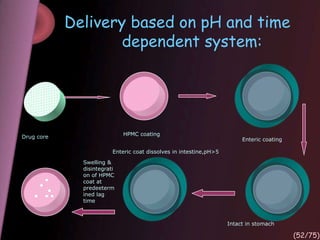
(51/75)
Drug core
HPMC coating
Enteric coating
Intact in stomach
Enteric coat dissolves in intestine,pH>5
Swelling &
disintegrati
on of HPMC
coat at
predeeterm
ined lag
time
Delivery based on pH and time
dependent system:
(52/75)
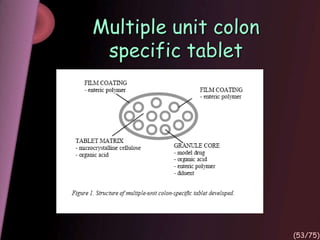
Multiple unit colon
specific tablet
(53/75)
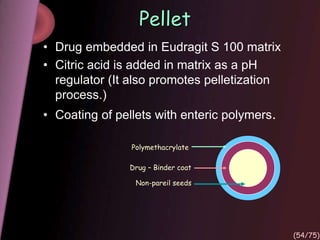
• Drug embedded in Eudragit S 100 matrix
• Citric acid is added in matrix as a pH
regulator (It also promotes pelletization
process.)
• Coating of pellets with enteric polymers.
Pellet
Polymethacrylate
Non-pareil seeds
Drug – Binder coat
(54/75)
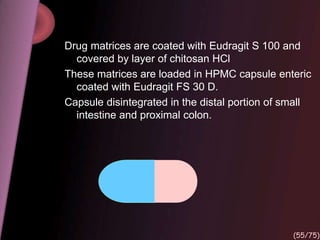
Drug matrices are coated with Eudragit S 100 and
covered by layer of chitosan HCl
These matrices are loaded in HPMC capsule enteric
coated with Eudragit FS 30 D.
Capsule disintegrated in the distal portion of small
intestine and proximal colon.
(55/75)
• Upon hydration the capsule shell dissolves and the
chitosan layer forms a gel (internal pH of 4.5),
which generates an acidic environment around the
Eudragit film so that it does not dissolve in the
ascending colon.
• In ascending colon, the chitosan HCl gel is
degraded by colonic microflora, thereby exposing
the eudragit film to colonic environment. (pH is less
than 7. So film remains intact.)
• In the descending colon, where pH is greater than
7, the Eudragit dissolves and releases the drug in
controlled manner.
• eg. Entericoted palets contain Enrofloxacin
(56/75)
Microbially controlled system
• Hydrogel beads formed by chitosan and
TPP (tri poly phosphate).
• Beads are then loaded with BSA
(bovine serum albumin)
• Crosslinking of chitosan with TPP,
reduces its solubility but does not affect
the degradation by colonic microflora.
(57/75)
• Other formulation are based on
• Zinc-pectinate beads (t50% is 7.33 hr)
• Ca-pectinate beads (t50% is 35 min)
• Guargum disc
• Drug loaded chitosan microcores
microencapsulated with Eudragit
• Chitosan microspheres coated with Eudragit
S 100 or L 100.
• eg. Levofloxacin carboxymithyl Chitosan
micropheres,
(58/75)
Microparticles
• Particles greater than 200 micron are
subjected to speedy bowel evacuation
due to diarrhoea.
• Microencapsulation with Eudragit P-
4135 F
• Biodegradable microspheres (they are
taken up by macrophages)
(59/75)
Microparticles in delivery of
peptides
• Insulin encapsulated by polyacrylates
wherein the coating is means to dissolve only
in the colon.
• A terpolymer of styrene and hydroxyethyl
methacrylate cross-linked with a difunctional
azo-compound.
• Poly (methacrylic-g-ethylene glycol) hydrogel
for insulin
• Insulin loaded in polymeric microspheres.
(60/75)
Insulin delivery
• Chitosan capsule
• Formulation consists of 20 IU of insulin
and 3.49 PA % of sodium glycocholate
in chitosan capsule.
• Marked increase in insulin level and
hypoglycemic activity is observed after
8 hours.
(61/75)
Nanoparticulate system
• Nanoparticles tend to accumulate at the
site of inflammation in IBD.
• Microspheres and nanoparticles are
efficiently taken up by these
macrophages.
• This results in prolonged residence time
in desired area.
(62/75)
Problem with nanoparticles
• To prevent loss of nanoparticles in the early
transit through GI.
• Particle uptake by Payer’s patches and/or
enzymatic degradation.
To overcome this problem, drug loaded nano
particles are entrapped in pH sensitive
microspheres.
The Eudragit P-4135 F prevented drug release
in the upper GI tract and during intestinal
passage and permitted selective drug
delivery in the colon.
(63/75)
RESEARCH WORK
GOING ON
NOW A DAY.
1. Combination suitable for colon specific drug delivery system
(Dextran and Polyaspartamide)
To prepare and characterize novel Hydrogels with polysaccharide
Polyaminoacid structure, able to under go an enzymic hydrolysis in
colon and Useful for treating inflammatory bowel diseases
2. Synthesis, Characterization and swelling studies of pH
responsive psyllium and Methacrylamide based Hydrogels
for the use of colon specific drug delivery
3. Study of the swelling dynemics of porous hydrogels based on
Poly (Chitosan-g-acrylic acid) for oral colon targateing drug dilivery
(Chemical Abstract Volume-147, No.-10, Sept. 3, 2007 219626w)
(Chemical Abstract Volume-147, No.-10, Sept. 3, 2007 219634x)
(Chemical Abstract Volume-147, No.-10, Sept. 3, 2007 219689u)
4. Characterization and relevance of physicochemical interaction
Among component of a novel multi particulate formulation.
Preparation of beads by ionotropic gelation of deacetylated
gellan gum in presence of Ca+2 ions. Folloed by coating with
Eudragit S-100
5. Synthesis and in vitro biodegradation of azo polymer for colon-
Specific drug delivery.
(Chemical Abstract Volume-147, No.-13, Sept. 24, 2007 284677c)
(Chemical Abstract Volume-147, No.-11, Sept. 10, 2007 242921x)
EVALUATION
(64/75)
Evaluation
1. In vitro dissolution study
2. In vitro enzymatic degradation test
3. Relative colonic tissue exposure
4. Relative systemic exposure to drugs
5. -Scintigraphy
6. Magnetic moment imaging study
7. Drug delivery index
8. High frequency capsule
(65/75)
• Invitro test for intactness of coatings
and carriers in simulated conditions of
stomach and intestine
• Drug release study in 0.1 N HCl for 2
hours (mean gastric emptying time)
• Drug release study in phosphate buffer
for 3 hours (mean small intestine transit
time)
(66/75)
• Invitro enzymatic degradation test
Method 1
Method 2
(67/75)
Method 1
• Drug release in buffer medium
containing enzymes (e.g. pectinase,
dextranase) or cecal contents of rat or
guinea pig or rabbit
• Amount of drug release in particular
time is directly proportional to the rate of
degradation of polymer carrier
(68/75)
Method 2
• Suitable medium containing colonic
bacteria (Streptococcus faecium or B.
ovatus)
• Amount of drug released at different
time intervals is determined
(69/75)
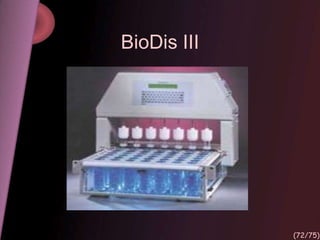
BioDis-III (Apparatus III)
• Ideal for the dissolution profiling of extended
release dosage forms.
• It is designed to meet or exceed current USP
specification.
• It used a reciprocating motion to dip the inner
tube into media.
• At the designated time, the entire row of inner
tubes raises and moves to the next row of
media.
(70/75)
Bio-Dis III
• Fully programmable in each row for dip
speed, time, hold time, drain time.
• Capable of running unattended upto 6 days
and can store upto 25 programms.
• 7 sample tubes which automatically traverse
upto 6 rows of corresponding outer tubes
filled with different media.
• With accessories, the appropriate media
volume can vary from 100, 300 ml (USP) or
1000 ml.
(71/75)
BioDis III
(72/75)
References
 Chemical Abstract Volume no,-17 April,23, 2007 147:343831c
 Chemical Abstract Volume no.-1 July,2, 2007 147:16197j
 Chemical Abstract Volume-147, No.-2, July 9, 2007 32626a
 Chemical Abstract Volume-147, No.-4, July 23. 2007, 79221h
 Chemical Abstract Volume-147, No.-4, July 23, 2007 79528p
 Chemical Abstract Volume-147, No-4, July23,2007 79161p
 Chemical Abstract Volume-147, No.- 10, Sep., 3 2007
219626w
 Chemical Abstract Volume-147, No.-10, Sep.,3 2007 219634x
 Chemical Abstract Volume-147, No.-10, Sep.,3 2007 219689u
 Chemical Abstract Volume-147, No.-11, Sep. 10, 2007 242771y
 Chemical Abstract Volume-147, No.-11, Sep.10, 2007 242921x
 Chemical Abstract Volume-147, No.-13, Sep.24, 2007
284677c
(73/75)
 www.egalet.com
 www.pentasausa.com
 www.budenofalk.com
 www.alizyme.com
 www.dissolution.com
 “Pharmaceutical approaches to colon targeted DDS”
 JPPS 6(1):33-66, 2003
 “Colonic Drug delivery: Challenges and opportunities”-
 An overview. European gastrointestinal review, 2006
 “Perspectives on colonic Drug Delivery” Business
 Briefing: Pharmatech 2003
 “Multiparticulate formulation approach to colon Drug Delivery:
Current Perspectives” 9(3): 327-338, 2006
(74/75)
Praful Vahoniya
Paper-421
L. M. College of Pharmacy
Ahmedabad
Friendship is the
Union of Spirits,
A marriage of
hearts
and the bond there
of virtue

Chapter on Colon targeted drug delivery system

  • 1.
    Colon Targeted DrugDelivery System By:Rajesh L. Dumpala (B.Pharm, M. Pharm.) PhD. ( Pursuing) Research Scientist, Alembic Research Centre. Vadodara E.Mail:-rdumpala64@gmail.com
  • 2.
    Content Anatomy of Colon Challengesand problems Factors affecting performance of CDDS Pharmaceutical approaches Evaluation Market formulations References (2/75)
  • 3.
  • 4.
    Application In local colonicpathologies Systemic delivery of protein and peptide Potential site for the treatment of diseases sensitive to circadian rhythms (asthma, angina and arthritis) For the drugs that are absorbed through colon such as steroids (….efficacy..) For the treatment of disorders like IBS, colitis, crohn’s disease (…where it is necessary to attain high concentration of drugs) (4/75)
  • 5.
    Praful Vahoniya Paper-421 L. M.College of Pharmacy Ahmedabad Chron’s Disease (5/75)
  • 6.
    Limitation and Challenges Dissolutionin luminal fluid. Stability of drugs. Binding of drugs to dietary residues, intestinal secretions, mucus or fecal matter. Metabolic degradation by colonic microflora. Wide range of pH values (6/75)
  • 7.
    Lower surface areaand relative “tightness” of the tight junctions in the colon restrict drug transport. Longer residence time Requires protection against variety of the gastric enzymes. Cytochrome P450 3A class of drug metabolizing enzymes have lower activity in colon (7/75)
  • 8.
    Target sites Disease conditions Drugsused Topical/local action Inflammatory bowel disease, Irritable bowel Hydrocortisone, Budenoside, Prednisolone, Sulphasalazine, Olsalazine, Infliximab Mesalazine, Balsalazide, 6- Mercaptopurine, Azathiorprine, Cyclosporine,etc Introduction to colonic drug delivery system (8/75)
  • 9.
  • 10.
    Systemic action To prevent gastric irritation NSAIDS To preventfirst pass metabolism of orally ingested drugs Steroids Oral delivery of peptides Insulin (10/75)
  • 11.
  • 12.
    A. Gastric emptying Fastedstate 10 min. to 2 hrs Fed state Higher than 2 hrs Small intestinal transit 3-4 hours Colonic transit 20-35 hours (12/75)
  • 13.
    DISEASE EFFECT ONCOLONIC ABSORPTION OF DRUGS IBD (Crohn’s disease & Ulcerative colitis) Malabsorption lipophilic drugs Mucosa & submucosa gets thick & so reduces surface area, reduces diffusion Diarrhoea Retention time reduces. Reduces drug absorption & release from dosage form Gastrointestinal disease state (13/75)
  • 14.
    Constipation Reduction inbowel movement & decreases the avaibility of drug at absorption site Gastroenteritis Diarrhoea affects the performance of formulations (14/75)
  • 15.
  • 16.
    Approaches 1. Prodrug 2. pHdependent system 3. Time dependent system 4. Microflora activated system 5. Micro particulate system 6. Pressure controlled system (16/75)
  • 17.
    A. PRODRUG APPROACH(Drug is conjugated with carrier) I. Azo conjugate eg. Sulphasalazine for 5-ASA Drug is conjugated with an azo bond. II. Glycoside conjugate eg. Dexamithasone Drug is conjugated with glycoside III. Glucuronide conjugate Drug is conjugated with Glucuronide IV. Cyclodextrin conjugate(βCD) Drug is conjugated with cyclodextrin V. Dextran conjugate eg. Naproxen-dextran conjugation Drug is conjugated with dextran 1. Prodrug approach (17/75)
  • 18.
    VI. Polymeric conjugateDrug is conjugated with polymer VII. Amino acid conjugate eg. Proteins. Drug is conjugated with aminoacid (18/75)
  • 19.
    2. pH dependentapproach • pH of the stomach, intestine and colon depends on variety of factors (diet, food intake, intestinal motility, diseases state) • Challenging to prepare dosage forms that withstand such variability. • Delivery system is designed based on the knowledge of polymers and their solubility. (19/75)
  • 20.
    • Co-polymers ofmethacrylic acid and methyl methacrylate are widely used. Eudragit L: pH 6 Eudragit S: pH 7 • Premature drug release observed. • To overcome this problem Eudragit FS has been developed. Eudragit FS: pH 7-7.5: Slow dissolution rate (20/75)
  • 21.
    Formulation based on conventionaltechniques Technique employed Polymer used Drug used pH dependent Eudragit L 100 and S 100 Mesalazin, Diclophenac Na and 5ASA Eudragit S, Eudragit FS, Eudragit P4135F Prednisolon Eudragit L 30 D-SS Eudragit FS 30 D Paracetamol (21/75)
  • 22.
  • 23.
  • 24.
    3.Time dependent delivery • Difficultto predict in advance. • Lag time of five hours is considered sufficient provided that the intestinal transit time is constant at three to four hours. • Pulsincap is earliest system based on this principle (24/75)
  • 25.
    Pulsincap • It consistsof enteric coated capsule containing water soluble cap and water insoluble body. • The body is loaded with Hydrogel plug and drug layer. • Enteric coat dissolves in small intestine and the water soluble cap also dissolves. • The Hydrogel plug absorbs water and swell and release drug at a predetermined lag time of 4 hours. (25/75)
  • 26.
    (26/75) eg. Modifide pulsein cap drug dilivery system of Diclofenac sodium
  • 27.
    Time clock The TimeClock system consists of a solid dosage form coated with lipidic barriers containing carnuba wax and bee’s wax along with surfactants, such as polyoxyethylene sorbitan mono oleate. This coat erodes or emulsifies in the aqueous environment in a time proportional to the thickness of the film, and the core is then available for dispersion. The lag time increased with increasing coating thickness. Such systems are better suited for water- soluble drugs. (27/75)
  • 28.
    Solid Salbutamol drugformulation coating with hydrophobic surfactant & water soluble polymer Redespersion of polymer & drug releases TIME CLOCK (28/75)
  • 29.
    Time controlled explosion system •This is a multiparticulate system in which drug is coated on non-pareil sugar seeds followed by a swellable layer and an insoluble top layer. • The swelling agents used include superdisintegrants like sodium carboxymethyl cellulose, sodium starch glycollate, L-hydroxypropyl cellulose, polymers like polyvinyl acetate, polyacrylic acid, polyethylene glycol, etc. (29/75)
  • 30.
    • Upon ingressof water, the swellable layer expands, resulting in rupture of film with subsequent rapid drug release. • The release is independent of environmental factors like pH and drug solubility. The lag time can be varied by varying coating thickness or adding high amounts of lipophilic plasticizer in the outermost layer. • A rapid release after the lag phase was achieved with increased concentration of osmotic agent. (30/75)
  • 31.
    TIME CONTROLLED EXPLOSIVE® SYSTEM Drugcore HPMC layer EC layer Aqueous medium Water diffuses through EC layer causes HPMC swelling (31/75)
  • 32.
    Technique employed Polymer used Drugused Time dependent HPMC Pseudo ephedrine HCl HEC, EC, MCC Theophylline Lactose HPMC acetate succinate Indomethacin Deltiazem HCl Conventional formulation (32/75)
  • 33.
    Technique employed Polymer used Drugused Bacteria dependent/Polysaccharide based Chitosan Diclofenac Sodium Pectin Chondroitin salphate Guar gum Indomethacin Indomethacin Doxamithacin Amylose Alginate 5 – ASA 5 – ASA 4. Bacterial based approach (33/75)
  • 34.
    Microbial flora Enzymesproduced Chiefly applied for: Majority of them Azoreductase Release of 5- ASA from variety of prodrugs Lactobacilli Glycosidase, Glucuronidase Glycosides & glucuronides Bacteroides Glycosidase, Glucuronidase Glycosides & glucuronides (34/75)
  • 35.
    Bifidobacteria Glycosidase, Glucuronidase Glycosides & glucuronides E.coli P.vulgaris, B.subtilis, B.mycoides Esterases, amidases Cleavageof esters or amidases of carboxylic acids Eubacteria, Clostidia, Streptococci Sulfatase Cleavage of O-sulfates & sulfamates (35/75)
  • 36.
    5. Pressure-controlled drug-delivery systems Muscular contraction of the gut wall generate pressure  Variable pressure generation  Colon has higher luminal pressure  System can be developed which withstand the pressure in intestine and ruptures in response to raised pressure in colon.  Ethyl cellulose capsules have been used for this purpose. (36/75)
  • 37.
  • 38.
    Egalet time release •Three component - coat - lag component - Drug release matrix (38/75)
  • 39.
  • 40.
  • 41.
    • Each Pentasamicrosphere is covered with special coating that allow 5-ASA to be delivered derectly into the small and large intestine. • Capsule upon contact with water releases microspheres that delivers the drug throughout the GIT. Pentasa (40/75)
  • 42.
  • 43.
    PENTASA Delivery System •In the presence of water, the release of 5- ASA is regulated by way of a special microsphere coating. • Thus, the PENTASA microspheres release continuously throughout the intestinal tract, allowing for the release of the drug. (42/75)
  • 44.
    A. 0.22 hourspost-dose Dissolution in stomach B. 1.92 hours post-dose Dispersion through the small intestine C. 6.33 hours post-dose Dispersion at terminal ileum and cecum A. B. C. (43/75)
  • 45.
    D. E. F. D.10.57 hours post-dose Dispersion at ascending and transverse colon E. 15.53 hours post-dose Dispersion throughout the large intestine F. 24 hours post dose (44/75)
  • 46.
  • 47.
  • 48.
    COLAL • COLAL involvescoating of drug pellets, tablets or capsules with Ethylcellulose and glassy amylose. • The glassy amylose is digested by bacterial enzymes of the colon only. • When coated pellets reach the colon, the coating is degraded, allowing the drug to be released. • Developed to overcome variations between individuals in transit times and conditions within the G.I. Tract. (47/75)
  • 49.
    6. Multiparticulate system Pellets Granularmatrix Beads Microspheres Nano particles (48/75)
  • 50.
    Multiparticulate formulation challenges • Preservethe formulation during its passage through the stomach and intestine. • Gastric transit time • Changes in pH and intestinal transit in IBD • Not affected by - disease state (diarrhea, diabetes, peptic ulcer) - posture (vertical or supine) - food type (fat and protein content) (49/75)
  • 51.
    Advantages of multiparticulate systemthan single unit • Enable the drug to reach colon quickly and longer retention time in ascending colon. • Due to smaller particle size, these systems are capable of passing through the GI tract easily. (50/75)
  • 52.
    pH and timedependent System • Enteric coated tablets prepared from enteric coated granules • Pellets (51/75)
  • 53.
    Drug core HPMC coating Entericcoating Intact in stomach Enteric coat dissolves in intestine,pH>5 Swelling & disintegrati on of HPMC coat at predeeterm ined lag time Delivery based on pH and time dependent system: (52/75)
  • 54.
  • 55.
    • Drug embeddedin Eudragit S 100 matrix • Citric acid is added in matrix as a pH regulator (It also promotes pelletization process.) • Coating of pellets with enteric polymers. Pellet Polymethacrylate Non-pareil seeds Drug – Binder coat (54/75)
  • 56.
    Drug matrices arecoated with Eudragit S 100 and covered by layer of chitosan HCl These matrices are loaded in HPMC capsule enteric coated with Eudragit FS 30 D. Capsule disintegrated in the distal portion of small intestine and proximal colon. (55/75)
  • 57.
    • Upon hydrationthe capsule shell dissolves and the chitosan layer forms a gel (internal pH of 4.5), which generates an acidic environment around the Eudragit film so that it does not dissolve in the ascending colon. • In ascending colon, the chitosan HCl gel is degraded by colonic microflora, thereby exposing the eudragit film to colonic environment. (pH is less than 7. So film remains intact.) • In the descending colon, where pH is greater than 7, the Eudragit dissolves and releases the drug in controlled manner. • eg. Entericoted palets contain Enrofloxacin (56/75)
  • 58.
    Microbially controlled system •Hydrogel beads formed by chitosan and TPP (tri poly phosphate). • Beads are then loaded with BSA (bovine serum albumin) • Crosslinking of chitosan with TPP, reduces its solubility but does not affect the degradation by colonic microflora. (57/75)
  • 59.
    • Other formulationare based on • Zinc-pectinate beads (t50% is 7.33 hr) • Ca-pectinate beads (t50% is 35 min) • Guargum disc • Drug loaded chitosan microcores microencapsulated with Eudragit • Chitosan microspheres coated with Eudragit S 100 or L 100. • eg. Levofloxacin carboxymithyl Chitosan micropheres, (58/75)
  • 60.
    Microparticles • Particles greaterthan 200 micron are subjected to speedy bowel evacuation due to diarrhoea. • Microencapsulation with Eudragit P- 4135 F • Biodegradable microspheres (they are taken up by macrophages) (59/75)
  • 61.
    Microparticles in deliveryof peptides • Insulin encapsulated by polyacrylates wherein the coating is means to dissolve only in the colon. • A terpolymer of styrene and hydroxyethyl methacrylate cross-linked with a difunctional azo-compound. • Poly (methacrylic-g-ethylene glycol) hydrogel for insulin • Insulin loaded in polymeric microspheres. (60/75)
  • 62.
    Insulin delivery • Chitosancapsule • Formulation consists of 20 IU of insulin and 3.49 PA % of sodium glycocholate in chitosan capsule. • Marked increase in insulin level and hypoglycemic activity is observed after 8 hours. (61/75)
  • 63.
    Nanoparticulate system • Nanoparticlestend to accumulate at the site of inflammation in IBD. • Microspheres and nanoparticles are efficiently taken up by these macrophages. • This results in prolonged residence time in desired area. (62/75)
  • 64.
    Problem with nanoparticles •To prevent loss of nanoparticles in the early transit through GI. • Particle uptake by Payer’s patches and/or enzymatic degradation. To overcome this problem, drug loaded nano particles are entrapped in pH sensitive microspheres. The Eudragit P-4135 F prevented drug release in the upper GI tract and during intestinal passage and permitted selective drug delivery in the colon. (63/75)
  • 65.
  • 66.
    1. Combination suitablefor colon specific drug delivery system (Dextran and Polyaspartamide) To prepare and characterize novel Hydrogels with polysaccharide Polyaminoacid structure, able to under go an enzymic hydrolysis in colon and Useful for treating inflammatory bowel diseases 2. Synthesis, Characterization and swelling studies of pH responsive psyllium and Methacrylamide based Hydrogels for the use of colon specific drug delivery 3. Study of the swelling dynemics of porous hydrogels based on Poly (Chitosan-g-acrylic acid) for oral colon targateing drug dilivery (Chemical Abstract Volume-147, No.-10, Sept. 3, 2007 219626w) (Chemical Abstract Volume-147, No.-10, Sept. 3, 2007 219634x) (Chemical Abstract Volume-147, No.-10, Sept. 3, 2007 219689u)
  • 67.
    4. Characterization andrelevance of physicochemical interaction Among component of a novel multi particulate formulation. Preparation of beads by ionotropic gelation of deacetylated gellan gum in presence of Ca+2 ions. Folloed by coating with Eudragit S-100 5. Synthesis and in vitro biodegradation of azo polymer for colon- Specific drug delivery. (Chemical Abstract Volume-147, No.-13, Sept. 24, 2007 284677c) (Chemical Abstract Volume-147, No.-11, Sept. 10, 2007 242921x)
  • 68.
  • 69.
    Evaluation 1. In vitrodissolution study 2. In vitro enzymatic degradation test 3. Relative colonic tissue exposure 4. Relative systemic exposure to drugs 5. -Scintigraphy 6. Magnetic moment imaging study 7. Drug delivery index 8. High frequency capsule (65/75)
  • 70.
    • Invitro testfor intactness of coatings and carriers in simulated conditions of stomach and intestine • Drug release study in 0.1 N HCl for 2 hours (mean gastric emptying time) • Drug release study in phosphate buffer for 3 hours (mean small intestine transit time) (66/75)
  • 71.
    • Invitro enzymaticdegradation test Method 1 Method 2 (67/75)
  • 72.
    Method 1 • Drugrelease in buffer medium containing enzymes (e.g. pectinase, dextranase) or cecal contents of rat or guinea pig or rabbit • Amount of drug release in particular time is directly proportional to the rate of degradation of polymer carrier (68/75)
  • 73.
    Method 2 • Suitablemedium containing colonic bacteria (Streptococcus faecium or B. ovatus) • Amount of drug released at different time intervals is determined (69/75)
  • 74.
    BioDis-III (Apparatus III) •Ideal for the dissolution profiling of extended release dosage forms. • It is designed to meet or exceed current USP specification. • It used a reciprocating motion to dip the inner tube into media. • At the designated time, the entire row of inner tubes raises and moves to the next row of media. (70/75)
  • 75.
    Bio-Dis III • Fullyprogrammable in each row for dip speed, time, hold time, drain time. • Capable of running unattended upto 6 days and can store upto 25 programms. • 7 sample tubes which automatically traverse upto 6 rows of corresponding outer tubes filled with different media. • With accessories, the appropriate media volume can vary from 100, 300 ml (USP) or 1000 ml. (71/75)
  • 76.
  • 77.
    References  Chemical AbstractVolume no,-17 April,23, 2007 147:343831c  Chemical Abstract Volume no.-1 July,2, 2007 147:16197j  Chemical Abstract Volume-147, No.-2, July 9, 2007 32626a  Chemical Abstract Volume-147, No.-4, July 23. 2007, 79221h  Chemical Abstract Volume-147, No.-4, July 23, 2007 79528p  Chemical Abstract Volume-147, No-4, July23,2007 79161p  Chemical Abstract Volume-147, No.- 10, Sep., 3 2007 219626w  Chemical Abstract Volume-147, No.-10, Sep.,3 2007 219634x  Chemical Abstract Volume-147, No.-10, Sep.,3 2007 219689u  Chemical Abstract Volume-147, No.-11, Sep. 10, 2007 242771y  Chemical Abstract Volume-147, No.-11, Sep.10, 2007 242921x  Chemical Abstract Volume-147, No.-13, Sep.24, 2007 284677c (73/75)
  • 78.
     www.egalet.com  www.pentasausa.com www.budenofalk.com  www.alizyme.com  www.dissolution.com  “Pharmaceutical approaches to colon targeted DDS”  JPPS 6(1):33-66, 2003  “Colonic Drug delivery: Challenges and opportunities”-  An overview. European gastrointestinal review, 2006  “Perspectives on colonic Drug Delivery” Business  Briefing: Pharmatech 2003  “Multiparticulate formulation approach to colon Drug Delivery: Current Perspectives” 9(3): 327-338, 2006 (74/75)
  • 79.
    Praful Vahoniya Paper-421 L. M.College of Pharmacy Ahmedabad Friendship is the Union of Spirits, A marriage of hearts and the bond there of virtue