Protozoa Background
Information
 Domain Eukarya
– Membrane bound
organelles, including nucleus
 Many kingdoms, 40+,
depending on what
classification scheme is
used
 Classification is always
changing
 Protozoa are animal-like
protists
 Primitive
– Single celled
– Colonial
 Gave rise to modern day
plants and animals
 Diversity is the rule in
every aspect
– Feeding / energetics
– Life cycles
– Reproduction
– Physiology /
osmoregulation
– Locomotion
– Morphology
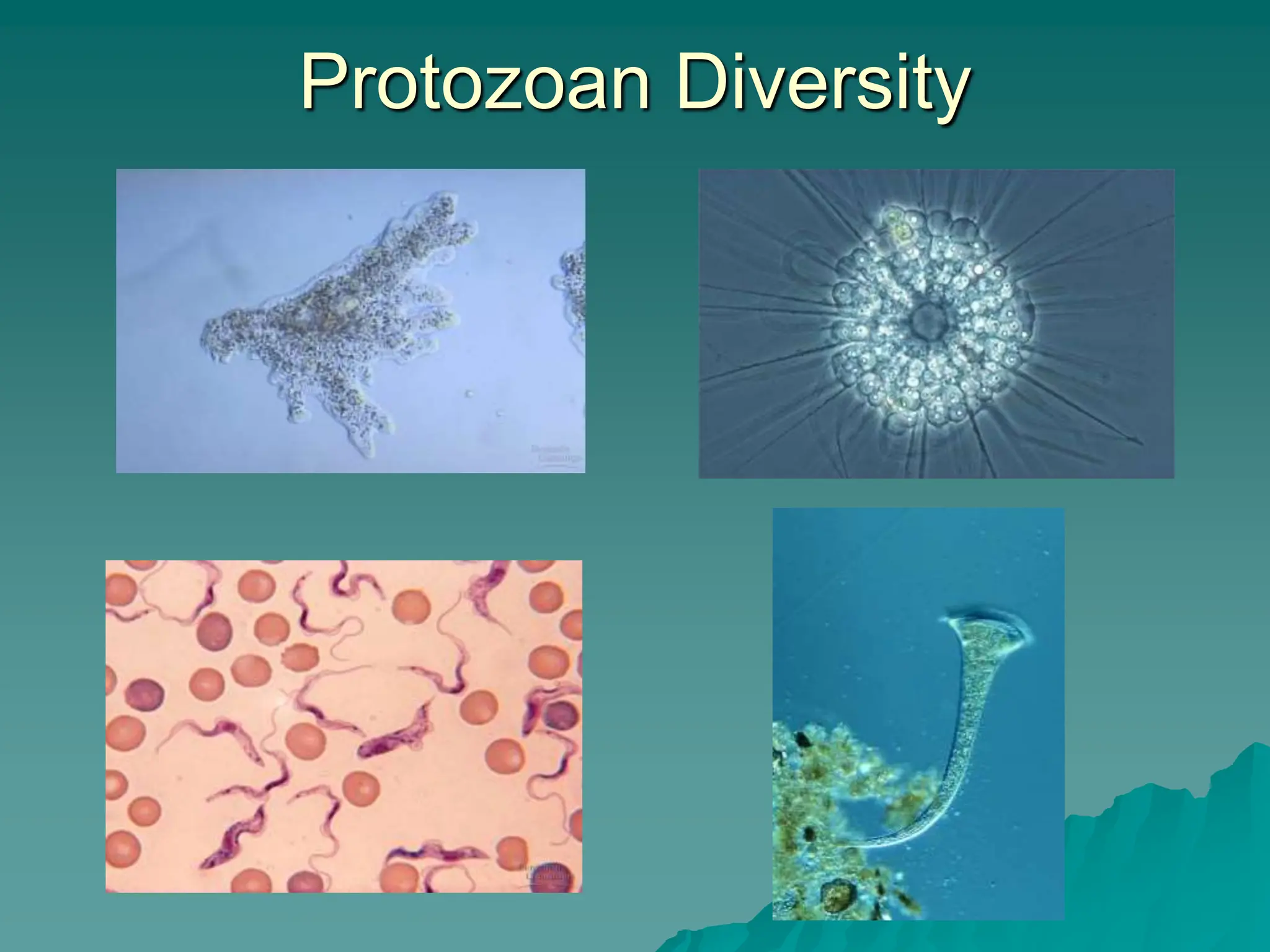
Protozoan Diversity
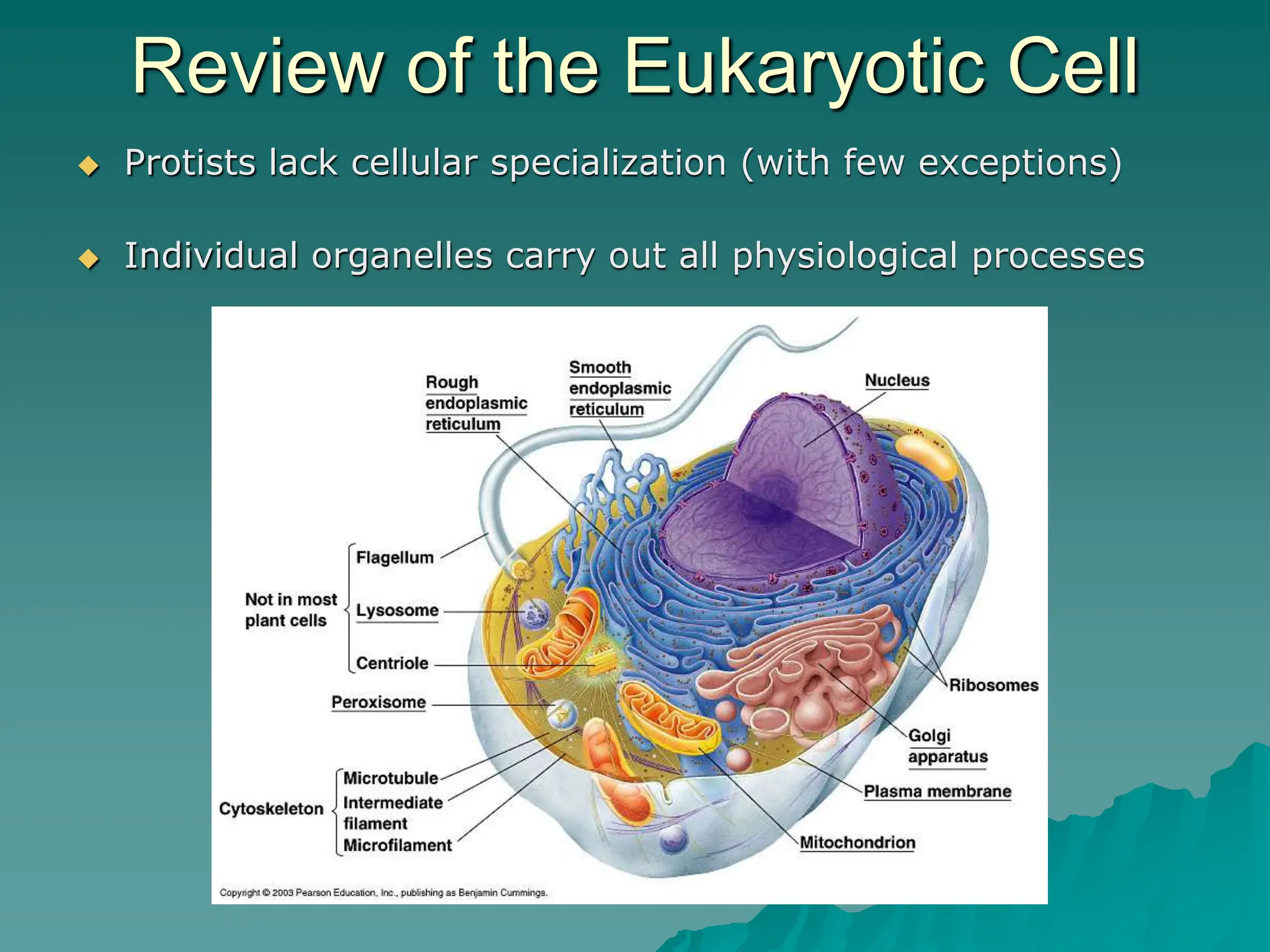
Review of the Eukaryotic Cell
 Protists lack cellular specialization (with few exceptions)
 Individual organelles carry out all physiological processes
 Cell membrane
– Barrier to the outside environment
– Selective passage of molecules
– Plays a role in endo / exocytosis
 Cytoplasm
– Ectoplasm – outer, stiff, portion
– Endoplasm – inner, fluid, portion
 Internal membrane system
– Consists of endoplasmic reticulum (ER), Golgi
bodies, and lysosomes
– Compartmentalizes the cell
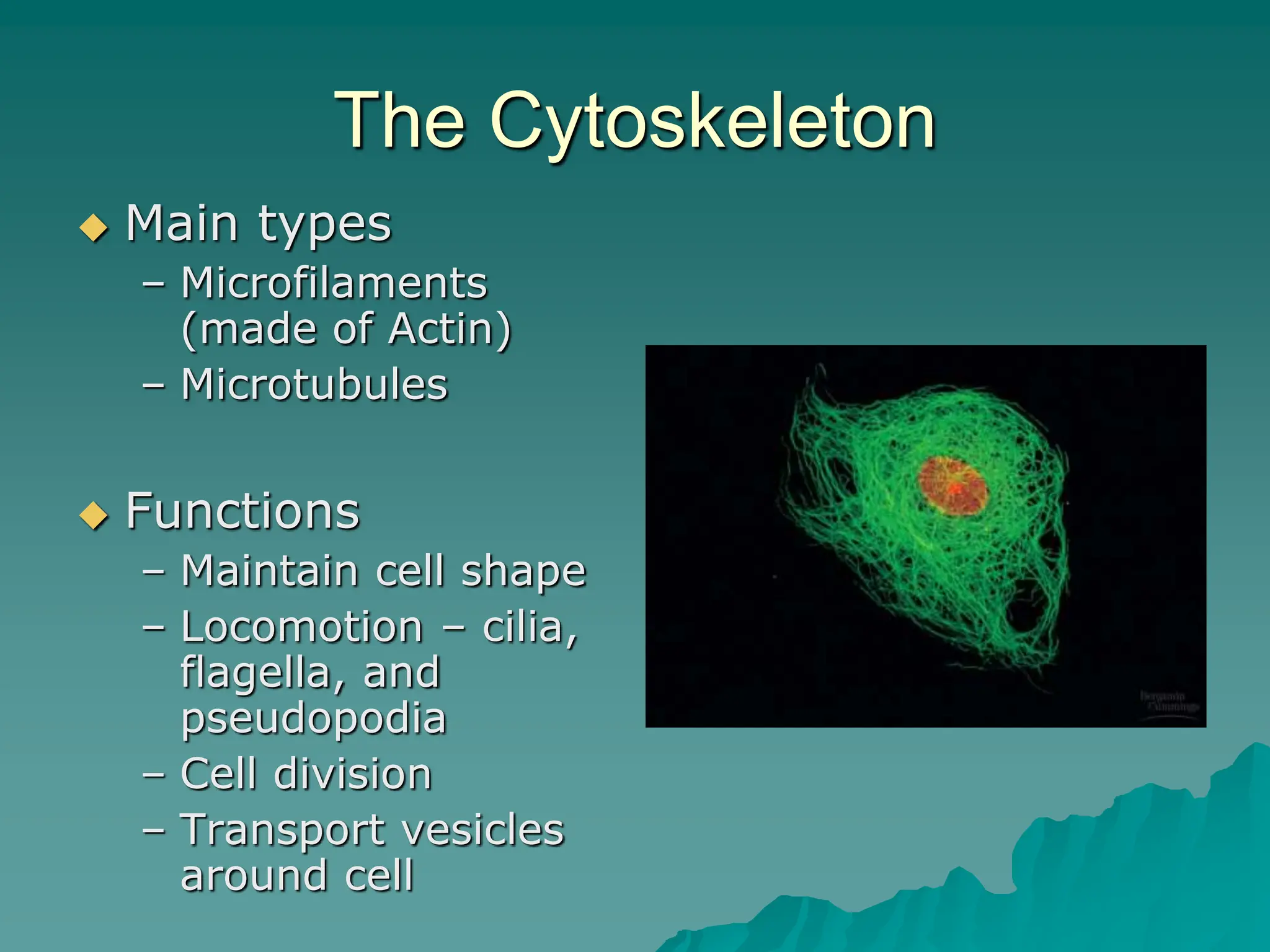
The Cytoskeleton
 Main types
– Microfilaments
(made of Actin)
– Microtubules
 Functions
– Maintain cell shape
– Locomotion – cilia,
flagella, and
pseudopodia
– Cell division
– Transport vesicles
around cell
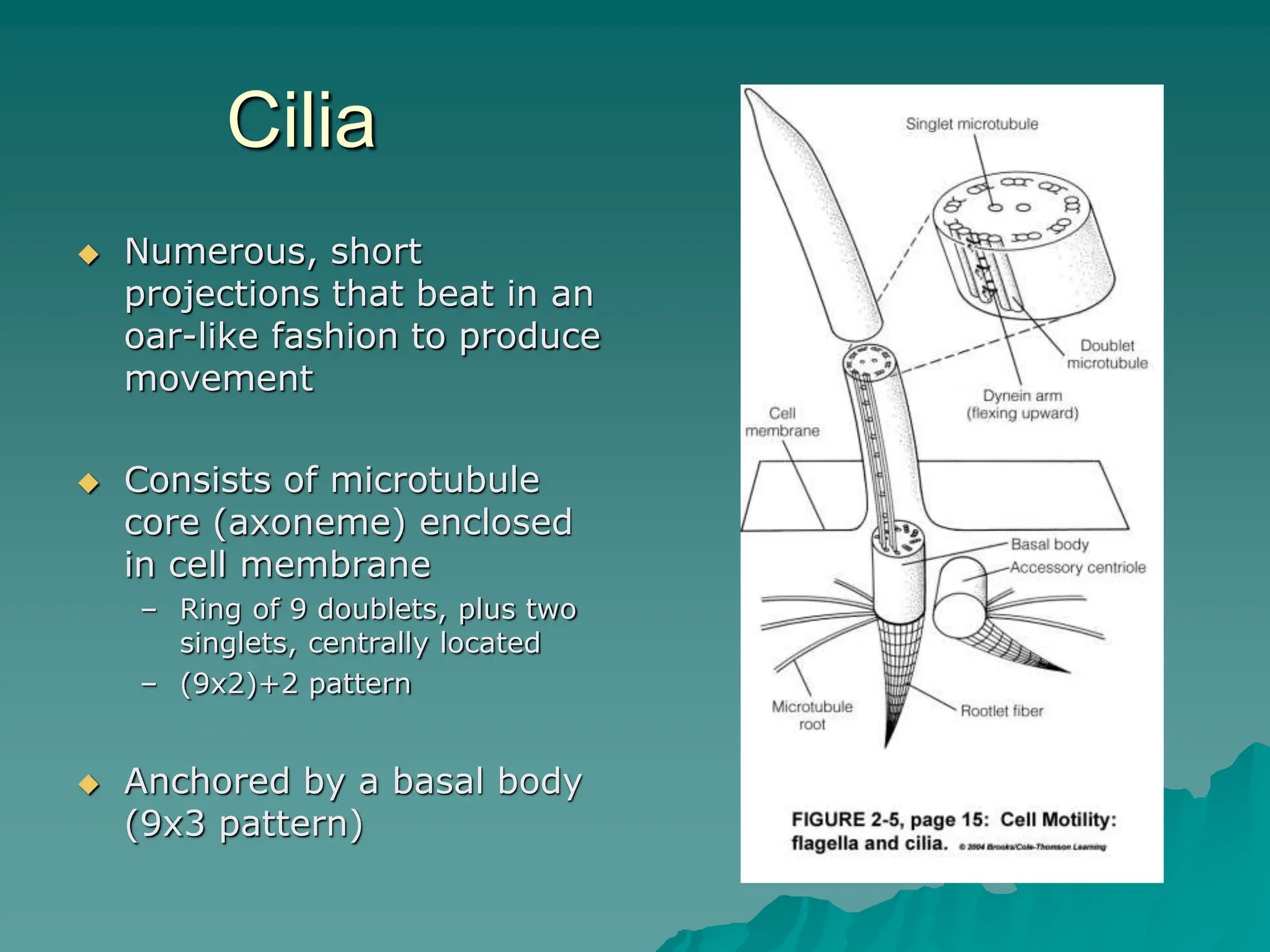
Cilia
 Numerous, short
projections that beat in an
oar-like fashion to produce
movement
 Consists of microtubule
core (axoneme) enclosed
in cell membrane
– Ring of 9 doublets, plus two
singlets, centrally located
– (9x2)+2 pattern
 Anchored by a basal body
(9x3 pattern)
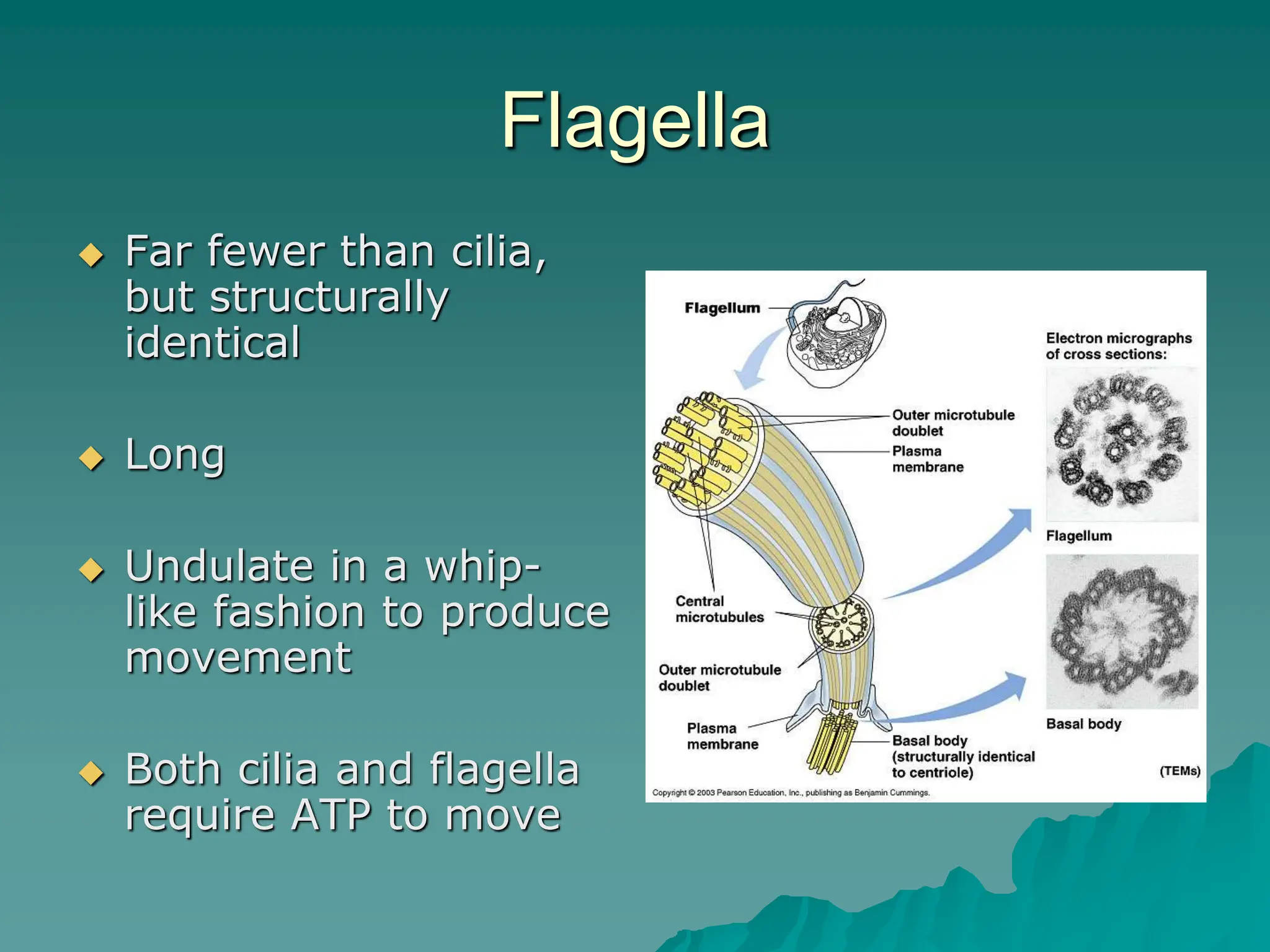
Flagella
 Far fewer than cilia,
but structurally
identical
 Long
 Undulate in a whip-
like fashion to produce
movement
 Both cilia and flagella
require ATP to move
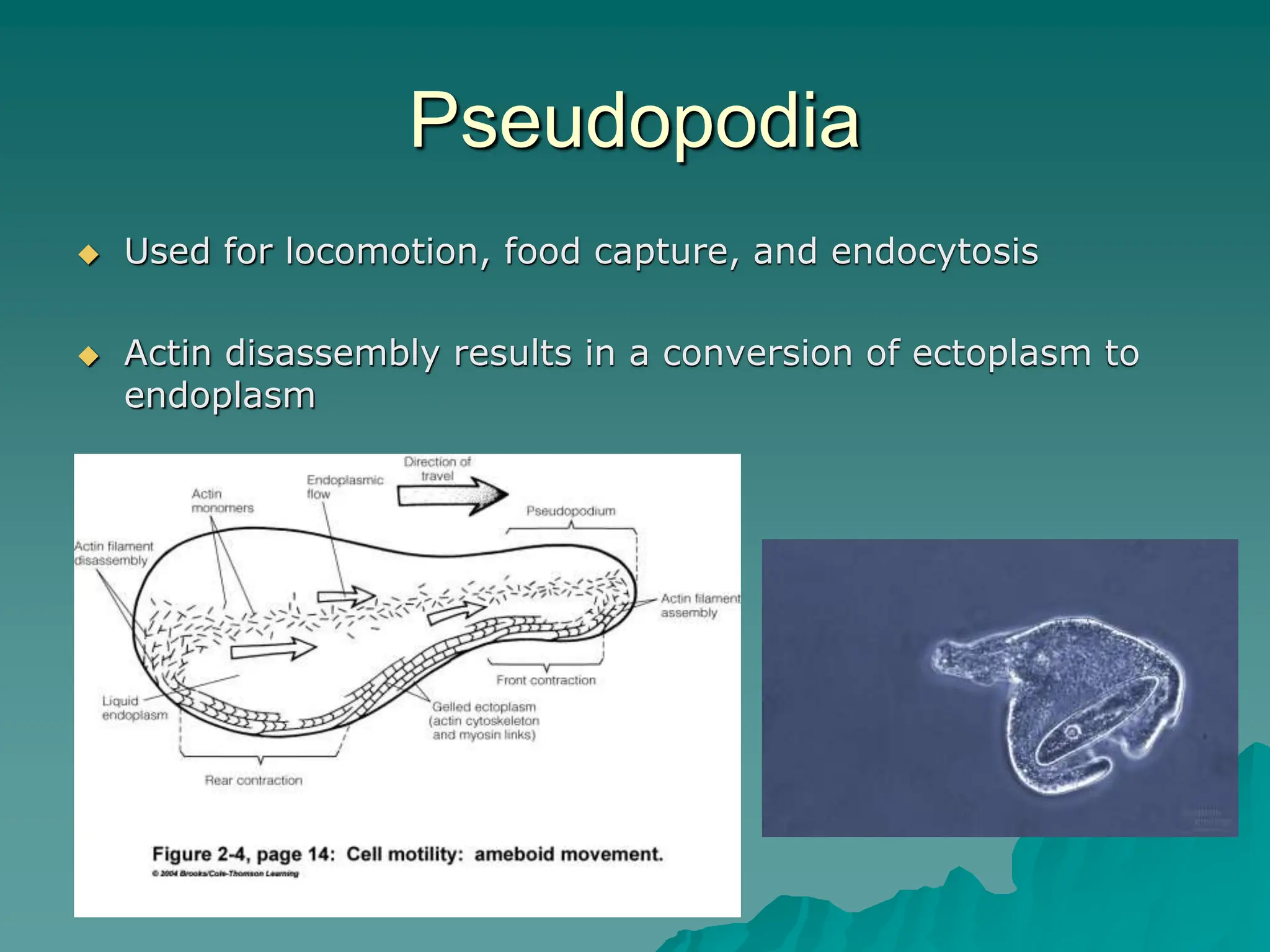
Pseudopodia
 Used for locomotion, food capture, and endocytosis
 Actin disassembly results in a conversion of ectoplasm to
endoplasm
Protozoan Physiology
 Same rules apply in single celled organisms as do
in metazoans
 In fact, environmental effects may be more
pronounced
– Ectothermic
– Large SA : Vol
 Important considerations
– Feeding and nutrition
– Enzyme function
– Osmoregulation
– Reproduction
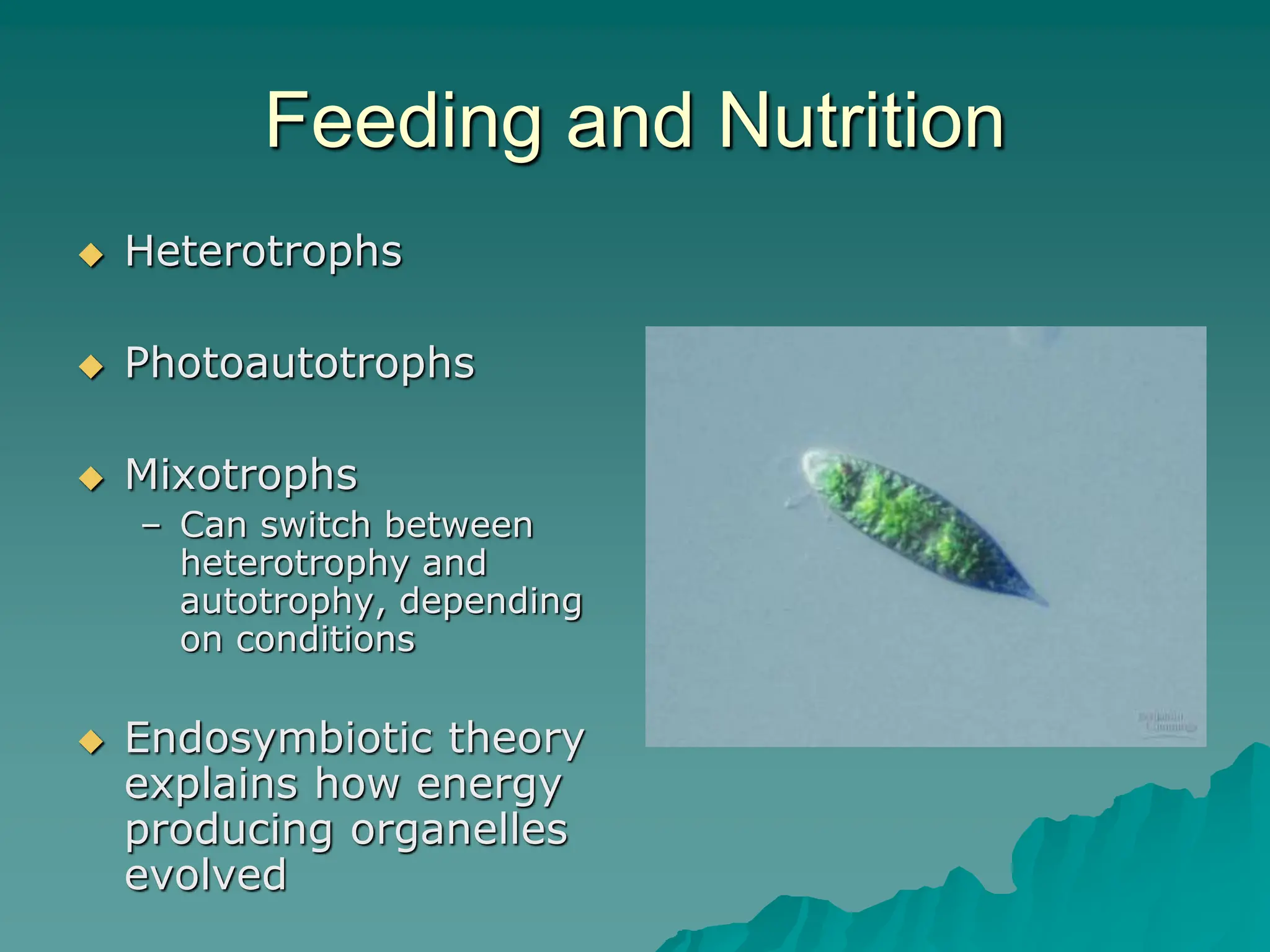
Feeding and Nutrition
 Heterotrophs
 Photoautotrophs
 Mixotrophs
– Can switch between
heterotrophy and
autotrophy, depending
on conditions
 Endosymbiotic theory
explains how energy
producing organelles
evolved
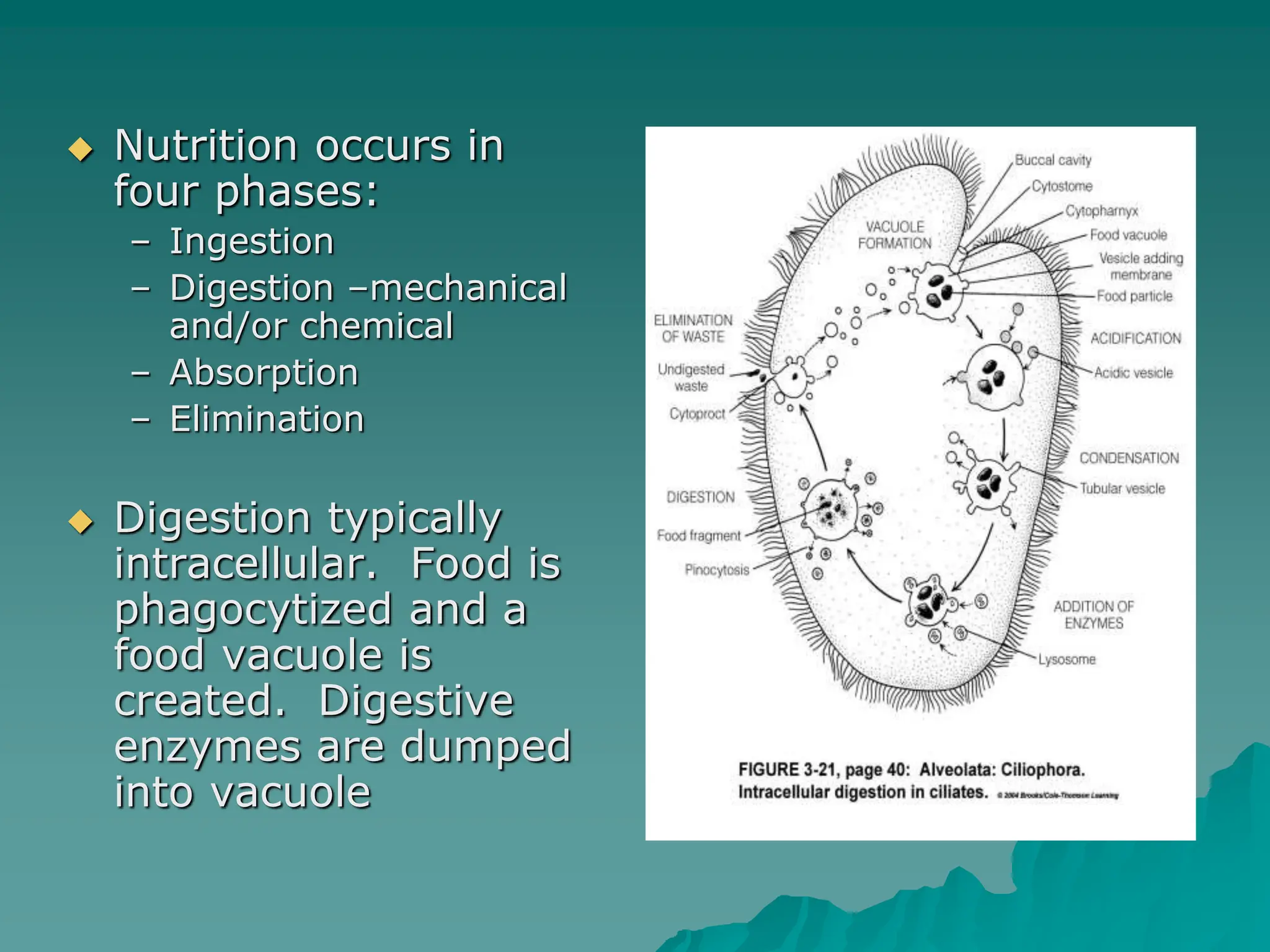
 Nutrition occurs in
four phases:
– Ingestion
– Digestion –mechanical
and/or chemical
– Absorption
– Elimination
 Digestion typically
intracellular. Food is
phagocytized and a
food vacuole is
created. Digestive
enzymes are dumped
into vacuole
Enzyme Function
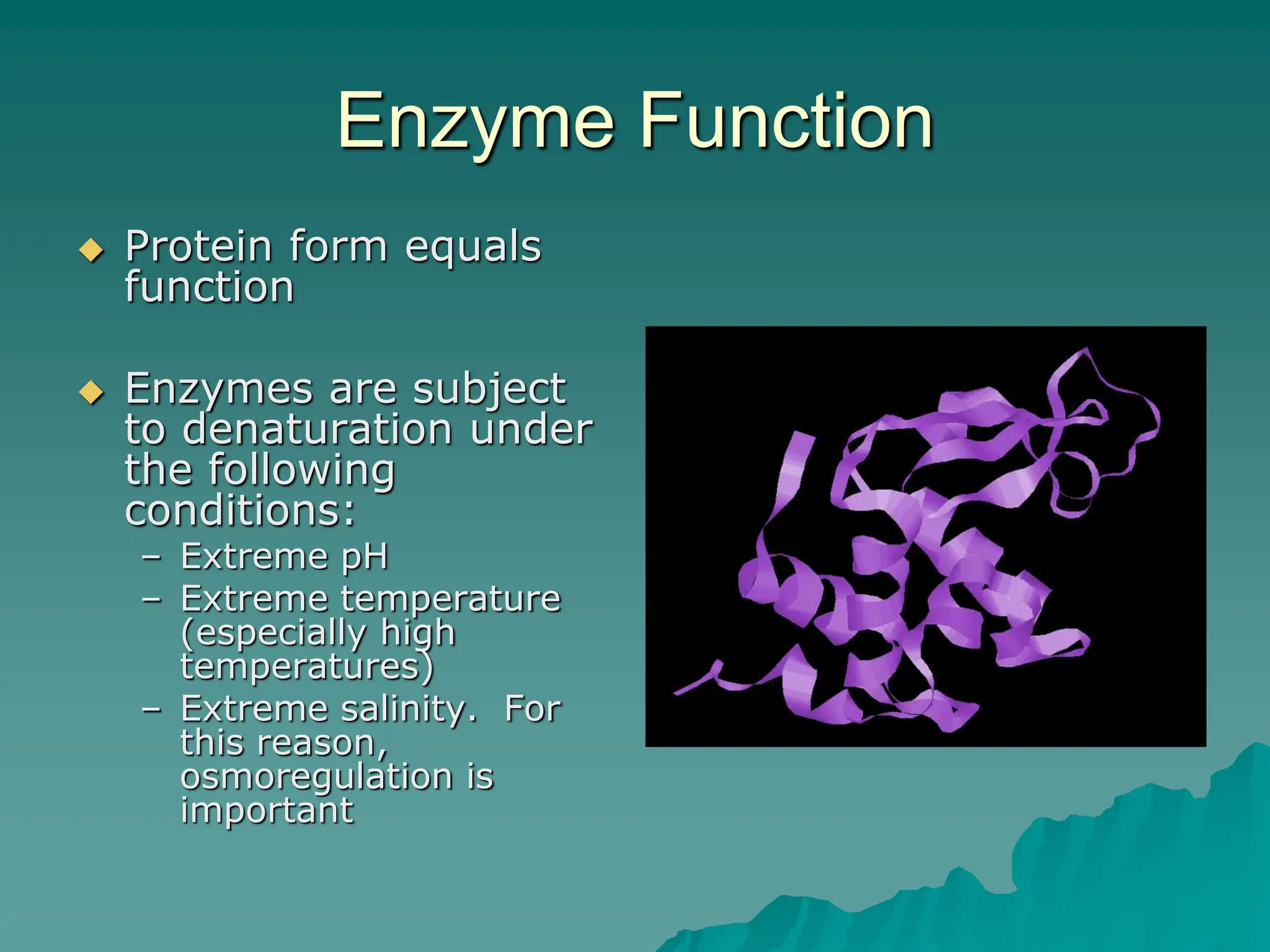
 Protein form equals
function
 Enzymes are subject
to denaturation under
the following
conditions:
– Extreme pH
– Extreme temperature
(especially high
temperatures)
– Extreme salinity. For
this reason,
osmoregulation is
important
Osmoregulation
 Many protists posses a specialized
organelle known as a contractile vacuole
 A collection of tubules known as the
spongiome, collect ions from the
cytoplasm and deliver them to the
contractile vacuole proper
 The vacuole contracts and its contents
are extruded
Reproduction
 All species reproduce
asexually (clonally)
– Fission – splitting of
parent that results in two
or multiple individuals
– Budding – portion of
parent splits off to form
new individual
 No recombination
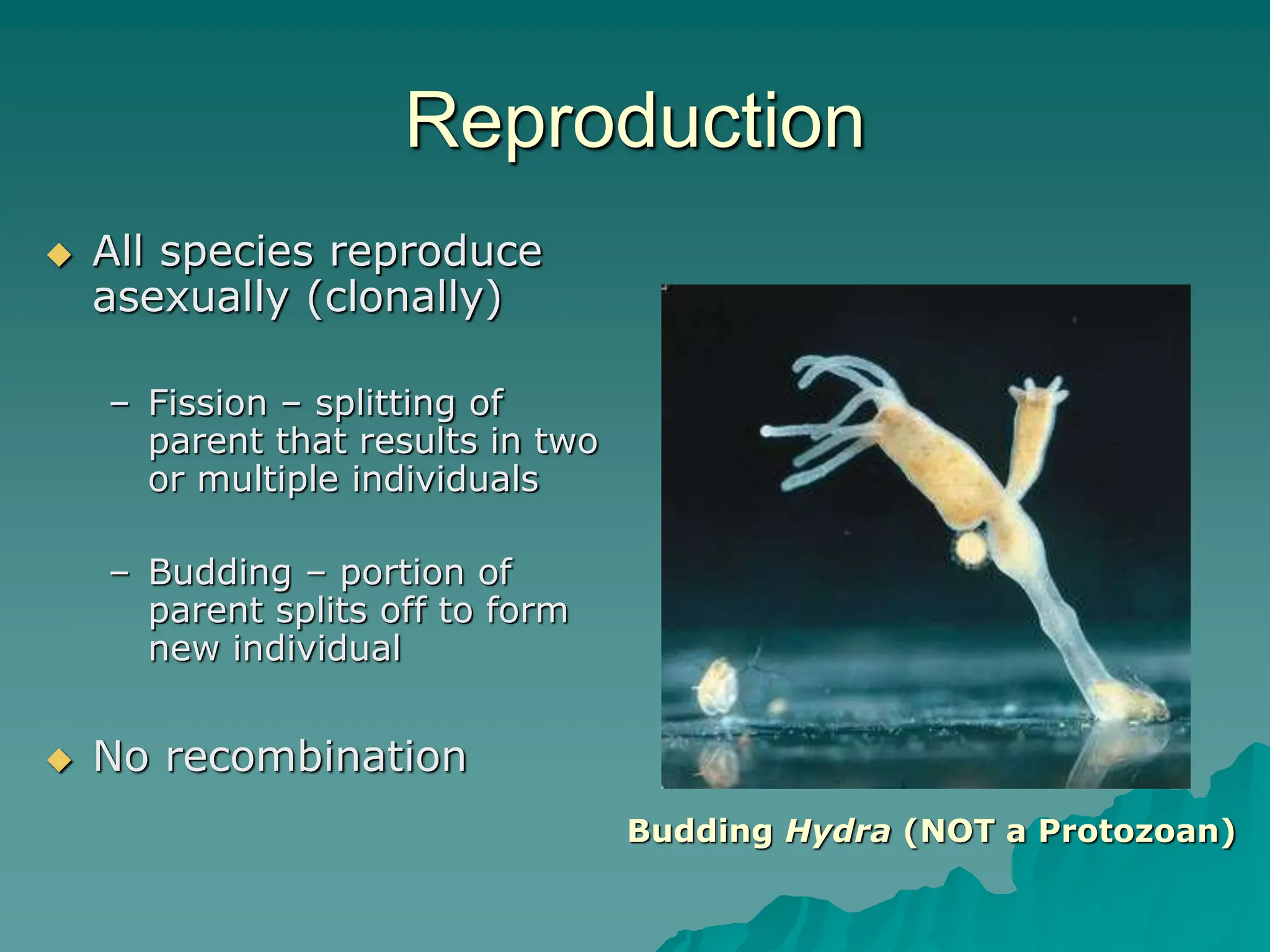
Budding Hydra (NOT a Protozoan)
 Though less common
some species can
even reproduce
sexually
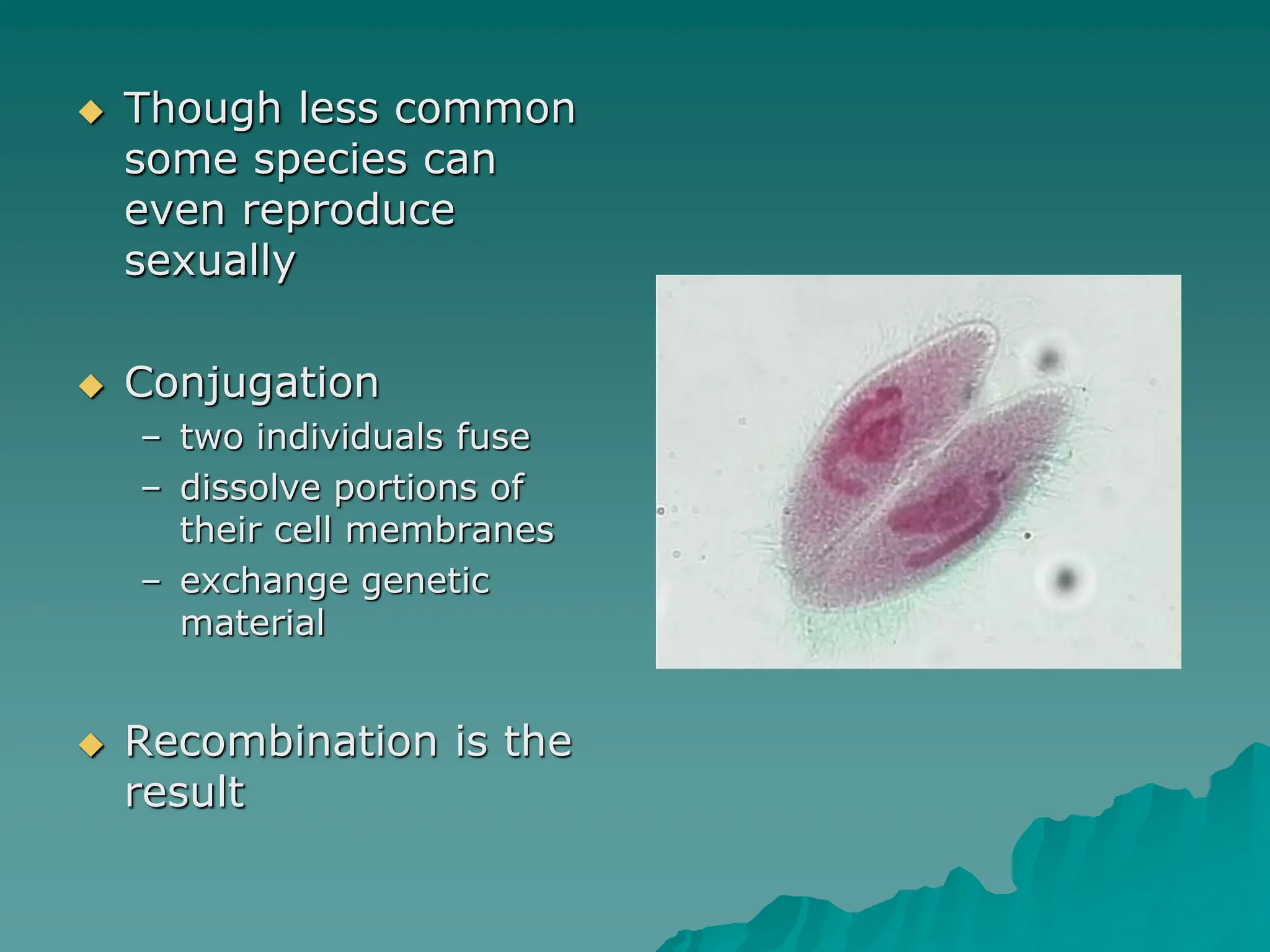
 Conjugation
– two individuals fuse
– dissolve portions of
their cell membranes
– exchange genetic
material
 Recombination is the
result
Asexual vs. Sexual
 Advantages to clonal reproduction
– Allows reproduction in the absence of a mate. Good for
isolated species
– Allows offspring to be reproduced quickly; no energy is
lost to gamete production, fertilization, or development
– Perpetuates identical genotypes; beneficial if already
well adapted to that environment
 Disadvantage
– Limited genetic possibilities. Constricts the gene pool
and species could die out when the environment
changes
 Advantages to sexual reproduction
– Increases genetic variability via crossing
over, independent assortment of
chromosomes, and random fertilization
– Result may be better environmental
adaptability for certain individuals, and the
species as a whole
 Disadvantage
– Finding mates in isolated or sessile species
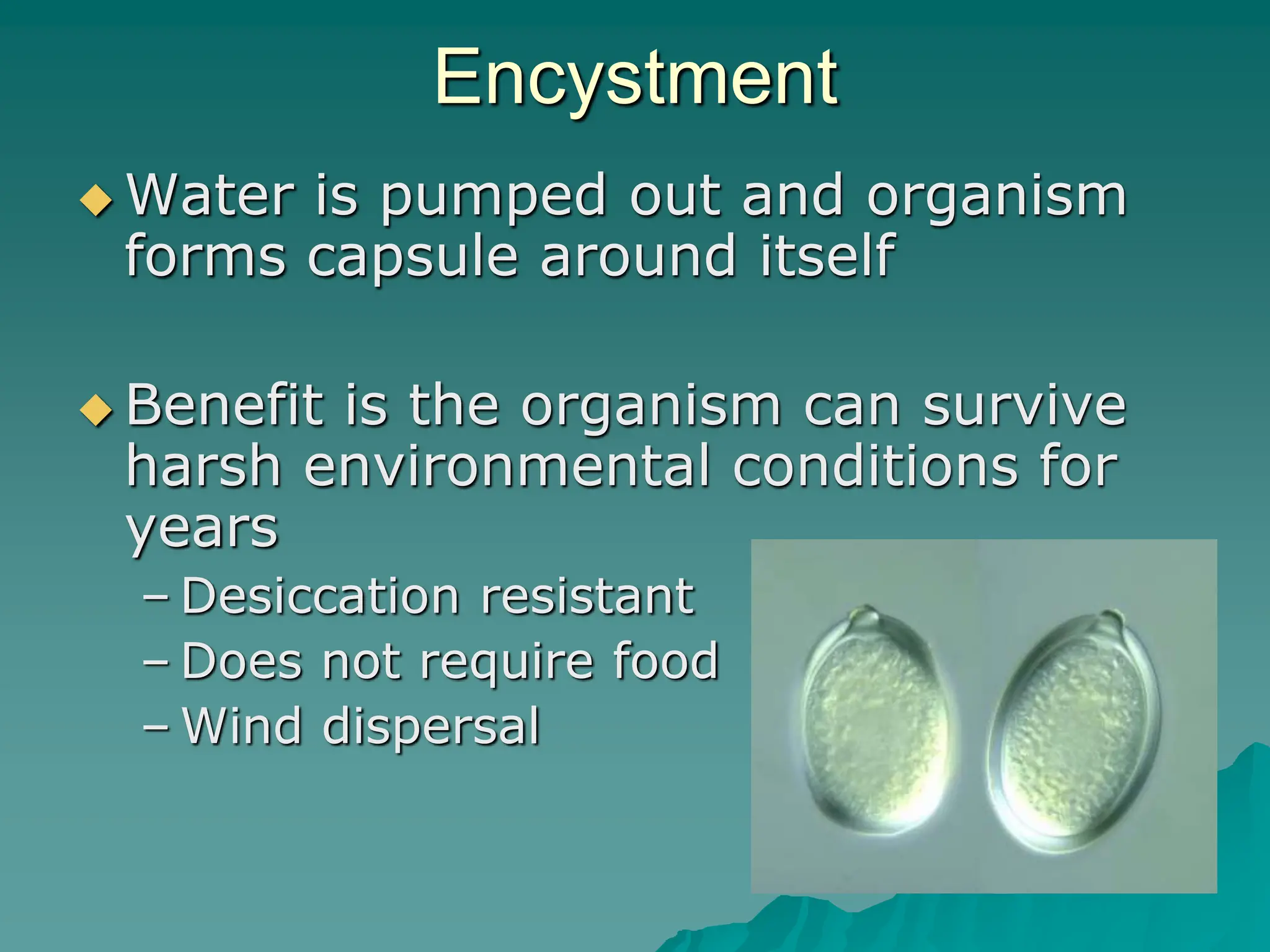
Encystment
 Water is pumped out and organism
forms capsule around itself
 Benefit is the organism can survive
harsh environmental conditions for
years
– Desiccation resistant
– Does not require food
– Wind dispersal
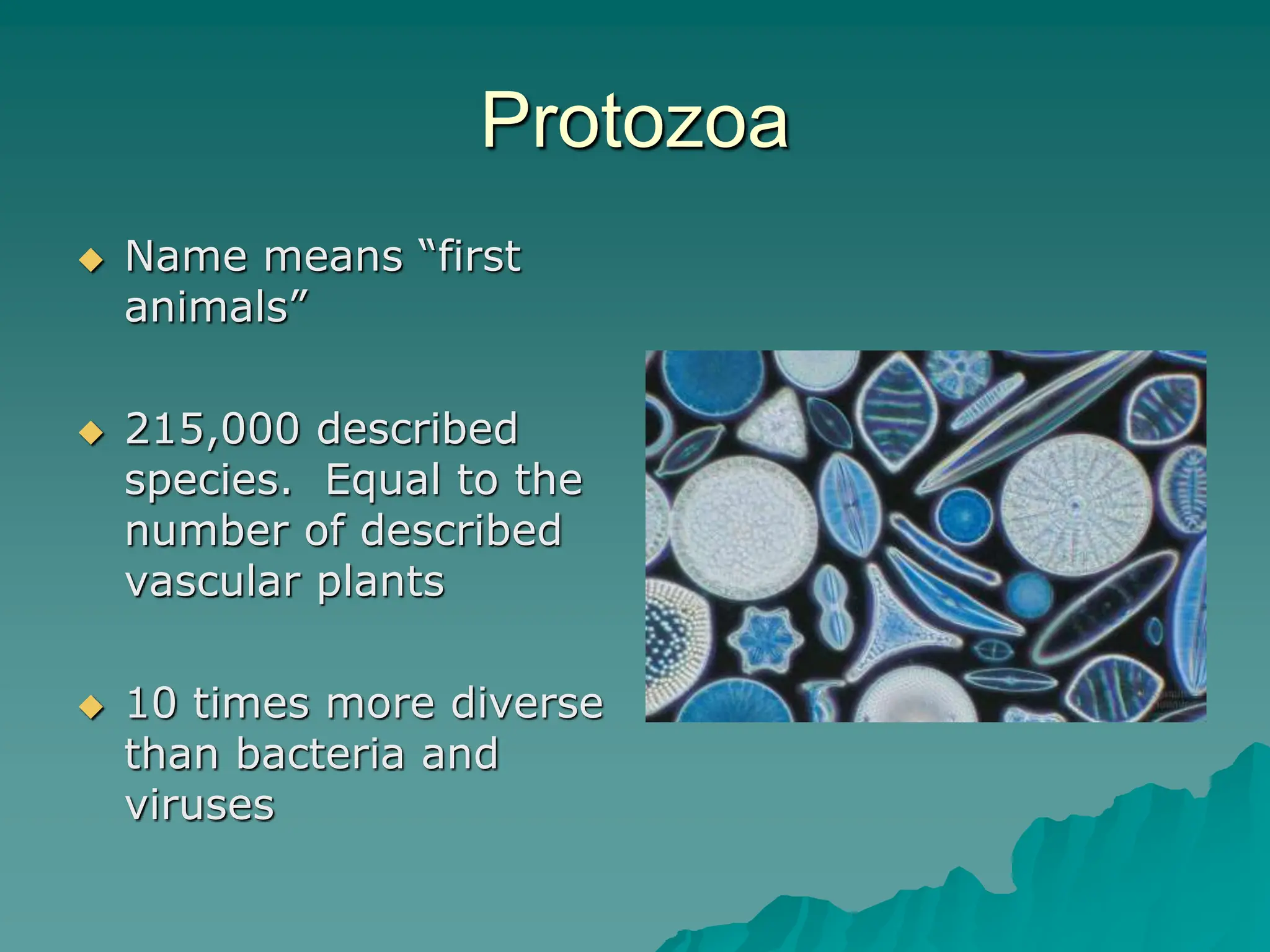
Protozoa
 Name means “first
animals”
 215,000 described
species. Equal to the
number of described
vascular plants
 10 times more diverse
than bacteria and
viruses
Protozoan Ecology
 Very important ecologically
 Many are photoautotrophs, and make up 40% of
all primary productivity
 Many make up a large component of plankton
communities
 25% of the described species live as symbionts.
Many of these are parasitic
 Many are important nutrient cyclers
Form and Function
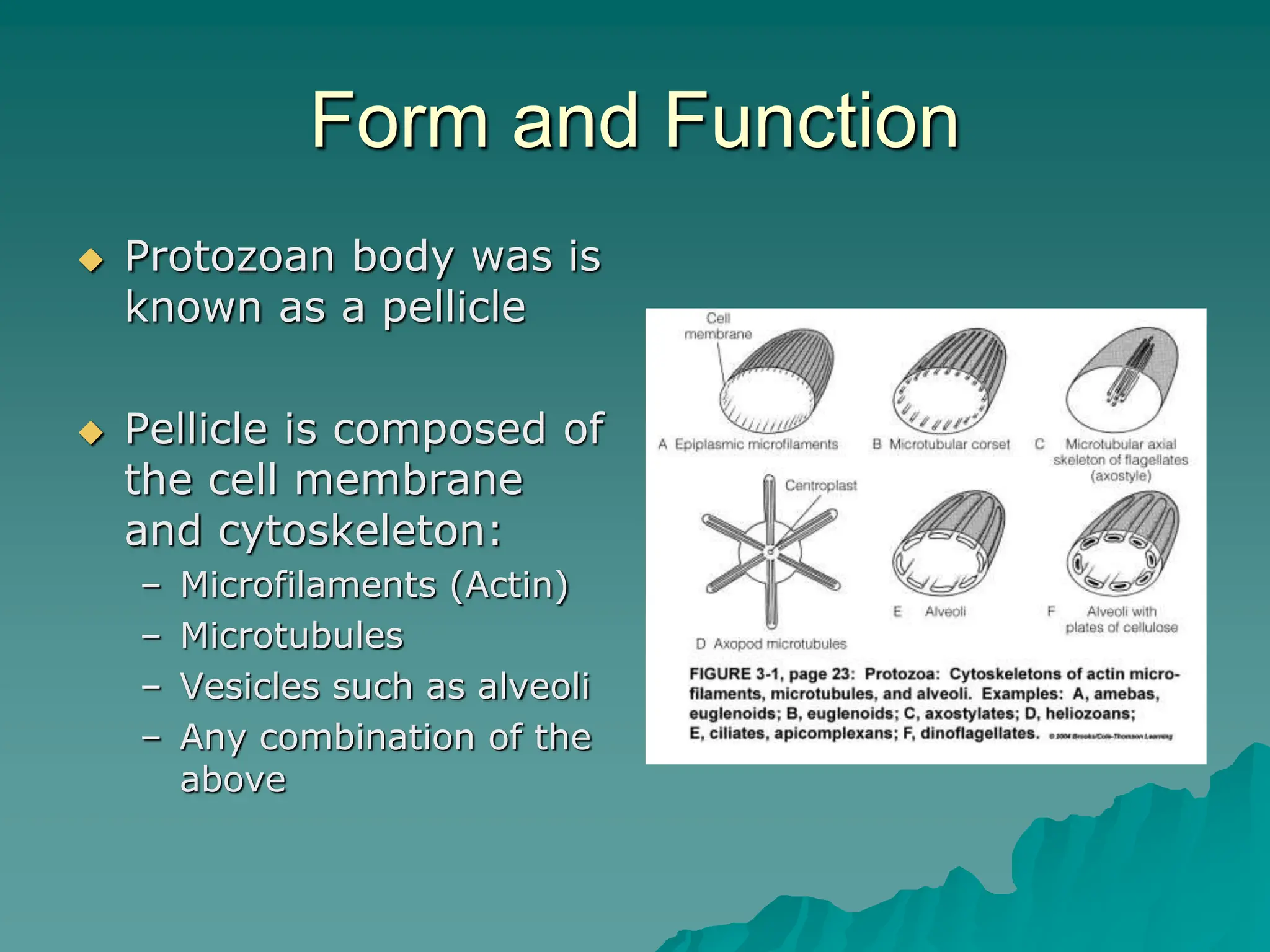
 Protozoan body was is
known as a pellicle
 Pellicle is composed of
the cell membrane
and cytoskeleton:
– Microfilaments (Actin)
– Microtubules
– Vesicles such as alveoli
– Any combination of the
above
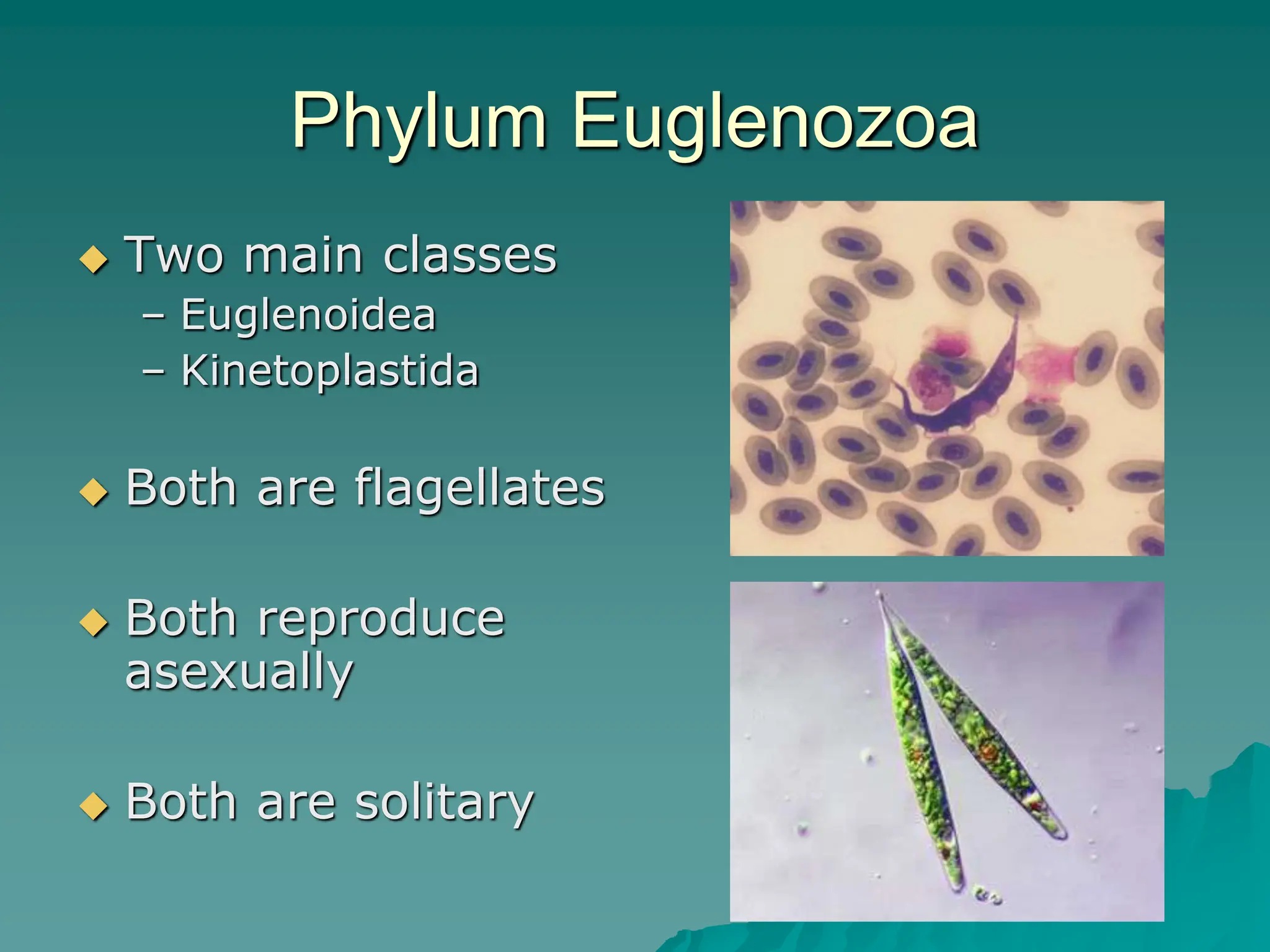
Phylum Euglenozoa
 Two main classes
– Euglenoidea
– Kinetoplastida
 Both are flagellates
 Both reproduce
asexually
 Both are solitary
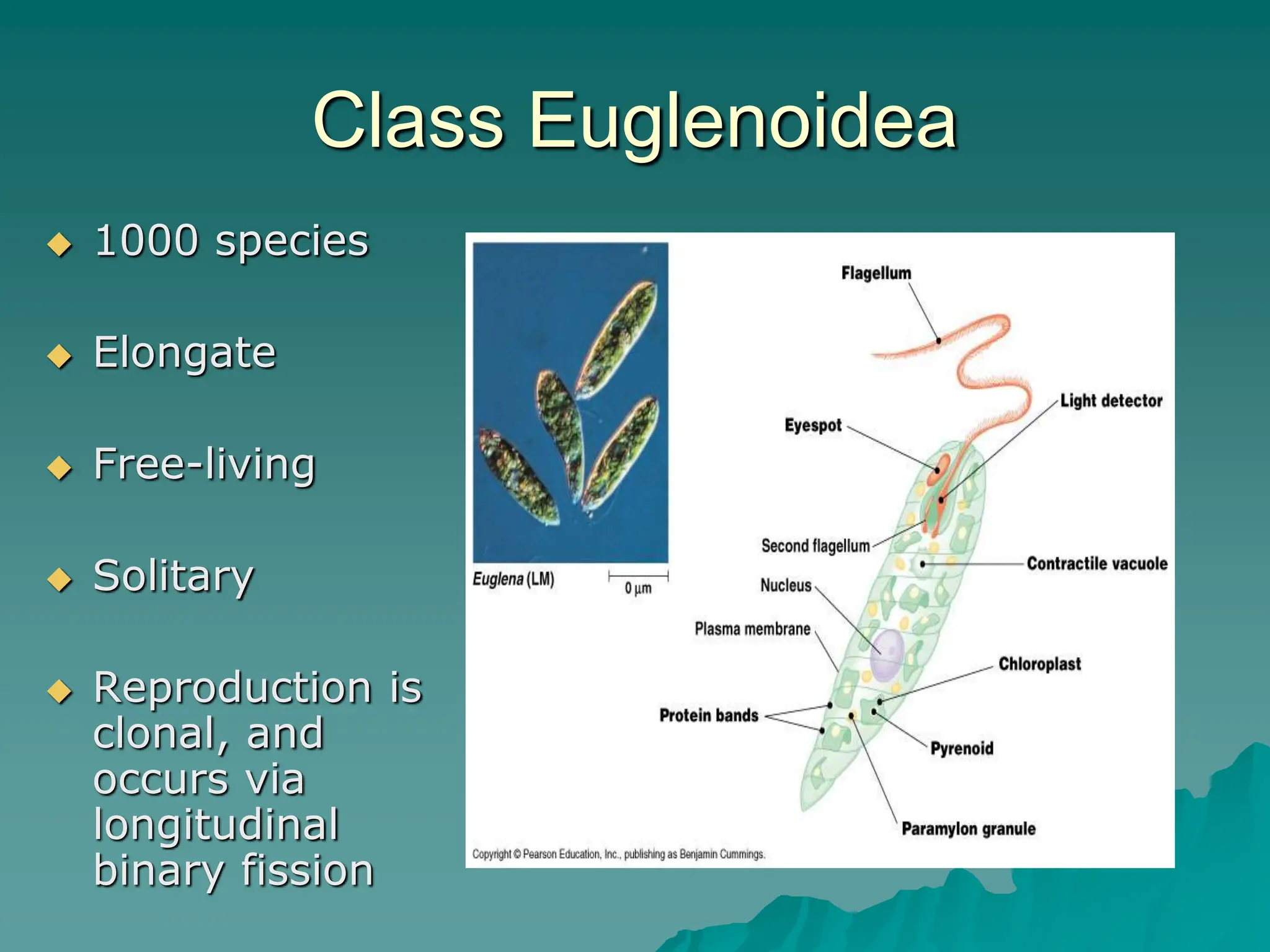
Class Euglenoidea
 1000 species
 Elongate
 Free-living
 Solitary
 Reproduction is
clonal, and
occurs via
longitudinal
binary fission
 Posses a contractile vacuole
 Two flagella, one long, one short
 Posses a pigmented eyespot that shades the
photosensitive paraflagellar body
 Heterotrophic, photoautotrophic, or mixotrophic
 Photosynthetic species rotate on their
longitudinal access as they swim toward the light
 Can produce a starch-like carbohydrate
– Known as paramylon
– Produced in the pyrenoids of their chloroplasts
– Stored as granules in cytoplasm
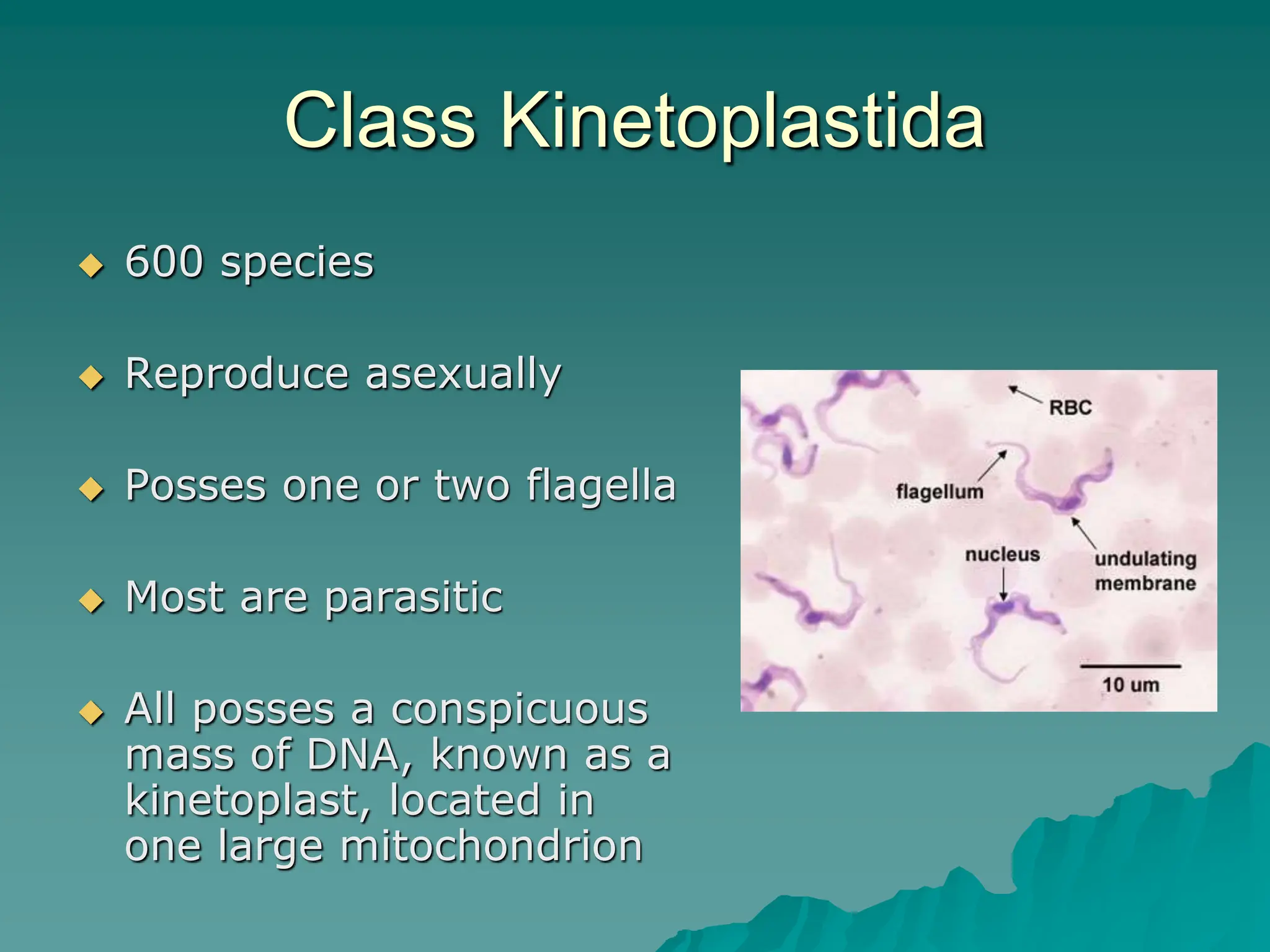
Class Kinetoplastida
 600 species
 Reproduce asexually
 Posses one or two flagella
 Most are parasitic
 All posses a conspicuous
mass of DNA, known as a
kinetoplast, located in
one large mitochondrion
 Link between
kinetoplast and
parasitic lifestyle of
most species
– Kinetoplast codes for
mitochondrial
morphogenesis
– Parasites alternate
between aerobic and
anaerobic host
environments
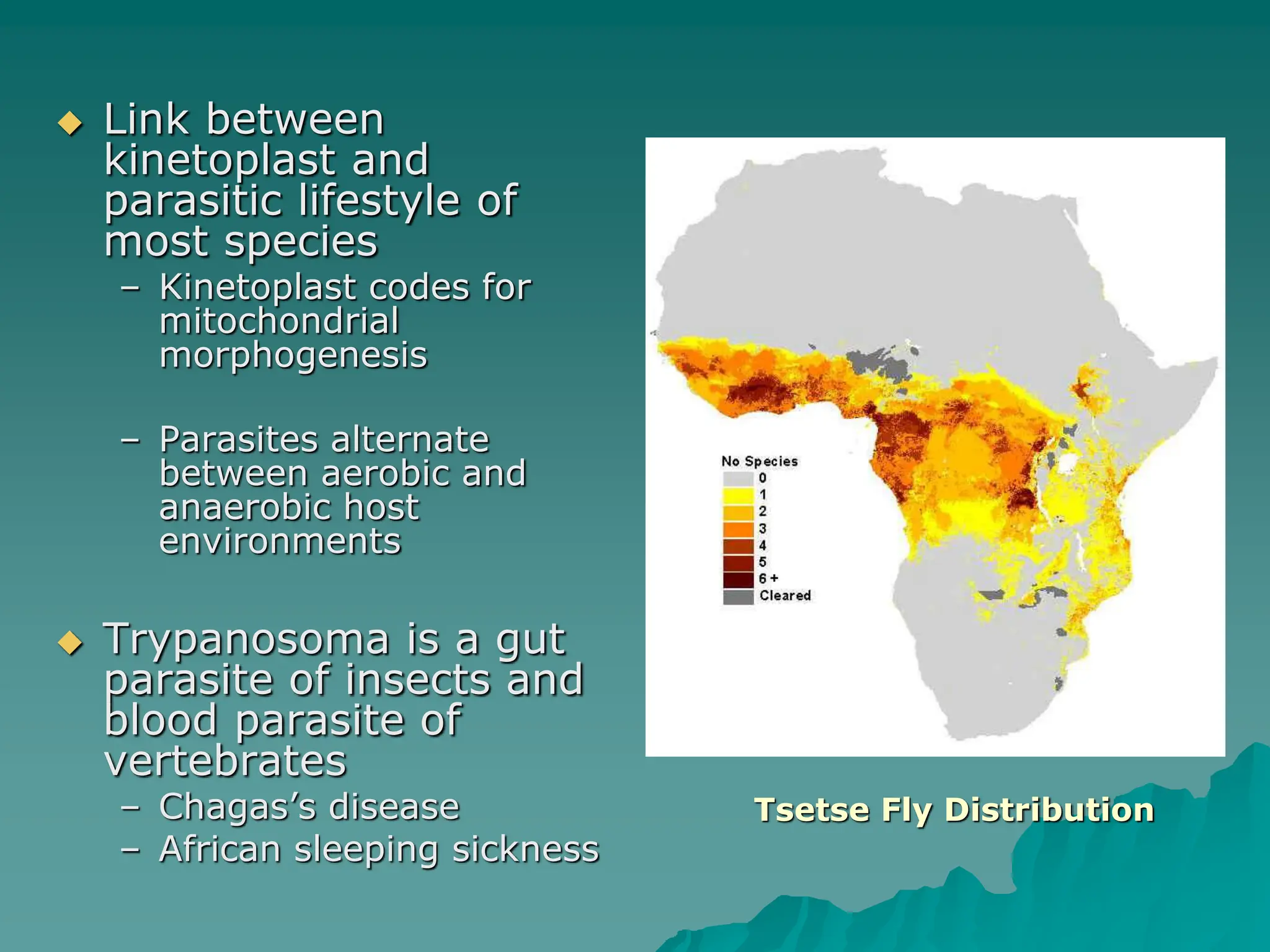
 Trypanosoma is a gut
parasite of insects and
blood parasite of
vertebrates
– Chagas’s disease
– African sleeping sickness
Tsetse Fly Distribution
 Trypanosoma possesses one large
flagellum that joins an undulating
membrane, which runs the length of
the organism
 The pellicle’s protein composition
(antigens) is controlled by roughly
1000 genes (40% of the genome)
– Thus, the parasite is able to effectively
elude the host’s immune system
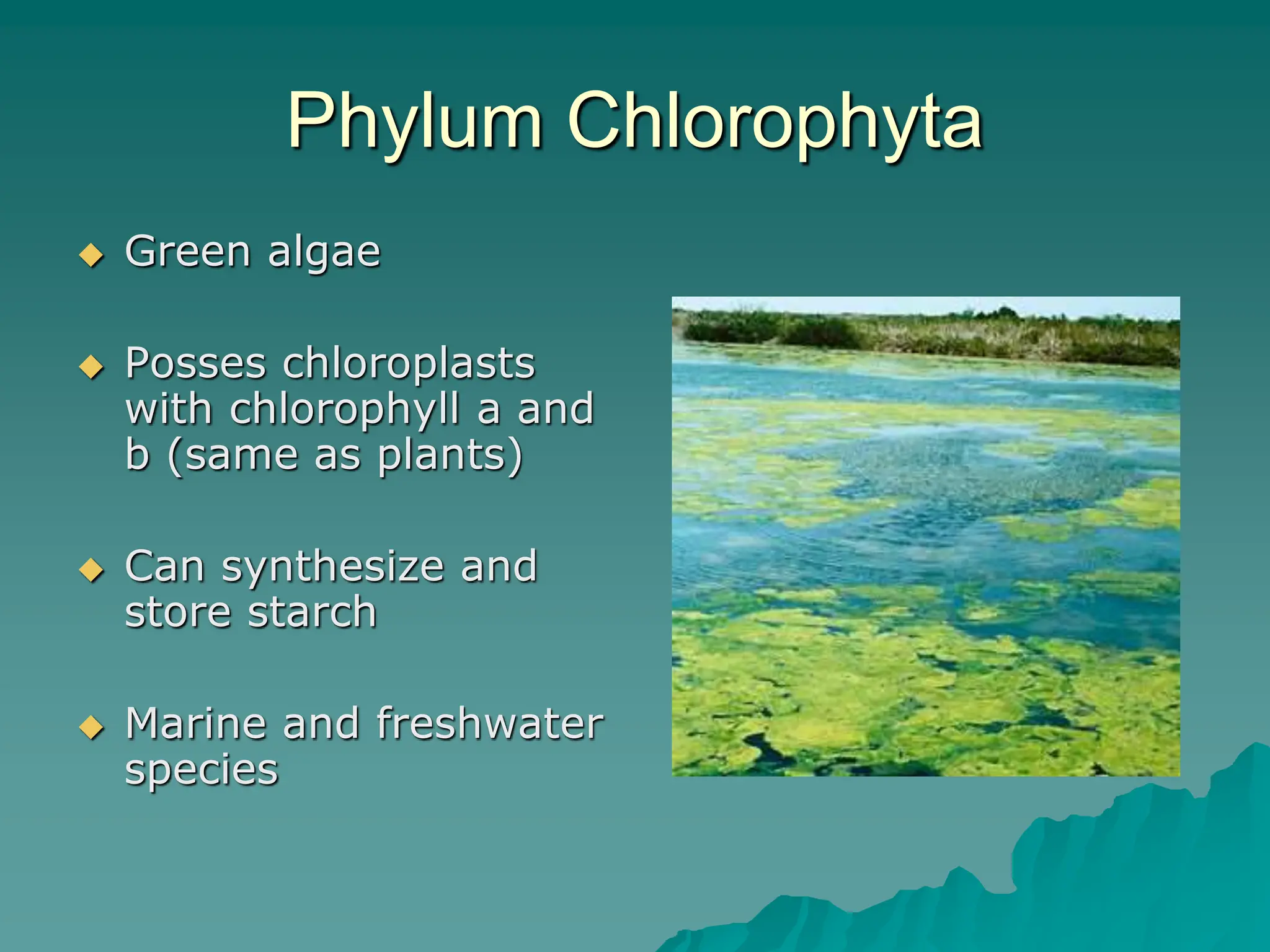
Phylum Chlorophyta
 Green algae
 Posses chloroplasts
with chlorophyll a and
b (same as plants)
 Can synthesize and
store starch
 Marine and freshwater
species
 Some genera are non-motile and
filamentous, such as Spirogyra
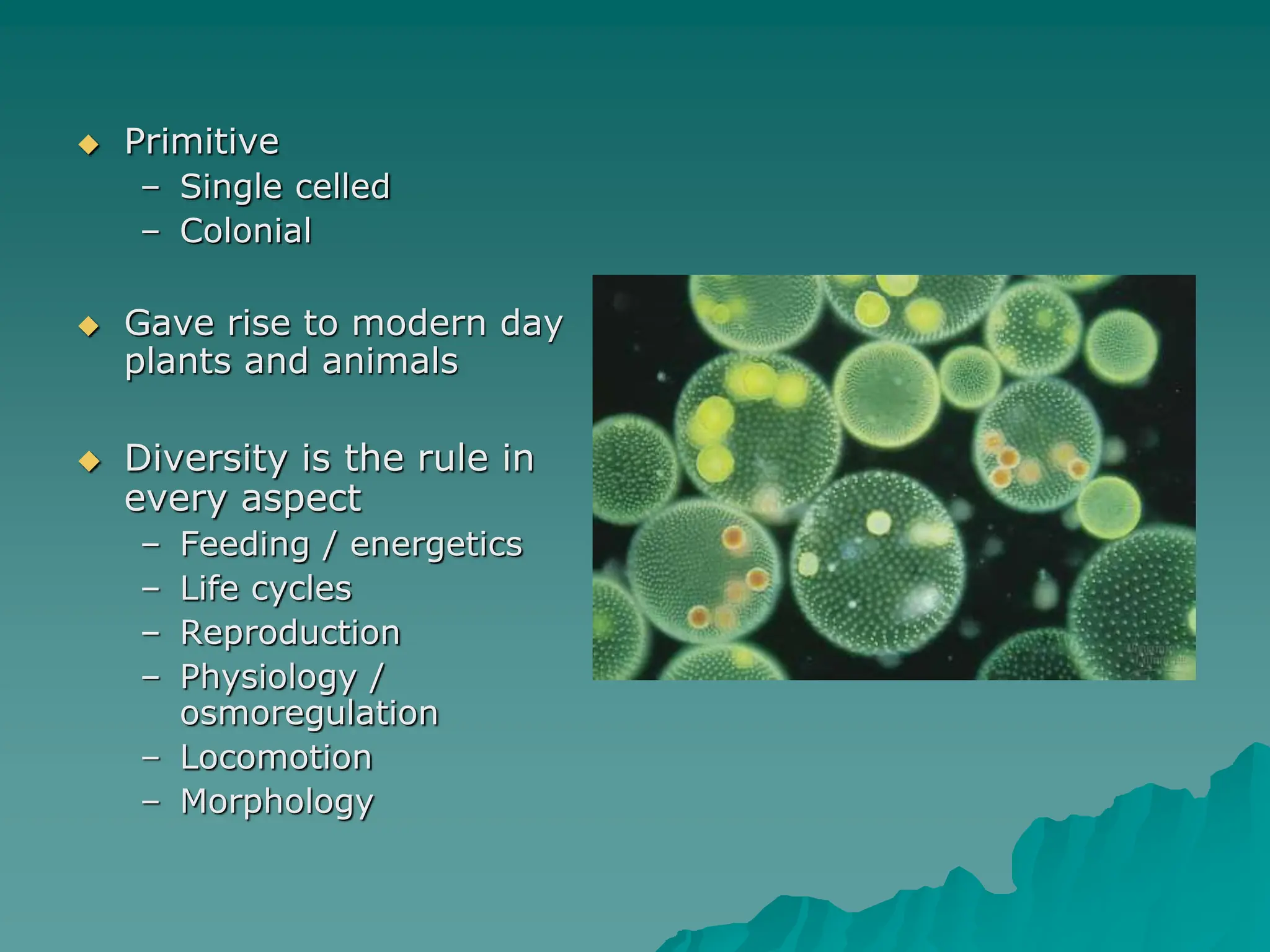
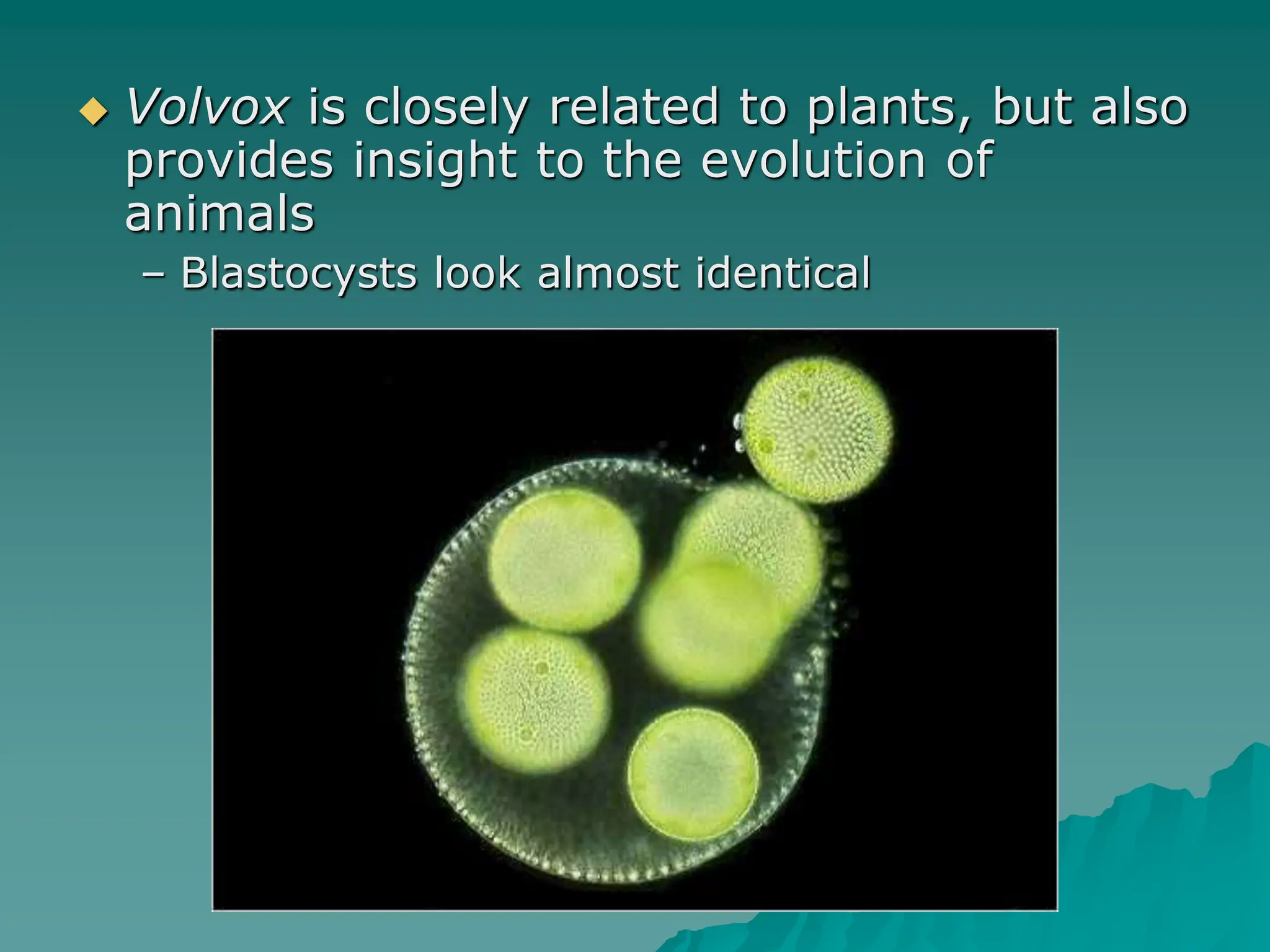
 Others such as Volvox are flagellated,
motile, and colonial
 In Volvox, up to 6000 individual cells may
make up a hollow spherical colony
 Individual cells are connected by
cytoplasmic bridges
 There is some cellular differentiation in
Volvox
– Non-flagellated gonidia (reproductive cells) can
reproduce sexually or asexually
 During asexual reproduction:
– Gonidium undergoes several rounds of fission
– Inverted (flagella pointing in) daughter colony
is created
– Flagella later point out
– Daughter colony bursts out of the parent
colony
 Volvox is closely related to plants, but also
provides insight to the evolution of
animals
– Blastocysts look almost identical
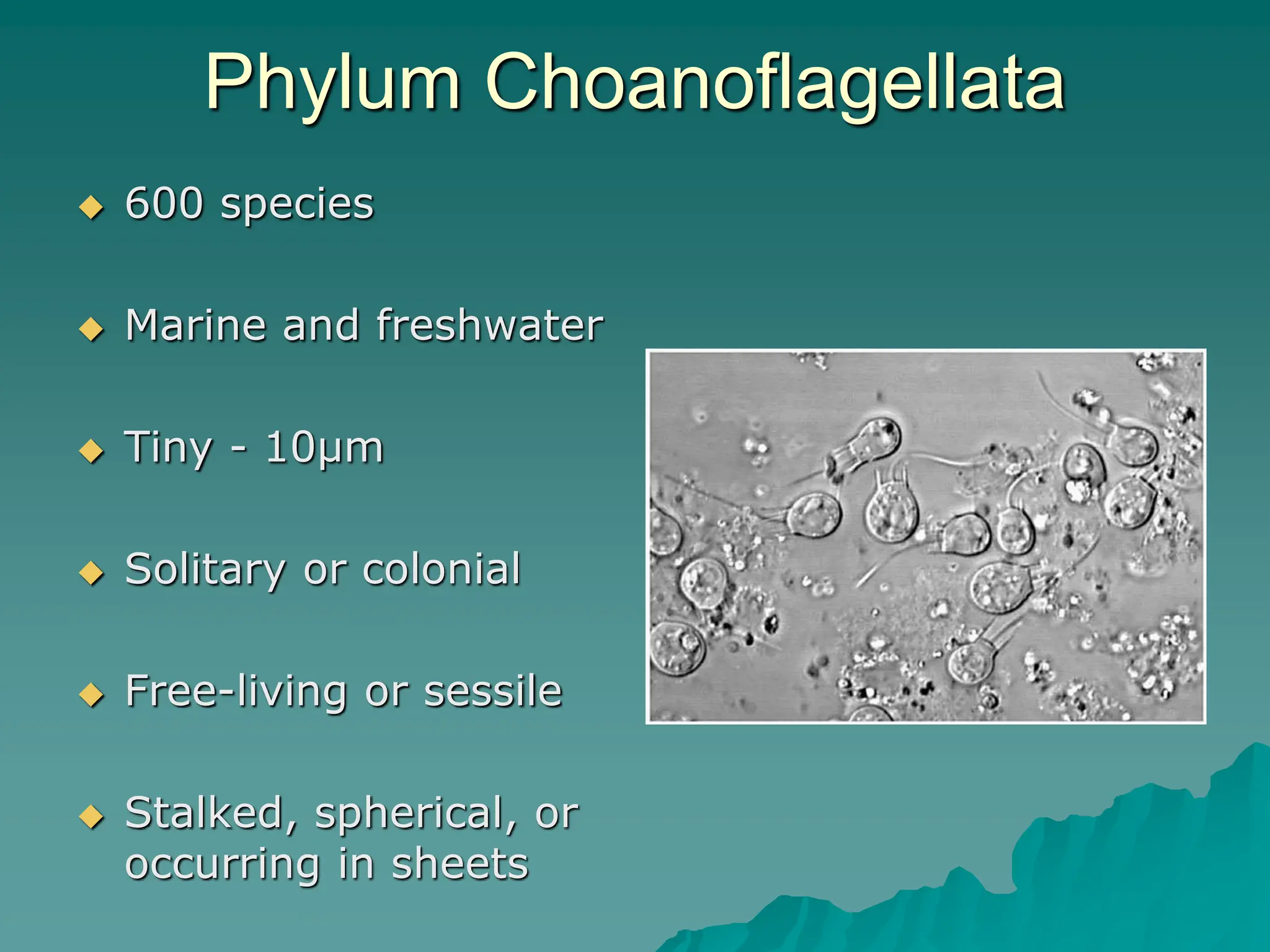
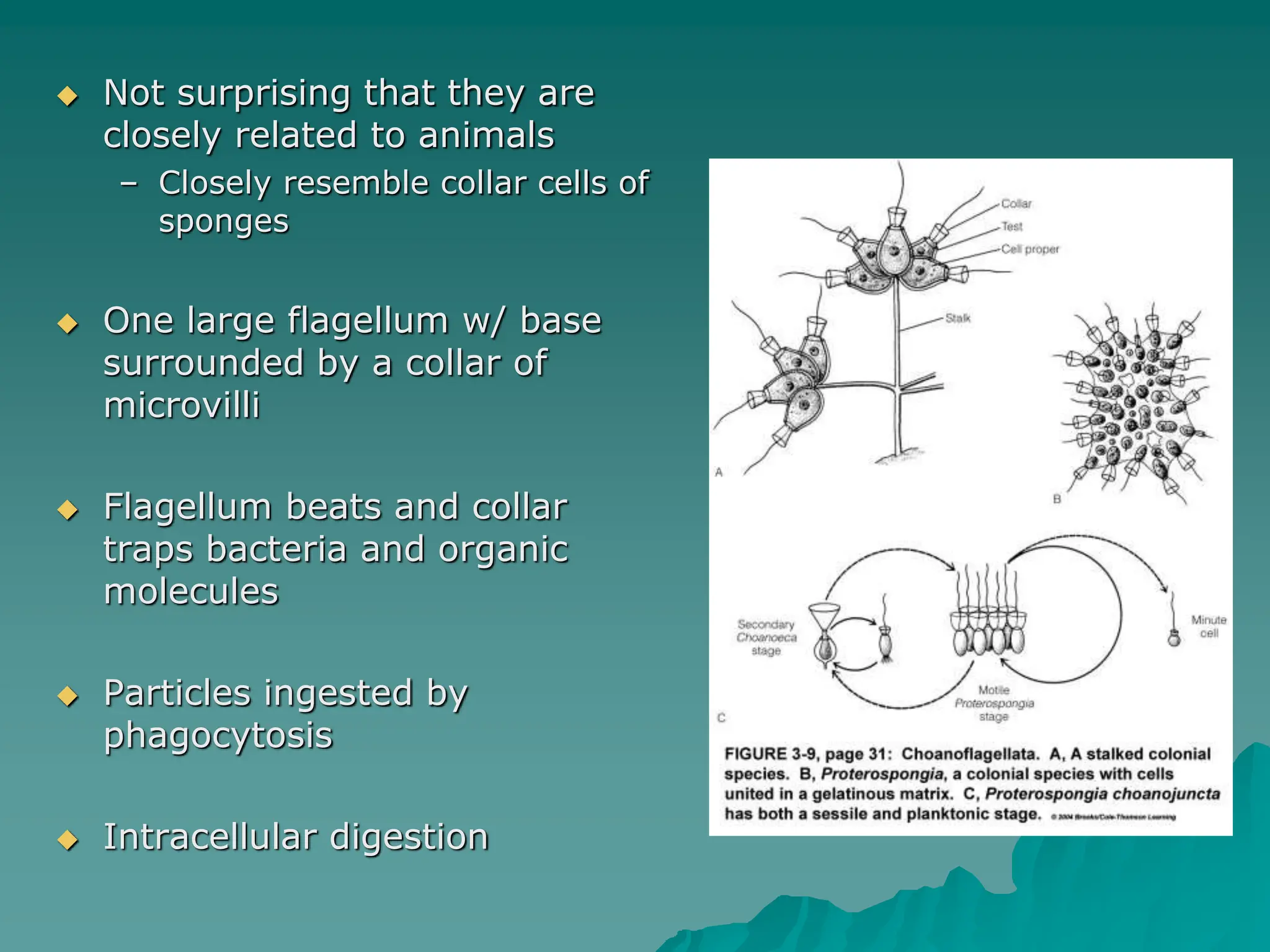
Phylum Choanoflagellata
 600 species
 Marine and freshwater
 Tiny - 10µm
 Solitary or colonial
 Free-living or sessile
 Stalked, spherical, or
occurring in sheets
 Not surprising that they are
closely related to animals
– Closely resemble collar cells of
sponges
 One large flagellum w/ base
surrounded by a collar of
microvilli
 Flagellum beats and collar
traps bacteria and organic
molecules
 Particles ingested by
phagocytosis
 Intracellular digestion
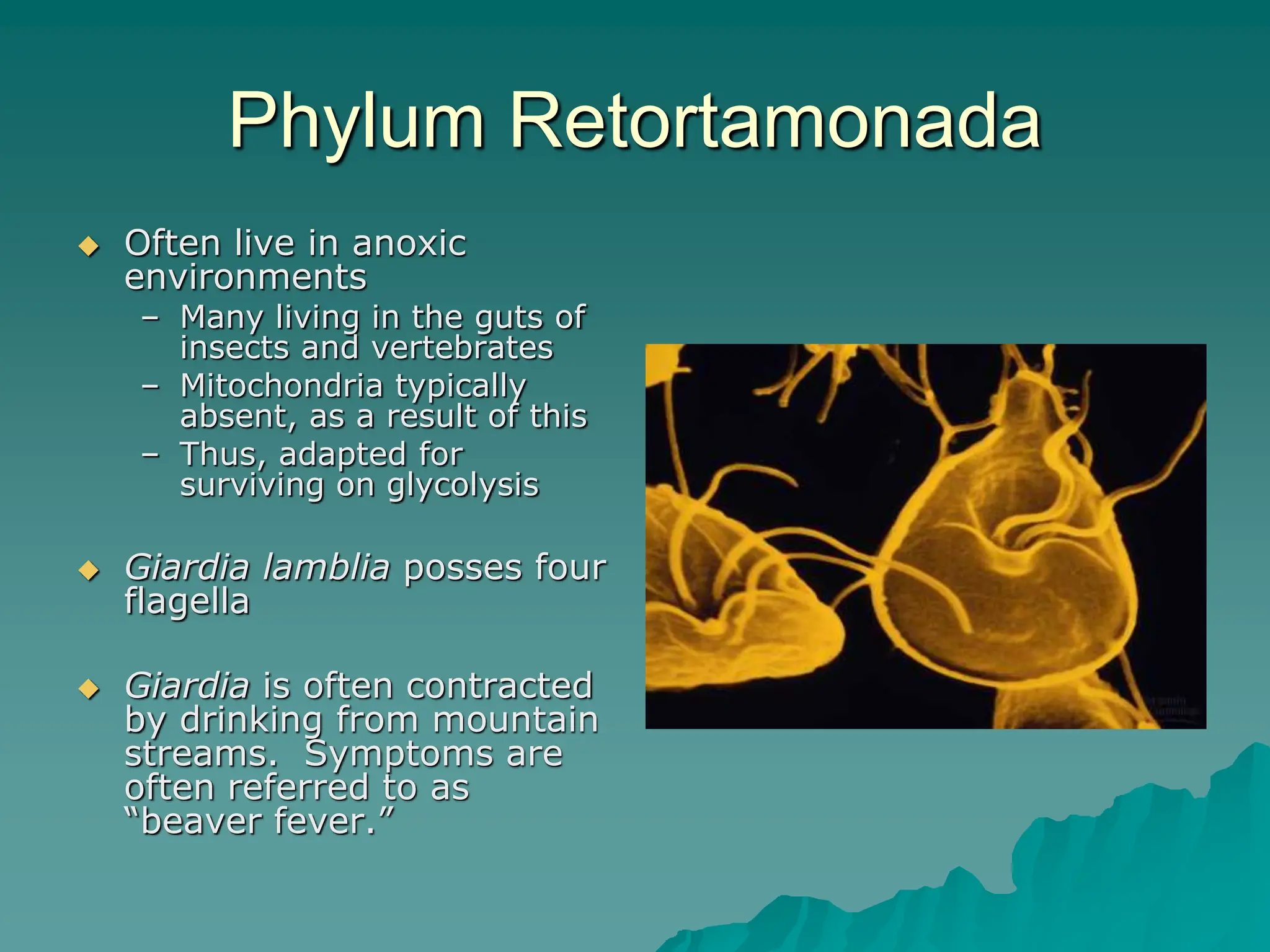
Phylum Retortamonada
 Often live in anoxic
environments
– Many living in the guts of
insects and vertebrates
– Mitochondria typically
absent, as a result of this
– Thus, adapted for
surviving on glycolysis
 Giardia lamblia posses four
flagella
 Giardia is often contracted
by drinking from mountain
streams. Symptoms are
often referred to as
“beaver fever.”
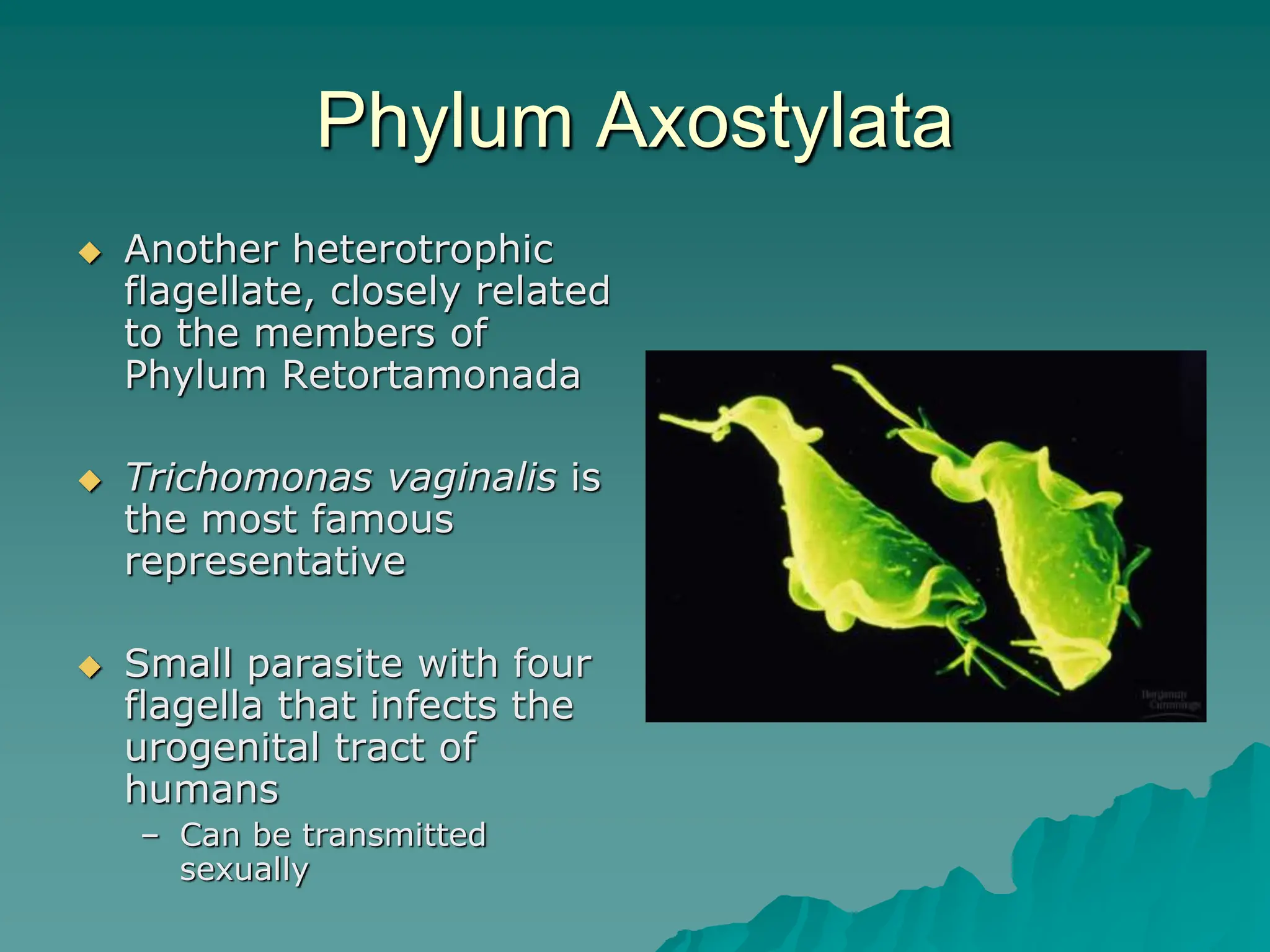
Phylum Axostylata
 Another heterotrophic
flagellate, closely related
to the members of
Phylum Retortamonada
 Trichomonas vaginalis is
the most famous
representative
 Small parasite with four
flagella that infects the
urogenital tract of
humans
– Can be transmitted
sexually
Phylum Alveolata
 Consists of three subphyla:
– Dinoflagellata
– Ciliophora
– Apicomplexa
 Have similar rDNA sequences
 Posses alveoli, sacs, deep to the cell
membrane
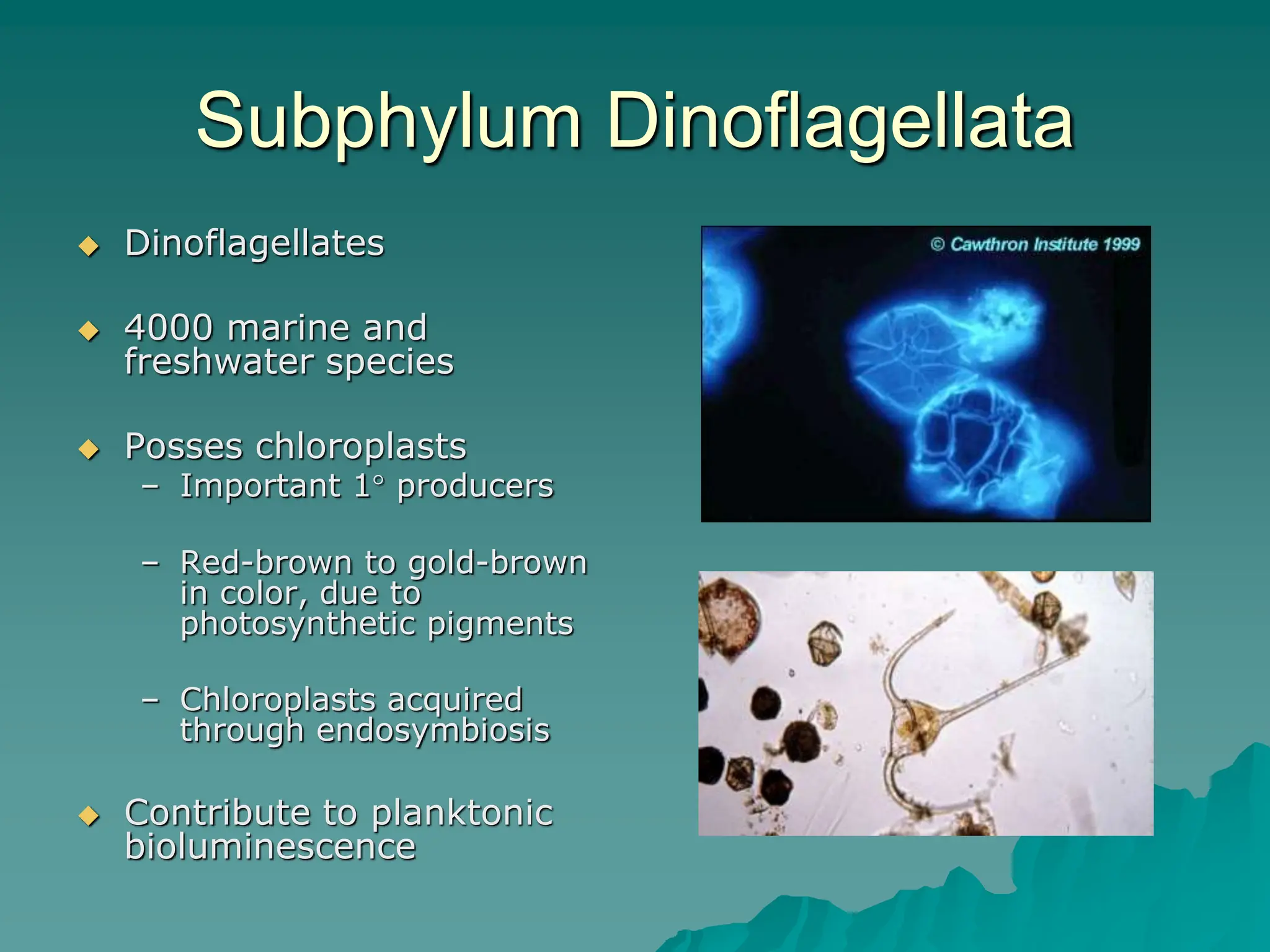
Subphylum Dinoflagellata
 Dinoflagellates
 4000 marine and
freshwater species
 Posses chloroplasts
– Important 1° producers
– Red-brown to gold-brown
in color, due to
photosynthetic pigments
– Chloroplasts acquired
through endosymbiosis
 Contribute to planktonic
bioluminescence
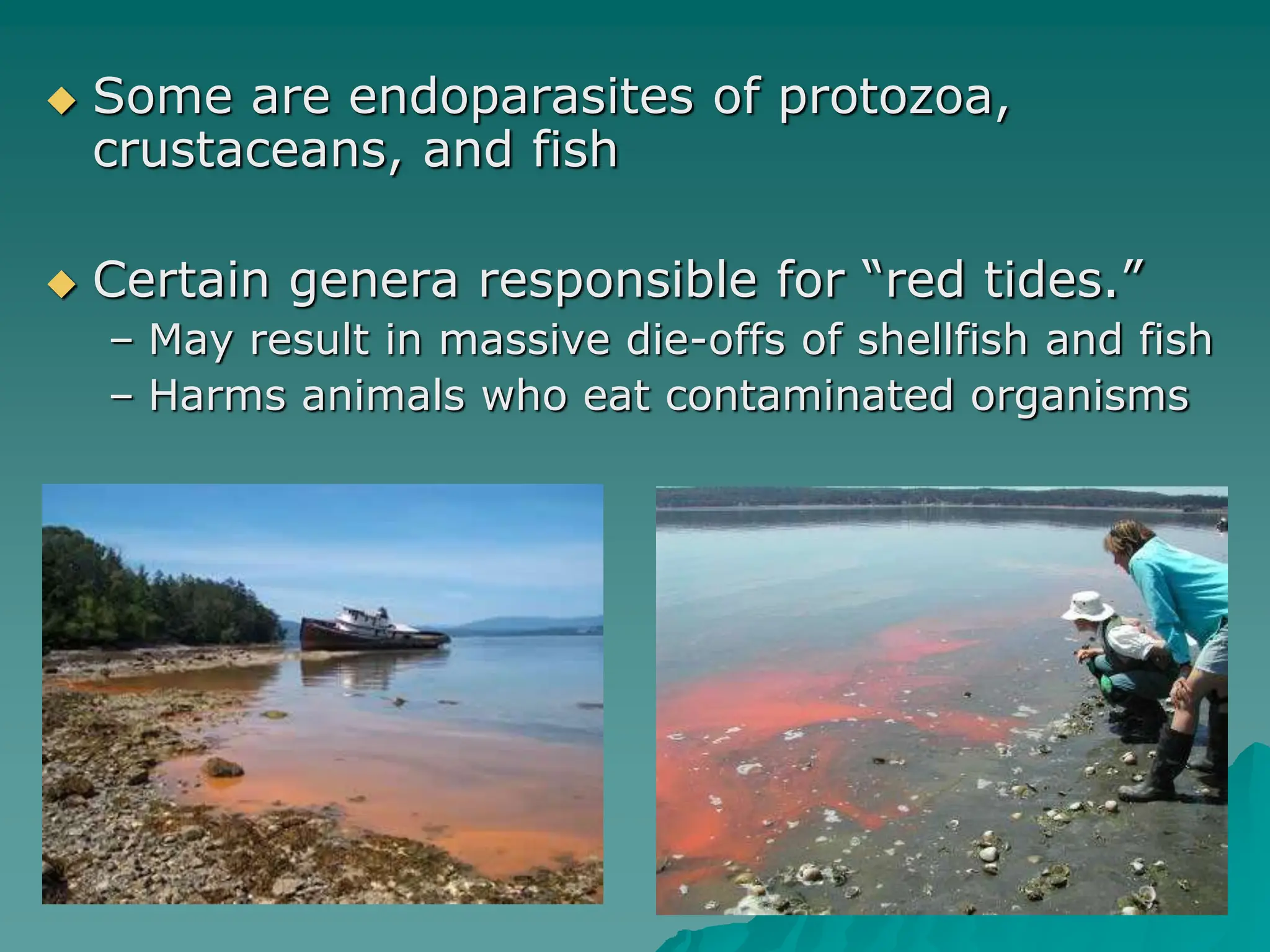
 Some are endoparasites of protozoa,
crustaceans, and fish
 Certain genera responsible for “red tides.”
– May result in massive die-offs of shellfish and fish
– Harms animals who eat contaminated organisms
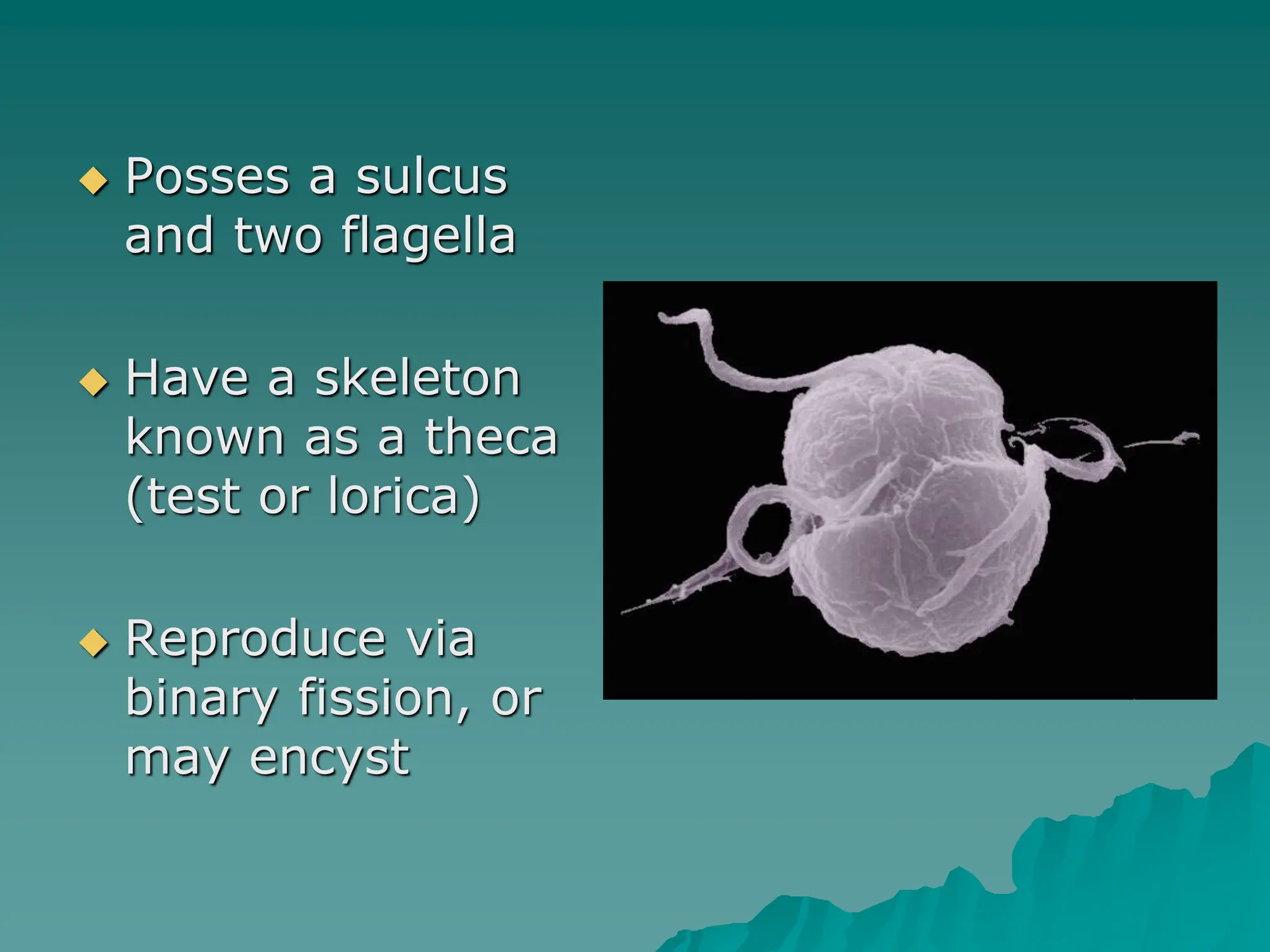
 Posses a sulcus
and two flagella
 Have a skeleton
known as a theca
(test or lorica)
 Reproduce via
binary fission, or
may encyst
Subphylum Ciliophora
 8000 described ciliates
 Sophisticated protozoans
 Have some degree of anterior – posterior
polarity
 Most are motile and solitary
 Many posses specialized ciliature
– Somatic cilia
– Oral cilia
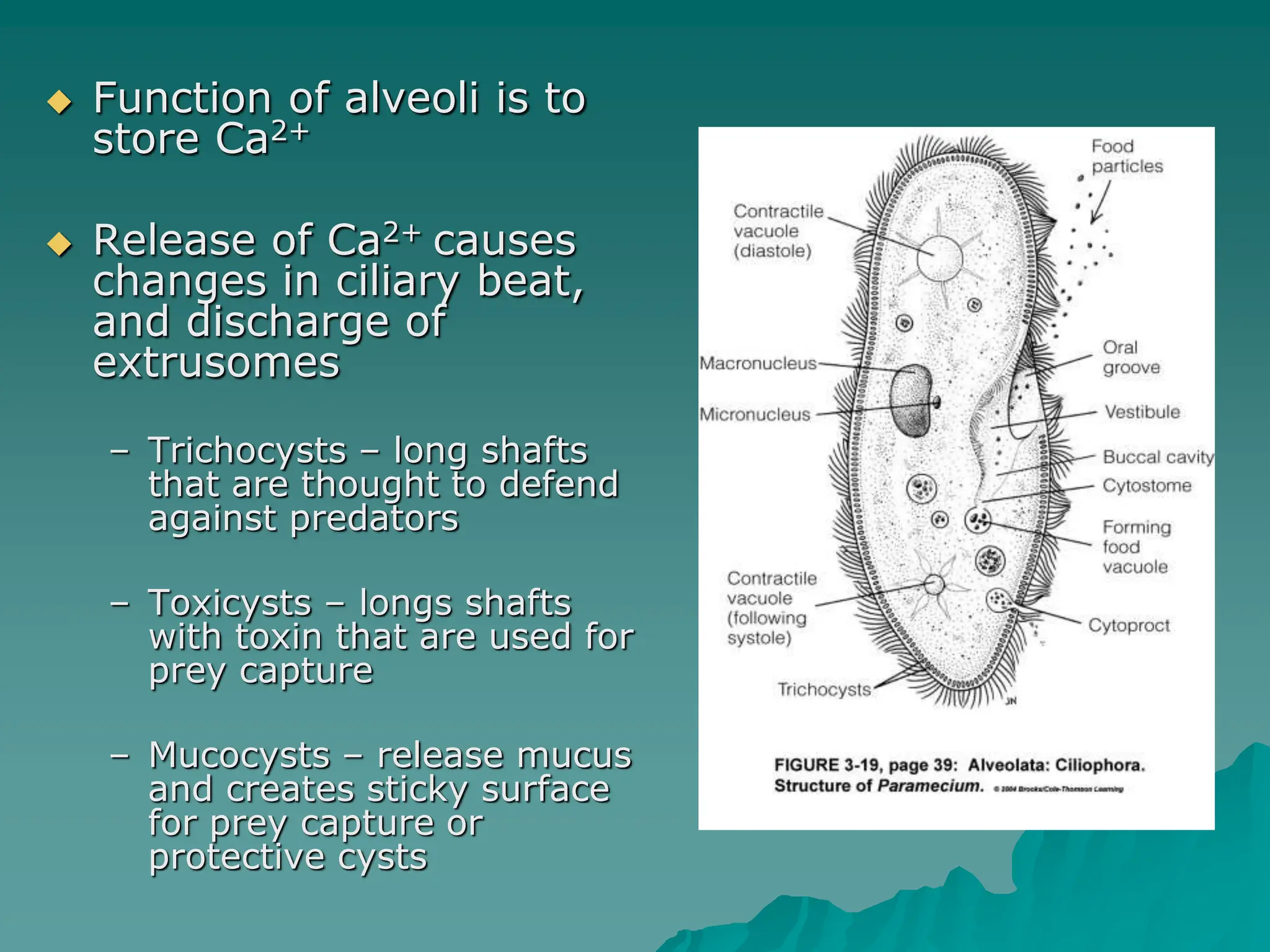
 Function of alveoli is to
store Ca2+
 Release of Ca2+ causes
changes in ciliary beat,
and discharge of
extrusomes
– Trichocysts – long shafts
that are thought to defend
against predators
– Toxicysts – longs shafts
with toxin that are used for
prey capture
– Mucocysts – release mucus
and creates sticky surface
for prey capture or
protective cysts
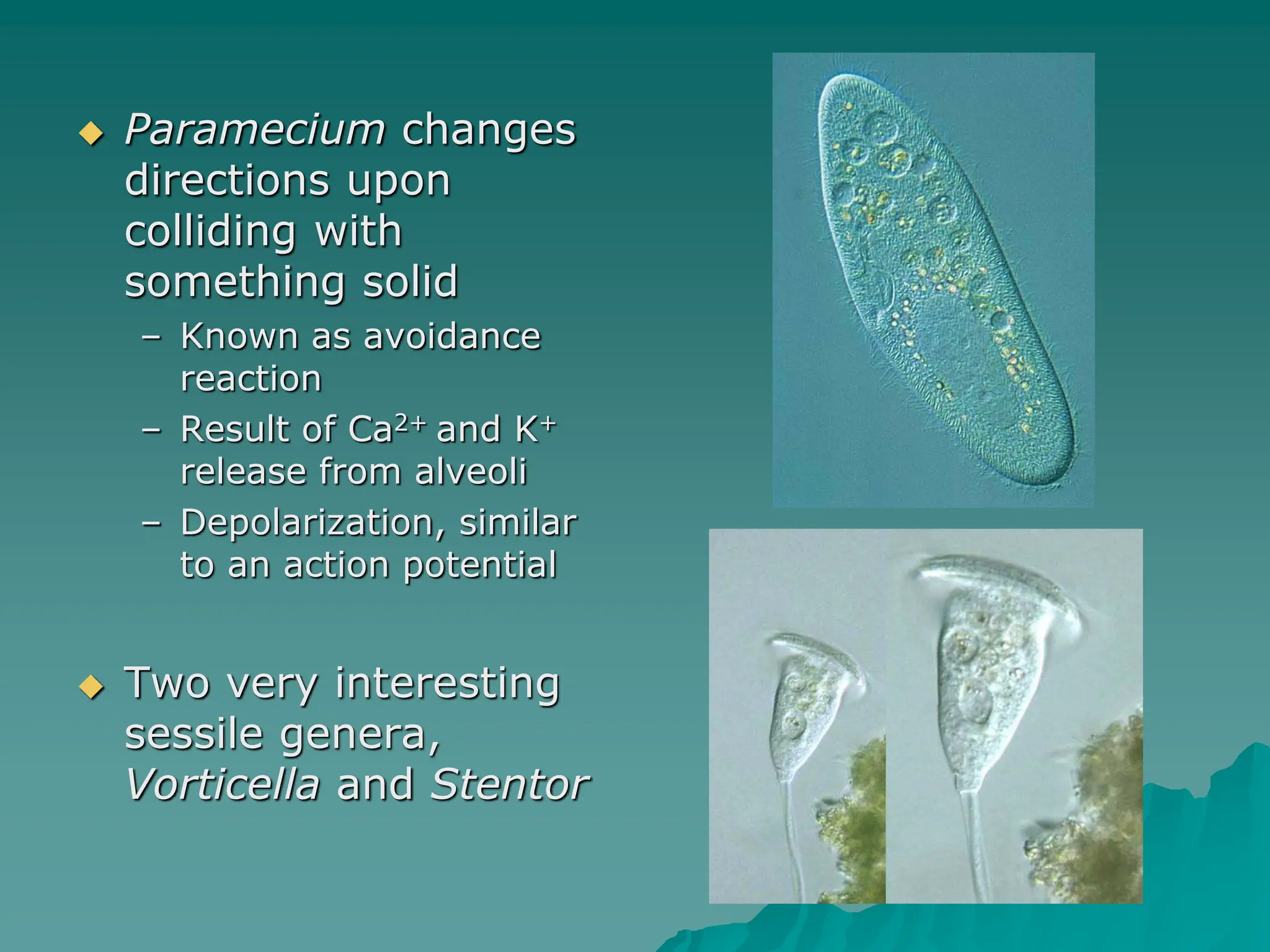
 Paramecium changes
directions upon
colliding with
something solid
– Known as avoidance
reaction
– Result of Ca2+ and K+
release from alveoli
– Depolarization, similar
to an action potential
 Two very interesting
sessile genera,
Vorticella and Stentor
 Vorticella
– Colonial
– Each cell possesses
a long stalk with a
spasmoneme (spiral
fiber)
– Contracts to
withdraw from
predators
 Stentor is a similar
genus
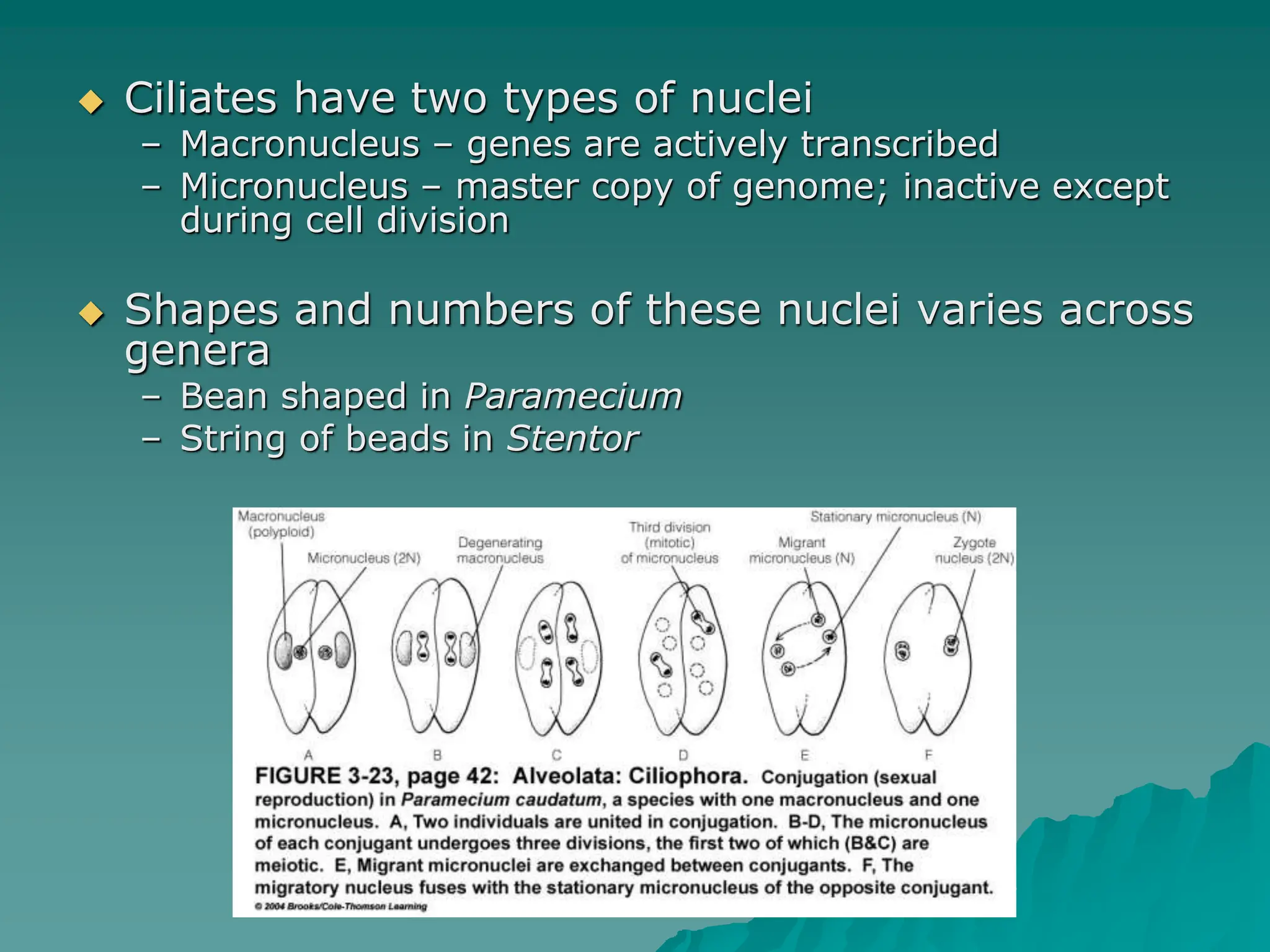
 Ciliates have two types of nuclei
– Macronucleus – genes are actively transcribed
– Micronucleus – master copy of genome; inactive except
during cell division
 Shapes and numbers of these nuclei varies across
genera
– Bean shaped in Paramecium
– String of beads in Stentor
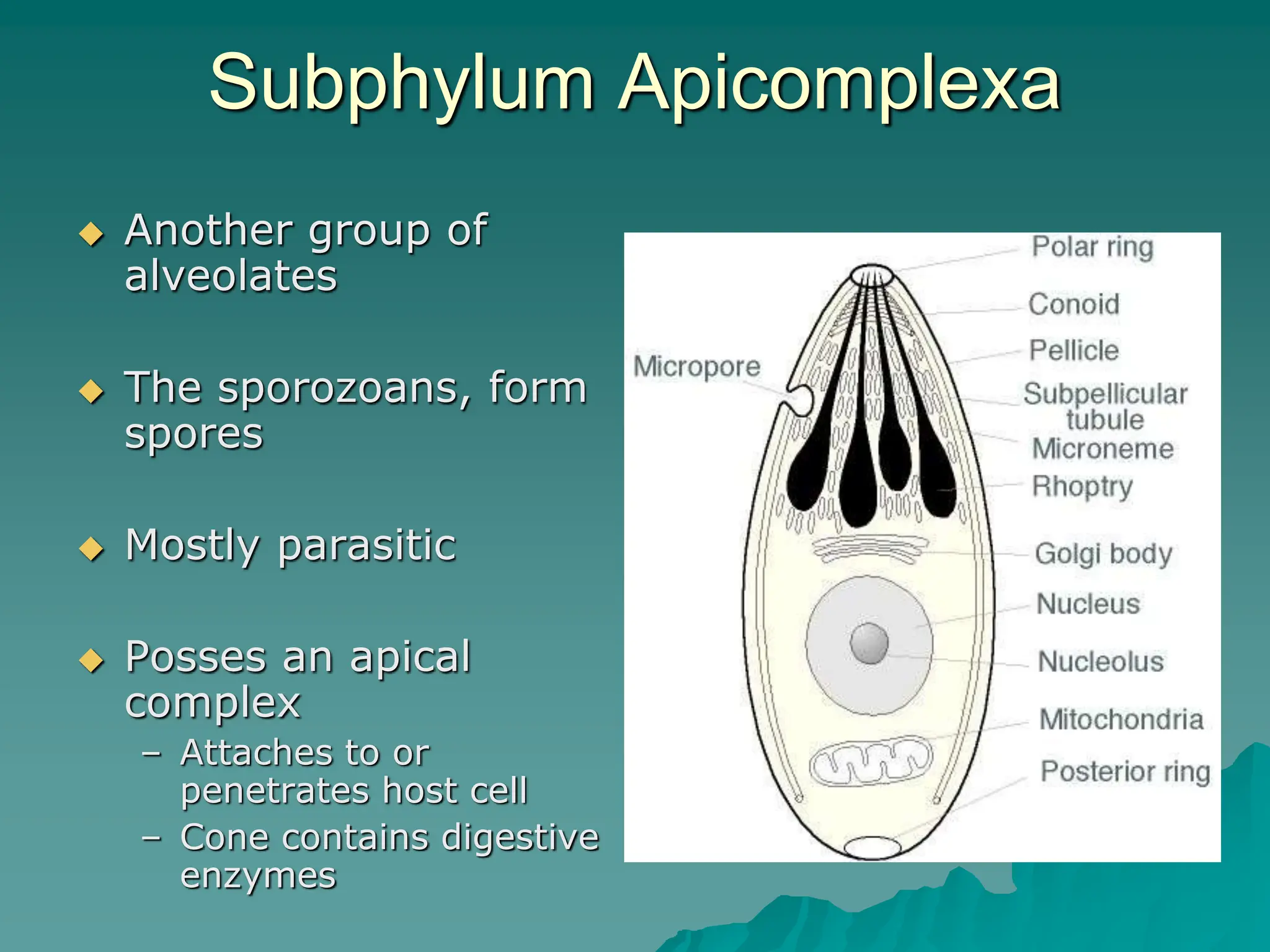
 Another group of
alveolates
 The sporozoans, form
spores
 Mostly parasitic
 Posses an apical
complex
– Attaches to or
penetrates host cell
– Cone contains digestive
enzymes
Subphylum Apicomplexa
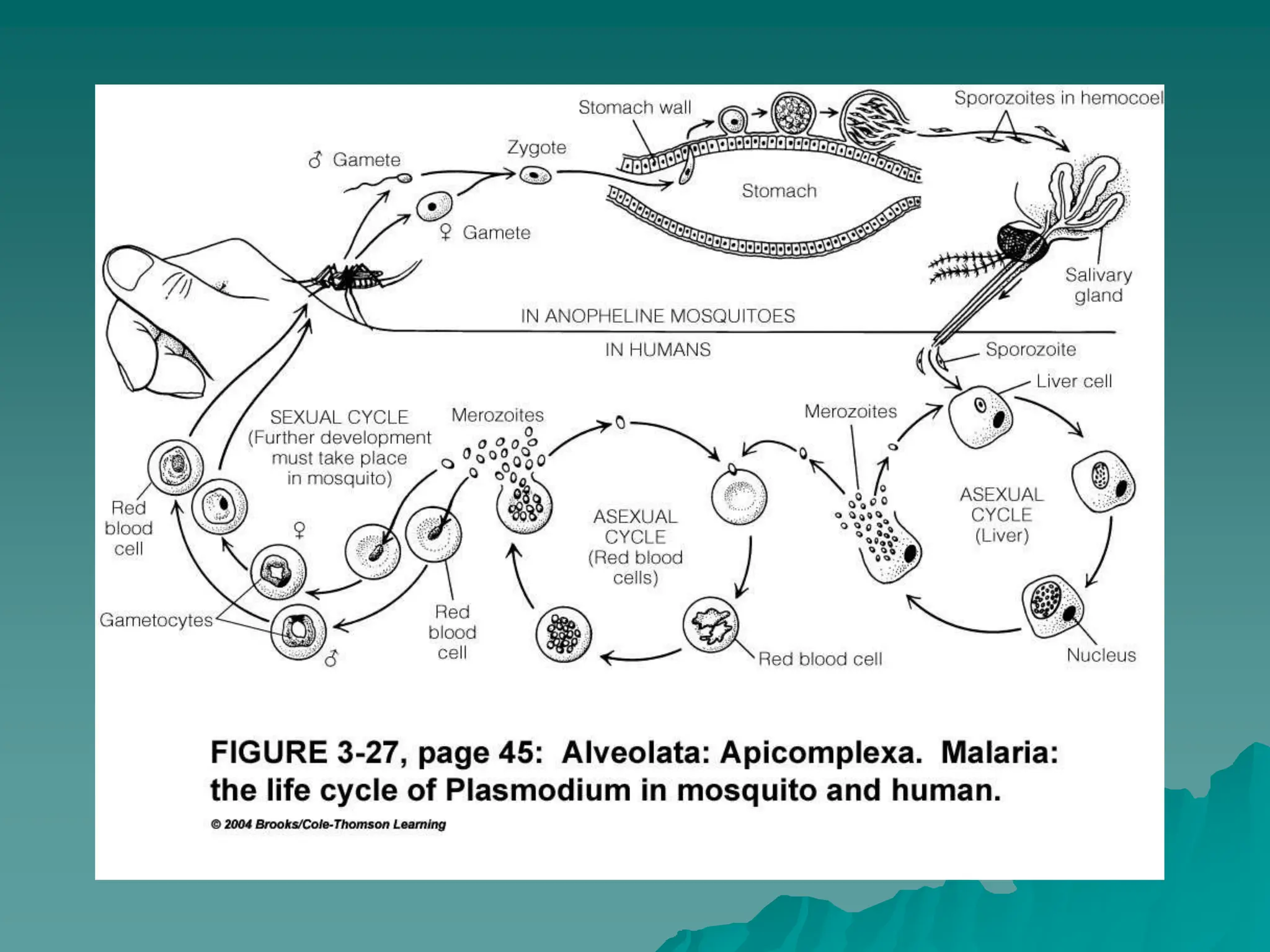
 Four species of Plasmodium that cause malaria
– #1 human parasite
– 300 million worldwide infected each year
– 1% die each year
– Anopheles mosquito is the vector
 Complex life cycle
– Sporozoite – motile, infective stage possessing apical complex
– Merozoite – motile, reinfective stage, also has apical complex
– Gametocytes – reproductive stage. Usually, male and female
gametocytes pair up and release gametes (sexual
reproduction)
– Spore – gametes pair to form zygotes, and a protective
capsule is secreted
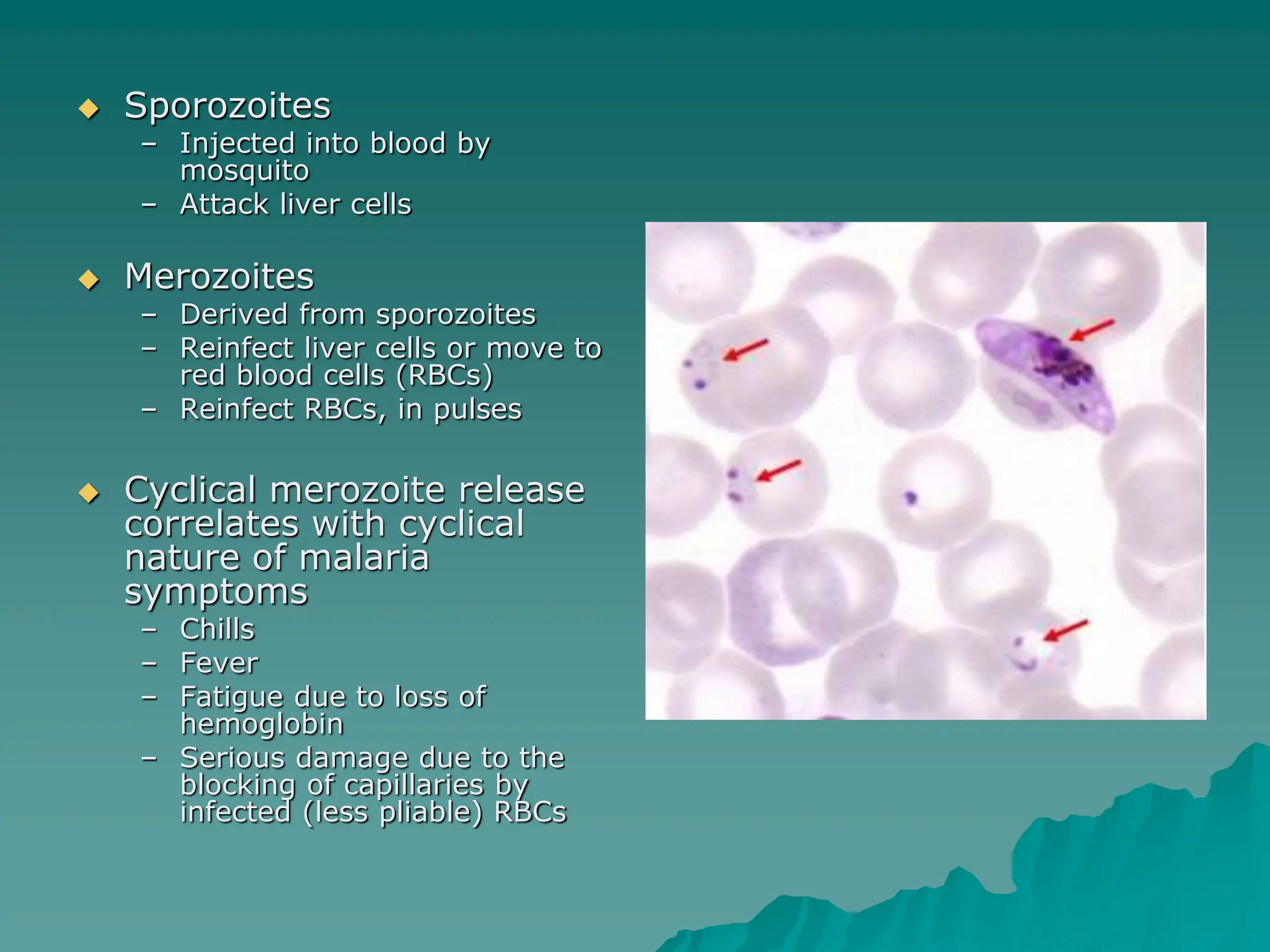
 Sporozoites
– Injected into blood by
mosquito
– Attack liver cells
 Merozoites
– Derived from sporozoites
– Reinfect liver cells or move to
red blood cells (RBCs)
– Reinfect RBCs, in pulses
 Cyclical merozoite release
correlates with cyclical
nature of malaria
symptoms
– Chills
– Fever
– Fatigue due to loss of
hemoglobin
– Serious damage due to the
blocking of capillaries by
infected (less pliable) RBCs
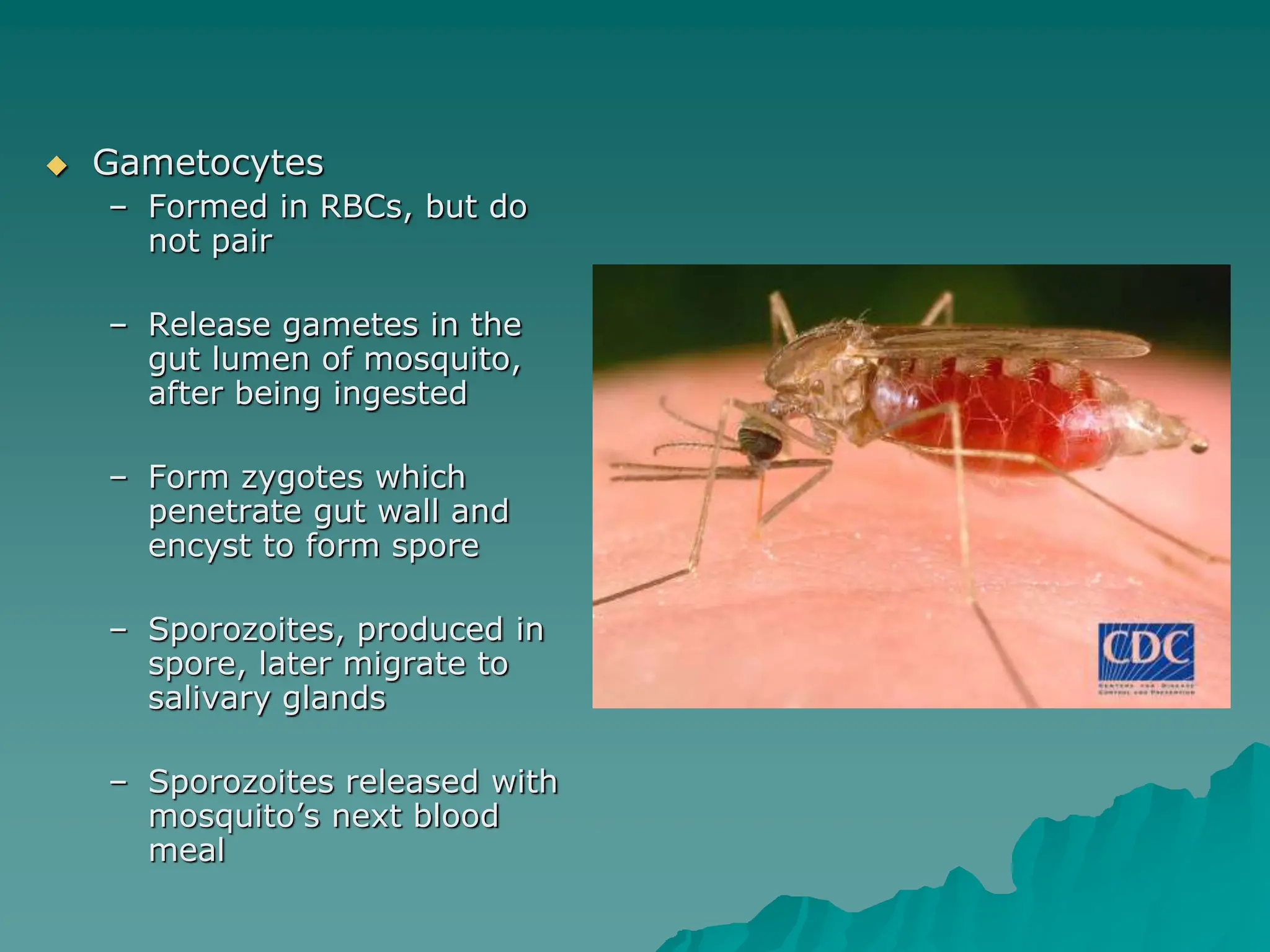
 Gametocytes
– Formed in RBCs, but do
not pair
– Release gametes in the
gut lumen of mosquito,
after being ingested
– Form zygotes which
penetrate gut wall and
encyst to form spore
– Sporozoites, produced in
spore, later migrate to
salivary glands
– Sporozoites released with
mosquito’s next blood
meal
Amoeboid Protozoa
 Posses pseudopodia for locomotion and prey capture
(heterotrophs)
 Have a complex cytoskeleton
 Marine, freshwater, and terrestrial species
 Same design found elsewhere in the animal kingdom
– Archeocytes of sponges
– Mammalian white blood cells (WBCs)
 Three main groups of amoeboid protozoans
– Amebas – 3 Phyla
– Phylum Foraminifera
– Phylum Actinopoda
Amebas
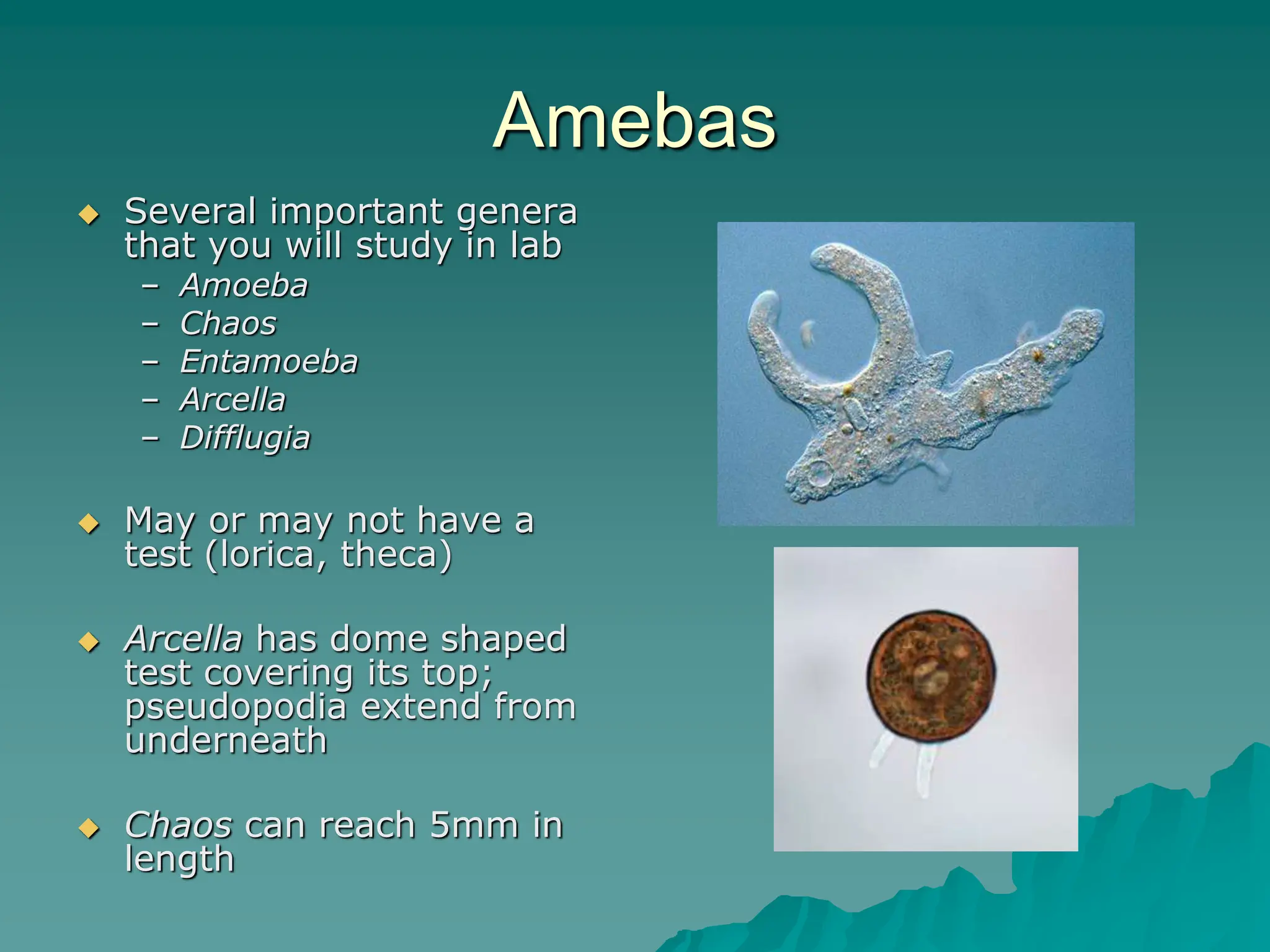
 Several important genera
that you will study in lab
– Amoeba
– Chaos
– Entamoeba
– Arcella
– Difflugia
 May or may not have a
test (lorica, theca)
 Arcella has dome shaped
test covering its top;
pseudopodia extend from
underneath
 Chaos can reach 5mm in
length
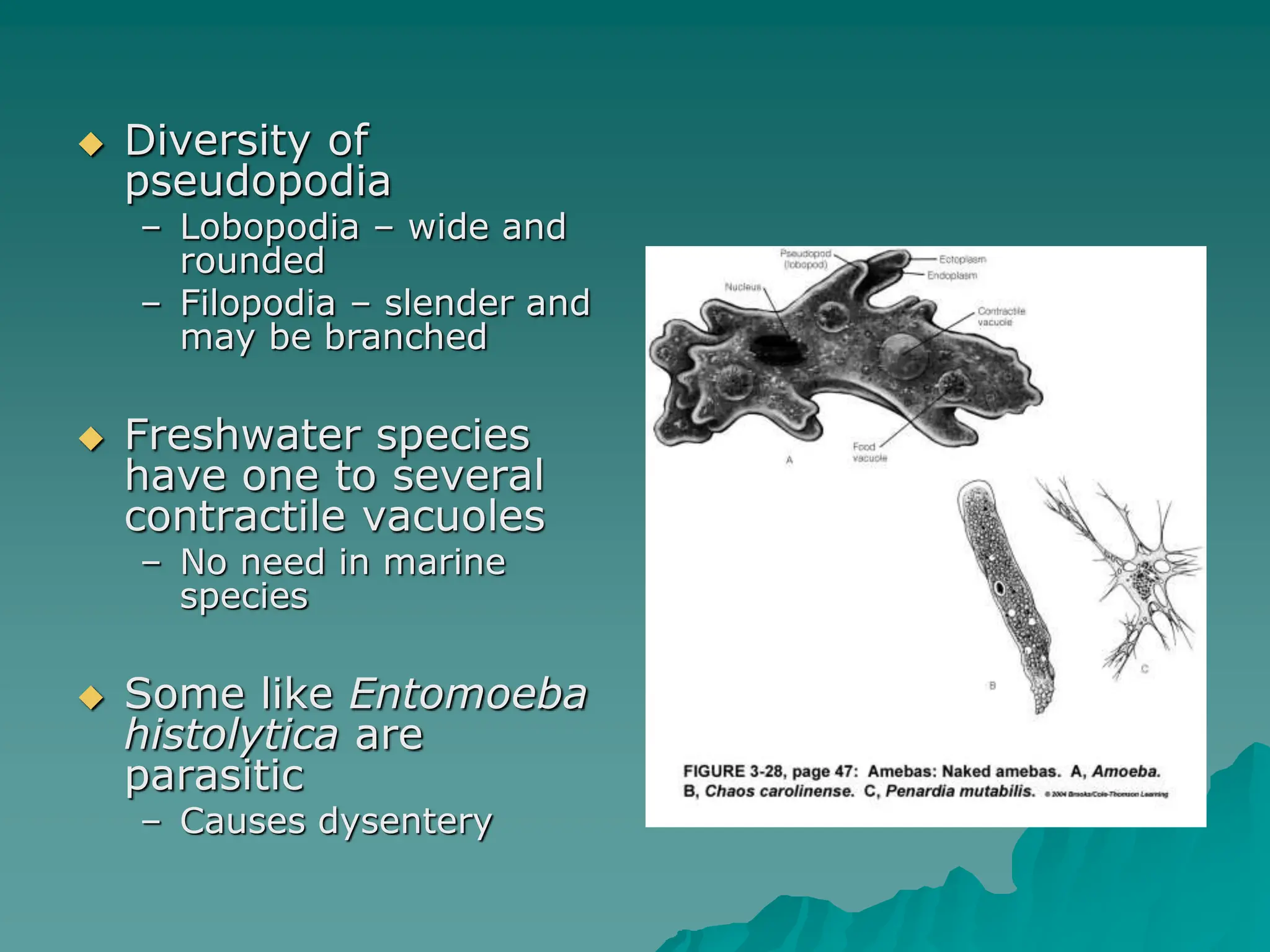
 Diversity of
pseudopodia
– Lobopodia – wide and
rounded
– Filopodia – slender and
may be branched
 Freshwater species
have one to several
contractile vacuoles
– No need in marine
species
 Some like Entomoeba
histolytica are
parasitic
– Causes dysentery
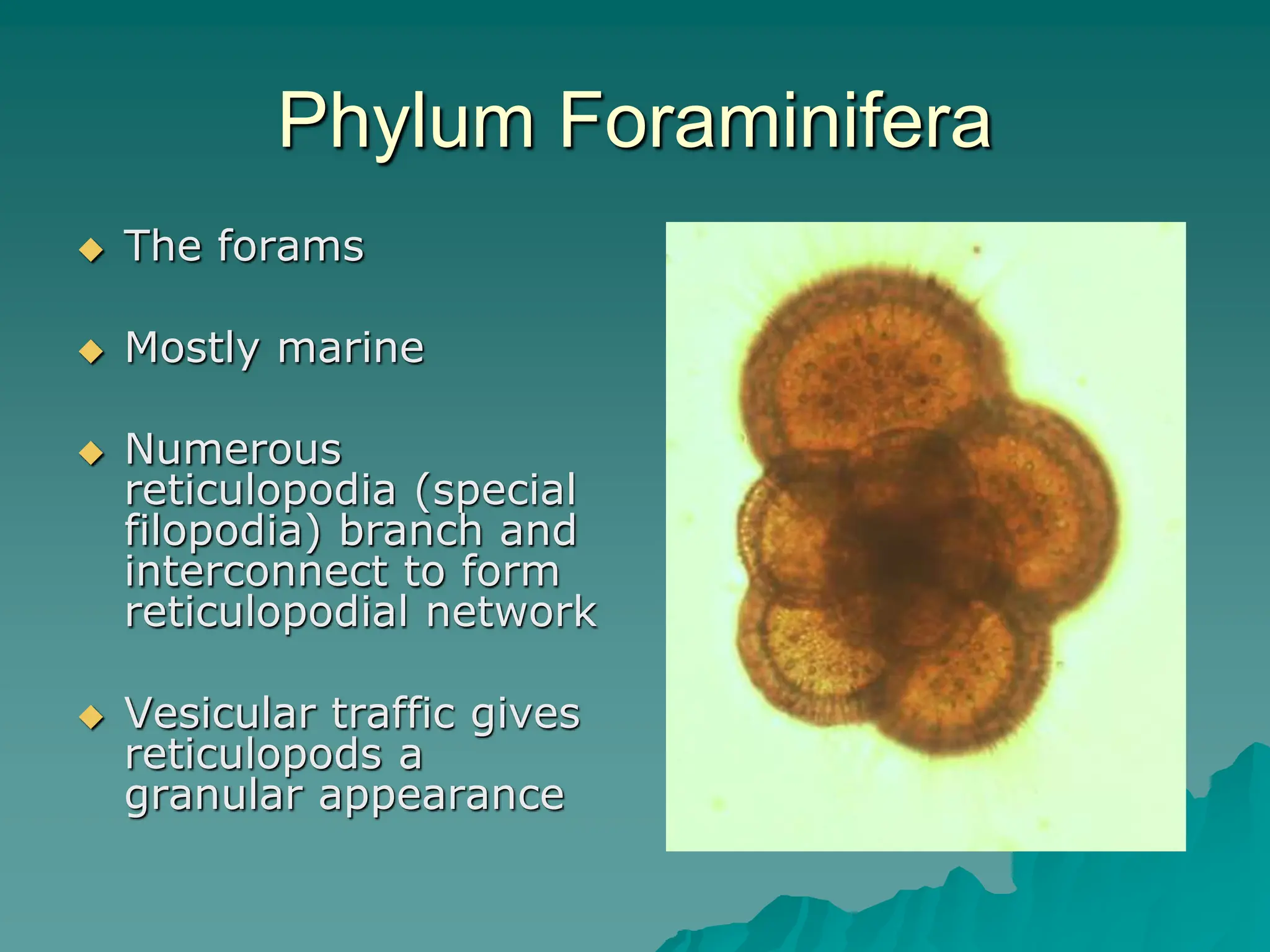
Phylum Foraminifera
 The forams
 Mostly marine
 Numerous
reticulopodia (special
filopodia) branch and
interconnect to form
reticulopodial network
 Vesicular traffic gives
reticulopods a
granular appearance
 Locomotion is
accomplished by
reticulopodial network
– Extends
– Anchors to substrate
– Retracts
 Forms a probing net that
is also used for finding
food
 Have a test, usually
composed of calcium
carbonate
 Most are
multichambered.
Usually start life
occupying one chamber,
but extend and secrete
new tests
 May be benthic or
planktonic, and there
are structural
differences between
the tests of the two
types
– Planktonic tests are
more fragile
– Also have spines to
increase surface area,
and thus buoyancy
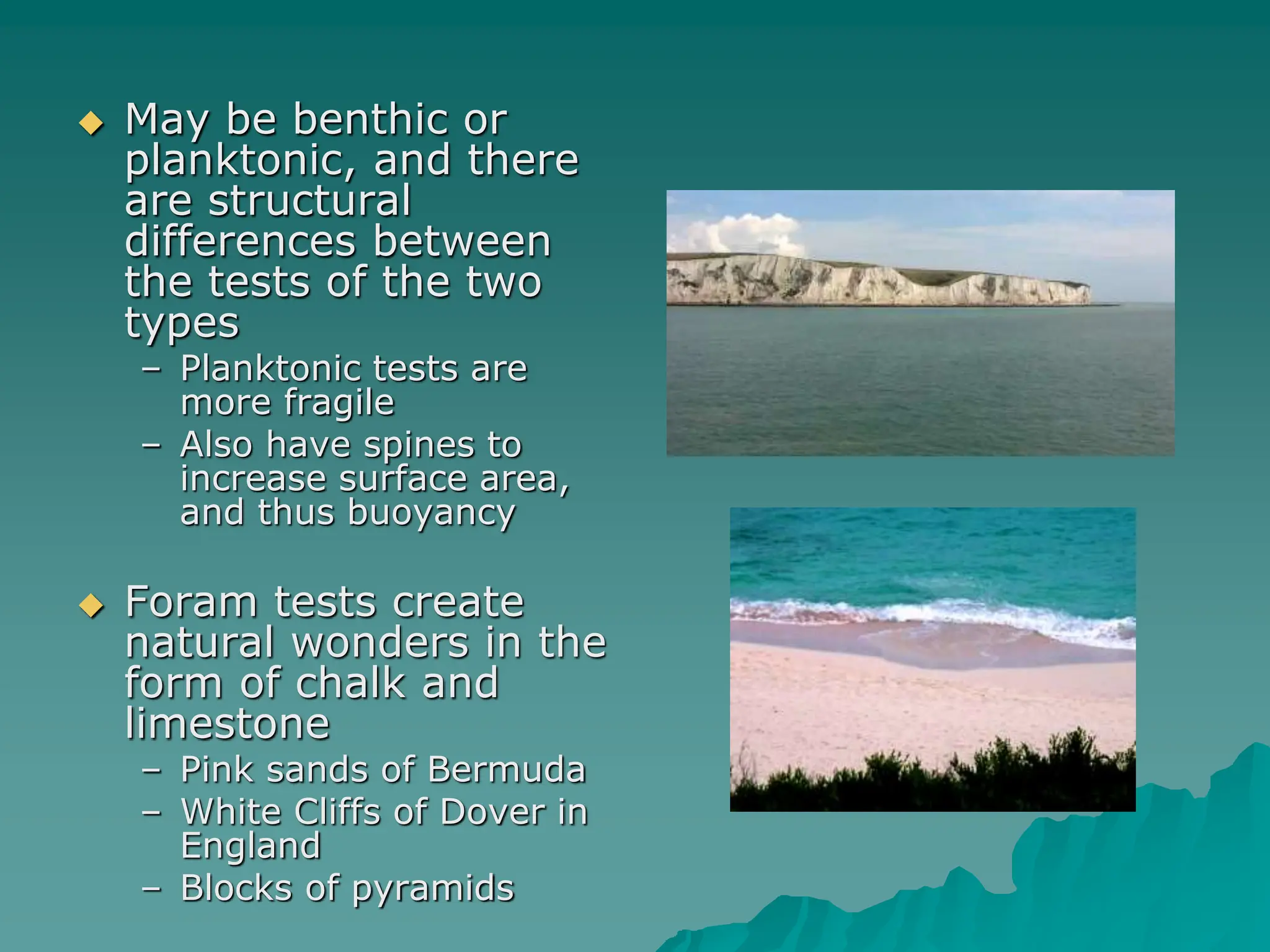
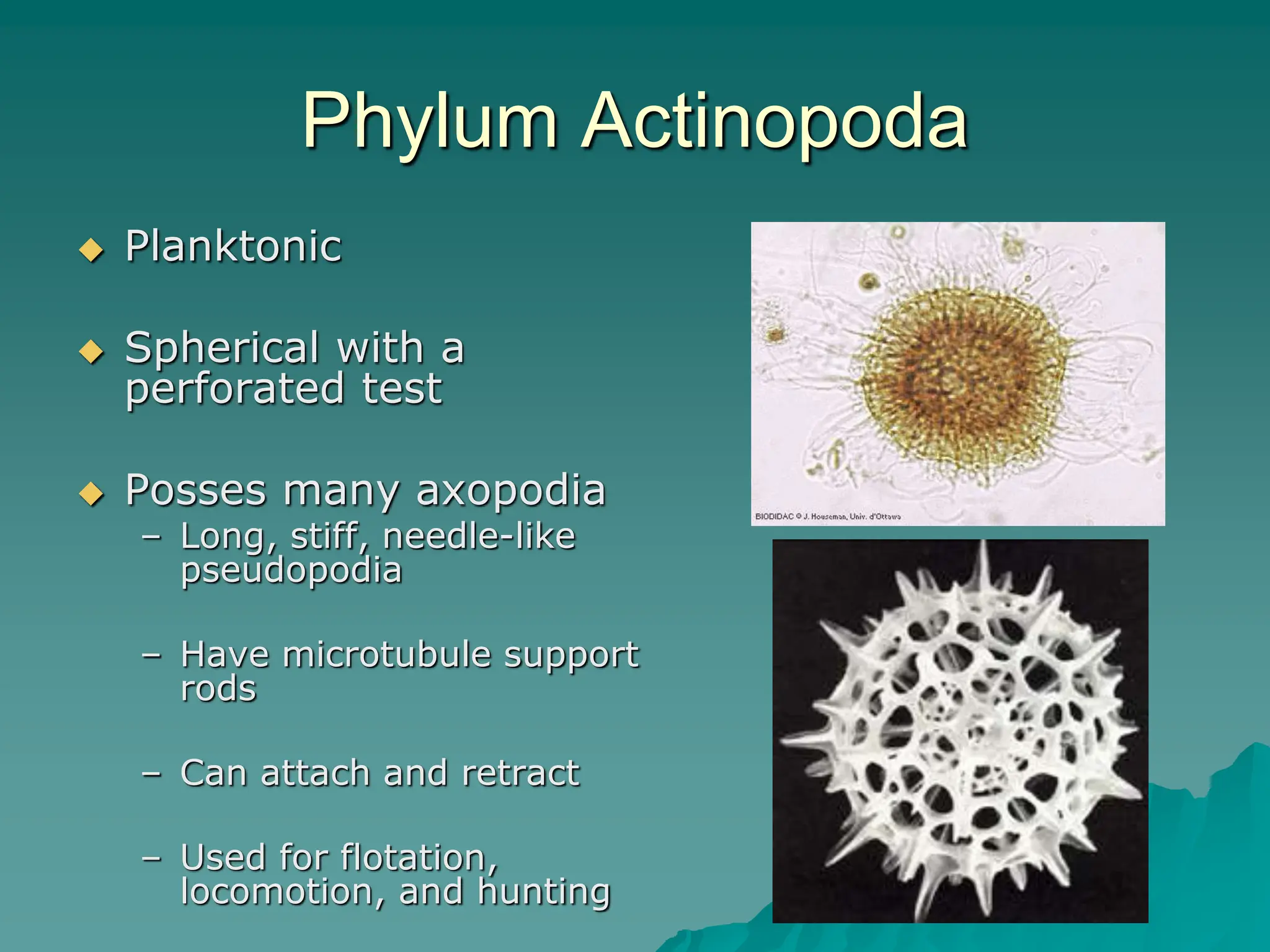
 Foram tests create
natural wonders in the
form of chalk and
limestone
– Pink sands of Bermuda
– White Cliffs of Dover in
England
– Blocks of pyramids
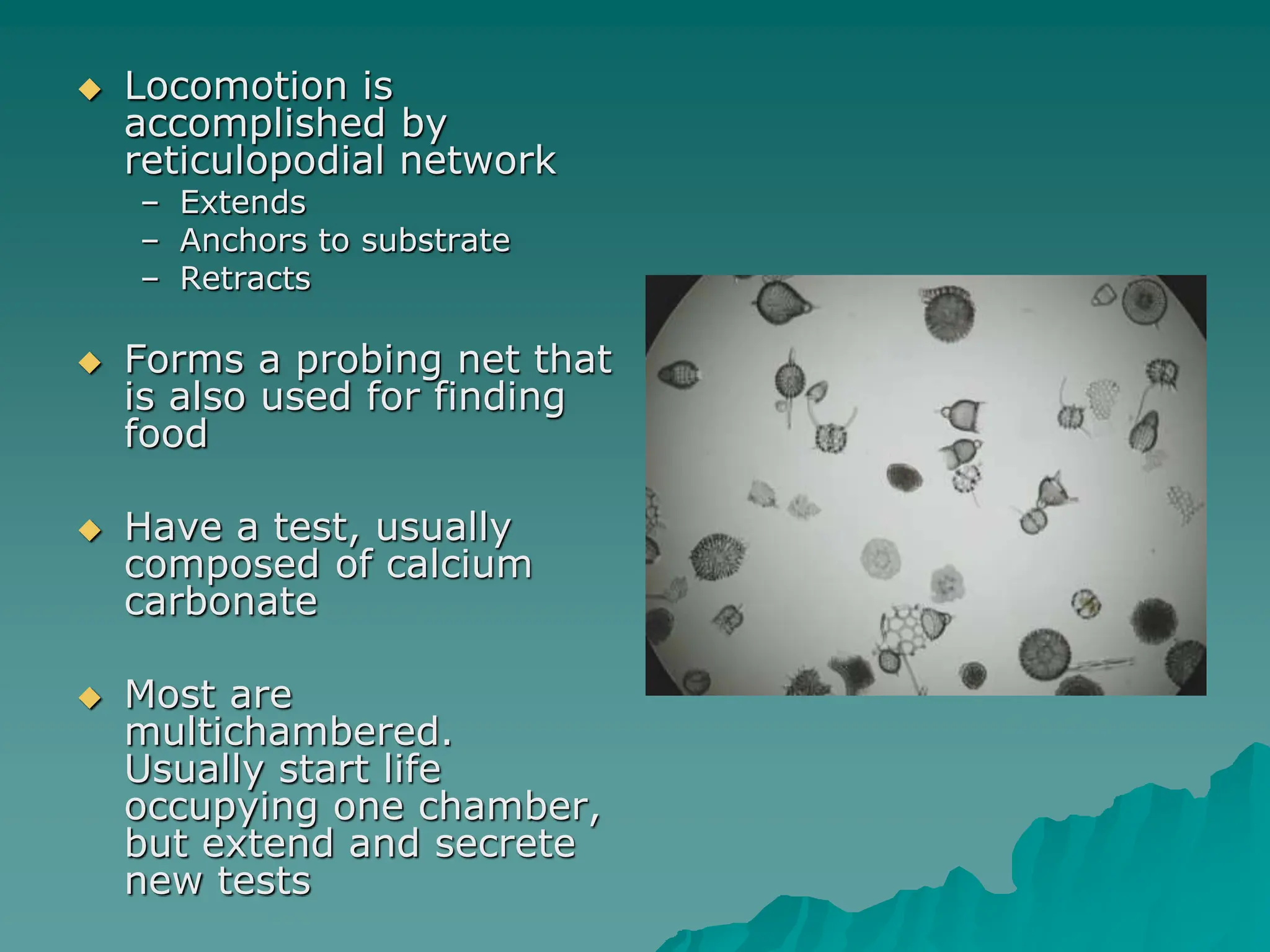
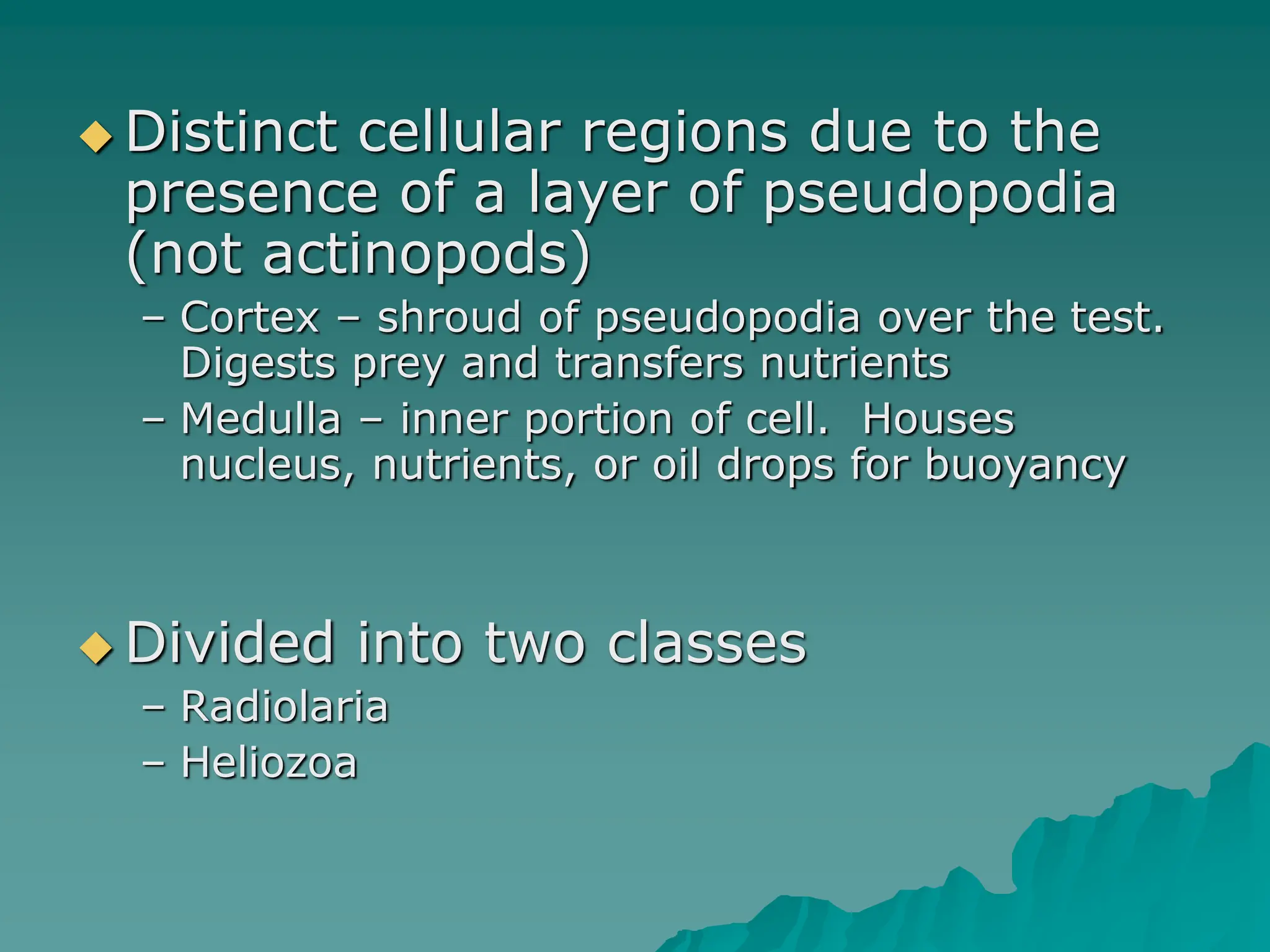
Phylum Actinopoda
 Planktonic
 Spherical with a
perforated test
 Posses many axopodia
– Long, stiff, needle-like
pseudopodia
– Have microtubule support
rods
– Can attach and retract
– Used for flotation,
locomotion, and hunting
 Distinct cellular regions due to the
presence of a layer of pseudopodia
(not actinopods)
– Cortex – shroud of pseudopodia over the test.
Digests prey and transfers nutrients
– Medulla – inner portion of cell. Houses
nucleus, nutrients, or oil drops for buoyancy
 Divided into two classes
– Radiolaria
– Heliozoa
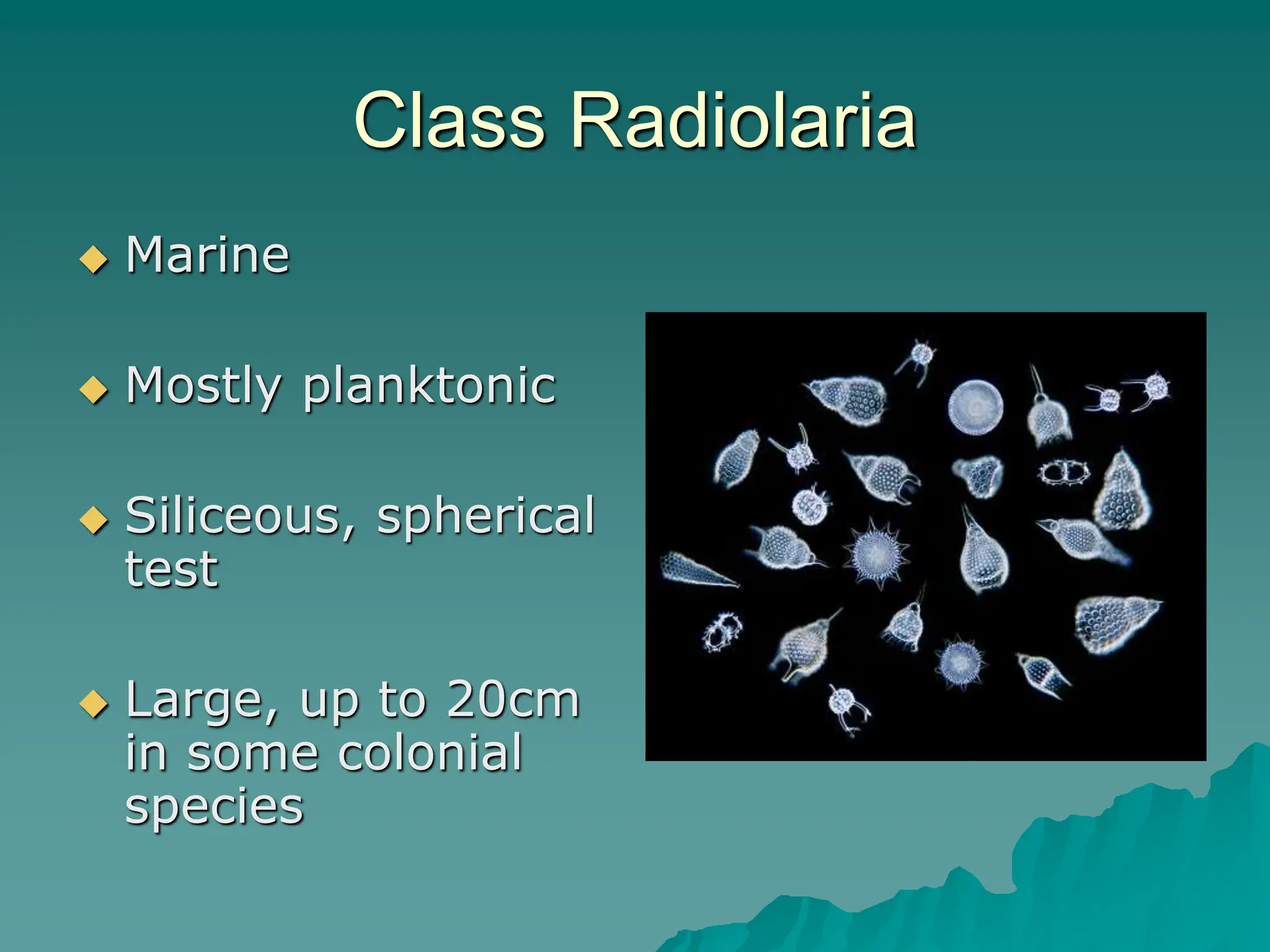
Class Radiolaria
 Marine
 Mostly planktonic
 Siliceous, spherical
test
 Large, up to 20cm
in some colonial
species
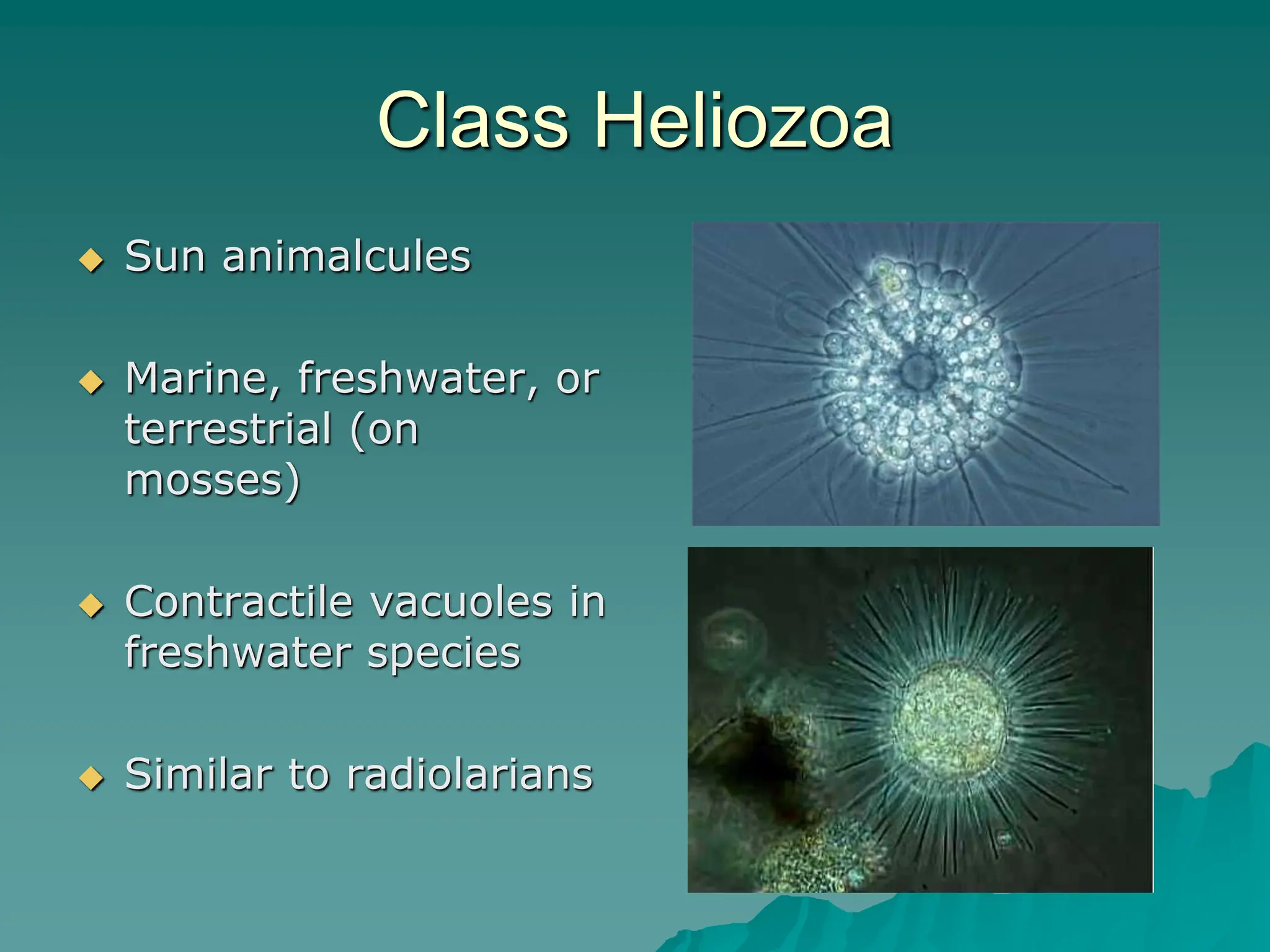
Class Heliozoa
 Sun animalcules
 Marine, freshwater, or
terrestrial (on
mosses)
 Contractile vacuoles in
freshwater species
 Similar to radiolarians

Protozoa Lect#2280920.ppt

  • 1.
    Protozoa Background Information  DomainEukarya – Membrane bound organelles, including nucleus  Many kingdoms, 40+, depending on what classification scheme is used  Classification is always changing  Protozoa are animal-like protists
  • 2.
     Primitive – Singlecelled – Colonial  Gave rise to modern day plants and animals  Diversity is the rule in every aspect – Feeding / energetics – Life cycles – Reproduction – Physiology / osmoregulation – Locomotion – Morphology
  • 3.
  • 4.
    Review of theEukaryotic Cell  Protists lack cellular specialization (with few exceptions)  Individual organelles carry out all physiological processes
  • 5.
     Cell membrane –Barrier to the outside environment – Selective passage of molecules – Plays a role in endo / exocytosis  Cytoplasm – Ectoplasm – outer, stiff, portion – Endoplasm – inner, fluid, portion  Internal membrane system – Consists of endoplasmic reticulum (ER), Golgi bodies, and lysosomes – Compartmentalizes the cell
  • 6.
    The Cytoskeleton  Maintypes – Microfilaments (made of Actin) – Microtubules  Functions – Maintain cell shape – Locomotion – cilia, flagella, and pseudopodia – Cell division – Transport vesicles around cell
  • 7.
    Cilia  Numerous, short projectionsthat beat in an oar-like fashion to produce movement  Consists of microtubule core (axoneme) enclosed in cell membrane – Ring of 9 doublets, plus two singlets, centrally located – (9x2)+2 pattern  Anchored by a basal body (9x3 pattern)
  • 8.
    Flagella  Far fewerthan cilia, but structurally identical  Long  Undulate in a whip- like fashion to produce movement  Both cilia and flagella require ATP to move
  • 9.
    Pseudopodia  Used forlocomotion, food capture, and endocytosis  Actin disassembly results in a conversion of ectoplasm to endoplasm
  • 10.
    Protozoan Physiology  Samerules apply in single celled organisms as do in metazoans  In fact, environmental effects may be more pronounced – Ectothermic – Large SA : Vol  Important considerations – Feeding and nutrition – Enzyme function – Osmoregulation – Reproduction
  • 11.
    Feeding and Nutrition Heterotrophs  Photoautotrophs  Mixotrophs – Can switch between heterotrophy and autotrophy, depending on conditions  Endosymbiotic theory explains how energy producing organelles evolved
  • 12.
     Nutrition occursin four phases: – Ingestion – Digestion –mechanical and/or chemical – Absorption – Elimination  Digestion typically intracellular. Food is phagocytized and a food vacuole is created. Digestive enzymes are dumped into vacuole
  • 13.
    Enzyme Function  Proteinform equals function  Enzymes are subject to denaturation under the following conditions: – Extreme pH – Extreme temperature (especially high temperatures) – Extreme salinity. For this reason, osmoregulation is important
  • 14.
    Osmoregulation  Many protistsposses a specialized organelle known as a contractile vacuole  A collection of tubules known as the spongiome, collect ions from the cytoplasm and deliver them to the contractile vacuole proper  The vacuole contracts and its contents are extruded
  • 15.
    Reproduction  All speciesreproduce asexually (clonally) – Fission – splitting of parent that results in two or multiple individuals – Budding – portion of parent splits off to form new individual  No recombination Budding Hydra (NOT a Protozoan)
  • 16.
     Though lesscommon some species can even reproduce sexually  Conjugation – two individuals fuse – dissolve portions of their cell membranes – exchange genetic material  Recombination is the result
  • 17.
    Asexual vs. Sexual Advantages to clonal reproduction – Allows reproduction in the absence of a mate. Good for isolated species – Allows offspring to be reproduced quickly; no energy is lost to gamete production, fertilization, or development – Perpetuates identical genotypes; beneficial if already well adapted to that environment  Disadvantage – Limited genetic possibilities. Constricts the gene pool and species could die out when the environment changes
  • 18.
     Advantages tosexual reproduction – Increases genetic variability via crossing over, independent assortment of chromosomes, and random fertilization – Result may be better environmental adaptability for certain individuals, and the species as a whole  Disadvantage – Finding mates in isolated or sessile species
  • 19.
    Encystment  Water ispumped out and organism forms capsule around itself  Benefit is the organism can survive harsh environmental conditions for years – Desiccation resistant – Does not require food – Wind dispersal
  • 20.
    Protozoa  Name means“first animals”  215,000 described species. Equal to the number of described vascular plants  10 times more diverse than bacteria and viruses
  • 21.
    Protozoan Ecology  Veryimportant ecologically  Many are photoautotrophs, and make up 40% of all primary productivity  Many make up a large component of plankton communities  25% of the described species live as symbionts. Many of these are parasitic  Many are important nutrient cyclers
  • 22.
    Form and Function Protozoan body was is known as a pellicle  Pellicle is composed of the cell membrane and cytoskeleton: – Microfilaments (Actin) – Microtubules – Vesicles such as alveoli – Any combination of the above
  • 23.
    Phylum Euglenozoa  Twomain classes – Euglenoidea – Kinetoplastida  Both are flagellates  Both reproduce asexually  Both are solitary
  • 24.
    Class Euglenoidea  1000species  Elongate  Free-living  Solitary  Reproduction is clonal, and occurs via longitudinal binary fission
  • 25.
     Posses acontractile vacuole  Two flagella, one long, one short  Posses a pigmented eyespot that shades the photosensitive paraflagellar body  Heterotrophic, photoautotrophic, or mixotrophic  Photosynthetic species rotate on their longitudinal access as they swim toward the light  Can produce a starch-like carbohydrate – Known as paramylon – Produced in the pyrenoids of their chloroplasts – Stored as granules in cytoplasm
  • 26.
    Class Kinetoplastida  600species  Reproduce asexually  Posses one or two flagella  Most are parasitic  All posses a conspicuous mass of DNA, known as a kinetoplast, located in one large mitochondrion
  • 27.
     Link between kinetoplastand parasitic lifestyle of most species – Kinetoplast codes for mitochondrial morphogenesis – Parasites alternate between aerobic and anaerobic host environments  Trypanosoma is a gut parasite of insects and blood parasite of vertebrates – Chagas’s disease – African sleeping sickness Tsetse Fly Distribution
  • 28.
     Trypanosoma possessesone large flagellum that joins an undulating membrane, which runs the length of the organism  The pellicle’s protein composition (antigens) is controlled by roughly 1000 genes (40% of the genome) – Thus, the parasite is able to effectively elude the host’s immune system
  • 29.
    Phylum Chlorophyta  Greenalgae  Posses chloroplasts with chlorophyll a and b (same as plants)  Can synthesize and store starch  Marine and freshwater species
  • 30.
     Some generaare non-motile and filamentous, such as Spirogyra  Others such as Volvox are flagellated, motile, and colonial  In Volvox, up to 6000 individual cells may make up a hollow spherical colony  Individual cells are connected by cytoplasmic bridges
  • 31.
     There issome cellular differentiation in Volvox – Non-flagellated gonidia (reproductive cells) can reproduce sexually or asexually  During asexual reproduction: – Gonidium undergoes several rounds of fission – Inverted (flagella pointing in) daughter colony is created – Flagella later point out – Daughter colony bursts out of the parent colony
  • 32.
     Volvox isclosely related to plants, but also provides insight to the evolution of animals – Blastocysts look almost identical
  • 33.
    Phylum Choanoflagellata  600species  Marine and freshwater  Tiny - 10µm  Solitary or colonial  Free-living or sessile  Stalked, spherical, or occurring in sheets
  • 34.
     Not surprisingthat they are closely related to animals – Closely resemble collar cells of sponges  One large flagellum w/ base surrounded by a collar of microvilli  Flagellum beats and collar traps bacteria and organic molecules  Particles ingested by phagocytosis  Intracellular digestion
  • 35.
    Phylum Retortamonada  Oftenlive in anoxic environments – Many living in the guts of insects and vertebrates – Mitochondria typically absent, as a result of this – Thus, adapted for surviving on glycolysis  Giardia lamblia posses four flagella  Giardia is often contracted by drinking from mountain streams. Symptoms are often referred to as “beaver fever.”
  • 36.
    Phylum Axostylata  Anotherheterotrophic flagellate, closely related to the members of Phylum Retortamonada  Trichomonas vaginalis is the most famous representative  Small parasite with four flagella that infects the urogenital tract of humans – Can be transmitted sexually
  • 37.
    Phylum Alveolata  Consistsof three subphyla: – Dinoflagellata – Ciliophora – Apicomplexa  Have similar rDNA sequences  Posses alveoli, sacs, deep to the cell membrane
  • 38.
    Subphylum Dinoflagellata  Dinoflagellates 4000 marine and freshwater species  Posses chloroplasts – Important 1° producers – Red-brown to gold-brown in color, due to photosynthetic pigments – Chloroplasts acquired through endosymbiosis  Contribute to planktonic bioluminescence
  • 39.
     Some areendoparasites of protozoa, crustaceans, and fish  Certain genera responsible for “red tides.” – May result in massive die-offs of shellfish and fish – Harms animals who eat contaminated organisms
  • 40.
     Posses asulcus and two flagella  Have a skeleton known as a theca (test or lorica)  Reproduce via binary fission, or may encyst
  • 41.
    Subphylum Ciliophora  8000described ciliates  Sophisticated protozoans  Have some degree of anterior – posterior polarity  Most are motile and solitary  Many posses specialized ciliature – Somatic cilia – Oral cilia
  • 42.
     Function ofalveoli is to store Ca2+  Release of Ca2+ causes changes in ciliary beat, and discharge of extrusomes – Trichocysts – long shafts that are thought to defend against predators – Toxicysts – longs shafts with toxin that are used for prey capture – Mucocysts – release mucus and creates sticky surface for prey capture or protective cysts
  • 43.
     Paramecium changes directionsupon colliding with something solid – Known as avoidance reaction – Result of Ca2+ and K+ release from alveoli – Depolarization, similar to an action potential  Two very interesting sessile genera, Vorticella and Stentor
  • 44.
     Vorticella – Colonial –Each cell possesses a long stalk with a spasmoneme (spiral fiber) – Contracts to withdraw from predators  Stentor is a similar genus
  • 45.
     Ciliates havetwo types of nuclei – Macronucleus – genes are actively transcribed – Micronucleus – master copy of genome; inactive except during cell division  Shapes and numbers of these nuclei varies across genera – Bean shaped in Paramecium – String of beads in Stentor
  • 46.
     Another groupof alveolates  The sporozoans, form spores  Mostly parasitic  Posses an apical complex – Attaches to or penetrates host cell – Cone contains digestive enzymes Subphylum Apicomplexa
  • 47.
     Four speciesof Plasmodium that cause malaria – #1 human parasite – 300 million worldwide infected each year – 1% die each year – Anopheles mosquito is the vector  Complex life cycle – Sporozoite – motile, infective stage possessing apical complex – Merozoite – motile, reinfective stage, also has apical complex – Gametocytes – reproductive stage. Usually, male and female gametocytes pair up and release gametes (sexual reproduction) – Spore – gametes pair to form zygotes, and a protective capsule is secreted
  • 49.
     Sporozoites – Injectedinto blood by mosquito – Attack liver cells  Merozoites – Derived from sporozoites – Reinfect liver cells or move to red blood cells (RBCs) – Reinfect RBCs, in pulses  Cyclical merozoite release correlates with cyclical nature of malaria symptoms – Chills – Fever – Fatigue due to loss of hemoglobin – Serious damage due to the blocking of capillaries by infected (less pliable) RBCs
  • 50.
     Gametocytes – Formedin RBCs, but do not pair – Release gametes in the gut lumen of mosquito, after being ingested – Form zygotes which penetrate gut wall and encyst to form spore – Sporozoites, produced in spore, later migrate to salivary glands – Sporozoites released with mosquito’s next blood meal
  • 51.
    Amoeboid Protozoa  Possespseudopodia for locomotion and prey capture (heterotrophs)  Have a complex cytoskeleton  Marine, freshwater, and terrestrial species  Same design found elsewhere in the animal kingdom – Archeocytes of sponges – Mammalian white blood cells (WBCs)  Three main groups of amoeboid protozoans – Amebas – 3 Phyla – Phylum Foraminifera – Phylum Actinopoda
  • 52.
    Amebas  Several importantgenera that you will study in lab – Amoeba – Chaos – Entamoeba – Arcella – Difflugia  May or may not have a test (lorica, theca)  Arcella has dome shaped test covering its top; pseudopodia extend from underneath  Chaos can reach 5mm in length
  • 53.
     Diversity of pseudopodia –Lobopodia – wide and rounded – Filopodia – slender and may be branched  Freshwater species have one to several contractile vacuoles – No need in marine species  Some like Entomoeba histolytica are parasitic – Causes dysentery
  • 54.
    Phylum Foraminifera  Theforams  Mostly marine  Numerous reticulopodia (special filopodia) branch and interconnect to form reticulopodial network  Vesicular traffic gives reticulopods a granular appearance
  • 55.
     Locomotion is accomplishedby reticulopodial network – Extends – Anchors to substrate – Retracts  Forms a probing net that is also used for finding food  Have a test, usually composed of calcium carbonate  Most are multichambered. Usually start life occupying one chamber, but extend and secrete new tests
  • 56.
     May bebenthic or planktonic, and there are structural differences between the tests of the two types – Planktonic tests are more fragile – Also have spines to increase surface area, and thus buoyancy  Foram tests create natural wonders in the form of chalk and limestone – Pink sands of Bermuda – White Cliffs of Dover in England – Blocks of pyramids
  • 57.
    Phylum Actinopoda  Planktonic Spherical with a perforated test  Posses many axopodia – Long, stiff, needle-like pseudopodia – Have microtubule support rods – Can attach and retract – Used for flotation, locomotion, and hunting
  • 58.
     Distinct cellularregions due to the presence of a layer of pseudopodia (not actinopods) – Cortex – shroud of pseudopodia over the test. Digests prey and transfers nutrients – Medulla – inner portion of cell. Houses nucleus, nutrients, or oil drops for buoyancy  Divided into two classes – Radiolaria – Heliozoa
  • 59.
    Class Radiolaria  Marine Mostly planktonic  Siliceous, spherical test  Large, up to 20cm in some colonial species
  • 60.
    Class Heliozoa  Sunanimalcules  Marine, freshwater, or terrestrial (on mosses)  Contractile vacuoles in freshwater species  Similar to radiolarians