EXPORT PRICING


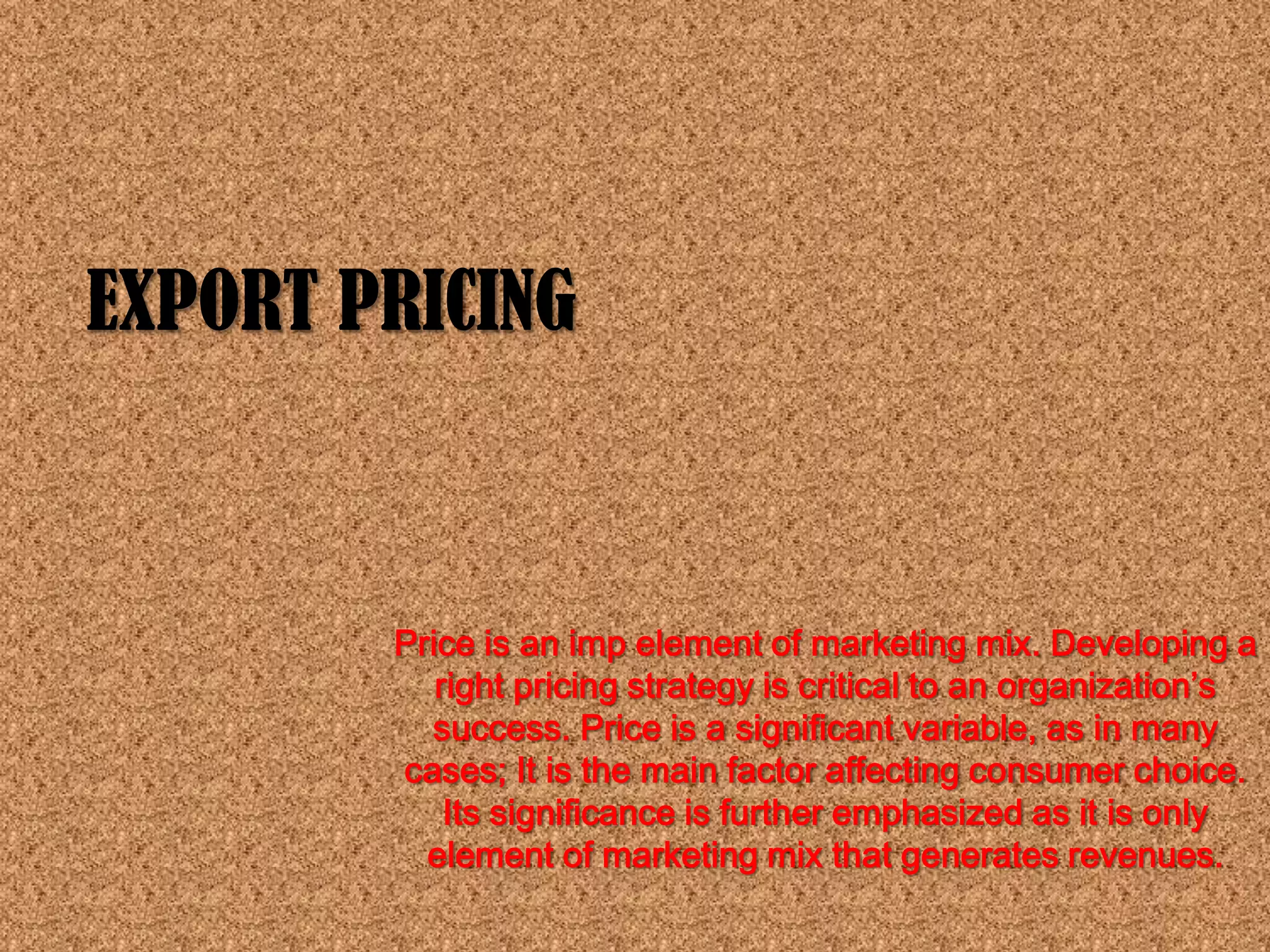
        Price is an imp element of marketing mix. Developing a
           right pricing strategy is critical to an organization’s
          success. Price is a significant variable, as in many
        cases; It is the main factor affecting consumer choice.
            Its significance is further emphasized as it is only
          element of marketing mix that generates revenues.
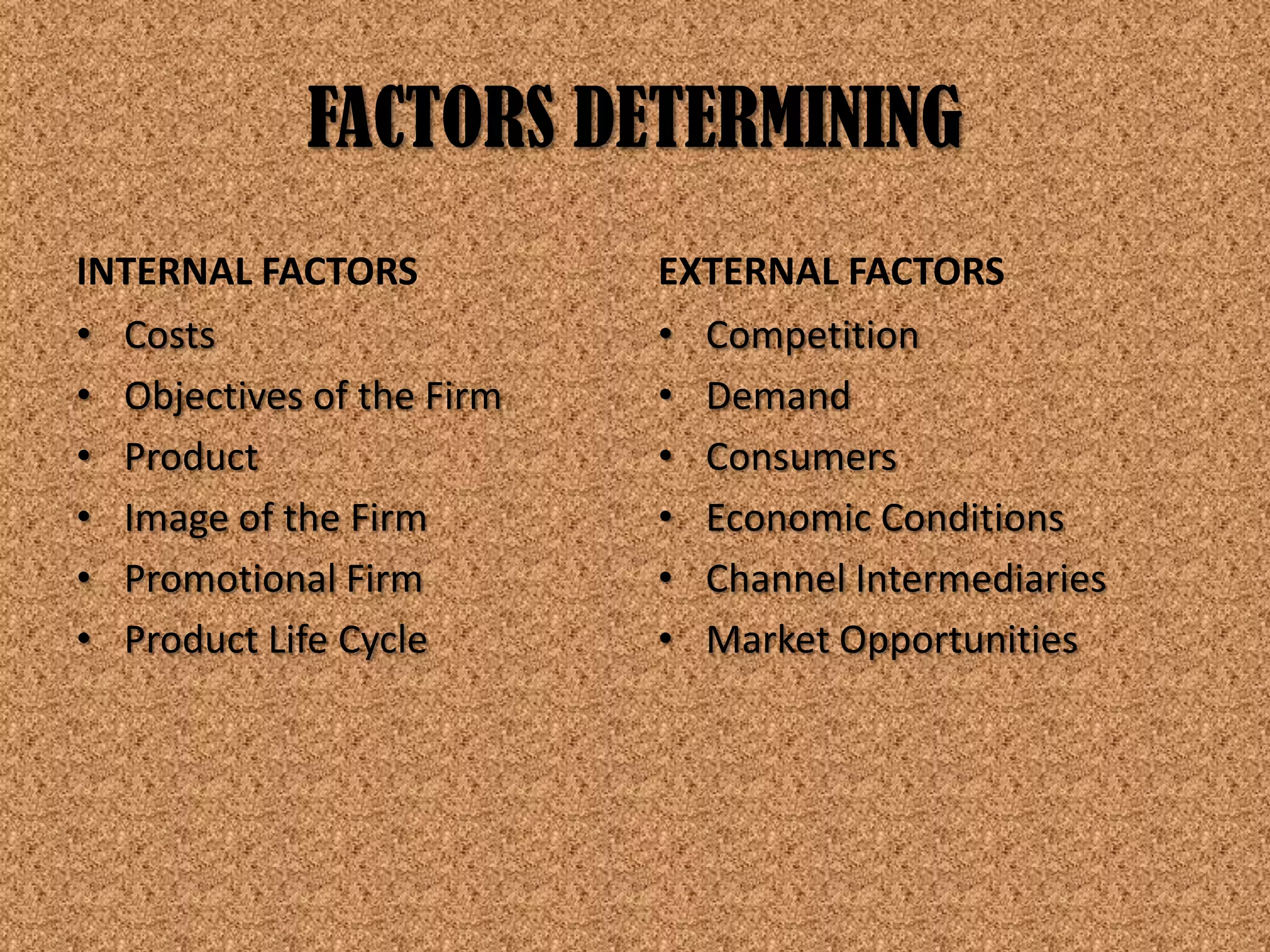
FACTORS DETERMINING
INTERNAL FACTORS           EXTERNAL FACTORS
• Costs                    • Competition
• Objectives of the Firm   • Demand
• Product                  • Consumers
• Image of the Firm        • Economic Conditions
• Promotional Firm         • Channel Intermediaries
• Product Life Cycle       • Market Opportunities
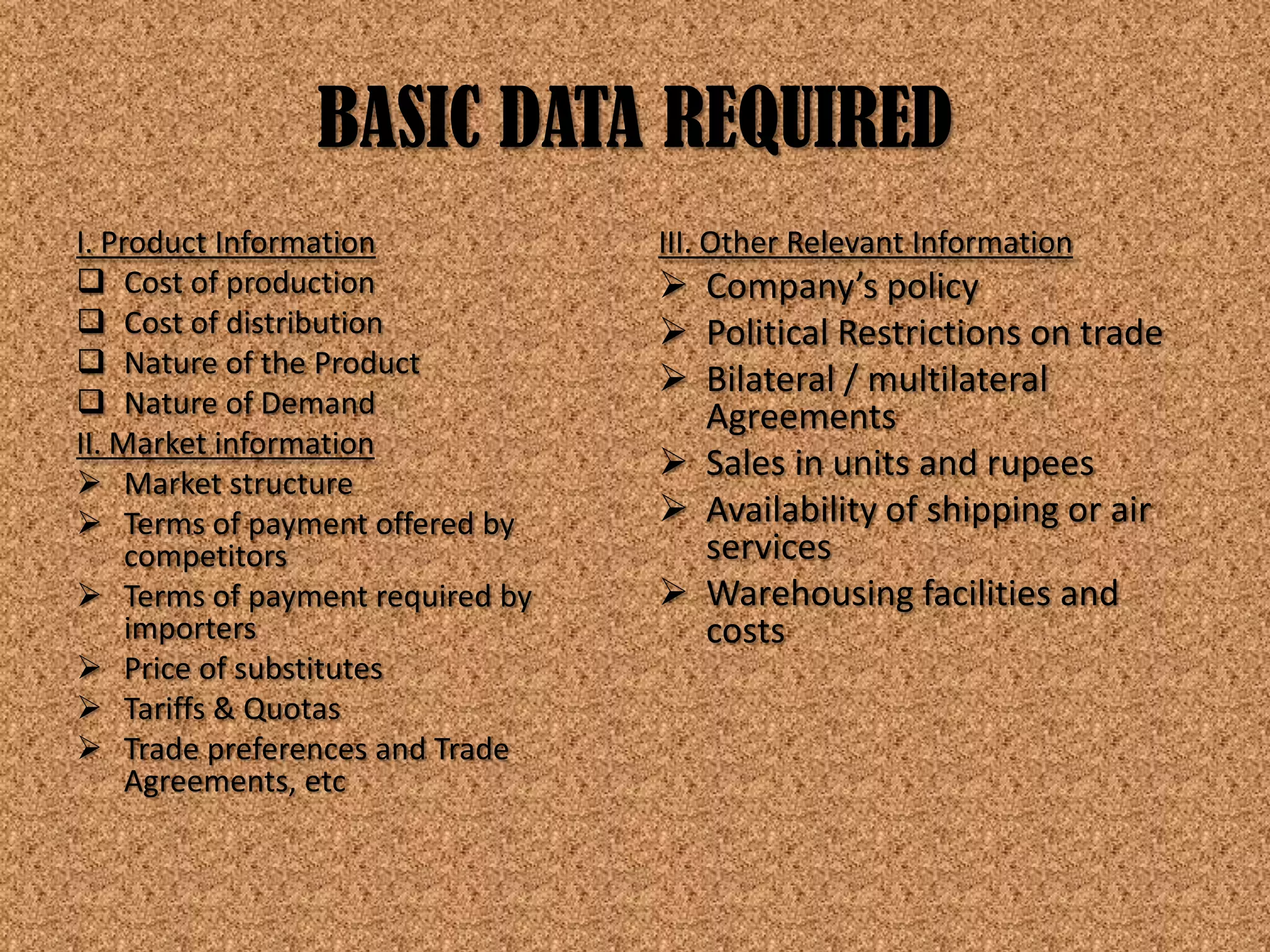
BASIC DATA REQUIRED
I. Product Information           III. Other Relevant Information
 Cost of production              Company’s policy
 Cost of distribution            Political Restrictions on trade
 Nature of the Product
                                  Bilateral / multilateral
 Nature of Demand                 Agreements
II. Market information
 Market structure
                                  Sales in units and rupees
 Terms of payment offered by     Availability of shipping or air
     competitors                   services
 Terms of payment required by    Warehousing facilities and
     importers                     costs
 Price of substitutes
 Tariffs & Quotas
 Trade preferences and Trade
     Agreements, etc
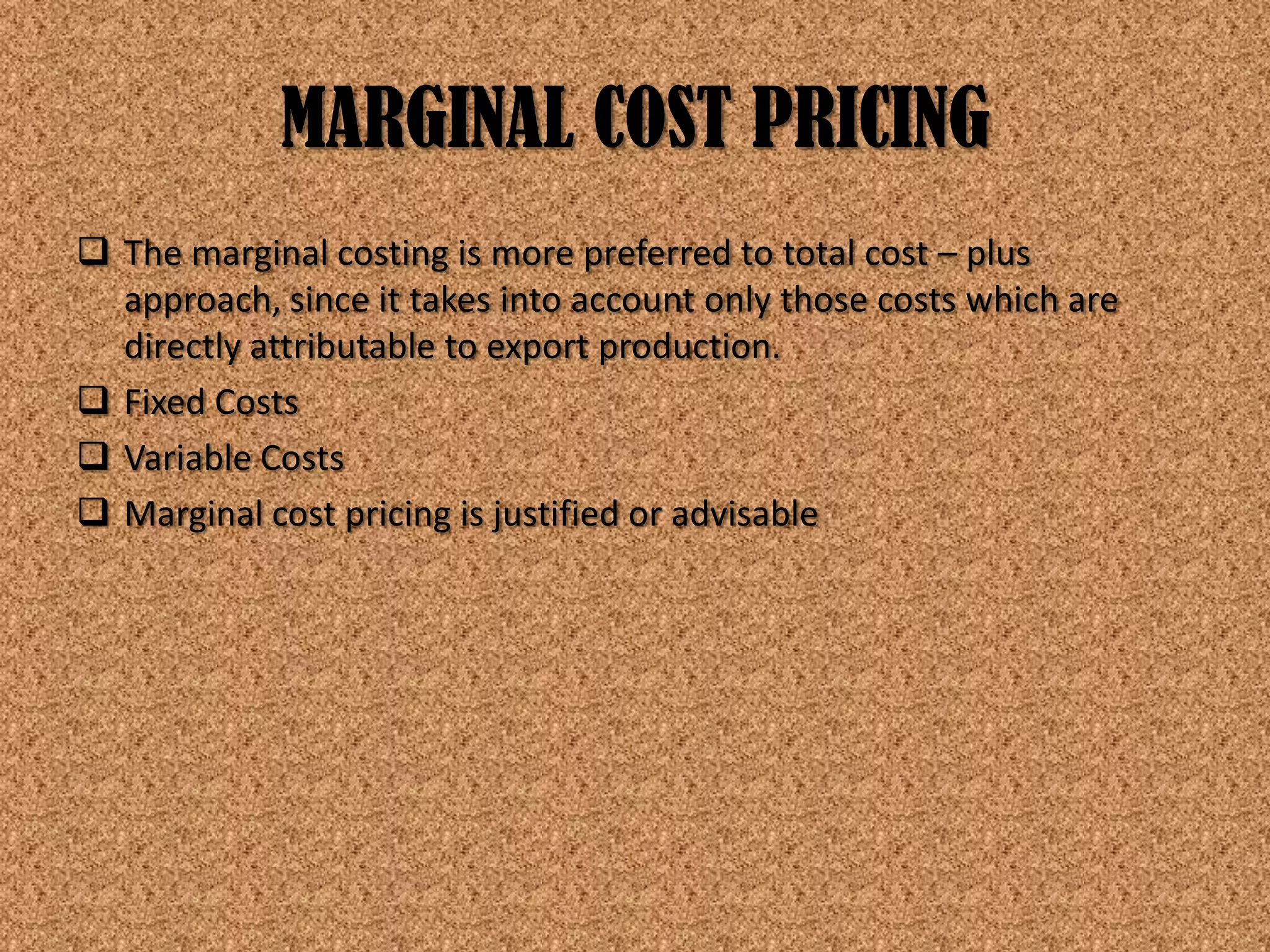
MARGINAL COST PRICING
 The marginal costing is more preferred to total cost – plus
  approach, since it takes into account only those costs which are
  directly attributable to export production.
 Fixed Costs
 Variable Costs
 Marginal cost pricing is justified or advisable
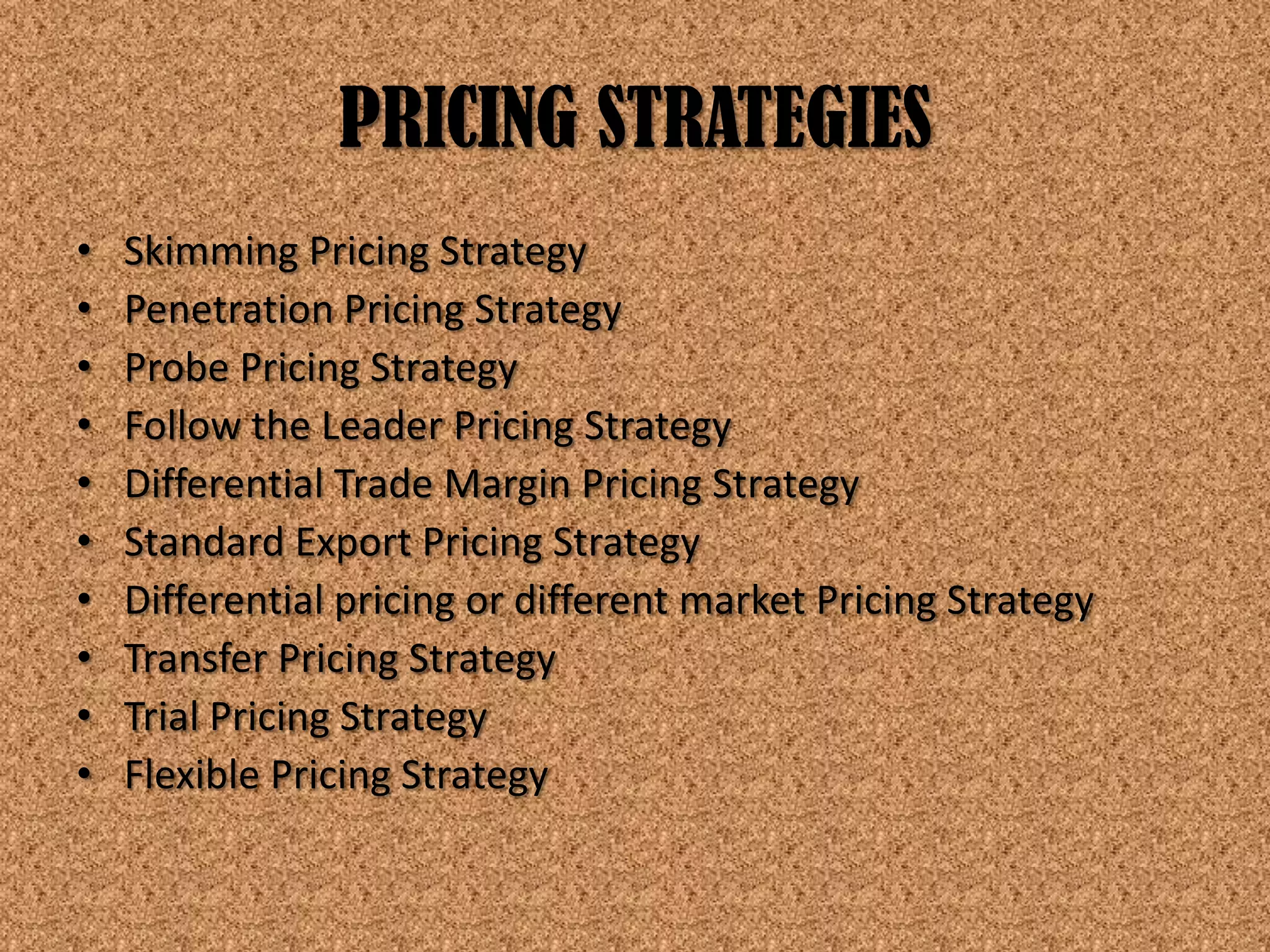
PRICING STRATEGIES
•   Skimming Pricing Strategy
•   Penetration Pricing Strategy
•   Probe Pricing Strategy
•   Follow the Leader Pricing Strategy
•   Differential Trade Margin Pricing Strategy
•   Standard Export Pricing Strategy
•   Differential pricing or different market Pricing Strategy
•   Transfer Pricing Strategy
•   Trial Pricing Strategy
•   Flexible Pricing Strategy
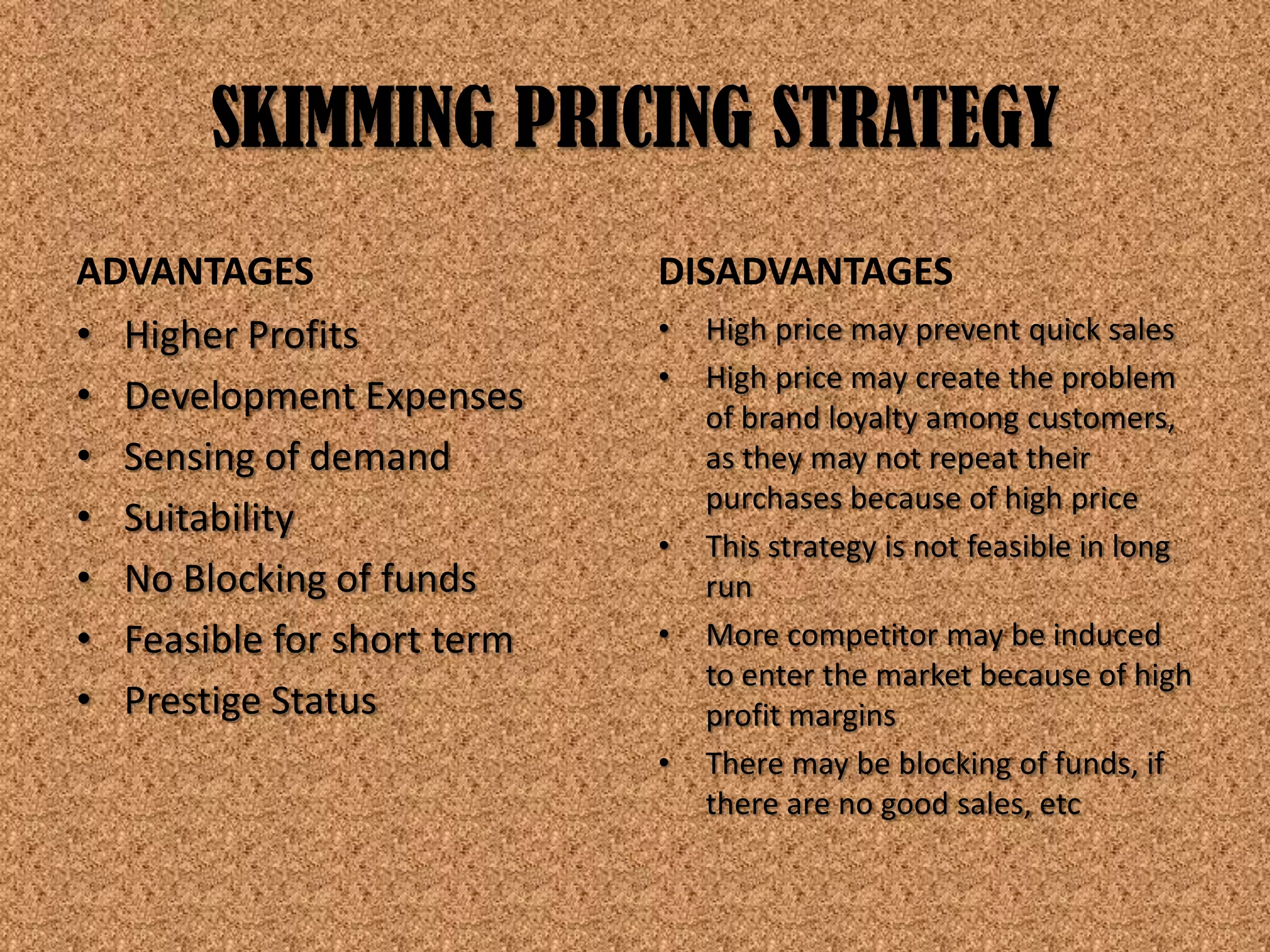
SKIMMING PRICING STRATEGY
ADVANTAGES                  DISADVANTAGES
• Higher Profits            •   High price may prevent quick sales
                            •   High price may create the problem
• Development Expenses          of brand loyalty among customers,
• Sensing of demand             as they may not repeat their
                                purchases because of high price
• Suitability
                            •   This strategy is not feasible in long
• No Blocking of funds          run
• Feasible for short term   •   More competitor may be induced
                                to enter the market because of high
• Prestige Status               profit margins
                            •   There may be blocking of funds, if
                                there are no good sales, etc
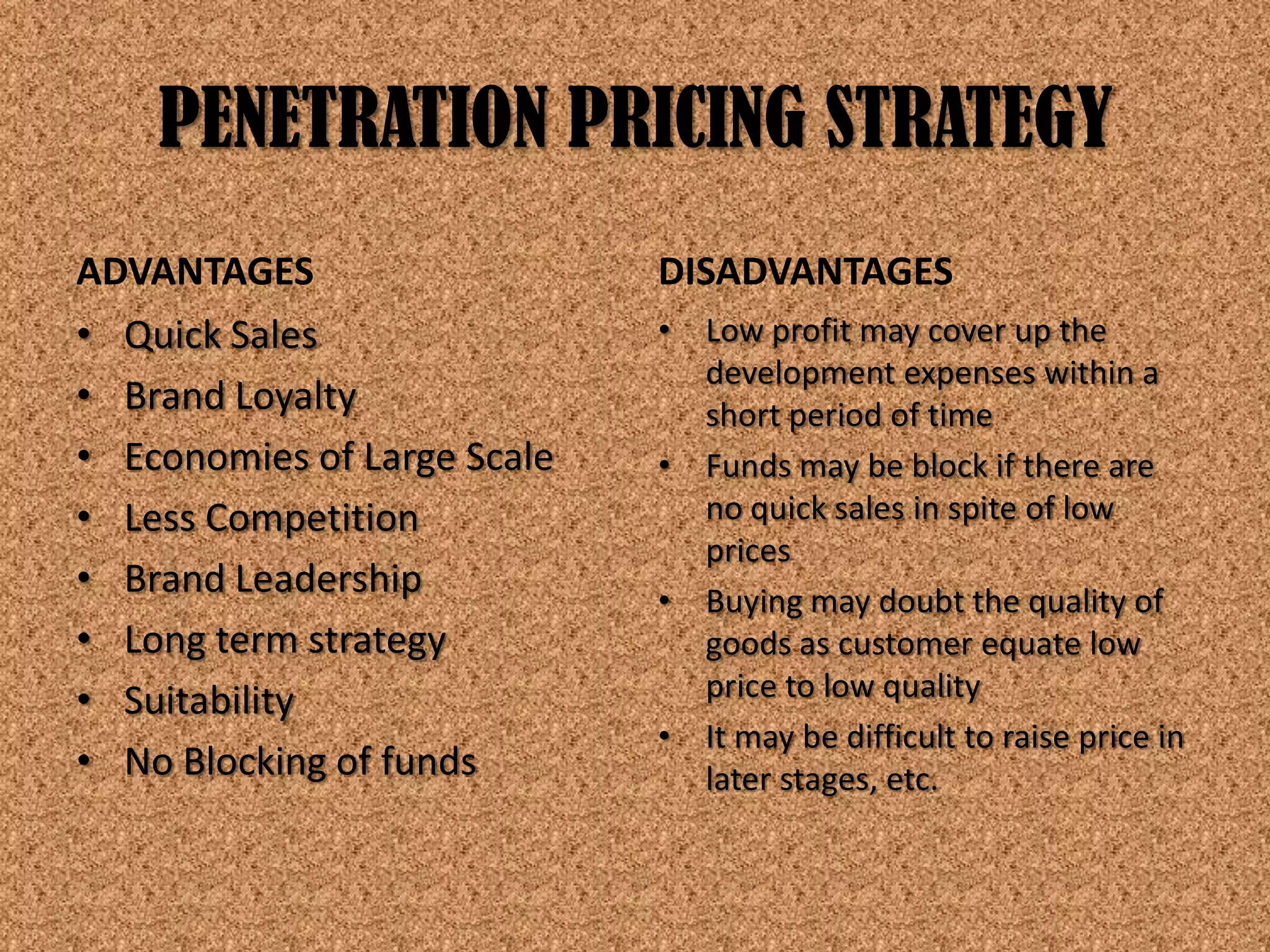
PENETRATION PRICING STRATEGY
ADVANTAGES                   DISADVANTAGES
• Quick Sales                • Low profit may cover up the
                               development expenses within a
• Brand Loyalty                short period of time
• Economies of Large Scale   • Funds may be block if there are
• Less Competition             no quick sales in spite of low
                               prices
• Brand Leadership           • Buying may doubt the quality of
• Long term strategy           goods as customer equate low
• Suitability                  price to low quality
                             • It may be difficult to raise price in
• No Blocking of funds         later stages, etc.
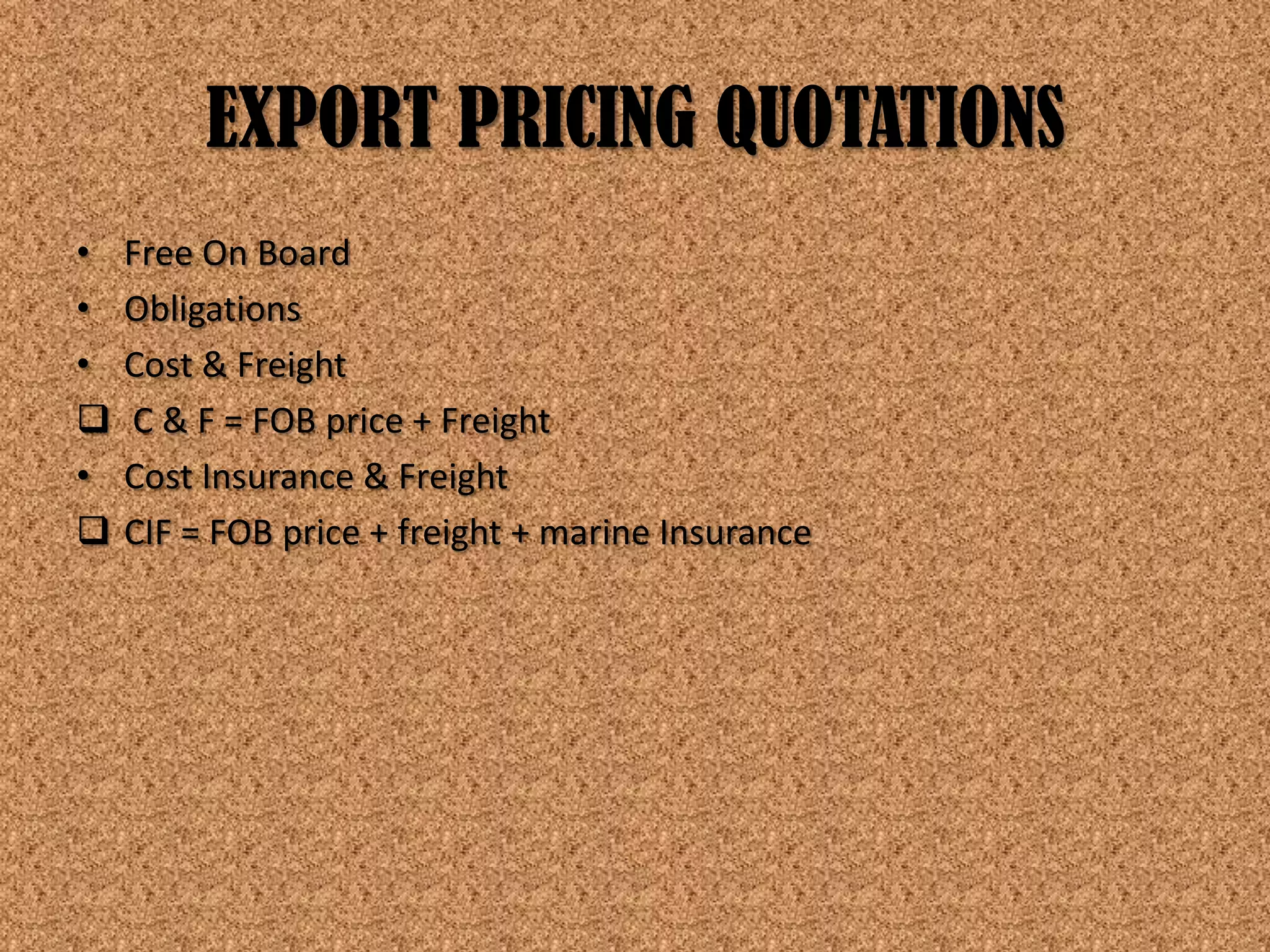
EXPORT PRICING QUOTATIONS
•   Free On Board
•   Obligations
•   Cost & Freight
   C & F = FOB price + Freight
•   Cost Insurance & Freight
   CIF = FOB price + freight + marine Insurance
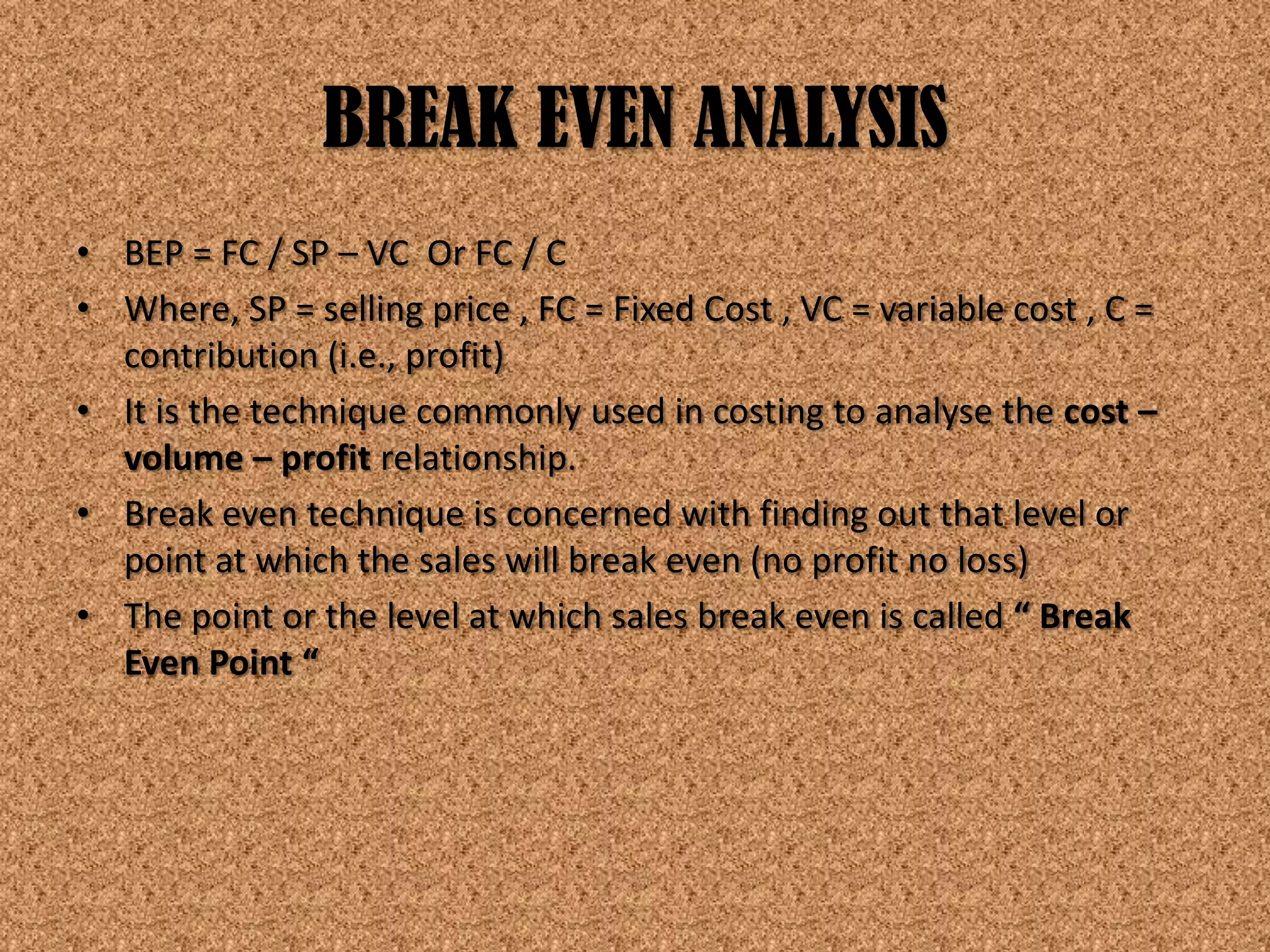
BREAK EVEN ANALYSIS
• BEP = FC / SP – VC Or FC / C
• Where, SP = selling price , FC = Fixed Cost , VC = variable cost , C =
  contribution (i.e., profit)
• It is the technique commonly used in costing to analyse the cost –
  volume – profit relationship.
• Break even technique is concerned with finding out that level or
  point at which the sales will break even (no profit no loss)
• The point or the level at which sales break even is called “ Break
  Even Point “

Chapter 6 . export pricing

  • 1.
    EXPORT PRICING Price is an imp element of marketing mix. Developing a right pricing strategy is critical to an organization’s success. Price is a significant variable, as in many cases; It is the main factor affecting consumer choice. Its significance is further emphasized as it is only element of marketing mix that generates revenues.
  • 2.
    FACTORS DETERMINING INTERNAL FACTORS EXTERNAL FACTORS • Costs • Competition • Objectives of the Firm • Demand • Product • Consumers • Image of the Firm • Economic Conditions • Promotional Firm • Channel Intermediaries • Product Life Cycle • Market Opportunities
  • 3.
    BASIC DATA REQUIRED I.Product Information III. Other Relevant Information  Cost of production  Company’s policy  Cost of distribution  Political Restrictions on trade  Nature of the Product  Bilateral / multilateral  Nature of Demand Agreements II. Market information  Market structure  Sales in units and rupees  Terms of payment offered by  Availability of shipping or air competitors services  Terms of payment required by  Warehousing facilities and importers costs  Price of substitutes  Tariffs & Quotas  Trade preferences and Trade Agreements, etc
  • 4.
    MARGINAL COST PRICING The marginal costing is more preferred to total cost – plus approach, since it takes into account only those costs which are directly attributable to export production.  Fixed Costs  Variable Costs  Marginal cost pricing is justified or advisable
  • 5.
    PRICING STRATEGIES • Skimming Pricing Strategy • Penetration Pricing Strategy • Probe Pricing Strategy • Follow the Leader Pricing Strategy • Differential Trade Margin Pricing Strategy • Standard Export Pricing Strategy • Differential pricing or different market Pricing Strategy • Transfer Pricing Strategy • Trial Pricing Strategy • Flexible Pricing Strategy
  • 6.
    SKIMMING PRICING STRATEGY ADVANTAGES DISADVANTAGES • Higher Profits • High price may prevent quick sales • High price may create the problem • Development Expenses of brand loyalty among customers, • Sensing of demand as they may not repeat their purchases because of high price • Suitability • This strategy is not feasible in long • No Blocking of funds run • Feasible for short term • More competitor may be induced to enter the market because of high • Prestige Status profit margins • There may be blocking of funds, if there are no good sales, etc
  • 7.
    PENETRATION PRICING STRATEGY ADVANTAGES DISADVANTAGES • Quick Sales • Low profit may cover up the development expenses within a • Brand Loyalty short period of time • Economies of Large Scale • Funds may be block if there are • Less Competition no quick sales in spite of low prices • Brand Leadership • Buying may doubt the quality of • Long term strategy goods as customer equate low • Suitability price to low quality • It may be difficult to raise price in • No Blocking of funds later stages, etc.
  • 8.
    EXPORT PRICING QUOTATIONS • Free On Board • Obligations • Cost & Freight  C & F = FOB price + Freight • Cost Insurance & Freight  CIF = FOB price + freight + marine Insurance
  • 9.
    BREAK EVEN ANALYSIS •BEP = FC / SP – VC Or FC / C • Where, SP = selling price , FC = Fixed Cost , VC = variable cost , C = contribution (i.e., profit) • It is the technique commonly used in costing to analyse the cost – volume – profit relationship. • Break even technique is concerned with finding out that level or point at which the sales will break even (no profit no loss) • The point or the level at which sales break even is called “ Break Even Point “