


Perception
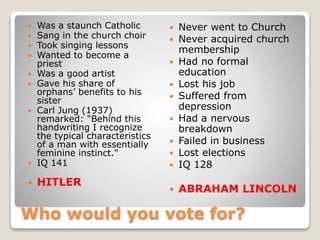
Who would you vote for?
 Was a staunch Catholic
 Sang in the church choir
 Took singing lessons
 Wanted to become a
priest
 Was a good artist
 Gave his share of
orphans’ benefits to his
sister
 Carl Jung (1937)
remarked: "Behind this
handwriting I recognize
the typical characteristics
of a man with essentially
feminine instinct."
 IQ 141
 HITLER
 Never went to Church
 Never acquired church
membership
 Had no formal
education
 Lost his job
 Suffered from
depression
 Had a nervous
breakdown
 Failed in business
 Lost elections
 IQ 128
 ABRAHAM LINCOLN
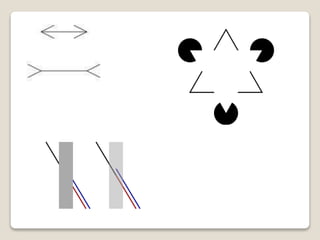
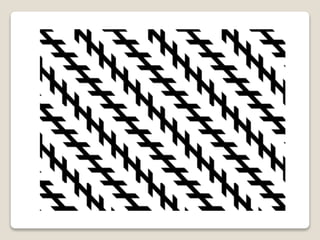
What is Perception
 Act of seeing what is there to be seen
Definitions
Perception: Process by which individuals organize and
interpret their sensory impressions in order to give
meaning to their environment.
Selection, organisation and interpretation of information
What one perceives may be different from perceived
reality. However, the world as it is perceived is the world
that is behaviourally important.
Factors influencing perception:
- The perceiver
- The target
- The situation
The Perceiver
 When an individual looks at the target and attempts to
interpret what he/she observes, that interpretation is
heavily influenced by the person characteristics of the
individual
 You purchase a new car and suddenly notice many of
similar models around
 If hungry, you notice food outlets around you.
 Plastic surgeon notices an imperfect nose!!
 .When you learn a new word, you suddenly find it popping
up in whatever you read!
 Your expectations can distort your perceptions.
The Target
 Characteristics of the target being observed can affect
what is perceived
 Loud people more likely to be noticed
 People dressing different from the crowd are noticed.
 Motion, sounds, size, and other attributes of a target shape
the way we see it.
 Also the relationship of the target to the background:
Objects that are close to each other tend to be perceived
together rather than separately.
 Persons, objects, or events that are similar to each other
also tend to be grouped together.
The situation
 The context in which we see objects or events is important.
 Elements in the surrounding environment influence our
perception.
 E.g. a lady dressed in an evening gown and makeup in a
management class.
 The time at which an object or event is seen can influence
your attention.
Perceptual Selectivity
 Intensity
 Contrast
 Size
 Repetition
 Motion
 Novelty & Familiarity
Perceptual Organisation
 Figure – Ground
 Perceptual Grouping
◦ Closure
◦ Continuity
◦ Proximity
◦ Similarity
 Perceptual Constancy
 Perceptual Context
Theories
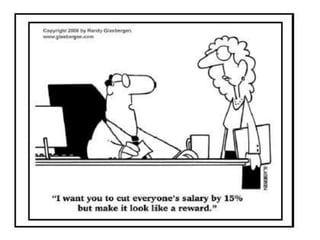
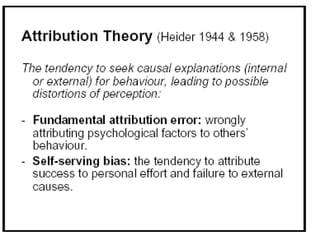
Attribution: We judge people differently, depending on what
meaning we attribute to a given behaviour.
Selective Perception: People selectively interpret what they
see on the basis of their interests, background, experience
& attitudes.
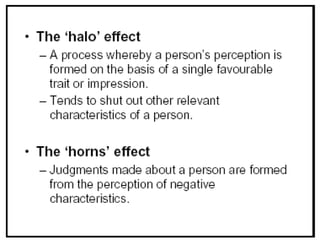
Halo / Horn effect: Drawing a general impression about an
individual on the basis of a single characteristic.
Contrast effects: Evaluation of a person affected by
comparison with another recently met.
Projection: Attributing one’s own characteristic to other
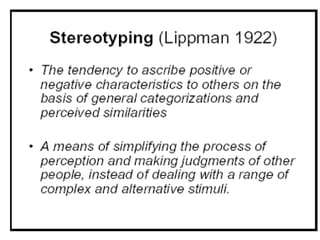
Stereotyping: Judging someone on the basis of one’s
perception of the group to which that person belongs.
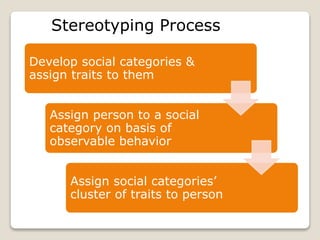
Develop social categories &
assign traits to them
Assign person to a social
category on basis of
observable behavior
Assign social categories’
cluster of traits to person
Stereotyping Process
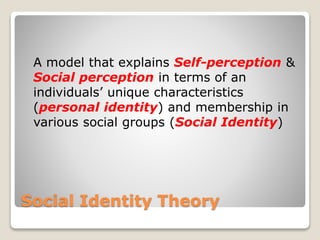
Social Identity Theory
A model that explains Self-perception &
Social perception in terms of an
individuals’ unique characteristics
(personal identity) and membership in
various social groups (Social Identity)
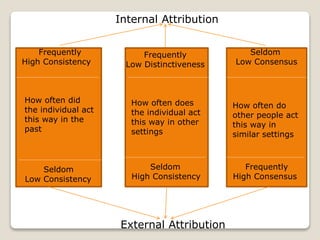
Frequently
High Consistency
Seldom
Low Consistency
How often did
the individual act
this way in the
past
Frequently
Low Distinctiveness
Seldom
High Consistency
How often does
the individual act
this way in other
settings
Seldom
Low Consensus
Frequently
High Consensus
How often do
other people act
this way in
similar settings
External Attribution
Internal Attribution
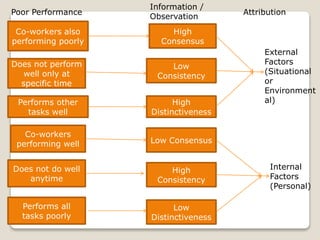
Co-workers also
performing poorly
Low Consensus
Does not perform
well only at
specific time
High
Distinctiveness
Performs other
tasks well
Co-workers
performing well
Does not do well
anytime
Performs all
tasks poorly
High
Consensus
Low
Consistency
High
Consistency
Low
Distinctiveness
Poor Performance
Information /
Observation
Attribution
External
Factors
(Situational
or
Environment
al)
Internal
Factors
(Personal)
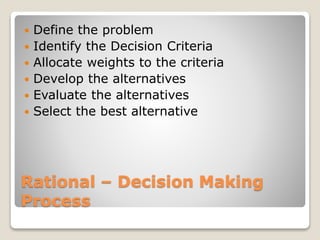
Rational – Decision Making
Process
 Define the problem
 Identify the Decision Criteria
 Allocate weights to the criteria
 Develop the alternatives
 Evaluate the alternatives
 Select the best alternative
Bounded Rationality
 Making decisions by constructing
simplified models that extract essential
features from problems without capturing
all their complexity
◦ Overconfidence Bias
◦ Anchoring Bias
◦ Confirmation Bias
◦ Availability Bias
◦ Representation Bias
Ethics in decision
making..corporate 11.wmv
 Utilitarian
 Rights
 Justice

Chapter 4 perception (2)

  • 1.
  • 2.
    Who would youvote for?  Was a staunch Catholic  Sang in the church choir  Took singing lessons  Wanted to become a priest  Was a good artist  Gave his share of orphans’ benefits to his sister  Carl Jung (1937) remarked: "Behind this handwriting I recognize the typical characteristics of a man with essentially feminine instinct."  IQ 141  HITLER  Never went to Church  Never acquired church membership  Had no formal education  Lost his job  Suffered from depression  Had a nervous breakdown  Failed in business  Lost elections  IQ 128  ABRAHAM LINCOLN
  • 6.
    What is Perception Act of seeing what is there to be seen
  • 8.
    Definitions Perception: Process bywhich individuals organize and interpret their sensory impressions in order to give meaning to their environment. Selection, organisation and interpretation of information What one perceives may be different from perceived reality. However, the world as it is perceived is the world that is behaviourally important. Factors influencing perception: - The perceiver - The target - The situation
  • 9.
    The Perceiver  Whenan individual looks at the target and attempts to interpret what he/she observes, that interpretation is heavily influenced by the person characteristics of the individual  You purchase a new car and suddenly notice many of similar models around  If hungry, you notice food outlets around you.  Plastic surgeon notices an imperfect nose!!  .When you learn a new word, you suddenly find it popping up in whatever you read!  Your expectations can distort your perceptions.
  • 10.
    The Target  Characteristicsof the target being observed can affect what is perceived  Loud people more likely to be noticed  People dressing different from the crowd are noticed.  Motion, sounds, size, and other attributes of a target shape the way we see it.  Also the relationship of the target to the background: Objects that are close to each other tend to be perceived together rather than separately.  Persons, objects, or events that are similar to each other also tend to be grouped together.
  • 11.
    The situation  Thecontext in which we see objects or events is important.  Elements in the surrounding environment influence our perception.  E.g. a lady dressed in an evening gown and makeup in a management class.  The time at which an object or event is seen can influence your attention.
  • 12.
    Perceptual Selectivity  Intensity Contrast  Size  Repetition  Motion  Novelty & Familiarity
  • 17.
    Perceptual Organisation  Figure– Ground  Perceptual Grouping ◦ Closure ◦ Continuity ◦ Proximity ◦ Similarity  Perceptual Constancy  Perceptual Context
  • 23.
    Theories Attribution: We judgepeople differently, depending on what meaning we attribute to a given behaviour. Selective Perception: People selectively interpret what they see on the basis of their interests, background, experience & attitudes. Halo / Horn effect: Drawing a general impression about an individual on the basis of a single characteristic. Contrast effects: Evaluation of a person affected by comparison with another recently met. Projection: Attributing one’s own characteristic to other Stereotyping: Judging someone on the basis of one’s perception of the group to which that person belongs.
  • 25.
    Develop social categories& assign traits to them Assign person to a social category on basis of observable behavior Assign social categories’ cluster of traits to person Stereotyping Process
  • 26.
    Social Identity Theory Amodel that explains Self-perception & Social perception in terms of an individuals’ unique characteristics (personal identity) and membership in various social groups (Social Identity)
  • 29.
    Frequently High Consistency Seldom Low Consistency Howoften did the individual act this way in the past Frequently Low Distinctiveness Seldom High Consistency How often does the individual act this way in other settings Seldom Low Consensus Frequently High Consensus How often do other people act this way in similar settings External Attribution Internal Attribution
  • 30.
    Co-workers also performing poorly LowConsensus Does not perform well only at specific time High Distinctiveness Performs other tasks well Co-workers performing well Does not do well anytime Performs all tasks poorly High Consensus Low Consistency High Consistency Low Distinctiveness Poor Performance Information / Observation Attribution External Factors (Situational or Environment al) Internal Factors (Personal)
  • 31.
    Rational – DecisionMaking Process  Define the problem  Identify the Decision Criteria  Allocate weights to the criteria  Develop the alternatives  Evaluate the alternatives  Select the best alternative
  • 32.
    Bounded Rationality  Makingdecisions by constructing simplified models that extract essential features from problems without capturing all their complexity ◦ Overconfidence Bias ◦ Anchoring Bias ◦ Confirmation Bias ◦ Availability Bias ◦ Representation Bias
  • 33.
    Ethics in decision making..corporate11.wmv  Utilitarian  Rights  Justice

Editor's Notes

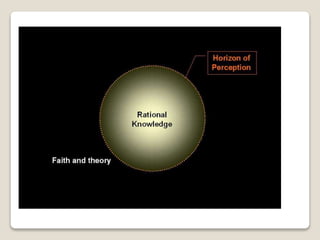
  • #6 Rationality and Certainty As Rational Beings we have the need to base our decisions on items and concepts which are absolute and certain.Things we know Our universe is, beyond the horizons of our perceptions and in many dimensions unknowable: Spatially, sub-atomically or historically it cannot be directly perceived, only inferred or hypothecated. Things we cannot know
  • #27 Personal identity – Unique characteristics & experiences, physical appearance, personality traits & special talents. Social identity – Self-perception as members of various social groups
  • #28 Primacy Effect Recency Effect
  • #31 Kelleys’ Theory of Attribution
  • #32 Discrepancy between existing & desired state of affairs
  • #33 A tendency to fixate on initial information from which we then fail to adequately adjust for subsequent information. The tendency to seek out information that reaffirms the past choices & to discount information that contradicts past judgments. We selectively gather information The tendency for people to base their judgments on information that is readily available to them. Assessing the likelihood of an occurrence by inappropriately considering the current situation as identical to ones in the past.
  • #34 Utilitarian values mean that the decisions should produce the greatest good for the greatest number of people. Moral rights values mean that the decisions should protect the fundamental rights and privileges of those affected. Distributive Justice values mean that the decisions should allocate benefits and harms among those affected by the decision in a fair and equitable manner. Inequality is acceptable if Everyone has equal access to more favored positions in society (Everyone has equal access to well-paying jobs & other values posittions) Inequalities are in the best interest of the least well-off in society (Some people can receive greater rewards than others if this benefits the less-off)