Chapter 20:
The Rise of an Urban
Order, 1870-1914
Experience History
DAVIDSON • GIENAPP • HEYRMAN • LYTLE • STOFF

© 2011 The McGraw-Hill Companies, Inc. All Rights Reserved.
2

Preview


“By the late nineteenth century, the country was
in the midst of an urban explosion. Industrial
cities of unparalleled size and diversity were
transforming American life. They lured people
from all over the globe, created tensions
between natives and newcomers, reshaped the
social order. …For so many Americans, a new
urban age was dawning. The golden door of
opportunity opened onto the city.”

© 2011 The McGraw-Hill Companies, Inc. All Rights Reserved.
3

The Highlights
A New Urban Age
 Running and Reforming the City
 City Life
 City Culture


© 2011 The McGraw-Hill Companies, Inc. All Rights Reserved.
4

A New Urban Age


The Urban Explosion
– Cities’ relations to regions around them shaped
natural and economic environments



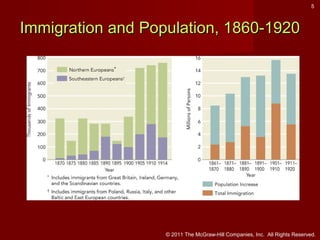
The Great Global Migration
–
–
–

Push and pull factors
Chinese immigrants
The “new” immigration from southern and eastern
Europe in the 1880s

© 2011 The McGraw-Hill Companies, Inc. All Rights Reserved.
5

Immigration and Population, 1860-1920

© 2011 The McGraw-Hill Companies, Inc. All Rights Reserved.
6



Holding the City Together
–
–
–
–



Patterns of settlement
Suburban homes
Role of electricity
Mass transit freed the middle class and poor to live
miles from work

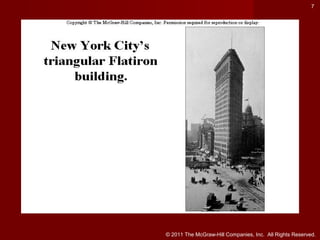
Bridges and Skyscrapers
– Suspension bridges
– Cloudscrapers: open floors ideal for warehouses,
office buildings, and department stores

© 2011 The McGraw-Hill Companies, Inc. All Rights Reserved.
7

© 2011 The McGraw-Hill Companies, Inc. All Rights Reserved.
8



The Urban Environment: Slum and Tenement
– Perils of the slum neighborhood
– Dumbbell tenement spread “like a scab”

“Far below the skyscrapers lay the slums and
tenements of the inner city. In cramped rooms and
sunless hallways, along narrow alleys and in
flooded basements lived the city’s poor.”

© 2011 The McGraw-Hill Companies, Inc. All Rights Reserved.
9

Running and Reforming the City


Boss Rule
– The boss as entrepreneur
– A crude welfare system



Rewards, Costs, and Accomplishments
– Boss William Tweed and Tammany Hall
– Bosses guided immigrants and helped
underprivileged up from poverty
– Toll was often outrageous

© 2011 The McGraw-Hill Companies, Inc. All Rights Reserved.
10



Nativism, Revivals, and the Social Gospel
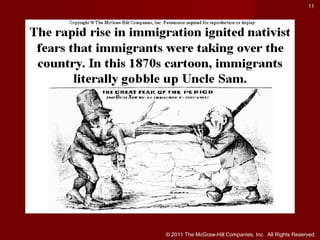
– Nativism: a defensive and fearful nationalism
– Chinese Exclusion Act (1882): banned the entry of
Chinese laborers
– Social Gospel: focused on improving the conditions of
society



The Social Settlement Movement
– The settlement house
– Lobbied for social legislation to improve housing,
women’s working conditions, and public schools

© 2011 The McGraw-Hill Companies, Inc. All Rights Reserved.
11

© 2011 The McGraw-Hill Companies, Inc. All Rights Reserved.
12

City Life


The Immigrant in the City
–
–
–
–
–



Ethnic neighborhoods
Adapting to America
Family life
Special situation of the Chinese
Assimilation

Urban Middle-Class Life
– The home as haven and status symbol
– The middle-class homemaker
© 2011 The McGraw-Hill Companies, Inc. All Rights Reserved.
13



Victorianism and the Pursuit of Virtue
– Woman’s Christian Temperance Union
– Comstock Law (1873) fought pornography



Challenges to Convention
– Victoria Woodhull
– Urban homosexual communities
“Middle-class life reflected a code of behavior called
Victorianism, named for Britain’s long-reigning
Queen Victoria (1837-1901). It emerged in the 1830s
and 1840s as part of an effort to tame the turbulent
urban-industrial society developing in Europe.”
© 2011 The McGraw-Hill Companies, Inc. All Rights Reserved.
14

City Culture


Public Education in an Urban Industrial World
– 1870-1900: an educational awakening occurred
– Schools taught conformity and values in addition to
reading, writing, and arithmetic



Higher Learning and the Rise of the Professional
– Postgraduate education
– Black colleges; professional schools



Higher Education for Women
– By 1910, 40 percent of college students were women
© 2011 The McGraw-Hill Companies, Inc. All Rights Reserved.
15



A Culture of Consumption
– Department stores
– Chain stores and mail-order houses



Leisure
– Sports and class distinctions
– Spectator sports for the urban masses



City Entertainment at Home and on the Road
– The streets, the saloon, dance halls, boxing
exhibitions, concerts and theater
– Popular music and the coming of jazz

© 2011 The McGraw-Hill Companies, Inc. All Rights Reserved.

Chapter 20

  • 1.
    Chapter 20: The Riseof an Urban Order, 1870-1914 Experience History DAVIDSON • GIENAPP • HEYRMAN • LYTLE • STOFF © 2011 The McGraw-Hill Companies, Inc. All Rights Reserved.
  • 2.
    2 Preview  “By the latenineteenth century, the country was in the midst of an urban explosion. Industrial cities of unparalleled size and diversity were transforming American life. They lured people from all over the globe, created tensions between natives and newcomers, reshaped the social order. …For so many Americans, a new urban age was dawning. The golden door of opportunity opened onto the city.” © 2011 The McGraw-Hill Companies, Inc. All Rights Reserved.
  • 3.
    3 The Highlights A NewUrban Age  Running and Reforming the City  City Life  City Culture  © 2011 The McGraw-Hill Companies, Inc. All Rights Reserved.
  • 4.
    4 A New UrbanAge  The Urban Explosion – Cities’ relations to regions around them shaped natural and economic environments  The Great Global Migration – – – Push and pull factors Chinese immigrants The “new” immigration from southern and eastern Europe in the 1880s © 2011 The McGraw-Hill Companies, Inc. All Rights Reserved.
  • 5.
    5 Immigration and Population,1860-1920 © 2011 The McGraw-Hill Companies, Inc. All Rights Reserved.
  • 6.
    6  Holding the CityTogether – – – –  Patterns of settlement Suburban homes Role of electricity Mass transit freed the middle class and poor to live miles from work Bridges and Skyscrapers – Suspension bridges – Cloudscrapers: open floors ideal for warehouses, office buildings, and department stores © 2011 The McGraw-Hill Companies, Inc. All Rights Reserved.
  • 7.
    7 © 2011 TheMcGraw-Hill Companies, Inc. All Rights Reserved.
  • 8.
    8  The Urban Environment:Slum and Tenement – Perils of the slum neighborhood – Dumbbell tenement spread “like a scab” “Far below the skyscrapers lay the slums and tenements of the inner city. In cramped rooms and sunless hallways, along narrow alleys and in flooded basements lived the city’s poor.” © 2011 The McGraw-Hill Companies, Inc. All Rights Reserved.
  • 9.
    9 Running and Reformingthe City  Boss Rule – The boss as entrepreneur – A crude welfare system  Rewards, Costs, and Accomplishments – Boss William Tweed and Tammany Hall – Bosses guided immigrants and helped underprivileged up from poverty – Toll was often outrageous © 2011 The McGraw-Hill Companies, Inc. All Rights Reserved.
  • 10.
    10  Nativism, Revivals, andthe Social Gospel – Nativism: a defensive and fearful nationalism – Chinese Exclusion Act (1882): banned the entry of Chinese laborers – Social Gospel: focused on improving the conditions of society  The Social Settlement Movement – The settlement house – Lobbied for social legislation to improve housing, women’s working conditions, and public schools © 2011 The McGraw-Hill Companies, Inc. All Rights Reserved.
  • 11.
    11 © 2011 TheMcGraw-Hill Companies, Inc. All Rights Reserved.
  • 12.
    12 City Life  The Immigrantin the City – – – – –  Ethnic neighborhoods Adapting to America Family life Special situation of the Chinese Assimilation Urban Middle-Class Life – The home as haven and status symbol – The middle-class homemaker © 2011 The McGraw-Hill Companies, Inc. All Rights Reserved.
  • 13.
    13  Victorianism and thePursuit of Virtue – Woman’s Christian Temperance Union – Comstock Law (1873) fought pornography  Challenges to Convention – Victoria Woodhull – Urban homosexual communities “Middle-class life reflected a code of behavior called Victorianism, named for Britain’s long-reigning Queen Victoria (1837-1901). It emerged in the 1830s and 1840s as part of an effort to tame the turbulent urban-industrial society developing in Europe.” © 2011 The McGraw-Hill Companies, Inc. All Rights Reserved.
  • 14.
    14 City Culture  Public Educationin an Urban Industrial World – 1870-1900: an educational awakening occurred – Schools taught conformity and values in addition to reading, writing, and arithmetic  Higher Learning and the Rise of the Professional – Postgraduate education – Black colleges; professional schools  Higher Education for Women – By 1910, 40 percent of college students were women © 2011 The McGraw-Hill Companies, Inc. All Rights Reserved.
  • 15.
    15  A Culture ofConsumption – Department stores – Chain stores and mail-order houses  Leisure – Sports and class distinctions – Spectator sports for the urban masses  City Entertainment at Home and on the Road – The streets, the saloon, dance halls, boxing exhibitions, concerts and theater – Popular music and the coming of jazz © 2011 The McGraw-Hill Companies, Inc. All Rights Reserved.