Effects of Industrialization on the United States:
    Turn of the 20th century age of expansion and
                     progressivism
• All of the following increased during the period
  after the Civil War:
  – Natural resources
  – Inventions
  – Population in cities
     • This leads to advances in technology
• Such increases brought about huge social issues
  never before experienced in the United States:
  – The demand for newly invented products led to an
    increase in production which in turn led to an increase in
    factory production and therefore, an increase in city
    populations
         – Structurally and logistically, cities were not prepared to accommodate so
           many people
         – Sanitation and garbage removal became a major issue
         – Crime increased
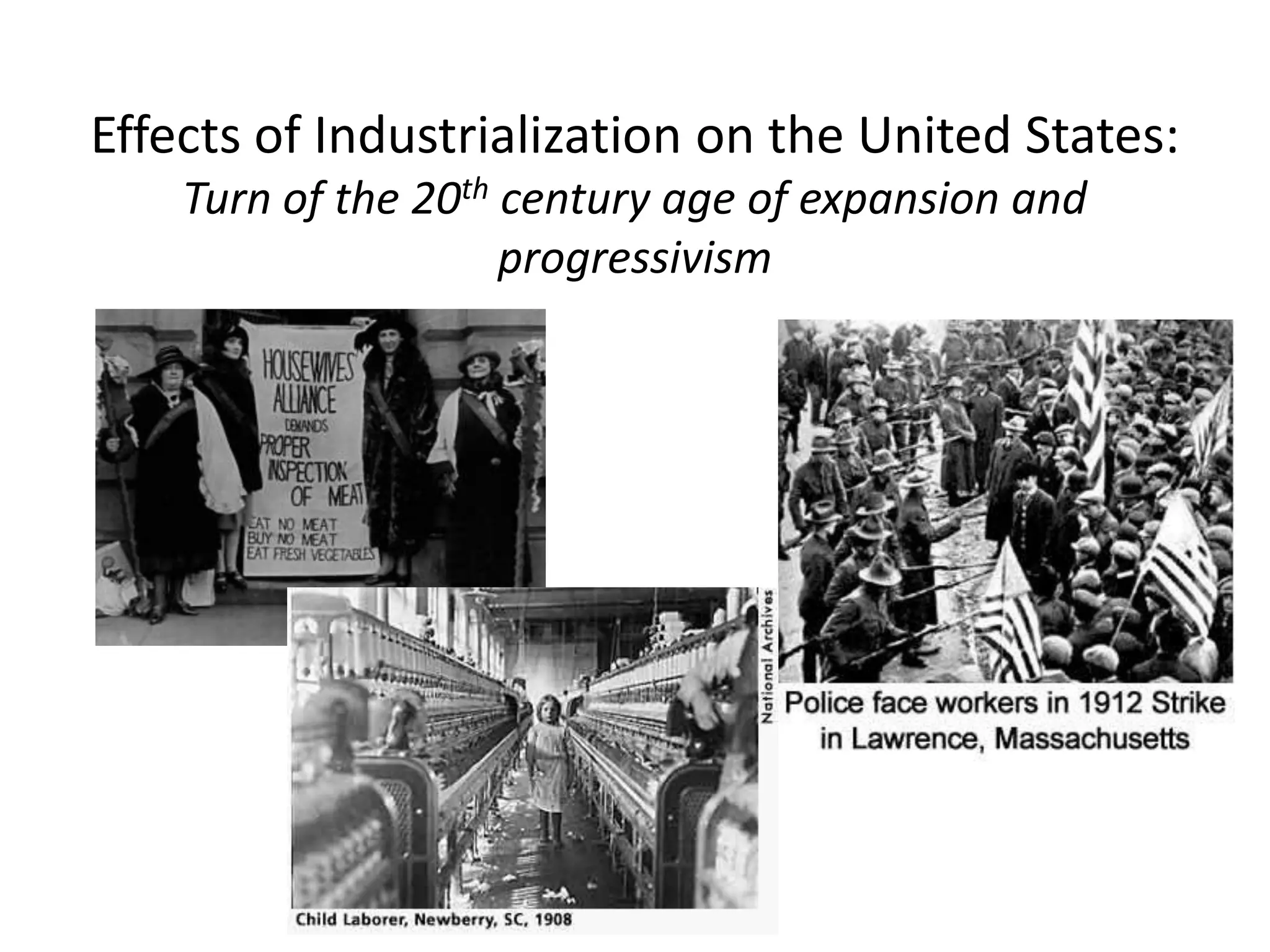
         – Factory work was long, tiring, dangerous, difficult, and it paid low wages
The age of inventions explodes during the
late 1800s:
• 1876- Edison invented the Light Bulb
   – Then he began to create power plants to
     make electricity
• 1890- electricity is used in many homes
• 1876- Alex. Graham Bell invented the
  telephone
• These changes result in more jobs in
  factories
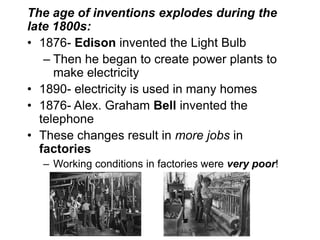
  – Working conditions in factories were very poor!
Workers are exploited and labor unions
emerge:
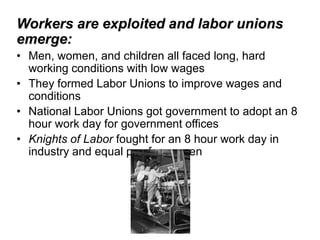
• Men, women, and children all faced long, hard
  working conditions with low wages
• They formed Labor Unions to improve wages and
  conditions
• National Labor Unions got government to adopt an 8
  hour work day for government offices
• Knights of Labor fought for an 8 hour work day in
  industry and equal pay for women
Union movements diverge and union
strikes turn Violent:
• Unions formed in the 1880s to help fight for worker’s rights
   – AFL – American Federation of Labor – trade and craft
     union led by Samuel Gompers
      • Collective bargaining – group agreements between workers
        and employers
   – ARU – American Railway Union – led Eugene V. Debs
• Many unions believed problems were because of the
  American economic system:
      • Private ownership and free competition led to differences
        in classes and poor working conditions
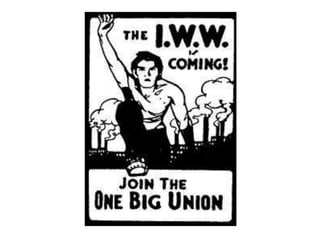
   – IWW – Industrial Workers of the World – wanted
     socialism
Unions Turn Violent continued…
• Many people believed in socialism - government control
  of business and equal wealth for all
• Unions used strikes to improve their conditions – strikes
  sometimes became violent
• Companies hired replacement workers (scabs) to
  work…breaking the strike


     The role of women and government
                   change:
• Most women were not allowed in unions but they still
  helped to improve working conditions
• The government often forced workers back to work if the
  strike hurt the economy

Effects of industrialization ppt

  • 1.
    Effects of Industrializationon the United States: Turn of the 20th century age of expansion and progressivism
  • 2.
    • All ofthe following increased during the period after the Civil War: – Natural resources – Inventions – Population in cities • This leads to advances in technology • Such increases brought about huge social issues never before experienced in the United States: – The demand for newly invented products led to an increase in production which in turn led to an increase in factory production and therefore, an increase in city populations – Structurally and logistically, cities were not prepared to accommodate so many people – Sanitation and garbage removal became a major issue – Crime increased – Factory work was long, tiring, dangerous, difficult, and it paid low wages
  • 3.
    The age ofinventions explodes during the late 1800s: • 1876- Edison invented the Light Bulb – Then he began to create power plants to make electricity • 1890- electricity is used in many homes • 1876- Alex. Graham Bell invented the telephone • These changes result in more jobs in factories – Working conditions in factories were very poor!
  • 4.
    Workers are exploitedand labor unions emerge: • Men, women, and children all faced long, hard working conditions with low wages • They formed Labor Unions to improve wages and conditions • National Labor Unions got government to adopt an 8 hour work day for government offices • Knights of Labor fought for an 8 hour work day in industry and equal pay for women
  • 6.
    Union movements divergeand union strikes turn Violent: • Unions formed in the 1880s to help fight for worker’s rights – AFL – American Federation of Labor – trade and craft union led by Samuel Gompers • Collective bargaining – group agreements between workers and employers – ARU – American Railway Union – led Eugene V. Debs • Many unions believed problems were because of the American economic system: • Private ownership and free competition led to differences in classes and poor working conditions – IWW – Industrial Workers of the World – wanted socialism
  • 7.
    Unions Turn Violentcontinued… • Many people believed in socialism - government control of business and equal wealth for all • Unions used strikes to improve their conditions – strikes sometimes became violent • Companies hired replacement workers (scabs) to work…breaking the strike The role of women and government change: • Most women were not allowed in unions but they still helped to improve working conditions • The government often forced workers back to work if the strike hurt the economy