MADATSST
&
MUKUND INGLE
PRESENT
Mr. Mukund B. Ingle
 Durgacharan Ray (1880), wrote about the city life and described
how even Gods couldn’t keep themselves away from the
fascinations of Urbanization.
 This book describes the attractions of cities as well as frustrations
and crimes of urban area.
 “The city seemed to offer a series of contrasting images and
experiences – wealth and poverty, splendor and dirt, opportunities
and disappointments.”
 The Rise of Industrial Capitalism
 The Establishments of Colonial Rule over large
parts of the World
 The Development of Democratic Ideas.
 Cities appeared first in river valley
 Cities developed when they have sufficient food
supply
 Cities developed due one or two specific reasons
during ancient times i.e. political, trading, religious
etc
 Modern cities are huge in size (metropolises)
combined with political and economical functions
 Urbanization – Development of city or town
 In 1750 the population of London was 675000 that reached
to 4 million by 1880
 London Dockyard was the major earning source in the
early period
 Industries like - Clothing and footwear, wood and
furniture, metals and engineering, printing and stationery,
and precision products such as surgical instruments,
watches, and objects of precious metal helped to growth
of the city
 DuringWorldWars, Motor car and Electrical goods industries
flourished
 CRIMINALS
 As London grew, crime increased. 20000 criminals by 1870s
 It was great concern for Police as they worried about law and
order
 Philanthropists were anxious about public morality
 Industrialists wanted a hard-working and orderly labor force.
 Henry Mayhew wrote about the labors of London and divided the
Criminals into two groups
▪ Skilled Criminals - the cheats and tricksters, pickpockets and
petty thieves
▪ Unskilled Criminals - stealing lead from roofs, food from shops,
lumps of coal, and clothes drying on hedges.
 WOMEN
 With technological developments, women gradually
lost their industrial jobs, and were forced to work
within households.
 As they lost their jobs, they stared working at
domestic level as maids, running lodges, tailoring,
washing or matchbox making.
 During 20th century women got the jobs back in
industries and withdrew from domestic work
 CHILDREN
 Parent pushed their children in low paid work
 They started working in industries and then turned
criminals as it was more profitable.
 Andrew Mearns, described this in his book –The
Bitter Cry of Outcast London
 The Compulsory Elementary Education Act (1870) and
Factory Acts after 1902 kept children away from
Industries and crimes
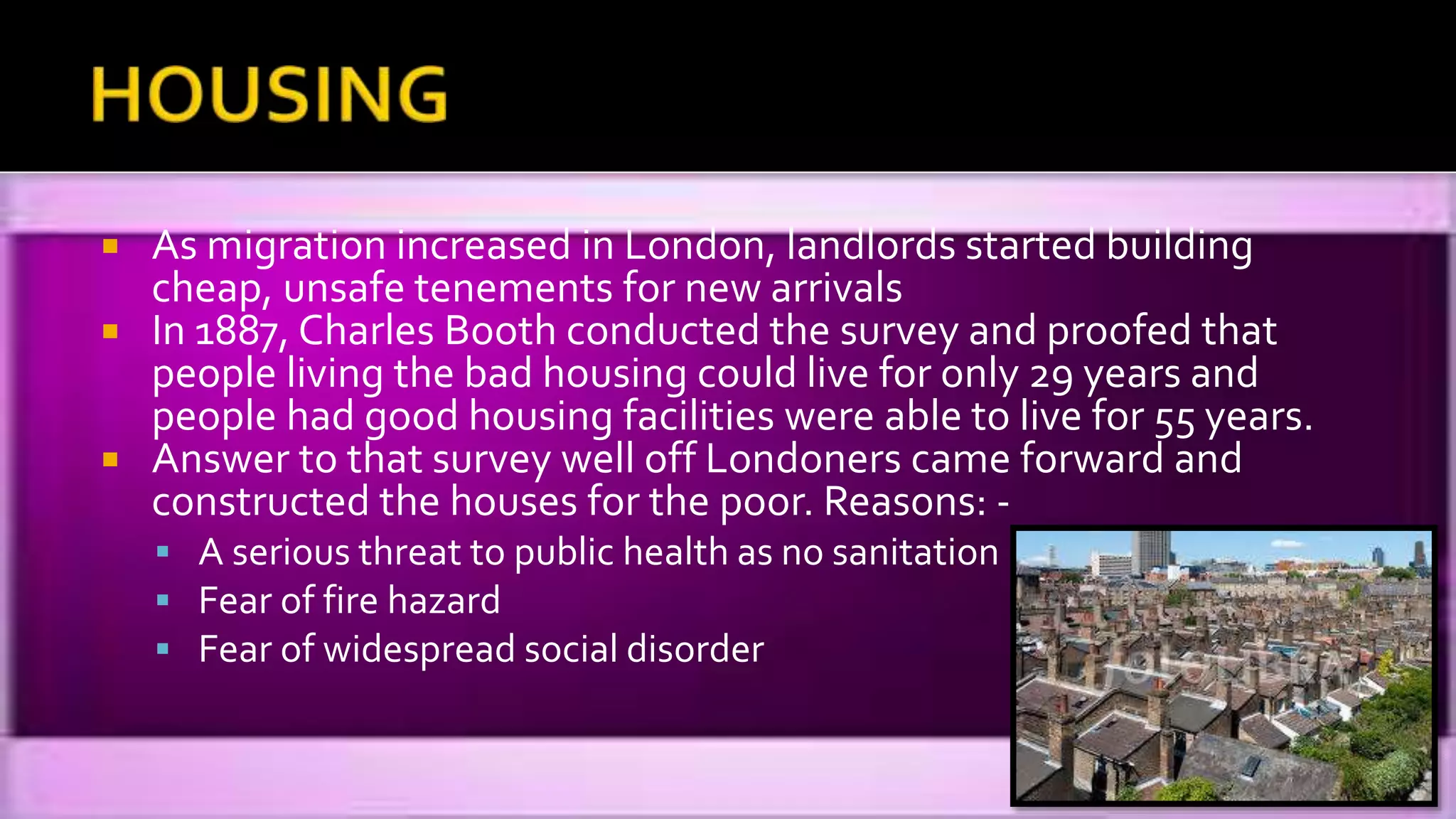
 As migration increased in London, landlords started building
cheap, unsafe tenements for new arrivals
 In 1887, Charles Booth conducted the survey and proofed that
people living the bad housing could live for only 29 years and
people had good housing facilities were able to live for 55 years.
 Answer to that survey well off Londoners came forward and
constructed the houses for the poor. Reasons: -
 A serious threat to public health as no sanitation
 Fear of fire hazard
 Fear of widespread social disorder
 Various steps were taken to clean up London –
 Decongest Localities
 Green the open space
 Reduce population
 Landscape the city
 Building of Apartments
 MajorThree Steps were: -
▪ Green Belts
▪ Gardens
▪ Small Family Cottages
 Architect and planner Ebenezer Howard developed the principle of the Garden City.
 Raymond Unwin and Barry Parker designed the garden city of New Earswick.
 Increasing demand of Transportation was solved in London
with the help of ‘Underground Railway’.
 First Railway – 10 Jan 1863 from Paddington to Farrington.
 People said no to the underground railway at the beginning
due to following reasons:
 Health problems
 Displacement of the people
 People accepted underground railway as:
 Road became empty
 City became vacant as people started shifting away from the city
 Transportation became fast and easy.
 FAMILY –
 Size of the family reduced
 Marriages started breaking down
 Women started facing isolation basically in the middle
and upper class
 Women in lower class had control on the their life as
they earned
 Due to industrialization women lost jobs and
conservatives started restricting the women rights
 SOCIAL MOVEMENTS –
 Individualism ( Demanding more rights to individuals)
 Chartism Movement (Demanding right to vote to all
adults)
 10 – Hour Movement (Limiting working hours in the
factories)
 WOMEN –
 After men, women started demanding right to
vote and right to property
 Women got their job back during war period
 Family became the heart of the market
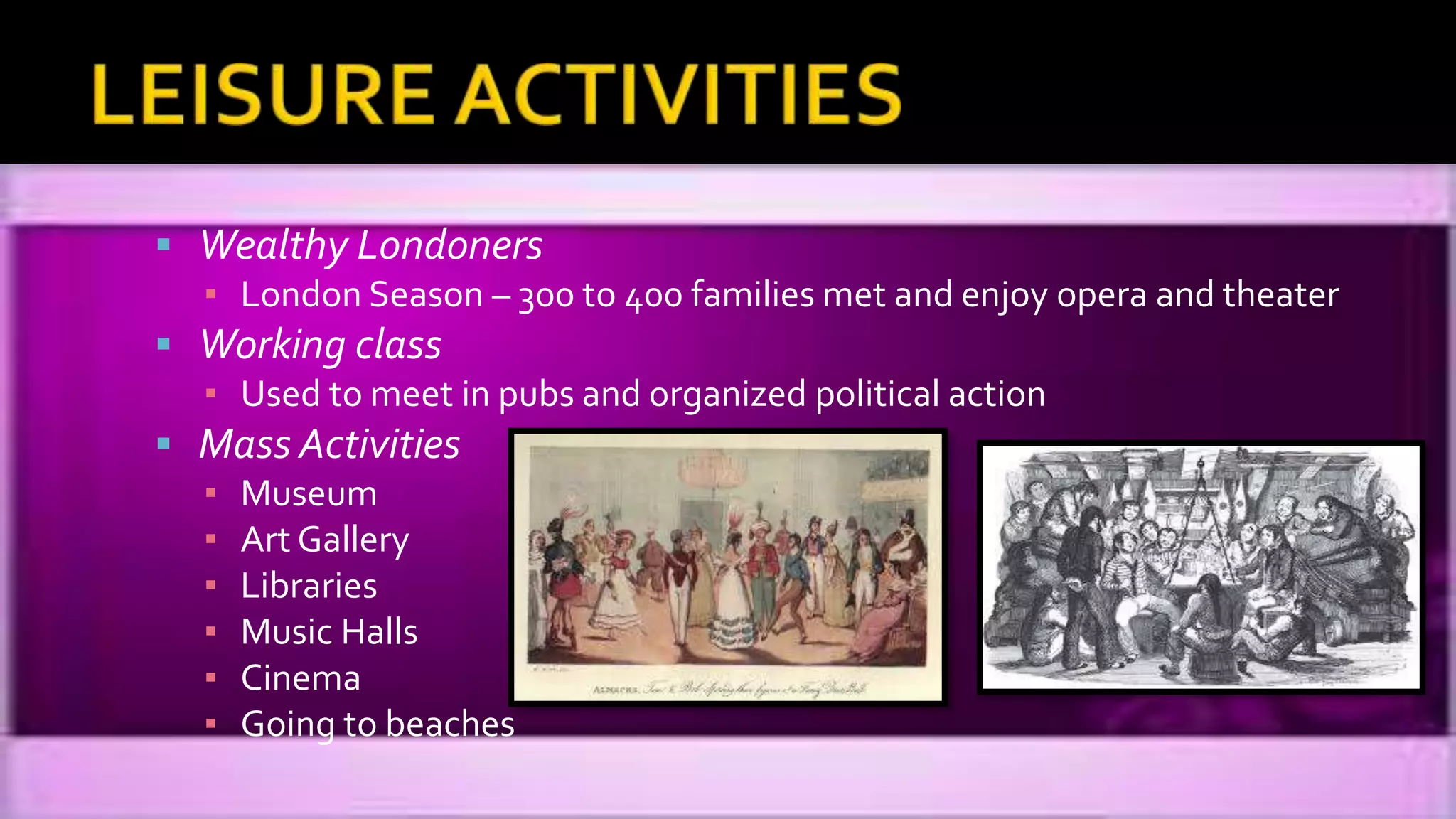
 Wealthy Londoners
▪ London Season – 300 to 400 families met and enjoy opera and theater
 Working class
▪ Used to meet in pubs and organized political action
 Mass Activities
▪ Museum
▪ Art Gallery
▪ Libraries
▪ Music Halls
▪ Cinema
▪ Going to beaches
 The Bloody Sunday of November 1887 – Poor people
marched on the road to demand against their poverty. Police
opened fire on them and brutally suppressed the riot.
 12 - Day strikes at Dockyard in London –Workers of London
Dockyard marched through the city peacefully for their
demands.
THANK YOU

Work, life & leisure part 1

  • 1.
  • 2.
  • 3.
     Durgacharan Ray(1880), wrote about the city life and described how even Gods couldn’t keep themselves away from the fascinations of Urbanization.  This book describes the attractions of cities as well as frustrations and crimes of urban area.  “The city seemed to offer a series of contrasting images and experiences – wealth and poverty, splendor and dirt, opportunities and disappointments.”
  • 4.
     The Riseof Industrial Capitalism  The Establishments of Colonial Rule over large parts of the World  The Development of Democratic Ideas.
  • 5.
     Cities appearedfirst in river valley  Cities developed when they have sufficient food supply  Cities developed due one or two specific reasons during ancient times i.e. political, trading, religious etc  Modern cities are huge in size (metropolises) combined with political and economical functions  Urbanization – Development of city or town
  • 6.
     In 1750the population of London was 675000 that reached to 4 million by 1880  London Dockyard was the major earning source in the early period  Industries like - Clothing and footwear, wood and furniture, metals and engineering, printing and stationery, and precision products such as surgical instruments, watches, and objects of precious metal helped to growth of the city  DuringWorldWars, Motor car and Electrical goods industries flourished
  • 7.
     CRIMINALS  AsLondon grew, crime increased. 20000 criminals by 1870s  It was great concern for Police as they worried about law and order  Philanthropists were anxious about public morality  Industrialists wanted a hard-working and orderly labor force.  Henry Mayhew wrote about the labors of London and divided the Criminals into two groups ▪ Skilled Criminals - the cheats and tricksters, pickpockets and petty thieves ▪ Unskilled Criminals - stealing lead from roofs, food from shops, lumps of coal, and clothes drying on hedges.
  • 8.
     WOMEN  Withtechnological developments, women gradually lost their industrial jobs, and were forced to work within households.  As they lost their jobs, they stared working at domestic level as maids, running lodges, tailoring, washing or matchbox making.  During 20th century women got the jobs back in industries and withdrew from domestic work
  • 9.
     CHILDREN  Parentpushed their children in low paid work  They started working in industries and then turned criminals as it was more profitable.  Andrew Mearns, described this in his book –The Bitter Cry of Outcast London  The Compulsory Elementary Education Act (1870) and Factory Acts after 1902 kept children away from Industries and crimes
  • 10.
     As migrationincreased in London, landlords started building cheap, unsafe tenements for new arrivals  In 1887, Charles Booth conducted the survey and proofed that people living the bad housing could live for only 29 years and people had good housing facilities were able to live for 55 years.  Answer to that survey well off Londoners came forward and constructed the houses for the poor. Reasons: -  A serious threat to public health as no sanitation  Fear of fire hazard  Fear of widespread social disorder
  • 11.
     Various stepswere taken to clean up London –  Decongest Localities  Green the open space  Reduce population  Landscape the city  Building of Apartments  MajorThree Steps were: - ▪ Green Belts ▪ Gardens ▪ Small Family Cottages  Architect and planner Ebenezer Howard developed the principle of the Garden City.  Raymond Unwin and Barry Parker designed the garden city of New Earswick.
  • 12.
     Increasing demandof Transportation was solved in London with the help of ‘Underground Railway’.  First Railway – 10 Jan 1863 from Paddington to Farrington.  People said no to the underground railway at the beginning due to following reasons:  Health problems  Displacement of the people  People accepted underground railway as:  Road became empty  City became vacant as people started shifting away from the city  Transportation became fast and easy.
  • 13.
     FAMILY – Size of the family reduced  Marriages started breaking down  Women started facing isolation basically in the middle and upper class  Women in lower class had control on the their life as they earned  Due to industrialization women lost jobs and conservatives started restricting the women rights
  • 14.
     SOCIAL MOVEMENTS–  Individualism ( Demanding more rights to individuals)  Chartism Movement (Demanding right to vote to all adults)  10 – Hour Movement (Limiting working hours in the factories)
  • 15.
     WOMEN – After men, women started demanding right to vote and right to property  Women got their job back during war period  Family became the heart of the market
  • 16.
     Wealthy Londoners ▪London Season – 300 to 400 families met and enjoy opera and theater  Working class ▪ Used to meet in pubs and organized political action  Mass Activities ▪ Museum ▪ Art Gallery ▪ Libraries ▪ Music Halls ▪ Cinema ▪ Going to beaches
  • 17.
     The BloodySunday of November 1887 – Poor people marched on the road to demand against their poverty. Police opened fire on them and brutally suppressed the riot.  12 - Day strikes at Dockyard in London –Workers of London Dockyard marched through the city peacefully for their demands.
  • 18.