Chapter 18:
The New South &
The Trans-Mississippi West,
1870-1914
Experience History
DAVIDSON • GIENAPP • HEYRMAN • LYTLE • STOFF

© 2011 The McGraw-Hill Companies, Inc. All Rights Reserved.
2

Preview


“By the end of the nineteenth century, both the
South and West had assumed their place as
suppliers of raw materials, providers of
foodstuffs, and consumers of finished goods.
A nation of ‘regional nations’ was thus knit
together in the last third of the nineteenth
century. Not all southerners and westerners
were happy with the result.”

© 2011 The McGraw-Hill Companies, Inc. All Rights Reserved.
3

The Highlights







The Southern Burden
Life in the New South
Western Frontiers
War for the West
Boom and Bust in the West
The Final Frontier

© 2011 The McGraw-Hill Companies, Inc. All Rights Reserved.
4

The Southern Burden


Agriculture in the New South
– A cotton-dominated economy
– Large families remained common in the South



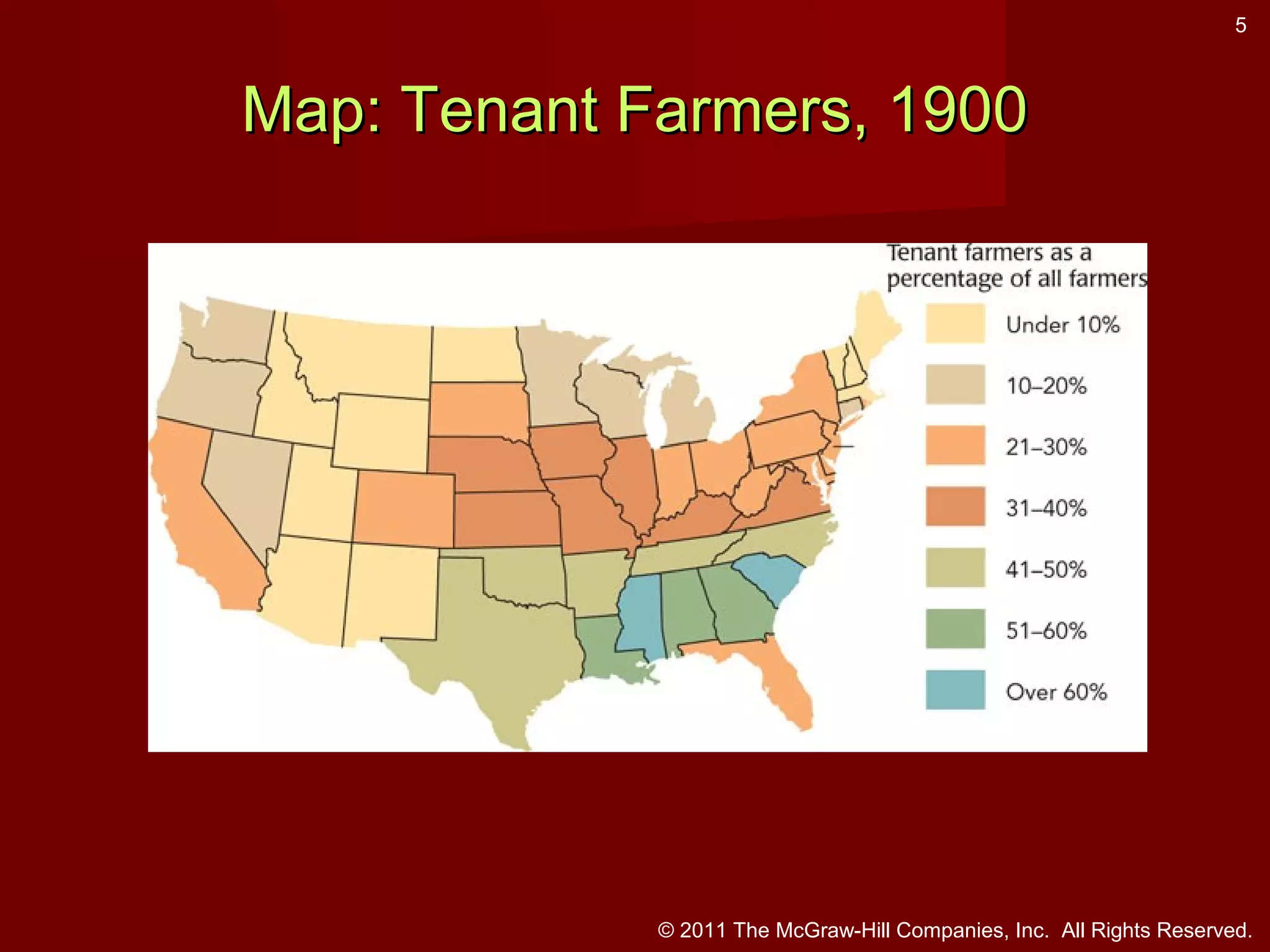
Tenancy and Sharecropping
– Agricultural ladder: perception that any poor man
could work his way up rung by rung
– Crop-lien system

© 2011 The McGraw-Hill Companies, Inc. All Rights Reserved.
5

Map: Tenant Farmers, 1900

© 2011 The McGraw-Hill Companies, Inc. All Rights Reserved.
6



Southern Industry
– Boom in textiles
– Tobacco and cigarette growth encouraged
urbanization and investment



Timber and Steel
– Environmental costs
– Birmingham steel

© 2011 The McGraw-Hill Companies, Inc. All Rights Reserved.
7



The Sources of Southern Poverty
– Late start in industrializing
– Undereducated labor
– The isolated southern labor market: fear of outsiders
“Under the campaign for a New South, all
[industries] grew dramatically in employment and
value, but not enough to end poverty or industrialize
the region.”

© 2011 The McGraw-Hill Companies, Inc. All Rights Reserved.
8

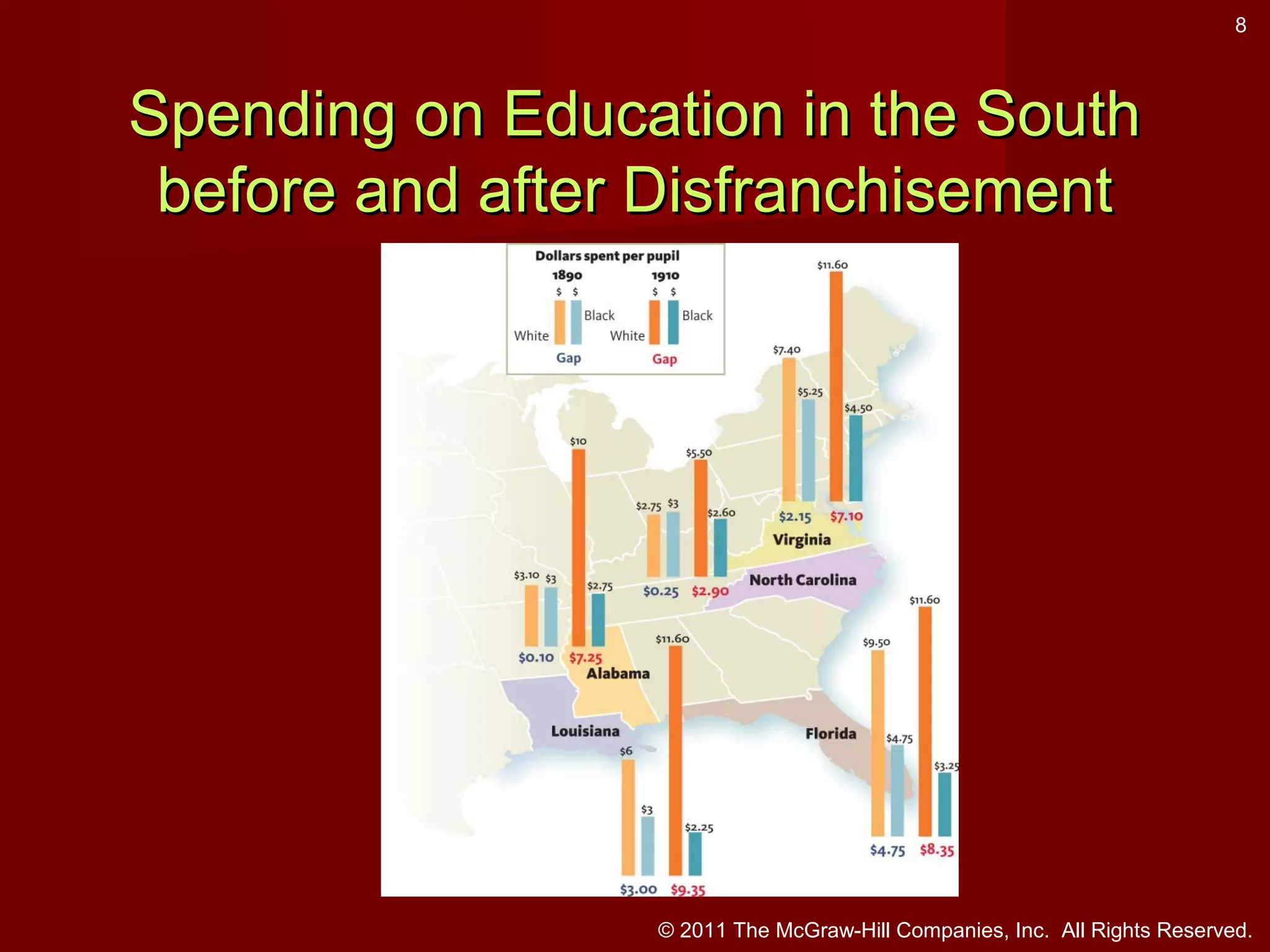
Spending on Education in the South
before and after Disfranchisement

© 2011 The McGraw-Hill Companies, Inc. All Rights Reserved.
9

Life in the New South


Rural Life
– Hunting: welcome relief from heavy farm work
– Farm entertainments: work-sharing festivals
celebrated the harvest
– Town: trips to town provided rural folk a chance to
mingle

© 2011 The McGraw-Hill Companies, Inc. All Rights Reserved.
10



The Church
– Rural religion dominated the South
– Separation of race and gender



Segregation
–
–
–

Laissez-faire race relations
Jim Crow laws
Plessy v. Ferguson

© 2011 The McGraw-Hill Companies, Inc. All Rights Reserved.
11

Western Frontiers


Western Landscapes
– “Great American Desert”
– Complex web of cultures and environments



Indian Peoples and the Western Environment
– Variety of Indian cultures
– Shared reverence for nature

© 2011 The McGraw-Hill Companies, Inc. All Rights Reserved.
12



Whites and the Western Environment:
Competing Visions
– William Gilpin, a western booster
– John Wesley Powell
– Water as a key resource

© 2011 The McGraw-Hill Companies, Inc. All Rights Reserved.
13

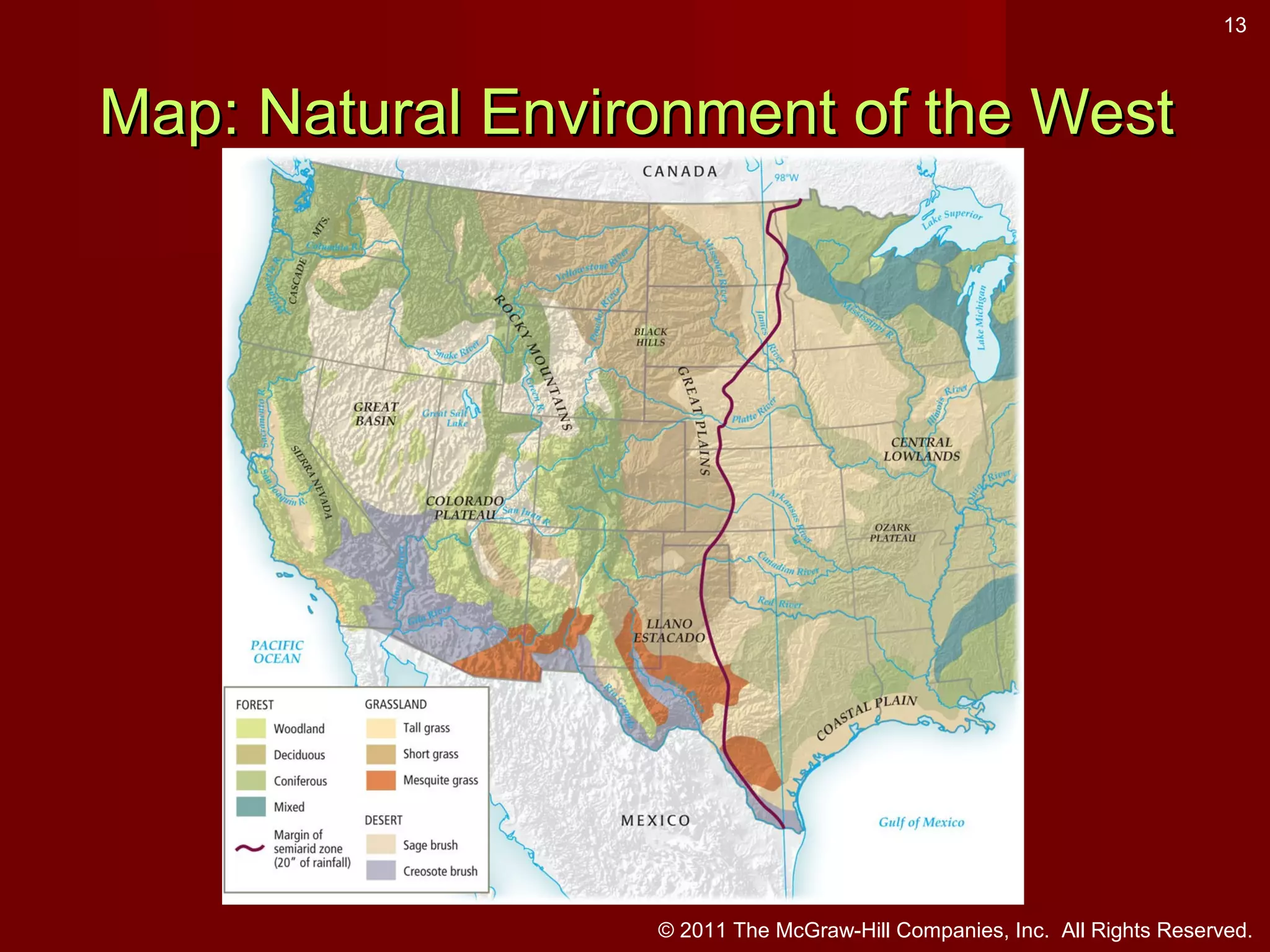
Map: Natural Environment of the West

© 2011 The McGraw-Hill Companies, Inc. All Rights Reserved.
14

War for the West


Contact and Conflict
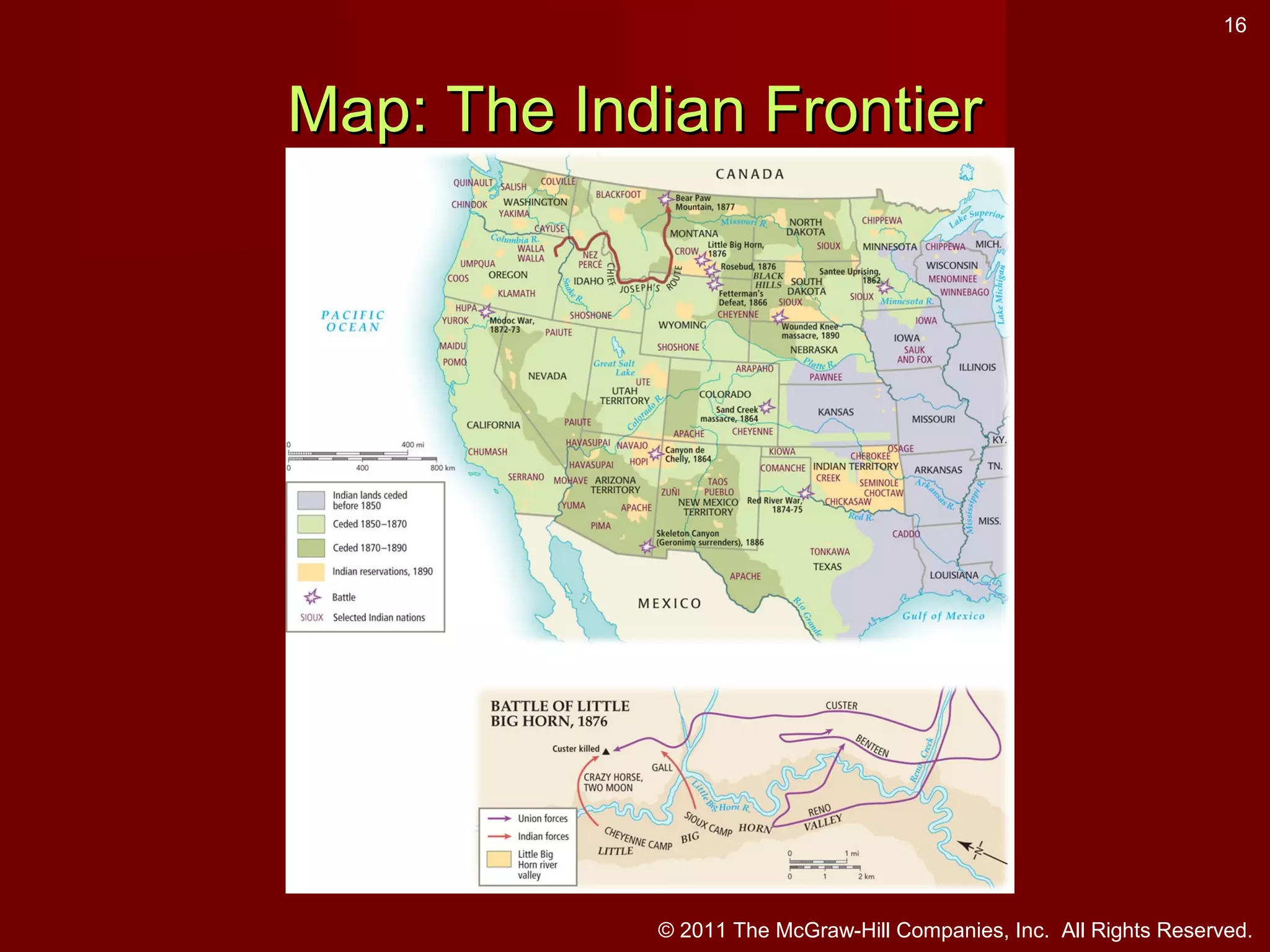
– Chivington massacre
– Buffalo soldiers



Custer’s “Last Stand”—and the Indians’
– Battle of Little Big Horn
– Chief Joseph

© 2011 The McGraw-Hill Companies, Inc. All Rights Reserved.
15



Killing with Kindness
– La Fleche and Jackson
– The Dawes Act
– Wounded Knee



Borderlands
– Juan José Herrera and the White Caps
– Mexican immigrants worked mostly as contract and
seasonal laborers
– Formation of regional communities

© 2011 The McGraw-Hill Companies, Inc. All Rights Reserved.
16

Map: The Indian Frontier

© 2011 The McGraw-Hill Companies, Inc. All Rights Reserved.
17



Ethno-Racial Identity in the New West
– A new racial triad: Anglos, African Americans, and
Latinos
– Racial identity in the New West would be more
complicated
“By the 1920s a multiracial labor force of landless
wage earners worked on giant ranches and farms
across the Southwest. In Texas the labor force was
triracial, but in California it also included Asian
Americans and, elsewhere, American Indians.”

© 2011 The McGraw-Hill Companies, Inc. All Rights Reserved.
18

Boom and Bust in the West


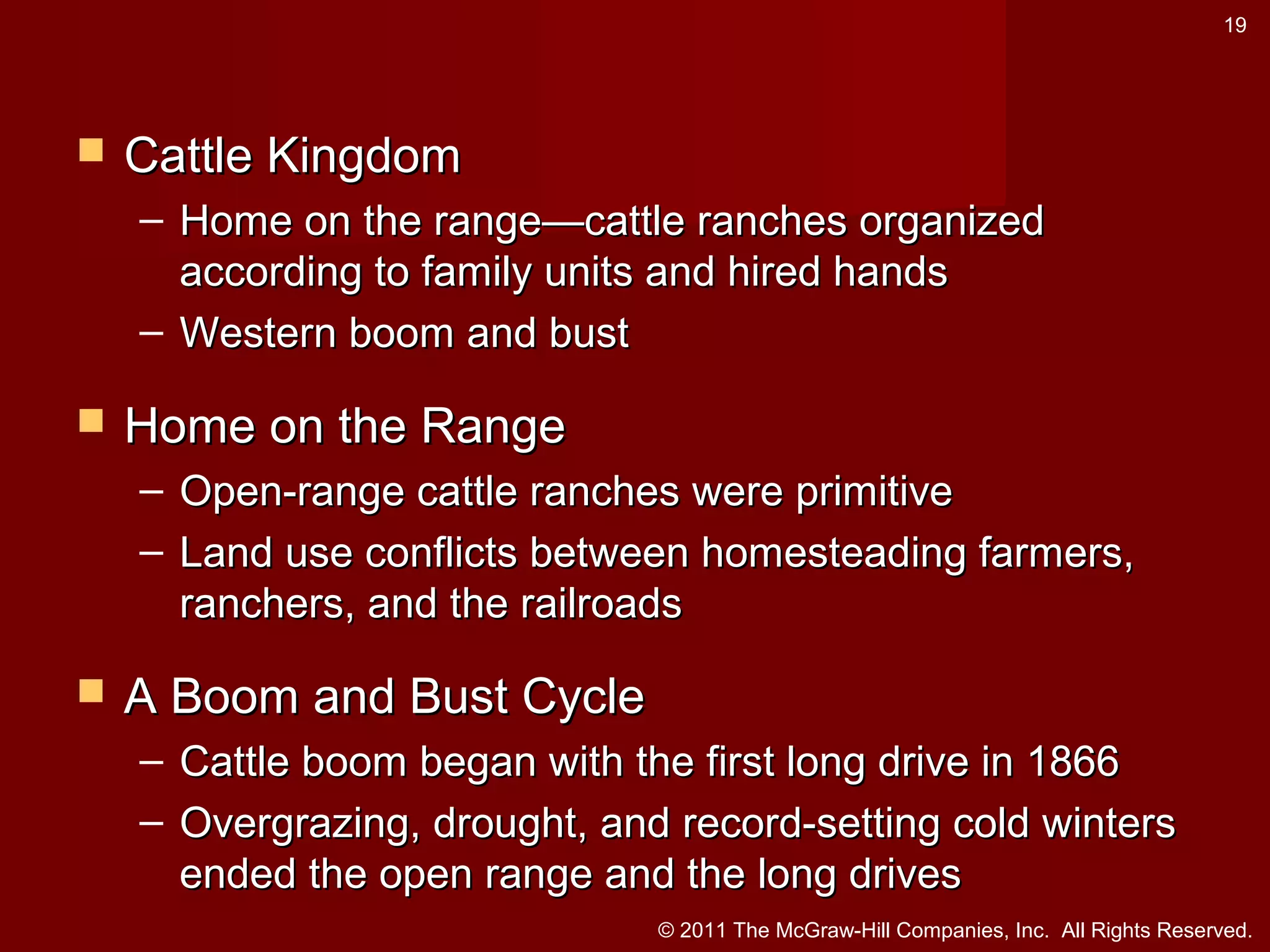
Mining Sets a Pattern
– Prostitution flourished openly in mining towns
– Environmental costs of mining



The Transcontinental Railroad
– Railroad land grants
– By threatening to bypass a town, railroad companies
could extract concessions

© 2011 The McGraw-Hill Companies, Inc. All Rights Reserved.
19



Cattle Kingdom
– Home on the range—cattle ranches organized
according to family units and hired hands
– Western boom and bust



Home on the Range
– Open-range cattle ranches were primitive
– Land use conflicts between homesteading farmers,
ranchers, and the railroads



A Boom and Bust Cycle
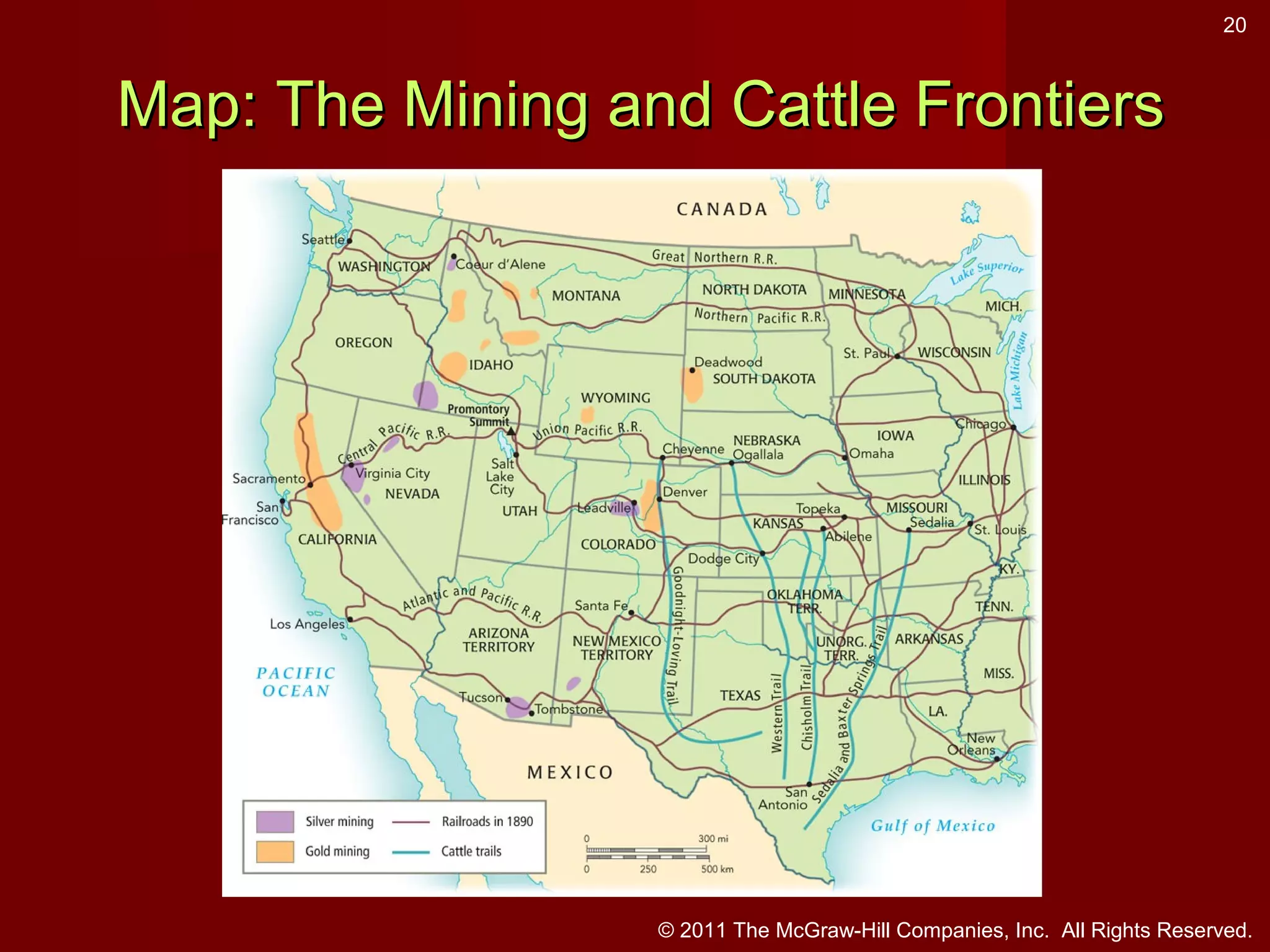
– Cattle boom began with the first long drive in 1866
– Overgrazing, drought, and record-setting cold winters
ended the open range and the long drives
© 2011 The McGraw-Hill Companies, Inc. All Rights Reserved.
20

Map: The Mining and Cattle Frontiers

© 2011 The McGraw-Hill Companies, Inc. All Rights Reserved.
21

The Final Frontier


A Rush for Land
– Boomers and Sooners
– Dream of the West as a garden paradise was being
shaken



Farming on the Plains
– Homestead Act
– Bonanza farms

© 2011 The McGraw-Hill Companies, Inc. All Rights Reserved.
22



A Plains Existence
– Heaviest burdens fell to women
– Religion: Indians turned to traditional spiritualism, and
Hispanics to the Catholic church



The Urban Frontier
– Transition from a raw frontier to a settled town
– Urban West growing at a rapid rate

© 2011 The McGraw-Hill Companies, Inc. All Rights Reserved.
23



The West and the World Economy
– Foreign investment generally came in two forms:
direct stock purchases and loans to western
corporations and individuals
– Westerners were part of a vast network of production
and trade that spanned the globe



Packaging and Exporting the “Wild West”
– William F. “Buffalo Bill” Cody idealized as an icon of
the mythic West



The South and the West in Sum
– Trying, and generally failing, to out-Yankee the
industrial Yankee
© 2011 The McGraw-Hill Companies, Inc. All Rights Reserved.

Chapter 18: New South & Trans-Miss

  • 1.
    Chapter 18: The NewSouth & The Trans-Mississippi West, 1870-1914 Experience History DAVIDSON • GIENAPP • HEYRMAN • LYTLE • STOFF © 2011 The McGraw-Hill Companies, Inc. All Rights Reserved.
  • 2.
    2 Preview  “By the endof the nineteenth century, both the South and West had assumed their place as suppliers of raw materials, providers of foodstuffs, and consumers of finished goods. A nation of ‘regional nations’ was thus knit together in the last third of the nineteenth century. Not all southerners and westerners were happy with the result.” © 2011 The McGraw-Hill Companies, Inc. All Rights Reserved.
  • 3.
    3 The Highlights       The SouthernBurden Life in the New South Western Frontiers War for the West Boom and Bust in the West The Final Frontier © 2011 The McGraw-Hill Companies, Inc. All Rights Reserved.
  • 4.
    4 The Southern Burden  Agriculturein the New South – A cotton-dominated economy – Large families remained common in the South  Tenancy and Sharecropping – Agricultural ladder: perception that any poor man could work his way up rung by rung – Crop-lien system © 2011 The McGraw-Hill Companies, Inc. All Rights Reserved.
  • 5.
    5 Map: Tenant Farmers,1900 © 2011 The McGraw-Hill Companies, Inc. All Rights Reserved.
  • 6.
    6  Southern Industry – Boomin textiles – Tobacco and cigarette growth encouraged urbanization and investment  Timber and Steel – Environmental costs – Birmingham steel © 2011 The McGraw-Hill Companies, Inc. All Rights Reserved.
  • 7.
    7  The Sources ofSouthern Poverty – Late start in industrializing – Undereducated labor – The isolated southern labor market: fear of outsiders “Under the campaign for a New South, all [industries] grew dramatically in employment and value, but not enough to end poverty or industrialize the region.” © 2011 The McGraw-Hill Companies, Inc. All Rights Reserved.
  • 8.
    8 Spending on Educationin the South before and after Disfranchisement © 2011 The McGraw-Hill Companies, Inc. All Rights Reserved.
  • 9.
    9 Life in theNew South  Rural Life – Hunting: welcome relief from heavy farm work – Farm entertainments: work-sharing festivals celebrated the harvest – Town: trips to town provided rural folk a chance to mingle © 2011 The McGraw-Hill Companies, Inc. All Rights Reserved.
  • 10.
    10  The Church – Ruralreligion dominated the South – Separation of race and gender  Segregation – – – Laissez-faire race relations Jim Crow laws Plessy v. Ferguson © 2011 The McGraw-Hill Companies, Inc. All Rights Reserved.
  • 11.
    11 Western Frontiers  Western Landscapes –“Great American Desert” – Complex web of cultures and environments  Indian Peoples and the Western Environment – Variety of Indian cultures – Shared reverence for nature © 2011 The McGraw-Hill Companies, Inc. All Rights Reserved.
  • 12.
    12  Whites and theWestern Environment: Competing Visions – William Gilpin, a western booster – John Wesley Powell – Water as a key resource © 2011 The McGraw-Hill Companies, Inc. All Rights Reserved.
  • 13.
    13 Map: Natural Environmentof the West © 2011 The McGraw-Hill Companies, Inc. All Rights Reserved.
  • 14.
    14 War for theWest  Contact and Conflict – Chivington massacre – Buffalo soldiers  Custer’s “Last Stand”—and the Indians’ – Battle of Little Big Horn – Chief Joseph © 2011 The McGraw-Hill Companies, Inc. All Rights Reserved.
  • 15.
    15  Killing with Kindness –La Fleche and Jackson – The Dawes Act – Wounded Knee  Borderlands – Juan José Herrera and the White Caps – Mexican immigrants worked mostly as contract and seasonal laborers – Formation of regional communities © 2011 The McGraw-Hill Companies, Inc. All Rights Reserved.
  • 16.
    16 Map: The IndianFrontier © 2011 The McGraw-Hill Companies, Inc. All Rights Reserved.
  • 17.
    17  Ethno-Racial Identity inthe New West – A new racial triad: Anglos, African Americans, and Latinos – Racial identity in the New West would be more complicated “By the 1920s a multiracial labor force of landless wage earners worked on giant ranches and farms across the Southwest. In Texas the labor force was triracial, but in California it also included Asian Americans and, elsewhere, American Indians.” © 2011 The McGraw-Hill Companies, Inc. All Rights Reserved.
  • 18.
    18 Boom and Bustin the West  Mining Sets a Pattern – Prostitution flourished openly in mining towns – Environmental costs of mining  The Transcontinental Railroad – Railroad land grants – By threatening to bypass a town, railroad companies could extract concessions © 2011 The McGraw-Hill Companies, Inc. All Rights Reserved.
  • 19.
    19  Cattle Kingdom – Homeon the range—cattle ranches organized according to family units and hired hands – Western boom and bust  Home on the Range – Open-range cattle ranches were primitive – Land use conflicts between homesteading farmers, ranchers, and the railroads  A Boom and Bust Cycle – Cattle boom began with the first long drive in 1866 – Overgrazing, drought, and record-setting cold winters ended the open range and the long drives © 2011 The McGraw-Hill Companies, Inc. All Rights Reserved.
  • 20.
    20 Map: The Miningand Cattle Frontiers © 2011 The McGraw-Hill Companies, Inc. All Rights Reserved.
  • 21.
    21 The Final Frontier  ARush for Land – Boomers and Sooners – Dream of the West as a garden paradise was being shaken  Farming on the Plains – Homestead Act – Bonanza farms © 2011 The McGraw-Hill Companies, Inc. All Rights Reserved.
  • 22.
    22  A Plains Existence –Heaviest burdens fell to women – Religion: Indians turned to traditional spiritualism, and Hispanics to the Catholic church  The Urban Frontier – Transition from a raw frontier to a settled town – Urban West growing at a rapid rate © 2011 The McGraw-Hill Companies, Inc. All Rights Reserved.
  • 23.
    23  The West andthe World Economy – Foreign investment generally came in two forms: direct stock purchases and loans to western corporations and individuals – Westerners were part of a vast network of production and trade that spanned the globe  Packaging and Exporting the “Wild West” – William F. “Buffalo Bill” Cody idealized as an icon of the mythic West  The South and the West in Sum – Trying, and generally failing, to out-Yankee the industrial Yankee © 2011 The McGraw-Hill Companies, Inc. All Rights Reserved.