Er. Nawaraj Bhandari
Topic 2
System Buses
Computer
Architecture
Components
 The Control Unit and the Arithmetic and Logic Unit constitute the
Central Processing Unit
 Data and instructions need to get into the system and results out
 Input/output
 Temporary storage of code and results is needed
 Main memory
Computer Components:
Top Level View
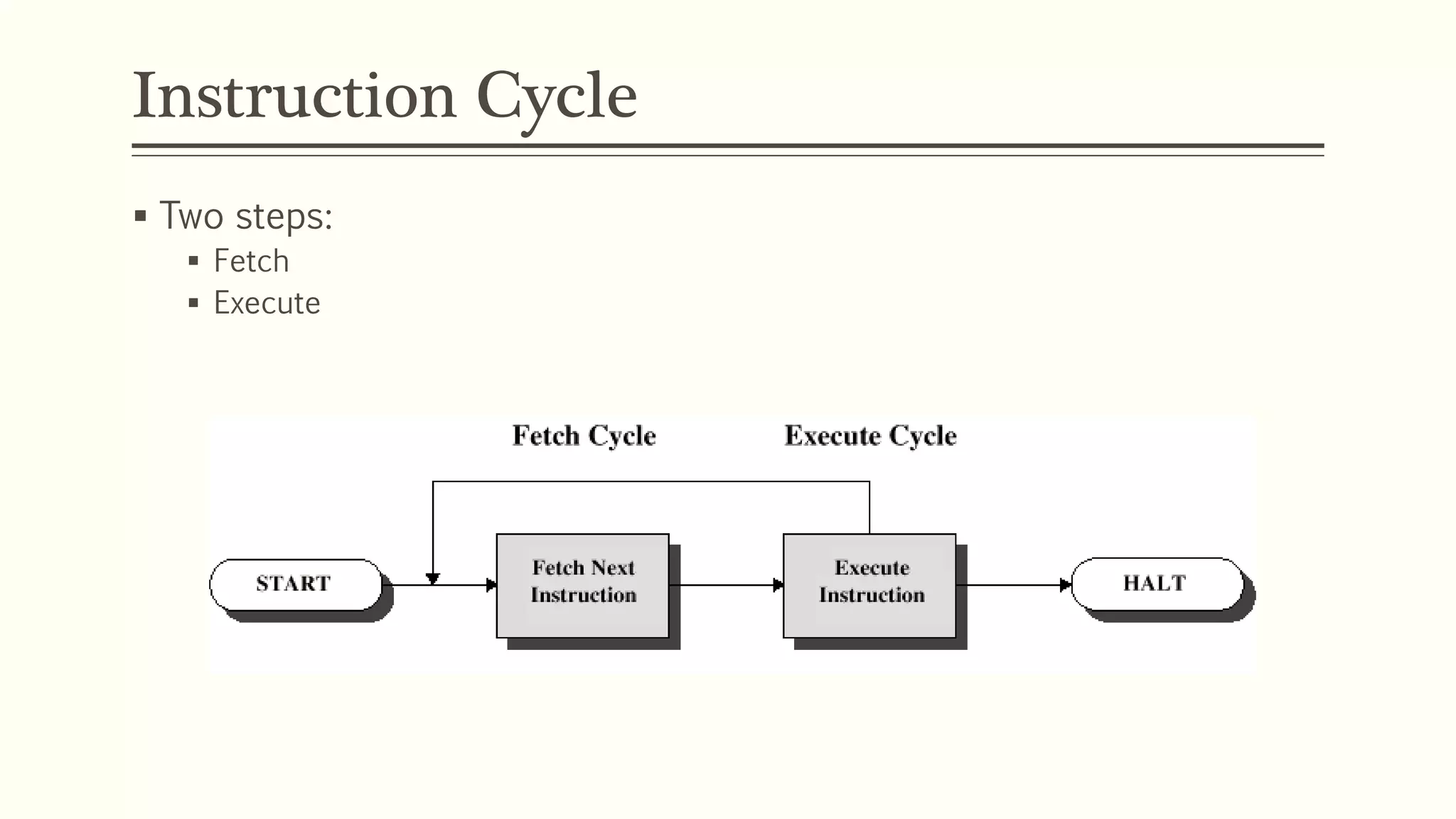
Instruction Cycle
 Two steps:
 Fetch
 Execute
Fetch Cycle
 Program Counter (PC) holds address of next instruction to fetch
 Processor fetches instruction from memory location pointed to by PC
 Increment PC
 Unless told otherwise
 Instruction loaded into Instruction Register (IR)
 Processor interprets instruction and performs required actions
Execute Cycle
 Processor-memory
 data transfer between CPU and main memory
 Processor I/O
 Data transfer between CPU and I/O module
 Data processing
 Some arithmetic or logical operation on data
 Control
 Alteration of sequence of operations
 e.g. jump
 Combination of above
Buses
 There are a number of possible interconnection systems
 Single and multiple BUS structures are most common
 e.g. Control/Address/Data bus (PC)
 e.g. Unibus (DEC-PDP)
What is a Bus?
 A communication pathway connecting two or more devices
 Usually broadcast
 Often grouped
 A number of channels in one bus
 e.g. 32 bit data bus is 32 separate single bit channels
 Power lines may not be shown
Data Bus
 Carries data
 Remember that there is no difference between “data” and “instruction” at this
level
 Width is a key determinant of performance
 8, 16, 32, 64 bit
Address bus
 Identify the source or destination of data
 e.g. CPU needs to read an instruction (data) from a given location in
memory
 Bus width determines maximum memory capacity of system
 e.g. 8080 has 16 bit address bus giving 64k address space
Control Bus
 Control and timing information
 Memory read/write signal
 Interrupt request
 Clock signals
Bus Interconnection Scheme
PCI Bus
 Peripheral Component Interconnection
 Intel released to public domain
 32 or 64 bit
 50 lines
PCI Bus Lines (required)
 Systems lines
 Including clock and reset
 Address & Data
 32 time mux lines for address/data
 Interrupt & validate lines
 Interface Control
 Arbitration
 Not shared
 Direct connection to PCI bus arbiter
 Error lines
PCI Bus Lines (Optional)
 Interrupt lines
 Not shared
 Cache support
 64-bit Bus Extension
 Additional 32 lines
 Time multiplexed
 2 lines to enable devices to agree to use 64-bit transfer
 JTAG/Boundary Scan
 For testing procedures
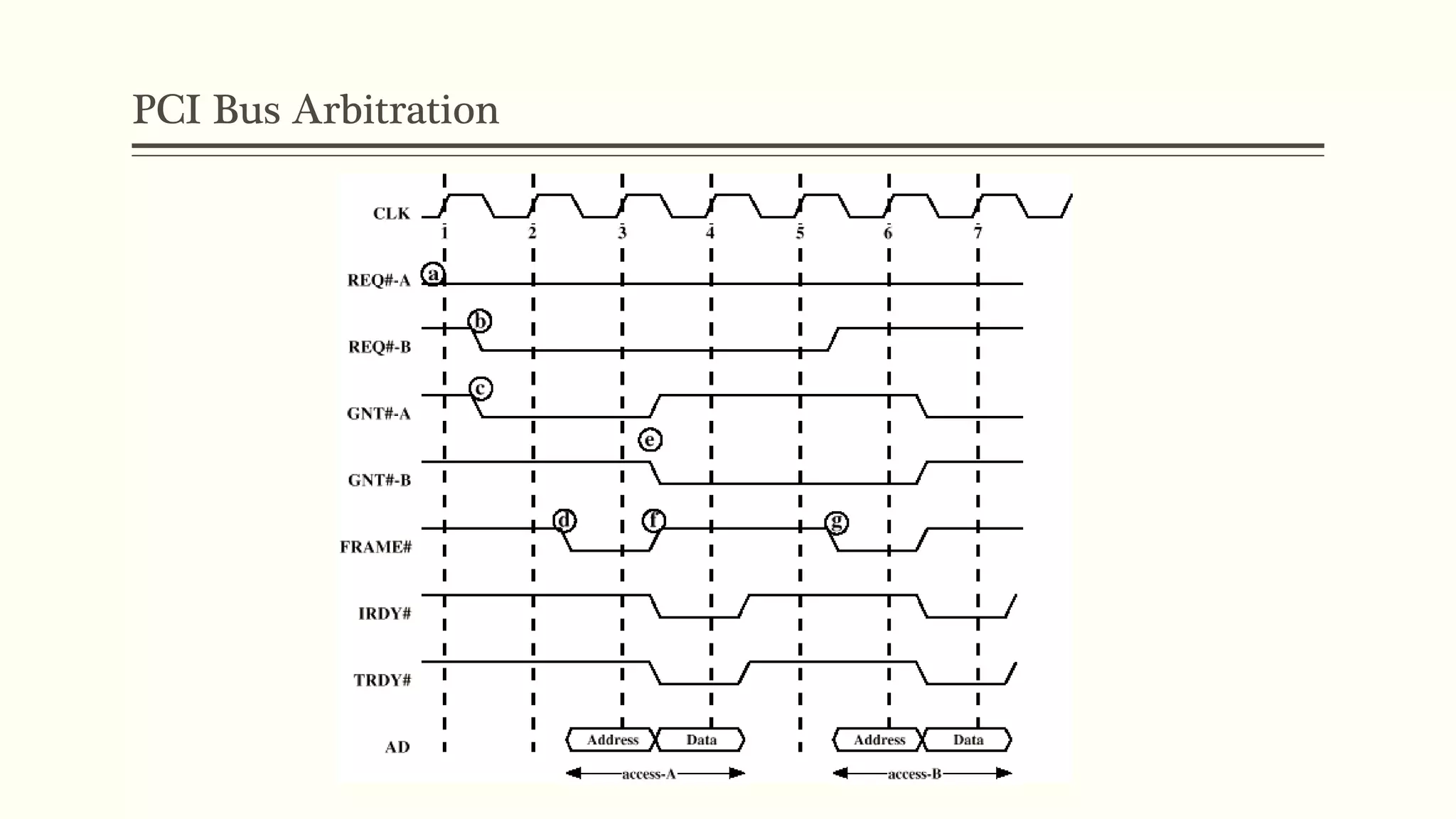
PCI Commands
 Transaction between initiator (master) and target
 Master claims bus
 Determine type of transaction
 e.g. I/O read/write
 Address phase
 One or more data phases
PCI Bus Arbiter
PCI Bus Arbitration
Internet Resources
 http://www.intel.com/
 Search for the Intel Museum
 http://www.ibm.com
 http://www.dec.com
 Charles Babbage Institute
 PowerPC
 Intel Developer Home
References
 AMDA67 Amdahl, G. “Validity of the Single-Processor Approach to
Achieving Large-Scale Computing Capability”, Proceedings of the
AFIPS Conference, 1967.
ANY QUESTIONS?

Chapter 2

  • 1.
    Er. Nawaraj Bhandari Topic2 System Buses Computer Architecture
  • 2.
    Components  The ControlUnit and the Arithmetic and Logic Unit constitute the Central Processing Unit  Data and instructions need to get into the system and results out  Input/output  Temporary storage of code and results is needed  Main memory
  • 3.
  • 4.
    Instruction Cycle  Twosteps:  Fetch  Execute
  • 5.
    Fetch Cycle  ProgramCounter (PC) holds address of next instruction to fetch  Processor fetches instruction from memory location pointed to by PC  Increment PC  Unless told otherwise  Instruction loaded into Instruction Register (IR)  Processor interprets instruction and performs required actions
  • 6.
    Execute Cycle  Processor-memory data transfer between CPU and main memory  Processor I/O  Data transfer between CPU and I/O module  Data processing  Some arithmetic or logical operation on data  Control  Alteration of sequence of operations  e.g. jump  Combination of above
  • 7.
    Buses  There area number of possible interconnection systems  Single and multiple BUS structures are most common  e.g. Control/Address/Data bus (PC)  e.g. Unibus (DEC-PDP)
  • 8.
    What is aBus?  A communication pathway connecting two or more devices  Usually broadcast  Often grouped  A number of channels in one bus  e.g. 32 bit data bus is 32 separate single bit channels  Power lines may not be shown
  • 9.
    Data Bus  Carriesdata  Remember that there is no difference between “data” and “instruction” at this level  Width is a key determinant of performance  8, 16, 32, 64 bit
  • 10.
    Address bus  Identifythe source or destination of data  e.g. CPU needs to read an instruction (data) from a given location in memory  Bus width determines maximum memory capacity of system  e.g. 8080 has 16 bit address bus giving 64k address space
  • 11.
    Control Bus  Controland timing information  Memory read/write signal  Interrupt request  Clock signals
  • 12.
  • 13.
    PCI Bus  PeripheralComponent Interconnection  Intel released to public domain  32 or 64 bit  50 lines
  • 14.
    PCI Bus Lines(required)  Systems lines  Including clock and reset  Address & Data  32 time mux lines for address/data  Interrupt & validate lines  Interface Control  Arbitration  Not shared  Direct connection to PCI bus arbiter  Error lines
  • 15.
    PCI Bus Lines(Optional)  Interrupt lines  Not shared  Cache support  64-bit Bus Extension  Additional 32 lines  Time multiplexed  2 lines to enable devices to agree to use 64-bit transfer  JTAG/Boundary Scan  For testing procedures
  • 16.
    PCI Commands  Transactionbetween initiator (master) and target  Master claims bus  Determine type of transaction  e.g. I/O read/write  Address phase  One or more data phases
  • 17.
  • 18.
  • 19.
    Internet Resources  http://www.intel.com/ Search for the Intel Museum  http://www.ibm.com  http://www.dec.com  Charles Babbage Institute  PowerPC  Intel Developer Home
  • 20.
    References  AMDA67 Amdahl,G. “Validity of the Single-Processor Approach to Achieving Large-Scale Computing Capability”, Proceedings of the AFIPS Conference, 1967.
  • 21.