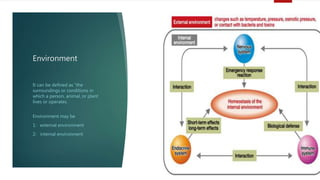
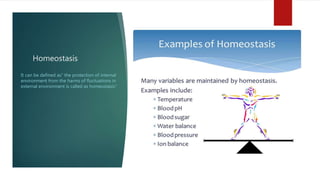
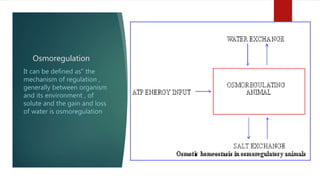
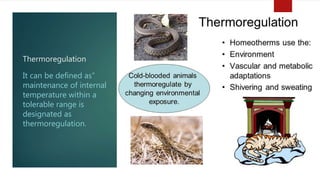
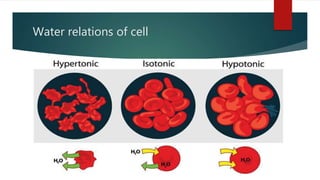
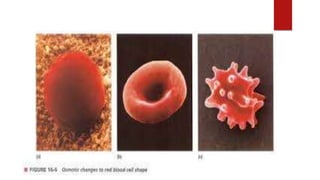
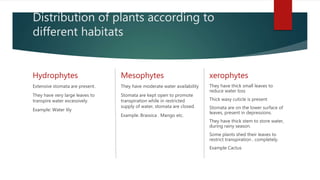
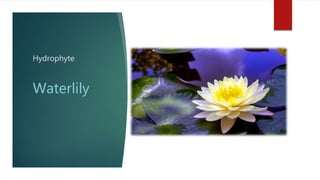
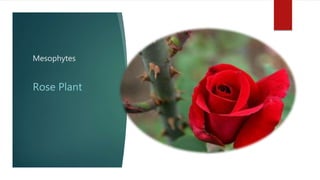
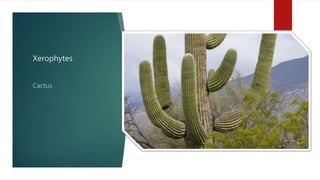
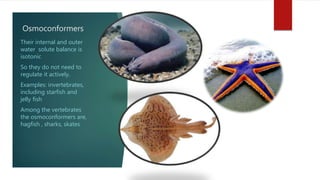
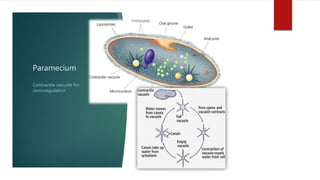
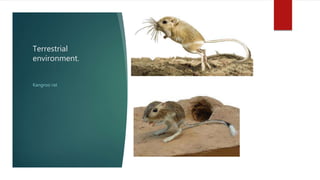
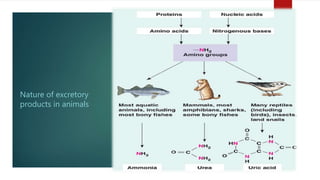
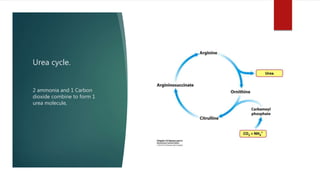
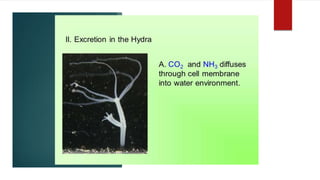
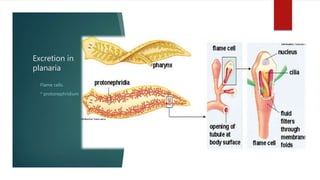
This document discusses homeostasis and various mechanisms organisms use to regulate their internal environments. It defines homeostasis as the protection of the internal environment from fluctuations in the external environment. It discusses osmoregulation as the regulation of solute and water balance between an organism and its environment. Thermoregulation is defined as maintaining internal temperature within a tolerable range. Excretion is the removal of nitrogenous wastes from the body. The document goes on to describe different types of plants and their adaptations for water regulation and osmoregulation in both plants and animals.



![1 major chemical composition of living thing [biochemistry]](https://cdn.slidesharecdn.com/ss_thumbnails/1majorchemicalcompositionoflivingthingbiochemistrymahmoudzazai-160121063030-thumbnail.jpg?width=640&height=640&fit=bounds)


![Support and movement[1]](https://cdn.slidesharecdn.com/ss_thumbnails/supportandmovement1-120727192429-phpapp02-thumbnail.jpg?width=640&height=640&fit=bounds)


![Chapter 25: Excretion [compatibility mode]](https://cdn.slidesharecdn.com/ss_thumbnails/chapter25-excretioncompatibilitymode-141214135059-conversion-gate01-thumbnail.jpg?width=640&height=640&fit=bounds)


