SPEECH 
DELIVERY 
A PowerPoint Presentation by: 
Ani Istiana 
Romy Mardian
DELIVERY 
1. What is Good Delivery ? 
2. Methods of Delivery 
3. The Speaker’s Voice 
4. The Speaker’s Body 
5. Practicing Delivery 
6. Answering Audience Questions
“You can speak well if your tongue can 
deliver the message of your heart.” 
Introduction 
The process by which 
meanings are 
exchanged b/w people 
through the use of 
common set of symbols 
is called 
COMMUNICATION.
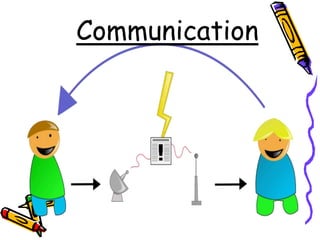
Communication
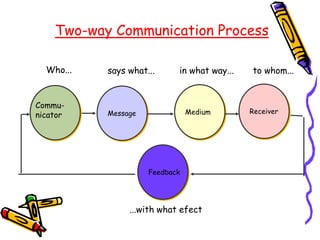
Two-way Communication Process 
Who... says what... in what way... to whom... 
Message Medium Receiver 
Feedback 
...with what efect 
Commu-nicator
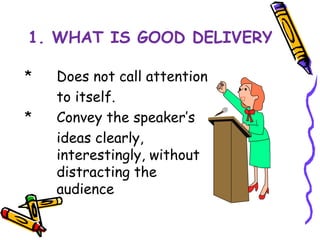
1. WHAT IS GOOD DELIVERY 
* Does not call attention 
to itself. 
* Convey the speaker’s 
ideas clearly, 
interestingly, without 
distracting the 
audience
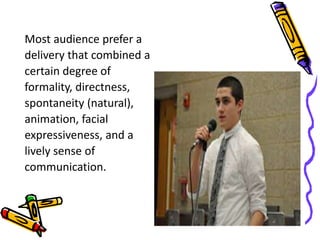
Most audience prefer a 
delivery that combined a 
certain degree of 
formality, directness, 
spontaneity (natural), 
animation, facial 
expressiveness, and a 
lively sense of 
communication.
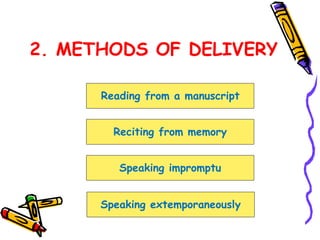
2. METHODS OF DELIVERY 
Reading from a manuscript 
Reciting from memory 
Speaking impromptu 
Speaking extemporaneously
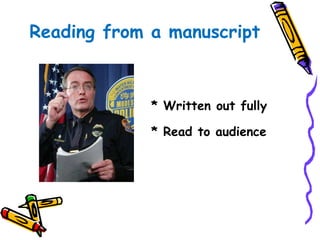
Reading from a manuscript 
* Written out fully 
* Read to audience
Speaking Impromtu 
* Delivered with little 
or no immediate 
preparation
Phrases that you can use in 
impromptu speaking 
“My first point is …” 
“Second, we can see that...” 
“In conclusion, I would like to say…” 
“Finally, …”
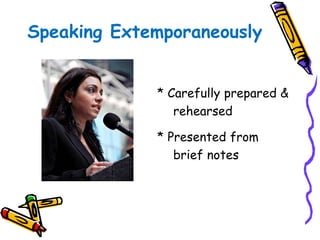
Speaking Extemporaneously 
* Carefully prepared & 
rehearsed 
* Presented from 
brief notes
Reciting from memory
Sounds spontaneous no 
matter how many times 
speech has been 
rehearsed
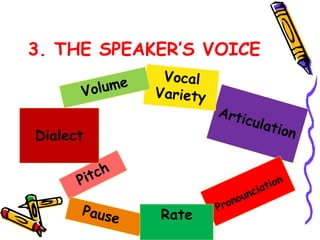
3. THE SPEAKER’S VOICE 
Dialect 
Rate
1. VOLUME 
Loudness or softness of 
speaker’s voice 
2. PITCH 
Highness or lowness of 
speaker’s voice 
3. RATE 
Speed at which person speaks
4. Pauses 
Momentary break in vocal delivery 
5. Vocalized Pauses 
Pauses that occur when speaker 
says “uh,” “er,” “um,” etc. 
6. Vocal Variety 
a. Changes in rate, pitch, volume 
b. Gives voice expressiveness
7. Pronunciation 
Accepted standard of sound, rhythm 
for words in given language. 
8. Articulation 
Physical production of speech sounds. 
9. Dialect 
Variety of a language distinguished by 
accent, grammar, vocabulary.
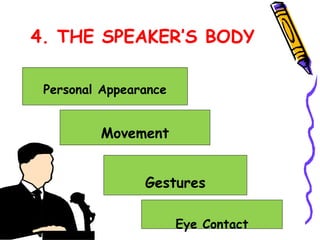
4. THE SPEAKER’S BODY 
Personal Appearance 
Gestures 
Eye Contact 
Movement
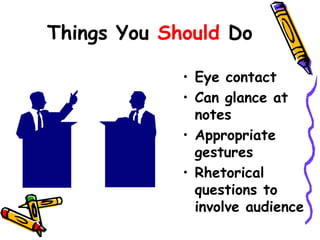
Things You Should Do 
• Eye contact 
• Can glance at 
notes 
• Appropriate 
gestures 
• Rhetorical 
questions to 
involve audience
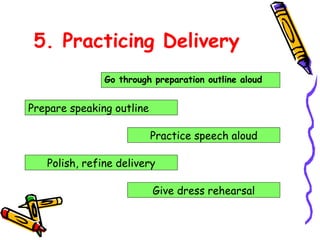
5. Practicing Delivery 
Go through preparation outline aloud 
Prepare speaking outline 
Practice speech aloud 
Polish, refine delivery 
Give dress rehearsal
6. Preparing Q&A Sessions 
• Formulate answers 
to possible 
questions 
• Practice delivery of 
answers
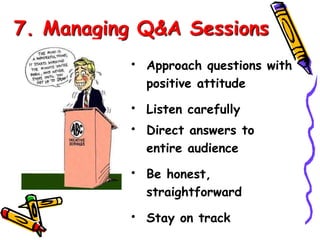
7. Managing Q&A Sessions 
• Approach questions with 
positive attitude 
• Listen carefully 
• Direct answers to 
entire audience 
• Be honest, 
straightforward 
• Stay on track
THANK YOU

Chapter 12 = delivery speech

  • 1.
    SPEECH DELIVERY APowerPoint Presentation by: Ani Istiana Romy Mardian
  • 2.
    DELIVERY 1. Whatis Good Delivery ? 2. Methods of Delivery 3. The Speaker’s Voice 4. The Speaker’s Body 5. Practicing Delivery 6. Answering Audience Questions
  • 3.
    “You can speakwell if your tongue can deliver the message of your heart.” Introduction The process by which meanings are exchanged b/w people through the use of common set of symbols is called COMMUNICATION.
  • 4.
  • 5.
    Two-way Communication Process Who... says what... in what way... to whom... Message Medium Receiver Feedback ...with what efect Commu-nicator
  • 6.
    1. WHAT ISGOOD DELIVERY * Does not call attention to itself. * Convey the speaker’s ideas clearly, interestingly, without distracting the audience
  • 7.
    Most audience prefera delivery that combined a certain degree of formality, directness, spontaneity (natural), animation, facial expressiveness, and a lively sense of communication.
  • 8.
    2. METHODS OFDELIVERY Reading from a manuscript Reciting from memory Speaking impromptu Speaking extemporaneously
  • 9.
    Reading from amanuscript * Written out fully * Read to audience
  • 10.
    Speaking Impromtu *Delivered with little or no immediate preparation
  • 11.
    Phrases that youcan use in impromptu speaking “My first point is …” “Second, we can see that...” “In conclusion, I would like to say…” “Finally, …”
  • 12.
    Speaking Extemporaneously *Carefully prepared & rehearsed * Presented from brief notes
  • 13.
  • 14.
    Sounds spontaneous no matter how many times speech has been rehearsed
  • 15.
    3. THE SPEAKER’SVOICE Dialect Rate
  • 16.
    1. VOLUME Loudnessor softness of speaker’s voice 2. PITCH Highness or lowness of speaker’s voice 3. RATE Speed at which person speaks
  • 17.
    4. Pauses Momentarybreak in vocal delivery 5. Vocalized Pauses Pauses that occur when speaker says “uh,” “er,” “um,” etc. 6. Vocal Variety a. Changes in rate, pitch, volume b. Gives voice expressiveness
  • 18.
    7. Pronunciation Acceptedstandard of sound, rhythm for words in given language. 8. Articulation Physical production of speech sounds. 9. Dialect Variety of a language distinguished by accent, grammar, vocabulary.
  • 19.
    4. THE SPEAKER’SBODY Personal Appearance Gestures Eye Contact Movement
  • 20.
    Things You ShouldDo • Eye contact • Can glance at notes • Appropriate gestures • Rhetorical questions to involve audience
  • 21.
    5. Practicing Delivery Go through preparation outline aloud Prepare speaking outline Practice speech aloud Polish, refine delivery Give dress rehearsal
  • 22.
    6. Preparing Q&ASessions • Formulate answers to possible questions • Practice delivery of answers
  • 23.
    7. Managing Q&ASessions • Approach questions with positive attitude • Listen carefully • Direct answers to entire audience • Be honest, straightforward • Stay on track
  • 24.