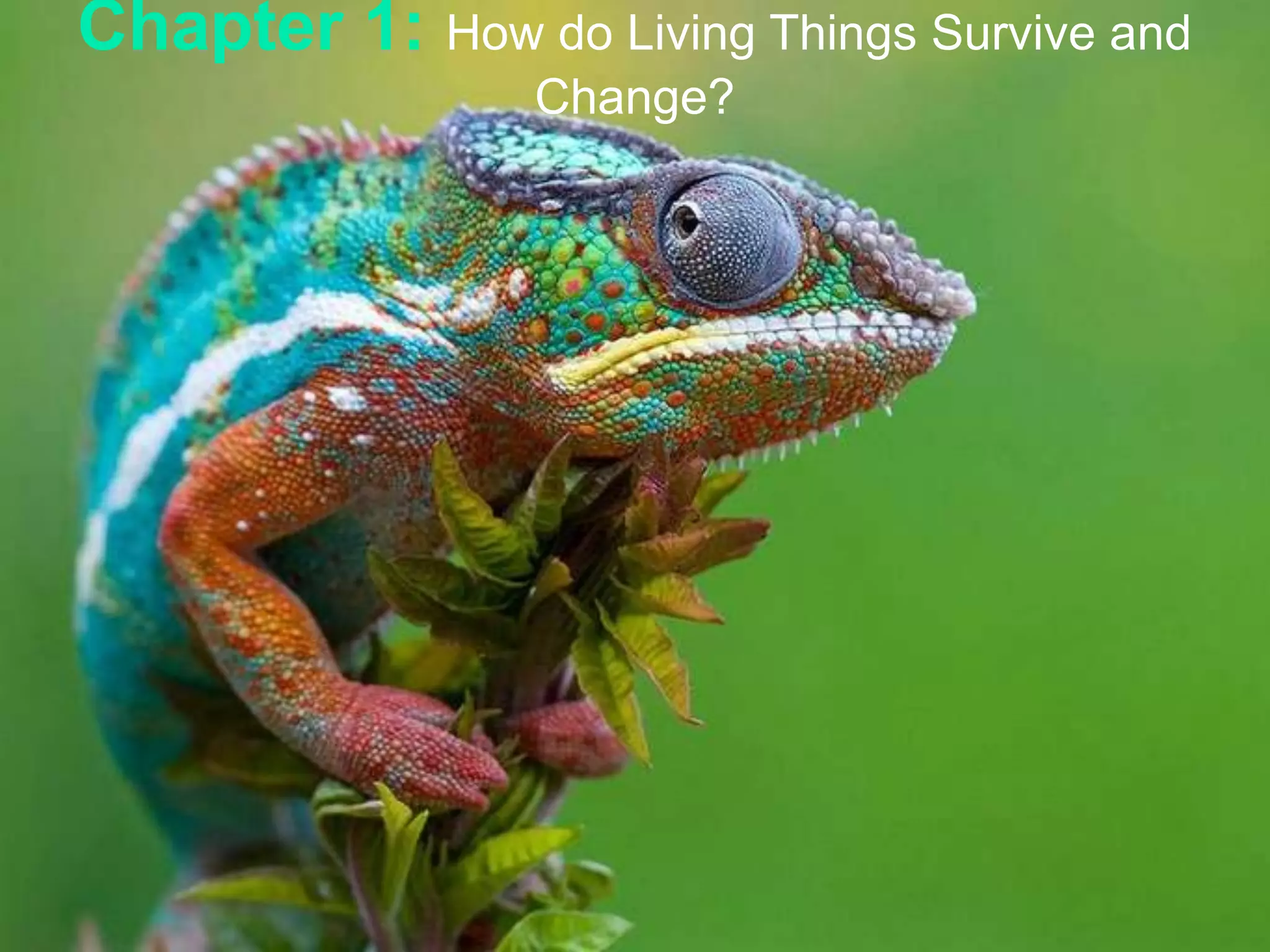
Chapter 1: How do Living Things Survive and
                 Change?
Lesson 2, p. 10 - 15

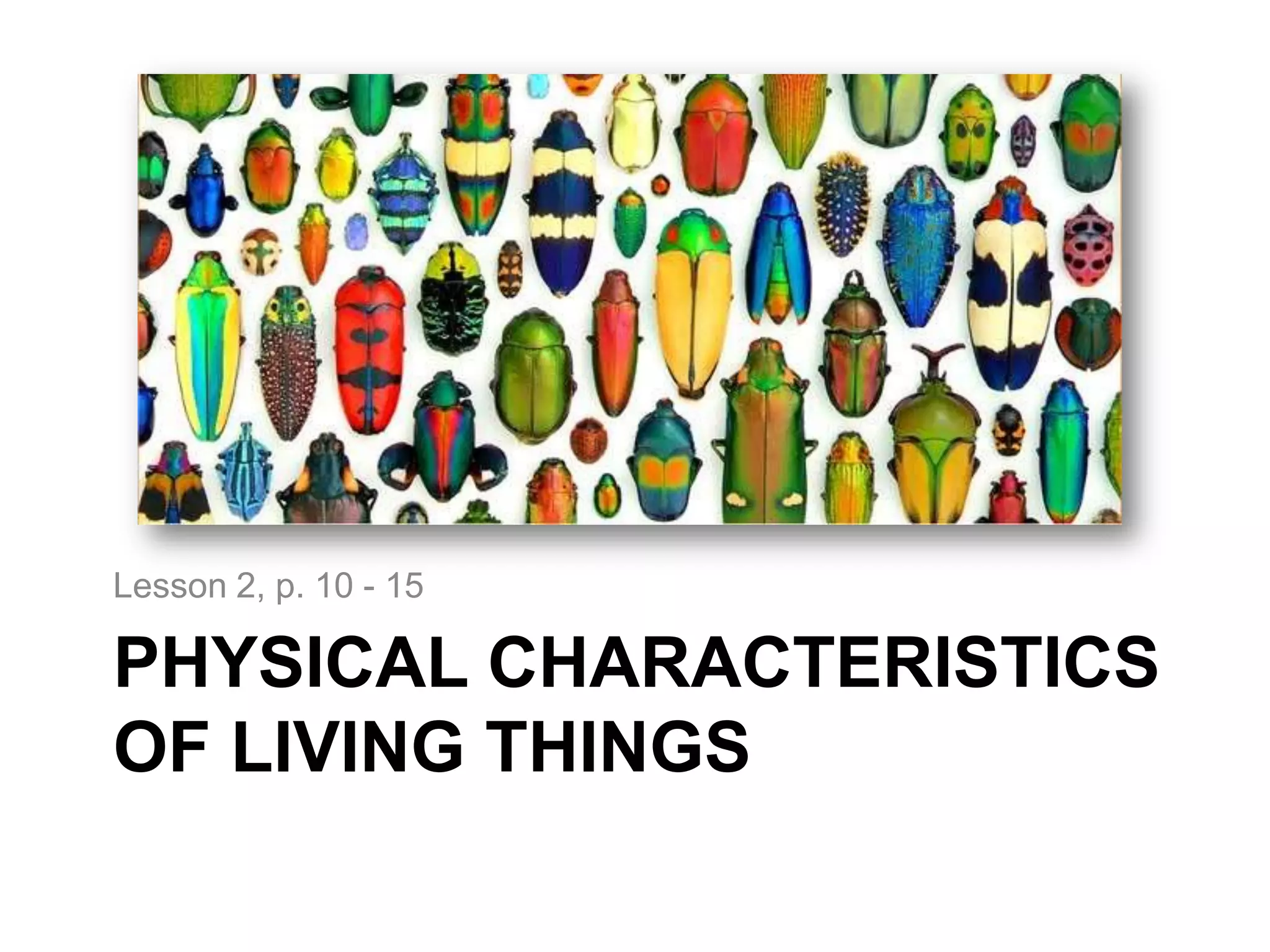
PHYSICAL CHARACTERISTICS
OF LIVING THINGS
Animal Adaptations
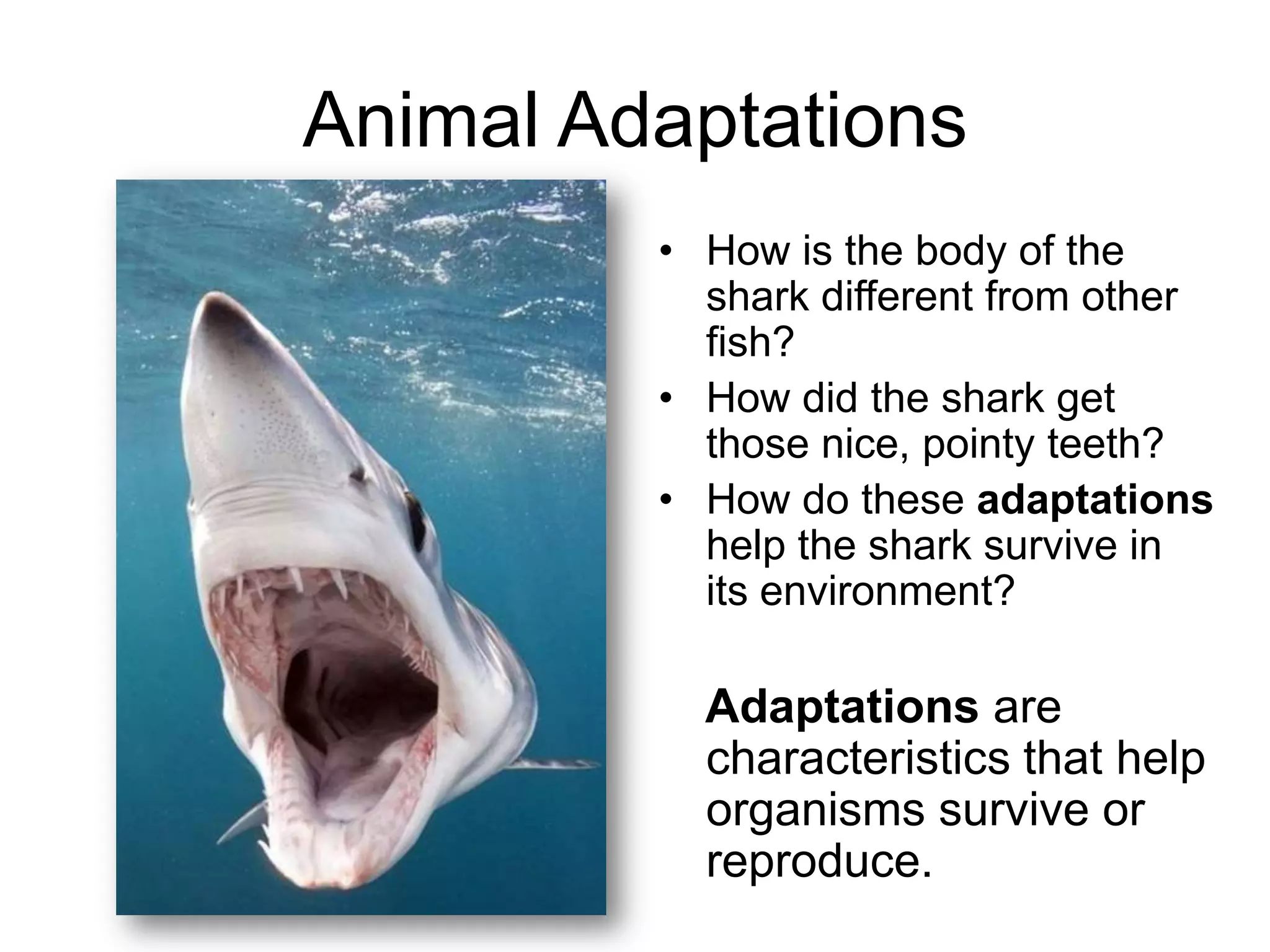
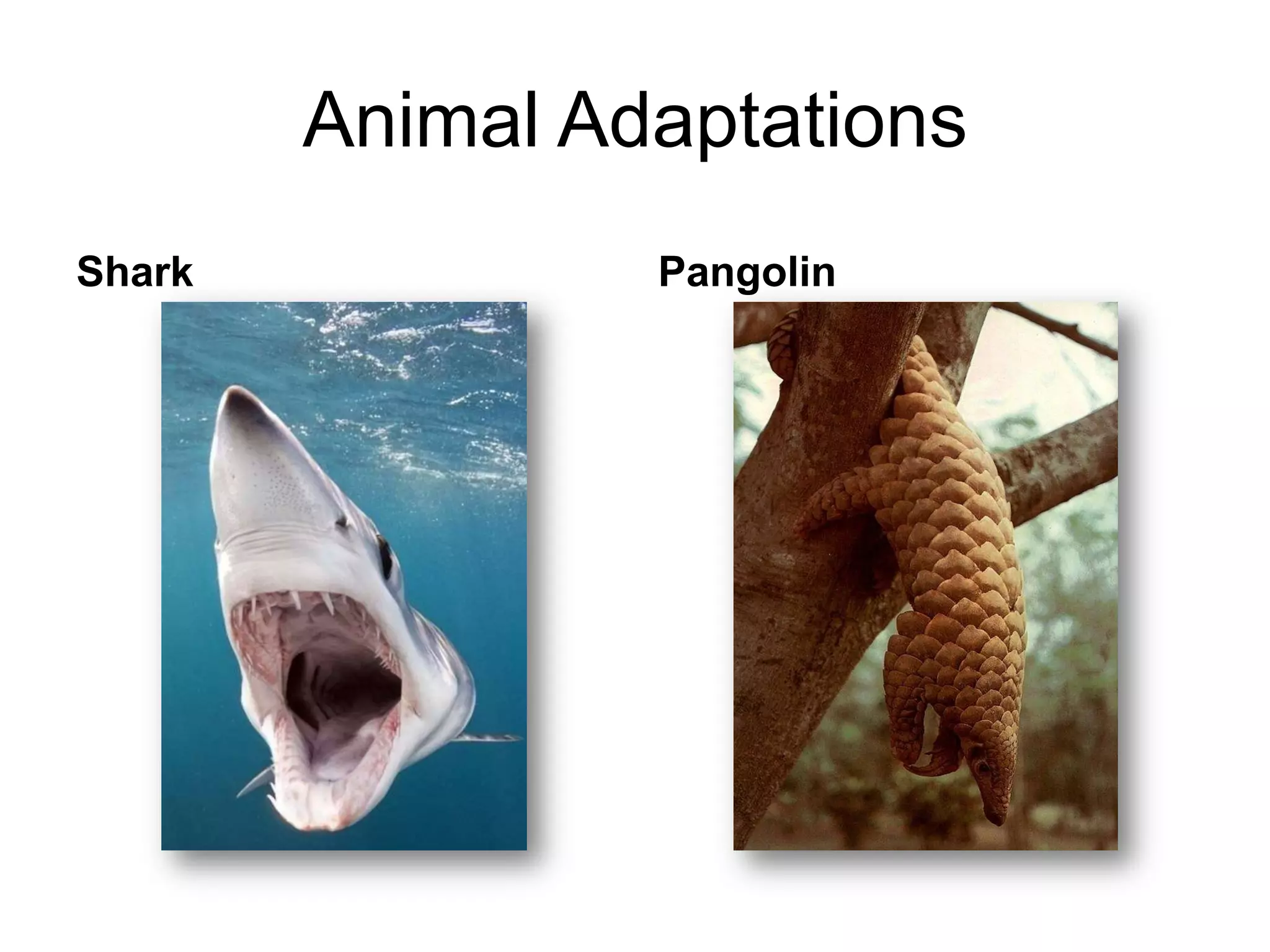
         • How is the body of the
           shark different from other
           fish?
         • How did the shark get
           those nice, pointy teeth?
         • How do these adaptations
           help the shark survive in
           its environment?

           Adaptations are
           characteristics that help
           organisms survive or
           reproduce.
Animal Adaptations
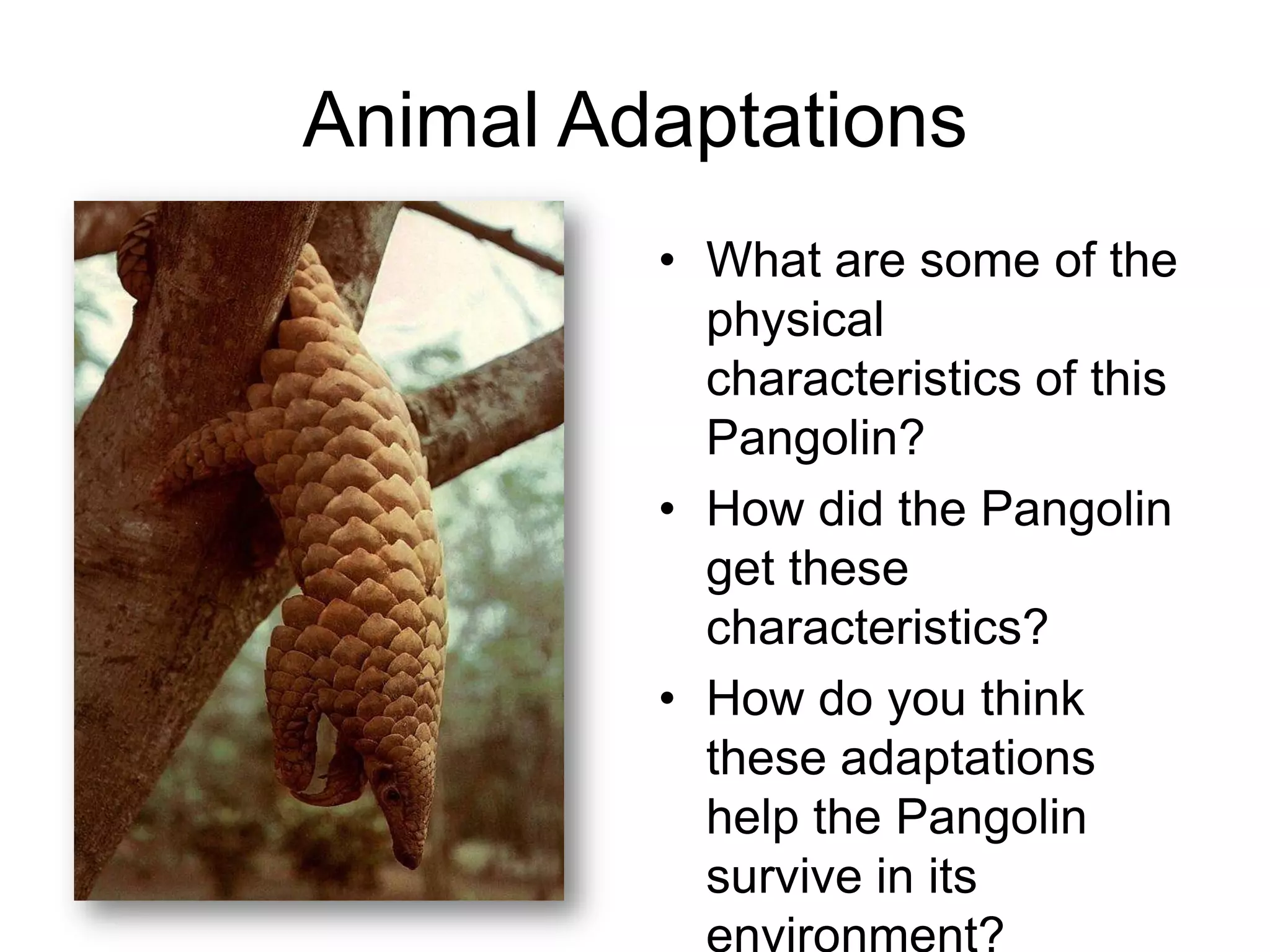
         • What are some of the
           physical
           characteristics of this
           Pangolin?
         • How did the Pangolin
           get these
           characteristics?
         • How do you think
           these adaptations
           help the Pangolin
           survive in its
           environment?
Animal Adaptations
Shark            Pangolin
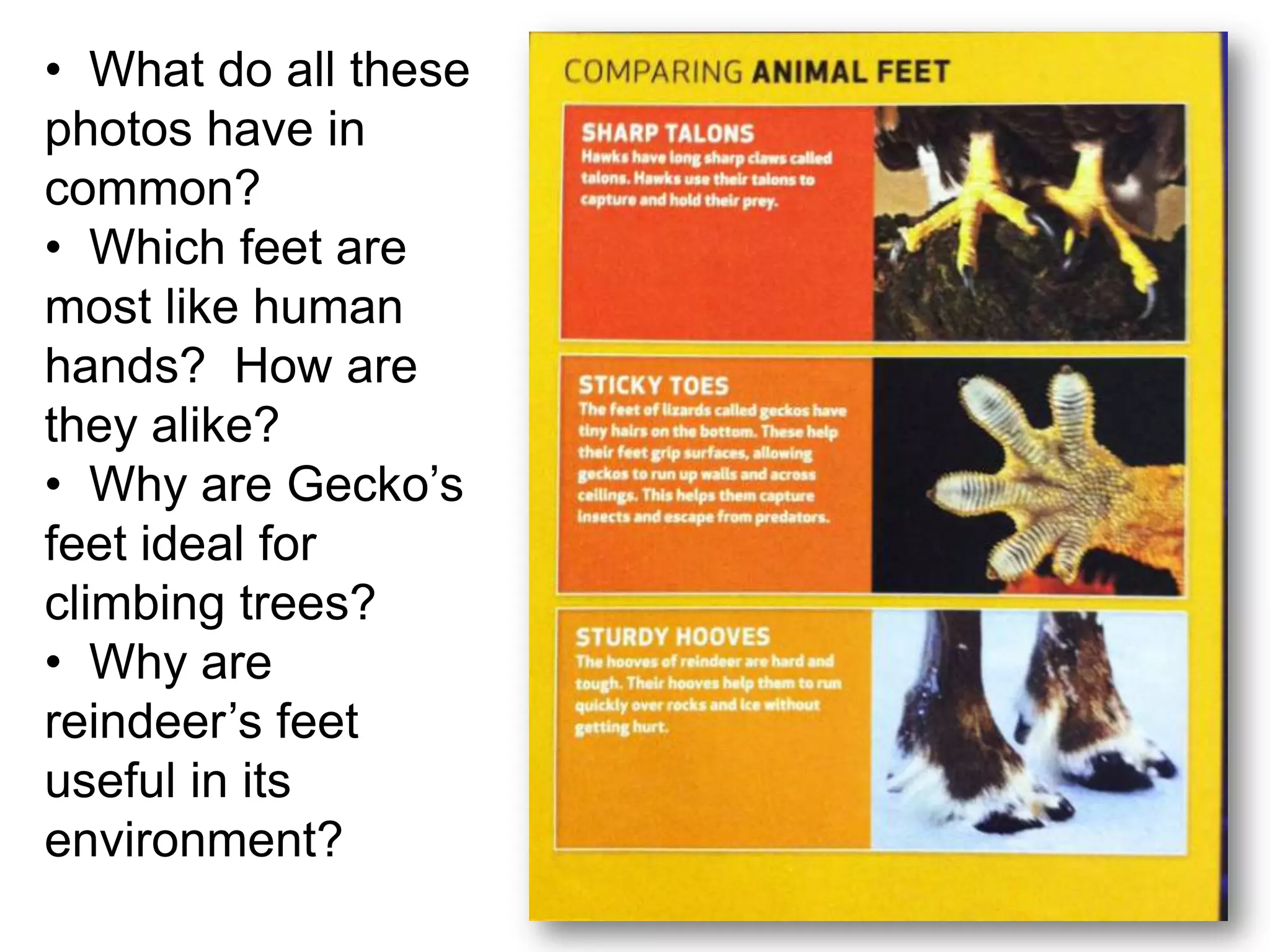
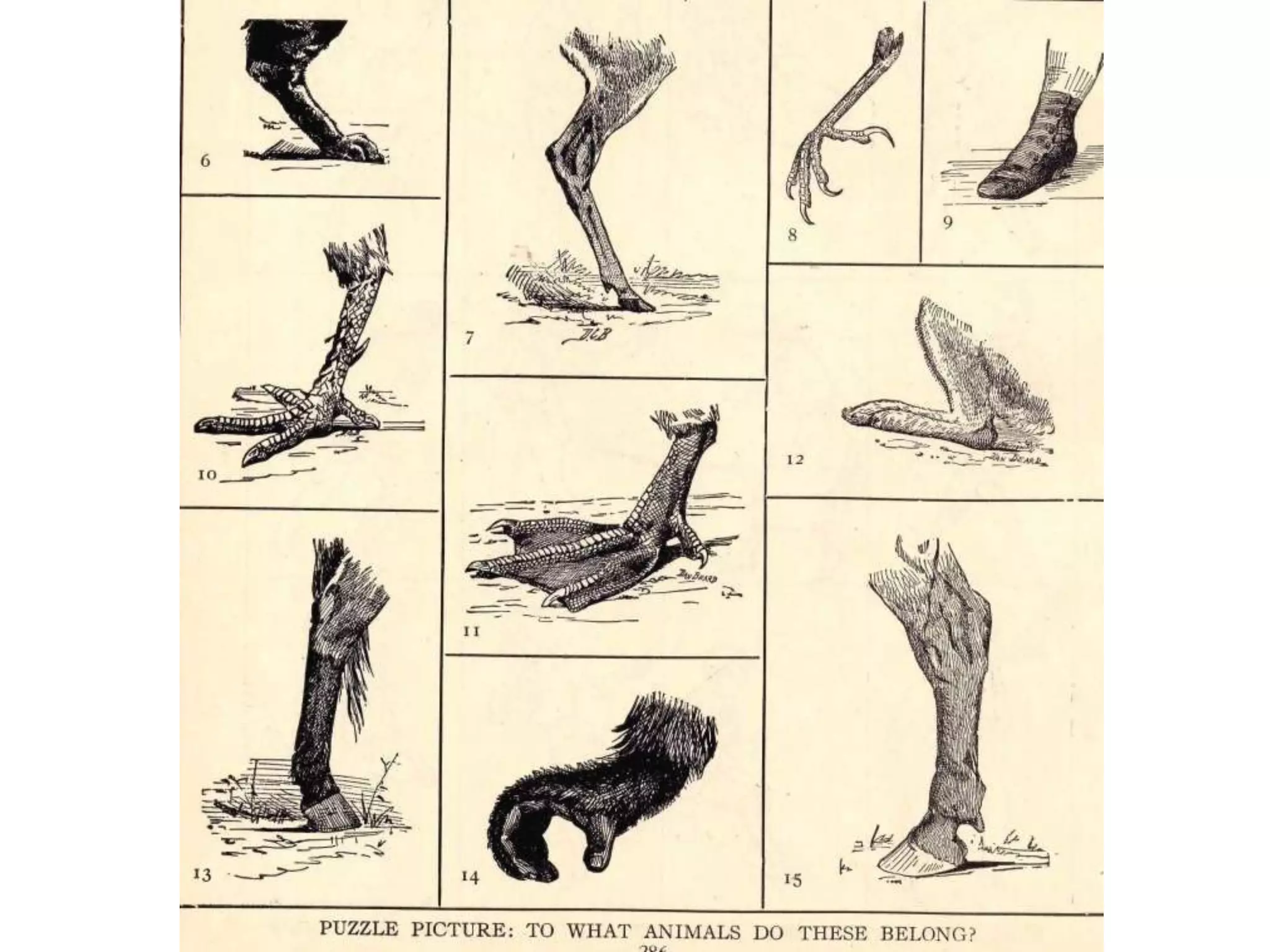
• What do all these
photos have in
common?
• Which feet are
most like human
hands? How are
they alike?
• Why are Gecko’s
feet ideal for
climbing trees?
• Why are
reindeer’s feet
useful in its
environment?
Give it a Try
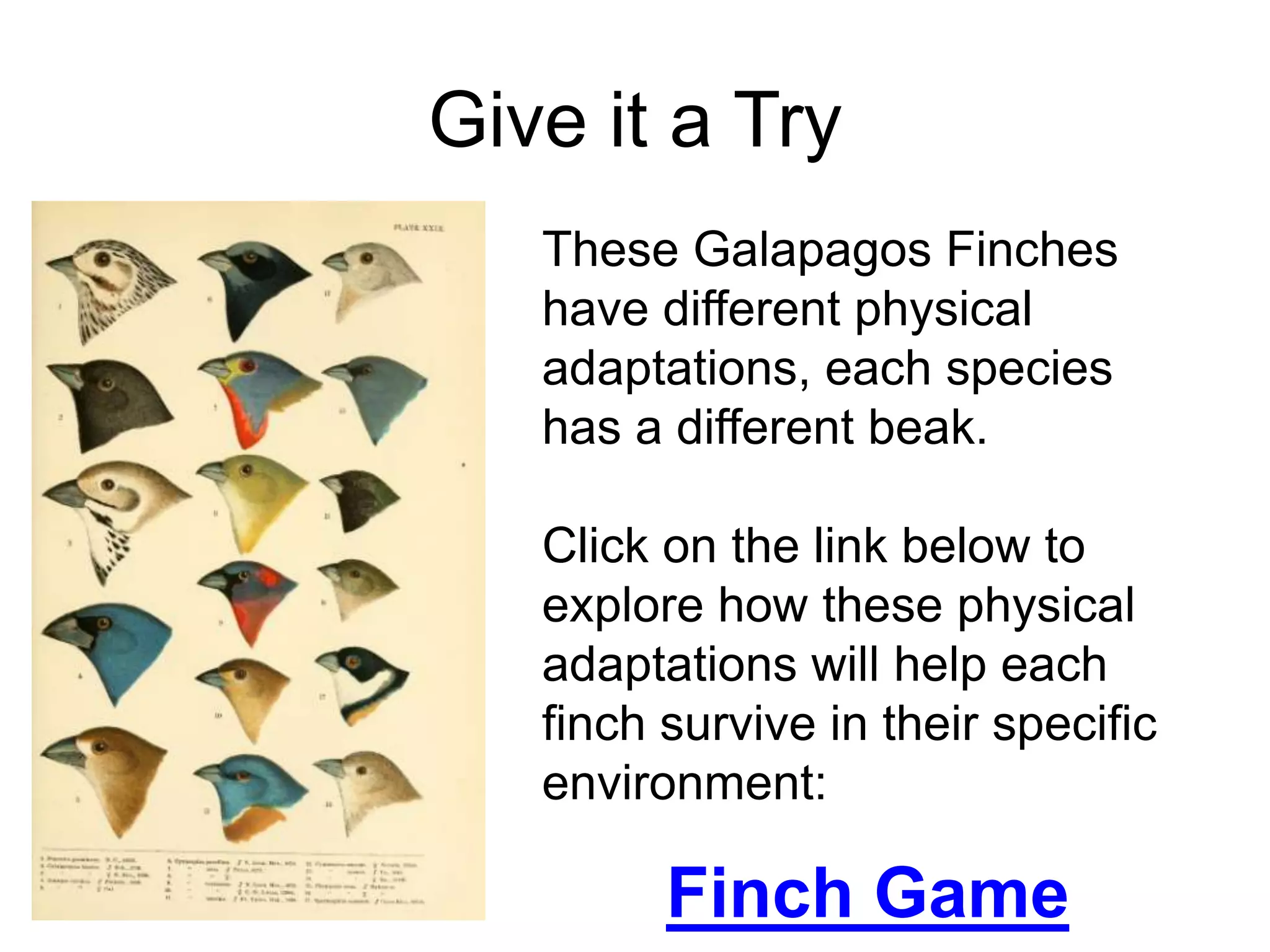
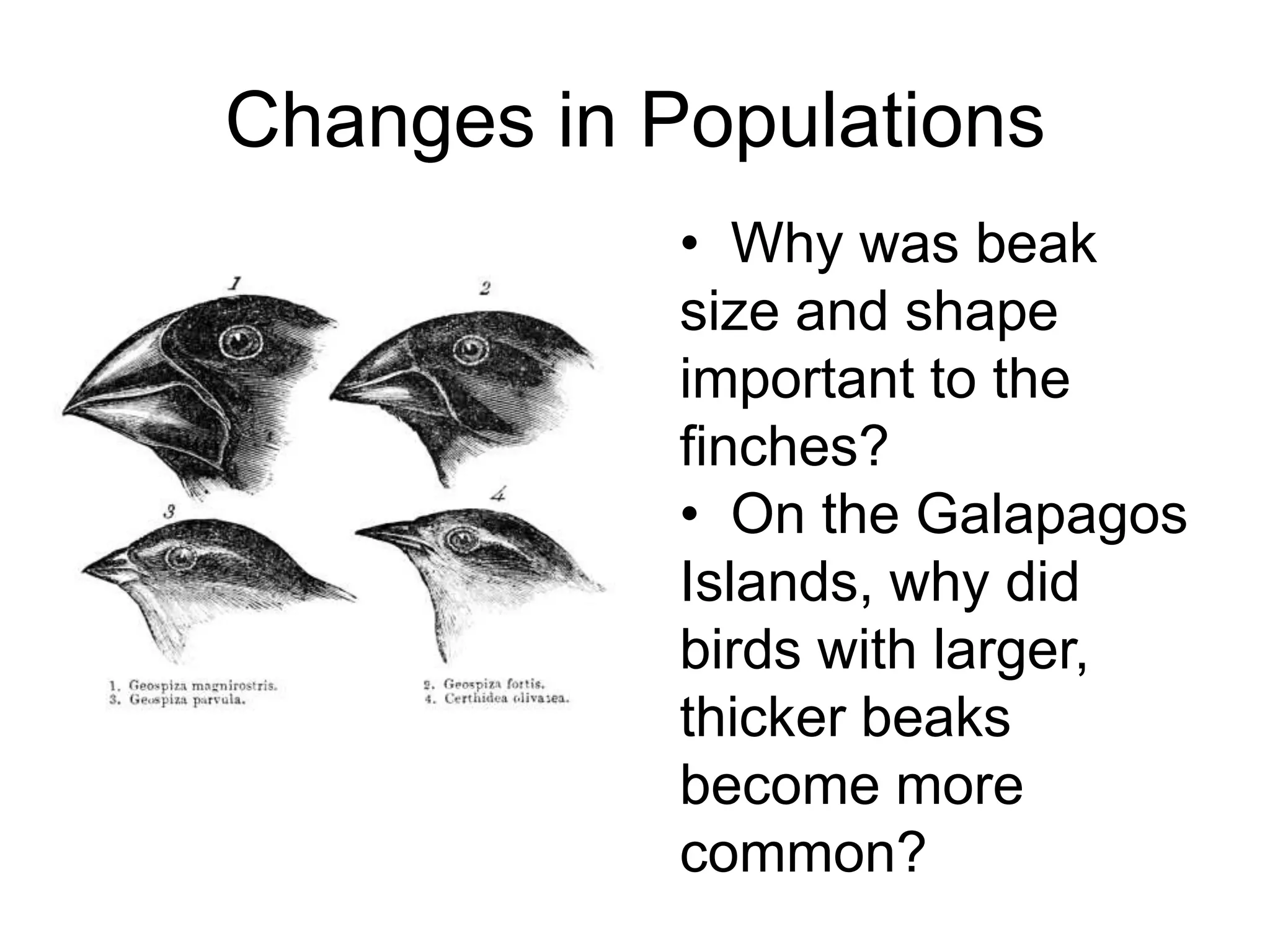
   These Galapagos Finches
   have different physical
   adaptations, each species
   has a different beak.

   Click on the link below to
   explore how these physical
   adaptations will help each
   finch survive in their specific
   environment:

         Finch Game
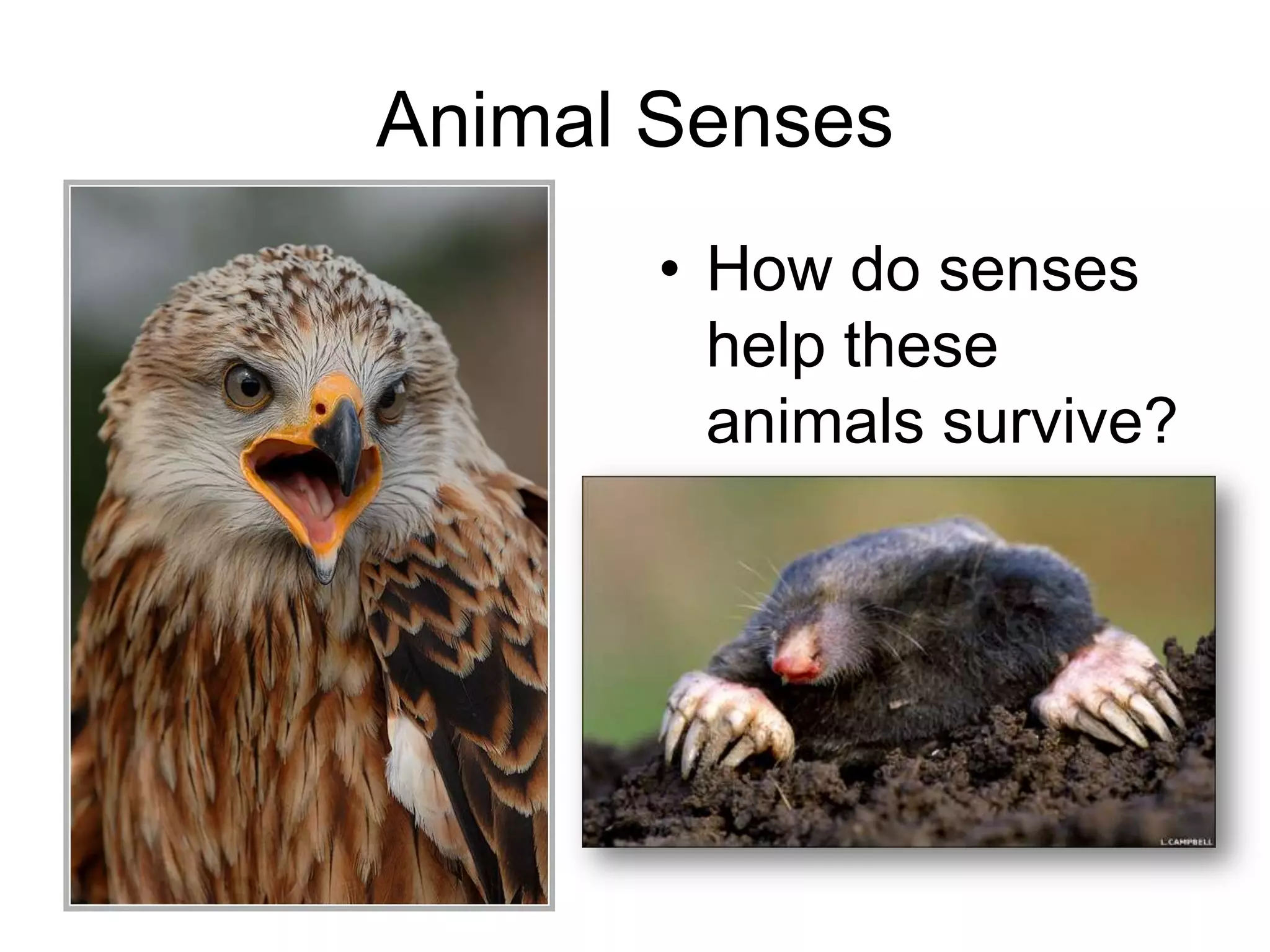
Animal Senses
       • How do senses
         help these
         animals survive?
Give it a Try
Let’s test out our knowledge of physical
adaptations and animal senses to build a
monster and see if it survives in its
environment.

Click on the link below to get started.

            Monster Game
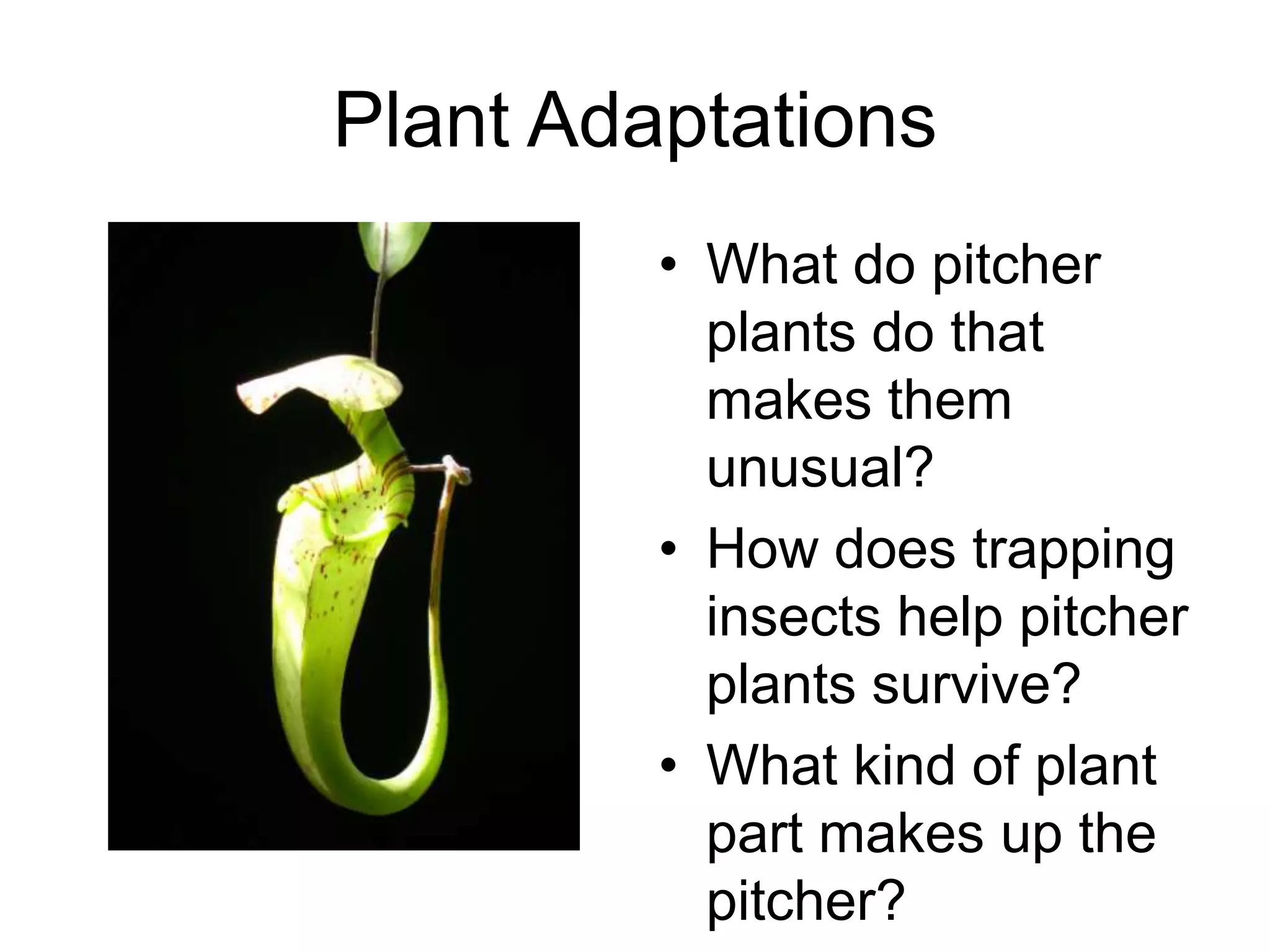
Plant Adaptations
         • What do pitcher
           plants do that
           makes them
           unusual?
         • How does trapping
           insects help pitcher
           plants survive?
         • What kind of plant
           part makes up the
           pitcher?
Review
Watch the video segment: Cave
Specialists
As you watch think about:
  • What types of physical adaptations you
  observe.
  • How each adaptation helps an animal
  survive in its environment.
State part of the question in your answer.
Locate the evidence for your answer in the text.
Add your own information by summarizing the text.
Make a meaningful connection
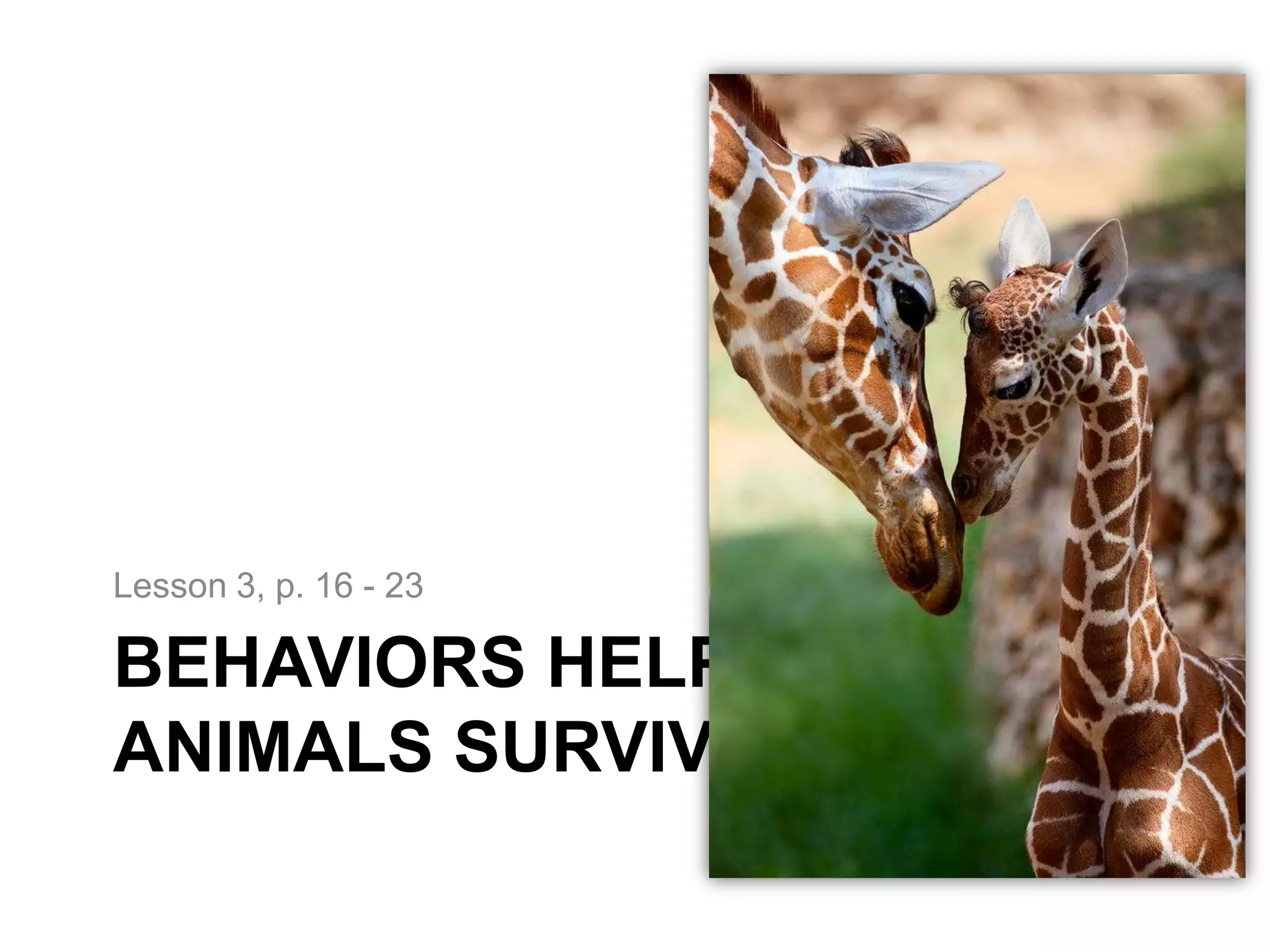
Lesson 3, p. 16 - 23

BEHAVIORS HELP
ANIMALS SURVIVE
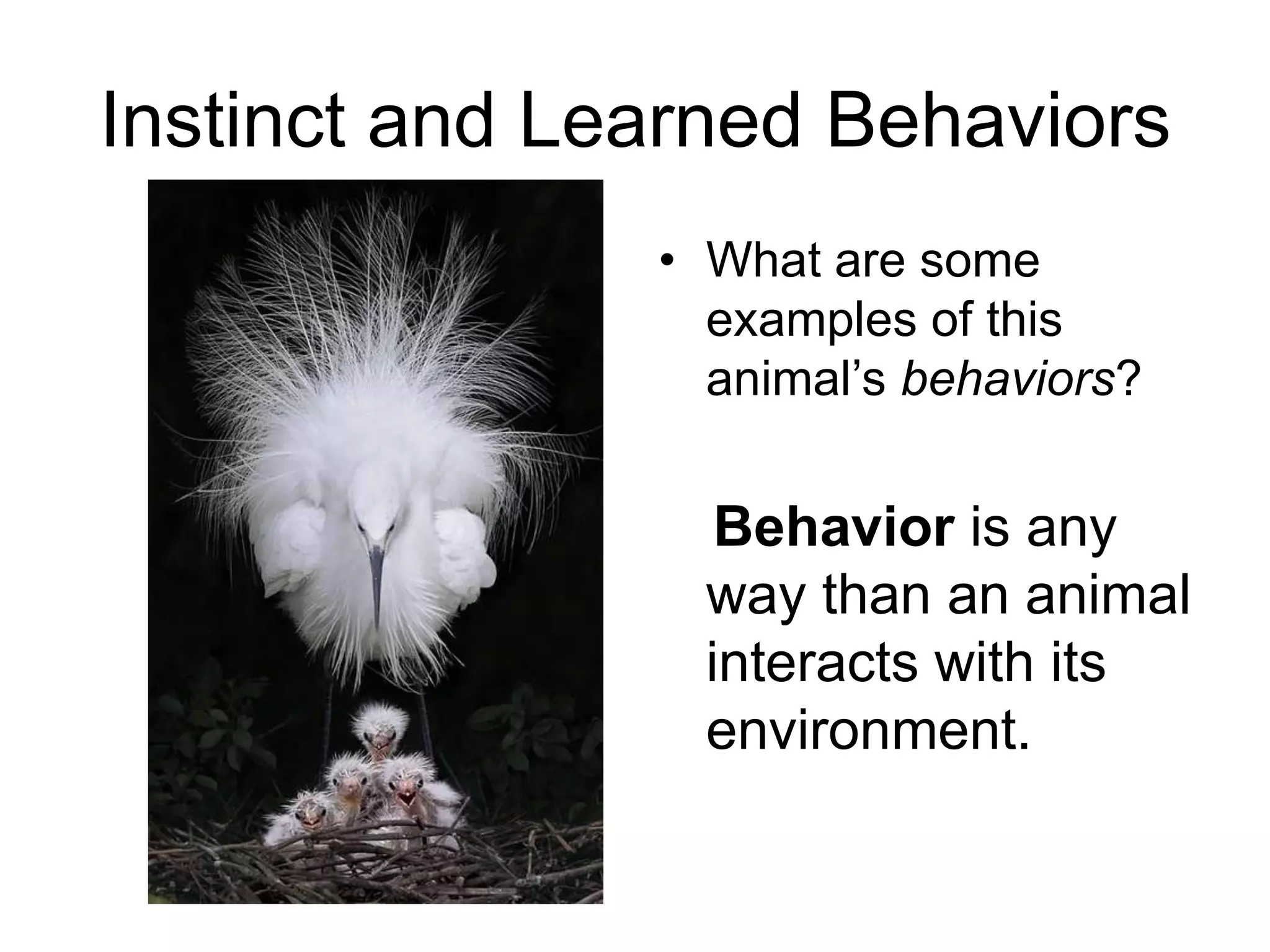
Instinct and Learned Behaviors
               • What are some
                 examples of this
                 animal’s behaviors?


                  Behavior is any
                 way than an animal
                 interacts with its
                 environment.
Behavior
Instinct                      Learned
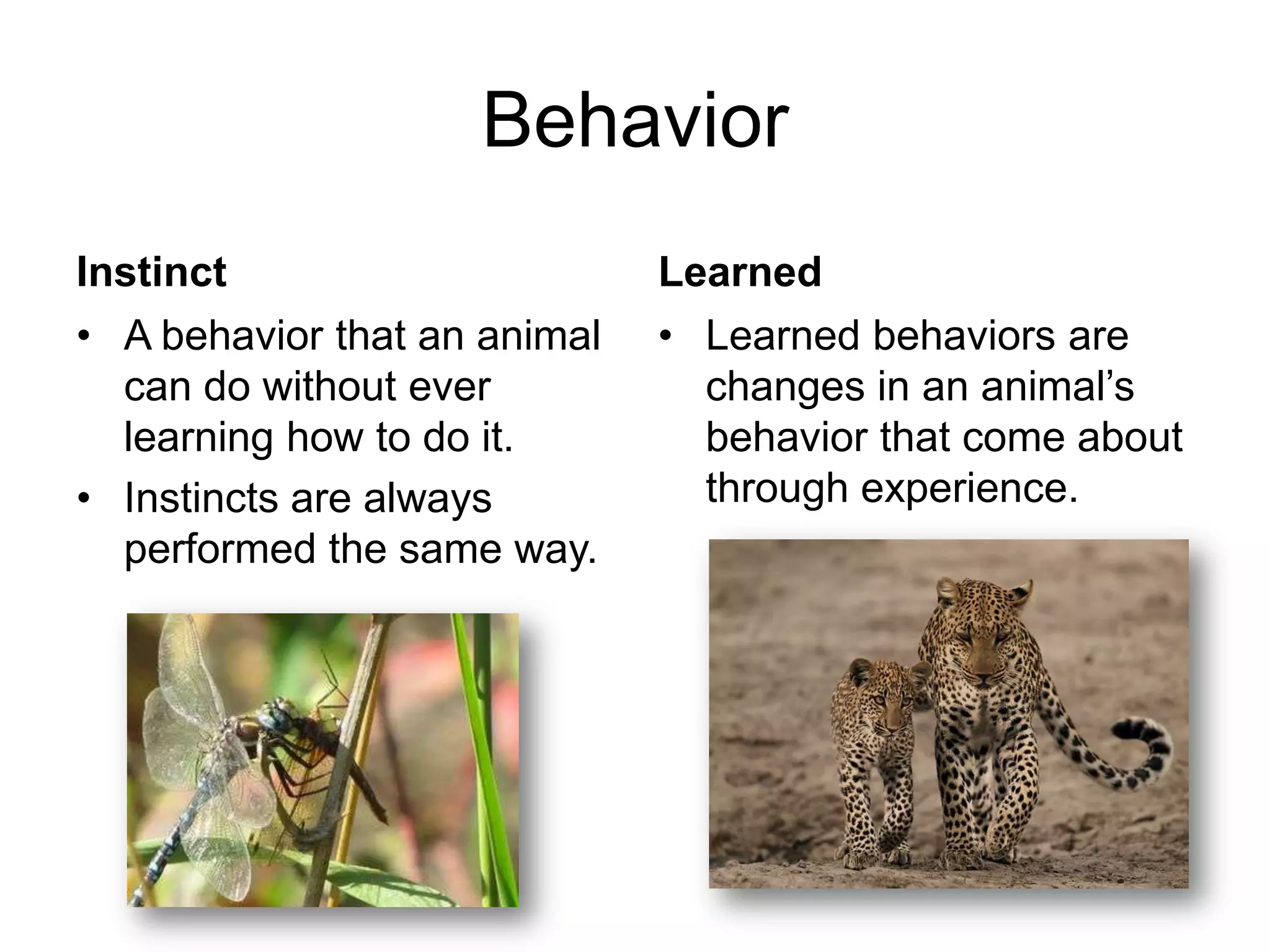
• A behavior that an animal   • Learned behaviors are
  can do without ever           changes in an animal’s
  learning how to do it.        behavior that come about
• Instincts are always          through experience.
  performed the same way.
Behavior


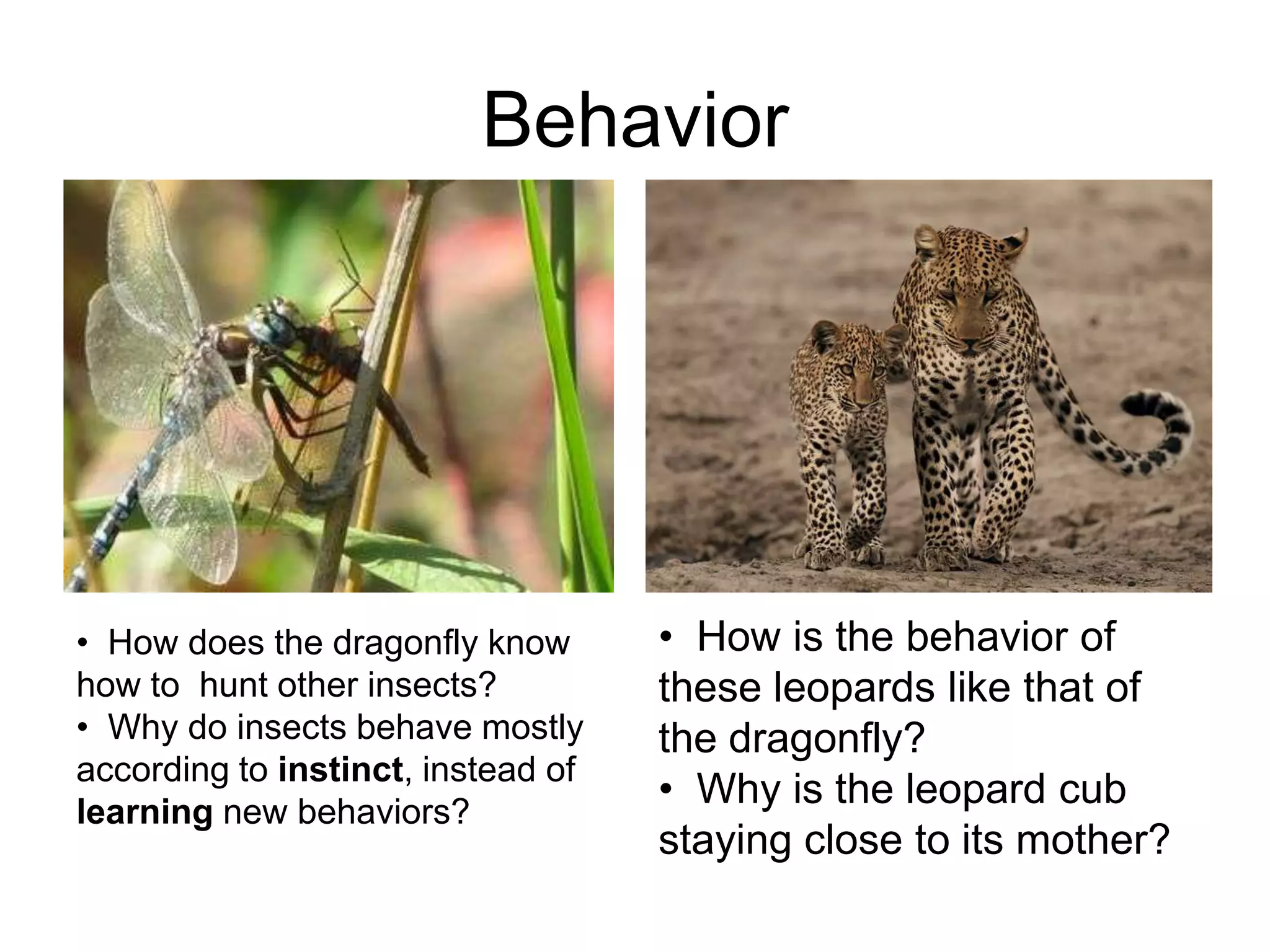
• How does the dragonfly know       • How is the behavior of
how to hunt other insects?          these leopards like that of
• Why do insects behave mostly      the dragonfly?
according to instinct, instead of
learning new behaviors?
                                    • Why is the leopard cub
                                    staying close to its mother?
Types of Behaviors that Help Animals to Survive

BEHAVIORS
Protection
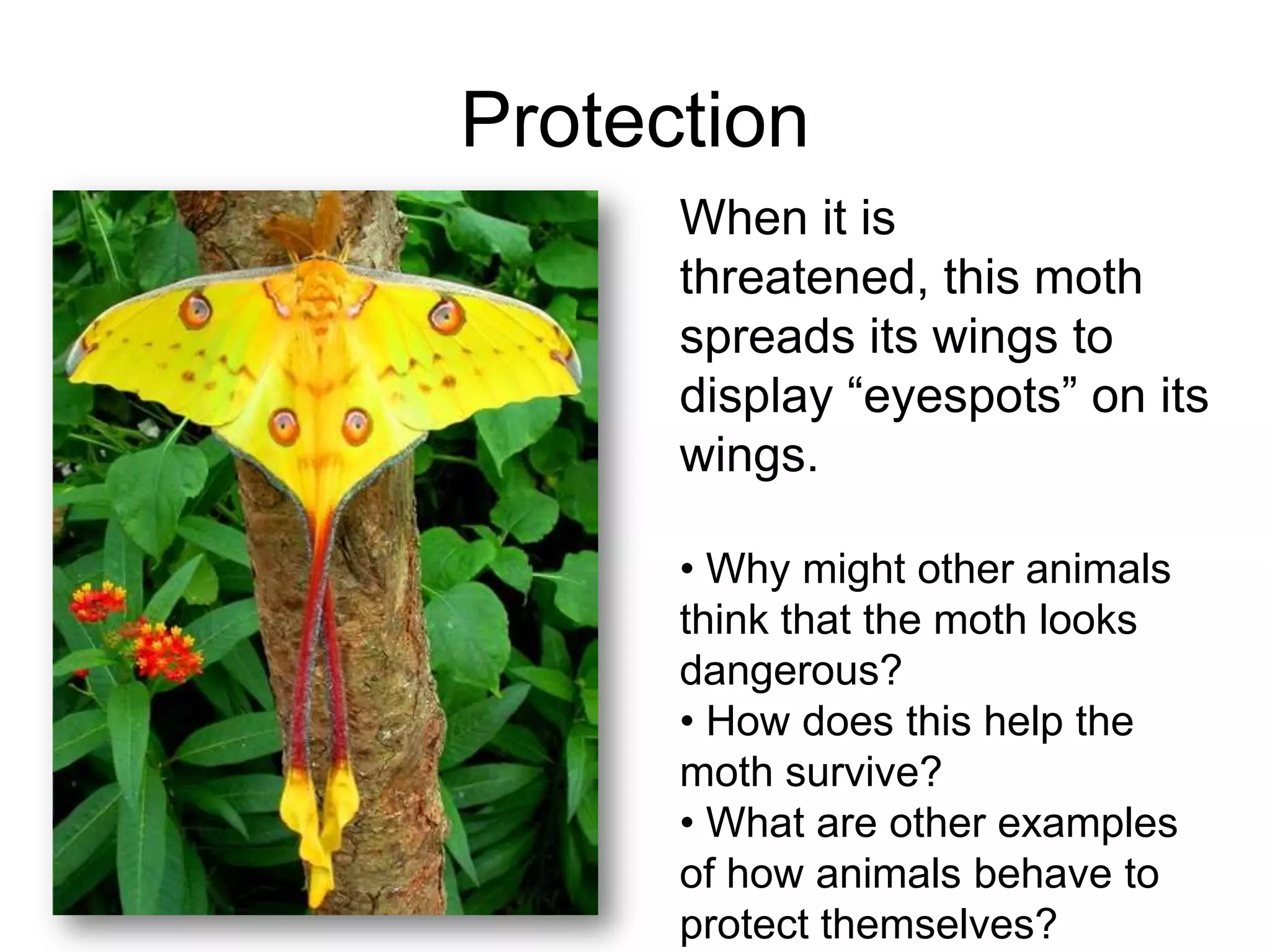
      When it is
      threatened, this moth
      spreads its wings to
      display “eyespots” on its
      wings.
      • Why might other animals
      think that the moth looks
      dangerous?
      • How does this help the
      moth survive?
      • What are other examples
      of how animals behave to
      protect themselves?
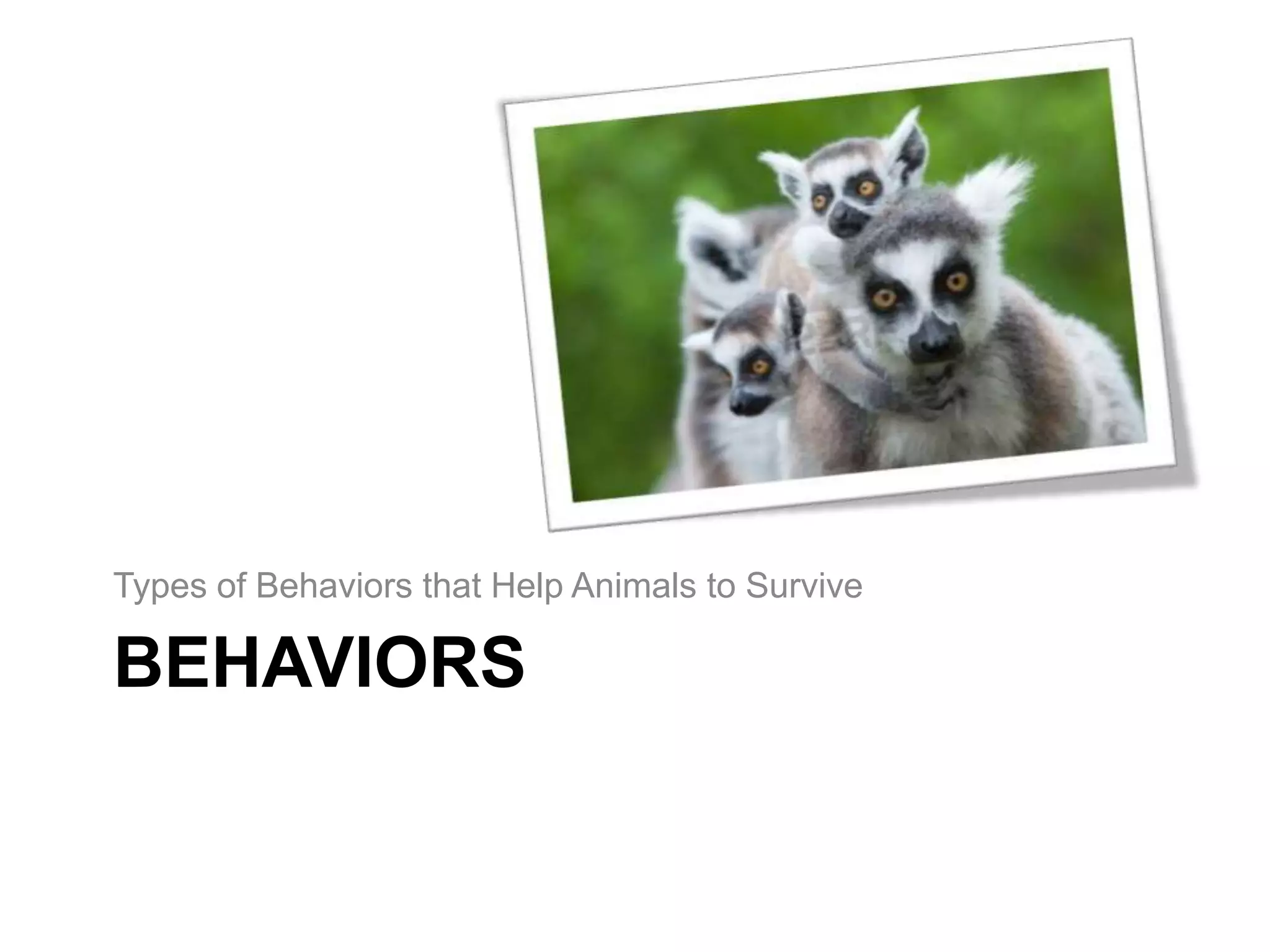
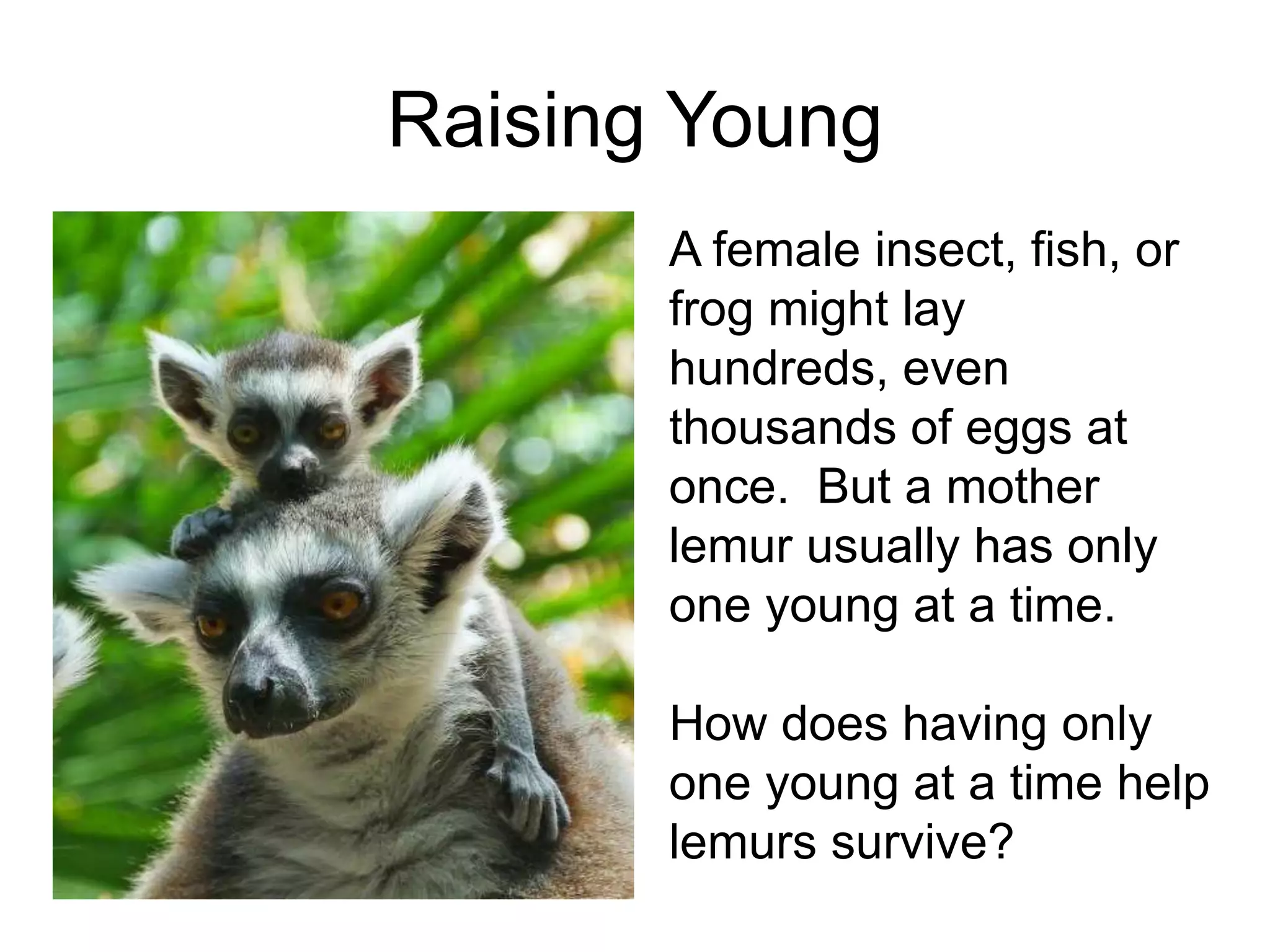
Raising Young
       A female insect, fish, or
       frog might lay
       hundreds, even
       thousands of eggs at
       once. But a mother
       lemur usually has only
       one young at a time.

       How does having only
       one young at a time help
       lemurs survive?
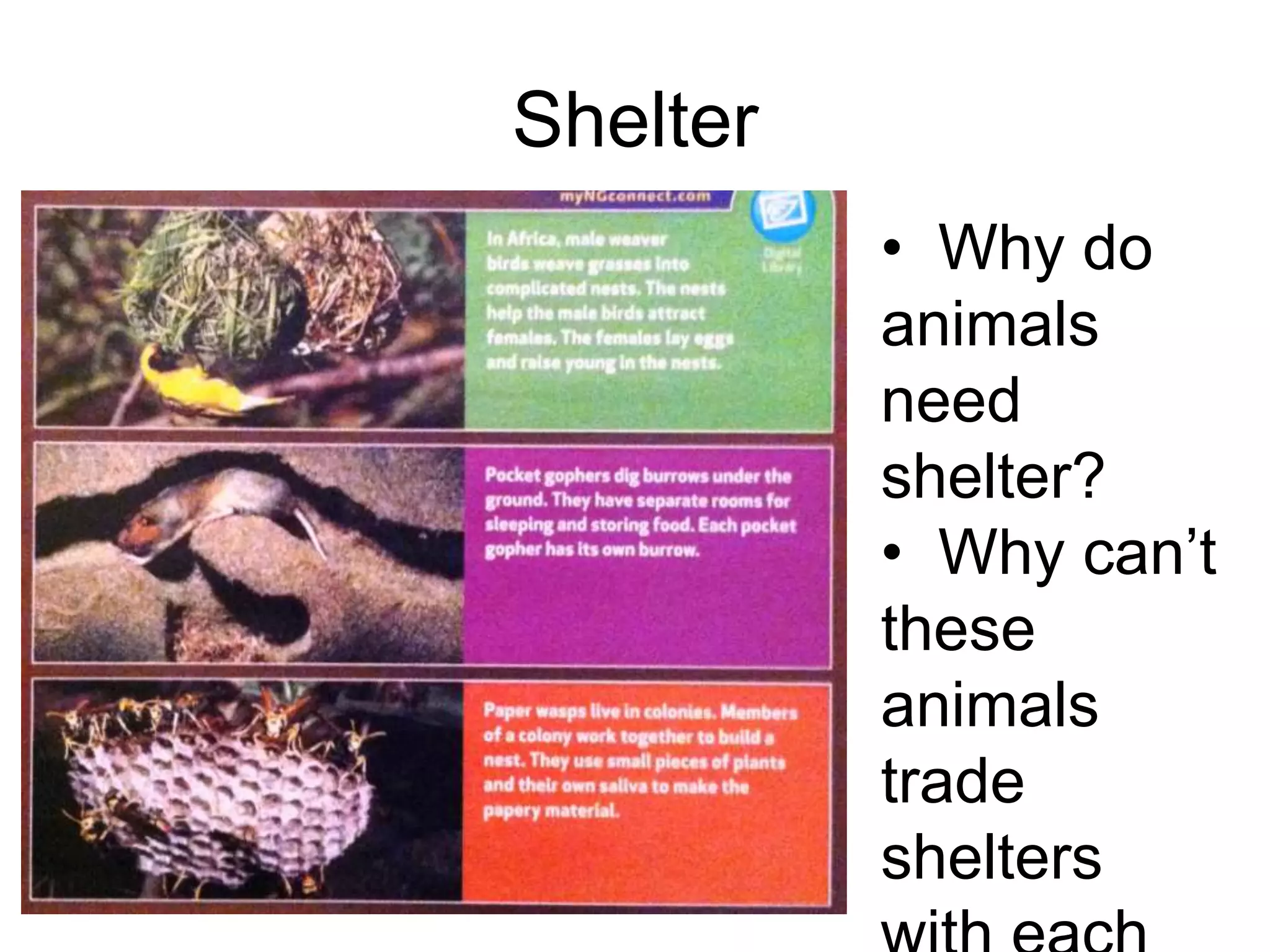
Shelter
          • Why do
          animals
          need
          shelter?
          • Why can’t
          these
          animals
          trade
          shelters
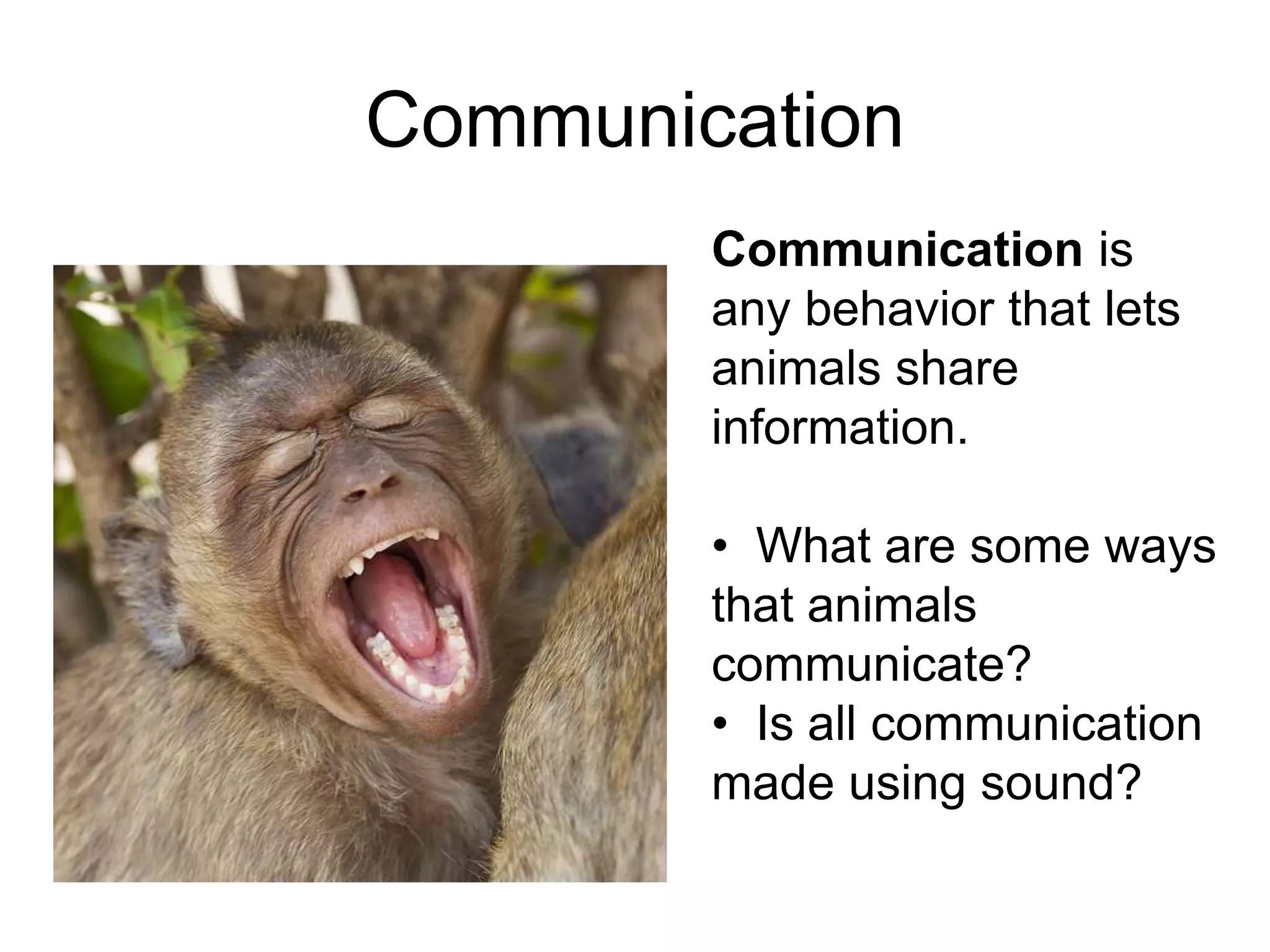
Communication
        Communication is
        any behavior that lets
        animals share
        information.

        • What are some ways
        that animals
        communicate?
        • Is all communication
        made using sound?
Review
Watch video: Underwater
Astonishments

As you watch, be thinking of:
  • Examples of physical adaptations
  • Examples of behavioral adaptations
  • Which behaviors are learned & which
  are instinct
  • Examples of communication
State part of the question in your answer.
Locate the evidence for your answer in the text.
Add your own information by summarizing the
text.

Make a meaningful connection
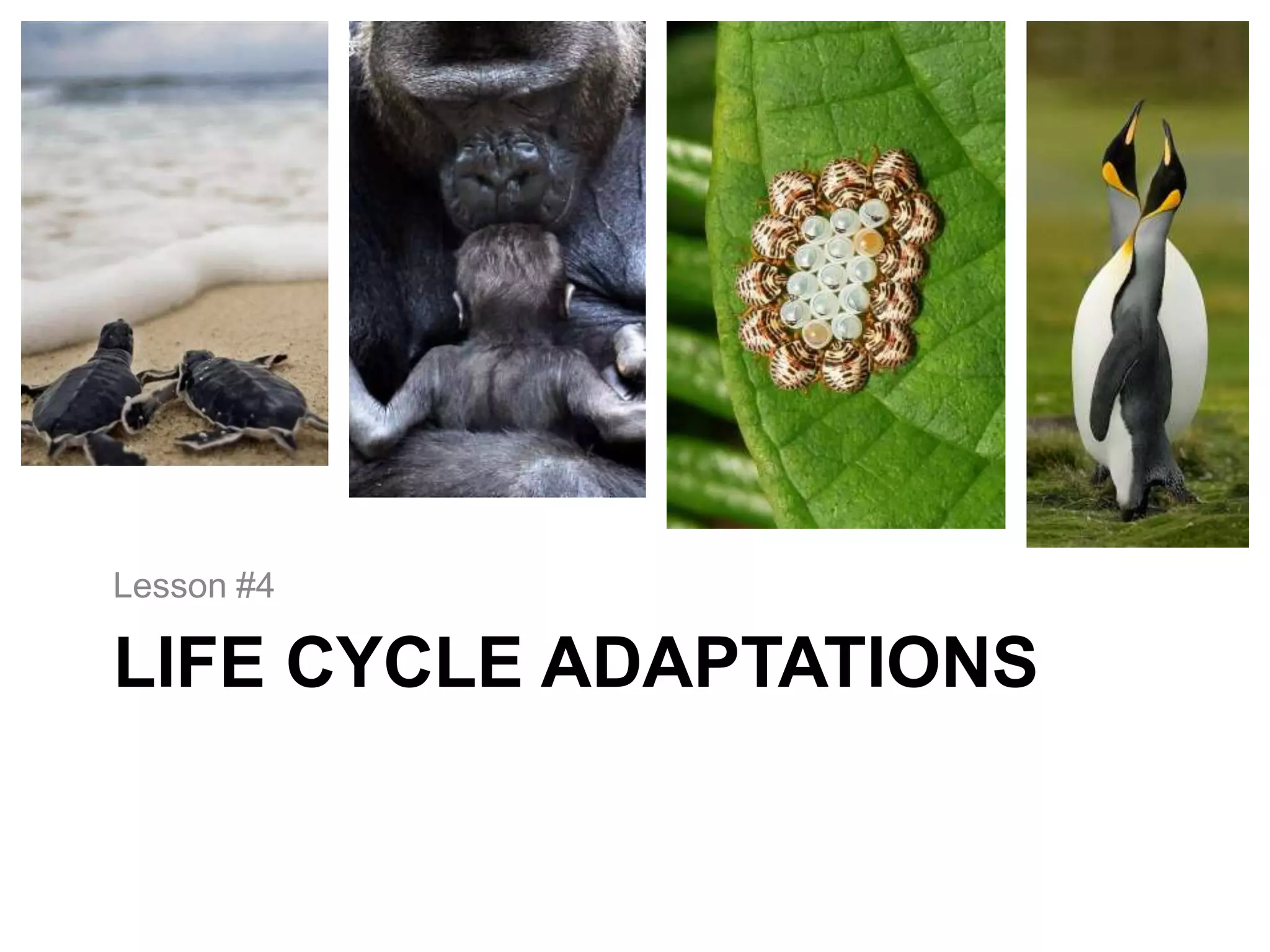
Lesson #4

LIFE CYCLE ADAPTATIONS
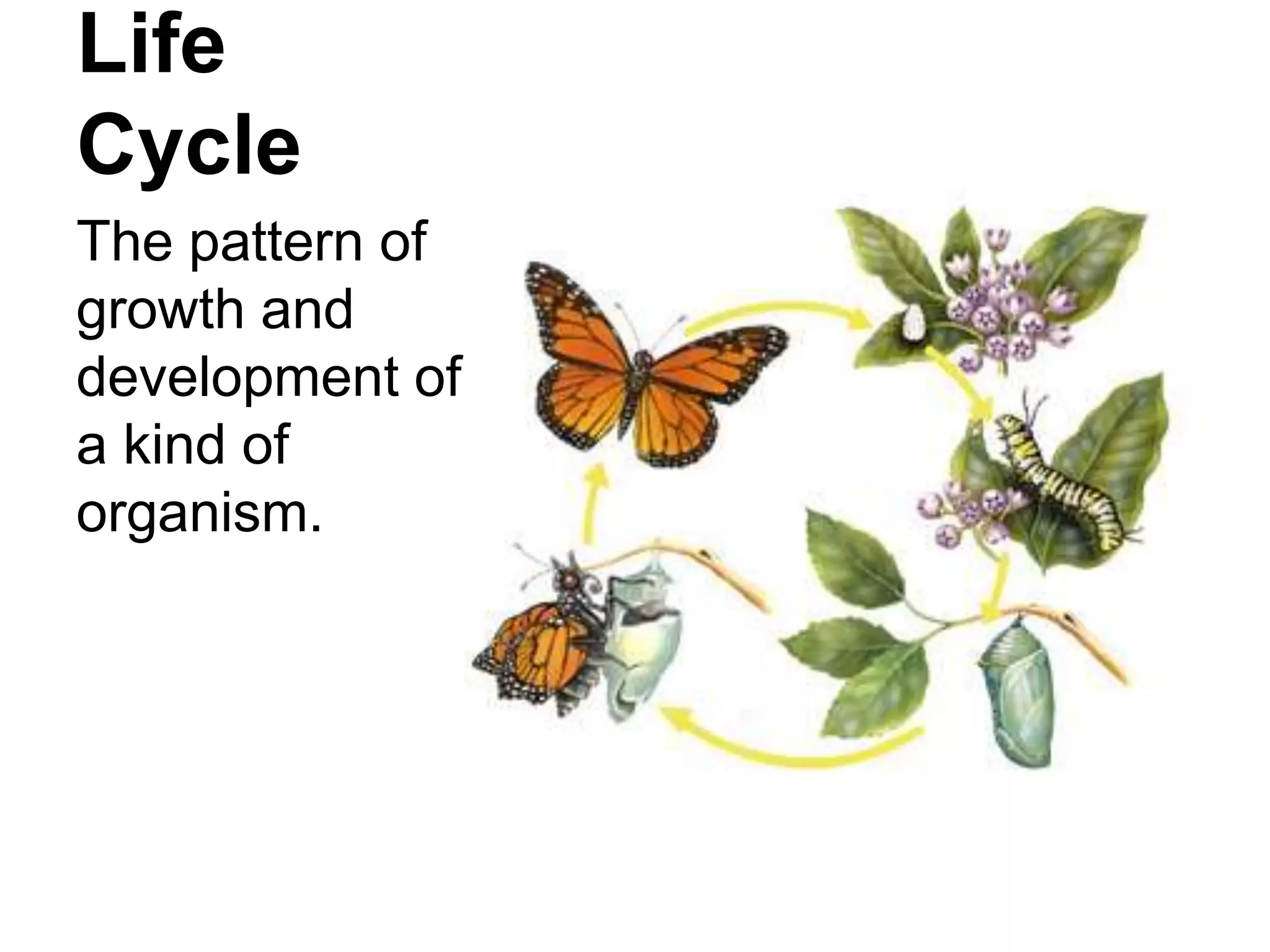
Life
Cycle
The pattern of
growth and
development of
a kind of
organism.
Life Cycle Adaptations
Living things also have life cycles that are adapted to help them survive.
For example, deer do not typically give birth in the fall or winter, because a
young deer would have difficulty surviving. Instead, deer have their young
in the spring – that way young deer have time to develop and grow before
weather conditions make survival more difficult.

Let’s look at some other examples by watching this video clip:

        Planet Earth: Deserts (Impact of Water on the Desert Ecosystem)

Be looking for:
  • Examples of how plant life cycles are adapted
  to
    their environments
  • Examples of how animal life cycles are adapted
  to
Plant Life Cycles
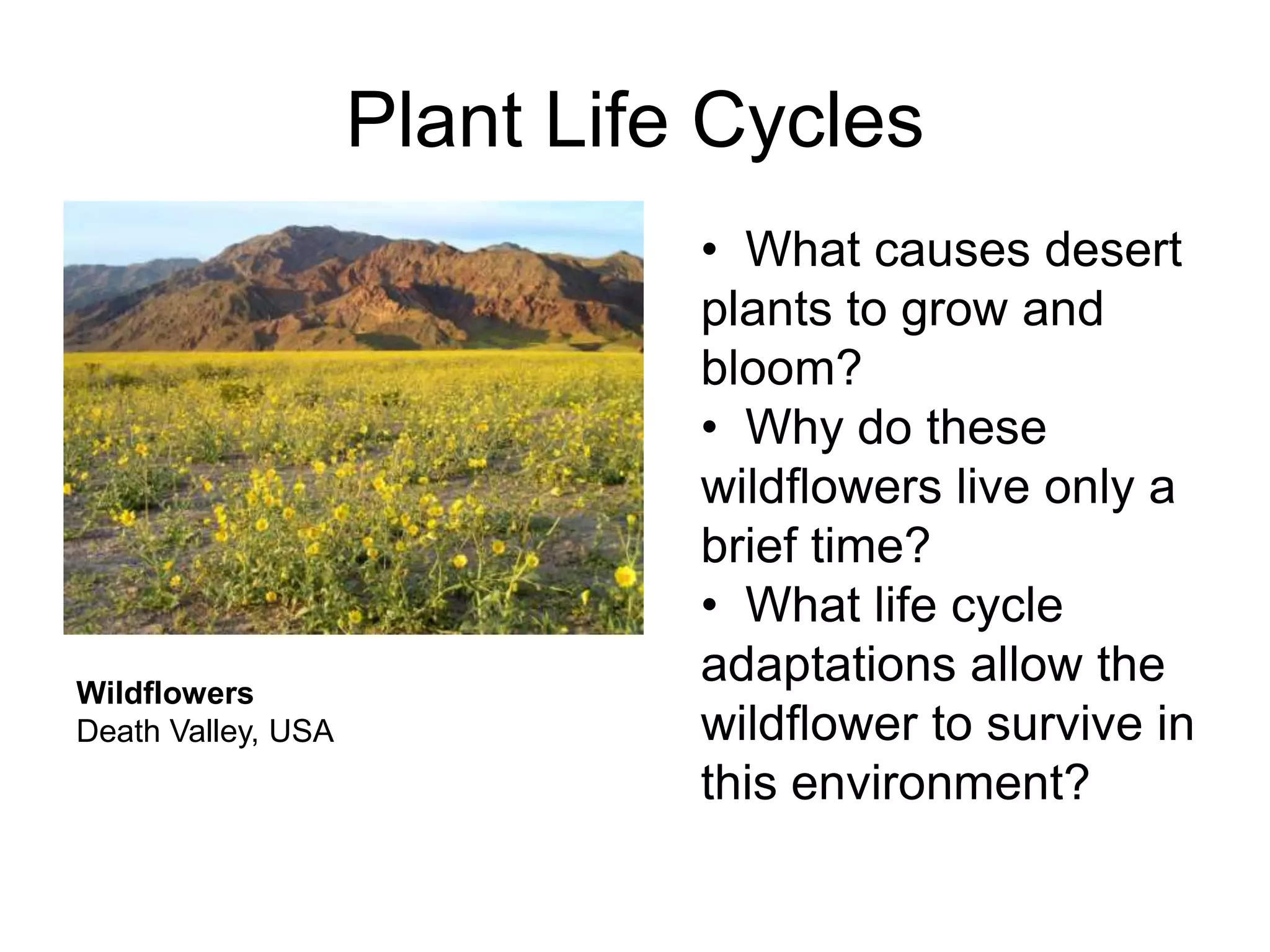
                              • What causes desert
                              plants to grow and
                              bloom?
                              • Why do these
                              wildflowers live only a
                              brief time?
                              • What life cycle
Wildflowers
                              adaptations allow the
Death Valley, USA             wildflower to survive in
                              this environment?
Animal Life Cycles
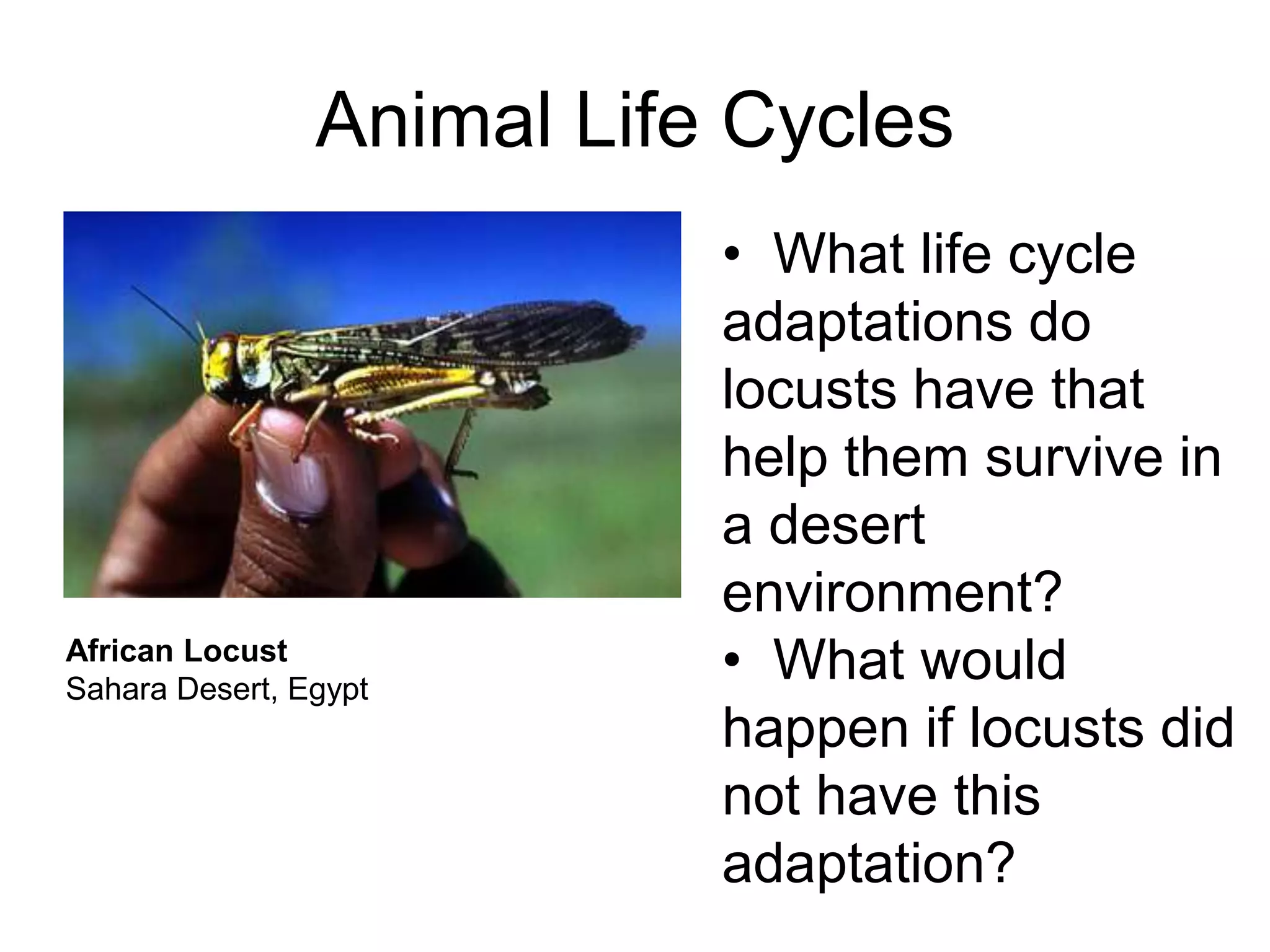
                           • What life cycle
                           adaptations do
                           locusts have that
                           help them survive in
                           a desert
                           environment?
African Locust
Sahara Desert, Egypt
                           • What would
                           happen if locusts did
                           not have this
                           adaptation?
Lesson #5

WHEN ENVIRONMENTS
CHANGE
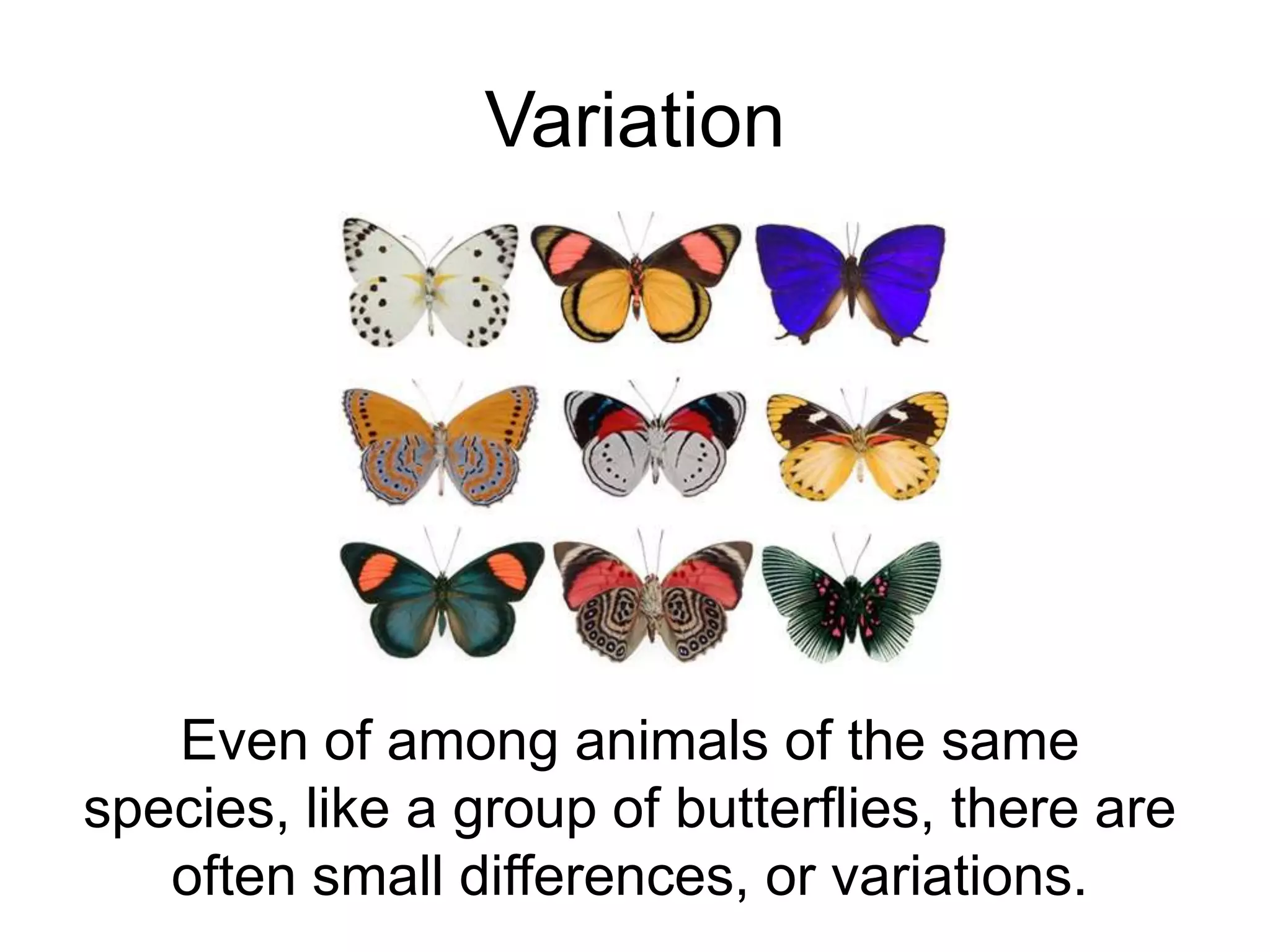
Variation


   Even of among animals of the same
species, like a group of butterflies, there are
   often small differences, or variations.
Differences Among Individuals
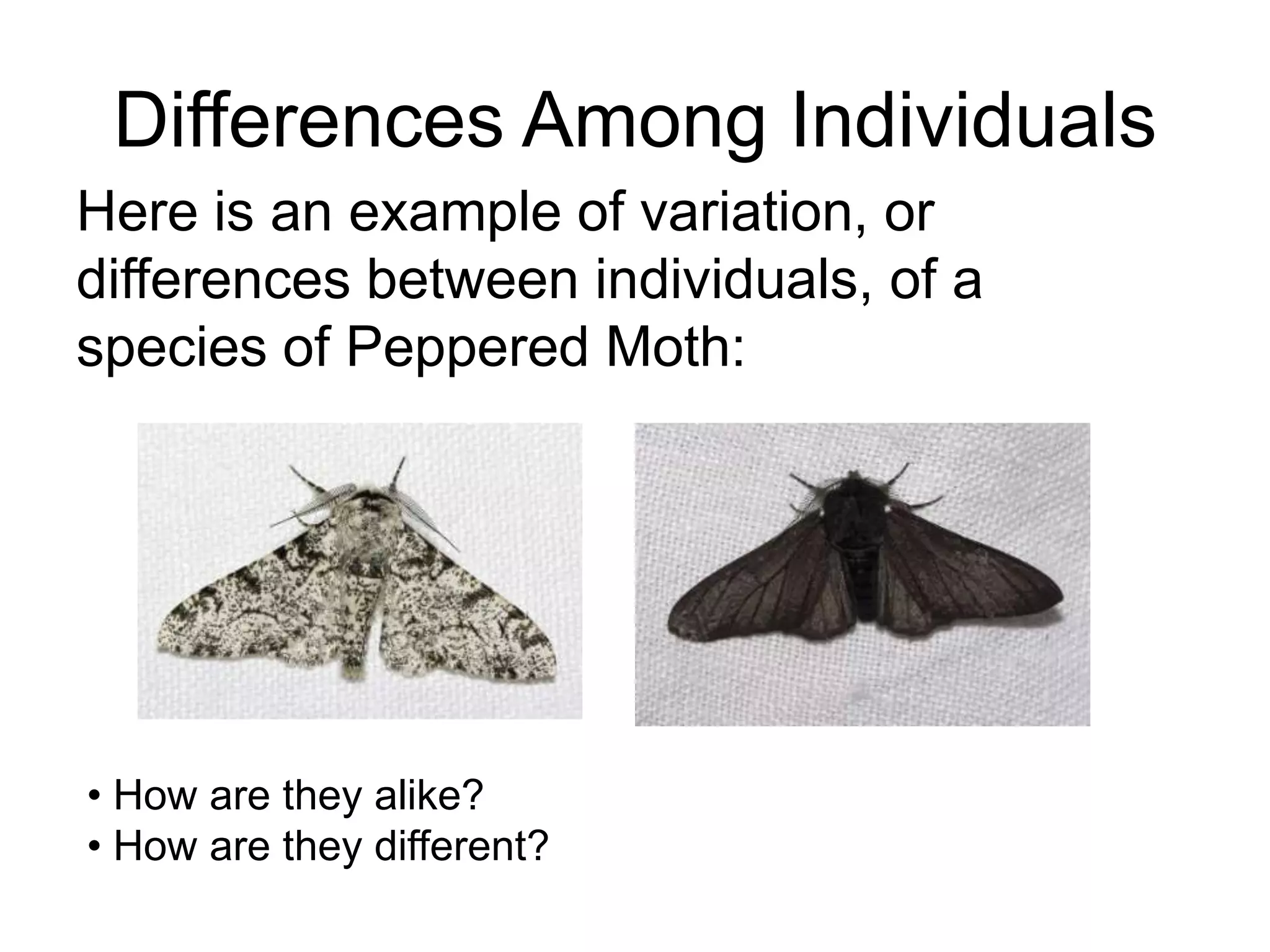
Here is an example of variation, or
differences between individuals, of a
species of Peppered Moth:


• How are they alike?
• How are they different?
Differences Among Individuals
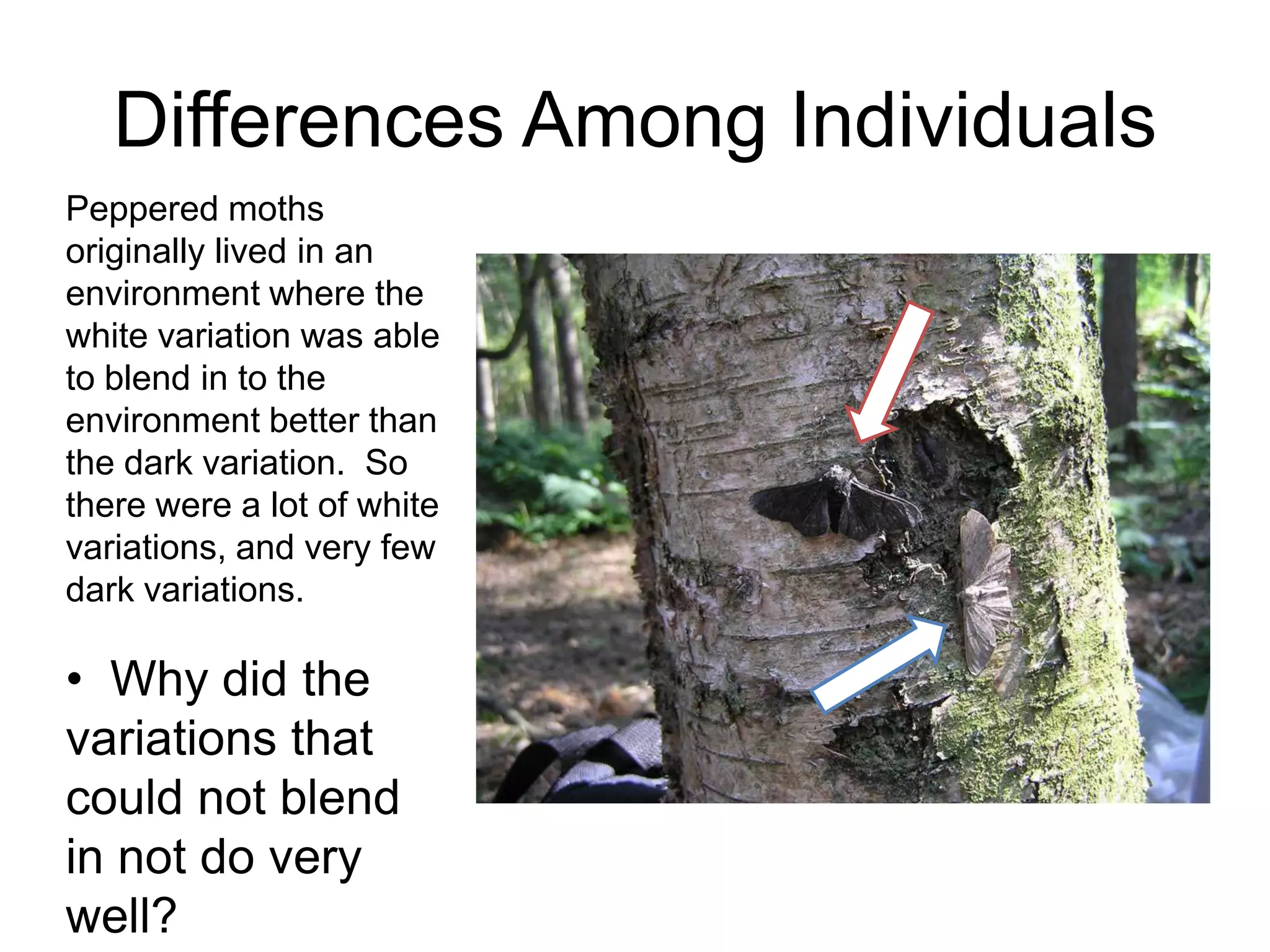
Peppered moths
originally lived in an
environment where the
white variation was able
to blend in to the
environment better than
the dark variation. So
there were a lot of white
variations, and very few
dark variations.

• Why did the
variations that
could not blend
in not do very
well?
Differences Among Individuals
During the Industrial
Revolution, however, pollution coated the
trees with black coal-dust. How do you think
this changed which variation of moth would
survive?

Let’s test out that hypothesis!

             Peppered Moths
            Natural Selection in Black and White
Changes in Populations
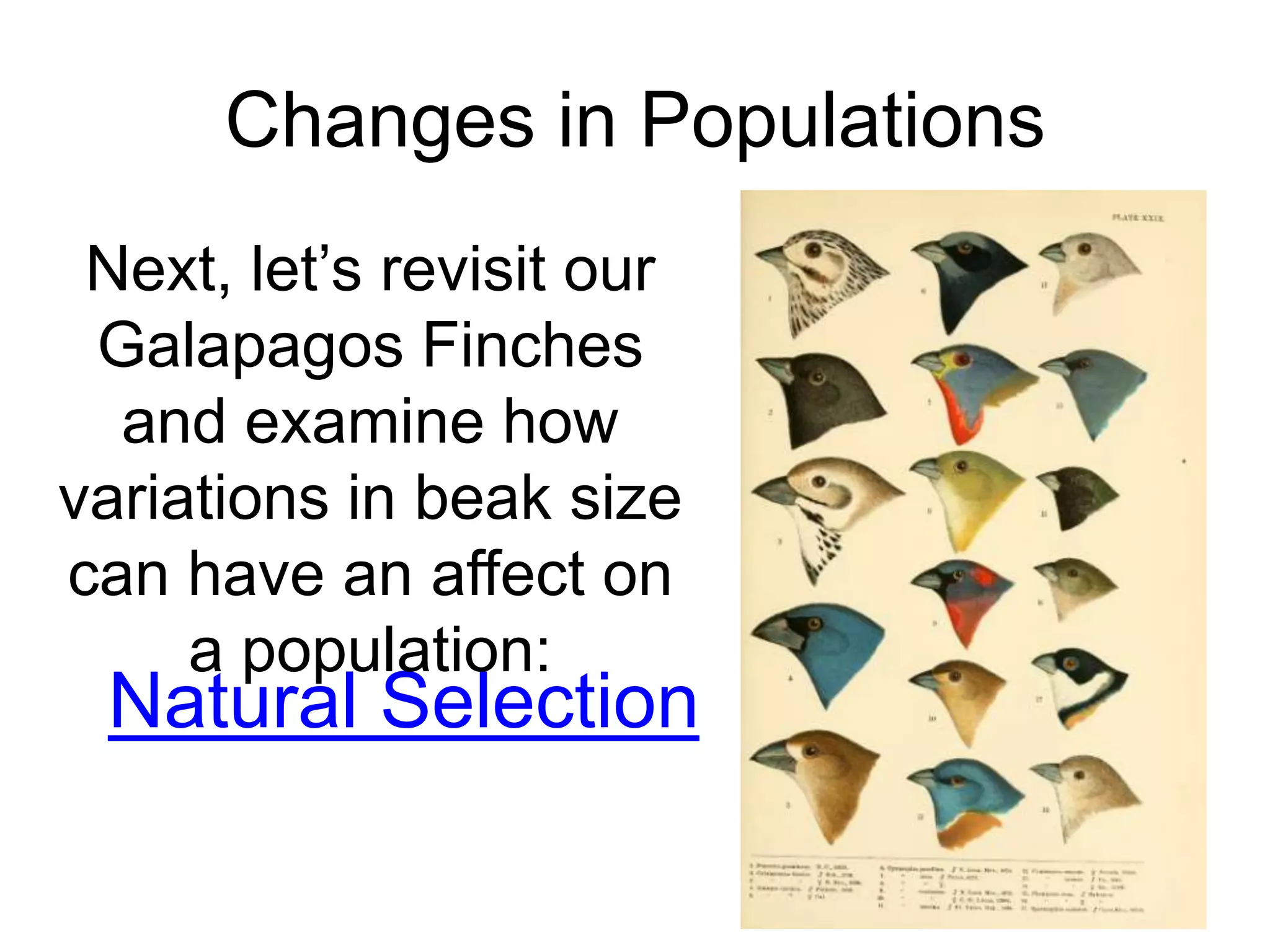
 Next, let’s revisit our
 Galapagos Finches
  and examine how
variations in beak size
can have an affect on
     a population:
 Natural Selection
Changes in Populations
            • Why was beak
            size and shape
            important to the
            finches?
            • On the Galapagos
            Islands, why did
            birds with larger,
            thicker beaks
            become more
            common?
State part of the question in your answer.
Locate the evidence for your answer in the text.
Add your own information by summarizing the text.
Make a meaningful connection

Chapter 1

  • 1.
    Chapter 1: Howdo Living Things Survive and Change?
  • 2.
    Lesson 2, p.10 - 15 PHYSICAL CHARACTERISTICS OF LIVING THINGS
  • 3.
    Animal Adaptations • How is the body of the shark different from other fish? • How did the shark get those nice, pointy teeth? • How do these adaptations help the shark survive in its environment? Adaptations are characteristics that help organisms survive or reproduce.
  • 4.
    Animal Adaptations • What are some of the physical characteristics of this Pangolin? • How did the Pangolin get these characteristics? • How do you think these adaptations help the Pangolin survive in its environment?
  • 5.
  • 6.
    • What doall these photos have in common? • Which feet are most like human hands? How are they alike? • Why are Gecko’s feet ideal for climbing trees? • Why are reindeer’s feet useful in its environment?
  • 8.
    Give it aTry These Galapagos Finches have different physical adaptations, each species has a different beak. Click on the link below to explore how these physical adaptations will help each finch survive in their specific environment: Finch Game
  • 9.
    Animal Senses • How do senses help these animals survive?
  • 10.
    Give it aTry Let’s test out our knowledge of physical adaptations and animal senses to build a monster and see if it survives in its environment. Click on the link below to get started. Monster Game
  • 11.
    Plant Adaptations • What do pitcher plants do that makes them unusual? • How does trapping insects help pitcher plants survive? • What kind of plant part makes up the pitcher?
  • 13.
    Review Watch the videosegment: Cave Specialists As you watch think about: • What types of physical adaptations you observe. • How each adaptation helps an animal survive in its environment.
  • 14.
    State part ofthe question in your answer. Locate the evidence for your answer in the text. Add your own information by summarizing the text. Make a meaningful connection
  • 15.
    Lesson 3, p.16 - 23 BEHAVIORS HELP ANIMALS SURVIVE
  • 16.
    Instinct and LearnedBehaviors • What are some examples of this animal’s behaviors? Behavior is any way than an animal interacts with its environment.
  • 17.
    Behavior Instinct Learned • A behavior that an animal • Learned behaviors are can do without ever changes in an animal’s learning how to do it. behavior that come about • Instincts are always through experience. performed the same way.
  • 18.
    Behavior • How doesthe dragonfly know • How is the behavior of how to hunt other insects? these leopards like that of • Why do insects behave mostly the dragonfly? according to instinct, instead of learning new behaviors? • Why is the leopard cub staying close to its mother?
  • 19.
    Types of Behaviorsthat Help Animals to Survive BEHAVIORS
  • 20.
    Protection When it is threatened, this moth spreads its wings to display “eyespots” on its wings. • Why might other animals think that the moth looks dangerous? • How does this help the moth survive? • What are other examples of how animals behave to protect themselves?
  • 21.
    Raising Young A female insect, fish, or frog might lay hundreds, even thousands of eggs at once. But a mother lemur usually has only one young at a time. How does having only one young at a time help lemurs survive?
  • 22.
    Shelter • Why do animals need shelter? • Why can’t these animals trade shelters
  • 23.
    Communication Communication is any behavior that lets animals share information. • What are some ways that animals communicate? • Is all communication made using sound?
  • 24.
    Review Watch video: Underwater Astonishments Asyou watch, be thinking of: • Examples of physical adaptations • Examples of behavioral adaptations • Which behaviors are learned & which are instinct • Examples of communication
  • 25.
    State part ofthe question in your answer. Locate the evidence for your answer in the text. Add your own information by summarizing the text. Make a meaningful connection
  • 26.
  • 27.
    Life Cycle The pattern of growthand development of a kind of organism.
  • 28.
    Life Cycle Adaptations Livingthings also have life cycles that are adapted to help them survive. For example, deer do not typically give birth in the fall or winter, because a young deer would have difficulty surviving. Instead, deer have their young in the spring – that way young deer have time to develop and grow before weather conditions make survival more difficult. Let’s look at some other examples by watching this video clip: Planet Earth: Deserts (Impact of Water on the Desert Ecosystem) Be looking for: • Examples of how plant life cycles are adapted to their environments • Examples of how animal life cycles are adapted to
  • 29.
    Plant Life Cycles • What causes desert plants to grow and bloom? • Why do these wildflowers live only a brief time? • What life cycle Wildflowers adaptations allow the Death Valley, USA wildflower to survive in this environment?
  • 30.
    Animal Life Cycles • What life cycle adaptations do locusts have that help them survive in a desert environment? African Locust Sahara Desert, Egypt • What would happen if locusts did not have this adaptation?
  • 31.
  • 32.
    Variation Even of among animals of the same species, like a group of butterflies, there are often small differences, or variations.
  • 33.
    Differences Among Individuals Hereis an example of variation, or differences between individuals, of a species of Peppered Moth: • How are they alike? • How are they different?
  • 34.
    Differences Among Individuals Pepperedmoths originally lived in an environment where the white variation was able to blend in to the environment better than the dark variation. So there were a lot of white variations, and very few dark variations. • Why did the variations that could not blend in not do very well?
  • 35.
    Differences Among Individuals Duringthe Industrial Revolution, however, pollution coated the trees with black coal-dust. How do you think this changed which variation of moth would survive? Let’s test out that hypothesis! Peppered Moths Natural Selection in Black and White
  • 36.
    Changes in Populations Next, let’s revisit our Galapagos Finches and examine how variations in beak size can have an affect on a population: Natural Selection
  • 37.
    Changes in Populations • Why was beak size and shape important to the finches? • On the Galapagos Islands, why did birds with larger, thicker beaks become more common?
  • 38.
    State part ofthe question in your answer. Locate the evidence for your answer in the text. Add your own information by summarizing the text. Make a meaningful connection