TOPIC:- ANIMAL ADAPTATIONS
PRESENTED
BY
MOHD ASIF KANTH
M.SC ZOOLOGY
BARKATULLAH UNIVERSITY (BHOPAL)
DEPTT. OF ZOOLOGY AND APPLIED AQUACULTURE
Email - asifkanth89@gmail.com
+919018533143 / +919697167585
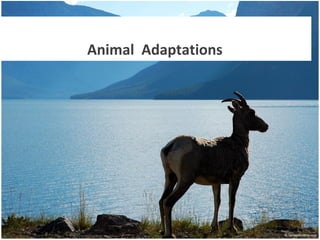
Animal Adaptations
Introduction
Definition
Adaptation in different animals
Adaptation in Amphibians, Reptiles, Birds and Mammals.
Conclusion
SYNOPSIS
Adaptation: a structure or behavior that helps a living thing live in its
surroundings.
Adapted: made fit to live under certain conditions.
Protective colorations: colors or patterns on an animal that help keep the
animal from being seen by predators.
Migration: movement from one place to another when the seasons change.
Hibernate: to spend the winter in a state in which the body greatly slows
down.
Nitrogen: a material that plants need to grow.
Annual: a plant that lives only one year.
Evergreen: a plant that stays green all year, including firs, spruces, and
pines.
Perennial: a plant that can live two years or more.
Vocabulary
An adaptation is a change in an animal’s physical
structure or behavior that helps an animal to survive
in their habitat.
Examples: The shape of a bird’s beak, number of fingers and
toes, or the color of an animal’s fur.
Physical adaptations do not develop during one
lifetime, but over many generations.
What is an
adaptation?
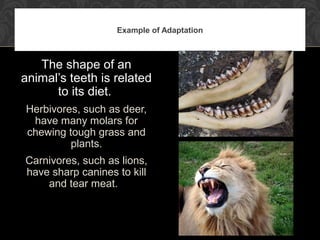
Example of Adaptation
The shape of an
animal’s teeth is related
to its diet.
Herbivores, such as deer,
have many molars for
chewing tough grass and
plants.
Carnivores, such as lions,
have sharp canines to kill
and tear meat.
All species have experienced adaptation and will
continue to slowly adapt as the next generations are
born.
We will identify certain species from each of these
groups and the reasons for their success:
Amphibians
Reptiles
Birds
Mammals
Who experiences adaptations?
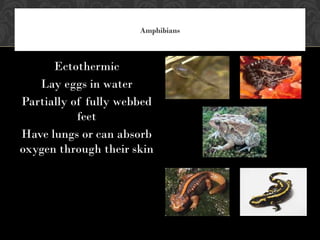
Amphibians
Ectothermic
Lay eggs in water
Partially of fully webbed
feet
Have lungs or can absorb
oxygen through their skin
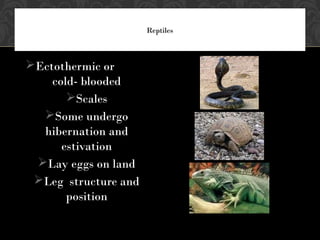
Reptiles
Ectothermic or
cold- blooded
Scales
Some undergo
hibernation and
estivation
Lay eggs on land
Leg structure and
position
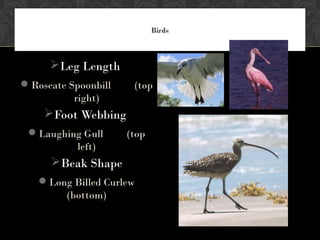
Birds
Leg Length
Roseate Spoonbill (top
right)
Foot Webbing
Laughing Gull (top
left)
Beak Shape
Long Billed Curlew
(bottom)
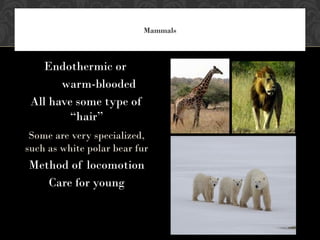
Mammals
Endothermic or
warm-blooded
All have some type of
“hair”
Some are very specialized,
such as white polar bear fur
Method of locomotion
Care for young
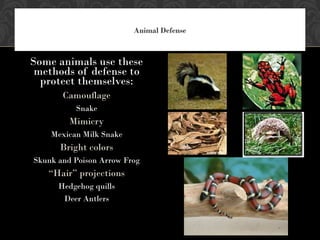
Animal Defense
Some animals use these
methods of defense to
protect themselves:
Camouflage
Snake
Mimicry
Mexican Milk Snake
Bright colors
Skunk and Poison Arrow Frog
“Hair” projections
Hedgehog quills
Deer Antlers
Why are the eyes of a lion set in front of the head rather than on the
sides?
Answer: Eyes in front of the head allow for depth perception and ability
to judge distances when hunting.
Adaptation Applications: Lions
What is the purpose of the mane on a male lion? What is the reason for the
lion’s color?
A thick mane helps the male to appear larger and serves as protection for
the throat. The tawny brown coat color camouflages the animal and young
among vegetation.
Adaptation Applications: Lions
Why are giraffes able to go for long periods of time without water?
Answer: Giraffes drink water when available, but can go weeks without it.
They rely on morning dew and the water content of their food.
Adaptation Applications: Giraffe
How are their long necks adapted to their lifestyle?
Answer: This extra length is thought to have evolved to help the giraffe
spot predators and other giraffes in the distance. Interestingly, giraffes and
humans have the same number of vertebrae in their necks.
Adaptation Applications: Giraffe
How do zebras defend themselves?
Capable of running up to 40 mph. Zebras defend themselves by kicking and
biting. Coloration also plays a role in evading predators, although theories
have not reached an agreement.
Adaptation Applications: Zebras
This is a very special kind of deep
sleep
It is brought on by short day
lengths, cold temperatures and food
shortages
It is a survival strategy
Dropping into a deep hibernation
means animals are using less energy
Food is scarce
Animals miss the cold seasons
What is
hibernation?
Why do animals
hibernate?
Email - asifkanth89@gmail.com
+919018533143 / +919697167585
They try to put on as much fat as possible because they wont be eating
much during the winter
This is called brown fat, which is found across the back and shoulders,
close to an animal’s organs
Brown fat works hard to deliver quick energy to an animal coming out
of hibernation
How do animals prepare for
hibernation?
Email - asifkanth89@gmail.com
+919018533143 / +919697167585
On the whole we can conclude that adaptations are the sum of various
physiological or structural modifications that take place in a part or
whole body of an organism so that they can accommodate themselves
according to their external environment.
CONCLUSION
Bear
hedgehog
Ladybird
Snake
Squirrels
Bats
Can you think of any animals that
hibernate?
Email - asifkanth89@gmail.com
+919018533143 / +919697167585
THANKS
Email - asifkanth89@gmail.com
+919018533143 / +919697167585

Animal adoptation by ASIF KANTH

  • 1.
    TOPIC:- ANIMAL ADAPTATIONS PRESENTED BY MOHDASIF KANTH M.SC ZOOLOGY BARKATULLAH UNIVERSITY (BHOPAL) DEPTT. OF ZOOLOGY AND APPLIED AQUACULTURE Email - asifkanth89@gmail.com +919018533143 / +919697167585
  • 2.
  • 3.
    Introduction Definition Adaptation in differentanimals Adaptation in Amphibians, Reptiles, Birds and Mammals. Conclusion SYNOPSIS
  • 4.
    Adaptation: a structureor behavior that helps a living thing live in its surroundings. Adapted: made fit to live under certain conditions. Protective colorations: colors or patterns on an animal that help keep the animal from being seen by predators. Migration: movement from one place to another when the seasons change. Hibernate: to spend the winter in a state in which the body greatly slows down. Nitrogen: a material that plants need to grow. Annual: a plant that lives only one year. Evergreen: a plant that stays green all year, including firs, spruces, and pines. Perennial: a plant that can live two years or more. Vocabulary
  • 5.
    An adaptation isa change in an animal’s physical structure or behavior that helps an animal to survive in their habitat. Examples: The shape of a bird’s beak, number of fingers and toes, or the color of an animal’s fur. Physical adaptations do not develop during one lifetime, but over many generations. What is an adaptation?
  • 6.
    Example of Adaptation Theshape of an animal’s teeth is related to its diet. Herbivores, such as deer, have many molars for chewing tough grass and plants. Carnivores, such as lions, have sharp canines to kill and tear meat.
  • 7.
    All species haveexperienced adaptation and will continue to slowly adapt as the next generations are born. We will identify certain species from each of these groups and the reasons for their success: Amphibians Reptiles Birds Mammals Who experiences adaptations?
  • 8.
    Amphibians Ectothermic Lay eggs inwater Partially of fully webbed feet Have lungs or can absorb oxygen through their skin
  • 9.
    Reptiles Ectothermic or cold- blooded Scales Someundergo hibernation and estivation Lay eggs on land Leg structure and position
  • 10.
    Birds Leg Length Roseate Spoonbill(top right) Foot Webbing Laughing Gull (top left) Beak Shape Long Billed Curlew (bottom)
  • 11.
    Mammals Endothermic or warm-blooded All havesome type of “hair” Some are very specialized, such as white polar bear fur Method of locomotion Care for young
  • 12.
    Animal Defense Some animalsuse these methods of defense to protect themselves: Camouflage Snake Mimicry Mexican Milk Snake Bright colors Skunk and Poison Arrow Frog “Hair” projections Hedgehog quills Deer Antlers
  • 13.
    Why are theeyes of a lion set in front of the head rather than on the sides? Answer: Eyes in front of the head allow for depth perception and ability to judge distances when hunting. Adaptation Applications: Lions
  • 14.
    What is thepurpose of the mane on a male lion? What is the reason for the lion’s color? A thick mane helps the male to appear larger and serves as protection for the throat. The tawny brown coat color camouflages the animal and young among vegetation. Adaptation Applications: Lions
  • 15.
    Why are giraffesable to go for long periods of time without water? Answer: Giraffes drink water when available, but can go weeks without it. They rely on morning dew and the water content of their food. Adaptation Applications: Giraffe
  • 16.
    How are theirlong necks adapted to their lifestyle? Answer: This extra length is thought to have evolved to help the giraffe spot predators and other giraffes in the distance. Interestingly, giraffes and humans have the same number of vertebrae in their necks. Adaptation Applications: Giraffe
  • 17.
    How do zebrasdefend themselves? Capable of running up to 40 mph. Zebras defend themselves by kicking and biting. Coloration also plays a role in evading predators, although theories have not reached an agreement. Adaptation Applications: Zebras
  • 18.
    This is avery special kind of deep sleep It is brought on by short day lengths, cold temperatures and food shortages It is a survival strategy Dropping into a deep hibernation means animals are using less energy Food is scarce Animals miss the cold seasons What is hibernation? Why do animals hibernate? Email - asifkanth89@gmail.com +919018533143 / +919697167585
  • 19.
    They try toput on as much fat as possible because they wont be eating much during the winter This is called brown fat, which is found across the back and shoulders, close to an animal’s organs Brown fat works hard to deliver quick energy to an animal coming out of hibernation How do animals prepare for hibernation? Email - asifkanth89@gmail.com +919018533143 / +919697167585
  • 20.
    On the wholewe can conclude that adaptations are the sum of various physiological or structural modifications that take place in a part or whole body of an organism so that they can accommodate themselves according to their external environment. CONCLUSION
  • 21.
    Bear hedgehog Ladybird Snake Squirrels Bats Can you thinkof any animals that hibernate? Email - asifkanth89@gmail.com +919018533143 / +919697167585
  • 22.