













































Challenging Middle School Readers with theSEM-RDr. Angela HousandUniversity of North Carolina-Wilmington
angelahousand.com
The National Research Center on the Gifted and Talentedwww.gifted.uconn.edu
If I were abook character, I would be…(insert your answer here)
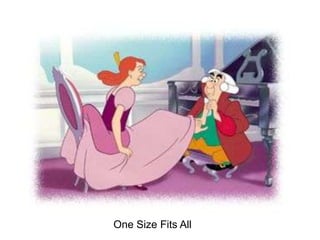
One Size Fits All
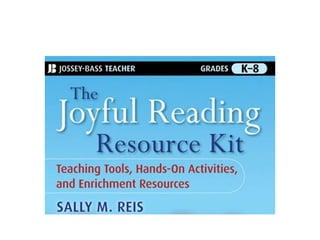
Sally ReisJoyful Reading & the SEM - R
The SEM-RAn enrichment-based reading program that seeks to increase reading achievement for all students while also addressing the pressing needs of talented readers.
What do you need toknow to implement the SEM-R?Write your answer on a post-it…Be as specific as possible.
GiftedMiddle School ReadersContinue reading avidly
Read more than twice as much
Move toward reading adult fiction(Carter, 1982)
aliteracynoun: the quality or state of being able to read but uninterested in doing so
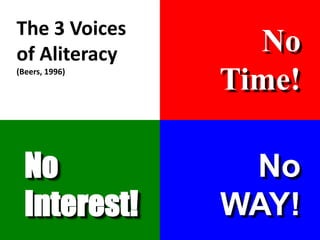
The 3 Voices of Aliteracy(Beers, 1996)No Time! No Interest! No WAY!
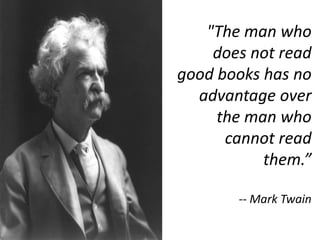
"The man who does not read good books has no advantage over the man who cannot read them.”-- Mark Twain
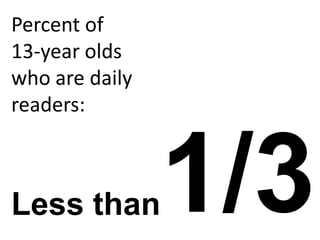
Percent of 13-year olds who are daily readers:1/3Less than
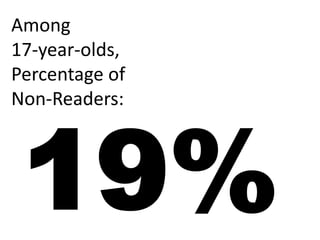
Among 17-year-olds,Percentage of Non-Readers:19%
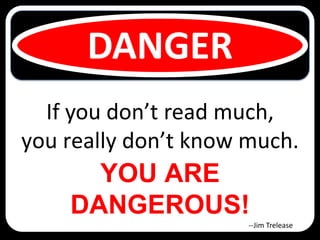
DANGERIf you don’t read much,you really don’t know much.YOU ARE DANGEROUS!--Jim Trelease
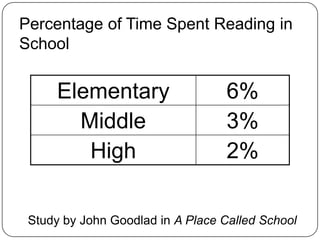
Percentage of Time Spent Reading in SchoolStudy by John Goodlad in A Place Called School
Are kids reading outside of class?
On average,Americans ages 15 to 24 spend almost 2 hoursPer day watching TV
7 Minutes
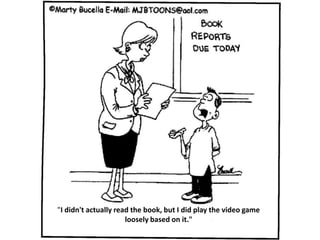
"I didn't actually read the book, but I did play the video game loosely based on it."
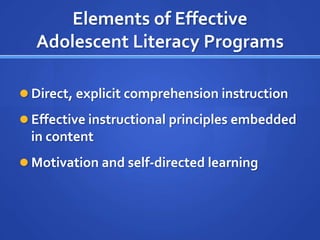
Elements of EffectiveAdolescent Literacy ProgramsDirect, explicit comprehension instructionEffective instructional principles embedded in contentMotivation and self-directed learning
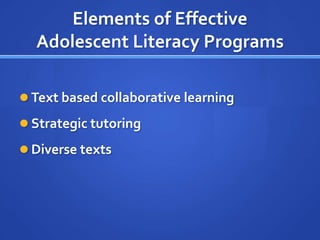
Elements of EffectiveAdolescent Literacy ProgramsText based collaborative learningStrategic tutoringDiverse texts
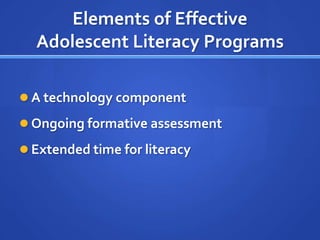
Elements of EffectiveAdolescent Literacy ProgramsA technology componentOngoing formative assessmentExtended time for literacy
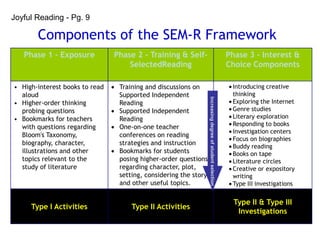
Joyful Reading - Pg. 9 Components of the SEM-R FrameworkIncreasing degree of student selection
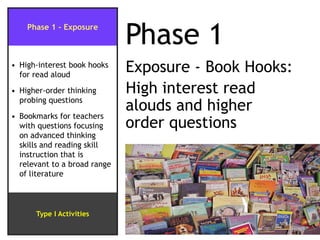
			Phase 1Exposure - Book Hooks:High interest read   alouds and higher     order questions
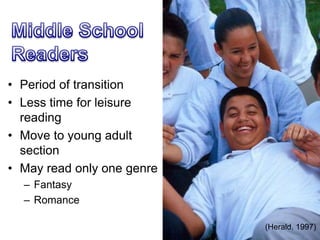
Middle School ReadersPeriod of transitionLess time for leisure readingMove to young adult sectionMay read only one genreFantasyRomance(Herald, 1997)
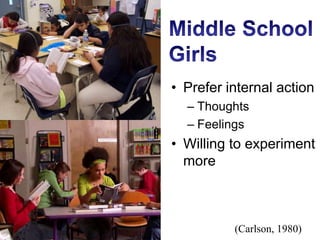
Middle SchoolGirlsPrefer internal actionThoughtsFeelingsWilling to experiment more(Carlson, 1980)
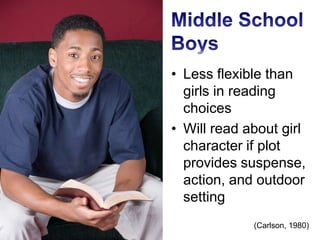
Middle SchoolBoys Less flexible than girls in reading choicesWill read about girl character if plot provides suspense, action, and outdoor setting(Carlson, 1980)
The E’s of Phase 1
Entice with Book Hooks
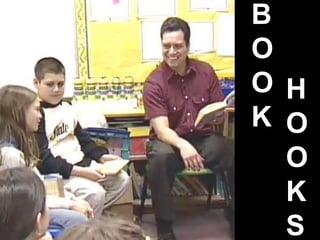
BOOKHOOKS
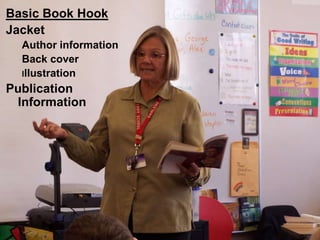
Basic Book HookJacketAuthor informationBack coverIllustrationPublication Information
August 24, 2010
Josh Lieb’s Website
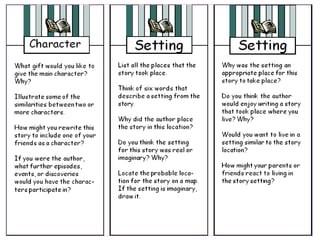
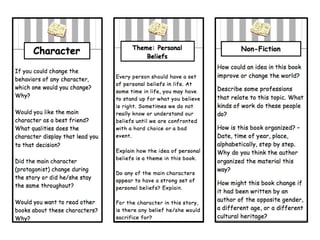
Engage by Questioning
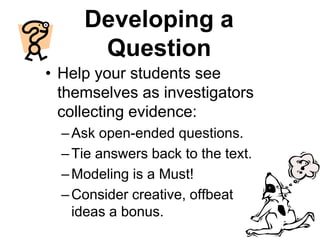
Developing a QuestionHelp your students see themselves as investigators collecting evidence:Ask open-ended questions.Tie answers back to the text.Modeling is a Must!Consider creative, offbeat ideas a bonus.
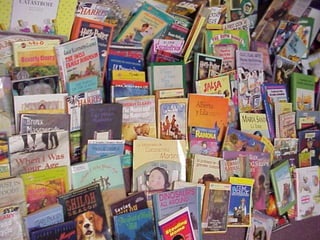
Exposure to a                                 Wide Range of Books
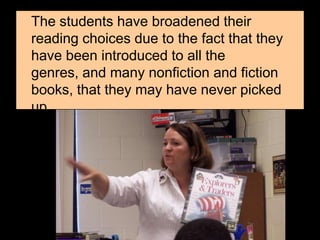
	The students have broadened their reading choices due to the fact that they have been introduced to all the genres, and many nonfiction and fiction books, that they may have never picked up.
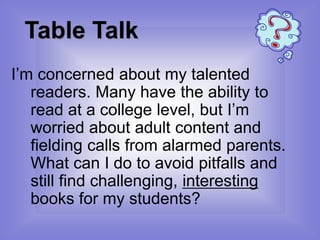
Table TalkI know the purpose of the SEM-R is to engage kids in reading appropriately challenging material, but how do I do that within Phase 1 with so many reluctant and remedial readers?
Employ Skills & Strategies
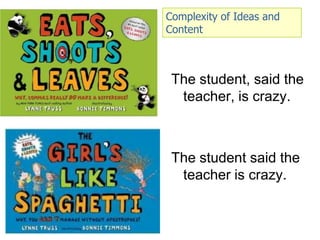
Complexity of Ideas and ContentThe student, said the teacher, is crazy.The student said the teacher is crazy.
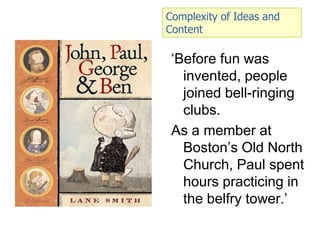
Complexity of Ideas and Content‘Before fun was invented, people joined bell-ringing clubs. As a member at Boston’s Old North Church, Paul spent hours practicing in the belfry tower.’
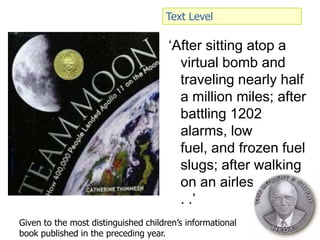
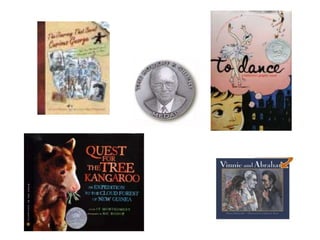
Given to the most distinguished children’s informational book published in the preceding year.Text Level‘After sitting atop a virtual bomb and traveling nearly half a million miles; after battling 1202 alarms, low fuel, and frozen fuel slugs; after walking on an airless rock; . . .’
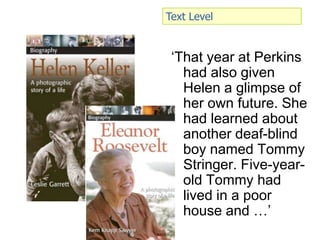
Text Level‘That year at Perkins had also given Helen a glimpse of her own future. She had learned about another deaf-blind boy named Tommy Stringer. Five-year-old Tommy had lived in a poor house and …’
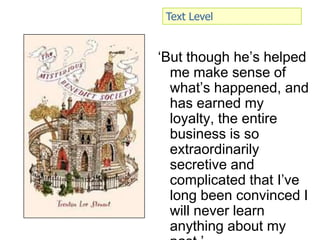
Text Level‘But though he’s helped me make sense of what’s happened, and has earned my loyalty, the entire business is so extraordinarily secretive and complicated that I’ve long been convinced I will never learn anything about my past.’
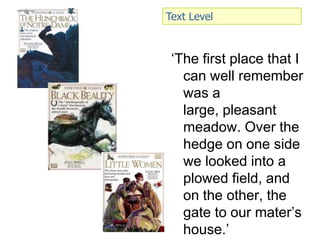
Text Level‘The first place that I can well remember was a large, pleasant meadow. Over the hedge on one side we looked into a plowed field, and on the other, the gate to our mater’s house.’
Explore Connections
Table TalkEvery time I introduce a new book during Phase 1, five students seem to want to read it right away! What should I do? What about the students in my subsequent class periods?
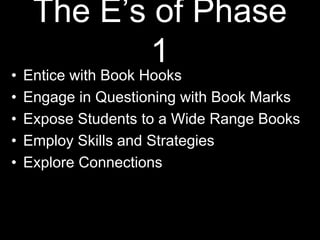
The E’s of Phase 1Entice with Book HooksEngage in Questioning with Book MarksExpose Students to a Wide Range BooksEmploy Skills and StrategiesExplore Connections
Good Morning!How might you hook me on a book that does not match my interests or genre preferences (ex: historical fiction)?
How Do I Start?
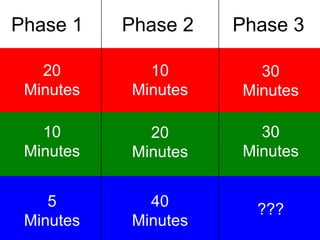
Phase 1Phase 3Phase 210  Minutes20  Minutes30  Minutes10  Minutes30  Minutes20  Minutes40  Minutes5Minutes???
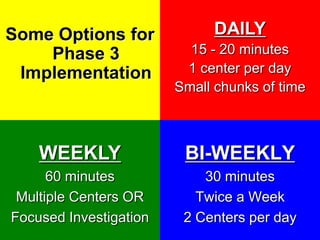
Some Options for Phase 3 ImplementationDAILY15 - 20 minutes1 center per daySmall chunks of timeWEEKLY60 minutesMultiple Centers ORFocused InvestigationBI-WEEKLY30 minutesTwice a Week2 Centers per day
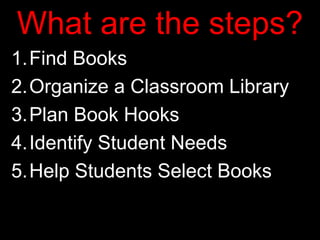
What are the steps?Find Books
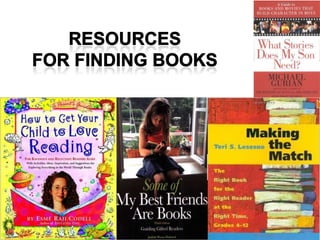
Resources for Finding Books
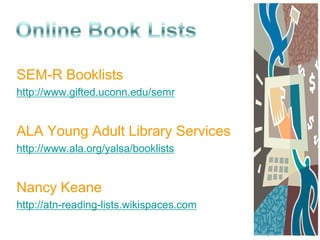
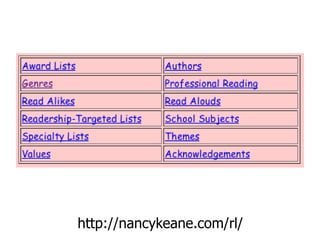
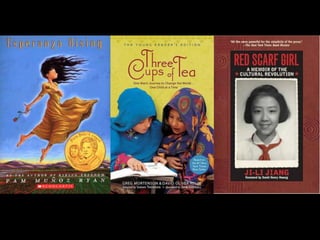
Online Book ListsSEM-R Booklistshttp://www.gifted.uconn.edu/semrALA Young Adult Library Serviceshttp://www.ala.org/yalsa/booklistsNancy Keanehttp://atn-reading-lists.wikispaces.com
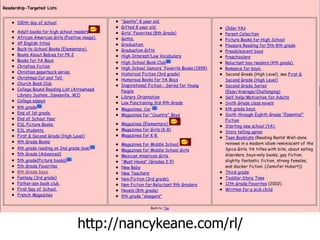
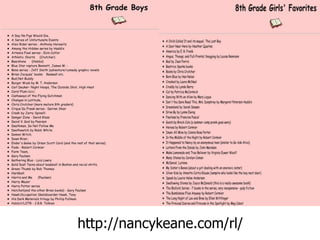
http://nancykeane.com/rl/
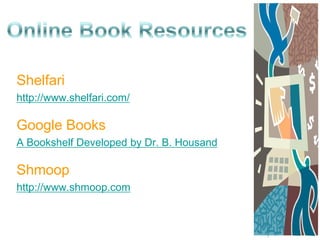
Online Book ResourcesShelfarihttp://www.shelfari.com/Google BooksA Bookshelf Developed by Dr. B. HousandShmoophttp://www.shmoop.com
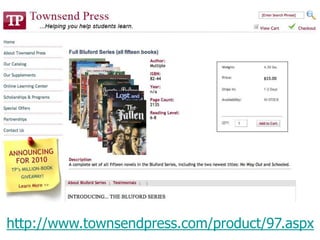
Online Book ResourcesTownsend Books for $1.00http://www.townsendpress.comAmazonhttp://www.amazon.com
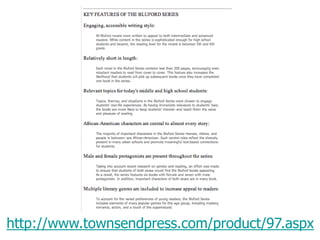
http://www.townsendpress.com/product/97.aspx
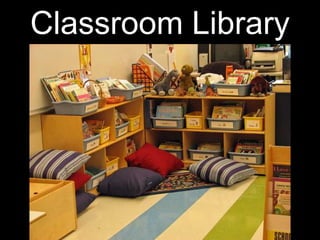
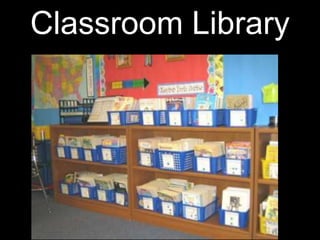
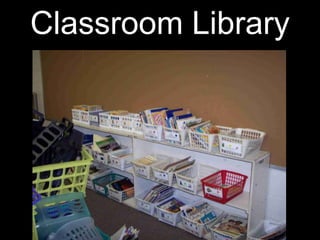
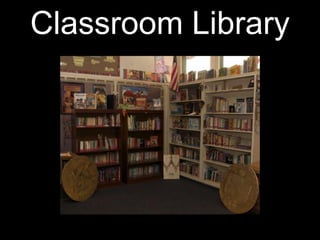
What are the steps?Find BooksOrganize a Classroom Library
Classroom Library
Classroom Library
Classroom Library
Classroom Library
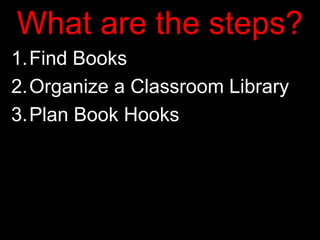
What are the steps?Find BooksOrganize a Classroom LibraryPlan Book Hooks
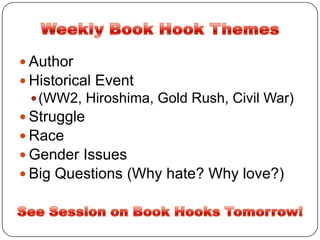
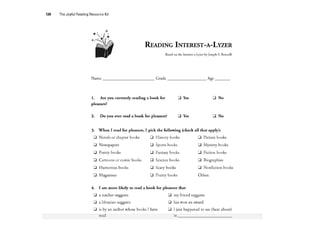
Weekly Book Hook ThemesAuthor Historical Event(WW2, Hiroshima, Gold Rush, Civil War)StruggleRace Gender IssuesBig Questions (Why hate? Why love?)See Session on Book Hooks Tomorrow!
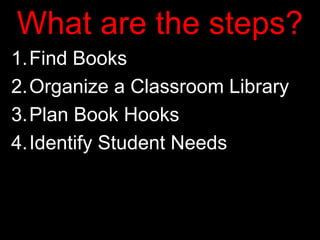
What are the steps?Find BooksOrganize a Classroom LibraryPlan Book HooksIdentify Student Needs
What are the steps?Find BooksOrganize a Classroom LibraryPlan Book HooksIdentify Student NeedsHelp Students Select Books
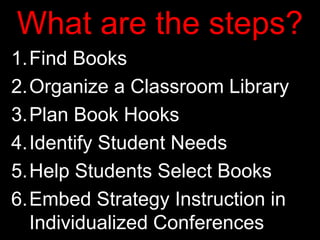
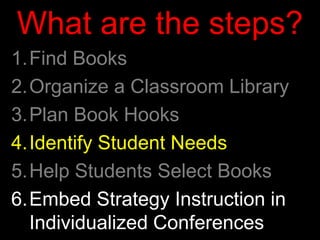
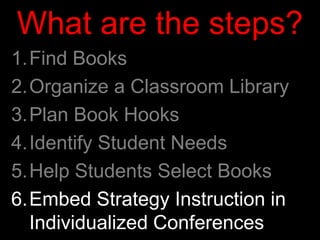
What are the steps?Find BooksOrganize a Classroom LibraryPlan Book HooksIdentify Student NeedsHelp Students Select BooksEmbed Strategy Instruction in Individualized Conferences
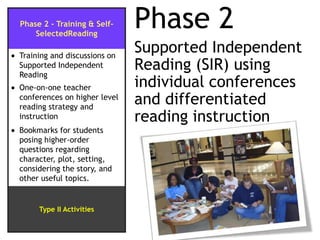
Phase 2Supported Independent Reading (SIR) using individual conferences and differentiated reading instruction
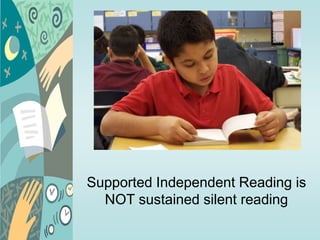
Supported Independent Reading isNOT sustained silent reading
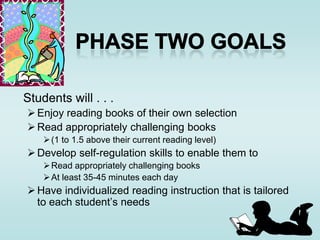
Phase Two Goals	Students will . . .Enjoy reading books of their own selection
Read appropriately challenging books
(1 to 1.5 above their current reading level)
Develop self-regulation skills to enable them to
Read appropriately challenging books
At least 35-45 minutes each day
Have individualized reading instruction that is tailored to each student’s needsWhat are the steps?Find BooksOrganize a Classroom LibraryPlan Book HooksIdentify Student NeedsHelp Students Select BooksEmbed Strategy Instruction in Individualized Conferences
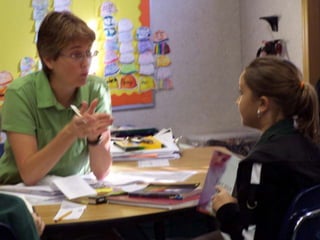
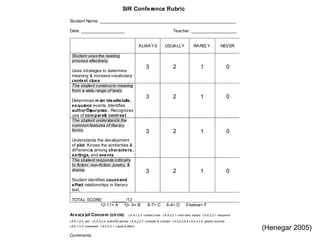
Conferences provide:Support for each student’s needs
Enthusiasm about books
Reading skill development
Interest-based reading opportunities
Self-regulation/monitoring
Increasing ability to focusConferences provide:Opportunity to assess reading level and book match
Thoughtful conversations about literature
Opportunities to use higher order thinking skill questionsConferences provide:Differentiation for all students in
Skills
Questions
Book Selection for OPTIMAL CHALLENGE!Enjoyable activities, “are not natural; they demand an effort that initially one is reluctant to make. But once the interaction starts to provide feedback to the person’s skills, it usually begins to be intrinsically rewarding”Enjoy Reading— Csikszentmihalyi, 1990
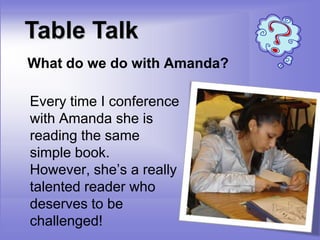
Table TalkWhat do we do with Amanda?Every time I conference with Amanda she is reading the same simple book. However, she’s a really  talented reader who deserves to be challenged!
What are the steps?Find BooksOrganize a Classroom LibraryPlan Book HooksIdentify Student NeedsHelp Students Select BooksEmbed Strategy Instruction in Individualized Conferences
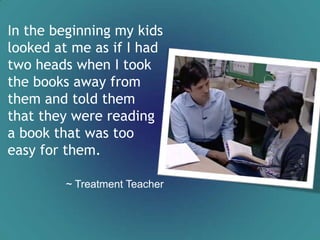
In the beginning my kids looked at me as if I had two heads when I took the books away from them and told them that they were reading a book that was too easy for them.~ Treatment Teacher
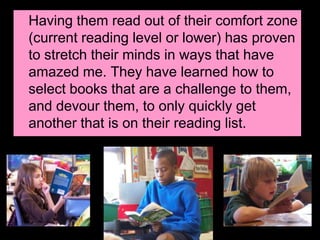
	Having them read out of their comfort zone (current reading level or lower) has proven to stretch their minds in ways that have amazed me. They have learned how to select books that are a challenge to them, and devour them, to only quickly get another that is on their reading list.
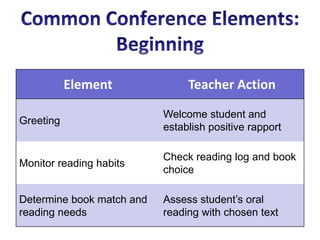
Common Conference Elements: Beginning
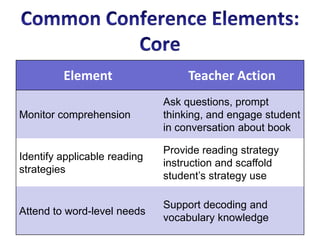
Common Conference Elements: Core
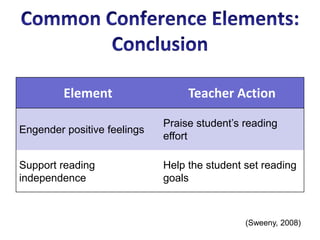
Common Conference Elements: Conclusion(Sweeny, 2008)
What are the steps?Find BooksOrganize a Classroom LibraryPlan Book HooksIdentify Student NeedsHelp Students Select BooksEmbed Strategy Instruction in Individualized Conferences
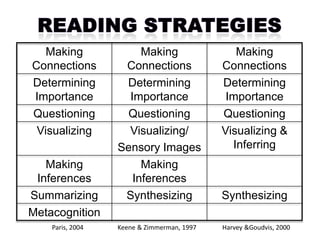
Reading Strategies		Paris, 2004	       		 Keene & Zimmerman, 1997                Harvey & Goudvis, 2000
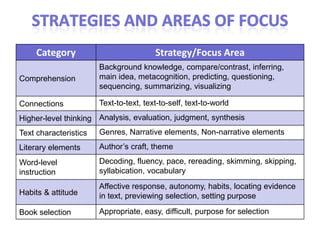
Strategies and Areas of Focus
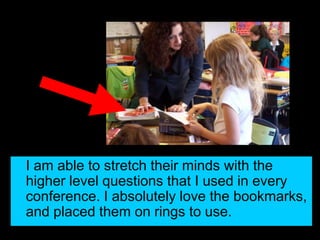
	I am able to stretch their minds with the higher level questions that I used in every conference. I absolutely love the bookmarks, and placed them on rings to use.
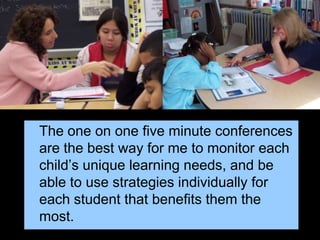
	The one on one five minute conferences are the best way for me to monitor each child’s unique learning needs, and be able to use strategies individually for each student that benefits them the most.
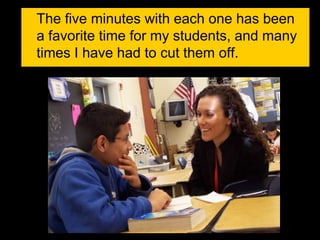
	The five minutes with each one has been a favorite time for my students, and many times I have had to cut them off.
Resolve to edge in a little reading every day, if it is but a single sentence. If you gain fifteen minutes a day, it will make itself felt at the end of the year.—Horace Mann
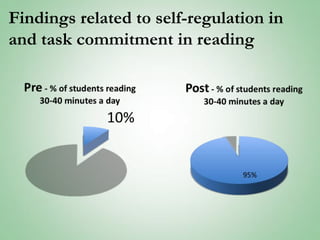
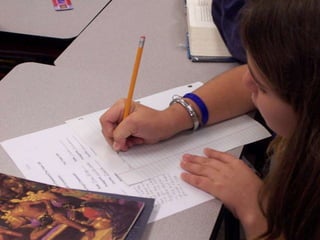
Findings related to self-regulation in and task commitment in reading
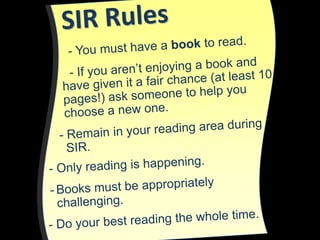
SIR Rules    - You must have a book to read.    - If you aren’t enjoying a book and   have given it a fair chance (at least 10 pages!) ask someone to help you choose a new one.- Remain in your reading area during   SIR.- Only reading is happening.Books must be appropriately       challenging.- Do your best reading the whole time.
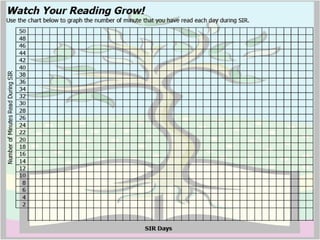
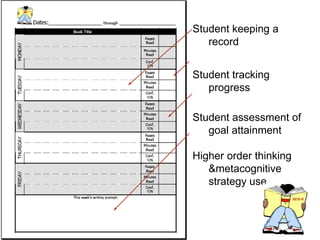
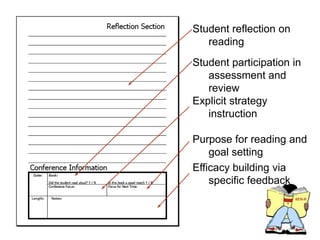
Student keeping a recordStudent tracking progressStudent assessment of goal attainmentHigher order thinking & metacognitive strategy use
Student reflection on readingStudent participation in assessment and reviewExplicit strategy instructionPurpose for reading and goal settingEfficacy building via specific feedback
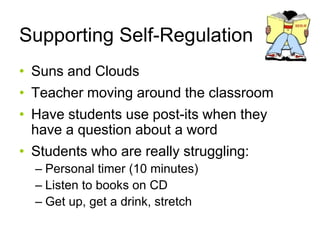
Supporting Self-RegulationSuns and CloudsTeacher moving around the classroomHave students use post-its when they have a question about a wordStudents who are really struggling:Personal timer (10 minutes)Listen to books on CDGet up, get a drink, stretch
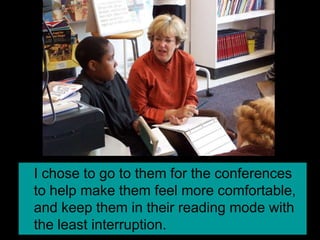
	I chose to go to them for the conferences to help make them feel more comfortable, and keep them in their reading mode with the least interruption.
Table TalkI know I need to differentiate my reading conferences, but I am also trying to get all my students to focus on theme as a literary element right now. Can I ask everybody the same questions, or do I need to come up with different questions for every student?
Differentiated Reading ConferencesThe conversation: Structure, Content, & Tone
Responses of students
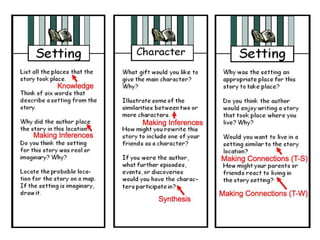
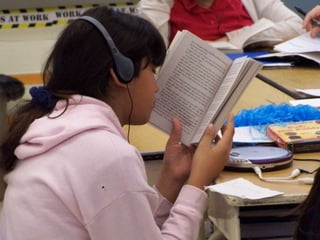
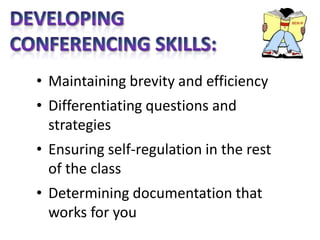
Strategies used by teachersIndividualizing and Differentiating Conferences	It is important to remember that not all students will need the same strategy instruction at the very same time, but that all students need some instruction if they are reading a book that is adequately challenging. For that reason, be sure that strategy instruction is integrated throughout conferences and differentiated to meet the needs of individual students.
Step #7Be prepared to let go.
“We do not need to burn books to kill our civilization; we need only to leave them unread for a generation.”—R. M. Hutchins
Phase Three:An Exploration of Reading Enrichment
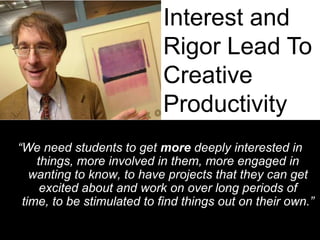
Interest and Rigor Lead To Creative Productivity“We need students to get more deeply interested in things, more involved in them, more engaged in wanting to know, to have projects that they can get excited about and work on over long periods of time, to be stimulated to find things out on their own.”
The Illusion of Choice
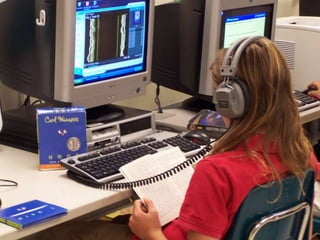
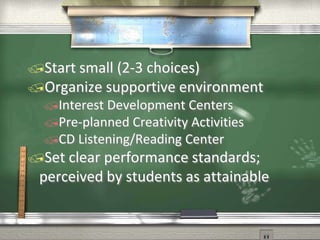
Start small (2-3 choices)Organize supportive environmentInterest Development CentersPre-planned Creativity ActivitiesCD Listening/Reading CenterSet clear performance standards; perceived by students as attainable
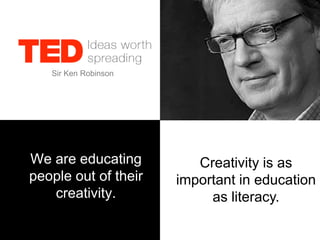
Sir Ken Robinson	We are educating people out of their creativity. 	Creativity is as important in education as literacy.
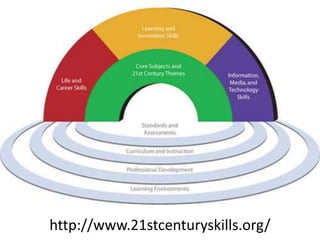
http://www.21stcenturyskills.org/
What’s Going On?What are your current classroom practices?How are you using centers? Do you provide choice in activities?
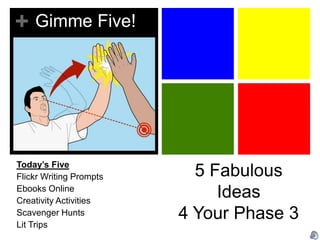
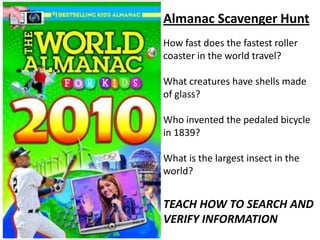
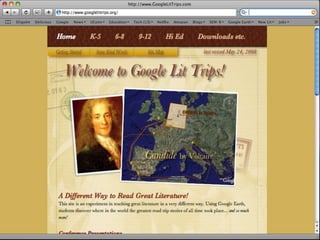
Gimme Five!5 Fabulous Ideas4 Your Phase 3Today’s FiveFlickr Writing PromptsEbooks OnlineCreativity ActivitiesScavenger HuntsLit Trips
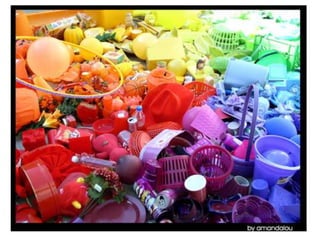
Flickr Writing Promptshttp://www.flickr.com
Book Bags…
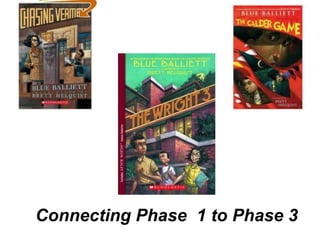
Modern Day Books…
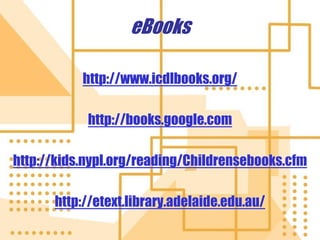
eBookshttp://www.icdlbooks.org/http://books.google.comhttp://kids.nypl.org/reading/Childrensebooks.cfmhttp://etext.library.adelaide.edu.au/
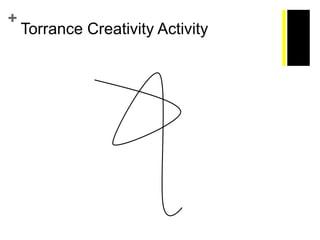
Torrance Creativity Activity
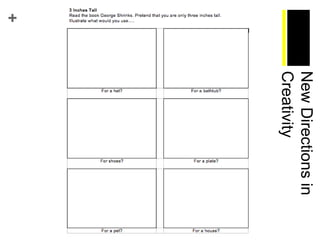
New Directions in Creativity

Challenging Middle School Readers with the SEM-R

Editor's Notes

  • #12 Dormant, uncommitted, and unmotivated to read.
  • #22 Biancarosa, C., & Snow, C. E. (2006). Reading next—A vision for action and research in middle andhigh school literacy: A report to Carnegie Corporation of New York (2nd ed.).Washington, DC: Alliancefor Excellent Education. -Page 3-
  • #28 What happens to young adolescents in other aspects of their lives occurs in their reading too – they are leaving childhood and the literature appropriate to it. They move to the Young Adult section in bookstores and libraries and they may choose to read only one genre like romance novels or fantasy (Herald, 1997 in Halstead, p. 82).
  • #57 What are the benefits of using picture books? Able to discuss an entire plot-line of a story rather than a short segment, provides novelty and promotes positive associations with literature, can explore illustrations and artwork which may appeal to certain students How could you make connections to appropriately challenging literature? Books on same topic, many picture books are written at 8th-9th grade reading level (i.e., A Woman for President),
  • #66 ShelfariAmazon (Customers who bought this book Themed book hooks
  • #73 Consider a system for signing up to read the book when it’s available: it could be a list on the board, a sticky note inside the back cover of interested students, or a margarine container where students submit their names and a drawing occurs randomly at the end of the day (sort of like a silent auction)- You may want to have a “display area” (chalk trays work well) where recently featured books are displayed for a certain amount of time or where students who are looking for a new book can peruse. - Another effective strategy is to have related texts (same author, topic, non-fiction, website, etc) and ideas available for interested students
  • #74 1, 2. 3. 4. 5. Encourage - Themese
  • #79 1, 2. 3. 4. 5. Encourage - Themese
  • #89 1, 2. 3. 4. 5. Encourage - Themese
  • #90 1, 2. 3. 4. 5. Encourage - Themese
  • #91 1, 2. 3. 4. 5. Encourage - Themese
  • #92 1, 2. 3. 4. 5. Encourage - Themese
  • #93 1, 2. 3. 4. 5. Encourage - Themese
  • #94 1, 2. 3. 4. 5. Encourage - Themese
  • #96 1, 2. 3. 4. 5. Encourage - Themese
  • #99 1, 2. 3. 4. 5. Encourage - Themese
  • #103 1, 2. 3. 4. 5. Encourage - Themese
  • #107 1, 2. 3. 4. 5. Encourage - Themese
  • #113 1, 2. 3. 4. 5. Encourage - Themese
  • #120 1, 2. 3. 4. 5. Encourage - Themese
  • #151 What are your current practices in the classroom? How are you using centers? Do you provide choice in activities?