








ENGINEERING SERENDIPITY 
LEVERAGING SOCIAL MEDIA AND TECHNOLOGY RESOURCES 
TO DEVELOP INTERESTS AND CREATE OPPORTUNITIES
Serendipity noun: 
the occurrence and 
development of 
events by chance in a 
happy or beneficial way
HORACE 
WALPOLE 1717-1797
Three Princes of Serendip
“The Three Princes of Serendip 
were always making discoveries, 
by ACCIDENT and SAGACITY, 
of things which they were not in quest of… 
now do you understand Serendipity.” 
Horace Walpole, 1754
Teaching THP for High Potential 
Summer 2013 
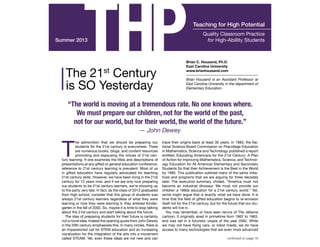
“The world is moving at a tremendous rate. No one knows where. 
We must prepare our children, not for the world of the past, 
not for our world, but for their world, the world of the future.” 
— John Dewey 
The admonition that we should be preparing our 
students for the 21st century is everywhere. There 
are numerous books, blogs, and content resources 
promoting and espousing the virtues of 21st cen-tury 
learning. If one examines the titles and descriptions of 
presentations at any gifted or general education conference, 
reference to 21st century learning is prevalent. Most of us 
in gifted education have regularly advocated for teaching 
21st century skills. However, we have been living in the 21st 
century for 13 years now, and if we are only now preparing 
our students to be 21st century learners, we’re showing up 
to the party very late. In fact, as the class of 2013 graduated 
from high school, consider that this group of students was 
always 21st century learners regardless of what they were 
learning or how they were learning it; they entered Kinder-garten 
in the fall of 2000. So, maybe it is time to stop talking 
about the 21st century and start talking about the future. 
The idea of preparing students for their future is certainly 
not a novel idea. Indeed the opening quote from John Dewey 
in the 20th century emphasizes this. In many circles, there is 
an impassioned call for STEM education and an increasing 
vocalization for the integration of the arts into a movement 
called STEAM. Yet, even these ideas are not new and can 
Quality Classroom Practice 
for High-Abillity Students 
Brian C. Housand, Ph.D. 
East Carolina University 
www.brianhousand.com 
Brian Housand is an Assistant Professor at 
East Carolina University in the department of 
Elementary Education. 
trace their origins back at least 30 years. In 1983, the Na-tional 
Science Board Commission on Precollege Education 
in Mathematics, Science and Technology published a report 
entitled, Educating Americans for the 21st Century: A Plan 
of Action for Improving Mathematics, Science, and Technol-ogy 
Education for All American Elementary and Secondary 
Students So that their Achievement is the Best in the World 
by 1995. This publication outlined many of the same initia-tives 
and programs that we are arguing for three decades 
later. The executive summary chided, “America must not 
become an industrial dinosaur. We must not provide our 
children a 1960s education for a 21st century world.” Yet, 
some might argue that is exactly what we have done. It is 
time that the field of gifted education begins to re-envision 
itself not for the 21st century, but for the future that our stu-dents 
will live in. 
You may remember, or have seen reruns of The Jetsons 
cartoon. It originally aired in primetime from 1962 to 1963, 
and was set in a futuristic utopia of the year 2062. While 
we may not have flying cars, or robot maids, we do have 
access to many technologies that are even more advanced 
continued on page 18 
The 21st Century 
is SO Yesterday 
INSIDE THIS ISSUE 
FEATURE ARTICLES Smart Cookies 15
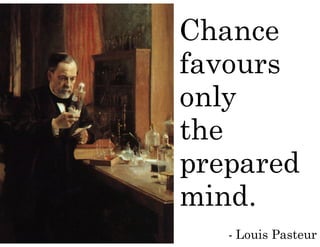
Chance 
favours 
only 
the 
prepared 
mind. 
- Louis Pasteur
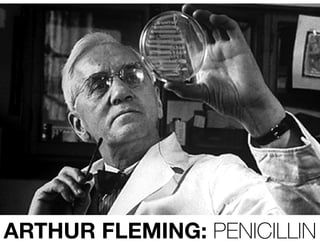
ARTHUR FLEMING: PENICILLIN
GO
GO
BUT…
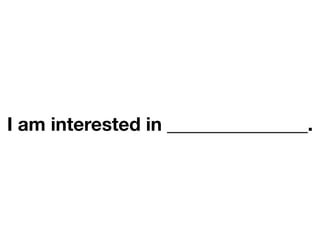
I am interested in _______________.
I am interested in _d__i_n_o__s_a__u__r_s__.
I am interested in __p__o__k_e_m__o__n___.
I am interested in _c_o__m_i_c_ _b_o__o_k__s_.
I am interested in N___O__T__H__I__N__G__.
I am interested in E__V_E_R__Y_T__H_I__N_G__!.
TYPE II 
METHODOLOGICAL 
HOW-TO ACTIVITIES 
TYPE III 
TYPE I 
GENERAL 
EXPLORATORY 
ACTIVITIES 
TRAINING / 
INDEPENDENT OR SMALL GROUP INVESTIGATIONS 
PRODUCTS AND/OR PERFORMANCES 
(Renzulli, 1977)
AGGREGATOR
EXPLORE 
THE GARDEN
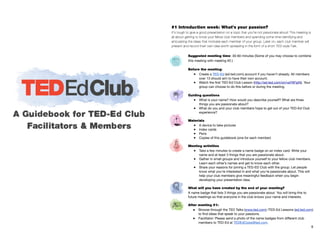
Suggested meeting time: 30-60 minutes (Some of you may choose to combine 
this meeting with meeting #2.) 
! 
Before the meeting: 
● Create a TED-Ed (ed.ted.com) account if you haven’t already. All members 
over 13 should aim to have their own account. 
● Watch the first TED-Ed Club Lesson (http://ed.ted.com/on/vaY6FipN). Your 
group can choose to do this before or during the meeting. ! 
Guiding questions 
● What is your name? How would you describe yourself? What are three 
things you are passionate about? 
● What do you and your club members hope to get out of your TED-Ed Club 
experience? 
! 
Materials 
● A device to take pictures 
● Index cards 
● Pens 
● Copies of this guidebook (one for each member) 
! 
Meeting activities 
● Take a few minutes to create a name badge on an index card. Write your 
name and at least 3 things that you are passionate about. 
● Gather in small groups and introduce yourself to your fellow club members. 
Learn each other’s names and get to know each other. 
● Share your reasons for joining a TED-ED Club with the group. Let people 
know what you’re interested in and what you’re passionate about. This will 
help your club members give meaningful feedback when you begin 
developing your presentation idea. 
! 
What will you have created by the end of your meeting? 
A name badge that lists 3 things you are passionate about. You will bring this to 
future meetings so that everyone in the club knows your name and interests. 
! 
After meeting #1: 
● Browse through the TED Talks (www.ted.com) /TED-Ed Lessons (ed.ted.com) 
to find ideas that speak to your passions. 
● Facilitator: Please send a photo of the name badges from different club 
members to TED-Ed at TEDEdClubs@ted.com. 
$6 
#1 Introduction week: What’s your passion? 
It’s tough to give a good presentation on a topic that you’re not passionate about! This meeting is 
all about getting to know your fellow club members and spending some time identifying and 
articulating the ideas that motivate each member of your group. Later on, each club member will 
present and record their own idea worth spreading in the form of a short TED-style Talk.
Don't be afraid to 
fall in love with 
something and 
pursue it with 
intensity
LURK
1. (of a person or animal) be or remain hidden so 
as to wait in ambush for someone or something: 
a ruthless killer still lurked in the darkness. 
2. (of an unpleasant quality) be present in a latent 
or barely discernible state, although still 
presenting a threat: fear lurks beneath the 
surface | (as adj. lurking) : he lives with a 
lurking fear of exposure as a fraud. 
3. read the postings on an Internet message board 
or in a chat room without making any 
contribution oneself.
1. (of a person or animal) be or remain hidden so 
as to wait in ambush for someone or something: 
a ruthless killer still lurked in the darkness. 
2. (of an unpleasant quality) be present in a latent 
or barely discernible state, although still 
presenting a threat: fear lurks beneath the 
surface | (as adj. lurking) : he lives with a 
lurking fear of exposure as a fraud. 
3. read the postings on an Internet message board 
or in a chat room without making any 
contribution oneself.
As the volume of media has grown exponentially, 
our propensity to explore it is diminishing. 
Danny Cohen / BBC1
flâneur 
one who 
saunters 
around 
observing 
society.
BROWSE 
SEARCH
roadtripnation.com/roadmap
THINK LIKE A DISCIPLINARIAN 
THINKING SKILLS
What are the DETAILS of the 
discipline? 
What are the MULTIPLE 
PERSPECTIVES in the discipline? 
What are the BIG IDEAS of the 
discipline? 
What are some of the 
UNANSWERED QUESTIONS?
STALK
Arranging serendipitous encounters 
isn’t always a function of 
WHO YOU KNOW, 
it should also be a function of 
WHO YOU WANT TO KNOW. Or 
WHO YOU SHOULD WANT TO KNOW, 
even if you don’t realize you should 
want to know them.
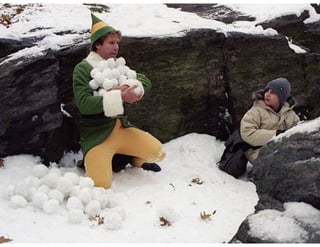
http://calvinandhobbes.wikia.com/wiki/Calvin's_snowballs
? ? ? ? ? 
Who are the EXPERTS? 
How do I follow them? 
Who do they follow? 
What are they reading? 
What are they producing?
CREATE
GET 
OFF 
THE 
SIDE 
LINE
Googleable
400,000 
DOWNLOADS 
!
BETHANY MOTA
13
13
13
$40,000.00
MATT NADEL
marques brownlee
Content 
Quality
Always improving 
Attending to detail 
A lot of hard work 
“Able to make some serious money” 
MKBHD
(bytelaunch.com)
ENGAGE
Social 
Capital
Become Well Liked
Valence 
Volume 
Quality
Nobody 
Likes to Hear 
“You’re Wrong”
Don’t 
you 
think 
if I were 
wrong, 
I’d 
KNOW it?
S 
O T 
W 
Helpful 
to achieving the 
objective 
Harmful 
to achieving the 
objective 
Internal Origin 
Attributes of the 
Individual 
Strengths Weaknesses 
External Origin 
Attributes of the 
Environment 
Opportunities Threats 
SWOT 
Analysis
LISTEN!
Relational & Egalitarian
Network Structure 
The Pattern of Connection 
• The number of contacts 
• The diversity of the contacts 
• The configuration and stability of the network 
• Position within the network
All in all, that night taught me you can never plan for 
what’s going to happen next at SXSW, but you can be 
prepared.
Openness to 
Experience
Cognitive Ability 
Intelligence 
Reasoning Ability
Intellectual Engagement 
Seeking the Truth 
Engaging in Ideas and Thought
Using Emotion, Gut Feelings, and Empathy 
for Decision Making 
Affective Engagement
All members must be capable of absorbing, applying, 
and recognizing the value of new information. 
Aesthetic Engagement
LGEOT
CURIOSITY + EFFORT = INTELLIGENCE 
(von Stumm, Hell, & Camorro-Premuzic, 2011)
STAY 
HUNGRY 
STAY 
FOOLISH.
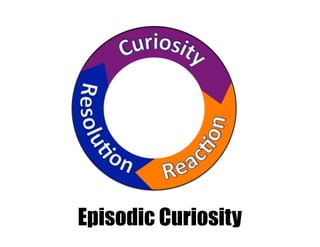
Episodic Curiosity
Episodic Curiosity
Episodic Curiosity
Episodic Curiosity
∞
AM GAuiNdeI fForE DSevTeOlop:i n g a Creative Career 
1. Don't be afraid to fall in love with something and 
pursue it with intensity. 
2. Know, understand, take pride in, practice, develop, 
exploit and enjoy your greatest strengths. 
3. Learn to free yourself from the expectations of 
others and to walk away from the games they impose 
on you. Free yourself to play your own game. 
4. Find a great teacher or mentor who will help you. 
5. Don't waste energy trying to be well rounded. 
6. Do what you love and can do well. 
7. Learn the skills of interdependence.

Engineering Serendipity

  • 1.
    ENGINEERING SERENDIPITY LEVERAGINGSOCIAL MEDIA AND TECHNOLOGY RESOURCES TO DEVELOP INTERESTS AND CREATE OPPORTUNITIES
  • 2.
    Serendipity noun: theoccurrence and development of events by chance in a happy or beneficial way
  • 3.
  • 4.
  • 5.
    “The Three Princesof Serendip were always making discoveries, by ACCIDENT and SAGACITY, of things which they were not in quest of… now do you understand Serendipity.” Horace Walpole, 1754
  • 6.
    Teaching THP forHigh Potential Summer 2013 “The world is moving at a tremendous rate. No one knows where. We must prepare our children, not for the world of the past, not for our world, but for their world, the world of the future.” — John Dewey The admonition that we should be preparing our students for the 21st century is everywhere. There are numerous books, blogs, and content resources promoting and espousing the virtues of 21st cen-tury learning. If one examines the titles and descriptions of presentations at any gifted or general education conference, reference to 21st century learning is prevalent. Most of us in gifted education have regularly advocated for teaching 21st century skills. However, we have been living in the 21st century for 13 years now, and if we are only now preparing our students to be 21st century learners, we’re showing up to the party very late. In fact, as the class of 2013 graduated from high school, consider that this group of students was always 21st century learners regardless of what they were learning or how they were learning it; they entered Kinder-garten in the fall of 2000. So, maybe it is time to stop talking about the 21st century and start talking about the future. The idea of preparing students for their future is certainly not a novel idea. Indeed the opening quote from John Dewey in the 20th century emphasizes this. In many circles, there is an impassioned call for STEM education and an increasing vocalization for the integration of the arts into a movement called STEAM. Yet, even these ideas are not new and can Quality Classroom Practice for High-Abillity Students Brian C. Housand, Ph.D. East Carolina University www.brianhousand.com Brian Housand is an Assistant Professor at East Carolina University in the department of Elementary Education. trace their origins back at least 30 years. In 1983, the Na-tional Science Board Commission on Precollege Education in Mathematics, Science and Technology published a report entitled, Educating Americans for the 21st Century: A Plan of Action for Improving Mathematics, Science, and Technol-ogy Education for All American Elementary and Secondary Students So that their Achievement is the Best in the World by 1995. This publication outlined many of the same initia-tives and programs that we are arguing for three decades later. The executive summary chided, “America must not become an industrial dinosaur. We must not provide our children a 1960s education for a 21st century world.” Yet, some might argue that is exactly what we have done. It is time that the field of gifted education begins to re-envision itself not for the 21st century, but for the future that our stu-dents will live in. You may remember, or have seen reruns of The Jetsons cartoon. It originally aired in primetime from 1962 to 1963, and was set in a futuristic utopia of the year 2062. While we may not have flying cars, or robot maids, we do have access to many technologies that are even more advanced continued on page 18 The 21st Century is SO Yesterday INSIDE THIS ISSUE FEATURE ARTICLES Smart Cookies 15
  • 7.
    Chance favours only the prepared mind. - Louis Pasteur
  • 8.
  • 12.
  • 13.
  • 14.
  • 15.
    I am interestedin _______________.
  • 16.
    I am interestedin _d__i_n_o__s_a__u__r_s__.
  • 17.
    I am interestedin __p__o__k_e_m__o__n___.
  • 18.
    I am interestedin _c_o__m_i_c_ _b_o__o_k__s_.
  • 19.
    I am interestedin N___O__T__H__I__N__G__.
  • 20.
    I am interestedin E__V_E_R__Y_T__H_I__N_G__!.
  • 21.
    TYPE II METHODOLOGICAL HOW-TO ACTIVITIES TYPE III TYPE I GENERAL EXPLORATORY ACTIVITIES TRAINING / INDEPENDENT OR SMALL GROUP INVESTIGATIONS PRODUCTS AND/OR PERFORMANCES (Renzulli, 1977)
  • 22.
  • 24.
  • 30.
    Suggested meeting time:30-60 minutes (Some of you may choose to combine this meeting with meeting #2.) ! Before the meeting: ● Create a TED-Ed (ed.ted.com) account if you haven’t already. All members over 13 should aim to have their own account. ● Watch the first TED-Ed Club Lesson (http://ed.ted.com/on/vaY6FipN). Your group can choose to do this before or during the meeting. ! Guiding questions ● What is your name? How would you describe yourself? What are three things you are passionate about? ● What do you and your club members hope to get out of your TED-Ed Club experience? ! Materials ● A device to take pictures ● Index cards ● Pens ● Copies of this guidebook (one for each member) ! Meeting activities ● Take a few minutes to create a name badge on an index card. Write your name and at least 3 things that you are passionate about. ● Gather in small groups and introduce yourself to your fellow club members. Learn each other’s names and get to know each other. ● Share your reasons for joining a TED-ED Club with the group. Let people know what you’re interested in and what you’re passionate about. This will help your club members give meaningful feedback when you begin developing your presentation idea. ! What will you have created by the end of your meeting? A name badge that lists 3 things you are passionate about. You will bring this to future meetings so that everyone in the club knows your name and interests. ! After meeting #1: ● Browse through the TED Talks (www.ted.com) /TED-Ed Lessons (ed.ted.com) to find ideas that speak to your passions. ● Facilitator: Please send a photo of the name badges from different club members to TED-Ed at TEDEdClubs@ted.com. $6 #1 Introduction week: What’s your passion? It’s tough to give a good presentation on a topic that you’re not passionate about! This meeting is all about getting to know your fellow club members and spending some time identifying and articulating the ideas that motivate each member of your group. Later on, each club member will present and record their own idea worth spreading in the form of a short TED-style Talk.
  • 31.
    Don't be afraidto fall in love with something and pursue it with intensity
  • 32.
  • 33.
    1. (of aperson or animal) be or remain hidden so as to wait in ambush for someone or something: a ruthless killer still lurked in the darkness. 2. (of an unpleasant quality) be present in a latent or barely discernible state, although still presenting a threat: fear lurks beneath the surface | (as adj. lurking) : he lives with a lurking fear of exposure as a fraud. 3. read the postings on an Internet message board or in a chat room without making any contribution oneself.
  • 34.
    1. (of aperson or animal) be or remain hidden so as to wait in ambush for someone or something: a ruthless killer still lurked in the darkness. 2. (of an unpleasant quality) be present in a latent or barely discernible state, although still presenting a threat: fear lurks beneath the surface | (as adj. lurking) : he lives with a lurking fear of exposure as a fraud. 3. read the postings on an Internet message board or in a chat room without making any contribution oneself.
  • 35.
    As the volumeof media has grown exponentially, our propensity to explore it is diminishing. Danny Cohen / BBC1
  • 36.
    flâneur one who saunters around observing society.
  • 37.
  • 38.
  • 39.
  • 40.
    THINK LIKE ADISCIPLINARIAN THINKING SKILLS
  • 42.
    What are theDETAILS of the discipline? What are the MULTIPLE PERSPECTIVES in the discipline? What are the BIG IDEAS of the discipline? What are some of the UNANSWERED QUESTIONS?
  • 43.
  • 44.
    Arranging serendipitous encounters isn’t always a function of WHO YOU KNOW, it should also be a function of WHO YOU WANT TO KNOW. Or WHO YOU SHOULD WANT TO KNOW, even if you don’t realize you should want to know them.
  • 45.
  • 46.
    ? ? ?? ? Who are the EXPERTS? How do I follow them? Who do they follow? What are they reading? What are they producing?
  • 49.
  • 50.
    GET OFF THE SIDE LINE
  • 51.
  • 57.
  • 58.
  • 60.
  • 61.
  • 62.
  • 63.
  • 65.
  • 68.
  • 69.
  • 70.
    Always improving Attendingto detail A lot of hard work “Able to make some serious money” MKBHD
  • 74.
  • 75.
  • 77.
  • 81.
  • 82.
  • 83.
    Nobody Likes toHear “You’re Wrong”
  • 84.
    Don’t you think if I were wrong, I’d KNOW it?
  • 89.
    S O T W Helpful to achieving the objective Harmful to achieving the objective Internal Origin Attributes of the Individual Strengths Weaknesses External Origin Attributes of the Environment Opportunities Threats SWOT Analysis
  • 90.
  • 92.
  • 94.
    Network Structure ThePattern of Connection • The number of contacts • The diversity of the contacts • The configuration and stability of the network • Position within the network
  • 98.
    All in all,that night taught me you can never plan for what’s going to happen next at SXSW, but you can be prepared.
  • 99.
  • 100.
  • 101.
    Intellectual Engagement Seekingthe Truth Engaging in Ideas and Thought
  • 102.
    Using Emotion, GutFeelings, and Empathy for Decision Making Affective Engagement
  • 103.
    All members mustbe capable of absorbing, applying, and recognizing the value of new information. Aesthetic Engagement
  • 104.
  • 107.
    CURIOSITY + EFFORT= INTELLIGENCE (von Stumm, Hell, & Camorro-Premuzic, 2011)
  • 108.
  • 110.
  • 111.
  • 112.
  • 113.
  • 114.
  • 116.
    AM GAuiNdeI fForEDSevTeOlop:i n g a Creative Career 1. Don't be afraid to fall in love with something and pursue it with intensity. 2. Know, understand, take pride in, practice, develop, exploit and enjoy your greatest strengths. 3. Learn to free yourself from the expectations of others and to walk away from the games they impose on you. Free yourself to play your own game. 4. Find a great teacher or mentor who will help you. 5. Don't waste energy trying to be well rounded. 6. Do what you love and can do well. 7. Learn the skills of interdependence.