CHAIN SURVEYING
Presented By
A.Bharat kumar
Chain surveying
It is the system of surveying in which the area
to be surveyed are measured directly in the
field and no angular measurements are taken.
There are two main methods of determining
distances,
i. Direct method
ii. Computative method
In the computative method, the distances are
obtained by calculation after the measurement
of angles and base distances/staff intercepts.
Objectives of chain
surveying
The chain surveying is done for the following
purposes:
1) To secure the data necessary for making a plan.
2) To secure data for exact description of the
boundaries of a piece of land.
3) To determine its area.
4) To divide a piece of land into a number of
units.
Instruments for chain
surveying
1. Chain
2. Tape
3. Arrow
4. Ranging rods
5. Cross staff
6. Plumb bob
7. Hammer (or) wooden mallet
8. Offset
Con…….
9. Pegs
10. Optical square
Chain surveying
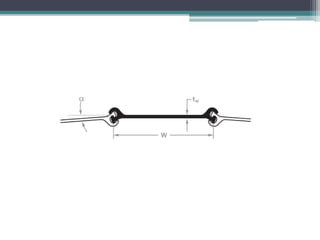
It is used to measure the distance between two
points on the ground. The chain is composed of
100 (or) 150 pieces of galvanized mild steel wire
4mm in diameter, called links. The ends of each
link are bent into a loop and connected together
by means of three rings. The ends of the chain
are provided with brass handles for dragging the
chain can be turned round without twisting. The
length of the chain is measured from the outside
of the other. Metallic tags are fixed at various
Con……
distinctive points of the chain to facilitate quick
reading of a chain in surveying measurements.
Types of chains:-
Generally chains are of two types:
i. Metric chains
ii. Non- metric chains
Metric chains
Metric chains are the most commonly used in
India. These types of chains comes in many
lengths such as 5, 10, 20, and 30 meters. Most
commonly used is 20m chain. Tallies are
provided at every 2m of the chain for quick
reading. Every link of this type of chain is 0.2m.
The total length of the chain is marked on the
brass handle at the ends.
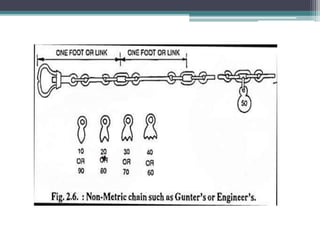
Non-metric chains
In this type of chains units other than metric
unit are used. Nowadays since metric chains are
used everywhere, non metric type of chain
became obsolete. Generally these chains are of 2
types.
i. Engineer’s chain
ii. Gunter’s chain
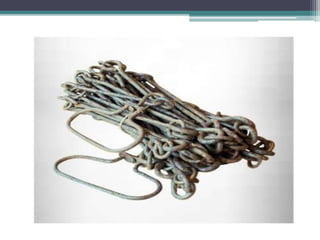
Engineer’s chain
The engineer’s chain is 100ft. Long and consists
of 100 links, each link being 1ft long. It is used in
all engineering surveys such as roads, rail rout &
moderately plain areas.
Gunter’s chain
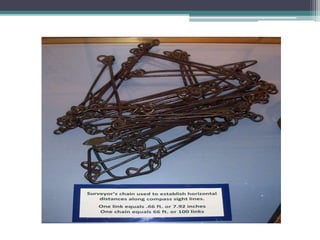
The Gunter's chain is 66ft. Long and is divided
into 100 links each 0.66ft long. It is very
convenient for measuring distances in miles and
furlongs and to know the area in acre.
10 Gunter's chain = 1 furlong
50 Gunter’s chain = 1 mile
10 square Gunter’s = 1 acre
Tape
Tapes are used to measure the lengths to
decimal places accuracy. It is also used to
measure the offset distance from main survey
line. Tapes are made of various materials and
are therefore divided into 4 classes.
a. Cloth (or) linen tape
b. Metallic tape
c. Steel tape
d. Invar tape
Cloth or linen tape
Linen tapes are closely
woven linen and
varnished to resist
moisture. They are
generally 10m, 20m, and
30m long in length and
12 to 15 mm wide. They
are generally used for
offset measurements.
These tapes are light and
flexible.
Metallic tape
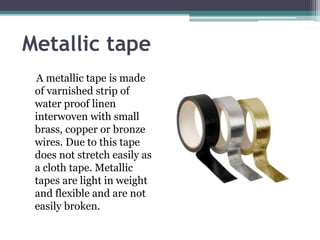
A metallic tape is made
of varnished strip of
water proof linen
interwoven with small
brass, copper or bronze
wires. Due to this tape
does not stretch easily as
a cloth tape. Metallic
tapes are light in weight
and flexible and are not
easily broken.
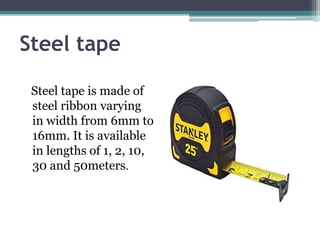
Steel tape
Steel tape is made of
steel ribbon varying
in width from 6mm to
16mm. It is available
in lengths of 1, 2, 10,
30 and 50meters.
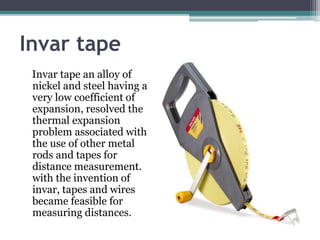
Invar tape
Invar tape an alloy of
nickel and steel having a
very low coefficient of
expansion, resolved the
thermal expansion
problem associated with
the use of other metal
rods and tapes for
distance measurement.
with the invention of
invar, tapes and wires
became feasible for
measuring distances.
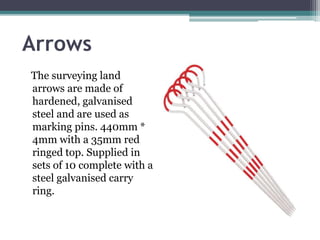
Arrows
The surveying land
arrows are made of
hardened, galvanised
steel and are used as
marking pins. 440mm *
4mm with a 35mm red
ringed top. Supplied in
sets of 10 complete with a
steel galvanised carry
ring.
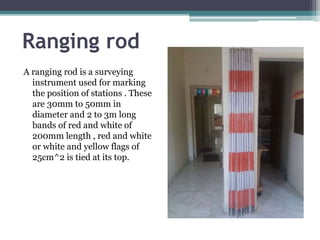
Ranging rod
A ranging rod is a surveying
instrument used for marking
the position of stations . These
are 30mm to 50mm in
diameter and 2 to 3m long
bands of red and white of
200mm length , red and white
or white and yellow flags of
25cm^2 is tied at its top.
Cross staff
Cross staff is used for:
i. Establishing perpendicular offset from a given
point to a line and
ii. Setting out a right angle at a given point on a
line
There are two forms of cross staff commonly
used namely
a. Open cross staff
b. French cross staff
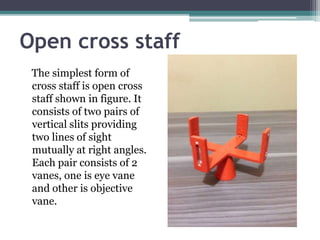
Open cross staff
The simplest form of
cross staff is open cross
staff shown in figure. It
consists of two pairs of
vertical slits providing
two lines of sight
mutually at right angles.
Each pair consists of 2
vanes, one is eye vane
and other is objective
vane.
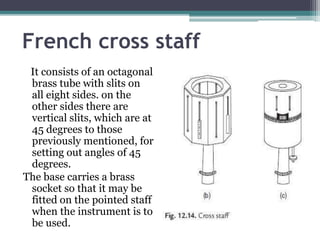
French cross staff
It consists of an octagonal
brass tube with slits on
all eight sides. on the
other sides there are
vertical slits, which are at
45 degrees to those
previously mentioned, for
setting out angles of 45
degrees.
The base carries a brass
socket so that it may be
fitted on the pointed staff
when the instrument is to
be used.
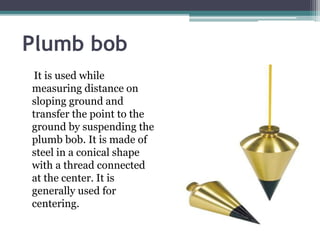
Plumb bob
It is used while
measuring distance on
sloping ground and
transfer the point to the
ground by suspending the
plumb bob. It is made of
steel in a conical shape
with a thread connected
at the center. It is
generally used for
centering.
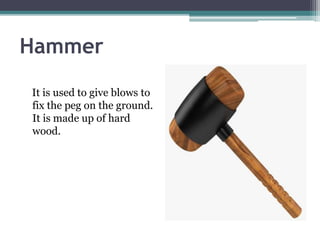
Hammer
It is used to give blows to
fix the peg on the ground.
It is made up of hard
wood.
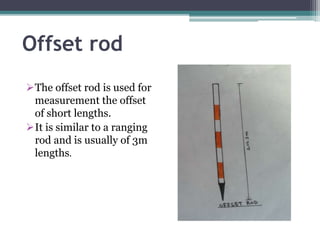
Offset rod
The offset rod is used for
measurement the offset
of short lengths.
It is similar to a ranging
rod and is usually of 3m
lengths.
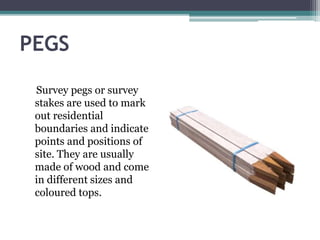
PEGS
Survey pegs or survey
stakes are used to mark
out residential
boundaries and indicate
points and positions of
site. They are usually
made of wood and come
in different sizes and
coloured tops.
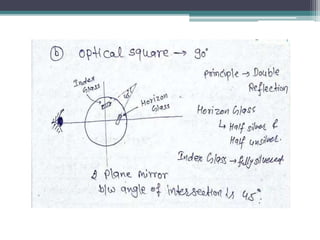
OPTICAL SQUARE
 Instrument used for perpendicular offsets only.
 consist of circular box 50mm in diameter and
12.5mm in depth.
 In line EG a glass B is provided silvered at top,
plan at bottom.
 Opposite of c, silver painted glass A called index
glass is fixed so that the inclined edge of glass A
& inclined face of glass B makes angle 45deg.
Chain surveying
Chain surveying

Chain surveying

  • 1.
  • 2.
    Chain surveying It isthe system of surveying in which the area to be surveyed are measured directly in the field and no angular measurements are taken. There are two main methods of determining distances, i. Direct method ii. Computative method In the computative method, the distances are obtained by calculation after the measurement of angles and base distances/staff intercepts.
  • 3.
    Objectives of chain surveying Thechain surveying is done for the following purposes: 1) To secure the data necessary for making a plan. 2) To secure data for exact description of the boundaries of a piece of land. 3) To determine its area. 4) To divide a piece of land into a number of units.
  • 4.
    Instruments for chain surveying 1.Chain 2. Tape 3. Arrow 4. Ranging rods 5. Cross staff 6. Plumb bob 7. Hammer (or) wooden mallet 8. Offset
  • 5.
  • 6.
    Chain surveying It isused to measure the distance between two points on the ground. The chain is composed of 100 (or) 150 pieces of galvanized mild steel wire 4mm in diameter, called links. The ends of each link are bent into a loop and connected together by means of three rings. The ends of the chain are provided with brass handles for dragging the chain can be turned round without twisting. The length of the chain is measured from the outside of the other. Metallic tags are fixed at various
  • 7.
    Con…… distinctive points ofthe chain to facilitate quick reading of a chain in surveying measurements. Types of chains:- Generally chains are of two types: i. Metric chains ii. Non- metric chains
  • 8.
    Metric chains Metric chainsare the most commonly used in India. These types of chains comes in many lengths such as 5, 10, 20, and 30 meters. Most commonly used is 20m chain. Tallies are provided at every 2m of the chain for quick reading. Every link of this type of chain is 0.2m. The total length of the chain is marked on the brass handle at the ends.
  • 10.
    Non-metric chains In thistype of chains units other than metric unit are used. Nowadays since metric chains are used everywhere, non metric type of chain became obsolete. Generally these chains are of 2 types. i. Engineer’s chain ii. Gunter’s chain
  • 12.
    Engineer’s chain The engineer’schain is 100ft. Long and consists of 100 links, each link being 1ft long. It is used in all engineering surveys such as roads, rail rout & moderately plain areas.
  • 14.
    Gunter’s chain The Gunter'schain is 66ft. Long and is divided into 100 links each 0.66ft long. It is very convenient for measuring distances in miles and furlongs and to know the area in acre. 10 Gunter's chain = 1 furlong 50 Gunter’s chain = 1 mile 10 square Gunter’s = 1 acre
  • 16.
    Tape Tapes are usedto measure the lengths to decimal places accuracy. It is also used to measure the offset distance from main survey line. Tapes are made of various materials and are therefore divided into 4 classes. a. Cloth (or) linen tape b. Metallic tape c. Steel tape d. Invar tape
  • 17.
    Cloth or linentape Linen tapes are closely woven linen and varnished to resist moisture. They are generally 10m, 20m, and 30m long in length and 12 to 15 mm wide. They are generally used for offset measurements. These tapes are light and flexible.
  • 18.
    Metallic tape A metallictape is made of varnished strip of water proof linen interwoven with small brass, copper or bronze wires. Due to this tape does not stretch easily as a cloth tape. Metallic tapes are light in weight and flexible and are not easily broken.
  • 19.
    Steel tape Steel tapeis made of steel ribbon varying in width from 6mm to 16mm. It is available in lengths of 1, 2, 10, 30 and 50meters.
  • 20.
    Invar tape Invar tapean alloy of nickel and steel having a very low coefficient of expansion, resolved the thermal expansion problem associated with the use of other metal rods and tapes for distance measurement. with the invention of invar, tapes and wires became feasible for measuring distances.
  • 21.
    Arrows The surveying land arrowsare made of hardened, galvanised steel and are used as marking pins. 440mm * 4mm with a 35mm red ringed top. Supplied in sets of 10 complete with a steel galvanised carry ring.
  • 22.
    Ranging rod A rangingrod is a surveying instrument used for marking the position of stations . These are 30mm to 50mm in diameter and 2 to 3m long bands of red and white of 200mm length , red and white or white and yellow flags of 25cm^2 is tied at its top.
  • 23.
    Cross staff Cross staffis used for: i. Establishing perpendicular offset from a given point to a line and ii. Setting out a right angle at a given point on a line There are two forms of cross staff commonly used namely a. Open cross staff b. French cross staff
  • 24.
    Open cross staff Thesimplest form of cross staff is open cross staff shown in figure. It consists of two pairs of vertical slits providing two lines of sight mutually at right angles. Each pair consists of 2 vanes, one is eye vane and other is objective vane.
  • 25.
    French cross staff Itconsists of an octagonal brass tube with slits on all eight sides. on the other sides there are vertical slits, which are at 45 degrees to those previously mentioned, for setting out angles of 45 degrees. The base carries a brass socket so that it may be fitted on the pointed staff when the instrument is to be used.
  • 26.
    Plumb bob It isused while measuring distance on sloping ground and transfer the point to the ground by suspending the plumb bob. It is made of steel in a conical shape with a thread connected at the center. It is generally used for centering.
  • 27.
    Hammer It is usedto give blows to fix the peg on the ground. It is made up of hard wood.
  • 28.
    Offset rod The offsetrod is used for measurement the offset of short lengths. It is similar to a ranging rod and is usually of 3m lengths.
  • 29.
    PEGS Survey pegs orsurvey stakes are used to mark out residential boundaries and indicate points and positions of site. They are usually made of wood and come in different sizes and coloured tops.
  • 30.
    OPTICAL SQUARE  Instrumentused for perpendicular offsets only.  consist of circular box 50mm in diameter and 12.5mm in depth.  In line EG a glass B is provided silvered at top, plan at bottom.  Opposite of c, silver painted glass A called index glass is fixed so that the inclined edge of glass A & inclined face of glass B makes angle 45deg.