

Presented By
A.Bharat kumar
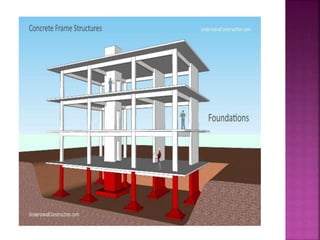
In engineering, a foundation is the
element of a structure which connects is
to the ground, and transfers loads from
the structure to the ground . Foundations
are generally considered either shallow or
deep . Foundation engineering is the
application of soil mechanics and rock
mechanics in the design of foundation
elements of structures.
Foundations provide the structures
stability from the ground.
 To distribute the weight of the structure
over large area so as to avoid over-
loading of the soil beneath.
 To anchor the structure against the
changing natural forces like earthquakes,
floods, frost-heave, tornado or wind.
 To load the sub-stratum evenly and thus
prevent unequal settlement.
 To provide a level surface for building
operations.
 To take the structure deep into the
ground and thus increase its stability,
preventing overloading.
 Specially designed foundation helps in
avoiding the lateral movements of the
supporting material.
 Foundation are two types they are:-
I. Shallow foundation
II. Deep foundation
 Several types of shallow foundation are
discussed below:
i. Isolated spread footing
ii. Wall footing (or) strip footing
iii. Combined footing
iv. Cantilever (or) strap footing
v. Raft (or) mat foundation
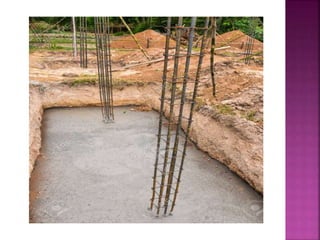
 Structural members are used to support
columns and to transmit their loads to
their loads to the soil.
 Supports wall that may either be bearing
or non bearing walls.
 Required to support direct concentric
loads.
 Used in low rise buildings.
 Usually supports two or three columns not
in a row.
 Used when two columns are so close that
single footings cannot be used or when
one column is located at or near a
property line.
 A strap footing is used to connect an
eccentrically loaded column footing to an
interior column.
 The strap is used to transmit the moment
caused from an eccentricity to the
interior column footing so that a uniform
soil pressure is generated beneath both
footings.
 The strap footing may be used instead of
a rectangular or trapezoidal combined
footing if the distance between columns
is large and / or the allowable soil
pressure is relatively large so that the
additional footing area is not needed.
 Consist of a thick reinforced concrete slab
covering the entire area of the bottom of
the structure (like a floor).
 Base soil has low bearing capacity or
 Column load are so large that more than
50% of the area covered by conventional
spread footing.
 Resist unequal settlement due to
earthquake.
 Quickness of construction work.
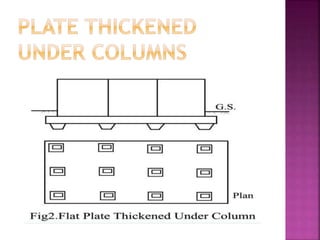
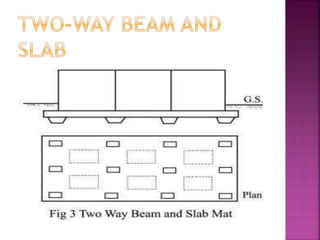
1. Flat plate mat
2. Plate thickened under columns
3. Two-way beam and slab
4. Rigid frame mat
5. Piled raft
6. Plate with pedestal
 Several types of deep foundation are
discussed below:
i. Pile foundation
ii. Pier foundation
iii. Caisson foundation
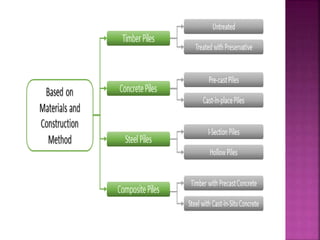
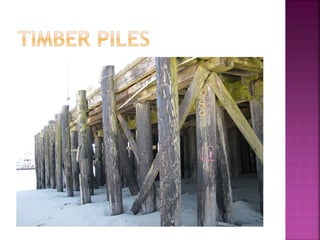
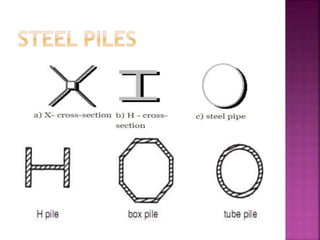
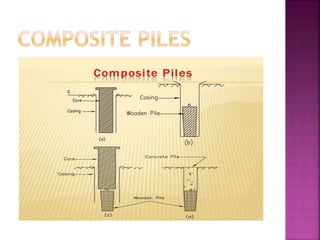
The pile’s are long cylinder of a strong
material such as concrete and these is
used for the large buildings , piers and
bridges foundations these type of pile
foundation is used the pile foundation is
costly than other type of foundation.
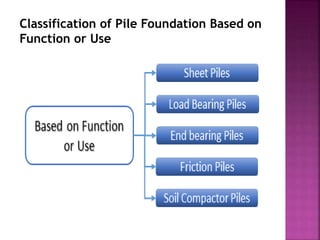
Classification of Pile Foundation Based on
Function or Use
 This type of pile is mostly used to provide
lateral support. Usually, they resist lateral
pressure from loose soil, the flow of
water, etc. They are usually used for
cofferdams, trench sheeting, shore
protection, etc. They are not used for
providing vertical support to the
structure. They are usually used to serve
the following purpose-
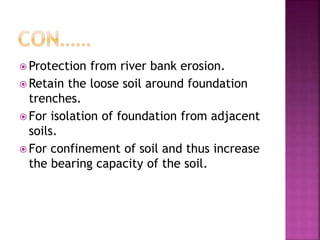
 Construction of retaining walls.
 Protection from river bank erosion.
 Retain the loose soil around foundation
trenches.
 For isolation of foundation from adjacent
soils.
 For confinement of soil and thus increase
the bearing capacity of the soil.
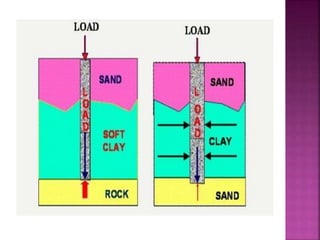
This type of pile foundation is mainly used
to transfer the vertical loads from the
structure to the soil. These foundations
transmit loads through the soil with poor
supporting property onto a layer which is
capable of bearing the load. Depending
on the mechanism of load transfer from
pile to the soil, load-bearing piles can be
further classified as flowed.
Friction pile transfers the load from the
structure to the soil by the frictional
force between the surface of the pile and
the soil surrounding the pile such as stiff
clay, sandy soil, etc. Friction can be
developed for the entire length of the
pile or a definite length of the pile,
depending on the strata of the soil. In
friction pile, generally, the entire surface
of the pile works to transfer the loads
from the structure to the soil.
The surface area of the pile
multiplied by the safe friction force
developed per unit area determines the
capacity of the pile.
While designing skin friction pile,
the skin friction to be developed at a pile
surface should be sincerely evaluated and
a reasonable factor of safety should be
considered. Besides this one can increase
the pile diameter, depth, number of piles
and make pile surface rough to increase
the capacity of friction pile
Sometimes piles are driven at placed
closed intervals to increase the bearing
capacity of soil by compacting.
Pier is an underground structure that
transmits heavier load which cannot be
transmitted by shallow foundations. It is
usually by shallower than pile foundation.
pier foundation is a cylinder structure
member which transfer heavy load from
super structure to the soil by end bearing.
unlike pile, it can only transfer load by
bearing and by not skin friction.
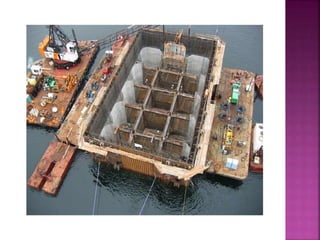
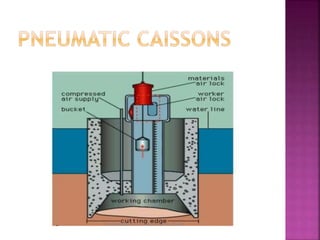
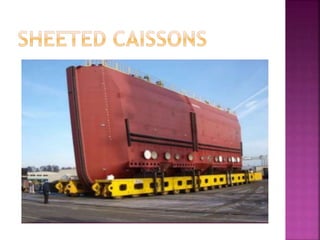
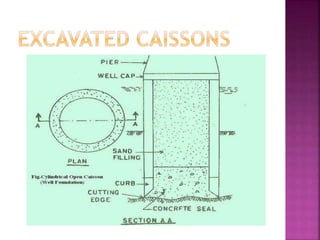
Caisson foundation is a watertight
retaining structure used as a bridge pier,
construction of dam etc. It is generally
used in structures which requires
foundation beneath a river or similar
water bodies. Reason for choosing caisson
foundation is that it can be floated to the
desired location and then suck into place
. caisson foundation is a ready-made
hollow cylinder depressed into the soil up
to the desired level and then filled with
concrete which ultimately converts to a
foundation. It is mostly used as bridge
piers. Caisson foundation such as:
1. Box caissons
2. Floating caissons
3. Pneumatic caissons
4. Open caissons
5. Sheeted caissons
6. Excavated caissons
Caisson foundation are economic when:
 Pile cap requirement is to be minimized.
 Noise and vibration needed to be
reduced.
 Foundation has to be placed beneath
water bodies.
 Highly lateral and axial loading capacity is
reduced.
Foundation
Foundation
Foundation
Foundation
Foundation
Foundation
Foundation
Foundation

Foundation

  • 1.
  • 2.
    In engineering, afoundation is the element of a structure which connects is to the ground, and transfers loads from the structure to the ground . Foundations are generally considered either shallow or deep . Foundation engineering is the application of soil mechanics and rock mechanics in the design of foundation elements of structures. Foundations provide the structures stability from the ground.
  • 3.
     To distributethe weight of the structure over large area so as to avoid over- loading of the soil beneath.  To anchor the structure against the changing natural forces like earthquakes, floods, frost-heave, tornado or wind.  To load the sub-stratum evenly and thus prevent unequal settlement.  To provide a level surface for building operations.
  • 4.
     To takethe structure deep into the ground and thus increase its stability, preventing overloading.  Specially designed foundation helps in avoiding the lateral movements of the supporting material.
  • 7.
     Foundation aretwo types they are:- I. Shallow foundation II. Deep foundation
  • 8.
     Several typesof shallow foundation are discussed below: i. Isolated spread footing ii. Wall footing (or) strip footing iii. Combined footing iv. Cantilever (or) strap footing v. Raft (or) mat foundation
  • 9.
     Structural membersare used to support columns and to transmit their loads to their loads to the soil.
  • 12.
     Supports wallthat may either be bearing or non bearing walls.  Required to support direct concentric loads.  Used in low rise buildings.
  • 14.
     Usually supportstwo or three columns not in a row.  Used when two columns are so close that single footings cannot be used or when one column is located at or near a property line.
  • 16.
     A strapfooting is used to connect an eccentrically loaded column footing to an interior column.  The strap is used to transmit the moment caused from an eccentricity to the interior column footing so that a uniform soil pressure is generated beneath both footings.
  • 17.
     The strapfooting may be used instead of a rectangular or trapezoidal combined footing if the distance between columns is large and / or the allowable soil pressure is relatively large so that the additional footing area is not needed.
  • 19.
     Consist ofa thick reinforced concrete slab covering the entire area of the bottom of the structure (like a floor).  Base soil has low bearing capacity or  Column load are so large that more than 50% of the area covered by conventional spread footing.
  • 20.
     Resist unequalsettlement due to earthquake.  Quickness of construction work.
  • 22.
    1. Flat platemat 2. Plate thickened under columns 3. Two-way beam and slab 4. Rigid frame mat 5. Piled raft 6. Plate with pedestal
  • 29.
     Several typesof deep foundation are discussed below: i. Pile foundation ii. Pier foundation iii. Caisson foundation
  • 30.
    The pile’s arelong cylinder of a strong material such as concrete and these is used for the large buildings , piers and bridges foundations these type of pile foundation is used the pile foundation is costly than other type of foundation.
  • 32.
    Classification of PileFoundation Based on Function or Use
  • 33.
     This typeof pile is mostly used to provide lateral support. Usually, they resist lateral pressure from loose soil, the flow of water, etc. They are usually used for cofferdams, trench sheeting, shore protection, etc. They are not used for providing vertical support to the structure. They are usually used to serve the following purpose-  Construction of retaining walls.
  • 34.
     Protection fromriver bank erosion.  Retain the loose soil around foundation trenches.  For isolation of foundation from adjacent soils.  For confinement of soil and thus increase the bearing capacity of the soil.
  • 36.
    This type ofpile foundation is mainly used to transfer the vertical loads from the structure to the soil. These foundations transmit loads through the soil with poor supporting property onto a layer which is capable of bearing the load. Depending on the mechanism of load transfer from pile to the soil, load-bearing piles can be further classified as flowed.
  • 38.
    Friction pile transfersthe load from the structure to the soil by the frictional force between the surface of the pile and the soil surrounding the pile such as stiff clay, sandy soil, etc. Friction can be developed for the entire length of the pile or a definite length of the pile, depending on the strata of the soil. In friction pile, generally, the entire surface of the pile works to transfer the loads from the structure to the soil.
  • 39.
    The surface areaof the pile multiplied by the safe friction force developed per unit area determines the capacity of the pile. While designing skin friction pile, the skin friction to be developed at a pile surface should be sincerely evaluated and a reasonable factor of safety should be considered. Besides this one can increase the pile diameter, depth, number of piles and make pile surface rough to increase the capacity of friction pile
  • 41.
    Sometimes piles aredriven at placed closed intervals to increase the bearing capacity of soil by compacting.
  • 48.
    Pier is anunderground structure that transmits heavier load which cannot be transmitted by shallow foundations. It is usually by shallower than pile foundation. pier foundation is a cylinder structure member which transfer heavy load from super structure to the soil by end bearing. unlike pile, it can only transfer load by bearing and by not skin friction.
  • 50.
    Caisson foundation isa watertight retaining structure used as a bridge pier, construction of dam etc. It is generally used in structures which requires foundation beneath a river or similar water bodies. Reason for choosing caisson foundation is that it can be floated to the desired location and then suck into place . caisson foundation is a ready-made hollow cylinder depressed into the soil up to the desired level and then filled with
  • 51.
    concrete which ultimatelyconverts to a foundation. It is mostly used as bridge piers. Caisson foundation such as: 1. Box caissons 2. Floating caissons 3. Pneumatic caissons 4. Open caissons 5. Sheeted caissons 6. Excavated caissons
  • 52.
    Caisson foundation areeconomic when:  Pile cap requirement is to be minimized.  Noise and vibration needed to be reduced.  Foundation has to be placed beneath water bodies.  Highly lateral and axial loading capacity is reduced.