

SOUND
Chapter 14
(Physics)
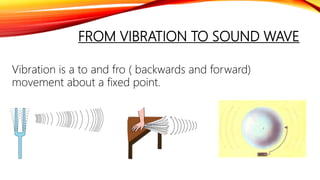
FROM VIBRATION TO SOUND WAVE
Vibration is a to and fro ( backwards and forward)
movement about a fixed point.
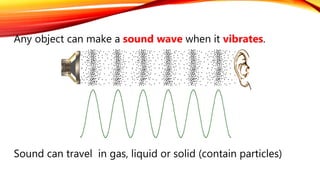
Any object can make a sound wave when it vibrates.
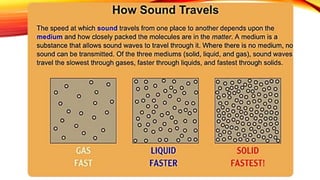
Sound can travel in gas, liquid or solid (contain particles)
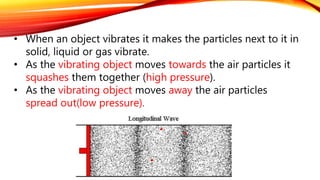
• When an object vibrates it makes the particles next to it in
solid, liquid or gas vibrate.
• As the vibrating object moves towards the air particles it
squashes them together (high pressure).
• As the vibrating object moves away the air particles
spread out(low pressure).
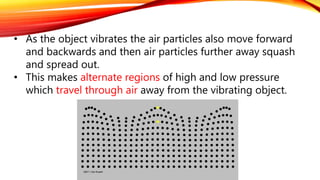
• As the object vibrates the air particles also move forward
and backwards and then air particles further away squash
and spread out.
• This makes alternate regions of high and low pressure
which travel through air away from the vibrating object.
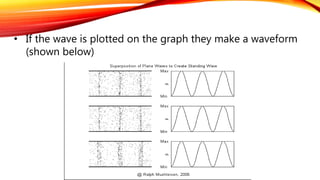
• If the wave is plotted on the graph they make a waveform
(shown below)
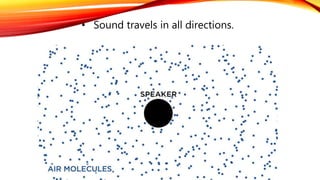
• Sound travels in all directions.
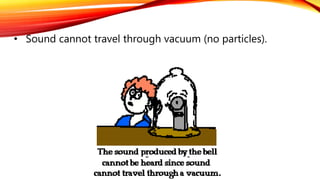
• Sound cannot travel through vacuum (no particles).
DETECTING SOUND WAVES
• Ear is the organ of the body that detects sound waves.
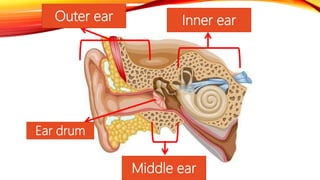
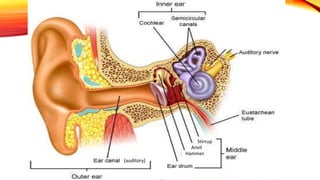
• The ear is divided into three parts:
a) Outer ear
b) Middle ear
c) Inner ear
Outer ear
Middle ear
Inner ear
Ear drum
Stirrup
Anvil
Hammer
(auditory)
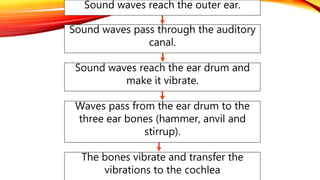
Sound waves reach the outer ear.
Sound waves pass through the auditory
canal.
Sound waves reach the ear drum and
make it vibrate.
Waves pass from the ear drum to the
three ear bones (hammer, anvil and
stirrup).
The bones vibrate and transfer the
vibrations to the cochlea
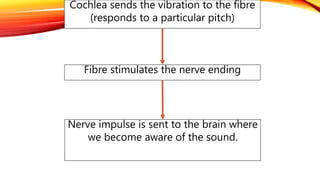
Cochlea sends the vibration to the fibre
(responds to a particular pitch)
Fibre stimulates the nerve ending
Nerve impulse is sent to the brain where
we become aware of the sound.
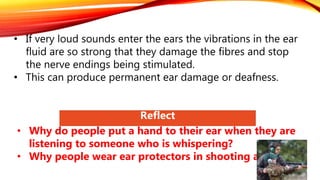
• If very loud sounds enter the ears the vibrations in the ear
fluid are so strong that they damage the fibres and stop
the nerve endings being stimulated.
• This can produce permanent ear damage or deafness.
Reflect
• Why do people put a hand to their ear when they are
listening to someone who is whispering?
• Why people wear ear protectors in shooting activities?
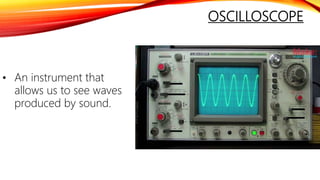
OSCILLOSCOPE
• An instrument that
allows us to see waves
produced by sound.
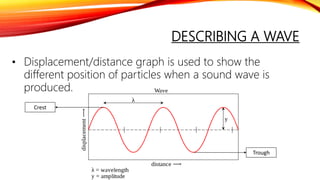
DESCRIBING A WAVE
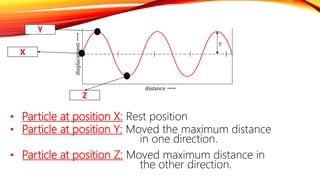
• Displacement/distance graph is used to show the
different position of particles when a sound wave is
produced.
Crest
Trough
• Particle at position X: Rest position
• Particle at position Y: Moved the maximum distance
in one direction.
• Particle at position Z: Moved maximum distance in
the other direction.
X
Y
Z
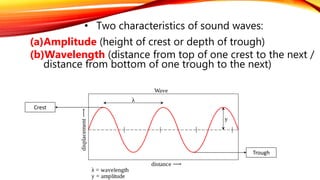
• Two characteristics of sound waves:
(a)Amplitude (height of crest or depth of trough)
(b)Wavelength (distance from top of one crest to the next /
distance from bottom of one trough to the next)
Crest
Trough
THE LOUDNESS OF SOUND
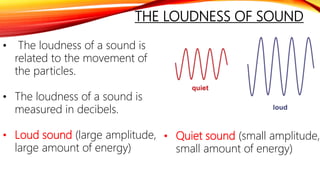
• The loudness of a sound is
related to the movement of
the particles.
• The loudness of a sound is
measured in decibels.
• Loud sound (large amplitude,
large amount of energy)
• Quiet sound (small amplitude,
small amount of energy)
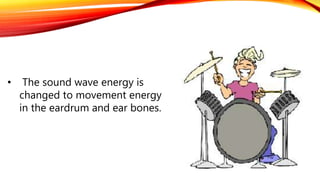
• The sound wave energy is
changed to movement energy
in the eardrum and ear bones.
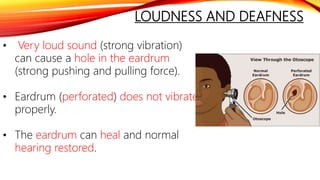
LOUDNESS AND DEAFNESS
• Very loud sound (strong vibration)
can cause a hole in the eardrum
(strong pushing and pulling force).
• Eardrum (perforated) does not vibrate
properly.
• The eardrum can heal and normal
hearing restored.
• If exposed to a particular note for a
long time, the person will no longer be
able to hear it.
• This is due to the nerve damage of the
nerve ending in the cochlea for that
note.
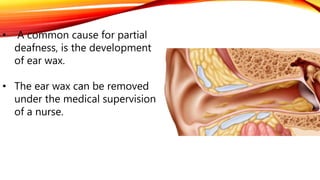
• A common cause for partial
deafness, is the development
of ear wax.
• The ear wax can be removed
under the medical supervision
of a nurse.
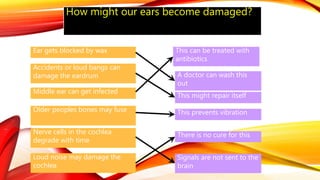
Ear gets blocked by wax
Accidents or loud bangs can
damage the eardrum
Middle ear can get infected
Older peoples bones may fuse
Nerve cells in the cochlea
degrade with time
Loud noise may damage the
cochlea
This can be treated with
antibiotics
This might repair itself
This prevents vibration
There is no cure for this
Signals are not sent to the
brain
A doctor can wash this
out
How might our ears become damaged?
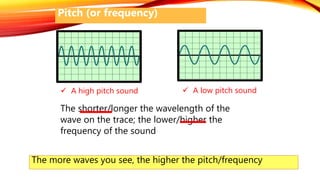
 A high pitch sound  A low pitch sound
The shorter/longer the wavelength of the
wave on the trace; the lower/higher the
frequency of the sound
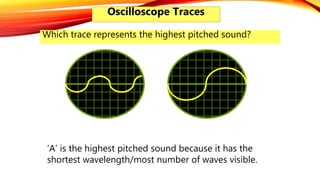
The more waves you see, the higher the pitch/frequency
Pitch (or frequency)
Which trace represents the highest pitched sound?
A
‘A’ is the highest pitched sound because it has the
shortest wavelength/most number of waves visible.
Oscilloscope Traces
B
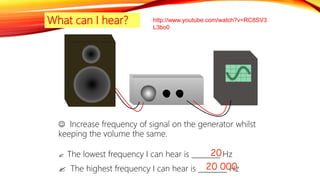
What can I hear?
 Increase frequency of signal on the generator whilst
keeping the volume the same.
 The lowest frequency I can hear is ________ Hz
 The highest frequency I can hear is ________ Hz
20
20 000
http://www.youtube.com/watch?v=RC8SV3
L3bo0
Hearing Ranges
0
1
10
100
1,000
10,000
100,000
1,000,000
Frequency [Hz]
Moths
Elephants
Mice
Humans
Pigeons
Bats
Hearing Ranges of Animals
Which animal can
hear the lowest
frequency?
Which animal can
hear the highest
frequency?
moths

Ch.14.sound

  • 1.
  • 2.
    FROM VIBRATION TOSOUND WAVE Vibration is a to and fro ( backwards and forward) movement about a fixed point.
  • 3.
    Any object canmake a sound wave when it vibrates. Sound can travel in gas, liquid or solid (contain particles)
  • 4.
    • When anobject vibrates it makes the particles next to it in solid, liquid or gas vibrate. • As the vibrating object moves towards the air particles it squashes them together (high pressure). • As the vibrating object moves away the air particles spread out(low pressure).
  • 5.
    • As theobject vibrates the air particles also move forward and backwards and then air particles further away squash and spread out. • This makes alternate regions of high and low pressure which travel through air away from the vibrating object.
  • 6.
    • If thewave is plotted on the graph they make a waveform (shown below)
  • 7.
    • Sound travelsin all directions.
  • 9.
    • Sound cannottravel through vacuum (no particles).
  • 10.
    DETECTING SOUND WAVES •Ear is the organ of the body that detects sound waves. • The ear is divided into three parts: a) Outer ear b) Middle ear c) Inner ear
  • 11.
  • 12.
  • 13.
    Sound waves reachthe outer ear. Sound waves pass through the auditory canal. Sound waves reach the ear drum and make it vibrate. Waves pass from the ear drum to the three ear bones (hammer, anvil and stirrup). The bones vibrate and transfer the vibrations to the cochlea
  • 14.
    Cochlea sends thevibration to the fibre (responds to a particular pitch) Fibre stimulates the nerve ending Nerve impulse is sent to the brain where we become aware of the sound.
  • 15.
    • If veryloud sounds enter the ears the vibrations in the ear fluid are so strong that they damage the fibres and stop the nerve endings being stimulated. • This can produce permanent ear damage or deafness. Reflect • Why do people put a hand to their ear when they are listening to someone who is whispering? • Why people wear ear protectors in shooting activities?
  • 16.
    OSCILLOSCOPE • An instrumentthat allows us to see waves produced by sound.
  • 17.
    DESCRIBING A WAVE •Displacement/distance graph is used to show the different position of particles when a sound wave is produced. Crest Trough
  • 18.
    • Particle atposition X: Rest position • Particle at position Y: Moved the maximum distance in one direction. • Particle at position Z: Moved maximum distance in the other direction. X Y Z
  • 19.
    • Two characteristicsof sound waves: (a)Amplitude (height of crest or depth of trough) (b)Wavelength (distance from top of one crest to the next / distance from bottom of one trough to the next) Crest Trough
  • 20.
    THE LOUDNESS OFSOUND • The loudness of a sound is related to the movement of the particles. • The loudness of a sound is measured in decibels. • Loud sound (large amplitude, large amount of energy) • Quiet sound (small amplitude, small amount of energy)
  • 21.
    • The soundwave energy is changed to movement energy in the eardrum and ear bones.
  • 22.
    LOUDNESS AND DEAFNESS •Very loud sound (strong vibration) can cause a hole in the eardrum (strong pushing and pulling force). • Eardrum (perforated) does not vibrate properly. • The eardrum can heal and normal hearing restored.
  • 23.
    • If exposedto a particular note for a long time, the person will no longer be able to hear it. • This is due to the nerve damage of the nerve ending in the cochlea for that note.
  • 24.
    • A commoncause for partial deafness, is the development of ear wax. • The ear wax can be removed under the medical supervision of a nurse.
  • 25.
    Ear gets blockedby wax Accidents or loud bangs can damage the eardrum Middle ear can get infected Older peoples bones may fuse Nerve cells in the cochlea degrade with time Loud noise may damage the cochlea This can be treated with antibiotics This might repair itself This prevents vibration There is no cure for this Signals are not sent to the brain A doctor can wash this out How might our ears become damaged?
  • 26.
     A highpitch sound  A low pitch sound The shorter/longer the wavelength of the wave on the trace; the lower/higher the frequency of the sound The more waves you see, the higher the pitch/frequency Pitch (or frequency)
  • 27.
    Which trace representsthe highest pitched sound? A ‘A’ is the highest pitched sound because it has the shortest wavelength/most number of waves visible. Oscilloscope Traces B
  • 28.
    What can Ihear?  Increase frequency of signal on the generator whilst keeping the volume the same.  The lowest frequency I can hear is ________ Hz  The highest frequency I can hear is ________ Hz 20 20 000 http://www.youtube.com/watch?v=RC8SV3 L3bo0
  • 29.
    Hearing Ranges 0 1 10 100 1,000 10,000 100,000 1,000,000 Frequency [Hz] Moths Elephants Mice Humans Pigeons Bats HearingRanges of Animals Which animal can hear the lowest frequency? Which animal can hear the highest frequency? moths