SOUND AND
HEARING
FACTS
● Sound is a form of energy produced by
vibration.
● Sound travels in longitudinal waves.
● Sound travels faster through solids than
liquids,gases.
SOUND
● Frequencies above 20,000 Hertz is
called ultrasound..
● Frequencies below 20 Hertz is called
infrasound.
PITCH AND FREQUENCY
COMPRESSION:where molecules are
compressed.
RAREFACTION:where molecules are spread
out.
VIBRATION
Repeated backward and forward.
WAVELENGTH and
FREQUENCY
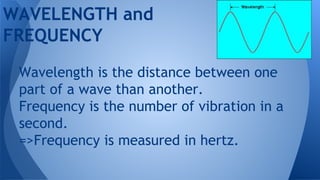
Wavelength is the distance between one
part of a wave than another.
Frequency is the number of vibration in a
second.
=>Frequency is measured in hertz.
THE HUMAN EAR
FUNCTION OF HUMAN EAR
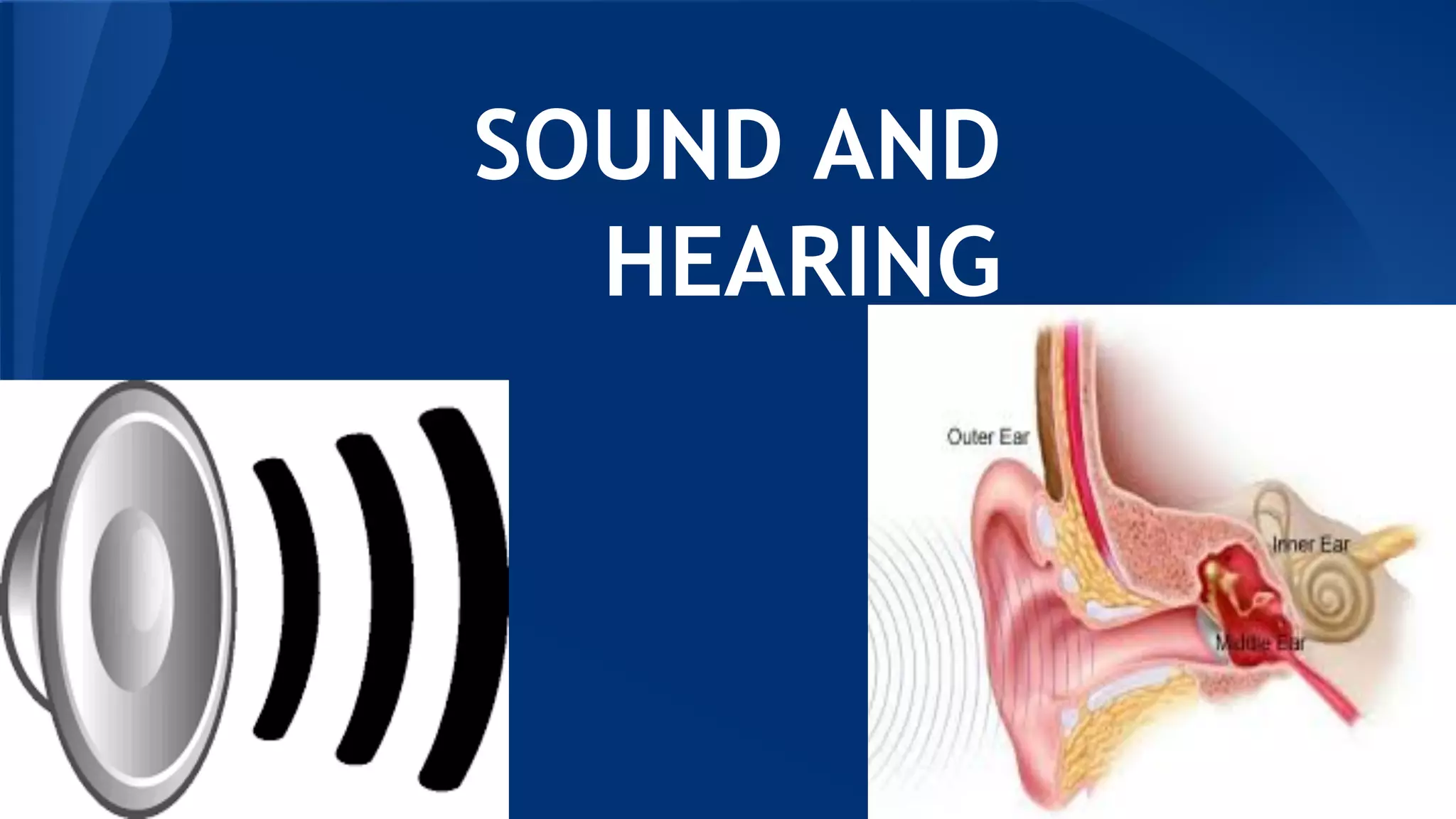
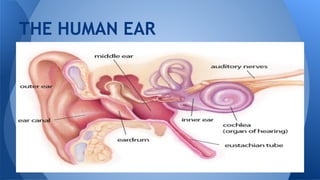
The ear has external, middle, and inner portions. The outer ear is called the
pinna and is made of ridged cartilage covered by skin. Sound funnels through
the pinna into the external auditory canal, a short tube that ends at the eardrum
(tympanic membrane).
Sound causes the eardrum and its tiny attached bones in the middle portion of
the ear to vibrate, and the vibrations are conducted to the nearby cochlea. The
spiral-shaped cochlea is part of the inner ear; it transforms sound into nerve
impulses that travel to the brain.
The fluid-filled semicircular canals (labyrinth) attach to the cochlea and nerves
in the inner ear. They send information on balance and head position to the
brain. The eustachian (auditory) tube drains fluid from the middle ear into the
throat (pharynx) behind the nose.
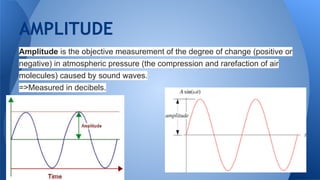
AMPLITUDE
Amplitude is the objective measurement of the degree of change (positive or
negative) in atmospheric pressure (the compression and rarefaction of air
molecules) caused by sound waves.
=>Measured in decibels.
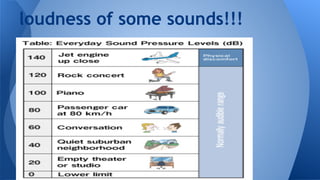
loudness of some sounds!!!
REFERENCES
BOOK
INTERNET.
MADE BY MUSHK AZIZ
CLASS:VIII-B

SOUND AND HEARING

  • 1.
  • 2.
    FACTS ● Sound isa form of energy produced by vibration. ● Sound travels in longitudinal waves. ● Sound travels faster through solids than liquids,gases.
  • 3.
    SOUND ● Frequencies above20,000 Hertz is called ultrasound.. ● Frequencies below 20 Hertz is called infrasound.
  • 4.
    PITCH AND FREQUENCY COMPRESSION:wheremolecules are compressed. RAREFACTION:where molecules are spread out.
  • 5.
  • 6.
    WAVELENGTH and FREQUENCY Wavelength isthe distance between one part of a wave than another. Frequency is the number of vibration in a second. =>Frequency is measured in hertz.
  • 7.
  • 8.
    FUNCTION OF HUMANEAR The ear has external, middle, and inner portions. The outer ear is called the pinna and is made of ridged cartilage covered by skin. Sound funnels through the pinna into the external auditory canal, a short tube that ends at the eardrum (tympanic membrane). Sound causes the eardrum and its tiny attached bones in the middle portion of the ear to vibrate, and the vibrations are conducted to the nearby cochlea. The spiral-shaped cochlea is part of the inner ear; it transforms sound into nerve impulses that travel to the brain. The fluid-filled semicircular canals (labyrinth) attach to the cochlea and nerves in the inner ear. They send information on balance and head position to the brain. The eustachian (auditory) tube drains fluid from the middle ear into the throat (pharynx) behind the nose.
  • 9.
    AMPLITUDE Amplitude is theobjective measurement of the degree of change (positive or negative) in atmospheric pressure (the compression and rarefaction of air molecules) caused by sound waves. =>Measured in decibels.
  • 10.
  • 11.