Nutrition
Objectives Name  the six classes of nutrients. Identify  the functions and food sources of carbohydrates, proteins, and fats.  Describe  the need for enough fiber in your diet. Identify  one health disorder linked to high levels of saturated fats in the diet. Describe  how diet can influence health.
What Is Nutrition? The science or study of food and the ways in which the body uses food. Nutrients are the substances in food that provide energy or help form body tissues and are necessary for life and growth.
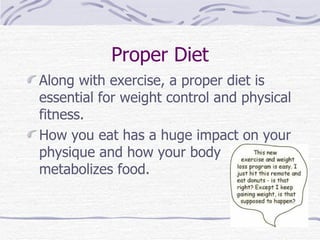
Proper Diet Along with exercise, a proper diet is essential for weight control and physical fitness.  How you eat has a huge impact on your physique and how your body metabolizes food.
Six Classes of Nutrients Carbohydrates Fats Proteins Vitamins Minerals Water A Balanced Diet   To be healthy, you need the right amount of nutrients from each class.
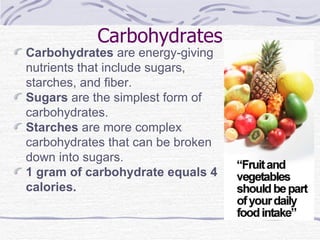
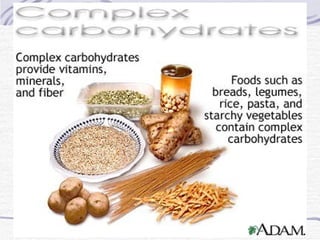
Carbohydrates Carbohydrates  are energy-giving nutrients that include sugars, starches, and fiber. Sugars  are the simplest form of carbohydrates. Starches  are more complex carbohydrates that can be broken down into sugars. 1 gram of carbohydrate equals 4 calories.
Carbs Continued Glycogen  is a form of carbohydrate your body uses for short-term energy storage. Fiber  is a complex carbohydrate that provides little energy and cannot be digested. However, fiber is important to keep your digestive system healthy.
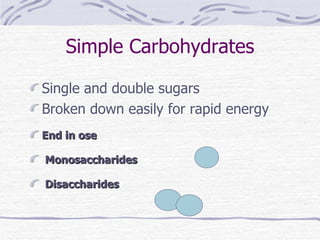
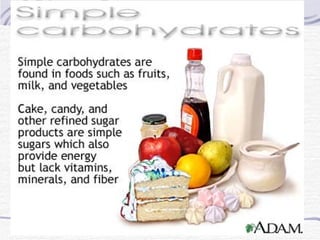
Simple Carbohydrates Single and double sugars Broken down easily for rapid energy End in ose Monosaccharides Disaccharides
Simple Sugars Glucose is a single sugar Fructose, lactose and sucrose are double sugars and are linked with glucose Glycogen: quick energy stores If you eat more than your body needs it is stored as fat
 
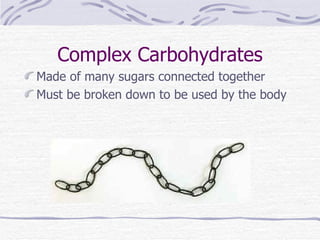
Complex Carbohydrates Made of many sugars connected together Must be broken down to be used by the body
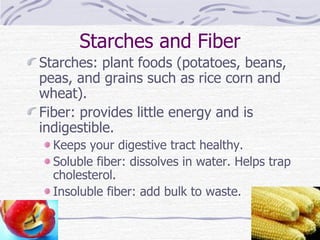
Starches and Fiber Starches: plant foods (potatoes, beans, peas, and grains such as rice corn and wheat). Fiber: provides little energy and is indigestible. Keeps your digestive tract healthy. Soluble fiber: dissolves in water. Helps trap cholesterol. Insoluble fiber: add bulk to waste.
 
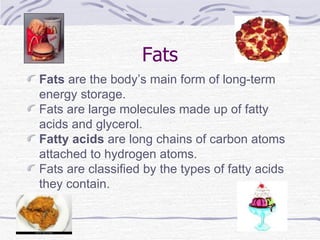
Fats Fats  are the body’s main form of long-term energy storage. Fats are large molecules made up of fatty acids and glycerol. Fatty acids  are long chains of carbon atoms attached to hydrogen atoms. Fats are classified by the types of fatty acids they contain.
Saturated Fat Saturated fats  contain saturated fatty acids. Saturated fats are usually solid at room temperature. They come from foods such as meat and milk. Eating too many saturated fats can lead to obesity, high cholesterol levels, and increased risk of heart disease.
Unsaturated Fat Unsaturated fats  contain unsaturated fatty acids. Saturated fats are usually liquid at room temperature. They come from foods such as oils and fish.
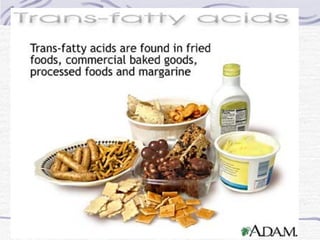
Trans Fat An unhealthy substance made through the chemical process of hydrogenation of oils. Hydrogenation solidifies liquid oils and increases the shelf life and the flavor stability of oils and foods that contain them.
 
Uses For Fat Energy Insulation Padding for organs Cell membranes Carry fat soluble vitamins Hormones Growth Skin
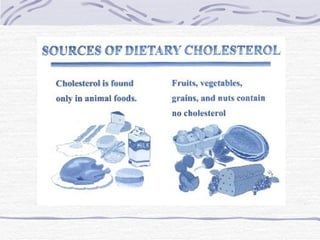
Cholesterol Found in all animal tissues. You make it and you eat it. Cholesterol is necessary for certain essential functions in the body. Low-density lipoprotein: brings cholesterol to the body cells. When your LDL is too high plaque is deposited on the walls of blood vessels. LDL= bad cholesterol.
Cholesterol Continued High-density lipoprotein: carries cholesterol back to the liver for elimination HDL=good cholesterol
 
Which Fat? You need fat in your diet Too much is bad!!!! Limit saturated fats, cholesterol, and trans fats Focus on unsaturated fats 25-35% of your diet should come from fat 1 gram of fat = 9 calories
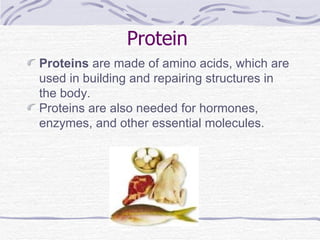
Protein Proteins  are made of amino acids, which are used in building and repairing structures in the body. Proteins are also needed for hormones, enzymes, and other essential molecules.
Protein Continued Essential amino acids  are nine amino acids that the body cannot produce on its own. Complete proteins  are dietary proteins that contain all the essential amino acids. Incomplete proteins  do not contain all the essential amino acids.
Uses for Proteins Body building nutrient Build & repair tissue Hormones, enzymes, antibodies  Energy Americans get too much protein Excess stores as fat 1 gram of protein = 4 calories
Metabolism Metabolism  is the sum of the chemical processes that take place in your body to keep you alive and active. Metabolism requires energy from carbohydrates, fats, and proteins. The energy in food is measured in calories.
What Is a Calorie? A calorie is the amount of heat needed to raise the temperature of a liter of water 1 degree. Relax. It is just a scientific way to measure energy.
What Do You Need to Know About Calories? Think about what you regularly eat,  What your calorie needs are,  And how to count calories.  It takes approximately 3,500 calories below your calorie needs to lose a pound of body fat.  It takes approximately 3,500 calories above your calorie needs to gain a pound.
Calories Count—and They Come From Both Food and Beverages. When eating packaged foods (for example, frozen, canned, and some prepared foods from the grocery store), counting your calories is easy—it's on the nutrition facts label.  When eating foods that do not have a nutrition facts label, you should pay attention to portion size.
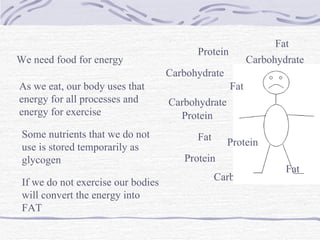
Carbohydrate Protein Fat Carbohydrate Carbohydrate Carbohydrate Protein Protein Protein Fat Fat Fat We need food for energy As we eat, our body uses that energy for all processes and energy for exercise If we do not exercise our bodies will convert the energy into FAT Some nutrients that we do not use is stored temporarily as glycogen
Can You:  Name  the six classes of nutrients. Identify  the functions and food sources of carbohydrates, proteins, and fats.  Describe  the need for enough fiber in your diet. Identify  one health disorder linked to high levels of saturated fats in the diet. Describe  how diet can influence health.
No Applause Is Necessary The End

Nutrition

  • 1.
  • 2.
    Objectives Name the six classes of nutrients. Identify the functions and food sources of carbohydrates, proteins, and fats. Describe the need for enough fiber in your diet. Identify one health disorder linked to high levels of saturated fats in the diet. Describe how diet can influence health.
  • 3.
    What Is Nutrition?The science or study of food and the ways in which the body uses food. Nutrients are the substances in food that provide energy or help form body tissues and are necessary for life and growth.
  • 4.
    Proper Diet Alongwith exercise, a proper diet is essential for weight control and physical fitness. How you eat has a huge impact on your physique and how your body metabolizes food.
  • 5.
    Six Classes ofNutrients Carbohydrates Fats Proteins Vitamins Minerals Water A Balanced Diet To be healthy, you need the right amount of nutrients from each class.
  • 6.
    Carbohydrates Carbohydrates are energy-giving nutrients that include sugars, starches, and fiber. Sugars are the simplest form of carbohydrates. Starches are more complex carbohydrates that can be broken down into sugars. 1 gram of carbohydrate equals 4 calories.
  • 7.
    Carbs Continued Glycogen is a form of carbohydrate your body uses for short-term energy storage. Fiber is a complex carbohydrate that provides little energy and cannot be digested. However, fiber is important to keep your digestive system healthy.
  • 8.
    Simple Carbohydrates Singleand double sugars Broken down easily for rapid energy End in ose Monosaccharides Disaccharides
  • 9.
    Simple Sugars Glucoseis a single sugar Fructose, lactose and sucrose are double sugars and are linked with glucose Glycogen: quick energy stores If you eat more than your body needs it is stored as fat
  • 10.
  • 11.
    Complex Carbohydrates Madeof many sugars connected together Must be broken down to be used by the body
  • 12.
    Starches and FiberStarches: plant foods (potatoes, beans, peas, and grains such as rice corn and wheat). Fiber: provides little energy and is indigestible. Keeps your digestive tract healthy. Soluble fiber: dissolves in water. Helps trap cholesterol. Insoluble fiber: add bulk to waste.
  • 13.
  • 14.
    Fats Fats are the body’s main form of long-term energy storage. Fats are large molecules made up of fatty acids and glycerol. Fatty acids are long chains of carbon atoms attached to hydrogen atoms. Fats are classified by the types of fatty acids they contain.
  • 15.
    Saturated Fat Saturatedfats contain saturated fatty acids. Saturated fats are usually solid at room temperature. They come from foods such as meat and milk. Eating too many saturated fats can lead to obesity, high cholesterol levels, and increased risk of heart disease.
  • 16.
    Unsaturated Fat Unsaturatedfats contain unsaturated fatty acids. Saturated fats are usually liquid at room temperature. They come from foods such as oils and fish.
  • 17.
    Trans Fat Anunhealthy substance made through the chemical process of hydrogenation of oils. Hydrogenation solidifies liquid oils and increases the shelf life and the flavor stability of oils and foods that contain them.
  • 18.
  • 19.
    Uses For FatEnergy Insulation Padding for organs Cell membranes Carry fat soluble vitamins Hormones Growth Skin
  • 20.
    Cholesterol Found inall animal tissues. You make it and you eat it. Cholesterol is necessary for certain essential functions in the body. Low-density lipoprotein: brings cholesterol to the body cells. When your LDL is too high plaque is deposited on the walls of blood vessels. LDL= bad cholesterol.
  • 21.
    Cholesterol Continued High-densitylipoprotein: carries cholesterol back to the liver for elimination HDL=good cholesterol
  • 22.
  • 23.
    Which Fat? Youneed fat in your diet Too much is bad!!!! Limit saturated fats, cholesterol, and trans fats Focus on unsaturated fats 25-35% of your diet should come from fat 1 gram of fat = 9 calories
  • 24.
    Protein Proteins are made of amino acids, which are used in building and repairing structures in the body. Proteins are also needed for hormones, enzymes, and other essential molecules.
  • 25.
    Protein Continued Essentialamino acids are nine amino acids that the body cannot produce on its own. Complete proteins are dietary proteins that contain all the essential amino acids. Incomplete proteins do not contain all the essential amino acids.
  • 26.
    Uses for ProteinsBody building nutrient Build & repair tissue Hormones, enzymes, antibodies Energy Americans get too much protein Excess stores as fat 1 gram of protein = 4 calories
  • 27.
    Metabolism Metabolism is the sum of the chemical processes that take place in your body to keep you alive and active. Metabolism requires energy from carbohydrates, fats, and proteins. The energy in food is measured in calories.
  • 28.
    What Is aCalorie? A calorie is the amount of heat needed to raise the temperature of a liter of water 1 degree. Relax. It is just a scientific way to measure energy.
  • 29.
    What Do YouNeed to Know About Calories? Think about what you regularly eat, What your calorie needs are, And how to count calories. It takes approximately 3,500 calories below your calorie needs to lose a pound of body fat. It takes approximately 3,500 calories above your calorie needs to gain a pound.
  • 30.
    Calories Count—and TheyCome From Both Food and Beverages. When eating packaged foods (for example, frozen, canned, and some prepared foods from the grocery store), counting your calories is easy—it's on the nutrition facts label. When eating foods that do not have a nutrition facts label, you should pay attention to portion size.
  • 31.
    Carbohydrate Protein FatCarbohydrate Carbohydrate Carbohydrate Protein Protein Protein Fat Fat Fat We need food for energy As we eat, our body uses that energy for all processes and energy for exercise If we do not exercise our bodies will convert the energy into FAT Some nutrients that we do not use is stored temporarily as glycogen
  • 32.
    Can You: Name the six classes of nutrients. Identify the functions and food sources of carbohydrates, proteins, and fats. Describe the need for enough fiber in your diet. Identify one health disorder linked to high levels of saturated fats in the diet. Describe how diet can influence health.
  • 33.
    No Applause IsNecessary The End