Nutrition
Diet A diet is one’s usual pattern of food choices. Poor diet is a risk factor for serious chronic diseases that are major killers of Americans, such as: Cardiovascular disease Diabetes Obesity Certain cancers
Nutrients and Non-Nutrients Nutrients are substances in food needed for growth, repair, and maintenance of cells. Some nutrients regulate cellular activities. Some nutrients supply energy. Non-nutrients are substances in food that are not needed by the body.  Some provide health benefits. Some can be toxic.
Phytochemicals Non-nutrient substances produced by plants that may provide health benefits. Fruits and vegetables are rich sources of  antioxidant  phytochemicals, including: Beta-carotene Lutein Anthocyanin
Antioxidants Antioxidants prevent or reduce the formation of free radicals, which are unstable and highly reactive atoms or compounds that can cause cellular damage. Such damage may contribute to heart disease and certain cancers.
Natural and Health Foods Natural foods are not necessarily more nutritious than foods that are not described as “natural.” Health foods such as honey, herbal teas, and cider vinegar provide nutrients, but there is little or no scientific evidence to support claims they prevent or treat various health conditions. Regardless of whether it’s natural or manufactured, a  healthy  food contributes to nutrient needs and is safe to eat.
Organic Foods Technically, any substance that contains the element  carbon  is organic. Carbohydrates, proteins, fats, and vitamins contain carbon; therefore foods that consist of these nutrients are organic. To be labeled “organic,” a food must meet certain standards. For example, fruits and vegetables labeled organic must be grown without the use of synthetic pesticides or fertilizers. Organic foods are not nutritionally superior to foods grown using conventional farming methods.
What Happens to Food in Your Body? Digestion  is the   process of breaking down large food molecules into nutrients.  Absorption  is the   passage of nutrients through intestinal walls and eventually into the blood.
Metabolism Metabolism   refers to   all chemical reactions that take place in the body. These reactions are necessary to power muscular movements, synthesize and repair tissues, release and use energy, and produce enzymes and hormones. The amount of energy in food is commonly expressed as a number of “calories.”
Energy Supplying Nutrients: Carbohydrates Plants supply most of the carbohydrates in the diet. The simplest carbohydrates are sugars (monosaccharides). Fruits, vegetables, and corn syrup are rich sources of monosaccharides. Glucose is blood sugar, a major energy source. Fructose is the sugar in fruits. Starches are complex carbohydrates. During digestion, starch is broken down into glucose molecules. Grains, beans, and certain vegetables are rich sources of starch.
Carbohydrates (continued) In the United States, carbohydrates constitute about 44% to 47% of the typical person’s caloric intake. Recommended total carbohydrate intake is 55% to 65% of calories, primarily from starchy foods. Recommendations for simple carbohydrate intake range from 10% to 25% of calories.  Health problems associated with carbohydrates include diabetes mellitus, metabolic syndrome, and lactose intolerance.
Myths About Carbohydrates Sugar does not cause hyperactivity,  mental illness, or criminal behavior. Tooth decay is the only health problem clearly associated with sugar consumption. Honey is not nutritionally superior to sugar, and it should not be given to infants.  Honey may contain bacterial spores that produce toxins and can be life threatening to infants.
Energy Supplying Nutrients: Fiber Plants make certain carbohydrates that the human body cannot digest. This material is called fiber. Soluble forms of fiber swell or dissolve in water. Rich sources include apples, bananas, citrus fruits, carrots, kidney beans, and oats. Insoluble forms of fiber remains fairly unchanged in water. Rich food sources include brown rice, wheat bran, and whole grain products.
Fiber and Health Fiber helps prevent constipation, hemorrhoids, and diverticulosis. It may reduce the risk of colon and rectal cancers, cardiovascular disease, and type 2 diabetes. The average American does not consume enough fiber-rich foods. At least 25 grams of fiber are recommended each day.
Diabetes Diabetes mellitus  ( diabetes ) is a group of chronic diseases characterized by the inability of the body to metabolize carbohydrates properly. Insulin  helps glucose (“blood sugar”) enter cells where it is metabolized for energy. People suffering from diabetes produce no insulin, produce insufficient amounts of insulin, or respond abnormally to insulin. As a result, blood glucose levels rise to unhealthy levels.
Diabetes Mellitus (continued) Chronic high blood glucose levels can lead to: Hypertension Loss of vision Nerve damage In the United States, poorly controlled diabetes is a major cause of: Kidney failure Blindness Lower limb amputations
Diabetes Mellitus (continued) Additionally, having diabetes greatly increases one’s risk of cardiovascular  disease. Type 1 and type 2 diabetes are the most prevalent forms. People with type 1 diabetes require daily injections of insulin. Although it can develop at any age, most cases are diagnosed in childhood.
Diabetes Mellitus (continued) Common signs and symptoms of type 1 diabetes: Lack of energy Listlessness Frequent urination Excessive thirst Fruity odor in breath Increased appetite with weight loss Vision problems
Diabetes Mellitus (continued) Most people with diabetes have type 2. The typical type 2 diabetic is overweight, older than 40 years of age, and has a family history of the disease. Since 1990, the prevalence of type 2 diabetes has increased dramatically in the United States, particularly among black Americans and Hispanics. The disease is also becoming more common among children and adolescents. Obesity, physical inactivity, and poor diet contribute to the development of type 2 diabetes in children and adults.
Diabetes Mellitus (continued) Common signs and symptoms of type 2 diabetes: Excessive thirst Excessive urination Vision problems In women, recurrent vaginal infections  Skin sores that do not heal Type 2 diabetes can often be controlled by making changes in diet and regular exercise. Many diabetics, however, need to take medications to increase the production of insulin. Routine health checkups are essential to lessening the long-term damaging effects of diabetes.
Metabolic Syndrome A condition that increases the risk for cardiovascular disease and type 2 diabetes  Signs: Excess abdominal fat Slightly elevated fasting blood glucose levels Elevated blood lipid levels Hypertension Cause: poor dietary habits
Lactose Intolerance Condition that involves the body’s inability to metabolize the sugar in milk Lactose intolerant people experience: Intestinal bloating Cramps Diarrhea, after consuming milk or milk products
Lipids Lipids   include  cholesterol  and  triglycerides  (fat). Some fat is necessary for health. Each triglyceride has three fatty acids. Fatty acids can be saturated, monounsaturated, or polyunsaturated. Saturated fat Animal foods generally contain more saturated fat than plant foods. Palm and coconut oils are exceptions; they are rich plant sources of saturated fat.
Lipids (continued) Monounsaturated fat Olives, peanuts, and canola oil are rich sources Polyunsaturated fat Corn, safflower, cottonseed, and walnut oils are rich sources
Cholesterol Cholesterol  is necessary for cell membranes and the production of vitamin D, bile, and certain hormones. It is found only in animal foods. Human body makes cholesterol. High blood cholesterol levels associated with increased risk of heart disease.
Lipids and Health High-fat diets often result in unwanted weight gain. Diets that supply too much  saturated fat  are associated with increased risk of heart disease. In general, diets high in saturated fat raise blood cholesterol levels to a greater extent than diets that contain cholesterol.
Lipids and Health (continued) Omega-3 fatty acids  are certain unsaturated fats that are associated with lower risk of heart disease and may improve joint mobility in people with rheumatoid arthritis. Rich food sources are canola and soybean oils, walnuts, flax seeds, and fatty fish from cold water (i.e., wild salmon, herring, tuna, and mackerel). Fish oil supplements are generally not recommended (high intakes of omega-3 fatty acids can lead to problems with clotting).
Hydrogenated Fat Hydrogenation process hardens liquid oils into more solid forms, such as margarine and shortening. Process makes unsaturated fat in oil more saturated Also produces an unhealthy type of fat called  trans  fatty acid Saturated fat and  trans  fatty acids are harmful to health as they raise blood cholesterol levels.
Recommendations for Lipid Intakes Healthy adults should reduce total fat intake to 20% to 35% of calories. No more than 10% of calories from saturated fat. Adults should limit cholesterol intake to no more than 300 mg per day.
Proteins Proteins are needed to build, maintain, and repair cells. Comprised of 20 amino acids Nine amino acids must be supplied by diet (essential amino acids). Complete proteins have all 9 essential amino acids. Incomplete proteins lack one or more essential amino acids.
Protein Needs The average American consumes about twice the amount of protein needed. Excess protein does not build more muscle. If the body needs energy, the extra amino acids are used for energy. If the body does not need energy, the extra amino acids is converted to fat and stored.
Vegetarian diets are based on plant rather than animal foods. Vegans (total vegetarians) eat only plant foods. Lacto-vegetarians include dairy products. Lacto-ovo-vegetarians consume eggs and dairy products. Vegetarian diets require careful planning to obtain all the essential amino acids, vitamins, and minerals. Vegetarian Diets
Nonenergy Supplying Nutrients: Vitamins Regulate growth, maintain tissues, and release energy from carbohydrates, proteins, and fats Provide no calories (energy) Needed in very small amounts
Classes of Vitamins Water-soluble vitamins Eight B vitamins and vitamin C Not stored in body Fat-soluble vitamins are A, D, E, and K Excesses are generally stored in body Vitamin A and D are the most toxic
Nonenergy Supplying Nutrients: Antioxidants Antioxidants   are compounds that protect cells by reducing or preventing free radical formation. Include various phytochemicals, such as beta-carotene and vitamins E and C. Antioxidant supplements are not recommended.  High doses may promote cancer cell growth. Can be obtained by eating a variety of fruits, vegetables, and other plant foods.
Nonenergy Supplying Nutrients: Minerals Minerals are a group of elements that:  Regulate chemical reactions Others are structural components contained in organic molecules (i.e. iron in hemoglobin and calcium in bone and teeth) Small amounts are needed for health. Excesses can create imbalances with other minerals or toxicity.
Calcium Calcium is the most plentiful mineral in the body. Calcium is needed for strong bones and teeth. It is involved in regulating blood pressure, clotting blood, and muscular movements. Bones store and release calcium as needed.
Osteoporosis As people age, bones lose mineral density and strength. As a result, bones break easily. Bones in hip, spine, and wrist are most likely to break. An estimated 10 million Americans over 50 years of age suffer from osteoporosis, especially menopausal women. Calcium-rich diet, weight-bearing exercise,  vitamin D, and magnesium help maintain strong bones.
Iron Most of the body’s iron is in hemoglobin, which is in red blood cells. The iron in hemoglobin picks up oxygen in the lungs and transports it to cells. Iron deficiency is one of the most common nutritional disorders in the United States. In severe cases, iron deficiency results in iron-deficiency anemia. Hemochromatosis (iron storage disease) can be deadly. A simple blood test can detect this condition.
Water Essential to life—one would die within days without water. Water Dissolves and transports material in the body Eliminates wastes Lubricates joints Is involved in many chemical reactions Water is lost through perspiration, urination, breathing, and bowel movements. Plain water, other beverages, and most foods, especially fruits and vegetables, supply water. Alcohol and caffeine act as diuretics, compounds that increase urinary loss of water.
Water (continued) Current recommendations: Food and beverages should supply about 16 cups of water daily for men and 11 cups for women. Dehydration can be deadly. Sports drinks replenish minerals and water that are lost during prolonged, heavy exercise in which considerable sweating occurs. Eating a variety of foods and drinking plain water before and during regular exercise meets the water needs for most people.
Planning a Nutritious Diet The key features of a nutritious diet are nutrient adequacy and nutrient balance. By selecting a wide variety of foods you can usually obtain the essential nutrients you need. “Everything in moderation” is the best approach to planning a well-balanced and nutritionally adequate diet.
The Dietary Guidelines  are a list of general recommendations that focus attention on the association between diet and chronic disease. The key recommendations are: Manage your weight at a healthy level.  Be physically active daily. Consume a nutritionally adequate diet. Consume fruits, vegetables, whole grains, and fat-free or low-fat dairy foods. Keep foods safe to eat. The Dietary Guidelines: 2005
The Dietary Guidelines 2005  (continued) Consume 20% to 35% of calories from fat and limit your cholesterol intake to 300 mg daily. Consume fiber-rich foods and limit your intake of sugary foods. Restrict salt intake to less than 1 teaspoon daily. If you drink alcohol, do so in moderation. Avoid alcohol if you are pregnant, breastfeeding, under 21, driving, or operating other machinery.
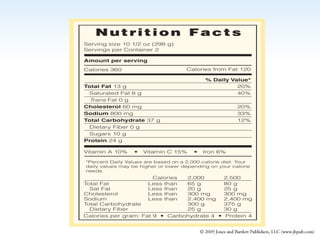
Using Nutritional Labeling The FDA requires nearly every packaged food to have a nutritional label, allowing consumers to determine the nutritional value of most packaged foods. Nutritional labels provide information about: Fat Cholesterol Sodium Total carbohydrates Fiber Sugar Protein
 
Across the Life Span Nutrition During Pregnancy   From conception until birth, the developing embryo/fetus depends on its mother for nutrients. A woman’s diet before conception has a significant impact on the health of her infant. Women who are undernourished during pregnancy have a high risk of miscarrying, having premature or underweight babies, and delivering babies with birth defects.
Across the Life Span (continued) Current Infant Feeding Recommendations Provide breast milk and a supplement that contains vitamin D and iron for at least the first 12 months of life. Do not feed solid foods before 4 months. Do not feed fresh whole or reduced-fat cow’s milk before first birthday. Iron-fortified formulas are acceptable, but women should consider benefits of breastfeeding.
Across the Life Span (continued) Child Nutrition  Most children eat enough food to maintain normal growth. Parents serve as role models as children establish food preferences and eating habits. Eating breakfast is an important habit to develop early in life. Poor eating habits can result in: Lack of energy Difficulty concentrating on school work Behavioral problems
Across the Life Span (continued) Elderly Nutrition   Physical, social, psychological, and economic factors often influence the quality and quantity of an elderly person’s food intake. As a result of aging, absorption of calcium, iron, and vitamins D and B 12   declines. Vitamin/mineral supplement may be needed. Many communities offer feeding programs for the elderly such as Meals-on-Wheels and congregate meals. In addition to providing nutritious food, such programs offer social contact that can reduce the risk of depression.

Healthy Living - Chapter 9 - Nutrition

  • 1.
  • 2.
    Diet A dietis one’s usual pattern of food choices. Poor diet is a risk factor for serious chronic diseases that are major killers of Americans, such as: Cardiovascular disease Diabetes Obesity Certain cancers
  • 3.
    Nutrients and Non-NutrientsNutrients are substances in food needed for growth, repair, and maintenance of cells. Some nutrients regulate cellular activities. Some nutrients supply energy. Non-nutrients are substances in food that are not needed by the body. Some provide health benefits. Some can be toxic.
  • 4.
    Phytochemicals Non-nutrient substancesproduced by plants that may provide health benefits. Fruits and vegetables are rich sources of antioxidant phytochemicals, including: Beta-carotene Lutein Anthocyanin
  • 5.
    Antioxidants Antioxidants preventor reduce the formation of free radicals, which are unstable and highly reactive atoms or compounds that can cause cellular damage. Such damage may contribute to heart disease and certain cancers.
  • 6.
    Natural and HealthFoods Natural foods are not necessarily more nutritious than foods that are not described as “natural.” Health foods such as honey, herbal teas, and cider vinegar provide nutrients, but there is little or no scientific evidence to support claims they prevent or treat various health conditions. Regardless of whether it’s natural or manufactured, a healthy food contributes to nutrient needs and is safe to eat.
  • 7.
    Organic Foods Technically,any substance that contains the element carbon is organic. Carbohydrates, proteins, fats, and vitamins contain carbon; therefore foods that consist of these nutrients are organic. To be labeled “organic,” a food must meet certain standards. For example, fruits and vegetables labeled organic must be grown without the use of synthetic pesticides or fertilizers. Organic foods are not nutritionally superior to foods grown using conventional farming methods.
  • 8.
    What Happens toFood in Your Body? Digestion is the process of breaking down large food molecules into nutrients. Absorption is the passage of nutrients through intestinal walls and eventually into the blood.
  • 9.
    Metabolism Metabolism refers to all chemical reactions that take place in the body. These reactions are necessary to power muscular movements, synthesize and repair tissues, release and use energy, and produce enzymes and hormones. The amount of energy in food is commonly expressed as a number of “calories.”
  • 10.
    Energy Supplying Nutrients:Carbohydrates Plants supply most of the carbohydrates in the diet. The simplest carbohydrates are sugars (monosaccharides). Fruits, vegetables, and corn syrup are rich sources of monosaccharides. Glucose is blood sugar, a major energy source. Fructose is the sugar in fruits. Starches are complex carbohydrates. During digestion, starch is broken down into glucose molecules. Grains, beans, and certain vegetables are rich sources of starch.
  • 11.
    Carbohydrates (continued) Inthe United States, carbohydrates constitute about 44% to 47% of the typical person’s caloric intake. Recommended total carbohydrate intake is 55% to 65% of calories, primarily from starchy foods. Recommendations for simple carbohydrate intake range from 10% to 25% of calories. Health problems associated with carbohydrates include diabetes mellitus, metabolic syndrome, and lactose intolerance.
  • 12.
    Myths About CarbohydratesSugar does not cause hyperactivity, mental illness, or criminal behavior. Tooth decay is the only health problem clearly associated with sugar consumption. Honey is not nutritionally superior to sugar, and it should not be given to infants. Honey may contain bacterial spores that produce toxins and can be life threatening to infants.
  • 13.
    Energy Supplying Nutrients:Fiber Plants make certain carbohydrates that the human body cannot digest. This material is called fiber. Soluble forms of fiber swell or dissolve in water. Rich sources include apples, bananas, citrus fruits, carrots, kidney beans, and oats. Insoluble forms of fiber remains fairly unchanged in water. Rich food sources include brown rice, wheat bran, and whole grain products.
  • 14.
    Fiber and HealthFiber helps prevent constipation, hemorrhoids, and diverticulosis. It may reduce the risk of colon and rectal cancers, cardiovascular disease, and type 2 diabetes. The average American does not consume enough fiber-rich foods. At least 25 grams of fiber are recommended each day.
  • 15.
    Diabetes Diabetes mellitus ( diabetes ) is a group of chronic diseases characterized by the inability of the body to metabolize carbohydrates properly. Insulin helps glucose (“blood sugar”) enter cells where it is metabolized for energy. People suffering from diabetes produce no insulin, produce insufficient amounts of insulin, or respond abnormally to insulin. As a result, blood glucose levels rise to unhealthy levels.
  • 16.
    Diabetes Mellitus (continued)Chronic high blood glucose levels can lead to: Hypertension Loss of vision Nerve damage In the United States, poorly controlled diabetes is a major cause of: Kidney failure Blindness Lower limb amputations
  • 17.
    Diabetes Mellitus (continued)Additionally, having diabetes greatly increases one’s risk of cardiovascular disease. Type 1 and type 2 diabetes are the most prevalent forms. People with type 1 diabetes require daily injections of insulin. Although it can develop at any age, most cases are diagnosed in childhood.
  • 18.
    Diabetes Mellitus (continued)Common signs and symptoms of type 1 diabetes: Lack of energy Listlessness Frequent urination Excessive thirst Fruity odor in breath Increased appetite with weight loss Vision problems
  • 19.
    Diabetes Mellitus (continued)Most people with diabetes have type 2. The typical type 2 diabetic is overweight, older than 40 years of age, and has a family history of the disease. Since 1990, the prevalence of type 2 diabetes has increased dramatically in the United States, particularly among black Americans and Hispanics. The disease is also becoming more common among children and adolescents. Obesity, physical inactivity, and poor diet contribute to the development of type 2 diabetes in children and adults.
  • 20.
    Diabetes Mellitus (continued)Common signs and symptoms of type 2 diabetes: Excessive thirst Excessive urination Vision problems In women, recurrent vaginal infections Skin sores that do not heal Type 2 diabetes can often be controlled by making changes in diet and regular exercise. Many diabetics, however, need to take medications to increase the production of insulin. Routine health checkups are essential to lessening the long-term damaging effects of diabetes.
  • 21.
    Metabolic Syndrome Acondition that increases the risk for cardiovascular disease and type 2 diabetes Signs: Excess abdominal fat Slightly elevated fasting blood glucose levels Elevated blood lipid levels Hypertension Cause: poor dietary habits
  • 22.
    Lactose Intolerance Conditionthat involves the body’s inability to metabolize the sugar in milk Lactose intolerant people experience: Intestinal bloating Cramps Diarrhea, after consuming milk or milk products
  • 23.
    Lipids Lipids include cholesterol and triglycerides (fat). Some fat is necessary for health. Each triglyceride has three fatty acids. Fatty acids can be saturated, monounsaturated, or polyunsaturated. Saturated fat Animal foods generally contain more saturated fat than plant foods. Palm and coconut oils are exceptions; they are rich plant sources of saturated fat.
  • 24.
    Lipids (continued) Monounsaturatedfat Olives, peanuts, and canola oil are rich sources Polyunsaturated fat Corn, safflower, cottonseed, and walnut oils are rich sources
  • 25.
    Cholesterol Cholesterol is necessary for cell membranes and the production of vitamin D, bile, and certain hormones. It is found only in animal foods. Human body makes cholesterol. High blood cholesterol levels associated with increased risk of heart disease.
  • 26.
    Lipids and HealthHigh-fat diets often result in unwanted weight gain. Diets that supply too much saturated fat are associated with increased risk of heart disease. In general, diets high in saturated fat raise blood cholesterol levels to a greater extent than diets that contain cholesterol.
  • 27.
    Lipids and Health(continued) Omega-3 fatty acids are certain unsaturated fats that are associated with lower risk of heart disease and may improve joint mobility in people with rheumatoid arthritis. Rich food sources are canola and soybean oils, walnuts, flax seeds, and fatty fish from cold water (i.e., wild salmon, herring, tuna, and mackerel). Fish oil supplements are generally not recommended (high intakes of omega-3 fatty acids can lead to problems with clotting).
  • 28.
    Hydrogenated Fat Hydrogenationprocess hardens liquid oils into more solid forms, such as margarine and shortening. Process makes unsaturated fat in oil more saturated Also produces an unhealthy type of fat called trans fatty acid Saturated fat and trans fatty acids are harmful to health as they raise blood cholesterol levels.
  • 29.
    Recommendations for LipidIntakes Healthy adults should reduce total fat intake to 20% to 35% of calories. No more than 10% of calories from saturated fat. Adults should limit cholesterol intake to no more than 300 mg per day.
  • 30.
    Proteins Proteins areneeded to build, maintain, and repair cells. Comprised of 20 amino acids Nine amino acids must be supplied by diet (essential amino acids). Complete proteins have all 9 essential amino acids. Incomplete proteins lack one or more essential amino acids.
  • 31.
    Protein Needs Theaverage American consumes about twice the amount of protein needed. Excess protein does not build more muscle. If the body needs energy, the extra amino acids are used for energy. If the body does not need energy, the extra amino acids is converted to fat and stored.
  • 32.
    Vegetarian diets arebased on plant rather than animal foods. Vegans (total vegetarians) eat only plant foods. Lacto-vegetarians include dairy products. Lacto-ovo-vegetarians consume eggs and dairy products. Vegetarian diets require careful planning to obtain all the essential amino acids, vitamins, and minerals. Vegetarian Diets
  • 33.
    Nonenergy Supplying Nutrients:Vitamins Regulate growth, maintain tissues, and release energy from carbohydrates, proteins, and fats Provide no calories (energy) Needed in very small amounts
  • 34.
    Classes of VitaminsWater-soluble vitamins Eight B vitamins and vitamin C Not stored in body Fat-soluble vitamins are A, D, E, and K Excesses are generally stored in body Vitamin A and D are the most toxic
  • 35.
    Nonenergy Supplying Nutrients:Antioxidants Antioxidants are compounds that protect cells by reducing or preventing free radical formation. Include various phytochemicals, such as beta-carotene and vitamins E and C. Antioxidant supplements are not recommended. High doses may promote cancer cell growth. Can be obtained by eating a variety of fruits, vegetables, and other plant foods.
  • 36.
    Nonenergy Supplying Nutrients:Minerals Minerals are a group of elements that: Regulate chemical reactions Others are structural components contained in organic molecules (i.e. iron in hemoglobin and calcium in bone and teeth) Small amounts are needed for health. Excesses can create imbalances with other minerals or toxicity.
  • 37.
    Calcium Calcium isthe most plentiful mineral in the body. Calcium is needed for strong bones and teeth. It is involved in regulating blood pressure, clotting blood, and muscular movements. Bones store and release calcium as needed.
  • 38.
    Osteoporosis As peopleage, bones lose mineral density and strength. As a result, bones break easily. Bones in hip, spine, and wrist are most likely to break. An estimated 10 million Americans over 50 years of age suffer from osteoporosis, especially menopausal women. Calcium-rich diet, weight-bearing exercise, vitamin D, and magnesium help maintain strong bones.
  • 39.
    Iron Most ofthe body’s iron is in hemoglobin, which is in red blood cells. The iron in hemoglobin picks up oxygen in the lungs and transports it to cells. Iron deficiency is one of the most common nutritional disorders in the United States. In severe cases, iron deficiency results in iron-deficiency anemia. Hemochromatosis (iron storage disease) can be deadly. A simple blood test can detect this condition.
  • 40.
    Water Essential tolife—one would die within days without water. Water Dissolves and transports material in the body Eliminates wastes Lubricates joints Is involved in many chemical reactions Water is lost through perspiration, urination, breathing, and bowel movements. Plain water, other beverages, and most foods, especially fruits and vegetables, supply water. Alcohol and caffeine act as diuretics, compounds that increase urinary loss of water.
  • 41.
    Water (continued) Currentrecommendations: Food and beverages should supply about 16 cups of water daily for men and 11 cups for women. Dehydration can be deadly. Sports drinks replenish minerals and water that are lost during prolonged, heavy exercise in which considerable sweating occurs. Eating a variety of foods and drinking plain water before and during regular exercise meets the water needs for most people.
  • 42.
    Planning a NutritiousDiet The key features of a nutritious diet are nutrient adequacy and nutrient balance. By selecting a wide variety of foods you can usually obtain the essential nutrients you need. “Everything in moderation” is the best approach to planning a well-balanced and nutritionally adequate diet.
  • 43.
    The Dietary Guidelines are a list of general recommendations that focus attention on the association between diet and chronic disease. The key recommendations are: Manage your weight at a healthy level. Be physically active daily. Consume a nutritionally adequate diet. Consume fruits, vegetables, whole grains, and fat-free or low-fat dairy foods. Keep foods safe to eat. The Dietary Guidelines: 2005
  • 44.
    The Dietary Guidelines2005 (continued) Consume 20% to 35% of calories from fat and limit your cholesterol intake to 300 mg daily. Consume fiber-rich foods and limit your intake of sugary foods. Restrict salt intake to less than 1 teaspoon daily. If you drink alcohol, do so in moderation. Avoid alcohol if you are pregnant, breastfeeding, under 21, driving, or operating other machinery.
  • 45.
    Using Nutritional LabelingThe FDA requires nearly every packaged food to have a nutritional label, allowing consumers to determine the nutritional value of most packaged foods. Nutritional labels provide information about: Fat Cholesterol Sodium Total carbohydrates Fiber Sugar Protein
  • 46.
  • 47.
    Across the LifeSpan Nutrition During Pregnancy From conception until birth, the developing embryo/fetus depends on its mother for nutrients. A woman’s diet before conception has a significant impact on the health of her infant. Women who are undernourished during pregnancy have a high risk of miscarrying, having premature or underweight babies, and delivering babies with birth defects.
  • 48.
    Across the LifeSpan (continued) Current Infant Feeding Recommendations Provide breast milk and a supplement that contains vitamin D and iron for at least the first 12 months of life. Do not feed solid foods before 4 months. Do not feed fresh whole or reduced-fat cow’s milk before first birthday. Iron-fortified formulas are acceptable, but women should consider benefits of breastfeeding.
  • 49.
    Across the LifeSpan (continued) Child Nutrition Most children eat enough food to maintain normal growth. Parents serve as role models as children establish food preferences and eating habits. Eating breakfast is an important habit to develop early in life. Poor eating habits can result in: Lack of energy Difficulty concentrating on school work Behavioral problems
  • 50.
    Across the LifeSpan (continued) Elderly Nutrition Physical, social, psychological, and economic factors often influence the quality and quantity of an elderly person’s food intake. As a result of aging, absorption of calcium, iron, and vitamins D and B 12 declines. Vitamin/mineral supplement may be needed. Many communities offer feeding programs for the elderly such as Meals-on-Wheels and congregate meals. In addition to providing nutritious food, such programs offer social contact that can reduce the risk of depression.