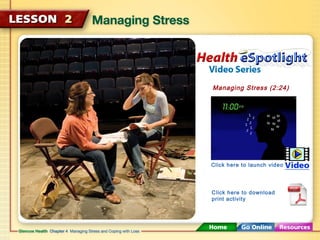
Managing Stress (2:24) 
Click here to launch video 
Click here to download 
print activity
You can manage stress by learning 
skills to reduce the amount and impact 
of stress in your life.
chronic stress 
stress-management skills 
relaxation response 
resilient
When Stress Becomes a Problem 
Identifying what is stressful is the first step 
in learning how to manage stress. 
The trick for managing stress is to learn 
strategies to keep stress from building up and to 
deal with individual stressors effectively.
When Stress Becomes a Problem 
The effects of stress are additive, meaning they 
build up over time. An increasing number of teens 
are experiencing chronic stress. 
chronic stress 
Stress associated with long-term 
problems that are beyond a 
person’s control
Stress-Management Techniques 
You can develop strategies to both avoid and 
reduce your stress. 
Stress-management skills help you manage 
stressors in a healthful, effective way.
Avoiding and Limiting Stress 
Avoiding situations that cause stress is the 
easiest way to reduce its effects. 
If you’re unable to avoid a stressor, you can try 
to restrict or limit the amount of stress you’re 
exposed to.
Avoiding and Limiting Stress 
Strategies for Avoiding and Limiting Stress 
Use refusal skills. 
Plan ahead. 
Think positively. 
Avoid tobacco, 
alcohol, and other 
drugs. 
If taking on a new activity will add to your stress, 
use refusal skills to say no. 
Manage your time wisely by planning ahead. 
Think about how stressed you feel before a test. 
A positive outlook limits stress by shifting your 
perception and how you respond to a stressor. 
Using tobacco, alcohol, and other drugs will 
harm the body and cause more stress.
Avoiding and Limiting Stress 
Overcoming Test Anxiety
Avoiding and Limiting Stress 
Planning ahead can help you avoid or limit stress.
Handling Stress and Reducing Its Effects 
For stressors that are unavoidable, practice stress 
reduction techniques to achieve a relaxation 
response. 
Relaxation response 
A state of calm
Handling Stress and Reducing Its Effects 
To lower the impact of stress on your health, try these tips: 
Practice 
relaxation 
techniques 
Redirect your 
energy 
Seek support 
Deep breathing, thinking pleasant thoughts, 
stretching, taking a warm bath, and even 
laughing can relieve your stress. 
When energy builds up from stress, use that 
energy in a constructive way. Work on a 
creative project or engage in physical activity. 
Confide in someone you trust for an objective 
view and valuable advice.
Staying Healthy and Building Resiliency 
Taking care of your health is essential to 
stress management. 
Positive health-maintenance habits help you 
deal with stress, prevent stress, reduce stress, 
and recover from stress.
Get Adequate Rest 
Adequate sleep can help you face the challenges 
and demands of the next day. 
Using time-management skills will allow you to get 
the eight to nine hours of sleep that you need each 
night.
Get Regular Physical Activity 
Participating in regular physical activity benefits 
your overall health. 
Physical activity can release pent-up energy, clear 
your mind, increase your energy level and your 
endurance, and help you sleep better.
Eat Nutritious Foods 
Eating a variety of healthful foods and drinking 
plenty of water not only helps your body function 
properly, but it also reduces the effects of stress. 
Poor eating habits can contribute to stress, 
causing weakness, fatigue, and a reduced ability 
to concentrate.
Staying Healthy and Building Resiliency 
By including self-maintenance and stress-management 
strategies in your daily routine, you 
can become more resilient. 
Resiliency helps you handle difficulties and 
challenges in healthful ways and achieve long-term 
success in spite of negative circumstances.
After You Read 
Reviewing Facts and Vocabulary 
1. What is chronic stress? 
Stress associated with long-term problems 
that are beyond a person’s control
After You Read 
Reviewing Facts and Vocabulary 
2. Identify four strategies to avoid or limit 
stress. 
Use refusal skills; plan ahead; think 
positively; avoid tobacco, alcohol, and 
other drugs
After You Read 
Reviewing Facts and Vocabulary 
3. Identify three relaxation techniques. 
Any three: Deep breathing, thinking pleasant 
thoughts, stretching, taking a warm bath, 
getting a massage, laughing
Ch04 02

Ch04 02

  • 1.
    Managing Stress (2:24) Click here to launch video Click here to download print activity
  • 2.
    You can managestress by learning skills to reduce the amount and impact of stress in your life.
  • 3.
    chronic stress stress-managementskills relaxation response resilient
  • 4.
    When Stress Becomesa Problem Identifying what is stressful is the first step in learning how to manage stress. The trick for managing stress is to learn strategies to keep stress from building up and to deal with individual stressors effectively.
  • 5.
    When Stress Becomesa Problem The effects of stress are additive, meaning they build up over time. An increasing number of teens are experiencing chronic stress. chronic stress Stress associated with long-term problems that are beyond a person’s control
  • 6.
    Stress-Management Techniques Youcan develop strategies to both avoid and reduce your stress. Stress-management skills help you manage stressors in a healthful, effective way.
  • 7.
    Avoiding and LimitingStress Avoiding situations that cause stress is the easiest way to reduce its effects. If you’re unable to avoid a stressor, you can try to restrict or limit the amount of stress you’re exposed to.
  • 8.
    Avoiding and LimitingStress Strategies for Avoiding and Limiting Stress Use refusal skills. Plan ahead. Think positively. Avoid tobacco, alcohol, and other drugs. If taking on a new activity will add to your stress, use refusal skills to say no. Manage your time wisely by planning ahead. Think about how stressed you feel before a test. A positive outlook limits stress by shifting your perception and how you respond to a stressor. Using tobacco, alcohol, and other drugs will harm the body and cause more stress.
  • 9.
    Avoiding and LimitingStress Overcoming Test Anxiety
  • 10.
    Avoiding and LimitingStress Planning ahead can help you avoid or limit stress.
  • 11.
    Handling Stress andReducing Its Effects For stressors that are unavoidable, practice stress reduction techniques to achieve a relaxation response. Relaxation response A state of calm
  • 12.
    Handling Stress andReducing Its Effects To lower the impact of stress on your health, try these tips: Practice relaxation techniques Redirect your energy Seek support Deep breathing, thinking pleasant thoughts, stretching, taking a warm bath, and even laughing can relieve your stress. When energy builds up from stress, use that energy in a constructive way. Work on a creative project or engage in physical activity. Confide in someone you trust for an objective view and valuable advice.
  • 13.
    Staying Healthy andBuilding Resiliency Taking care of your health is essential to stress management. Positive health-maintenance habits help you deal with stress, prevent stress, reduce stress, and recover from stress.
  • 14.
    Get Adequate Rest Adequate sleep can help you face the challenges and demands of the next day. Using time-management skills will allow you to get the eight to nine hours of sleep that you need each night.
  • 15.
    Get Regular PhysicalActivity Participating in regular physical activity benefits your overall health. Physical activity can release pent-up energy, clear your mind, increase your energy level and your endurance, and help you sleep better.
  • 16.
    Eat Nutritious Foods Eating a variety of healthful foods and drinking plenty of water not only helps your body function properly, but it also reduces the effects of stress. Poor eating habits can contribute to stress, causing weakness, fatigue, and a reduced ability to concentrate.
  • 17.
    Staying Healthy andBuilding Resiliency By including self-maintenance and stress-management strategies in your daily routine, you can become more resilient. Resiliency helps you handle difficulties and challenges in healthful ways and achieve long-term success in spite of negative circumstances.
  • 18.
    After You Read Reviewing Facts and Vocabulary 1. What is chronic stress? Stress associated with long-term problems that are beyond a person’s control
  • 19.
    After You Read Reviewing Facts and Vocabulary 2. Identify four strategies to avoid or limit stress. Use refusal skills; plan ahead; think positively; avoid tobacco, alcohol, and other drugs
  • 20.
    After You Read Reviewing Facts and Vocabulary 3. Identify three relaxation techniques. Any three: Deep breathing, thinking pleasant thoughts, stretching, taking a warm bath, getting a massage, laughing