SLIDE SHARE OF THE CEREBRAL PALSY
BY Dr RAJ BHARDWAJ (PT)
UTTAR PRADESH UNIVERSITY OF MEDICAL SCIENCE
SAIFAI ETAWAH.
TOPIC _
CEREBRAL PALSY.
● Introduction.
● Definition.
● Etiology.
● Classification.
● Clinical manifestations.
● Diagnosis.
● Pharmacological treatment.
● Physiotherapy treatment
● The cerebral palsy is a broad spectrum of moter disability.
● It causes by non progressive damage to developing brain at around the
birth.
● The cerebral palsy can be described as umbrella term.
DEFINITION _
The cerebral palsy is a neuromotor disorder which results
non progressive damage to the developing brain.
● It is a moter disability.
● The CP is a common problem.
● It is a worldwide problem.
● It present 2_2.5 per 1000 live births.
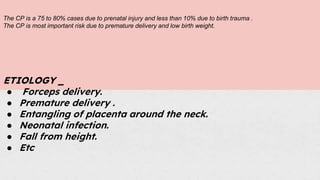
The CP is a 75 to 80% cases due to prenatal injury and less than 10% due to birth trauma .
The CP is most important risk due to premature delivery and low birth weight.
ETIOLOGY _
● Forceps delivery.
● Premature delivery .
● Entangling of placenta around the neck.
● Neonatal infection.
● Fall from height.
● Etc
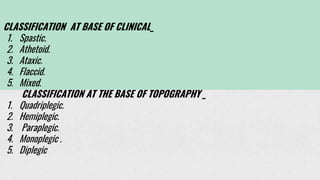
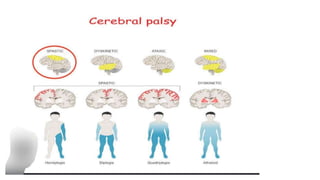
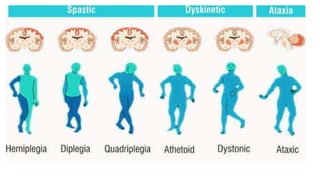
CLASSIFICATION AT BASE OF CLINICAL_
1. Spastic.
2. Athetoid.
3. Ataxic.
4. Flaccid.
5. Mixed.
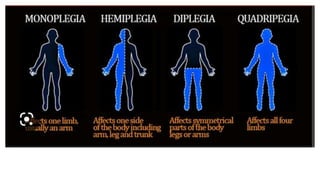
CLASSIFICATION AT THE BASE OF TOPOGRAPHY _
1. Quadriplegic.
2. Hemiplegic.
3. Paraplegic.
4. Monoplegic .
5. Diplegic
SPASTIC CEREBRAL PALSY _
● It is a most common type of CP .
● In case of type increased tone of the muscles.
● It present in all the limbs or half of the body.
● These types are more irritable and spasticity .
● These kids usually suffer from mental retardation and
cognitive problems, difficulty in motor learning etc.
ATHETOID CEREBRAL PALSY _
● It is a irrhthymical, irregular, jerky, purposeless,
involuntary writhing movements.
● It's also auditory problems.
ATAXIC CEREBRAL PALSY _
● These type of CP have
Poor balance and coordination due to the damage to the
cerebellum and it's pathways.
● The signs of hypotonia, intentional tremors, dysarthria.
● It also have poor IQ Levels with visual and auditory defects.
FLACCID CEREBRAL PALSY _
● It also called floppy kids.
● It is a low muscle tone and are usually mentally
retarded.
● The joint subluxations are common due to decreased
muscle tone.
● It will have difficulty in swallowing,breathing and
speech. MIXED TYPE OF CP_
● It is a developmental disorder with combination of
movement problems.
● It includes all above the type of CP
CLINICAL FEATURES_
1. Abnormal tone.
2. Abnormal reflexes.
3. Sensory disturbance.
4. Frontal bossing.
5. Excessive drooling of saliva.
6. Respiratory and oromotordysfunction.
7. Irregular dentition dysmorphic features
MULTIPLE ASSOCIATED DEFICITS_
1. Mental retardation.
2. Visual deficit
3. Hearing defects.
4. Learning disabilities.
5. Feeding problem.
6. Speech and language disorder.
7. Emotional and behavioral problems
DIAGNOSIS _
CT , MRI, EEG, EMG, lab test, neurological assessment.
Additional test _ vision, hearing, speech, movement disorder.
Physical examination etc.
Physiotherapy management _
● Physical therapy.
● Occupational therapy.
● Speech and language therapy.
● Recreation therapy .
Medication _
● Muscle relaxants drugs..
● Anticonvulsants drugs.
● Antacid.
● Laxative drugs.
Physiotherapy aims _
● Manegement of abnormal tone.
● Maintaining the length of muscle.
● Sensory integration.
● Training the respiratory and oromotor functions.
● Training for functional independence
Exercise therapy _
● Endurance, exercise.
● Resisted exercise.
● PNF strengthening techniques.
● Passive mobilization of the spine.
● Deep breathing exercises.
● Training of ADL activities
THANK YOU

Cerebral palsy

  • 1.
    SLIDE SHARE OFTHE CEREBRAL PALSY BY Dr RAJ BHARDWAJ (PT) UTTAR PRADESH UNIVERSITY OF MEDICAL SCIENCE SAIFAI ETAWAH. TOPIC _ CEREBRAL PALSY.
  • 2.
    ● Introduction. ● Definition. ●Etiology. ● Classification. ● Clinical manifestations. ● Diagnosis. ● Pharmacological treatment. ● Physiotherapy treatment
  • 3.
    ● The cerebralpalsy is a broad spectrum of moter disability. ● It causes by non progressive damage to developing brain at around the birth. ● The cerebral palsy can be described as umbrella term. DEFINITION _ The cerebral palsy is a neuromotor disorder which results non progressive damage to the developing brain. ● It is a moter disability. ● The CP is a common problem. ● It is a worldwide problem. ● It present 2_2.5 per 1000 live births.
  • 4.
    The CP isa 75 to 80% cases due to prenatal injury and less than 10% due to birth trauma . The CP is most important risk due to premature delivery and low birth weight. ETIOLOGY _ ● Forceps delivery. ● Premature delivery . ● Entangling of placenta around the neck. ● Neonatal infection. ● Fall from height. ● Etc
  • 5.
    CLASSIFICATION AT BASEOF CLINICAL_ 1. Spastic. 2. Athetoid. 3. Ataxic. 4. Flaccid. 5. Mixed. CLASSIFICATION AT THE BASE OF TOPOGRAPHY _ 1. Quadriplegic. 2. Hemiplegic. 3. Paraplegic. 4. Monoplegic . 5. Diplegic
  • 8.
    SPASTIC CEREBRAL PALSY_ ● It is a most common type of CP . ● In case of type increased tone of the muscles. ● It present in all the limbs or half of the body. ● These types are more irritable and spasticity . ● These kids usually suffer from mental retardation and cognitive problems, difficulty in motor learning etc.
  • 9.
    ATHETOID CEREBRAL PALSY_ ● It is a irrhthymical, irregular, jerky, purposeless, involuntary writhing movements. ● It's also auditory problems. ATAXIC CEREBRAL PALSY _ ● These type of CP have Poor balance and coordination due to the damage to the cerebellum and it's pathways. ● The signs of hypotonia, intentional tremors, dysarthria. ● It also have poor IQ Levels with visual and auditory defects.
  • 11.
    FLACCID CEREBRAL PALSY_ ● It also called floppy kids. ● It is a low muscle tone and are usually mentally retarded. ● The joint subluxations are common due to decreased muscle tone. ● It will have difficulty in swallowing,breathing and speech. MIXED TYPE OF CP_ ● It is a developmental disorder with combination of movement problems. ● It includes all above the type of CP
  • 12.
    CLINICAL FEATURES_ 1. Abnormaltone. 2. Abnormal reflexes. 3. Sensory disturbance. 4. Frontal bossing. 5. Excessive drooling of saliva. 6. Respiratory and oromotordysfunction. 7. Irregular dentition dysmorphic features
  • 13.
    MULTIPLE ASSOCIATED DEFICITS_ 1.Mental retardation. 2. Visual deficit 3. Hearing defects. 4. Learning disabilities. 5. Feeding problem. 6. Speech and language disorder. 7. Emotional and behavioral problems DIAGNOSIS _ CT , MRI, EEG, EMG, lab test, neurological assessment. Additional test _ vision, hearing, speech, movement disorder. Physical examination etc.
  • 14.
    Physiotherapy management _ ●Physical therapy. ● Occupational therapy. ● Speech and language therapy. ● Recreation therapy . Medication _ ● Muscle relaxants drugs.. ● Anticonvulsants drugs. ● Antacid. ● Laxative drugs.
  • 15.
    Physiotherapy aims _ ●Manegement of abnormal tone. ● Maintaining the length of muscle. ● Sensory integration. ● Training the respiratory and oromotor functions. ● Training for functional independence Exercise therapy _ ● Endurance, exercise. ● Resisted exercise. ● PNF strengthening techniques. ● Passive mobilization of the spine. ● Deep breathing exercises. ● Training of ADL activities
  • 18.