Presented by Tamirat Kore
Agricultural Quality Research Laboratory,
Addis Ababa
December 31, 2015
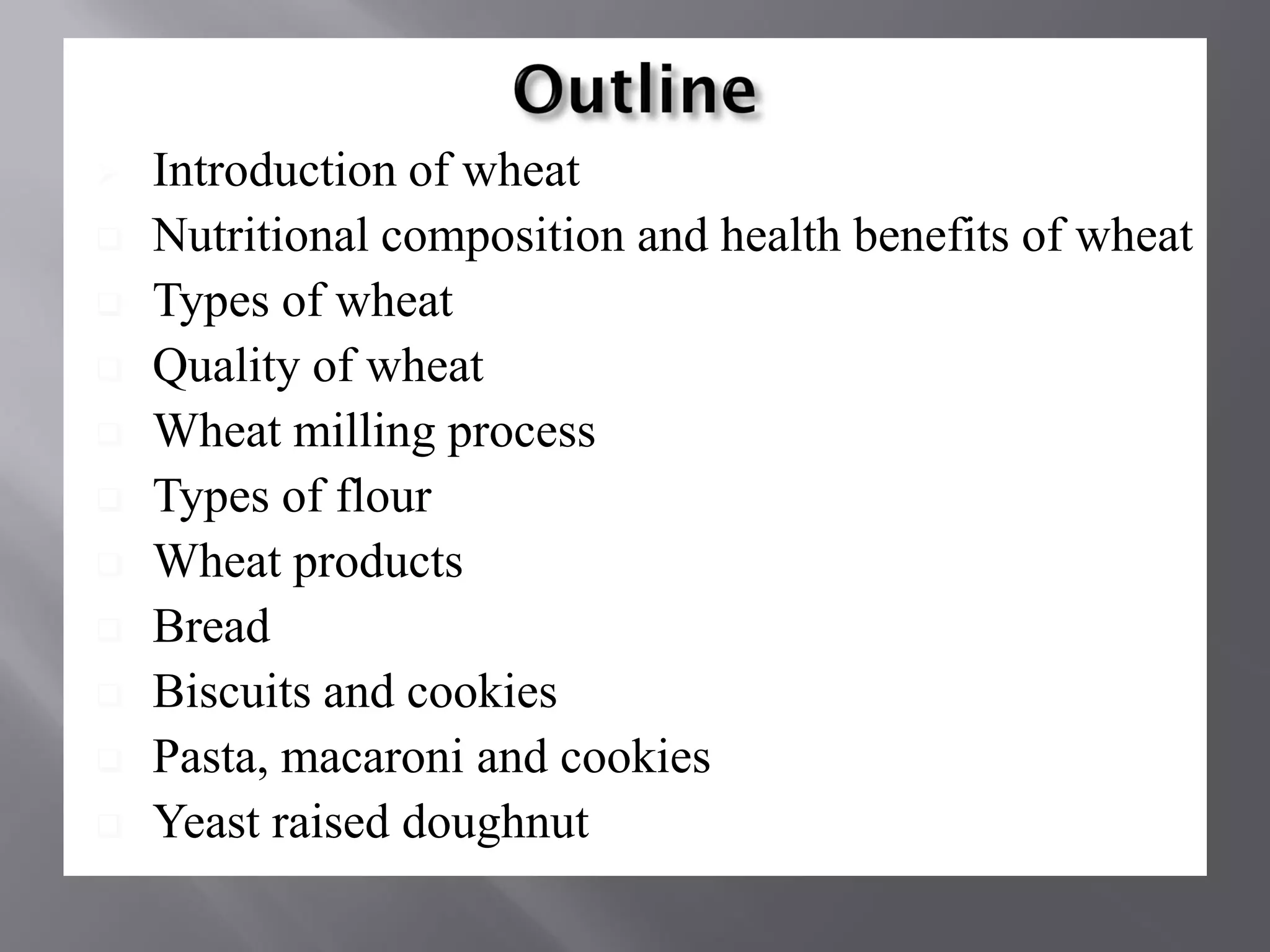
 Introduction of wheat
 Nutritional composition and health benefits of wheat
 Types of wheat
 Quality of wheat
 Wheat milling process
 Types of flour
 Wheat products
 Bread
 Biscuits and cookies
 Pasta, macaroni and cookies
 Yeast raised doughnut
 Wheat is the most important staple food crop for more than
one third of the world population
 Globally, wheat is the leading source of vegetable protein in
human food, having higher protein content and more calories
than maize or rice, the other major cereals.
 It is nutritious and easy to store and can be processed into
various types of food.
 It is an excellent health building food
 Wheat is considered as a good source of protein,
minerals, B-group vitamins and dietary fiber
 Although the environmental conditions can affect
nutritional composition of wheat grain with its essential
coating of bran, vitamins and minerals.
 Wheat grain is stable food used to make flour for
leavened, flat, and steamed breads, biscuits, cookies,
cakes, breakfast cereals, pasta, and noodle and for
fermentation to make beer, other alcoholic beverage.
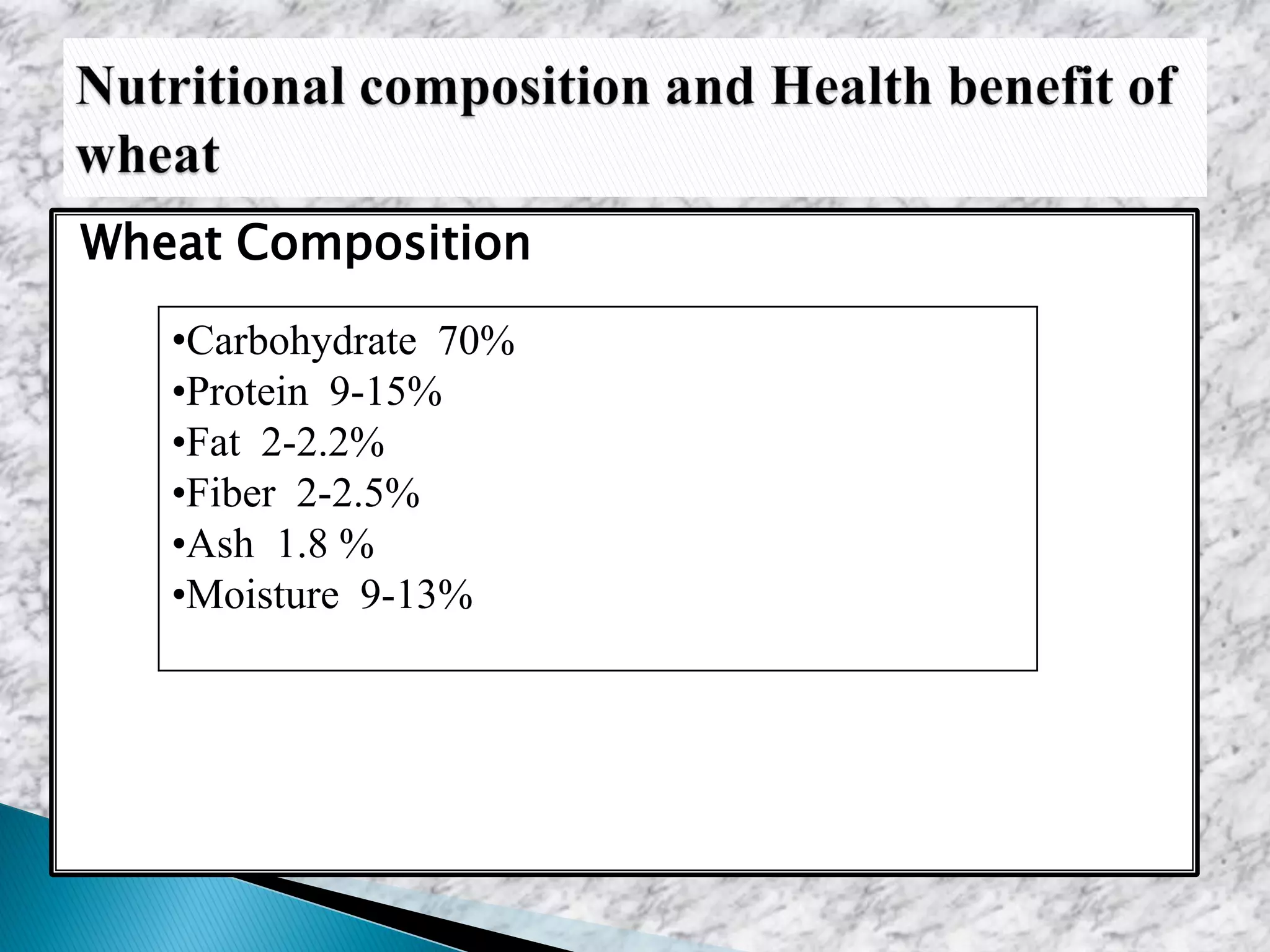
Wheat Composition
•Carbohydrate 70%
•Protein 9-15%
•Fat 2-2.2%
•Fiber 2-2.5%
•Ash 1.8 %
•Moisture 9-13%
 Wheat is one of the most important foods in a balanced
diet
 The nutrition community recommends that 55-60
percent of our daily calories come from carbohydrates.
 Also, no more than 30 percent of our calories should
come from fat, and approximately 12-15 percent of
calories should be derived from protein.
 Clearly, calories acquired from carbohydrates such as
wheat products are the healthiest and most important to
incorporate in our diets.
 Complex carbohydrates provide essential nutrients, are
less likely to be stored as fat and more likely to be
stored as muscle fuel
 So, what’s in wheat that makes it so healthy?
 One major component in wheat which is only found in
plant foods is dietary fiber.
 Dietary fiber is the carbohydrate in food which humans
cannot digest.
 sweep out the digestive tract as well as satisfying a Fiber
acts as a broom to appetite longer
 One slice of whole wheat bread contains 2 grams of
dietary fiber; one slice of white bread contains 0.5 grams;
and one ounce of wheat bran cereal contains between 8
and 9 grams of dietary fiber.
 The American Dietetic Association recommends eating
20-35 grams of fiber each day, but on average
Insoluble fiber
 Found in wheat bran and whole grains,
 Insoluble fiber passes through the digestive system quickly,
promoting regularity and reducing the risk of colon
irregularities or diverticulosus, a type of colon disease.
 Research suggests foods containing insoluble fiber may also
help reduce the risk of colon and breast cancer when part of
a low-fat diet.
Soluble fiber–
 Found in oats, beans, some fruits and vegetables and refined
white flour products.
 Studies indicate foods containing soluble fiber may help
decrease blood pressure and cholesterol levels, helping to
reduce the risk of heart disease.
 They may also help control blood sugar levels in people
with diabetes.
Thiamin (B1)-
 Needed daily for good appetite, digestion, and healthy
nerves.
 It also helps the body make better use of fat and
carbohydrates.
Riboflavin (B2)-
 This vitamin is essential for the use of protein by the
body.
Niacin (B3)-
 This is the “anti-pellagra” vitamin.
 Pellagra is a nutrient deficient disease that has been
virtually eliminated since the enrichment of white flour
products.
Iron
 Iron is essential for providing our bodies with energy.
 Iron acts in this way by carrying oxygen from the lungs to
muscles and other parts of the body.
 A deficiency of iron causes a disease known as anemia which
results in a lack of energy.
Protein
 Wheat foods provide 2-4 grams of protein per one ounce
serving.
 Six to seven ounces of protein per day are required for the
average teenager and adult.
 Protein is an important component of every cell in the body.
 Hair and nails are mostly made of protein. Our body uses
protein to build and repair tissues and use protein to make
enzymes, hormones, and other body chemicals.
 Protein is an important building block of bones, muscles,
cartilage, skin, and blood
 Wheat cultivars are further classified in terms of wheat
hardness, protein content, and protein quality.
1. Hard wheat
 They have high gluten content(higher protein quantity and
quality)
 When hard wheat is milled the endosperm cells separate along
the cell wall margin into easily sifted particles
 It has high extraction of white flour
 Hard types tend to have possessing a vitreous
endosperm with starch granules tightly packed in a
protein.
 During milling, some starch grains are damaged,
resulting in an increased surface area that leads to
higher water absorption
 The bran is easily separated from the endosperm
 It capable of high water absorption during dough
production
2. Soft wheat
 The gluten content is low
 Soft wheat has much lower extraction rate
 The flour consists of a mass of fine cell debris with poor
flow characteristics
 The softer wheat have a less compact starch-protein
complex which results in less starch damage and lower
water absorption.
 The protein level of soft wheat is usually lower, producing
less resistant, more extensible dough
 It is required for biscuit making
3. Durum wheat
 It is the hardest wheat grown
 Durum wheat is suitable for pasta and macaroni
 It is most often ground into a granular flour with a light
yellow color known as semolina, which has the ideal
properties for making the best pasta
 Durum is high in protein and gluten, which are necessary
for making good pasta
 It is occasionally used for baked goods (especially risen
breads), but it is not used for this purpose as often as other
wheat varieties.
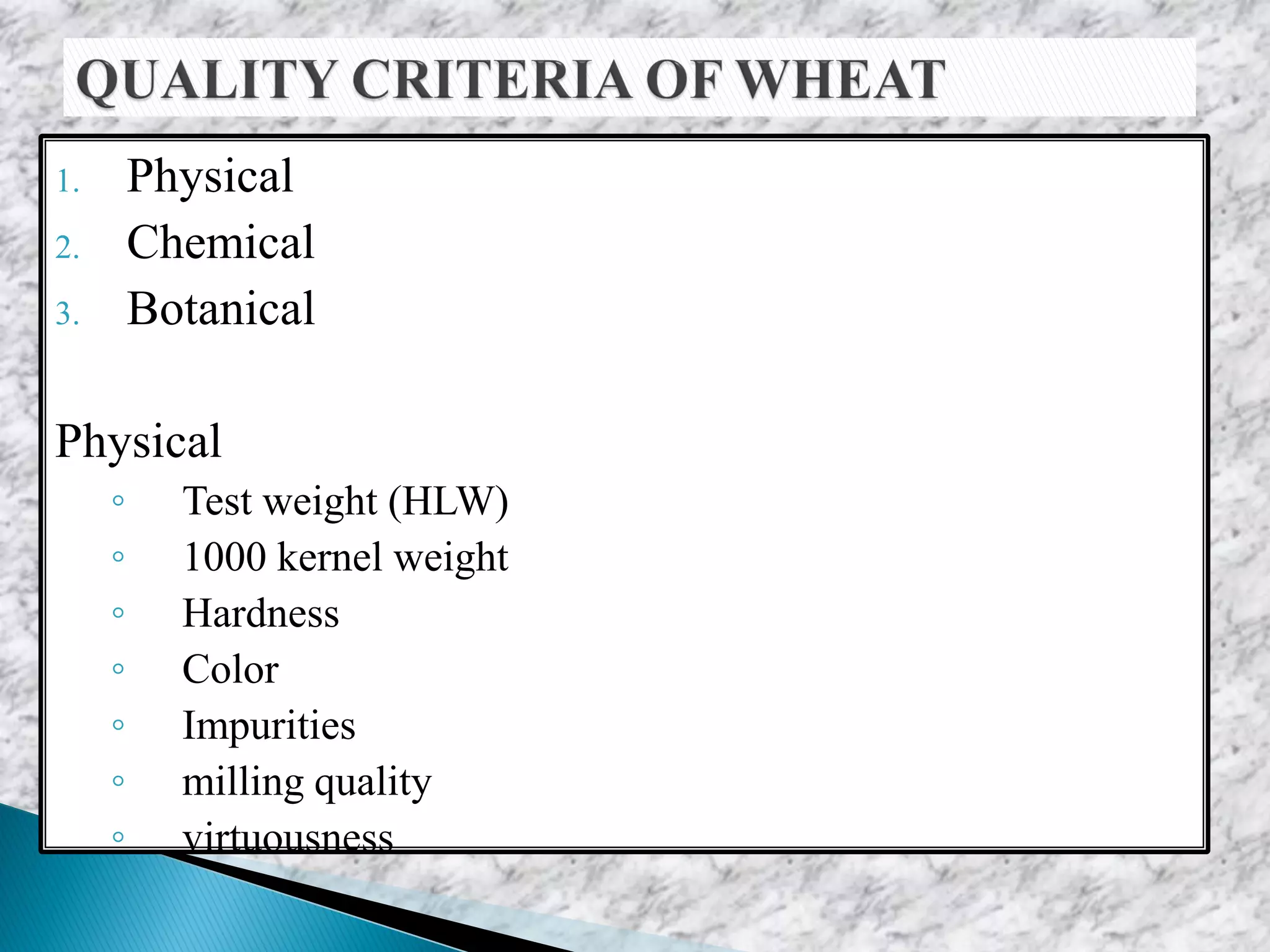
1. Physical
2. Chemical
3. Botanical
Physical
◦ Test weight (HLW)
◦ 1000 kernel weight
◦ Hardness
◦ Color
◦ Impurities
◦ milling quality
◦ virtuousness
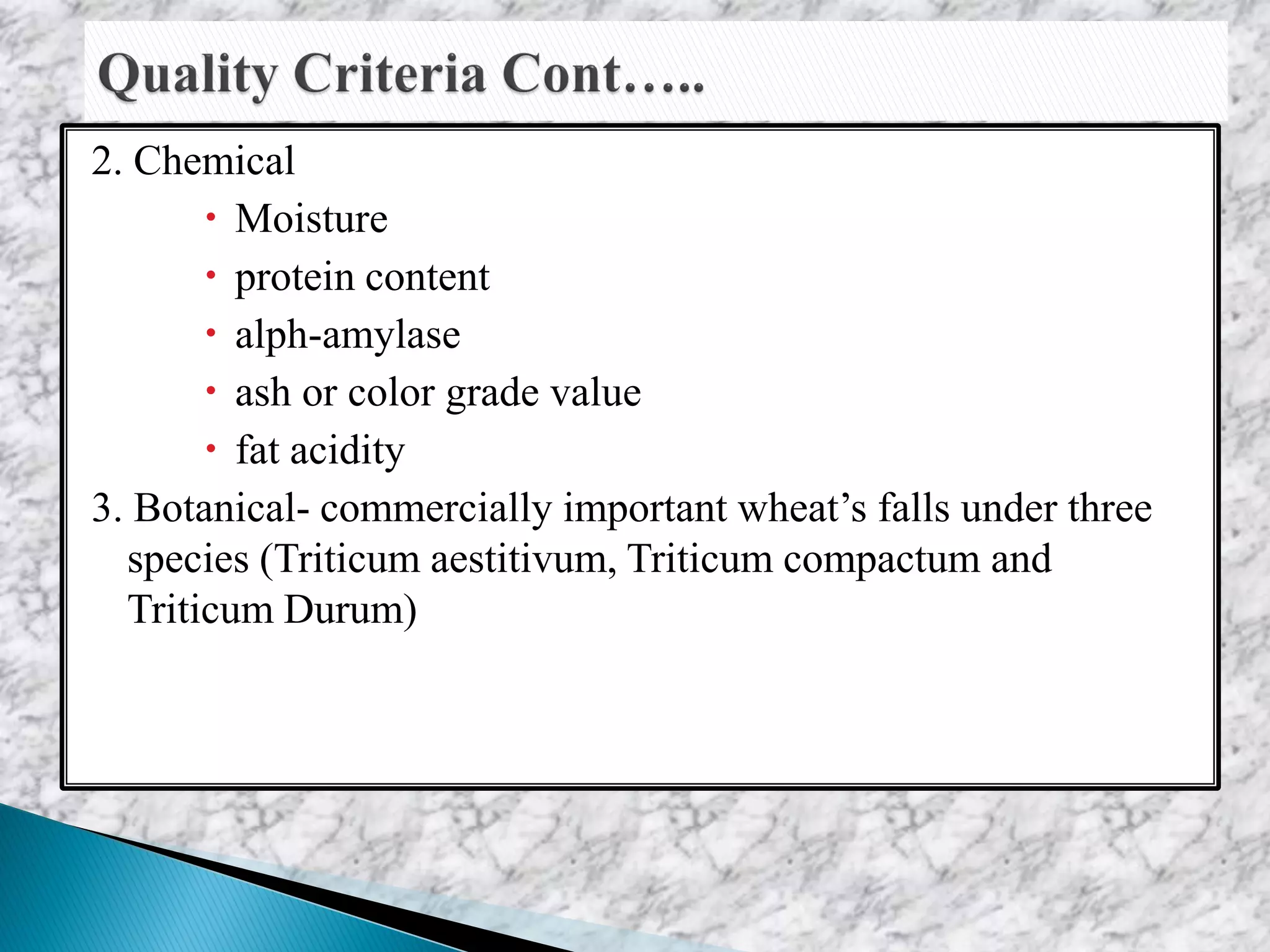
2. Chemical
 Moisture
 protein content
 alph-amylase
 ash or color grade value
 fat acidity
3. Botanical- commercially important wheat’s falls under three
species (Triticum aestitivum, Triticum compactum and
Triticum Durum)
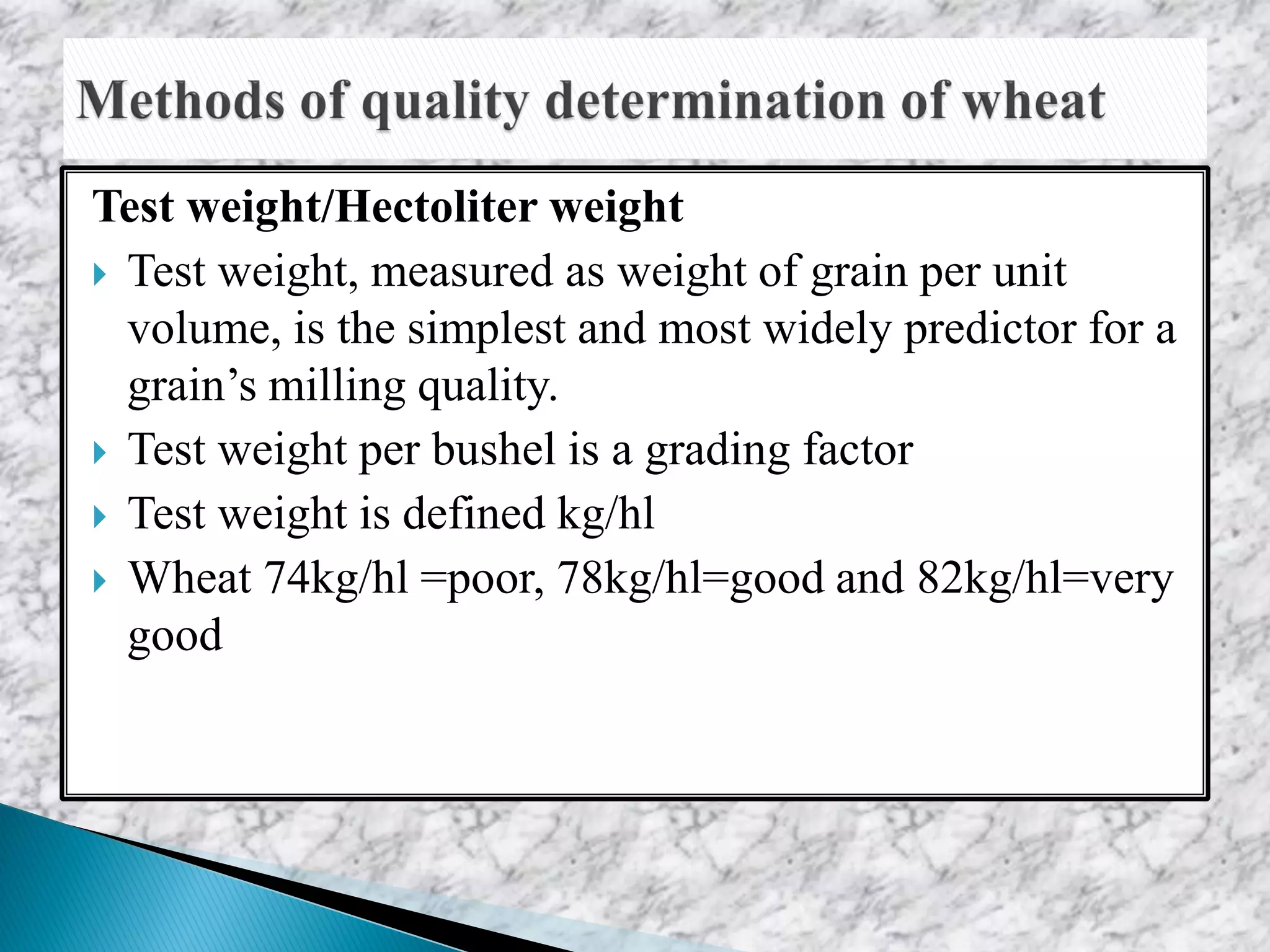
Test weight/Hectoliter weight
 Test weight, measured as weight of grain per unit
volume, is the simplest and most widely predictor for a
grain’s milling quality.
 Test weight per bushel is a grading factor
 Test weight is defined kg/hl
 Wheat 74kg/hl =poor, 78kg/hl=good and 82kg/hl=very
good
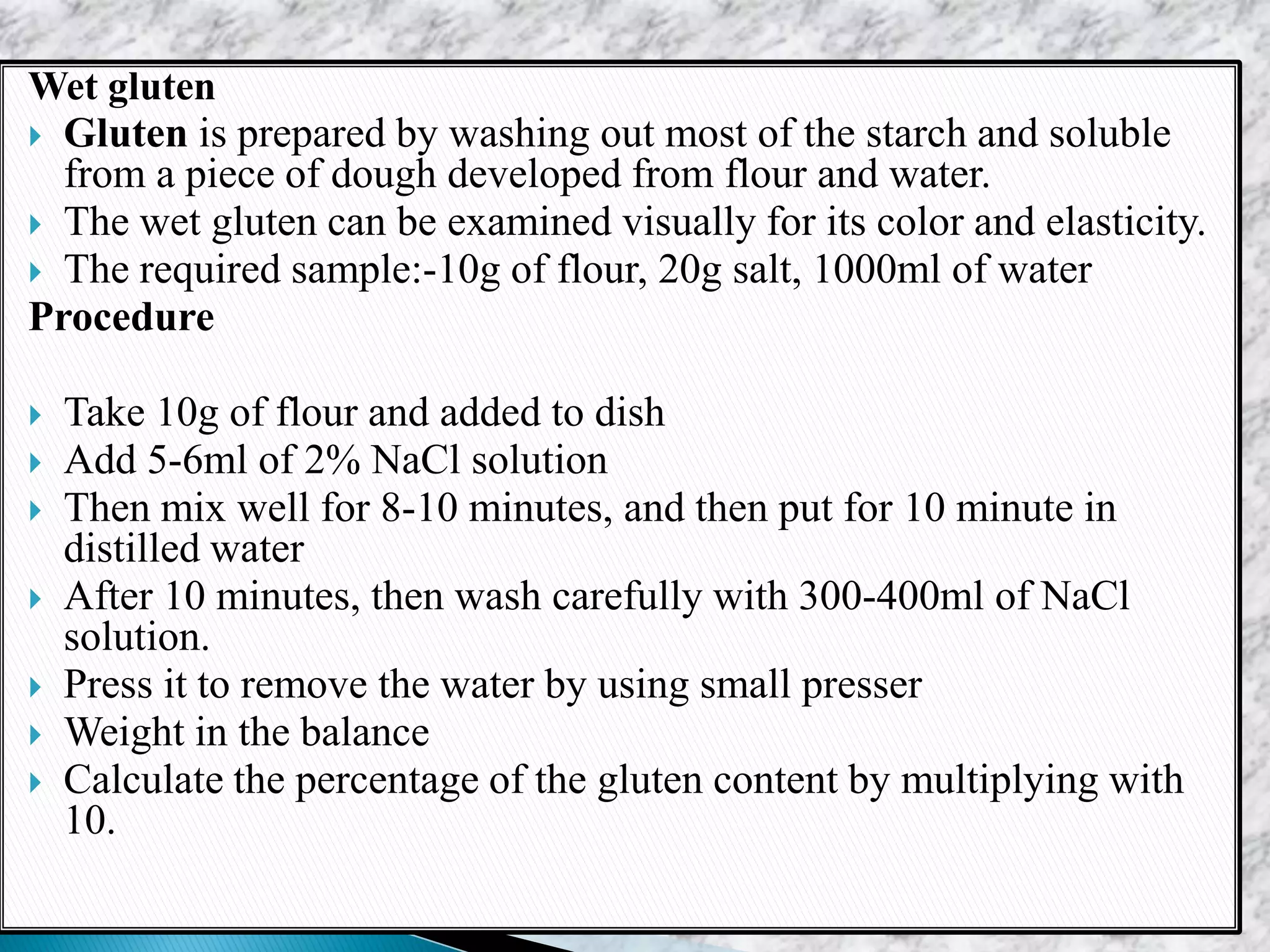
Wet gluten
 Gluten is prepared by washing out most of the starch and soluble
from a piece of dough developed from flour and water.
 The wet gluten can be examined visually for its color and elasticity.
 The required sample:-10g of flour, 20g salt, 1000ml of water
Procedure
 Take 10g of flour and added to dish
 Add 5-6ml of 2% NaCl solution
 Then mix well for 8-10 minutes, and then put for 10 minute in
distilled water
 After 10 minutes, then wash carefully with 300-400ml of NaCl
solution.
 Press it to remove the water by using small presser
 Weight in the balance
 Calculate the percentage of the gluten content by multiplying with
10.
 Wheat flour is the most important ingredient in home
baking
 It is the framework for almost every commercially
baked product and pasta.
 Of the grains available for the production of flour,
wheat is unique
 It is the only cereal grain with sufficient gluten content
to make a typical loaf of bread without being mixed
with other grains
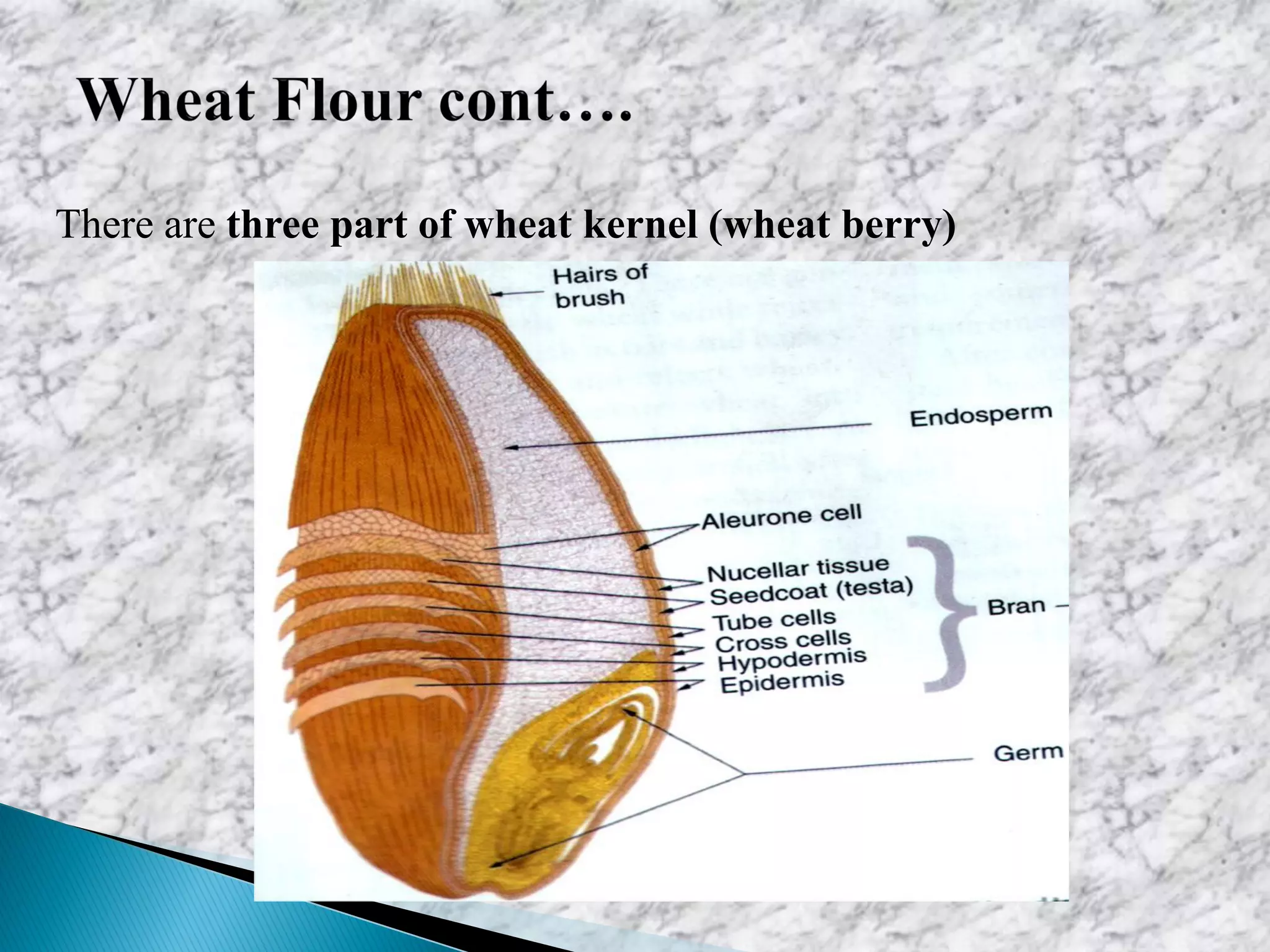
There are three part of wheat kernel (wheat berry)
Wheat Flour cont….
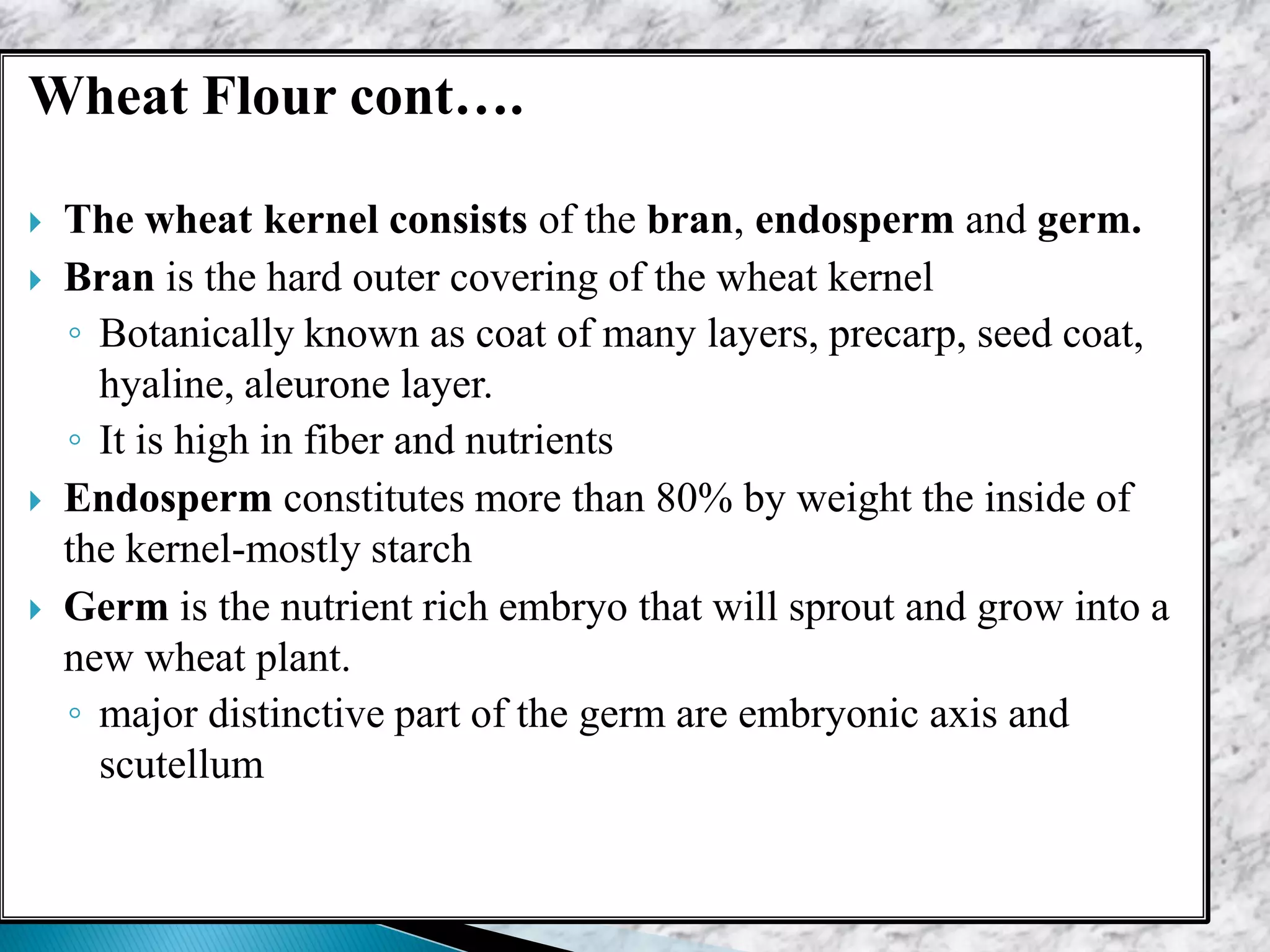
 The wheat kernel consists of the bran, endosperm and germ.
 Bran is the hard outer covering of the wheat kernel
◦ Botanically known as coat of many layers, precarp, seed coat,
hyaline, aleurone layer.
◦ It is high in fiber and nutrients
 Endosperm constitutes more than 80% by weight the inside of
the kernel-mostly starch
 Germ is the nutrient rich embryo that will sprout and grow into a
new wheat plant.
◦ major distinctive part of the germ are embryonic axis and
scutellum
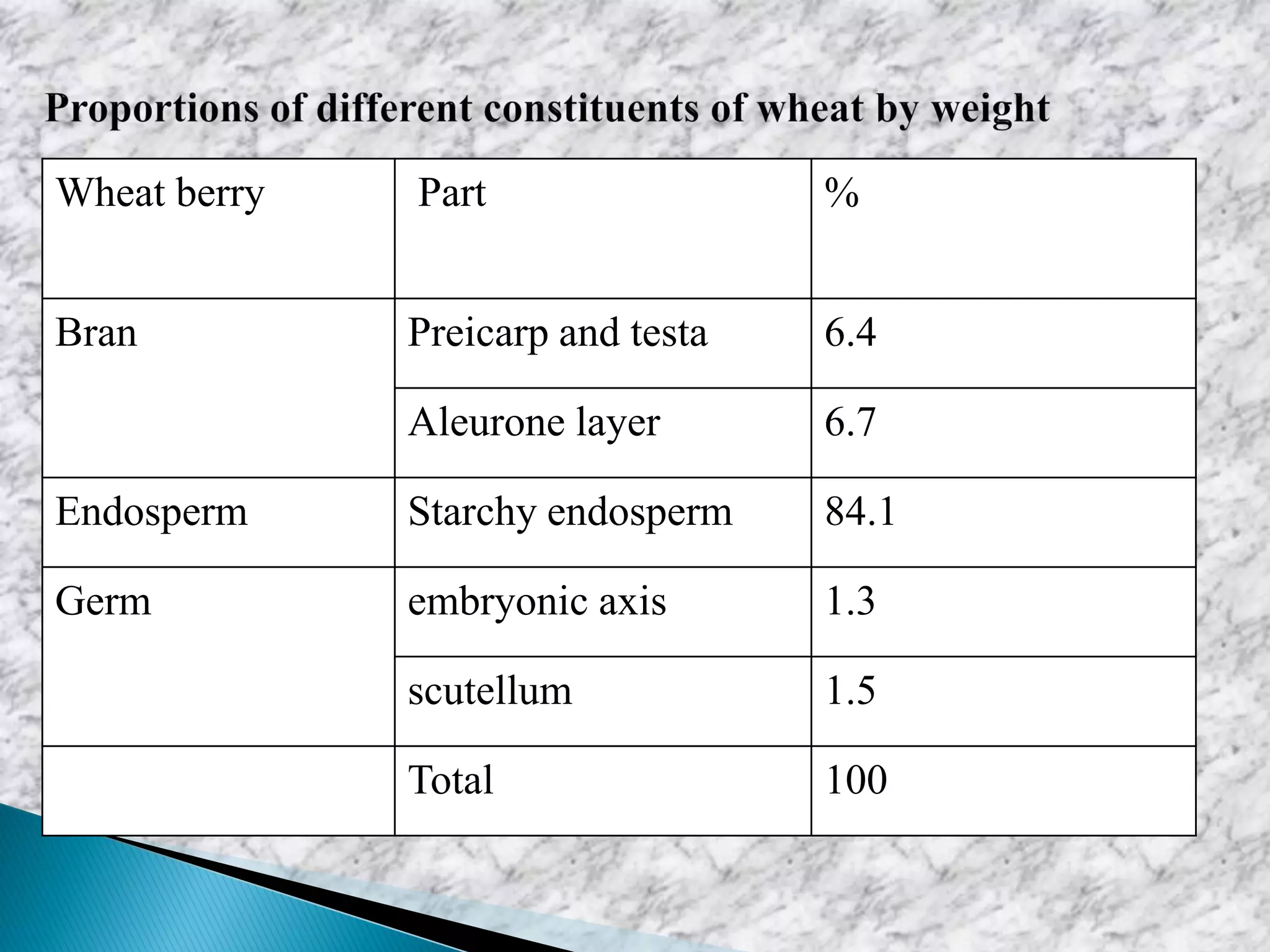
Wheat berry Part %
Bran Preicarp and testa 6.4
Aleurone layer 6.7
Endosperm Starchy endosperm 84.1
Germ embryonic axis 1.3
scutellum 1.5
Total 100
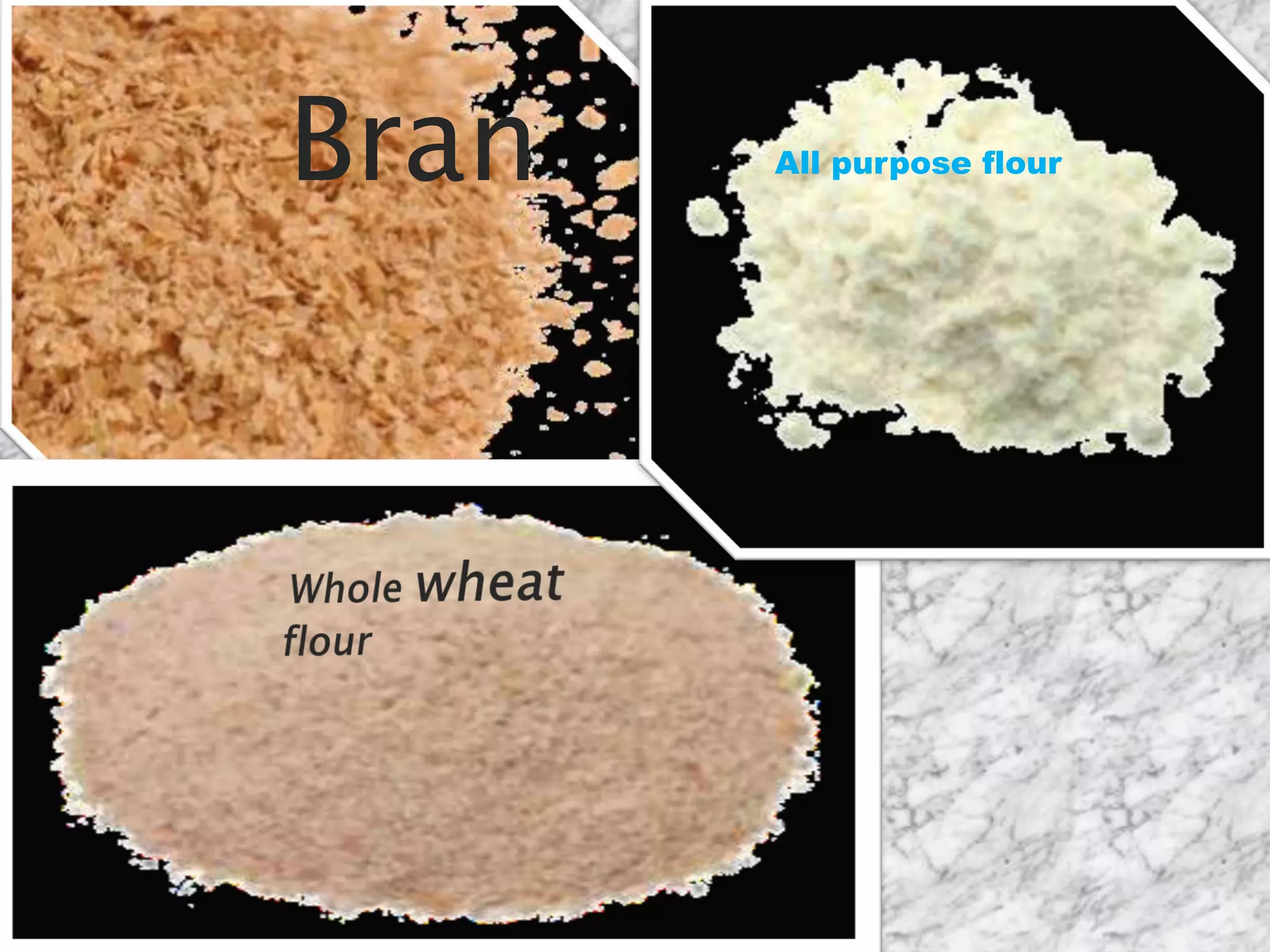
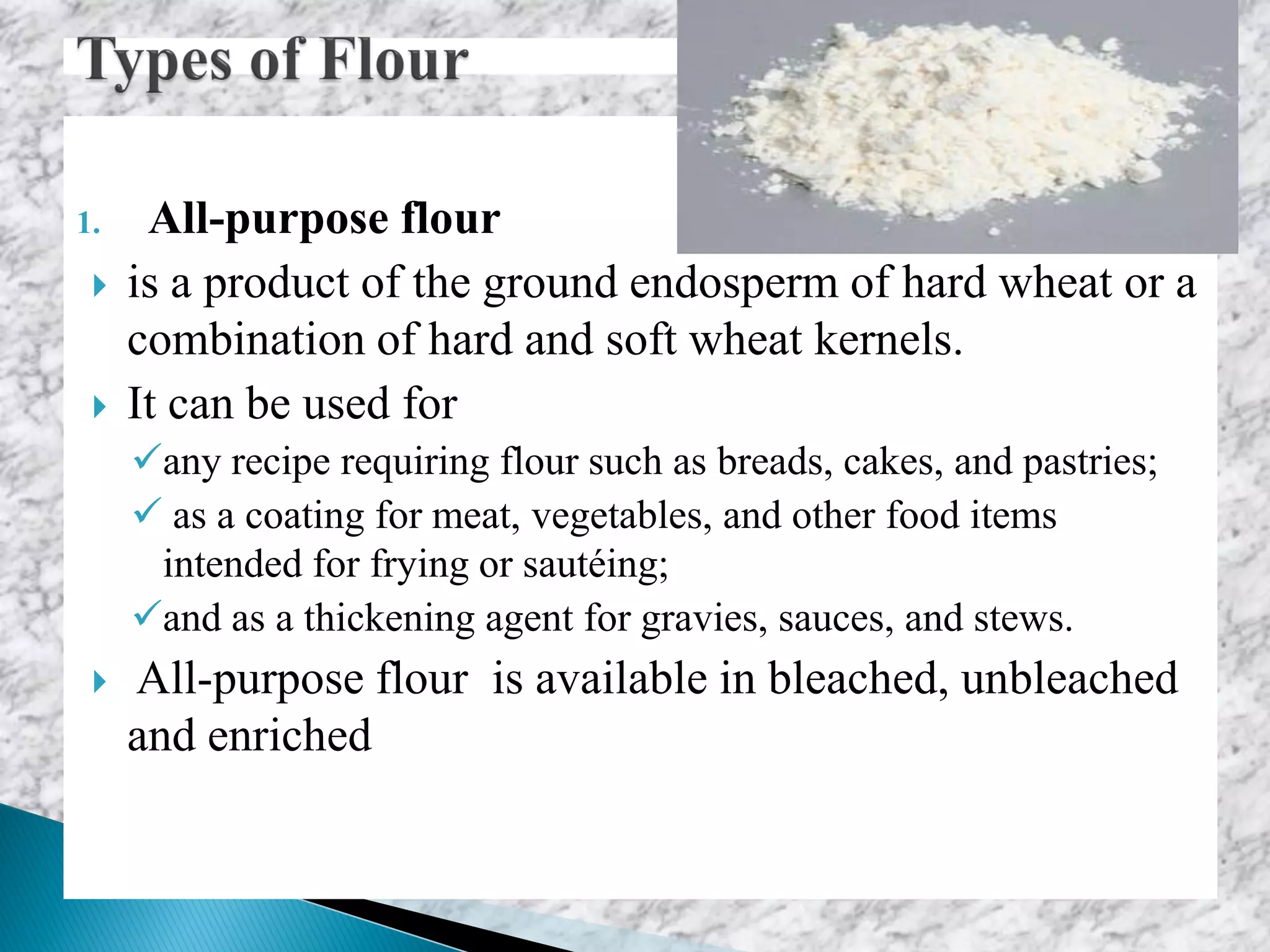
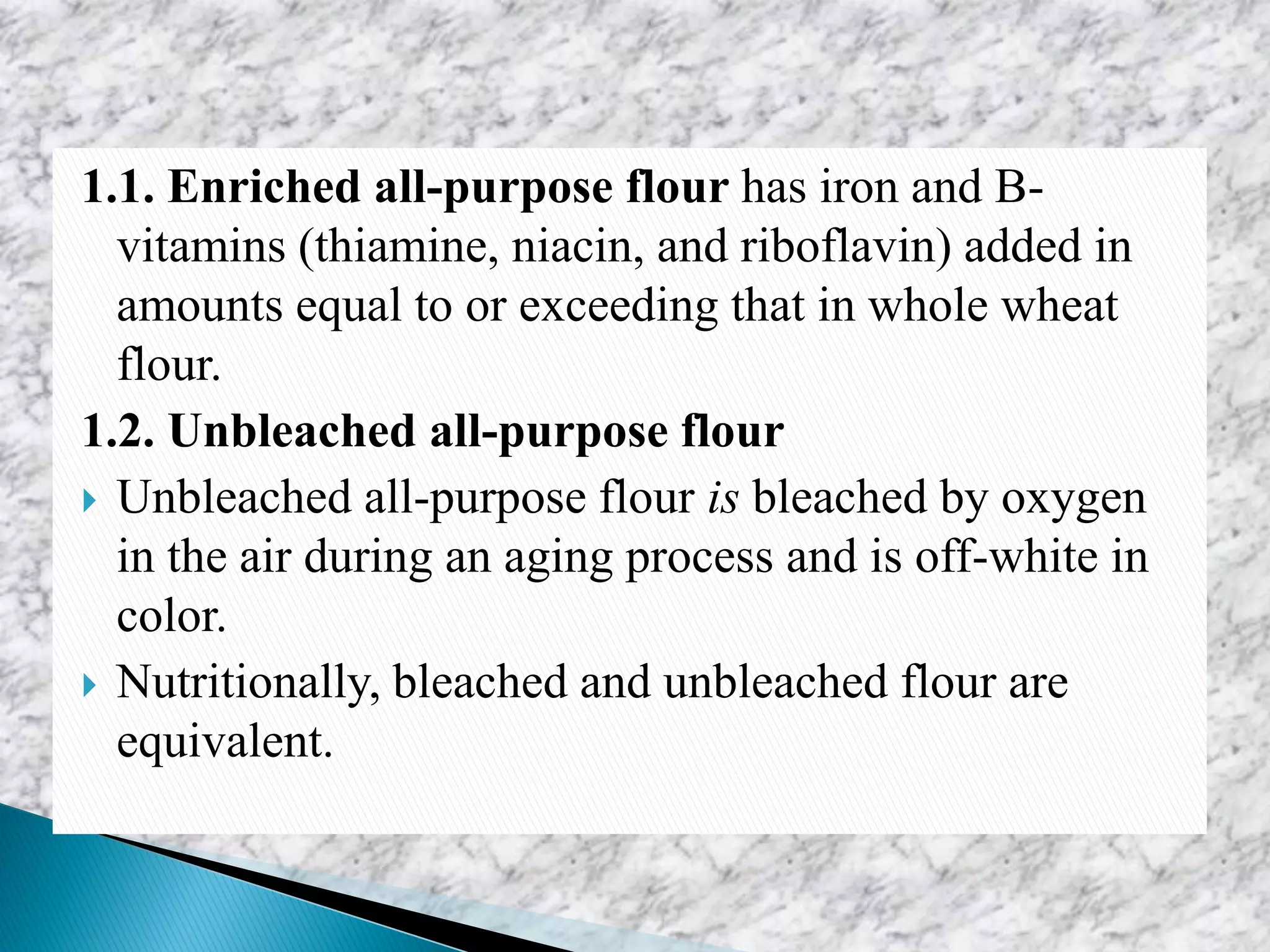
Bran All purpose flour
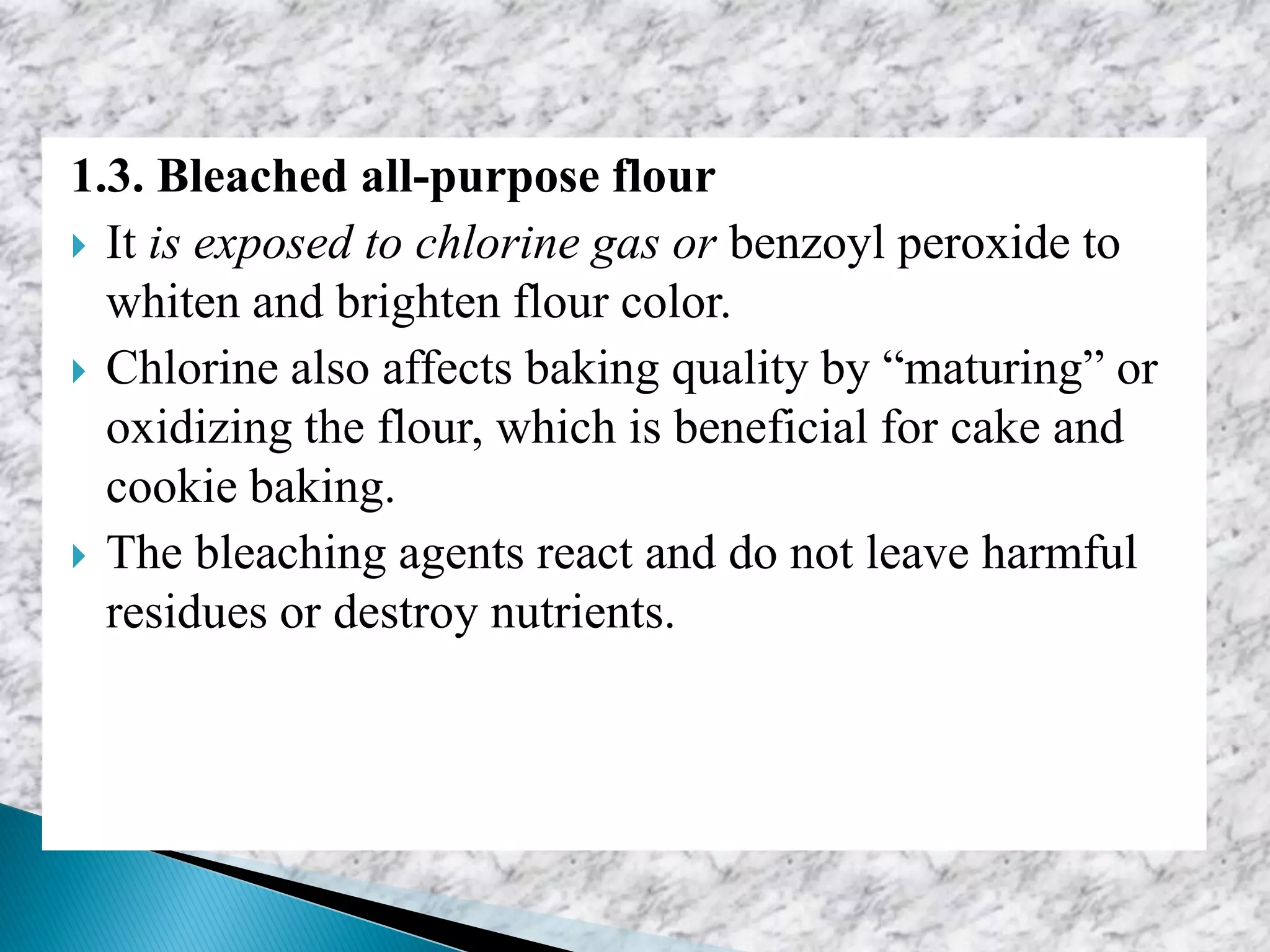
1. All-purpose flour
 is a product of the ground endosperm of hard wheat or a
combination of hard and soft wheat kernels.
 It can be used for
any recipe requiring flour such as breads, cakes, and pastries;
 as a coating for meat, vegetables, and other food items
intended for frying or sautéing;
and as a thickening agent for gravies, sauces, and stews.
 All-purpose flour is available in bleached, unbleached
and enriched
1.1. Enriched all-purpose flour has iron and B-
vitamins (thiamine, niacin, and riboflavin) added in
amounts equal to or exceeding that in whole wheat
flour.
1.2. Unbleached all-purpose flour
 Unbleached all-purpose flour is bleached by oxygen
in the air during an aging process and is off-white in
color.
 Nutritionally, bleached and unbleached flour are
equivalent.
1.3. Bleached all-purpose flour
 It is exposed to chlorine gas or benzoyl peroxide to
whiten and brighten flour color.
 Chlorine also affects baking quality by “maturing” or
oxidizing the flour, which is beneficial for cake and
cookie baking.
 The bleaching agents react and do not leave harmful
residues or destroy nutrients.
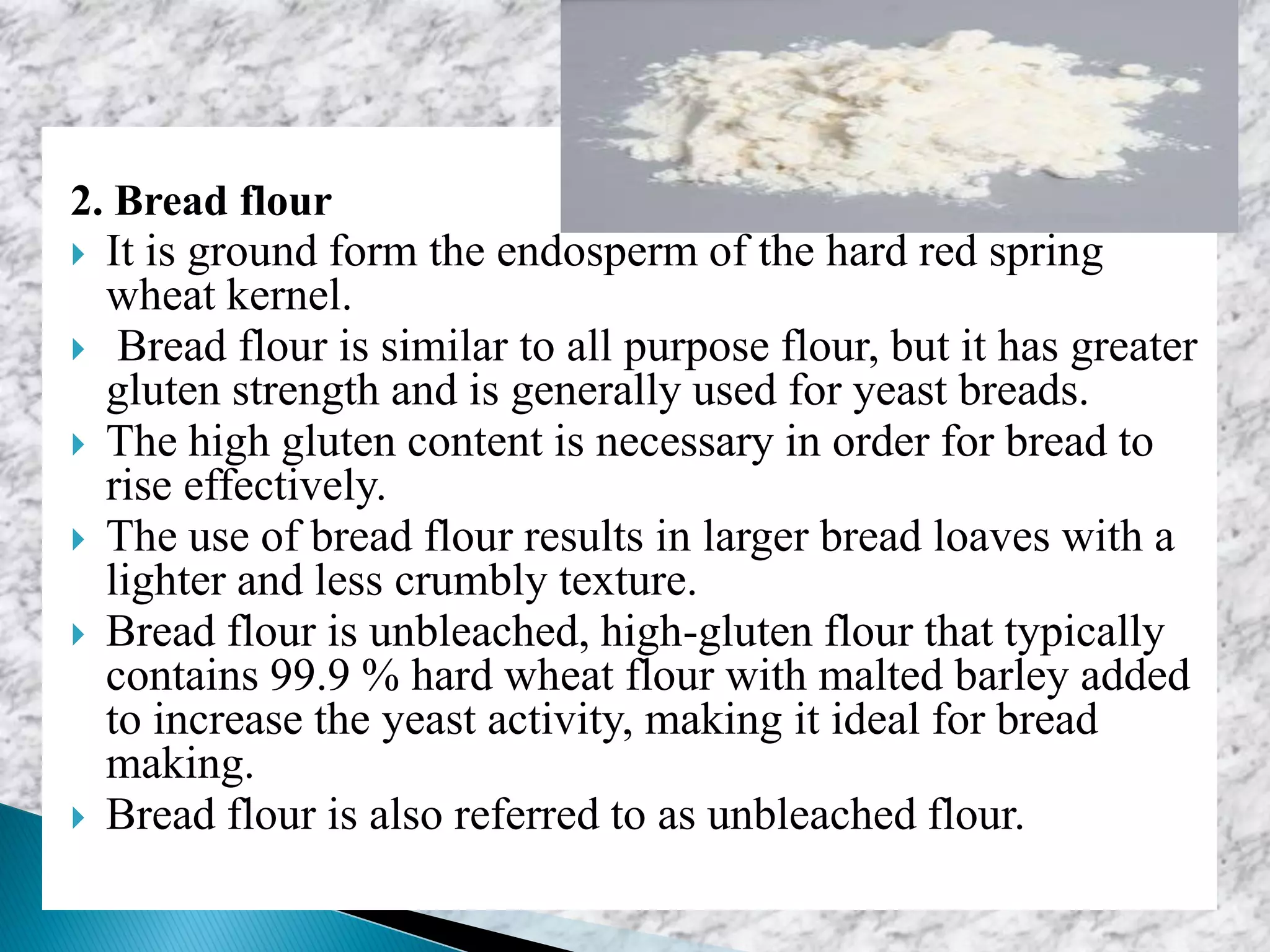
2. Bread flour
 It is ground form the endosperm of the hard red spring
wheat kernel.
 Bread flour is similar to all purpose flour, but it has greater
gluten strength and is generally used for yeast breads.
 The high gluten content is necessary in order for bread to
rise effectively.
 The use of bread flour results in larger bread loaves with a
lighter and less crumbly texture.
 Bread flour is unbleached, high-gluten flour that typically
contains 99.9 % hard wheat flour with malted barley added
to increase the yeast activity, making it ideal for bread
making.
 Bread flour is also referred to as unbleached flour.
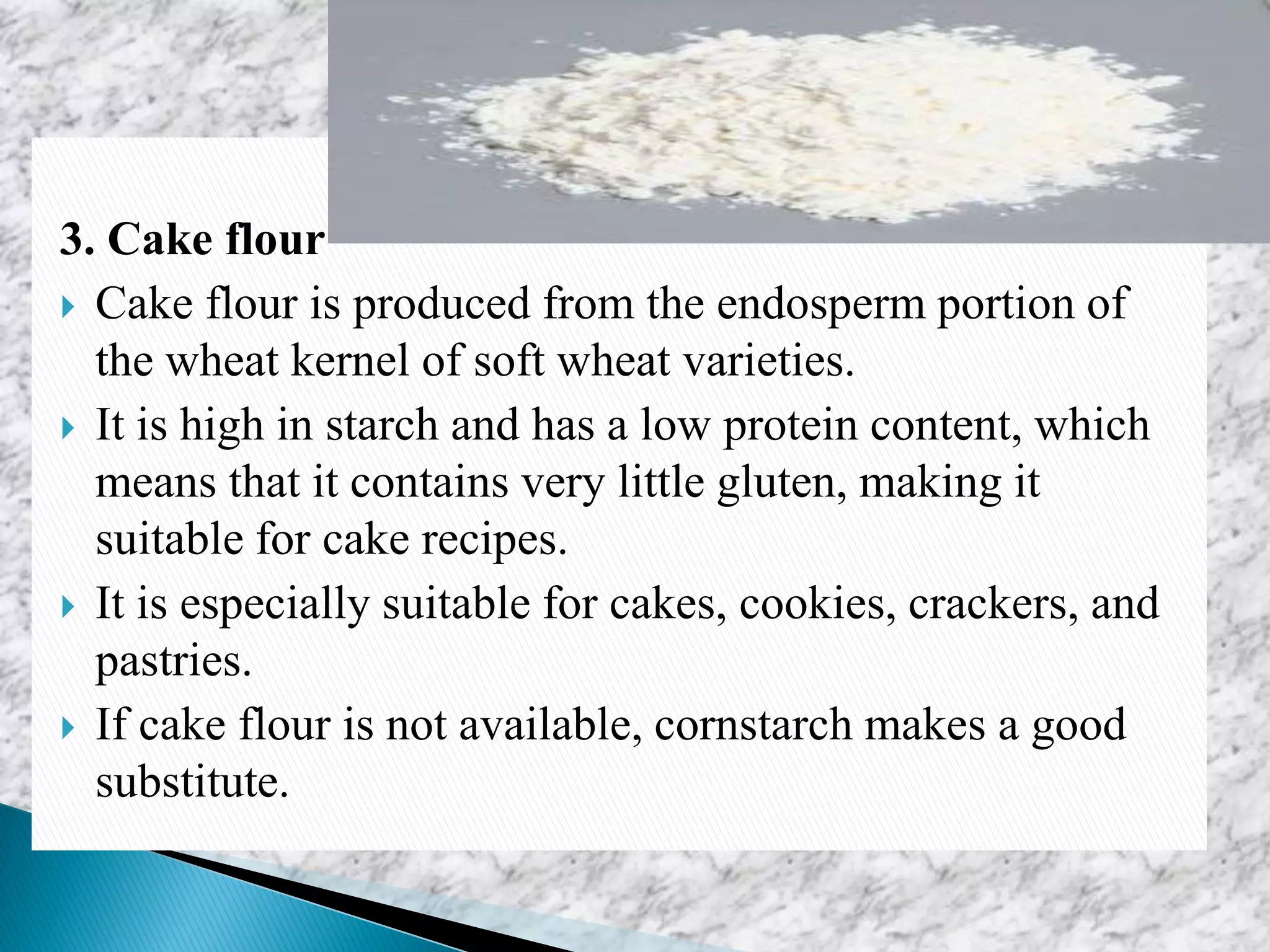
3. Cake flour
 Cake flour is produced from the endosperm portion of
the wheat kernel of soft wheat varieties.
 It is high in starch and has a low protein content, which
means that it contains very little gluten, making it
suitable for cake recipes.
 It is especially suitable for cakes, cookies, crackers, and
pastries.
 If cake flour is not available, cornstarch makes a good
substitute.
4. Pastry flour
 Pastry flour is produced from soft-wheat and it
has a fine-texture and a high starch content,
but less starch than cake flour.
 It is milled from a soft, low gluten wheat and is
used for pastries.
 Pastry flour is finely ground, but it is not as fine
as cake flour.
 It is available in bleached and unbleached
varieties and is most often used for making
flaky pie crusts, cookies, biscuits, and assorted
pastries.
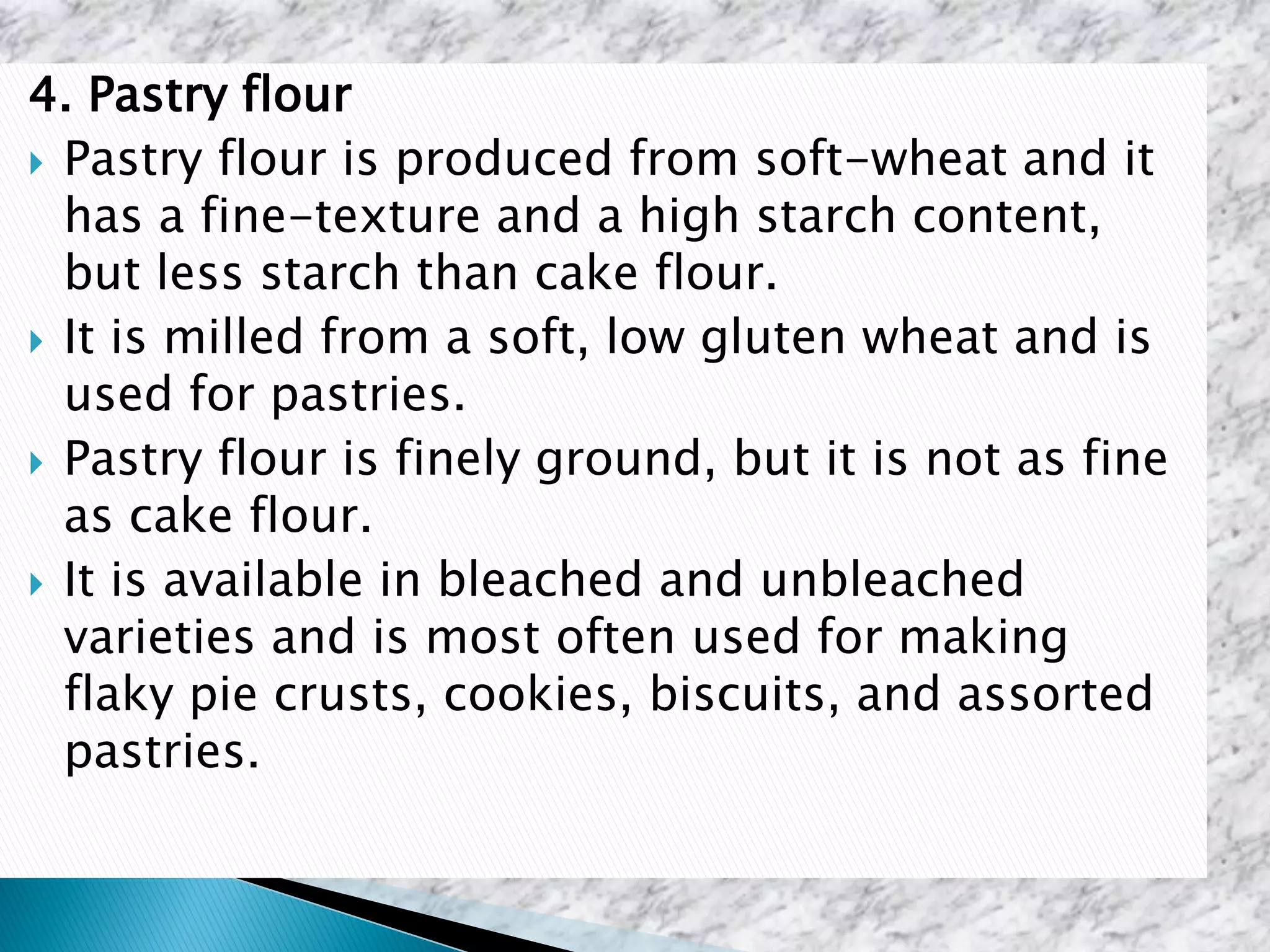
5. Semolina Flour
 Semolina flour is available coarsely ground or ground
twice for a fine texture with a light yellow color
 It is the coarsely ground endosperm of durum wheat
which is used almost exclusively for making pasta.
 Durum wheat has the ideal properties for making the
best pasta.
 It is high in protein and gluten, which are used to create
high quality pasta products such as macaroni and
spaghetti
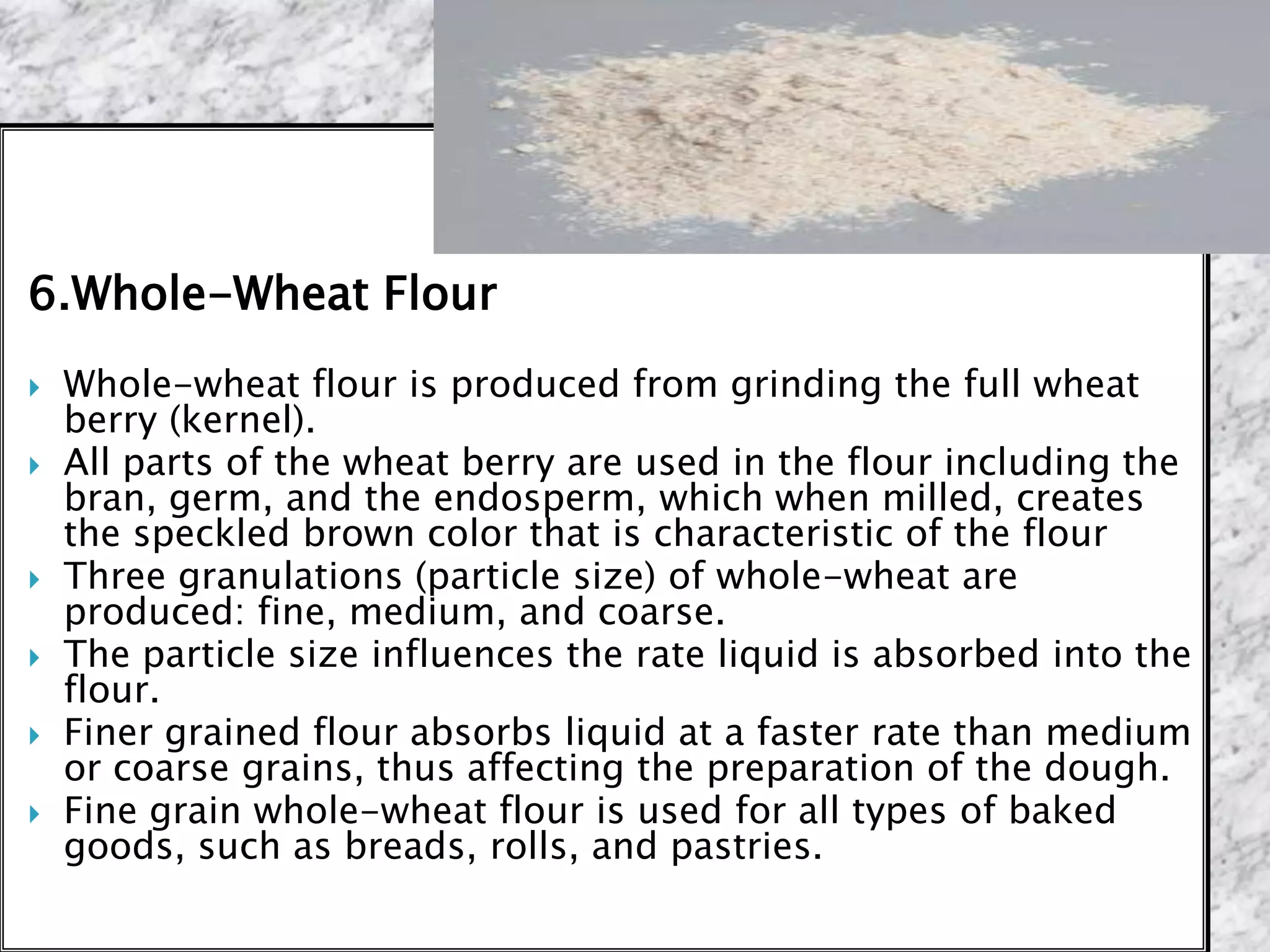
6.Whole-Wheat Flour
 Whole-wheat flour is produced from grinding the full wheat
berry (kernel).
 All parts of the wheat berry are used in the flour including the
bran, germ, and the endosperm, which when milled, creates
the speckled brown color that is characteristic of the flour
 Three granulations (particle size) of whole-wheat are
produced: fine, medium, and coarse.
 The particle size influences the rate liquid is absorbed into the
flour.
 Finer grained flour absorbs liquid at a faster rate than medium
or coarse grains, thus affecting the preparation of the dough.
 Fine grain whole-wheat flour is used for all types of baked
goods, such as breads, rolls, and pastries.
 Medium grained can be used for the same
types of foods, but will provide a coarser
crumb.
 Coarse whole-wheat flour has a much larger
bran particle and consequently is most often
used to provide breads with natural, nutty
flavors and rough textures.
 WHITE FLOUR is made from endosperm only=
not whole grain
 WHOLE WHEAT FLOUR combines all 3 parts of
the wheat kernel=whole grain
 Quality parameters of the flour such as color,
protein, granulation distribution, gluten
quantity and quality, and starch damage play
a role in the suitability of flour for the baker.
 Physical test:- Color, milling quality and
Virtuousness.
 Chemical test:-Moisture, protein, fiber,
starch, mineral content and color grade
 Amounts and types of final products vary among
mills are a result of differences in
 flow-sheet, adjustments, and
 kinds of wheat milled
 Flours from the different stages in the mill are
not identical in
 physical appearance, chemical analysis, or baking
properties.
 Another important factor besides the
determination of quality is the concept of flour
uniformity
 Optimum flour granulation distribution is an
important parameter for the baking process.
 Drastic change in granulation effects on
 water absorption, water retention during
fermentation, proofing, and
 quality of finished breads.
 Flour color depends on
 wheat cleanliness,
 tempering level,
 fineness of flour, and
 the amount of bran particles it contains.
 Too much fine bran effects flour shade,
producing a darker shade.
 Change in mill ambient conditions could also
affect flour color.
 Mixing of different quality wheat varieties so
as to meet desired product quality.
 Blending is mostly done on protein basis.
 Hard wheat varieties are blended with soft
wheat varieties in order to obtain the desired
level of protein content in the resulting flour.
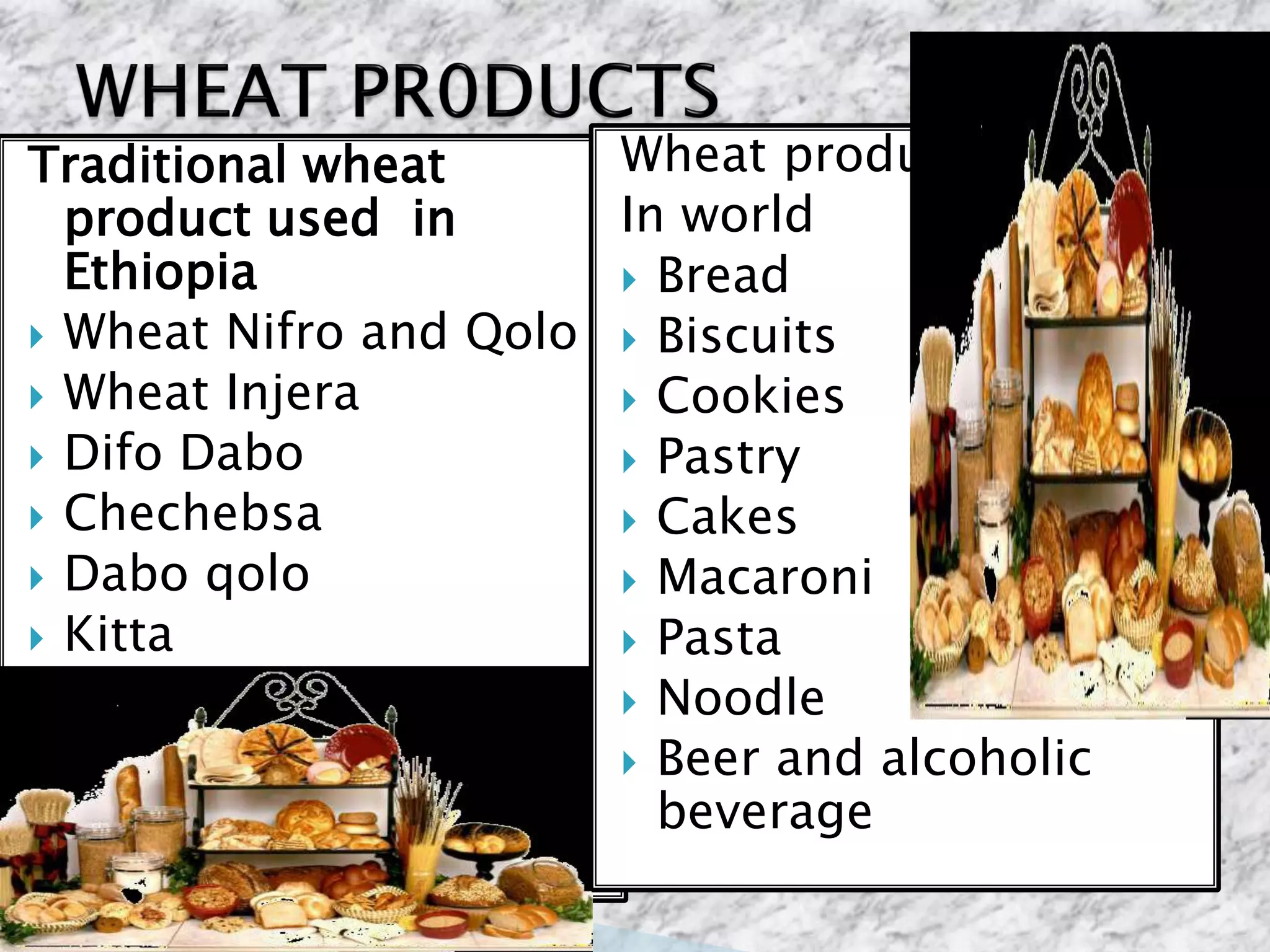
Traditional wheat
product used in
Ethiopia
 Wheat Nifro and Qolo
 Wheat Injera
 Difo Dabo
 Chechebsa
 Dabo qolo
 Kitta
Wheat products
In world
 Bread
 Biscuits
 Cookies
 Pastry
 Cakes
 Macaroni
 Pasta
 Noodle
 Beer and alcoholic
beverage
1. BREAD
 It is yeast leavened wheat product
 Bread is made by many different procedures.
 The particular procedures used depend on
 tradition,
 the amount (cost) and type of energy
available
 the type and consistency of the flour
available,
 the type of bread desired, and
 the time between baking and eating
What are the major recipes?
 The major ingredients for bread making are
wheat flour, yeast, water and salt
 The other ingredients are fat, sugar, milk or
milk solids, oxidants, enzymes, surfactants,
and additives to protect against molds.
 Flour is responsible for the structure of the
bread and it allows the formation of visco-
elastic that retains gas.
 Yeast is the major role to convert fermentable
carbohydrates into Co2 and ethanol.
 The gases provide the lift that produces a
light or leavened loaf of bread.
 The Salt functions in bread making are taste
and affect rheological properties.
 It makes dough stronger by shielding charges
on the dough protein.
 The last fundamental ingredient is water which is a
plasticizer and solvent.
 Shortening/oil-bread stays soft and more palatable for a
long period of time.
 giving increased volume to bread
 acts as a plasticizer in dough
 Sugar- It is source of fermentable carbohydrates for the
yeast
 It provides a sweet taste to the bread
 Oxidants- ascorbic acid, potassium bromate, and calcium
peroxide at level PPM
 improve dough strength and results in bread with better loaf
volume and texture.
 The processing of bread can be divided into
three basic operations:
 mixing or dough formation,
 fermentation, and
 baking
 Two procedures
1. Straight-dough system
2. Sponge-and dough process
 Type of bread
a. Pan bread
b. Baguettes and Hearth breads
c. Flat breads
d. Buns
e. Croissants
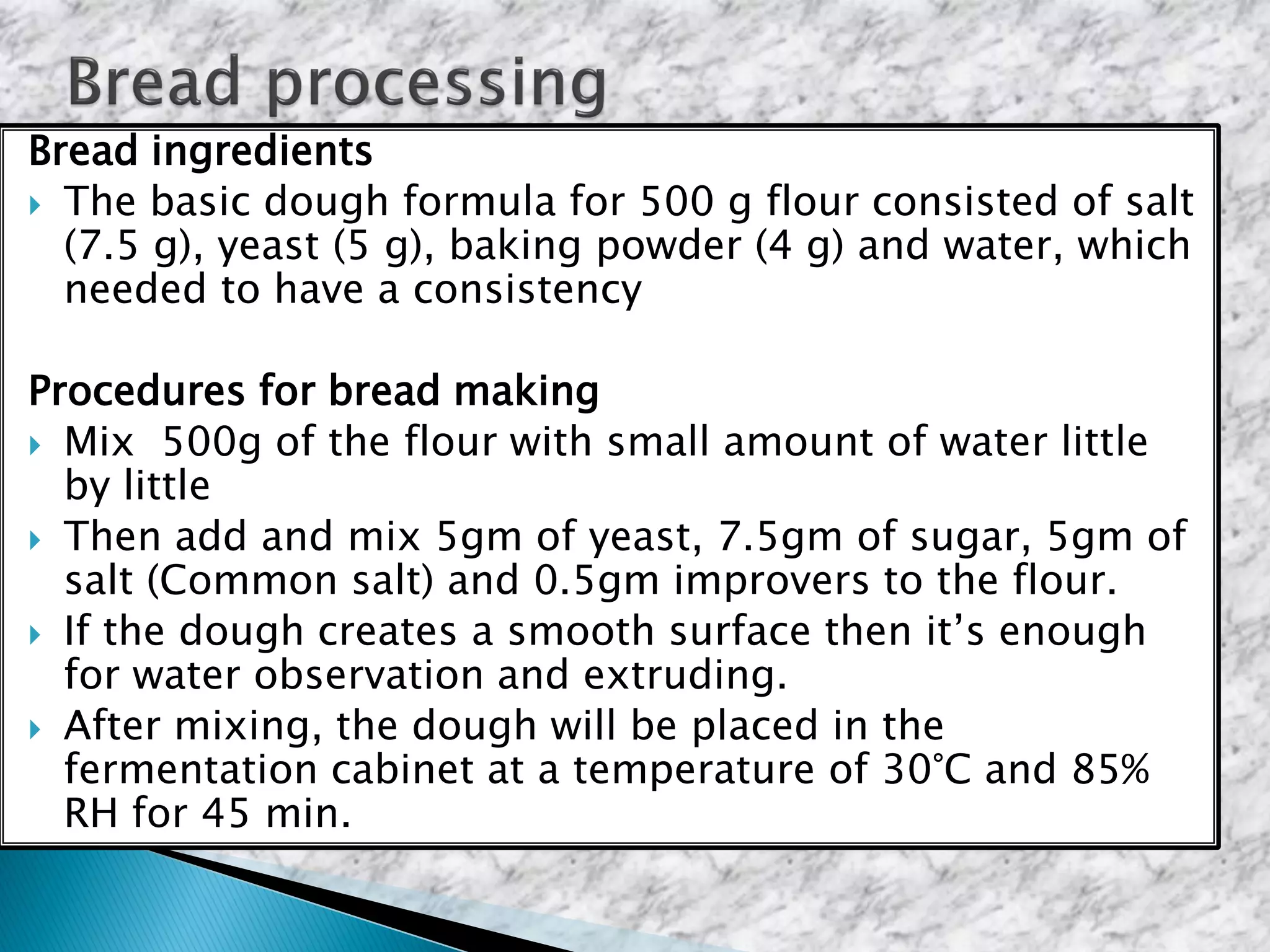
Bread ingredients
 The basic dough formula for 500 g flour consisted of salt
(7.5 g), yeast (5 g), baking powder (4 g) and water, which
needed to have a consistency
Procedures for bread making
 Mix 500g of the flour with small amount of water little
by little
 Then add and mix 5gm of yeast, 7.5gm of sugar, 5gm of
salt (Common salt) and 0.5gm improvers to the flour.
 If the dough creates a smooth surface then it’s enough
for water observation and extruding.
 After mixing, the dough will be placed in the
fermentation cabinet at a temperature of 30°C and 85%
RH for 45 min.
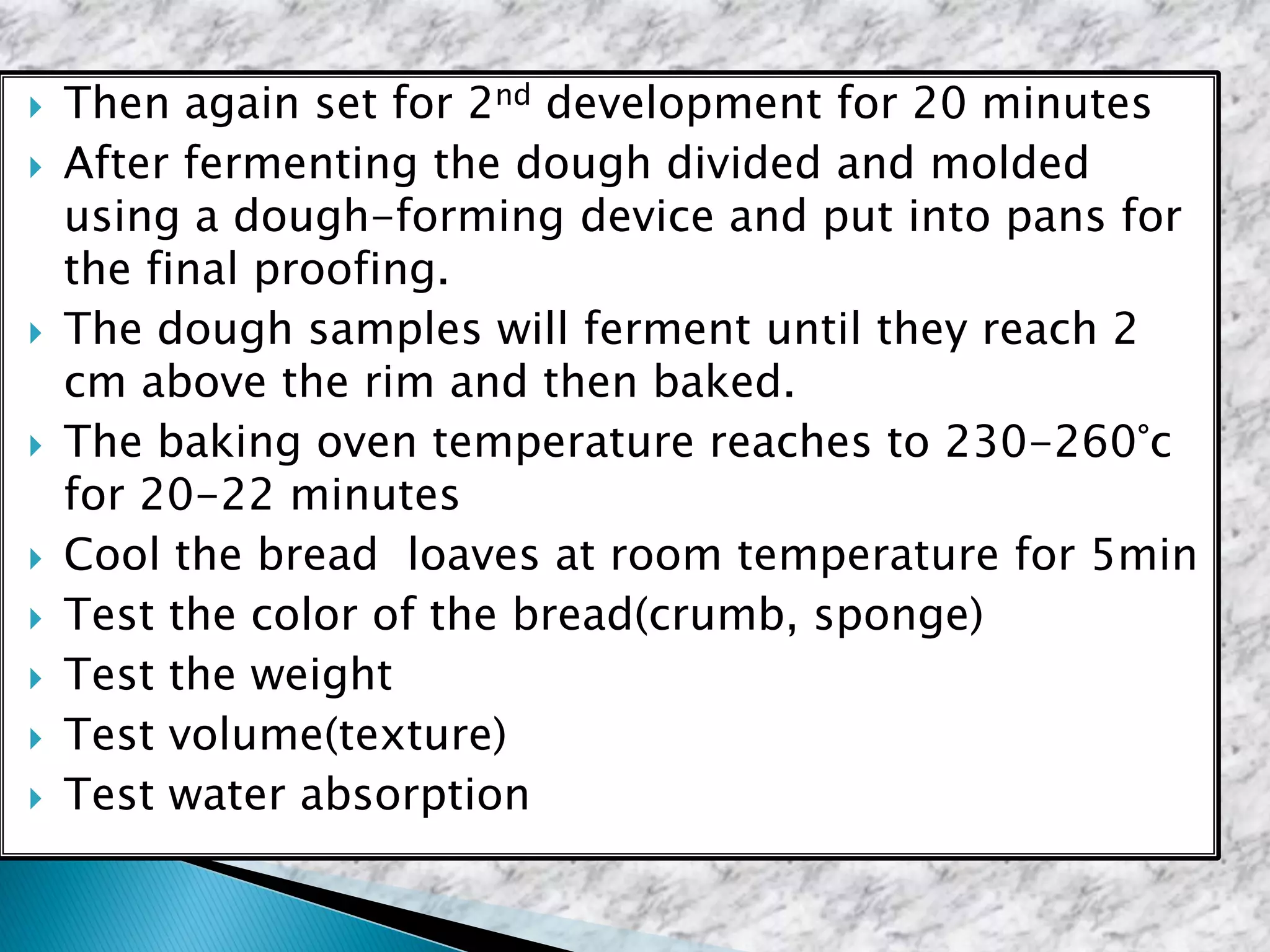
 Then again set for 2nd development for 20 minutes
 After fermenting the dough divided and molded
using a dough-forming device and put into pans for
the final proofing.
 The dough samples will ferment until they reach 2
cm above the rim and then baked.
 The baking oven temperature reaches to 230-260°c
for 20-22 minutes
 Cool the bread loaves at room temperature for 5min
 Test the color of the bread(crumb, sponge)
 Test the weight
 Test volume(texture)
 Test water absorption
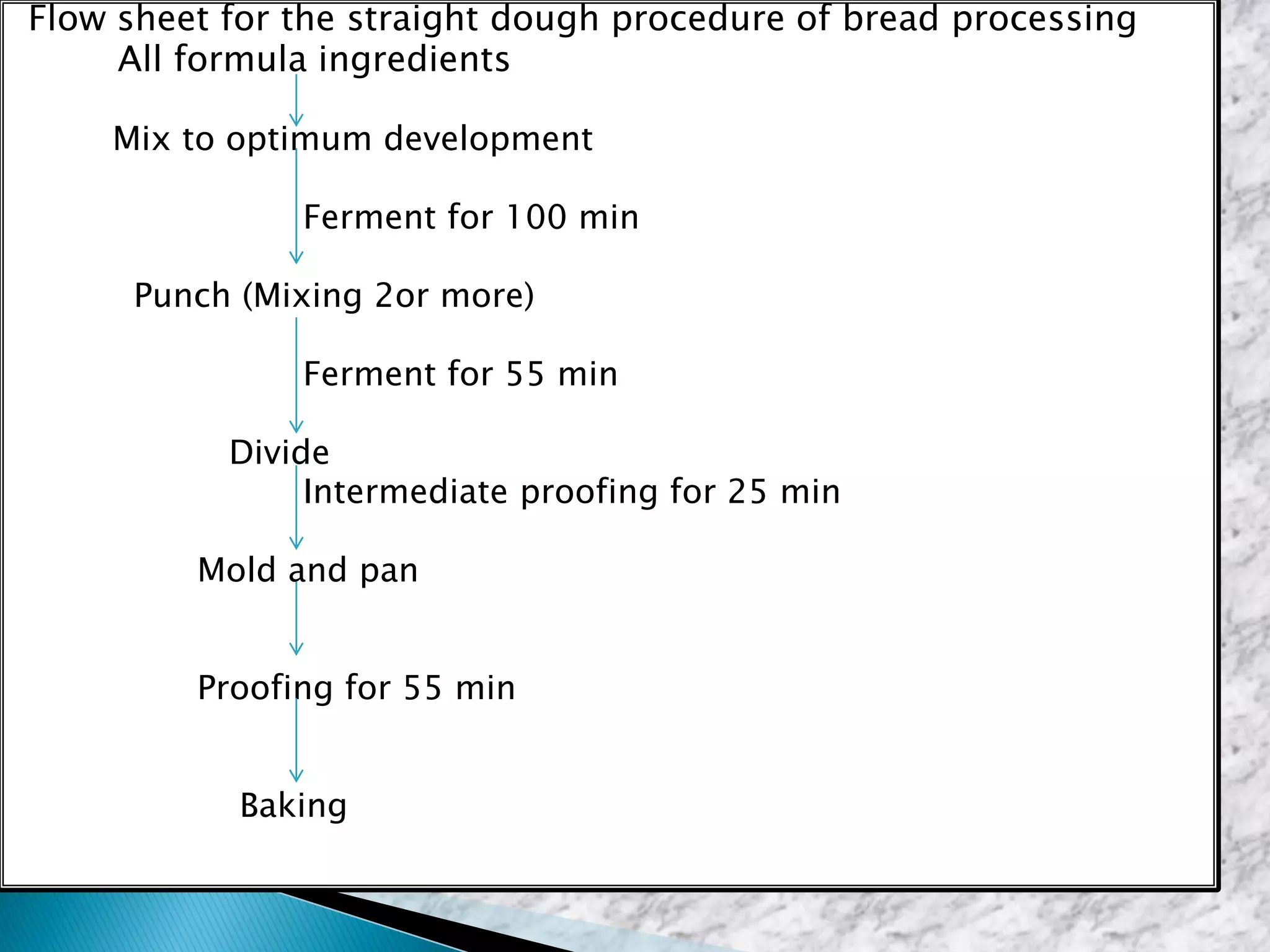
Flow sheet for the straight dough procedure of bread processing
All formula ingredients
Mix to optimum development
Ferment for 100 min
Punch (Mixing 2or more)
Ferment for 55 min
Divide
Intermediate proofing for 25 min
Mold and pan
Proofing for 55 min
Baking
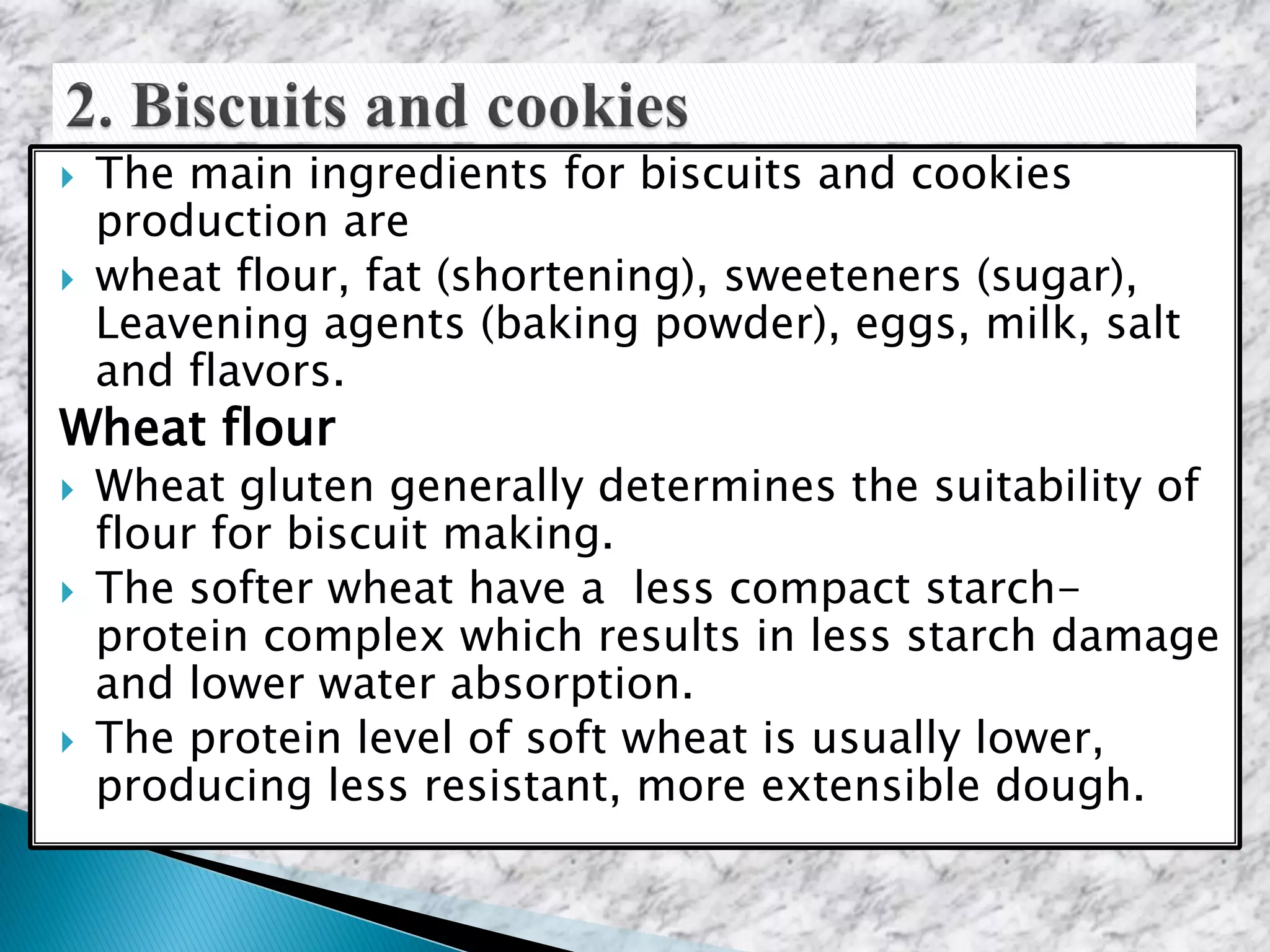
 The main ingredients for biscuits and cookies
production are
 wheat flour, fat (shortening), sweeteners (sugar),
Leavening agents (baking powder), eggs, milk, salt
and flavors.
Wheat flour
 Wheat gluten generally determines the suitability of
flour for biscuit making.
 The softer wheat have a less compact starch-
protein complex which results in less starch damage
and lower water absorption.
 The protein level of soft wheat is usually lower,
producing less resistant, more extensible dough.
 Soft wheat is a unique blend of white, soft grained
wheat varieties.
 Less starch damage from soft wheat flour thus
occurs which favors an increase in biscuit diameter.
 Flour protein levels needed for biscuit making
typically range from 7 to10% and are often selected
by functionality for end use , price, and availability
 The flour protein has a major influence on biscuit
quality and in particular, on its diameter.
 The quantity and quality of the protein present in
flour have a major role in influencing the rheological
behavior, particularly when flour is the major
constituent of the formula.
Sweeteners (sugar)
 All biscuit formula contains sweeteners, which contain
the bulk of dissolved material in most dough.
 It contributes to texture, flavor, sweetness and color in
biscuit
 The quantity, granulation and type of sugar used
influence the quality of biscuits
 Sucrose, a non-reducing disaccharide, is the common
sugar used in biscuit preparation
 The continuing change in texture and development of
the final crispness has been attributed to slow
crystallization of sucrose from concentrated sugar syrup
formed during the earlier stage of processing
 Up on cooling, much of it crystallizes and strongly
affects the texture of baked biscuits.
 Sugars functionality in biscuits systems includes more
than only imparting sweetness
Shortening (Fat)
 Fat are used as surface sprays in cream filling and coating and as
release agents
 Fat functionality is very versatile in baked products that include
providing of flavor and mouth feel and contributes to the
appearance, palatability and texture of the biscuits
 Fat is the principal recipe responsible for tenderness, keeping
quality, grain and texture and it adding a rich quality to biscuit.
 Mechanical properties of biscuit are largely dependent on the fat
components of the formulation
Water
 Water is often a processing aid or catalyst, rather than as an
ingredients.
 Water functions in several ways, including
hydrating flour protein and starch,
 dissolving sugars, salt and various leavening chemicals
aiding in ingredient distribution and
helping control dough temperature
 A dough consistency is directly related to its water content or
absorption.
 Water activity is an important way to measure and monitor water
mobility in baked products.
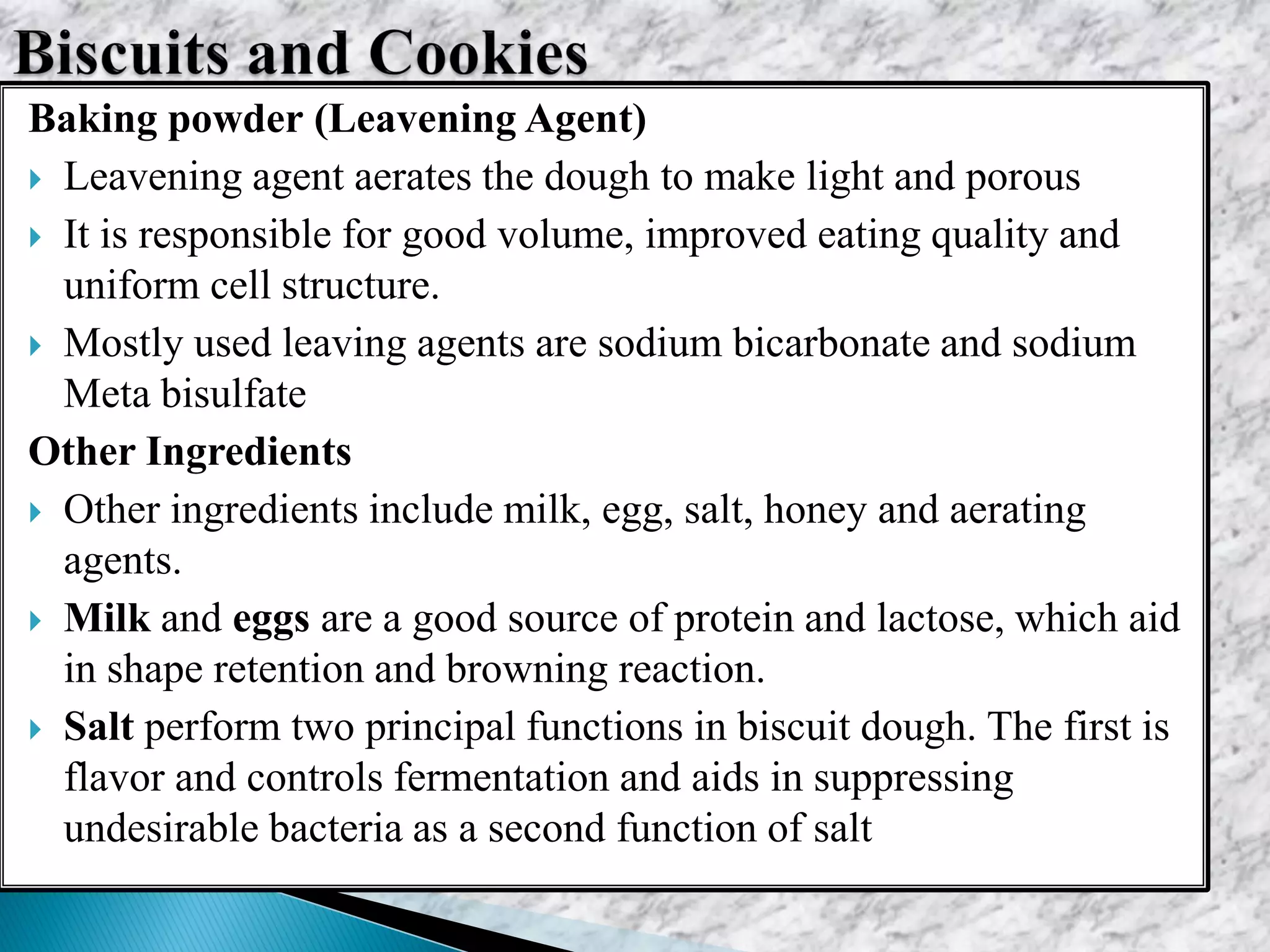
Baking powder (Leavening Agent)
 Leavening agent aerates the dough to make light and porous
 It is responsible for good volume, improved eating quality and
uniform cell structure.
 Mostly used leaving agents are sodium bicarbonate and sodium
Meta bisulfate
Other Ingredients
 Other ingredients include milk, egg, salt, honey and aerating
agents.
 Milk and eggs are a good source of protein and lactose, which aid
in shape retention and browning reaction.
 Salt perform two principal functions in biscuit dough. The first is
flavor and controls fermentation and aids in suppressing
undesirable bacteria as a second function of salt
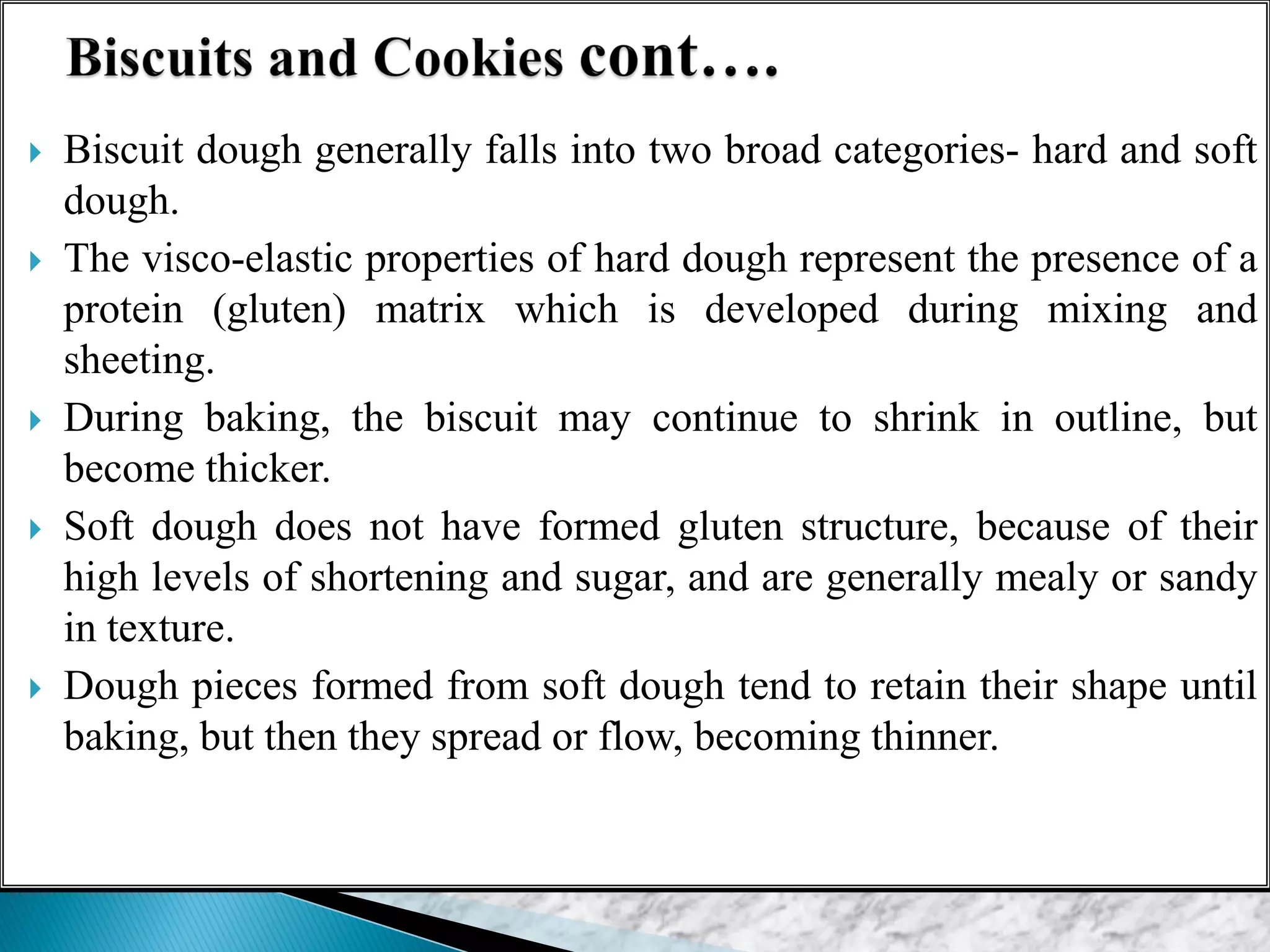
 Biscuit dough generally falls into two broad categories- hard and soft
dough.
 The visco-elastic properties of hard dough represent the presence of a
protein (gluten) matrix which is developed during mixing and
sheeting.
 During baking, the biscuit may continue to shrink in outline, but
become thicker.
 Soft dough does not have formed gluten structure, because of their
high levels of shortening and sugar, and are generally mealy or sandy
in texture.
 Dough pieces formed from soft dough tend to retain their shape until
baking, but then they spread or flow, becoming thinner.
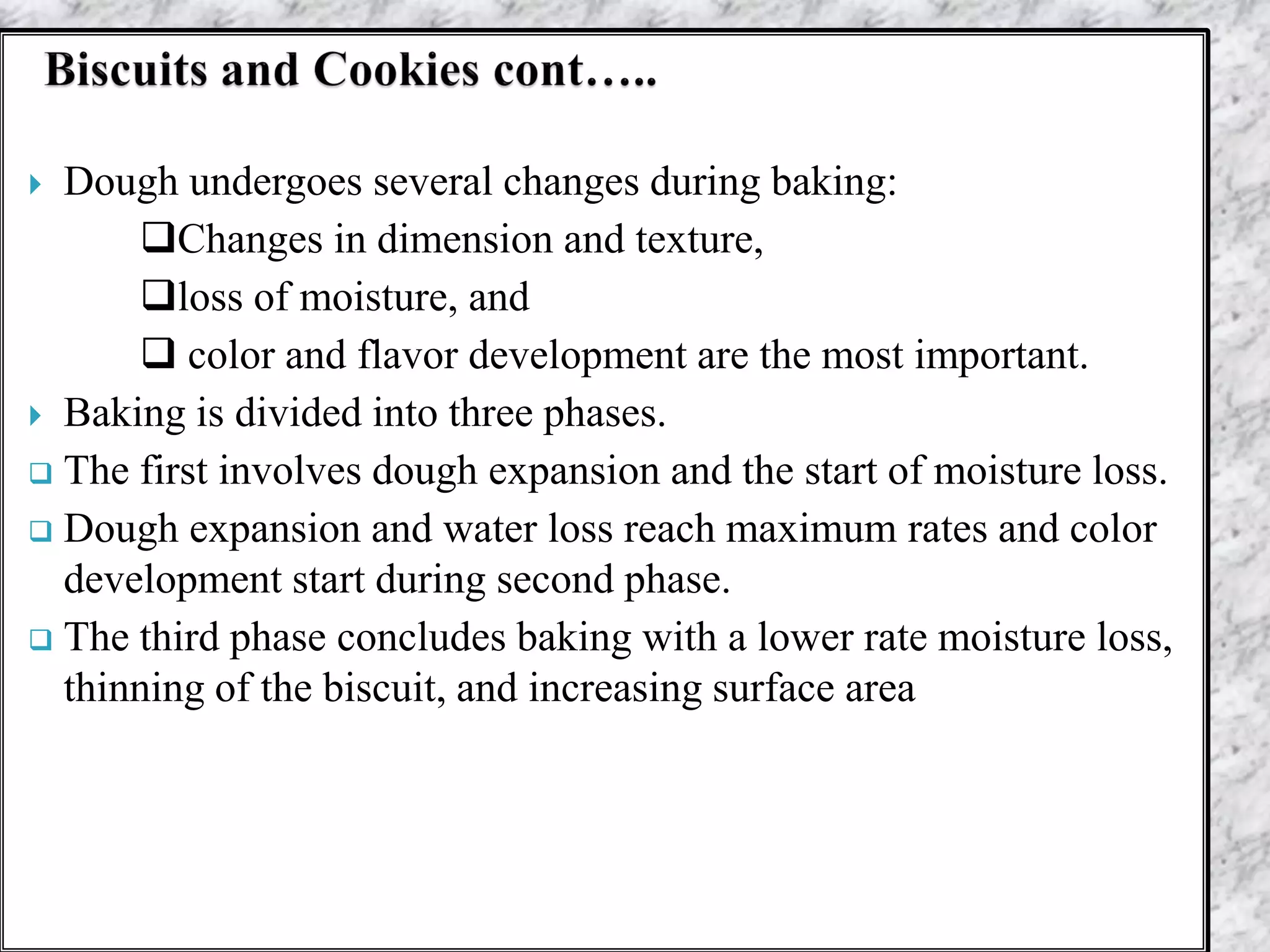
 Dough undergoes several changes during baking:
Changes in dimension and texture,
loss of moisture, and
 color and flavor development are the most important.
 Baking is divided into three phases.
 The first involves dough expansion and the start of moisture loss.
 Dough expansion and water loss reach maximum rates and color
development start during second phase.
 The third phase concludes baking with a lower rate moisture loss,
thinning of the biscuit, and increasing surface area
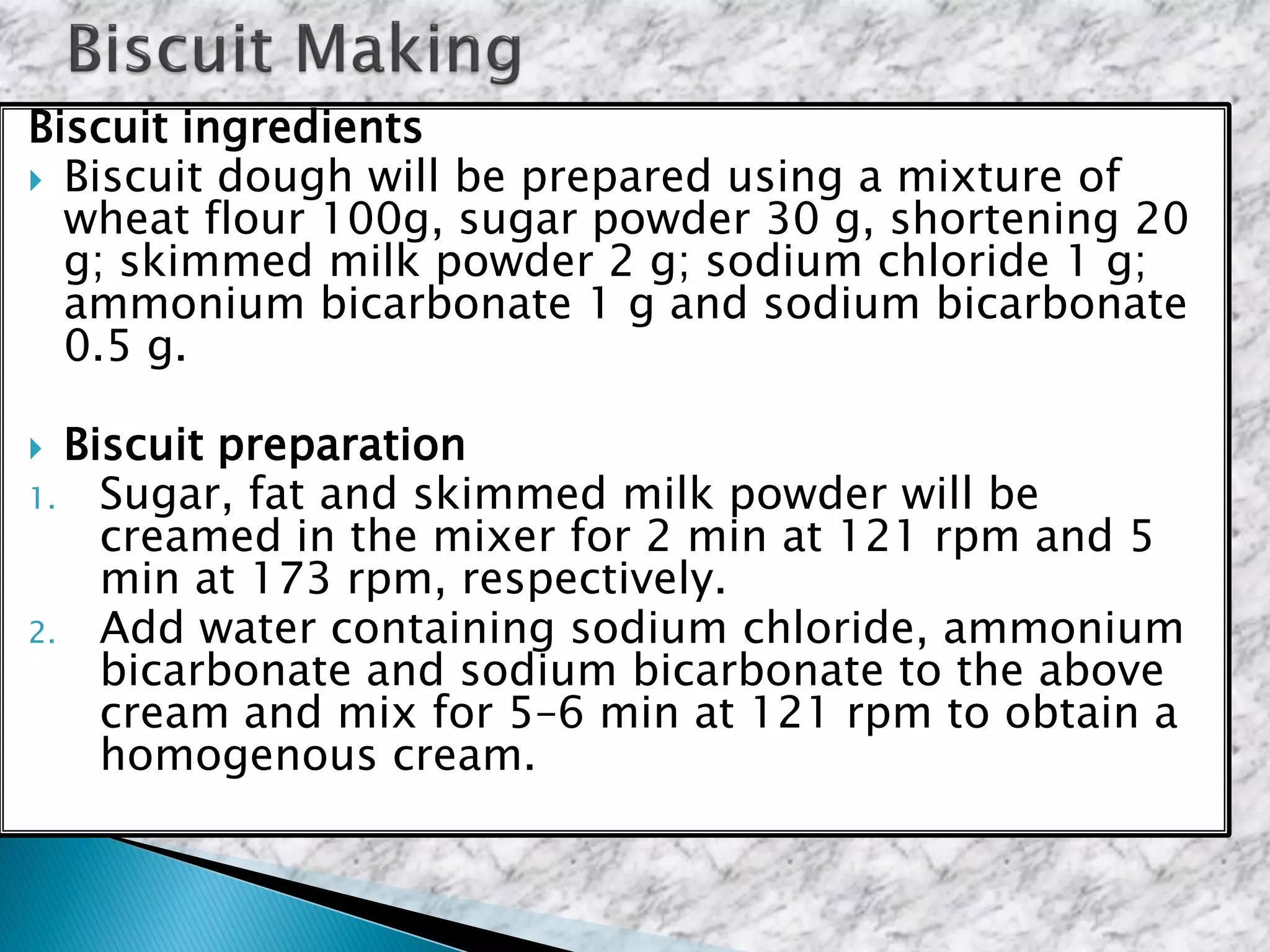
Biscuit ingredients
 Biscuit dough will be prepared using a mixture of
wheat flour 100g, sugar powder 30 g, shortening 20
g; skimmed milk powder 2 g; sodium chloride 1 g;
ammonium bicarbonate 1 g and sodium bicarbonate
0.5 g.
 Biscuit preparation
1. Sugar, fat and skimmed milk powder will be
creamed in the mixer for 2 min at 121 rpm and 5
min at 173 rpm, respectively.
2. Add water containing sodium chloride, ammonium
bicarbonate and sodium bicarbonate to the above
cream and mix for 5–6 min at 121 rpm to obtain a
homogenous cream.
3. Finally wheat flour will be added and mixed for
3 min at 60 rpm.
4. Dough will be sheeted/molded using a rolling
pin to a thickness of 3.5mm with the help of an
aluminum platform and frame
5. Biscuits will be shaped with a cutter of 55mm
diameter and baked on an aluminum tray at 200
°C for 9–10 min when a very light brown color
form before removal of the biscuit
6. It allows cooling and storing at atmospheric
temperature.
Cookies making
Cookies ingredients
 Cookies with straight grade wheat flour (500 g), sugar (250 g),
hydrogenated vegetable ghee (250 g), eggs (60 g each) and baking
powder (10 g).
Preparation of cookies
1. Weigh the ingredients accurately
2. Mix vegetable ghee (oil) and sugar, then add eggs one by one.
3. The straight grade flour are homogenously mixed and blended with
baking powder and sifted.
4. Add the flour to sugar ghee- egg mass and mix to get a homogeneous
mass.
5. Roll the batter with uniform thickness with the help of the rolling pin
6. Cookies will be cut out with the help of cookie cutter and placed in
trays.
7. Baking will be done at 170–180 °C for 15–20 min.
8. Cookies will be allowed to cool at room temperature for 8–10 min and
stored in airtight glass jars
Flow chart for the preparation of Biscuit and cookies
Wheat flour, Water and baking ingredient
Weighing
Mixing
Kneading
Shaping
Baking (175 0C for 20 min)
Cooling
Storage
Pasta
 Pasta products are produced/made are semolina
(wheat flour), water and other optional ingredients.
 The wheat flour (semolina) which consists of fine
particles of uniform size and produces the highest
quality of pasta products.
Macaroni
 The raw material of macaroni products produced
from wheat flour, water and other optional
ingredients.
 The wheat flour used for macaroni is both hard and
durum wheat which consists of fine particles of
uniform size and produces the highest quality
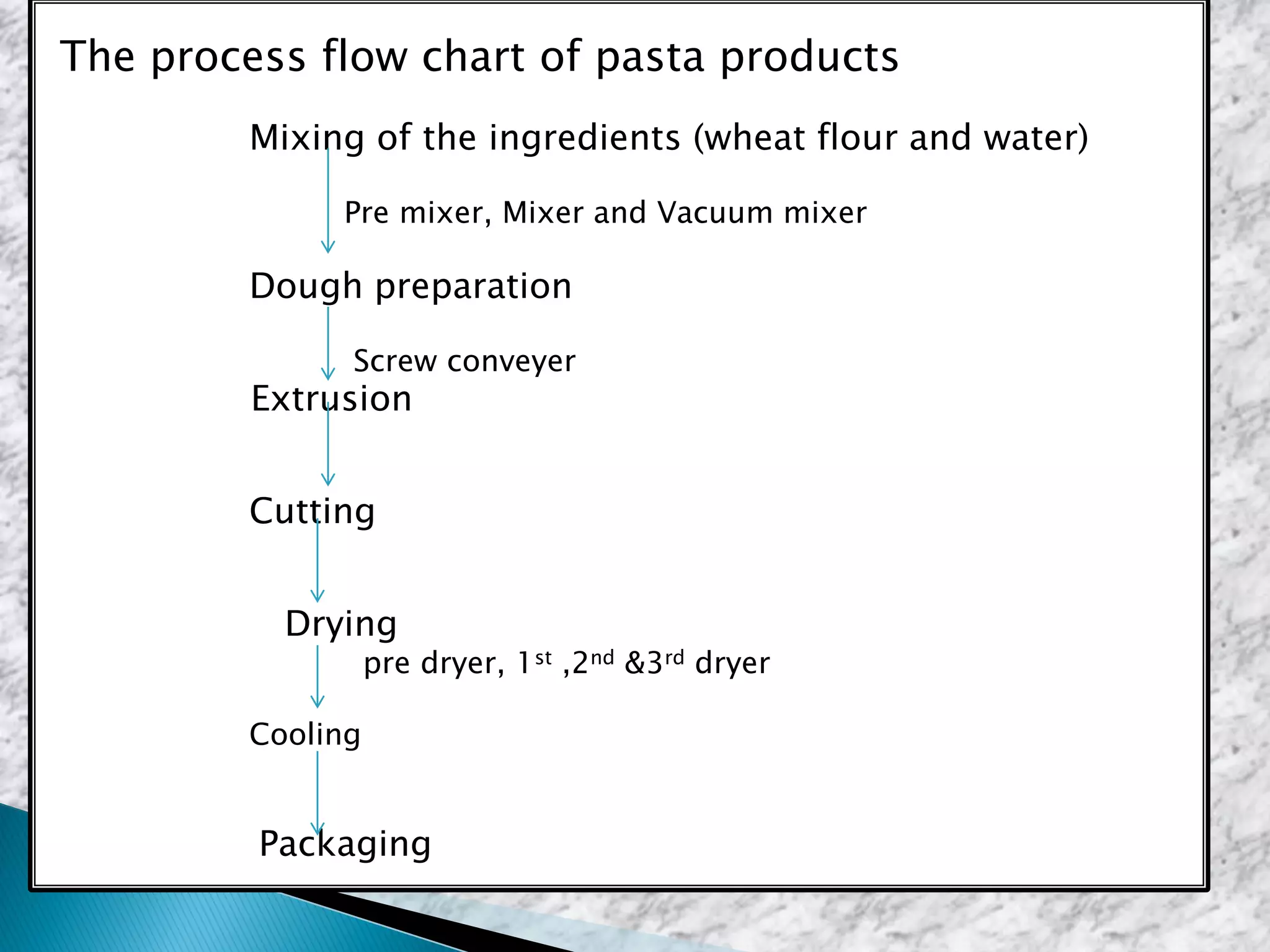
The process flow chart of pasta products
Mixing of the ingredients (wheat flour and water)
Pre mixer, Mixer and Vacuum mixer
Dough preparation
Screw conveyer
Extrusion
Cutting
Drying
pre dryer, 1st ,2nd &3rd dryer
Cooling
Packaging
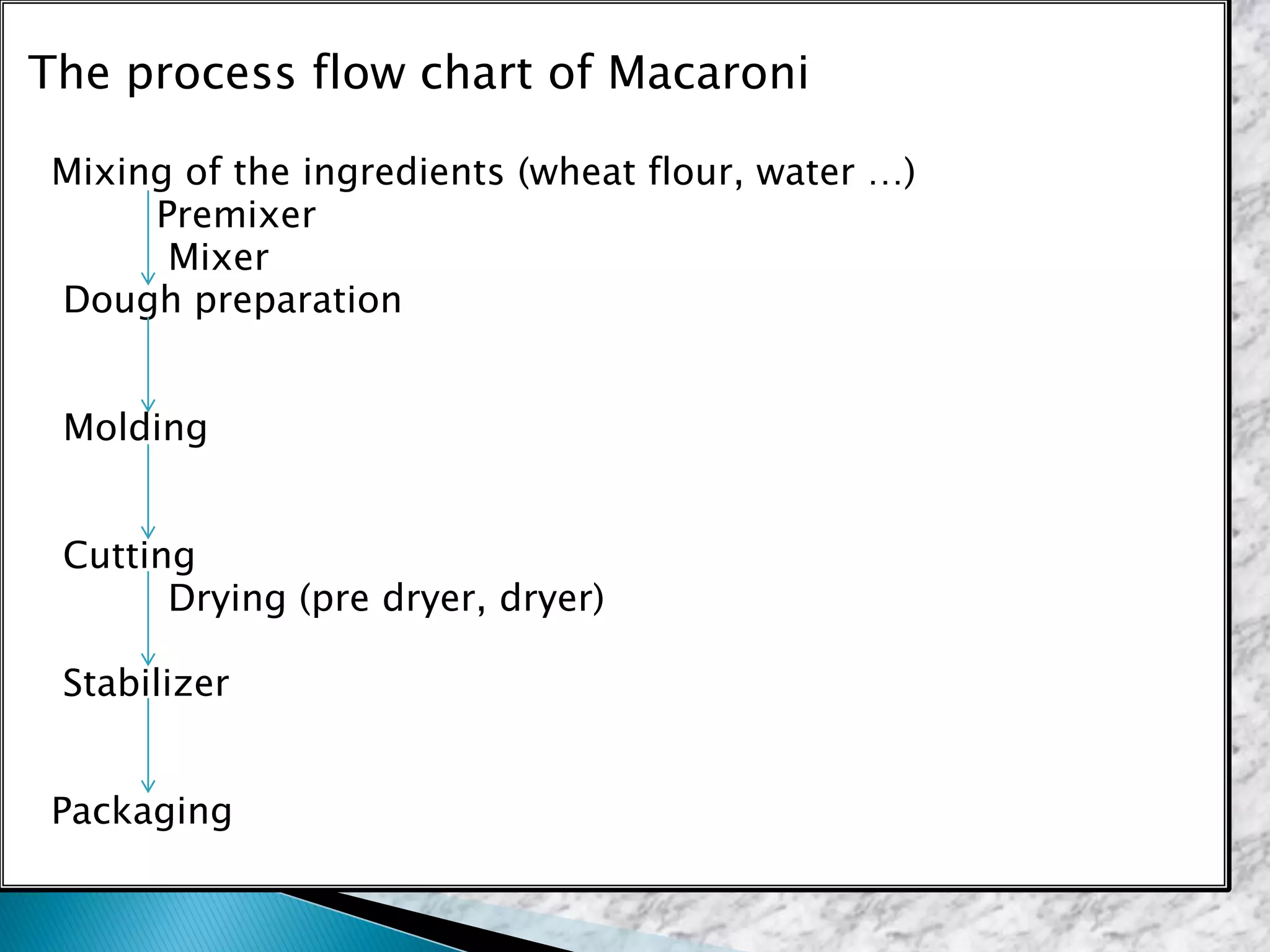
The process flow chart of Macaroni
Mixing of the ingredients (wheat flour, water …)
Premixer
Mixer
Dough preparation
Molding
Cutting
Drying (pre dryer, dryer)
Stabilizer
Packaging
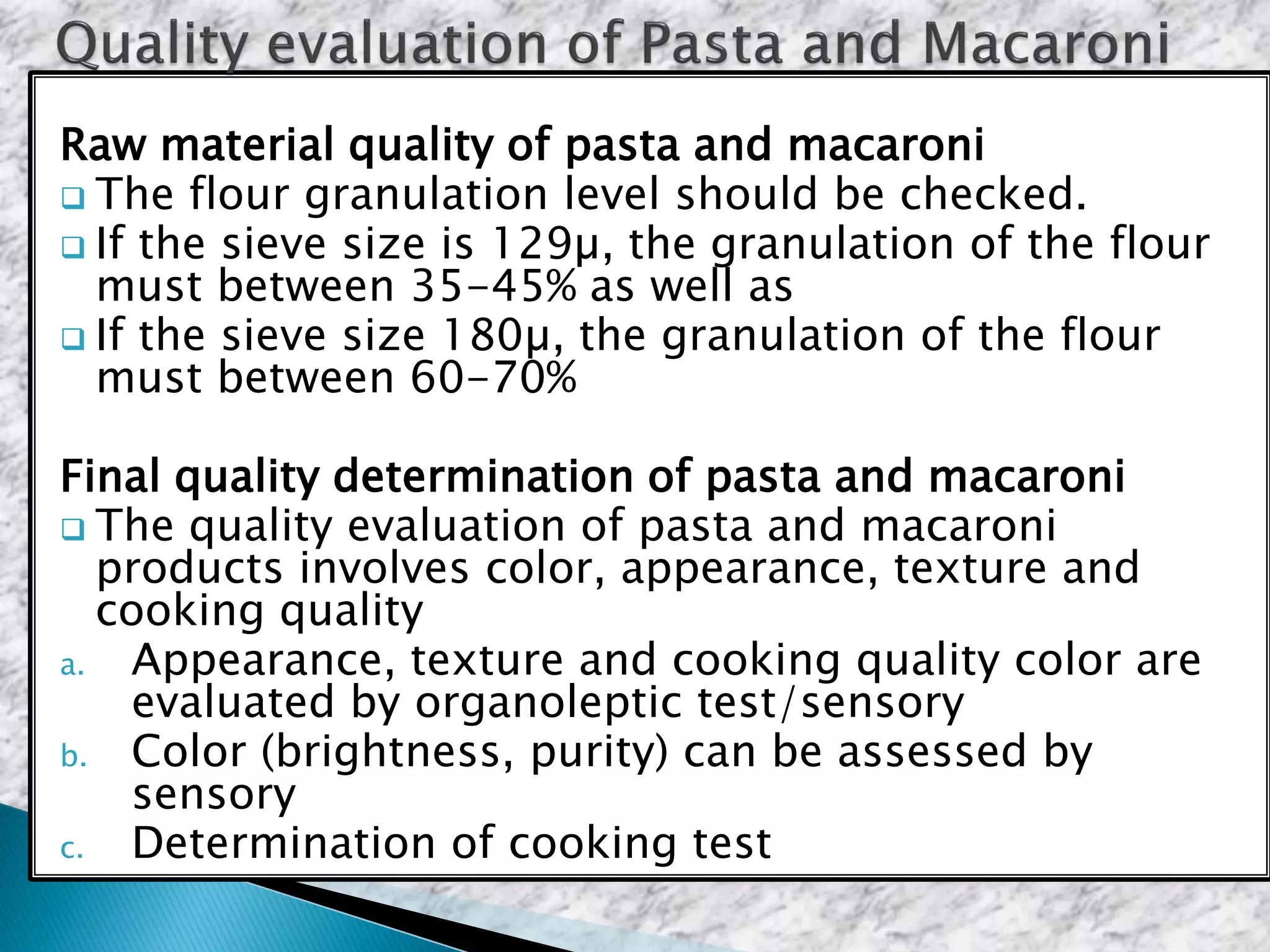
Raw material quality of pasta and macaroni
 The flour granulation level should be checked.
 If the sieve size is 129µ, the granulation of the flour
must between 35-45% as well as
 If the sieve size 180µ, the granulation of the flour
must between 60-70%
Final quality determination of pasta and macaroni
 The quality evaluation of pasta and macaroni
products involves color, appearance, texture and
cooking quality
a. Appearance, texture and cooking quality color are
evaluated by organoleptic test/sensory
b. Color (brightness, purity) can be assessed by
sensory
c. Determination of cooking test
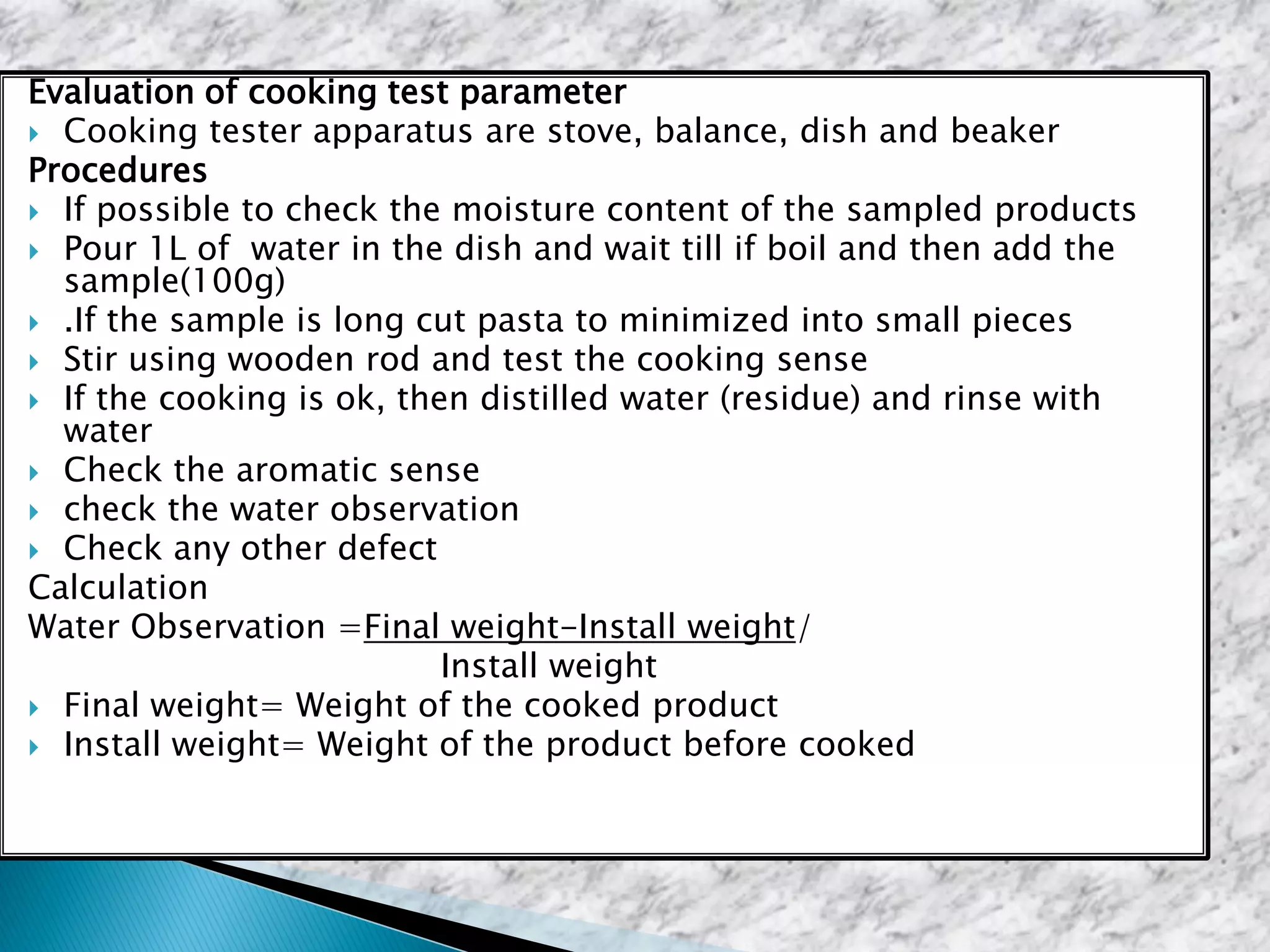
Evaluation of cooking test parameter
 Cooking tester apparatus are stove, balance, dish and beaker
Procedures
 If possible to check the moisture content of the sampled products
 Pour 1L of water in the dish and wait till if boil and then add the
sample(100g)
 .If the sample is long cut pasta to minimized into small pieces
 Stir using wooden rod and test the cooking sense
 If the cooking is ok, then distilled water (residue) and rinse with
water
 Check the aromatic sense
 check the water observation
 Check any other defect
Calculation
Water Observation =Final weight-Install weight/
Install weight
 Final weight= Weight of the cooked product
 Install weight= Weight of the product before cooked
Quality defects
The common quality defects of pasta and
macaroni
 white spot
 Crack
 Bend for pasta
 The color of final product pasta and macaroni
are yellow color
 There are two classes of deep fried pastries,
1. yeast raised doughnut and
2. cake doughnut.
 Both products have rather specific flour
requirement that vary somewhat according to end
product and process requirements.
 In both cases flour blend high protein hard wheat
flour and low protein soft wheat flour are required.
 Yeast raised doughnut:-
are made from dough containing yeast as
leavening agent
This dough is similar to bread dough
 The ingredients it contain
require a blend (60-100%) hard wheat flour
and (0-40%) soft wheat flour usually with 11-
12.5% protein and 8.5-9.5% protein
respectively.
5-10% sugar
5-10% shortening
2-3 times yeast level higher than those of
bread
 The basic mixing or dough development
requirements are similar to bread.
 Most Yeast raised doughnut are made with straight
dough procedure
all ingredients are added at once
fermentation takes place with all the ingredients in the dough
Higher yeast level, less fermentation requirement than bread.
 Regardless of the fermentation process, the dough is
subsequently shaped as required and
 It allowed to proof or rise for 25-40 minute
The proofing condition are much drier than those required for
bread;
Proof moisture is 40-70% for doughnut as against 85-95% for
bread.
 then the dough pieces are fried in a deep fat fryer at
about 185-195°c depending on product variety and
process limitations:
they are either surface fried with turning point or
fried submerged
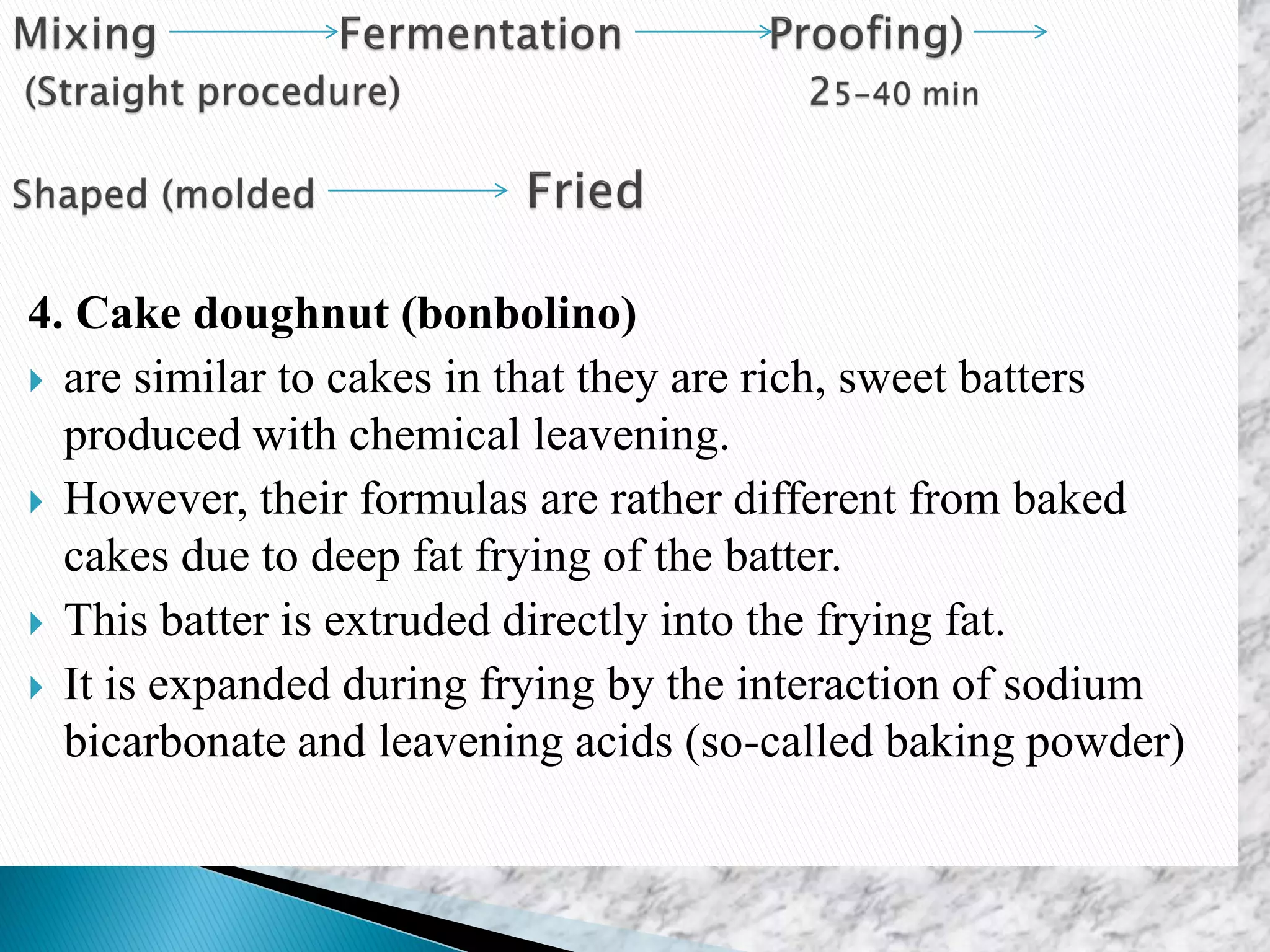
4. Cake doughnut (bonbolino)
 are similar to cakes in that they are rich, sweet batters
produced with chemical leavening.
 However, their formulas are rather different from baked
cakes due to deep fat frying of the batter.
 This batter is extruded directly into the frying fat.
 It is expanded during frying by the interaction of sodium
bicarbonate and leavening acids (so-called baking powder)
 the raw material used
Blend of 70/30 or 50/50 soft wheat flour and hard wheat flour
 Generally, a soft wheat flour of 8.5-9.5% protein and a
hard wheat flour of 10.5-12% protein appropriate for
cake doughnuts.
 Flour is the predominant ingredient of the formula;
◦ flour quality is important for controlling viscosity and batter
flow
◦ and thus for the quality of the end product
 The final properties of the doughnut are influenced by several
factors
1. Frying fat is absorbed from the fryer during cooking.
 20-24% of the final doughnut is fat, which is absorbed during
frying.
2. Control of the time at which the batter surfaces is also
important
3. Control of batter flow during frying is critical
4. The batter must have adequate strength just before the
doughnut is turned to prevent excess bubbling or gassiness at
the batter surface.
 this prevents excess fat absorption and small holes in the
surface of the doughnut
 flour quality helps to support the batter strength

Wheat Processing and Product Development: A training

  • 1.
    Presented by TamiratKore Agricultural Quality Research Laboratory, Addis Ababa December 31, 2015
  • 2.
     Introduction ofwheat  Nutritional composition and health benefits of wheat  Types of wheat  Quality of wheat  Wheat milling process  Types of flour  Wheat products  Bread  Biscuits and cookies  Pasta, macaroni and cookies  Yeast raised doughnut
  • 3.
     Wheat isthe most important staple food crop for more than one third of the world population  Globally, wheat is the leading source of vegetable protein in human food, having higher protein content and more calories than maize or rice, the other major cereals.  It is nutritious and easy to store and can be processed into various types of food.  It is an excellent health building food
  • 4.
     Wheat isconsidered as a good source of protein, minerals, B-group vitamins and dietary fiber  Although the environmental conditions can affect nutritional composition of wheat grain with its essential coating of bran, vitamins and minerals.  Wheat grain is stable food used to make flour for leavened, flat, and steamed breads, biscuits, cookies, cakes, breakfast cereals, pasta, and noodle and for fermentation to make beer, other alcoholic beverage.
  • 5.
    Wheat Composition •Carbohydrate 70% •Protein9-15% •Fat 2-2.2% •Fiber 2-2.5% •Ash 1.8 % •Moisture 9-13%
  • 6.
     Wheat isone of the most important foods in a balanced diet  The nutrition community recommends that 55-60 percent of our daily calories come from carbohydrates.  Also, no more than 30 percent of our calories should come from fat, and approximately 12-15 percent of calories should be derived from protein.
  • 7.
     Clearly, caloriesacquired from carbohydrates such as wheat products are the healthiest and most important to incorporate in our diets.  Complex carbohydrates provide essential nutrients, are less likely to be stored as fat and more likely to be stored as muscle fuel  So, what’s in wheat that makes it so healthy?  One major component in wheat which is only found in plant foods is dietary fiber.
  • 8.
     Dietary fiberis the carbohydrate in food which humans cannot digest.  sweep out the digestive tract as well as satisfying a Fiber acts as a broom to appetite longer  One slice of whole wheat bread contains 2 grams of dietary fiber; one slice of white bread contains 0.5 grams; and one ounce of wheat bran cereal contains between 8 and 9 grams of dietary fiber.  The American Dietetic Association recommends eating 20-35 grams of fiber each day, but on average
  • 9.
    Insoluble fiber  Foundin wheat bran and whole grains,  Insoluble fiber passes through the digestive system quickly, promoting regularity and reducing the risk of colon irregularities or diverticulosus, a type of colon disease.  Research suggests foods containing insoluble fiber may also help reduce the risk of colon and breast cancer when part of a low-fat diet.
  • 10.
    Soluble fiber–  Foundin oats, beans, some fruits and vegetables and refined white flour products.  Studies indicate foods containing soluble fiber may help decrease blood pressure and cholesterol levels, helping to reduce the risk of heart disease.  They may also help control blood sugar levels in people with diabetes.
  • 11.
    Thiamin (B1)-  Neededdaily for good appetite, digestion, and healthy nerves.  It also helps the body make better use of fat and carbohydrates. Riboflavin (B2)-  This vitamin is essential for the use of protein by the body. Niacin (B3)-  This is the “anti-pellagra” vitamin.  Pellagra is a nutrient deficient disease that has been virtually eliminated since the enrichment of white flour products.
  • 12.
    Iron  Iron isessential for providing our bodies with energy.  Iron acts in this way by carrying oxygen from the lungs to muscles and other parts of the body.  A deficiency of iron causes a disease known as anemia which results in a lack of energy.
  • 13.
    Protein  Wheat foodsprovide 2-4 grams of protein per one ounce serving.  Six to seven ounces of protein per day are required for the average teenager and adult.  Protein is an important component of every cell in the body.  Hair and nails are mostly made of protein. Our body uses protein to build and repair tissues and use protein to make enzymes, hormones, and other body chemicals.  Protein is an important building block of bones, muscles, cartilage, skin, and blood
  • 14.
     Wheat cultivarsare further classified in terms of wheat hardness, protein content, and protein quality. 1. Hard wheat  They have high gluten content(higher protein quantity and quality)  When hard wheat is milled the endosperm cells separate along the cell wall margin into easily sifted particles  It has high extraction of white flour
  • 15.
     Hard typestend to have possessing a vitreous endosperm with starch granules tightly packed in a protein.  During milling, some starch grains are damaged, resulting in an increased surface area that leads to higher water absorption  The bran is easily separated from the endosperm  It capable of high water absorption during dough production
  • 16.
    2. Soft wheat The gluten content is low  Soft wheat has much lower extraction rate  The flour consists of a mass of fine cell debris with poor flow characteristics  The softer wheat have a less compact starch-protein complex which results in less starch damage and lower water absorption.  The protein level of soft wheat is usually lower, producing less resistant, more extensible dough  It is required for biscuit making
  • 17.
    3. Durum wheat It is the hardest wheat grown  Durum wheat is suitable for pasta and macaroni  It is most often ground into a granular flour with a light yellow color known as semolina, which has the ideal properties for making the best pasta  Durum is high in protein and gluten, which are necessary for making good pasta  It is occasionally used for baked goods (especially risen breads), but it is not used for this purpose as often as other wheat varieties.
  • 18.
    1. Physical 2. Chemical 3.Botanical Physical ◦ Test weight (HLW) ◦ 1000 kernel weight ◦ Hardness ◦ Color ◦ Impurities ◦ milling quality ◦ virtuousness
  • 19.
    2. Chemical  Moisture protein content  alph-amylase  ash or color grade value  fat acidity 3. Botanical- commercially important wheat’s falls under three species (Triticum aestitivum, Triticum compactum and Triticum Durum)
  • 20.
    Test weight/Hectoliter weight Test weight, measured as weight of grain per unit volume, is the simplest and most widely predictor for a grain’s milling quality.  Test weight per bushel is a grading factor  Test weight is defined kg/hl  Wheat 74kg/hl =poor, 78kg/hl=good and 82kg/hl=very good
  • 21.
    Wet gluten  Glutenis prepared by washing out most of the starch and soluble from a piece of dough developed from flour and water.  The wet gluten can be examined visually for its color and elasticity.  The required sample:-10g of flour, 20g salt, 1000ml of water Procedure  Take 10g of flour and added to dish  Add 5-6ml of 2% NaCl solution  Then mix well for 8-10 minutes, and then put for 10 minute in distilled water  After 10 minutes, then wash carefully with 300-400ml of NaCl solution.  Press it to remove the water by using small presser  Weight in the balance  Calculate the percentage of the gluten content by multiplying with 10.
  • 22.
     Wheat flouris the most important ingredient in home baking  It is the framework for almost every commercially baked product and pasta.  Of the grains available for the production of flour, wheat is unique  It is the only cereal grain with sufficient gluten content to make a typical loaf of bread without being mixed with other grains
  • 23.
    There are threepart of wheat kernel (wheat berry)
  • 24.
    Wheat Flour cont…. The wheat kernel consists of the bran, endosperm and germ.  Bran is the hard outer covering of the wheat kernel ◦ Botanically known as coat of many layers, precarp, seed coat, hyaline, aleurone layer. ◦ It is high in fiber and nutrients  Endosperm constitutes more than 80% by weight the inside of the kernel-mostly starch  Germ is the nutrient rich embryo that will sprout and grow into a new wheat plant. ◦ major distinctive part of the germ are embryonic axis and scutellum
  • 25.
    Wheat berry Part% Bran Preicarp and testa 6.4 Aleurone layer 6.7 Endosperm Starchy endosperm 84.1 Germ embryonic axis 1.3 scutellum 1.5 Total 100
  • 26.
  • 27.
    1. All-purpose flour is a product of the ground endosperm of hard wheat or a combination of hard and soft wheat kernels.  It can be used for any recipe requiring flour such as breads, cakes, and pastries;  as a coating for meat, vegetables, and other food items intended for frying or sautéing; and as a thickening agent for gravies, sauces, and stews.  All-purpose flour is available in bleached, unbleached and enriched
  • 28.
    1.1. Enriched all-purposeflour has iron and B- vitamins (thiamine, niacin, and riboflavin) added in amounts equal to or exceeding that in whole wheat flour. 1.2. Unbleached all-purpose flour  Unbleached all-purpose flour is bleached by oxygen in the air during an aging process and is off-white in color.  Nutritionally, bleached and unbleached flour are equivalent.
  • 29.
    1.3. Bleached all-purposeflour  It is exposed to chlorine gas or benzoyl peroxide to whiten and brighten flour color.  Chlorine also affects baking quality by “maturing” or oxidizing the flour, which is beneficial for cake and cookie baking.  The bleaching agents react and do not leave harmful residues or destroy nutrients.
  • 30.
    2. Bread flour It is ground form the endosperm of the hard red spring wheat kernel.  Bread flour is similar to all purpose flour, but it has greater gluten strength and is generally used for yeast breads.  The high gluten content is necessary in order for bread to rise effectively.  The use of bread flour results in larger bread loaves with a lighter and less crumbly texture.  Bread flour is unbleached, high-gluten flour that typically contains 99.9 % hard wheat flour with malted barley added to increase the yeast activity, making it ideal for bread making.  Bread flour is also referred to as unbleached flour.
  • 31.
    3. Cake flour Cake flour is produced from the endosperm portion of the wheat kernel of soft wheat varieties.  It is high in starch and has a low protein content, which means that it contains very little gluten, making it suitable for cake recipes.  It is especially suitable for cakes, cookies, crackers, and pastries.  If cake flour is not available, cornstarch makes a good substitute.
  • 32.
    4. Pastry flour Pastry flour is produced from soft-wheat and it has a fine-texture and a high starch content, but less starch than cake flour.  It is milled from a soft, low gluten wheat and is used for pastries.  Pastry flour is finely ground, but it is not as fine as cake flour.  It is available in bleached and unbleached varieties and is most often used for making flaky pie crusts, cookies, biscuits, and assorted pastries.
  • 33.
    5. Semolina Flour Semolina flour is available coarsely ground or ground twice for a fine texture with a light yellow color  It is the coarsely ground endosperm of durum wheat which is used almost exclusively for making pasta.  Durum wheat has the ideal properties for making the best pasta.  It is high in protein and gluten, which are used to create high quality pasta products such as macaroni and spaghetti
  • 34.
    6.Whole-Wheat Flour  Whole-wheatflour is produced from grinding the full wheat berry (kernel).  All parts of the wheat berry are used in the flour including the bran, germ, and the endosperm, which when milled, creates the speckled brown color that is characteristic of the flour  Three granulations (particle size) of whole-wheat are produced: fine, medium, and coarse.  The particle size influences the rate liquid is absorbed into the flour.  Finer grained flour absorbs liquid at a faster rate than medium or coarse grains, thus affecting the preparation of the dough.  Fine grain whole-wheat flour is used for all types of baked goods, such as breads, rolls, and pastries.
  • 35.
     Medium grainedcan be used for the same types of foods, but will provide a coarser crumb.  Coarse whole-wheat flour has a much larger bran particle and consequently is most often used to provide breads with natural, nutty flavors and rough textures.  WHITE FLOUR is made from endosperm only= not whole grain  WHOLE WHEAT FLOUR combines all 3 parts of the wheat kernel=whole grain
  • 36.
     Quality parametersof the flour such as color, protein, granulation distribution, gluten quantity and quality, and starch damage play a role in the suitability of flour for the baker.  Physical test:- Color, milling quality and Virtuousness.  Chemical test:-Moisture, protein, fiber, starch, mineral content and color grade
  • 37.
     Amounts andtypes of final products vary among mills are a result of differences in  flow-sheet, adjustments, and  kinds of wheat milled  Flours from the different stages in the mill are not identical in  physical appearance, chemical analysis, or baking properties.  Another important factor besides the determination of quality is the concept of flour uniformity  Optimum flour granulation distribution is an important parameter for the baking process.
  • 38.
     Drastic changein granulation effects on  water absorption, water retention during fermentation, proofing, and  quality of finished breads.  Flour color depends on  wheat cleanliness,  tempering level,  fineness of flour, and  the amount of bran particles it contains.  Too much fine bran effects flour shade, producing a darker shade.  Change in mill ambient conditions could also affect flour color.
  • 39.
     Mixing ofdifferent quality wheat varieties so as to meet desired product quality.  Blending is mostly done on protein basis.  Hard wheat varieties are blended with soft wheat varieties in order to obtain the desired level of protein content in the resulting flour.
  • 40.
    Traditional wheat product usedin Ethiopia  Wheat Nifro and Qolo  Wheat Injera  Difo Dabo  Chechebsa  Dabo qolo  Kitta Wheat products In world  Bread  Biscuits  Cookies  Pastry  Cakes  Macaroni  Pasta  Noodle  Beer and alcoholic beverage
  • 41.
    1. BREAD  Itis yeast leavened wheat product  Bread is made by many different procedures.  The particular procedures used depend on  tradition,  the amount (cost) and type of energy available  the type and consistency of the flour available,  the type of bread desired, and  the time between baking and eating What are the major recipes?
  • 42.
     The majoringredients for bread making are wheat flour, yeast, water and salt  The other ingredients are fat, sugar, milk or milk solids, oxidants, enzymes, surfactants, and additives to protect against molds.  Flour is responsible for the structure of the bread and it allows the formation of visco- elastic that retains gas.
  • 43.
     Yeast isthe major role to convert fermentable carbohydrates into Co2 and ethanol.  The gases provide the lift that produces a light or leavened loaf of bread.  The Salt functions in bread making are taste and affect rheological properties.  It makes dough stronger by shielding charges on the dough protein.
  • 44.
     The lastfundamental ingredient is water which is a plasticizer and solvent.  Shortening/oil-bread stays soft and more palatable for a long period of time.  giving increased volume to bread  acts as a plasticizer in dough  Sugar- It is source of fermentable carbohydrates for the yeast  It provides a sweet taste to the bread  Oxidants- ascorbic acid, potassium bromate, and calcium peroxide at level PPM  improve dough strength and results in bread with better loaf volume and texture.
  • 45.
     The processingof bread can be divided into three basic operations:  mixing or dough formation,  fermentation, and  baking  Two procedures 1. Straight-dough system 2. Sponge-and dough process  Type of bread a. Pan bread b. Baguettes and Hearth breads c. Flat breads d. Buns e. Croissants
  • 46.
    Bread ingredients  Thebasic dough formula for 500 g flour consisted of salt (7.5 g), yeast (5 g), baking powder (4 g) and water, which needed to have a consistency Procedures for bread making  Mix 500g of the flour with small amount of water little by little  Then add and mix 5gm of yeast, 7.5gm of sugar, 5gm of salt (Common salt) and 0.5gm improvers to the flour.  If the dough creates a smooth surface then it’s enough for water observation and extruding.  After mixing, the dough will be placed in the fermentation cabinet at a temperature of 30°C and 85% RH for 45 min.
  • 47.
     Then againset for 2nd development for 20 minutes  After fermenting the dough divided and molded using a dough-forming device and put into pans for the final proofing.  The dough samples will ferment until they reach 2 cm above the rim and then baked.  The baking oven temperature reaches to 230-260°c for 20-22 minutes  Cool the bread loaves at room temperature for 5min  Test the color of the bread(crumb, sponge)  Test the weight  Test volume(texture)  Test water absorption
  • 48.
    Flow sheet forthe straight dough procedure of bread processing All formula ingredients Mix to optimum development Ferment for 100 min Punch (Mixing 2or more) Ferment for 55 min Divide Intermediate proofing for 25 min Mold and pan Proofing for 55 min Baking
  • 49.
     The mainingredients for biscuits and cookies production are  wheat flour, fat (shortening), sweeteners (sugar), Leavening agents (baking powder), eggs, milk, salt and flavors. Wheat flour  Wheat gluten generally determines the suitability of flour for biscuit making.  The softer wheat have a less compact starch- protein complex which results in less starch damage and lower water absorption.  The protein level of soft wheat is usually lower, producing less resistant, more extensible dough.
  • 50.
     Soft wheatis a unique blend of white, soft grained wheat varieties.  Less starch damage from soft wheat flour thus occurs which favors an increase in biscuit diameter.  Flour protein levels needed for biscuit making typically range from 7 to10% and are often selected by functionality for end use , price, and availability  The flour protein has a major influence on biscuit quality and in particular, on its diameter.  The quantity and quality of the protein present in flour have a major role in influencing the rheological behavior, particularly when flour is the major constituent of the formula.
  • 51.
    Sweeteners (sugar)  Allbiscuit formula contains sweeteners, which contain the bulk of dissolved material in most dough.  It contributes to texture, flavor, sweetness and color in biscuit  The quantity, granulation and type of sugar used influence the quality of biscuits  Sucrose, a non-reducing disaccharide, is the common sugar used in biscuit preparation  The continuing change in texture and development of the final crispness has been attributed to slow crystallization of sucrose from concentrated sugar syrup formed during the earlier stage of processing  Up on cooling, much of it crystallizes and strongly affects the texture of baked biscuits.  Sugars functionality in biscuits systems includes more than only imparting sweetness
  • 52.
    Shortening (Fat)  Fatare used as surface sprays in cream filling and coating and as release agents  Fat functionality is very versatile in baked products that include providing of flavor and mouth feel and contributes to the appearance, palatability and texture of the biscuits  Fat is the principal recipe responsible for tenderness, keeping quality, grain and texture and it adding a rich quality to biscuit.  Mechanical properties of biscuit are largely dependent on the fat components of the formulation
  • 53.
    Water  Water isoften a processing aid or catalyst, rather than as an ingredients.  Water functions in several ways, including hydrating flour protein and starch,  dissolving sugars, salt and various leavening chemicals aiding in ingredient distribution and helping control dough temperature  A dough consistency is directly related to its water content or absorption.  Water activity is an important way to measure and monitor water mobility in baked products.
  • 54.
    Baking powder (LeaveningAgent)  Leavening agent aerates the dough to make light and porous  It is responsible for good volume, improved eating quality and uniform cell structure.  Mostly used leaving agents are sodium bicarbonate and sodium Meta bisulfate Other Ingredients  Other ingredients include milk, egg, salt, honey and aerating agents.  Milk and eggs are a good source of protein and lactose, which aid in shape retention and browning reaction.  Salt perform two principal functions in biscuit dough. The first is flavor and controls fermentation and aids in suppressing undesirable bacteria as a second function of salt
  • 55.
     Biscuit doughgenerally falls into two broad categories- hard and soft dough.  The visco-elastic properties of hard dough represent the presence of a protein (gluten) matrix which is developed during mixing and sheeting.  During baking, the biscuit may continue to shrink in outline, but become thicker.  Soft dough does not have formed gluten structure, because of their high levels of shortening and sugar, and are generally mealy or sandy in texture.  Dough pieces formed from soft dough tend to retain their shape until baking, but then they spread or flow, becoming thinner.
  • 56.
     Dough undergoesseveral changes during baking: Changes in dimension and texture, loss of moisture, and  color and flavor development are the most important.  Baking is divided into three phases.  The first involves dough expansion and the start of moisture loss.  Dough expansion and water loss reach maximum rates and color development start during second phase.  The third phase concludes baking with a lower rate moisture loss, thinning of the biscuit, and increasing surface area
  • 57.
    Biscuit ingredients  Biscuitdough will be prepared using a mixture of wheat flour 100g, sugar powder 30 g, shortening 20 g; skimmed milk powder 2 g; sodium chloride 1 g; ammonium bicarbonate 1 g and sodium bicarbonate 0.5 g.  Biscuit preparation 1. Sugar, fat and skimmed milk powder will be creamed in the mixer for 2 min at 121 rpm and 5 min at 173 rpm, respectively. 2. Add water containing sodium chloride, ammonium bicarbonate and sodium bicarbonate to the above cream and mix for 5–6 min at 121 rpm to obtain a homogenous cream.
  • 58.
    3. Finally wheatflour will be added and mixed for 3 min at 60 rpm. 4. Dough will be sheeted/molded using a rolling pin to a thickness of 3.5mm with the help of an aluminum platform and frame 5. Biscuits will be shaped with a cutter of 55mm diameter and baked on an aluminum tray at 200 °C for 9–10 min when a very light brown color form before removal of the biscuit 6. It allows cooling and storing at atmospheric temperature.
  • 59.
    Cookies making Cookies ingredients Cookies with straight grade wheat flour (500 g), sugar (250 g), hydrogenated vegetable ghee (250 g), eggs (60 g each) and baking powder (10 g). Preparation of cookies 1. Weigh the ingredients accurately 2. Mix vegetable ghee (oil) and sugar, then add eggs one by one. 3. The straight grade flour are homogenously mixed and blended with baking powder and sifted. 4. Add the flour to sugar ghee- egg mass and mix to get a homogeneous mass. 5. Roll the batter with uniform thickness with the help of the rolling pin 6. Cookies will be cut out with the help of cookie cutter and placed in trays. 7. Baking will be done at 170–180 °C for 15–20 min. 8. Cookies will be allowed to cool at room temperature for 8–10 min and stored in airtight glass jars
  • 60.
    Flow chart forthe preparation of Biscuit and cookies Wheat flour, Water and baking ingredient Weighing Mixing Kneading Shaping Baking (175 0C for 20 min) Cooling Storage
  • 61.
    Pasta  Pasta productsare produced/made are semolina (wheat flour), water and other optional ingredients.  The wheat flour (semolina) which consists of fine particles of uniform size and produces the highest quality of pasta products. Macaroni  The raw material of macaroni products produced from wheat flour, water and other optional ingredients.  The wheat flour used for macaroni is both hard and durum wheat which consists of fine particles of uniform size and produces the highest quality
  • 62.
    The process flowchart of pasta products Mixing of the ingredients (wheat flour and water) Pre mixer, Mixer and Vacuum mixer Dough preparation Screw conveyer Extrusion Cutting Drying pre dryer, 1st ,2nd &3rd dryer Cooling Packaging
  • 63.
    The process flowchart of Macaroni Mixing of the ingredients (wheat flour, water …) Premixer Mixer Dough preparation Molding Cutting Drying (pre dryer, dryer) Stabilizer Packaging
  • 64.
    Raw material qualityof pasta and macaroni  The flour granulation level should be checked.  If the sieve size is 129µ, the granulation of the flour must between 35-45% as well as  If the sieve size 180µ, the granulation of the flour must between 60-70% Final quality determination of pasta and macaroni  The quality evaluation of pasta and macaroni products involves color, appearance, texture and cooking quality a. Appearance, texture and cooking quality color are evaluated by organoleptic test/sensory b. Color (brightness, purity) can be assessed by sensory c. Determination of cooking test
  • 65.
    Evaluation of cookingtest parameter  Cooking tester apparatus are stove, balance, dish and beaker Procedures  If possible to check the moisture content of the sampled products  Pour 1L of water in the dish and wait till if boil and then add the sample(100g)  .If the sample is long cut pasta to minimized into small pieces  Stir using wooden rod and test the cooking sense  If the cooking is ok, then distilled water (residue) and rinse with water  Check the aromatic sense  check the water observation  Check any other defect Calculation Water Observation =Final weight-Install weight/ Install weight  Final weight= Weight of the cooked product  Install weight= Weight of the product before cooked
  • 66.
    Quality defects The commonquality defects of pasta and macaroni  white spot  Crack  Bend for pasta  The color of final product pasta and macaroni are yellow color
  • 67.
     There aretwo classes of deep fried pastries, 1. yeast raised doughnut and 2. cake doughnut.  Both products have rather specific flour requirement that vary somewhat according to end product and process requirements.  In both cases flour blend high protein hard wheat flour and low protein soft wheat flour are required.
  • 68.
     Yeast raiseddoughnut:- are made from dough containing yeast as leavening agent This dough is similar to bread dough  The ingredients it contain require a blend (60-100%) hard wheat flour and (0-40%) soft wheat flour usually with 11- 12.5% protein and 8.5-9.5% protein respectively. 5-10% sugar 5-10% shortening 2-3 times yeast level higher than those of bread  The basic mixing or dough development requirements are similar to bread.
  • 69.
     Most Yeastraised doughnut are made with straight dough procedure all ingredients are added at once fermentation takes place with all the ingredients in the dough Higher yeast level, less fermentation requirement than bread.  Regardless of the fermentation process, the dough is subsequently shaped as required and  It allowed to proof or rise for 25-40 minute The proofing condition are much drier than those required for bread; Proof moisture is 40-70% for doughnut as against 85-95% for bread.  then the dough pieces are fried in a deep fat fryer at about 185-195°c depending on product variety and process limitations: they are either surface fried with turning point or fried submerged
  • 70.
    4. Cake doughnut(bonbolino)  are similar to cakes in that they are rich, sweet batters produced with chemical leavening.  However, their formulas are rather different from baked cakes due to deep fat frying of the batter.  This batter is extruded directly into the frying fat.  It is expanded during frying by the interaction of sodium bicarbonate and leavening acids (so-called baking powder)
  • 71.
     the rawmaterial used Blend of 70/30 or 50/50 soft wheat flour and hard wheat flour  Generally, a soft wheat flour of 8.5-9.5% protein and a hard wheat flour of 10.5-12% protein appropriate for cake doughnuts.  Flour is the predominant ingredient of the formula; ◦ flour quality is important for controlling viscosity and batter flow ◦ and thus for the quality of the end product
  • 72.
     The finalproperties of the doughnut are influenced by several factors 1. Frying fat is absorbed from the fryer during cooking.  20-24% of the final doughnut is fat, which is absorbed during frying. 2. Control of the time at which the batter surfaces is also important 3. Control of batter flow during frying is critical 4. The batter must have adequate strength just before the doughnut is turned to prevent excess bubbling or gassiness at the batter surface.  this prevents excess fat absorption and small holes in the surface of the doughnut  flour quality helps to support the batter strength