Vegetables
© PDST Home Economics
Classification
Roots Greens Fruit veg. Pulses
Carrots
Parsnips
Onions
Potato
Turnips
Cabbage
Broccoli
Lettuce
Brussel
sprouts
Tomato
Peppers
Cucumber
Courgettes
Marrow
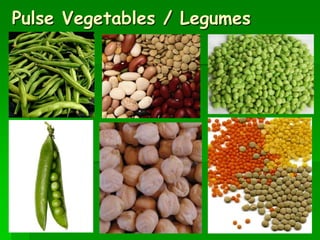
Peas
Beans
Lentils
Root vegetables
Green vegetables
Fruit vegetables
Pulse Vegetables / Legumes
In Season
 Some vegetables are only available fresh at certain
times of the year i.e. when they are in ‘season’.
 When out of season they are available frozen, dried,
canned.
Average Composition
Veg Protein Fat Carb Vits Mins Water
Roots 1-2% 0% 5-20% A, C Calcium
Iron
70-90%
Greens 0% 0% 5-10% A, C Calcium
Iron
Potassium
90-95%
Fruit 1% 0% 2-5% A, C Calcium
Iron
90-95%
Pulses 2-5% 0% 4-10% A, C Calcium
Iron
Potassium
75-90%
Nutritive Value / Food Value
 All veg. contain a lot of water to prevent dehydration in
the body.
 Not a good source of protein –
soya are pulses that contain HBV protein for growth.
 Lack fat, often add during cooking.
 Good source of fibre for healthy digestive system,
some starch and sugar for energy.
 Vitamin C for general health and Vitamin A
for skin, eyes, growth, membranes.
 Calcium for bones and teeth
 Iron for the blood
 Potassium for nerves and muscles
Value in the diet / Dietetic Value
 Add colour, flavour, texture to diet.
 Good source of vitamins and minerals.
 Good source fibre for healthy digestive system
 Pulses are cheap source protein, important for vegans
 Low in calories, good for low calorie diets.
 Eaten raw or al dente.
 Potatoes, high in starch, good for energy.
 Fresh vegetables cheap & plentiful in season.
 Also available frozen, canned, dried.
EU Grading of Vegetables
 Vegetables must be: sound, clean, chemical free, graded
by size.
 Labels must show: Quality, origin, variety.
 Class Extra best quality
Class I good quality
Class II marketable, small defect
Class III marketable but poorer quality
 Prices depend on:
availability, demand, weather, quality, production cost
 Organic vegetables are grown without artificial
fertilisers or chemicals
Buying Storing Preparing
Roots Heavy for size
Correct colour
Hard, no
bruises
Medium size
No excess soil
Remove
plastic bags.
Store openly
in a veg rack
in cool dry
ventilated
place.
Wash in cold
water.
Top, tail, peel
thinly.
Remove any
damaged parts.
Leave whole, slice
or dice.
Greens Crisp
Firm, closely
packed heads
Not eaten by
slugs or
insects
Store in salad
drawer of
fridge.
Lettuce:
wash, dry,
store in a
sealed plastic
bag in fridge
Remove withered
leaves
Pull leaves apart
Cut up if
necessary
Wash under cold
running water
Buying Storing Preparing
Fruits Correct colour
No bruising
No discolour
or mould
Medium size
Store in cool
dark place or
salad drawer
of fridge
Wash under cold
running water
Remove any
inedible parts
Leave whole, slice,
dice
Pulses Firm green
pods.
Heavy for size
Not shrivelled
or discoloured
Pods full but
not bulging.
Can be stored
for a few
days in a
sealed
container in a
cold place
Remove pods just
before cooking.
Wash well in cold
water
Effect of cooking on vegetables
 Loss of vitamin C so eat raw if possible
 The starch cooks and becomes digestible
 The cellulose softens and the texture softens
 Some vegetables absorb water and swell
 Minerals dissolve into cooking water
 Vegetables loose colour and flavour so cook for
shortest possible time
To retain maximum nutrition
Preparation
 Use fresh vegetables
 Eat raw when possible
 Prepare just before cooking
 Wash in cold running water
 Do not steep
 Leave skin on or peel thinly
 Cut up as little as possible
 Use sharp knife for chopping
Cooking
 Put into boiling salted
water
 Do not add bread soda
 Cook quickly in smallest
possible amount of water
 Cover with lid
 Use cooking liquid in gravy,
sauce, soup.
Serving
 Serve as quickly as
possible
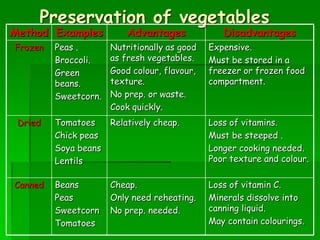
Preservation of vegetables
Method Examples Advantages Disadvantages
Frozen Peas .
Broccoli.
Green
beans.
Sweetcorn.
Nutritionally as good
as fresh vegetables.
Good colour, flavour,
texture.
No prep. or waste.
Cook quickly.
Expensive.
Must be stored in a
freezer or frozen food
compartment.
Dried Tomatoes
Chick peas
Soya beans
Lentils
Relatively cheap. Loss of vitamins.
Must be steeped .
Longer cooking needed.
Poor texture and colour.
Canned Beans
Peas
Sweetcorn
Tomatoes
Cheap.
Only need reheating.
No prep. needed.
Loss of vitamin C.
Minerals dissolve into
canning liquid.
May contain colourings.

Vegetables

  • 1.
  • 3.
    Classification Roots Greens Fruitveg. Pulses Carrots Parsnips Onions Potato Turnips Cabbage Broccoli Lettuce Brussel sprouts Tomato Peppers Cucumber Courgettes Marrow Peas Beans Lentils
  • 4.
  • 5.
  • 6.
  • 7.
  • 8.
    In Season  Somevegetables are only available fresh at certain times of the year i.e. when they are in ‘season’.  When out of season they are available frozen, dried, canned.
  • 9.
    Average Composition Veg ProteinFat Carb Vits Mins Water Roots 1-2% 0% 5-20% A, C Calcium Iron 70-90% Greens 0% 0% 5-10% A, C Calcium Iron Potassium 90-95% Fruit 1% 0% 2-5% A, C Calcium Iron 90-95% Pulses 2-5% 0% 4-10% A, C Calcium Iron Potassium 75-90%
  • 10.
    Nutritive Value /Food Value  All veg. contain a lot of water to prevent dehydration in the body.  Not a good source of protein – soya are pulses that contain HBV protein for growth.  Lack fat, often add during cooking.  Good source of fibre for healthy digestive system, some starch and sugar for energy.  Vitamin C for general health and Vitamin A for skin, eyes, growth, membranes.  Calcium for bones and teeth  Iron for the blood  Potassium for nerves and muscles
  • 11.
    Value in thediet / Dietetic Value  Add colour, flavour, texture to diet.  Good source of vitamins and minerals.  Good source fibre for healthy digestive system  Pulses are cheap source protein, important for vegans  Low in calories, good for low calorie diets.  Eaten raw or al dente.  Potatoes, high in starch, good for energy.  Fresh vegetables cheap & plentiful in season.  Also available frozen, canned, dried.
  • 12.
    EU Grading ofVegetables  Vegetables must be: sound, clean, chemical free, graded by size.  Labels must show: Quality, origin, variety.  Class Extra best quality Class I good quality Class II marketable, small defect Class III marketable but poorer quality  Prices depend on: availability, demand, weather, quality, production cost  Organic vegetables are grown without artificial fertilisers or chemicals
  • 13.
    Buying Storing Preparing RootsHeavy for size Correct colour Hard, no bruises Medium size No excess soil Remove plastic bags. Store openly in a veg rack in cool dry ventilated place. Wash in cold water. Top, tail, peel thinly. Remove any damaged parts. Leave whole, slice or dice. Greens Crisp Firm, closely packed heads Not eaten by slugs or insects Store in salad drawer of fridge. Lettuce: wash, dry, store in a sealed plastic bag in fridge Remove withered leaves Pull leaves apart Cut up if necessary Wash under cold running water
  • 14.
    Buying Storing Preparing FruitsCorrect colour No bruising No discolour or mould Medium size Store in cool dark place or salad drawer of fridge Wash under cold running water Remove any inedible parts Leave whole, slice, dice Pulses Firm green pods. Heavy for size Not shrivelled or discoloured Pods full but not bulging. Can be stored for a few days in a sealed container in a cold place Remove pods just before cooking. Wash well in cold water
  • 15.
    Effect of cookingon vegetables  Loss of vitamin C so eat raw if possible  The starch cooks and becomes digestible  The cellulose softens and the texture softens  Some vegetables absorb water and swell  Minerals dissolve into cooking water  Vegetables loose colour and flavour so cook for shortest possible time
  • 16.
    To retain maximumnutrition Preparation  Use fresh vegetables  Eat raw when possible  Prepare just before cooking  Wash in cold running water  Do not steep  Leave skin on or peel thinly  Cut up as little as possible  Use sharp knife for chopping Cooking  Put into boiling salted water  Do not add bread soda  Cook quickly in smallest possible amount of water  Cover with lid  Use cooking liquid in gravy, sauce, soup. Serving  Serve as quickly as possible
  • 17.
    Preservation of vegetables MethodExamples Advantages Disadvantages Frozen Peas . Broccoli. Green beans. Sweetcorn. Nutritionally as good as fresh vegetables. Good colour, flavour, texture. No prep. or waste. Cook quickly. Expensive. Must be stored in a freezer or frozen food compartment. Dried Tomatoes Chick peas Soya beans Lentils Relatively cheap. Loss of vitamins. Must be steeped . Longer cooking needed. Poor texture and colour. Canned Beans Peas Sweetcorn Tomatoes Cheap. Only need reheating. No prep. needed. Loss of vitamin C. Minerals dissolve into canning liquid. May contain colourings.