Cereals
The grains of cultivated grasses
© PDST Home Economics
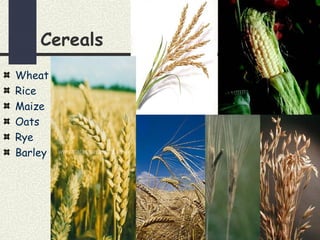
Cereals
Wheat
Rice
Maize
Oats
Rye
Barley
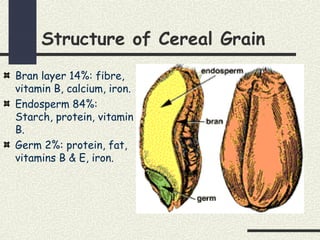
Structure of Cereal Grain
Bran layer 14%: fibre,
vitamin B, calcium, iron.
Endosperm 84%:
Starch, protein, vitamin
B.
Germ 2%: protein, fat,
vitamins B & E, iron.
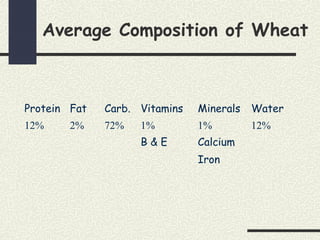
Average Composition of Wheat
Protein Fat Carb. Vitamins Minerals Water
12% 2% 72% 1%
B & E
1%
Calcium
Iron
12%
Nutritive / Food Value
Protein, LBV, (gluten in wheat and rye).
Fat, polyunsaturated, essential fatty acids.
Carbohydrate, starch mostly, the rest is fibre.
Vitamin B especially B1, B2, niacin, also Vitamin E.
Minerals: Calcium Iron, Phosphorus.
Low in water therefore they keep well.
Dietetic Value
Important energy food because of starch.
Whole grains good for fibre.
Wholegrains good source vitamin B calcium, iron.
Unsaturated fat ok in low cholesterol diets.
Cheap & versatile.
Coeliacs must avoid wheat, oats, barley, rye because of
gluten.
Phytates in cereals inhibit calcium & iron absorption.
Polished rice lacks Vitamin B and maize lacks tryptophan
so deficiency diseases can occur where they are the
staple food.
Effects of Heat on Cereals
Starch grains swell, burst, absorb liquid (e.g. risotto).
Dry heat: grains swell burst and absorb fat (e.g. pastry).
Cellulose gets soft.
Starch becomes digestible.
Protein coagulates (e.g. sets dough in oven).
Dextrinisation and caramelisation causes surface browning
on bread and cakes etc…
Loss of some vitamin B.
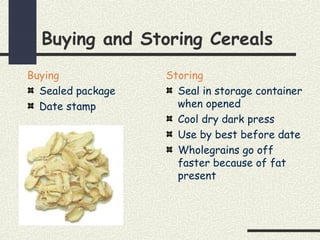
Buying and Storing Cereals
Buying
Sealed package
Date stamp
Storing
Seal in storage container
when opened
Cool dry dark press
Use by best before date
Wholegrains go off
faster because of fat
present
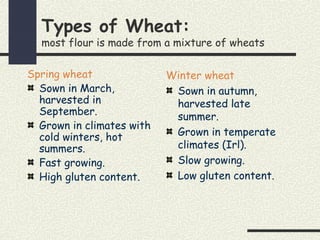
Types of Wheat:
most flour is made from a mixture of wheats
Spring wheat
Sown in March,
harvested in
September.
Grown in climates with
cold winters, hot
summers.
Fast growing.
High gluten content.
Winter wheat
Sown in autumn,
harvested late
summer.
Grown in temperate
climates (Irl).
Slow growing.
Low gluten content.
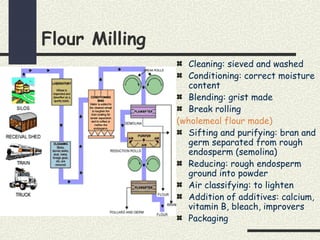
Flour Milling
Cleaning: sieved and washed
Conditioning: correct moisture
content
Blending: grist made
Break rolling
(wholemeal flour made)
Sifting and purifying: bran and
germ separated from rough
endosperm (semolina)
Reducing: rough endosperm
ground into powder
Air classifying: to lighten
Addition of additives: calcium,
vitamin B, bleach, improvers
Packaging
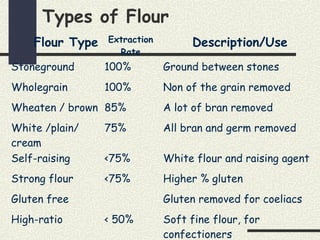
Types of Flour
Flour Type Extraction
Rate
Description/Use
Stoneground 100% Ground between stones
Wholegrain 100% Non of the grain removed
Wheaten / brown 85% A lot of bran removed
White /plain/
cream
75% All bran and germ removed
Self-raising <75% White flour and raising agent
Strong flour <75% Higher % gluten
Gluten free Gluten removed for coeliacs
High-ratio < 50% Soft fine flour, for
confectioners
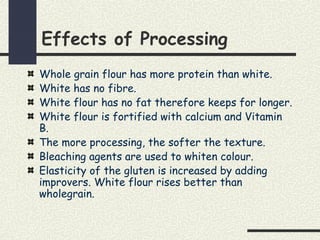
Effects of Processing
Whole grain flour has more protein than white.
White has no fibre.
White flour has no fat therefore keeps for longer.
White flour is fortified with calcium and Vitamin
B.
The more processing, the softer the texture.
Bleaching agents are used to whiten colour.
Elasticity of the gluten is increased by adding
improvers. White flour rises better than
wholegrain.
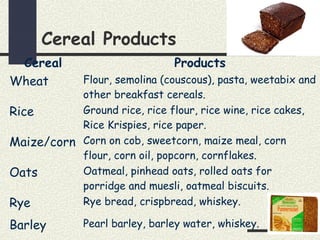
Cereal Products
Cereal Products
Wheat Flour, semolina (couscous), pasta, weetabix and
other breakfast cereals.
Rice Ground rice, rice flour, rice wine, rice cakes,
Rice Krispies, rice paper.
Maize/corn Corn on cob, sweetcorn, maize meal, corn
flour, corn oil, popcorn, cornflakes.
Oats Oatmeal, pinhead oats, rolled oats for
porridge and muesli, oatmeal biscuits.
Rye Rye bread, crispbread, whiskey.
Barley Pearl barley, barley water, whiskey.
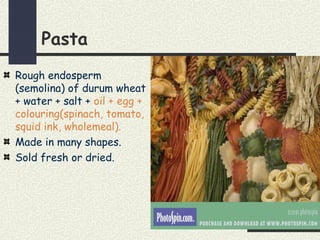
Pasta
Rough endosperm
(semolina) of durum wheat
+ water + salt + oil + egg +
colouring(spinach, tomato,
squid ink, wholemeal).
Made in many shapes.
Sold fresh or dried.
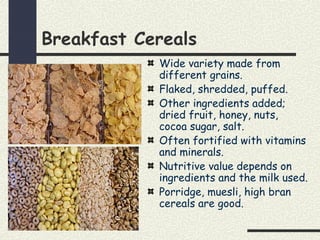
Breakfast Cereals
Wide variety made from
different grains.
Flaked, shredded, puffed.
Other ingredients added;
dried fruit, honey, nuts,
cocoa sugar, salt.
Often fortified with vitamins
and minerals.
Nutritive value depends on
ingredients and the milk used.
Porridge, muesli, high bran
cereals are good.
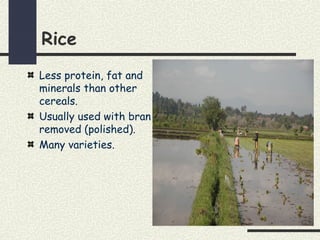
Rice
Less protein, fat and
minerals than other
cereals.
Usually used with bran
removed (polished).
Many varieties.
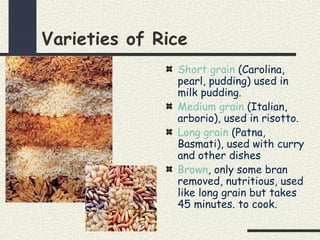
Varieties of Rice
Short grain (Carolina,
pearl, pudding) used in
milk pudding.
Medium grain (Italian,
arborio), used in risotto.
Long grain (Patna,
Basmati), used with curry
and other dishes
Brown, only some bran
removed, nutritious, used
like long grain but takes
45 minutes. to cook.
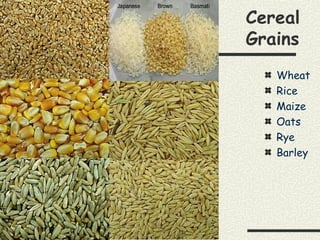
Cereal
Grains
Wheat
Rice
Maize
Oats
Rye
Barley

Cereals 1

  • 1.
    Cereals The grains ofcultivated grasses © PDST Home Economics
  • 2.
  • 3.
    Structure of CerealGrain Bran layer 14%: fibre, vitamin B, calcium, iron. Endosperm 84%: Starch, protein, vitamin B. Germ 2%: protein, fat, vitamins B & E, iron.
  • 4.
    Average Composition ofWheat Protein Fat Carb. Vitamins Minerals Water 12% 2% 72% 1% B & E 1% Calcium Iron 12%
  • 5.
    Nutritive / FoodValue Protein, LBV, (gluten in wheat and rye). Fat, polyunsaturated, essential fatty acids. Carbohydrate, starch mostly, the rest is fibre. Vitamin B especially B1, B2, niacin, also Vitamin E. Minerals: Calcium Iron, Phosphorus. Low in water therefore they keep well.
  • 6.
    Dietetic Value Important energyfood because of starch. Whole grains good for fibre. Wholegrains good source vitamin B calcium, iron. Unsaturated fat ok in low cholesterol diets. Cheap & versatile. Coeliacs must avoid wheat, oats, barley, rye because of gluten. Phytates in cereals inhibit calcium & iron absorption. Polished rice lacks Vitamin B and maize lacks tryptophan so deficiency diseases can occur where they are the staple food.
  • 7.
    Effects of Heaton Cereals Starch grains swell, burst, absorb liquid (e.g. risotto). Dry heat: grains swell burst and absorb fat (e.g. pastry). Cellulose gets soft. Starch becomes digestible. Protein coagulates (e.g. sets dough in oven). Dextrinisation and caramelisation causes surface browning on bread and cakes etc… Loss of some vitamin B.
  • 8.
    Buying and StoringCereals Buying Sealed package Date stamp Storing Seal in storage container when opened Cool dry dark press Use by best before date Wholegrains go off faster because of fat present
  • 9.
    Types of Wheat: mostflour is made from a mixture of wheats Spring wheat Sown in March, harvested in September. Grown in climates with cold winters, hot summers. Fast growing. High gluten content. Winter wheat Sown in autumn, harvested late summer. Grown in temperate climates (Irl). Slow growing. Low gluten content.
  • 10.
    Flour Milling Cleaning: sievedand washed Conditioning: correct moisture content Blending: grist made Break rolling (wholemeal flour made) Sifting and purifying: bran and germ separated from rough endosperm (semolina) Reducing: rough endosperm ground into powder Air classifying: to lighten Addition of additives: calcium, vitamin B, bleach, improvers Packaging
  • 11.
    Types of Flour FlourType Extraction Rate Description/Use Stoneground 100% Ground between stones Wholegrain 100% Non of the grain removed Wheaten / brown 85% A lot of bran removed White /plain/ cream 75% All bran and germ removed Self-raising <75% White flour and raising agent Strong flour <75% Higher % gluten Gluten free Gluten removed for coeliacs High-ratio < 50% Soft fine flour, for confectioners
  • 12.
    Effects of Processing Wholegrain flour has more protein than white. White has no fibre. White flour has no fat therefore keeps for longer. White flour is fortified with calcium and Vitamin B. The more processing, the softer the texture. Bleaching agents are used to whiten colour. Elasticity of the gluten is increased by adding improvers. White flour rises better than wholegrain.
  • 13.
    Cereal Products Cereal Products WheatFlour, semolina (couscous), pasta, weetabix and other breakfast cereals. Rice Ground rice, rice flour, rice wine, rice cakes, Rice Krispies, rice paper. Maize/corn Corn on cob, sweetcorn, maize meal, corn flour, corn oil, popcorn, cornflakes. Oats Oatmeal, pinhead oats, rolled oats for porridge and muesli, oatmeal biscuits. Rye Rye bread, crispbread, whiskey. Barley Pearl barley, barley water, whiskey.
  • 14.
    Pasta Rough endosperm (semolina) ofdurum wheat + water + salt + oil + egg + colouring(spinach, tomato, squid ink, wholemeal). Made in many shapes. Sold fresh or dried.
  • 15.
    Breakfast Cereals Wide varietymade from different grains. Flaked, shredded, puffed. Other ingredients added; dried fruit, honey, nuts, cocoa sugar, salt. Often fortified with vitamins and minerals. Nutritive value depends on ingredients and the milk used. Porridge, muesli, high bran cereals are good.
  • 16.
    Rice Less protein, fatand minerals than other cereals. Usually used with bran removed (polished). Many varieties.
  • 17.
    Varieties of Rice Shortgrain (Carolina, pearl, pudding) used in milk pudding. Medium grain (Italian, arborio), used in risotto. Long grain (Patna, Basmati), used with curry and other dishes Brown, only some bran removed, nutritious, used like long grain but takes 45 minutes. to cook.
  • 18.