 Derivatives of 7-amino-cephalosporanic acid
 Cephamycins are fermented products of
streptomyces
 Closely related in structure to penicillin (beta-
lactam ring).
 They are highly resistant to penicillinase.
 Some bacteria can produce a beta
lactamase called cephalosporinase
 Many of them are resistant to the enzyme.
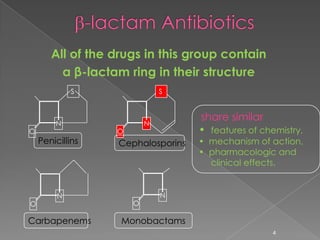
4
Monobactams
All of the drugs in this group contain
a β-lactam ring in their structure
Penicillins
N
O
S
Carbapenems
N
O
N
O
N
O
S
Cephalosporins
share similar
• features of chemistry,
• mechanism of action,
• pharmacologic and
clinical effects.
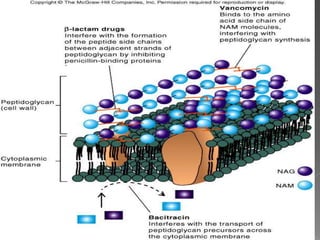
 Cephalosporins inhibit the
peptido-glycan synthesis of
bacterial cell wall in a manner
similar to that of penicillin and are
considered bactericidal.
6
 Divided into 4 major groups called
“Generations”
 Are divided into Generations based on
 Parallel their chronological development
 Their antimicrobial spectrum
› First generation
› Second generation
› Third generation
› Fourth generation
EXAMPLES: Cephalothin, Cefazolin,
Cephalexin , Cephadroxil
They have a stronger antimicrobial action on G+
bacteria than that of the other generations, but
they action on G- bacteria is relatively poor.
① These cephalosporins have nephrotoxicity to a
certain degree.
② They are NOT effective against pseudomonas.
First Generation Cephalosporins
④ Comparatively, they are less stable for
beta- lactamase (penicillinase ).
⑤ They are chiefly used in treating infection
of the penicillinase-producing S.aureus
and for surgical prophylaxis.
⑥ Cefazolin do not penetrate the central
nervous system and can not be used to
treat meningitis.
First Generation Cephalosporins
 Treatment infection of the penicillinase-
productive S.aureus
 Minor staphylococcal lesions
 For surgical prophylaxis
 Cephazolin drug of choice for k. pneumonie
infections
 Treatment of staphylococcal or streptococcal
infection who have a h/o penicillin
hypersensitivity.
10
 Cefamandole, Cefaclor, Cefuroxime, Cefot
etan, Cefoxitin (Cephamycins)
① Action of this generation on G+ bacteria is
the same or a little less than that of the first
generation.
② Their antimicrobial action on G- bacteria is
obviously increased. (H. influenza, Klebsiella)
③ Cephamycins are effective against
anaerobes such as B.fragilis, serratia
④ Ineffective against p.aeruginosa.
⑤ They are stable to many kind of beta-
lactamases and have less nephrotoxicity
than the first generation.
⑥ Cefuroxime is the only second-
generation drug that crosses the blood-
brain barrier : used for the treatment of
meningitis, especially H.influenzae
meningitis, and sepsis.
 Sinusitis, Otitis, LRTI, Community acquired
pneumonia
› caused by beta lactamase producing H.
influenza
 Meningitis
 Mixed infections :
› Peritonitis
› Diverticulitis
› pelvic infections
13
 Cefotaxime, Ceftriaxone, Cefoperazone,
Cefixime, Ceftizidime, Cefodoxime.
① The broadest spectrums of all cephalo-
② The highest activities against G- bacteria.
③ The lowest activities against G+ bacteria.
④ The highest resistance to β-lactamase.
⑤ Can cross blood brain barrier
⑤ The best penetration into the CSF;
almost no nephrotoxicity.
⑥ Ceftizoxime have good activity
against B.fragilis.
⑦ Some of them are effective against
P.aeruginosa and enteric bacilli.
(cefoperazone and ceftizidime)
 There are also some unique properties of
individual 3th generation.
 Ceftriaxone has the longest half-life(8h) of any
cephalosporin.
 Cefixime is an oral preparation.
 Ceftazidime is the best anti-pseudomonal
cephalosporin.
 Cefoperazone is eliminated(70%) in the bile,
and is thus very useful in patients with renal
failure.
 Used for serious infections caused by organisms
resistant to other drugs.
 Gonorrhea : cefixime / ceftriaxone
 Meningitis : Ceftriaxone, cefotaxime
 community acquired pneumonia: Ceftriaxone
 Septicemia
 Nosocomial infections
 UTI
 LRTI
 Soft tissue infections
 cellulitis
 Typhoid fever
 Mixed aerobic , anaerobic infections
 Urethral , biliary tract infections
 First line drug for Gonorrhea caused by
Nisseria (ceftriaxone , Cefixime)
 Meningitis caused by
pneumococci, meningococci, H.
influenza.
 Empirical theraphy for sepsis of unknown
cause
 Urethral or biliary tract infections
18
Cefepime
1. More resistant to hydrolysis by β-
lactamase
2. Active against P-aeruginosa &
Enterobacteriaceace.
3. Clinical use as third generations.
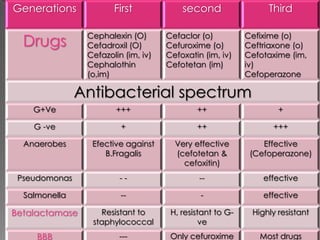
Generations First second Third
Drugs Cephalexin (O)
Cefadroxil (O)
Cefazolin (im, iv)
Cephalothin
(o,im)
Cefaclor (o)
Cefuroxime (o)
Cefoxatin (im, iv)
Cefotetan (im)
Cefixime (o)
Ceftriaxone (o)
Cefotaxime (im,
iv)
Cefoperazone
Antibacterial spectrum
G+Ve +++ ++ +
G -ve + ++ +++
Anaerobes Efective against
B.Fragalis
Very effective
(cefotetan &
cefoxitin)
Effective
(Cefoperazone)
Pseudomonas - - -- effective
Salmonella -- - effective
Betalactamase Resistant to
staphylococcal
H, resistant to G-
ve
Highly resistant
BBB --- Only cefuroxime Most drugs
 Relatively few and low
 The most common ones are Allergy-
hypersensitivity reactions (5%-10%)
anaphylaxis, fever, skin rashes, nephritis,
granulocytopenia, and hemolytic anemia.
 During treatment with third-generation
drugs, these resistant bacteria, as well as
fungi, often proliferate and may induce
superinfections.
 Nephrotoxicity:
 The first-generation cephalosporins have
certain nephrotoxicity. (Renal damage,
including interstitial nephritis and even
tubular necrosis )
 The second-generation have slight
nephrotoxicity.
 The third-generation have no
nephrotoxicity.
Monobactams - Aztreonam
① Aztreonam is highly resistant to beta-
lactamases
② It is highly active against aerobic G- bacteria,
including P.aeruginosa and penicillinase-
producing strains of H. influenzae and
gonococci. But it shows poor activity against
G+ cocci and anaerobic bacteria.
③ The antimicrobial spectrum of aztreonam is
similar to that of aminoglycosides
 Mechanism of action
 Pharmacologic effects
 Clinical Uses
 Adverse Effects
Vancomycin
Vancomycin is an
antibiotic
produced by
Streptococcus
orientalis.
① Vancomycin is very effective against
most staphylococci including those
producing beta-lactamases,and other
G+ cocci such as streptococcus
viridans, enterococci, and
pneumococcus.
② It is also active against clostridium
species, Corynebacterium
diphtheriae, and Bacillus anthracis.
① Orally only for the treatment of antibiotic-
associated Pseudomembranous colitis
caused by C.difficile.
② Intravenous administration is mainly used
for serious G+ coccal infections, such as
enterocolitis, septicemia
› Especially for those caused by penicilin-
resistant pneumococcus and staphylococci
① Phlebitis
› at the site of injection.
② Nephrotoxicity and Ototoxicity
› rare with monotherapy, more common
when administered with other nephro- or
ototoxins
› risk factors include renal impairment,
prolonged therapy, high doses, high serum
concentrations, other toxic meds
③ “Red-Man”or “red neck” Syndrome
› flushing, pruritus, erythematous rash on face
and upper torso
› related to RATE of intravenous infusion;
should be infused over at least 60 minutes
› resolves spontaneously after discontinuation
› Prevent: may lengthen infusion (over 2 to 3
hours) or pretreat with antihistamines in
some cases
 They are available only in fixed
combinations with specific penicillins:
 Ampicillin + sulbactam
 Amoxicillin + clavulanic acid
 Ticarcillin + clavulanate potassium
 Piperacillin + tazobactam sodium
 (Amp/Sulbactam)
 Spectrum: Amp + most anaerobes + many
enteric G (-) rods, OSSA
 Sulbactam alone is very active against
Acinetobacter spp.
30
 (Pip/Tazo)
 THE most broad-spectrum penicillin
 Tazobactam may improve the activity of
piperacillin vs. gram-negative rods,
including anaerobes
 4.5g IV q8h = 3.375g IV q6h
 4.5g IV q6h for Pseudomonas
31

Cephalosporins

  • 3.
     Derivatives of7-amino-cephalosporanic acid  Cephamycins are fermented products of streptomyces  Closely related in structure to penicillin (beta- lactam ring).  They are highly resistant to penicillinase.  Some bacteria can produce a beta lactamase called cephalosporinase  Many of them are resistant to the enzyme.
  • 4.
    4 Monobactams All of thedrugs in this group contain a β-lactam ring in their structure Penicillins N O S Carbapenems N O N O N O S Cephalosporins share similar • features of chemistry, • mechanism of action, • pharmacologic and clinical effects.
  • 5.
     Cephalosporins inhibitthe peptido-glycan synthesis of bacterial cell wall in a manner similar to that of penicillin and are considered bactericidal.
  • 6.
  • 7.
     Divided into4 major groups called “Generations”  Are divided into Generations based on  Parallel their chronological development  Their antimicrobial spectrum › First generation › Second generation › Third generation › Fourth generation
  • 8.
    EXAMPLES: Cephalothin, Cefazolin, Cephalexin, Cephadroxil They have a stronger antimicrobial action on G+ bacteria than that of the other generations, but they action on G- bacteria is relatively poor. ① These cephalosporins have nephrotoxicity to a certain degree. ② They are NOT effective against pseudomonas. First Generation Cephalosporins
  • 9.
    ④ Comparatively, theyare less stable for beta- lactamase (penicillinase ). ⑤ They are chiefly used in treating infection of the penicillinase-producing S.aureus and for surgical prophylaxis. ⑥ Cefazolin do not penetrate the central nervous system and can not be used to treat meningitis. First Generation Cephalosporins
  • 10.
     Treatment infectionof the penicillinase- productive S.aureus  Minor staphylococcal lesions  For surgical prophylaxis  Cephazolin drug of choice for k. pneumonie infections  Treatment of staphylococcal or streptococcal infection who have a h/o penicillin hypersensitivity. 10
  • 11.
     Cefamandole, Cefaclor,Cefuroxime, Cefot etan, Cefoxitin (Cephamycins) ① Action of this generation on G+ bacteria is the same or a little less than that of the first generation. ② Their antimicrobial action on G- bacteria is obviously increased. (H. influenza, Klebsiella) ③ Cephamycins are effective against anaerobes such as B.fragilis, serratia
  • 12.
    ④ Ineffective againstp.aeruginosa. ⑤ They are stable to many kind of beta- lactamases and have less nephrotoxicity than the first generation. ⑥ Cefuroxime is the only second- generation drug that crosses the blood- brain barrier : used for the treatment of meningitis, especially H.influenzae meningitis, and sepsis.
  • 13.
     Sinusitis, Otitis,LRTI, Community acquired pneumonia › caused by beta lactamase producing H. influenza  Meningitis  Mixed infections : › Peritonitis › Diverticulitis › pelvic infections 13
  • 14.
     Cefotaxime, Ceftriaxone,Cefoperazone, Cefixime, Ceftizidime, Cefodoxime. ① The broadest spectrums of all cephalo- ② The highest activities against G- bacteria. ③ The lowest activities against G+ bacteria. ④ The highest resistance to β-lactamase. ⑤ Can cross blood brain barrier
  • 15.
    ⑤ The bestpenetration into the CSF; almost no nephrotoxicity. ⑥ Ceftizoxime have good activity against B.fragilis. ⑦ Some of them are effective against P.aeruginosa and enteric bacilli. (cefoperazone and ceftizidime)
  • 16.
     There arealso some unique properties of individual 3th generation.  Ceftriaxone has the longest half-life(8h) of any cephalosporin.  Cefixime is an oral preparation.  Ceftazidime is the best anti-pseudomonal cephalosporin.  Cefoperazone is eliminated(70%) in the bile, and is thus very useful in patients with renal failure.
  • 17.
     Used forserious infections caused by organisms resistant to other drugs.  Gonorrhea : cefixime / ceftriaxone  Meningitis : Ceftriaxone, cefotaxime  community acquired pneumonia: Ceftriaxone  Septicemia  Nosocomial infections  UTI  LRTI  Soft tissue infections  cellulitis  Typhoid fever  Mixed aerobic , anaerobic infections  Urethral , biliary tract infections
  • 18.
     First linedrug for Gonorrhea caused by Nisseria (ceftriaxone , Cefixime)  Meningitis caused by pneumococci, meningococci, H. influenza.  Empirical theraphy for sepsis of unknown cause  Urethral or biliary tract infections 18
  • 19.
    Cefepime 1. More resistantto hydrolysis by β- lactamase 2. Active against P-aeruginosa & Enterobacteriaceace. 3. Clinical use as third generations.
  • 20.
    Generations First secondThird Drugs Cephalexin (O) Cefadroxil (O) Cefazolin (im, iv) Cephalothin (o,im) Cefaclor (o) Cefuroxime (o) Cefoxatin (im, iv) Cefotetan (im) Cefixime (o) Ceftriaxone (o) Cefotaxime (im, iv) Cefoperazone Antibacterial spectrum G+Ve +++ ++ + G -ve + ++ +++ Anaerobes Efective against B.Fragalis Very effective (cefotetan & cefoxitin) Effective (Cefoperazone) Pseudomonas - - -- effective Salmonella -- - effective Betalactamase Resistant to staphylococcal H, resistant to G- ve Highly resistant BBB --- Only cefuroxime Most drugs
  • 21.
     Relatively fewand low  The most common ones are Allergy- hypersensitivity reactions (5%-10%) anaphylaxis, fever, skin rashes, nephritis, granulocytopenia, and hemolytic anemia.  During treatment with third-generation drugs, these resistant bacteria, as well as fungi, often proliferate and may induce superinfections.
  • 22.
     Nephrotoxicity:  Thefirst-generation cephalosporins have certain nephrotoxicity. (Renal damage, including interstitial nephritis and even tubular necrosis )  The second-generation have slight nephrotoxicity.  The third-generation have no nephrotoxicity.
  • 23.
    Monobactams - Aztreonam ①Aztreonam is highly resistant to beta- lactamases ② It is highly active against aerobic G- bacteria, including P.aeruginosa and penicillinase- producing strains of H. influenzae and gonococci. But it shows poor activity against G+ cocci and anaerobic bacteria. ③ The antimicrobial spectrum of aztreonam is similar to that of aminoglycosides
  • 24.
     Mechanism ofaction  Pharmacologic effects  Clinical Uses  Adverse Effects Vancomycin Vancomycin is an antibiotic produced by Streptococcus orientalis.
  • 25.
    ① Vancomycin isvery effective against most staphylococci including those producing beta-lactamases,and other G+ cocci such as streptococcus viridans, enterococci, and pneumococcus. ② It is also active against clostridium species, Corynebacterium diphtheriae, and Bacillus anthracis.
  • 26.
    ① Orally onlyfor the treatment of antibiotic- associated Pseudomembranous colitis caused by C.difficile. ② Intravenous administration is mainly used for serious G+ coccal infections, such as enterocolitis, septicemia › Especially for those caused by penicilin- resistant pneumococcus and staphylococci
  • 27.
    ① Phlebitis › atthe site of injection. ② Nephrotoxicity and Ototoxicity › rare with monotherapy, more common when administered with other nephro- or ototoxins › risk factors include renal impairment, prolonged therapy, high doses, high serum concentrations, other toxic meds
  • 28.
    ③ “Red-Man”or “redneck” Syndrome › flushing, pruritus, erythematous rash on face and upper torso › related to RATE of intravenous infusion; should be infused over at least 60 minutes › resolves spontaneously after discontinuation › Prevent: may lengthen infusion (over 2 to 3 hours) or pretreat with antihistamines in some cases
  • 29.
     They areavailable only in fixed combinations with specific penicillins:  Ampicillin + sulbactam  Amoxicillin + clavulanic acid  Ticarcillin + clavulanate potassium  Piperacillin + tazobactam sodium
  • 30.
     (Amp/Sulbactam)  Spectrum:Amp + most anaerobes + many enteric G (-) rods, OSSA  Sulbactam alone is very active against Acinetobacter spp. 30
  • 31.
     (Pip/Tazo)  THEmost broad-spectrum penicillin  Tazobactam may improve the activity of piperacillin vs. gram-negative rods, including anaerobes  4.5g IV q8h = 3.375g IV q6h  4.5g IV q6h for Pseudomonas 31