Introduction 
Classification 
Centrifugal Compressor 
Components 
Application 
Pros & Cons
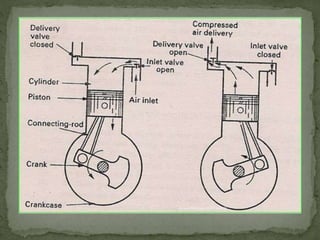
An air compressor is a device that converts power 
(usually from an electric motor, a diesel engine or a 
gasoline engine) into kinetic energy by compressing 
and pressurizing air, which, on command, can be 
released in quick bursts. There are numerous methods 
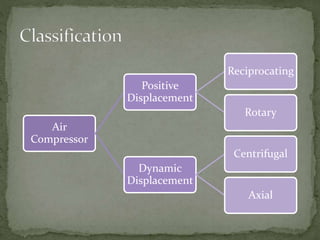
of air compression, divided into either positive-displacement 
or dynamic-displacement types.
Air 
Compressor 
Positive 
Displacement 
Reciprocating 
Rotary 
Dynamic 
Displacement 
Centrifugal 
Axial
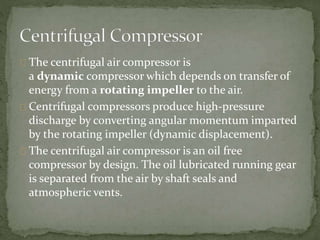
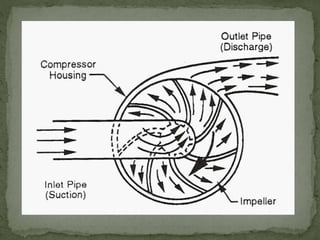
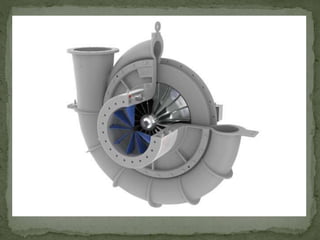
The centrifugal air compressor is 
a dynamic compressor which depends on transfer of 
energy from a rotating impeller to the air. 
Centrifugal compressors produce high-pressure 
discharge by converting angular momentum imparted 
by the rotating impeller (dynamic displacement). 
The centrifugal air compressor is an oil free 
compressor by design. The oil lubricated running gear 
is separated from the air by shaft seals and 
atmospheric vents.
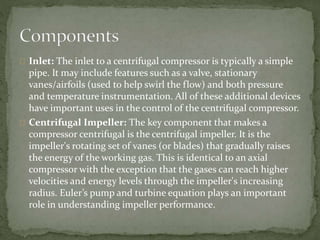
Inlet: The inlet to a centrifugal compressor is typically a simple 
pipe. It may include features such as a valve, stationary 
vanes/airfoils (used to help swirl the flow) and both pressure 
and temperature instrumentation. All of these additional devices 
have important uses in the control of the centrifugal compressor. 
Centrifugal Impeller: The key component that makes a 
compressor centrifugal is the centrifugal impeller. It is the 
impeller's rotating set of vanes (or blades) that gradually raises 
the energy of the working gas. This is identical to an axial 
compressor with the exception that the gases can reach higher 
velocities and energy levels through the impeller's increasing 
radius. Euler’s pump and turbine equation plays an important 
role in understanding impeller performance.
Diffuser: The next key component to the simple centrifugal 
compressor is the diffuser. Downstream of the impeller in the flow 
path, it is the diffuser's responsibility to convert the kinetic energy 
(high velocity) of the gas into pressure by gradually slowing (diffusing) 
the gas velocity. Diffusers can be vaneless, vaned or an alternating 
combination. High efficiency vaned diffusers are also designed over a 
wide range of solidities from less than 1 to over 4. Hybrid versions of 
vaned diffusers include: wedge, channel, and pipe diffusers. There are 
turbocharger applications that benefit by incorporating no diffuser. 
Collector: The collector of a centrifugal compressor can take many 
shapes and forms. When the diffuser discharges into a large empty 
chamber, the collector may be termed a Plenum. When the diffuser 
discharges into a device that looks somewhat like a snail shell, bull's 
horn or a French horn, the collector is likely to be termed 
a volute or scroll. As the name implies, a collector’s purpose is to gather 
the flow from the diffuser discharge annulus and deliver this flow to a 
downstream pipe. Either the collector or the pipe may also contain 
valves and instrumentation to control the compressor.
In gas turbines and auxiliary power units. 
In automotive engine and diesel 
engine turbochargers and superchargers. 
In pipeline compressors of natural gas to move the gas from 
the production site to the consumer. 
In oil refineries, natural gas 
processing, petrochemical and chemical plants. 
Air-conditioning and refrigeration and HVAC: Centrifugal 
compressors quite often supply the compression in water 
chillers cycles.
Pros 
Centrifugal compressors are 
used throughout industry 
because they have fewer rubbing 
parts, are relatively energy 
efficient, and give higher airflow 
than a similarly 
sized reciprocating 
compressor or positive-displacement 
compressor. 
Centrifugal compressors are 
often used in small gas 
turbine engines like APUs 
(auxiliary power units) and 
smaller aircraft gas turbines. 
Cons 
Their main drawback is that 
they cannot achieve the 
high compression ratio of 
reciprocating compressors 
without multiple stages. 
Centrifugal compressors are 
impractical, compared to axial 
compressors, for use in large gas 
turbine engines propelling large 
aircraft, due to the resulting 
weight and stress, and to the 
frontal area presented by the 
diffuser.
Thank You

Centrifugal Compressor

  • 2.
    Introduction Classification CentrifugalCompressor Components Application Pros & Cons
  • 3.
    An air compressoris a device that converts power (usually from an electric motor, a diesel engine or a gasoline engine) into kinetic energy by compressing and pressurizing air, which, on command, can be released in quick bursts. There are numerous methods of air compression, divided into either positive-displacement or dynamic-displacement types.
  • 5.
    Air Compressor Positive Displacement Reciprocating Rotary Dynamic Displacement Centrifugal Axial
  • 6.
    The centrifugal aircompressor is a dynamic compressor which depends on transfer of energy from a rotating impeller to the air. Centrifugal compressors produce high-pressure discharge by converting angular momentum imparted by the rotating impeller (dynamic displacement). The centrifugal air compressor is an oil free compressor by design. The oil lubricated running gear is separated from the air by shaft seals and atmospheric vents.
  • 8.
    Inlet: The inletto a centrifugal compressor is typically a simple pipe. It may include features such as a valve, stationary vanes/airfoils (used to help swirl the flow) and both pressure and temperature instrumentation. All of these additional devices have important uses in the control of the centrifugal compressor. Centrifugal Impeller: The key component that makes a compressor centrifugal is the centrifugal impeller. It is the impeller's rotating set of vanes (or blades) that gradually raises the energy of the working gas. This is identical to an axial compressor with the exception that the gases can reach higher velocities and energy levels through the impeller's increasing radius. Euler’s pump and turbine equation plays an important role in understanding impeller performance.
  • 10.
    Diffuser: The nextkey component to the simple centrifugal compressor is the diffuser. Downstream of the impeller in the flow path, it is the diffuser's responsibility to convert the kinetic energy (high velocity) of the gas into pressure by gradually slowing (diffusing) the gas velocity. Diffusers can be vaneless, vaned or an alternating combination. High efficiency vaned diffusers are also designed over a wide range of solidities from less than 1 to over 4. Hybrid versions of vaned diffusers include: wedge, channel, and pipe diffusers. There are turbocharger applications that benefit by incorporating no diffuser. Collector: The collector of a centrifugal compressor can take many shapes and forms. When the diffuser discharges into a large empty chamber, the collector may be termed a Plenum. When the diffuser discharges into a device that looks somewhat like a snail shell, bull's horn or a French horn, the collector is likely to be termed a volute or scroll. As the name implies, a collector’s purpose is to gather the flow from the diffuser discharge annulus and deliver this flow to a downstream pipe. Either the collector or the pipe may also contain valves and instrumentation to control the compressor.
  • 11.
    In gas turbinesand auxiliary power units. In automotive engine and diesel engine turbochargers and superchargers. In pipeline compressors of natural gas to move the gas from the production site to the consumer. In oil refineries, natural gas processing, petrochemical and chemical plants. Air-conditioning and refrigeration and HVAC: Centrifugal compressors quite often supply the compression in water chillers cycles.
  • 12.
    Pros Centrifugal compressorsare used throughout industry because they have fewer rubbing parts, are relatively energy efficient, and give higher airflow than a similarly sized reciprocating compressor or positive-displacement compressor. Centrifugal compressors are often used in small gas turbine engines like APUs (auxiliary power units) and smaller aircraft gas turbines. Cons Their main drawback is that they cannot achieve the high compression ratio of reciprocating compressors without multiple stages. Centrifugal compressors are impractical, compared to axial compressors, for use in large gas turbine engines propelling large aircraft, due to the resulting weight and stress, and to the frontal area presented by the diffuser.
  • 13.