 Scarpa´s ganglion provides axons that create vestibular nerve.
 Next station is vestibular nuclei complex.
 Vestibular nuclei are found in the lateral tegmentum of the upper
medulla and caudal part of the pons.
 There are some vestibular afferents that grow directly into the
cerebellum: the floccular nodular lobe in the inferior part of the
cerebellum (vestibular cerebellum).
 One of the major functions of the vestibular nuclei is to coordinate
the movements of the eyes so that we can mantain the stable fixation
while our head and body are in motion.
 Vestibulo-occular reflex: if we fixate our eyes in the spot that is
located in the midline (between our eyes) and turn the head to the
left, our eyes are going to move to the right.
 So in this case, there is activation of the left horizontal semicircular
canal and inactivation of the right horizontal semicircular canal.
While we turn our heads to the left, turning our eyes to the right activates
the right lateral rectus muscle and the left medial rectus muscle.
The tone of the antagonistic muscles has to be reduced.
There is activation of the right abducens nerve (for right lateral rectus
muscle) and of the left occulomotor nerve (for left medial rectus muscle).
 FIRST, there is activation of ganglion neurons on the left side that
innervate the left horizontal semicircular canal.
 SECOND, some neurons from the vestibular nuclei will send the
activation signal via their axons to the abducens nucleus on the
opposite side of the brainstem: activation of the right lateral rectus
muscle.
 THIRD, the internuclear interneuron sends excitatory signal from the
right abducens nucleus to the left occulomotor nucleus for the
activation of the left medial rectus muscle.
Inhibitory interneuron that grows from vestibular
nucleus inhibits the firing of the left abducens nucleus so
the tone of the left lateral rectus muscle is reduced.
Internuclear interneuron is then inhibited and sends the
inhibitory input to the right occulomotor nucleus so the
tone of the right medial rectus muscle is reduced.
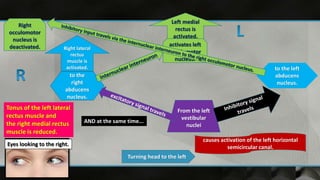
Turning head to the left
causes activation of the left horizontal
semicircular canal.
From the left
vestibular
nuclei
to the
right
abducens
nucleus.
Right lateral
rectus
muscle is
activated.
activates left
occulomotor
nucleus.
Left medial
rectus is
activated.
AND at the same time...
to the left
abducens
nucleus.
Right
occulomotor
nucleus is
deactivated.
Tonus of the left lateral
rectus muscle and
the right medial rectus
muscle is reduced.
Eyes looking to the right.
Nystagmus is a rhythmic form of reflexive eye movements composed
of slow component in one direction interruped repeatedly by fast
saccadic-like movements in the opposite direction.
Vestibular nistagmus is normally driven by persistent rotation of the
head.
The slow component of the nistagmus is driven by the vestibulo-
occular reflex and the fast saccadic component resets the eye
position.
 The balance between the activities of the two vestibular nerves
afferents that arise from the functional pairs of semicircular canals
determines the type and direction of nystagmus expressed.
 If there is hypofunction of the right vestibular system, slow fase of the
vestibular nistagmus will be to the right side and fast saccadic
component will be to the left side.
 If there is hypofunction of the left vestibular system, slow fase of the
vestibular nistagmus will be to the left side and fast saccadic
component will be to the right side.
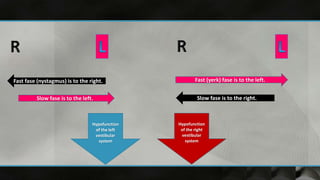
Hypofunction
of the left
vestibular
system
Fast fase (nystagmus) is to the right.
Slow fase is to the left.
Hypofunction
of the right
vestibular
system
Fast (yerk) fase is to the left.
Slow fase is to the right.
 Vestibular nuclei produce reflexive adjustments of the posture that
compensate for movements of the head.
 Medial system of descending axons regulates posture in the most
medial parts of the spinal cord white matter.
 Medial vestibulospinal tract is the most medial part of the medial
descending system.
 Lateral vestibulospinal tract is the lateral part of the medial
descending system.
 Medial vestibulospinal tract arises from the medial vestibular nucleus
and it gives rise to bilateral projections that innervate mainly motor
neurons in the cervical cord.
 Those motor neurons are concerned with movements of the neck and
head.
 Vestibulocervical reflex connects the vestibular system and the spinal
cord: if we fall forward, there will be bacward tilt of the head
(vestibular part) and extension of both of our hands forward (spinal
part).
Lateral vestibulospinal tract originates in the lateral vestibular
nucleus.
It gives rise to descending projections that run through the anterior
medial spinal cord white matter.
They innervate mostly neurons in lumbosacral enlargement
ipsilaterally: maintaining the extensor tone of the anti-gravity
muscles of the lower extremities.
If the body is falling to the right, there will
be activation of the right vestibular system
and via the lateral vestibulospinal tract the
activation of motor neurons that will
extend the muscles of the right leg.
Lateral and superior vestibular nuclei project to the
ventral posterior complex of the thalamus and from the
thalamus to the parietal cortex where is vestibular
cortex.
Vestibular cortex: region near face representation of
somatosensory cortex (Brodmann´s area A3 concerning
proprioception) and posterior parietal cortex
(Brodmann´s area 5 concerning vestibular signals).
https://www.coursera.org/learn/medical-
neuroscience/lecture: Leonard E. White,
PhD, Duke University

Central vestibular processing

  • 2.
     Scarpa´s ganglionprovides axons that create vestibular nerve.  Next station is vestibular nuclei complex.  Vestibular nuclei are found in the lateral tegmentum of the upper medulla and caudal part of the pons.  There are some vestibular afferents that grow directly into the cerebellum: the floccular nodular lobe in the inferior part of the cerebellum (vestibular cerebellum).
  • 3.
     One ofthe major functions of the vestibular nuclei is to coordinate the movements of the eyes so that we can mantain the stable fixation while our head and body are in motion.  Vestibulo-occular reflex: if we fixate our eyes in the spot that is located in the midline (between our eyes) and turn the head to the left, our eyes are going to move to the right.  So in this case, there is activation of the left horizontal semicircular canal and inactivation of the right horizontal semicircular canal.
  • 4.
    While we turnour heads to the left, turning our eyes to the right activates the right lateral rectus muscle and the left medial rectus muscle. The tone of the antagonistic muscles has to be reduced. There is activation of the right abducens nerve (for right lateral rectus muscle) and of the left occulomotor nerve (for left medial rectus muscle).
  • 5.
     FIRST, thereis activation of ganglion neurons on the left side that innervate the left horizontal semicircular canal.  SECOND, some neurons from the vestibular nuclei will send the activation signal via their axons to the abducens nucleus on the opposite side of the brainstem: activation of the right lateral rectus muscle.  THIRD, the internuclear interneuron sends excitatory signal from the right abducens nucleus to the left occulomotor nucleus for the activation of the left medial rectus muscle.
  • 6.
    Inhibitory interneuron thatgrows from vestibular nucleus inhibits the firing of the left abducens nucleus so the tone of the left lateral rectus muscle is reduced. Internuclear interneuron is then inhibited and sends the inhibitory input to the right occulomotor nucleus so the tone of the right medial rectus muscle is reduced.
  • 7.
    Turning head tothe left causes activation of the left horizontal semicircular canal. From the left vestibular nuclei to the right abducens nucleus. Right lateral rectus muscle is activated. activates left occulomotor nucleus. Left medial rectus is activated. AND at the same time... to the left abducens nucleus. Right occulomotor nucleus is deactivated. Tonus of the left lateral rectus muscle and the right medial rectus muscle is reduced. Eyes looking to the right.
  • 8.
    Nystagmus is arhythmic form of reflexive eye movements composed of slow component in one direction interruped repeatedly by fast saccadic-like movements in the opposite direction. Vestibular nistagmus is normally driven by persistent rotation of the head. The slow component of the nistagmus is driven by the vestibulo- occular reflex and the fast saccadic component resets the eye position.
  • 9.
     The balancebetween the activities of the two vestibular nerves afferents that arise from the functional pairs of semicircular canals determines the type and direction of nystagmus expressed.  If there is hypofunction of the right vestibular system, slow fase of the vestibular nistagmus will be to the right side and fast saccadic component will be to the left side.  If there is hypofunction of the left vestibular system, slow fase of the vestibular nistagmus will be to the left side and fast saccadic component will be to the right side.
  • 10.
    Hypofunction of the left vestibular system Fastfase (nystagmus) is to the right. Slow fase is to the left. Hypofunction of the right vestibular system Fast (yerk) fase is to the left. Slow fase is to the right.
  • 11.
     Vestibular nucleiproduce reflexive adjustments of the posture that compensate for movements of the head.  Medial system of descending axons regulates posture in the most medial parts of the spinal cord white matter.  Medial vestibulospinal tract is the most medial part of the medial descending system.  Lateral vestibulospinal tract is the lateral part of the medial descending system.
  • 12.
     Medial vestibulospinaltract arises from the medial vestibular nucleus and it gives rise to bilateral projections that innervate mainly motor neurons in the cervical cord.  Those motor neurons are concerned with movements of the neck and head.  Vestibulocervical reflex connects the vestibular system and the spinal cord: if we fall forward, there will be bacward tilt of the head (vestibular part) and extension of both of our hands forward (spinal part).
  • 13.
    Lateral vestibulospinal tractoriginates in the lateral vestibular nucleus. It gives rise to descending projections that run through the anterior medial spinal cord white matter. They innervate mostly neurons in lumbosacral enlargement ipsilaterally: maintaining the extensor tone of the anti-gravity muscles of the lower extremities.
  • 14.
    If the bodyis falling to the right, there will be activation of the right vestibular system and via the lateral vestibulospinal tract the activation of motor neurons that will extend the muscles of the right leg.
  • 15.
    Lateral and superiorvestibular nuclei project to the ventral posterior complex of the thalamus and from the thalamus to the parietal cortex where is vestibular cortex. Vestibular cortex: region near face representation of somatosensory cortex (Brodmann´s area A3 concerning proprioception) and posterior parietal cortex (Brodmann´s area 5 concerning vestibular signals).
  • 17.