Central Nervous System
The Autonomic Nervous System
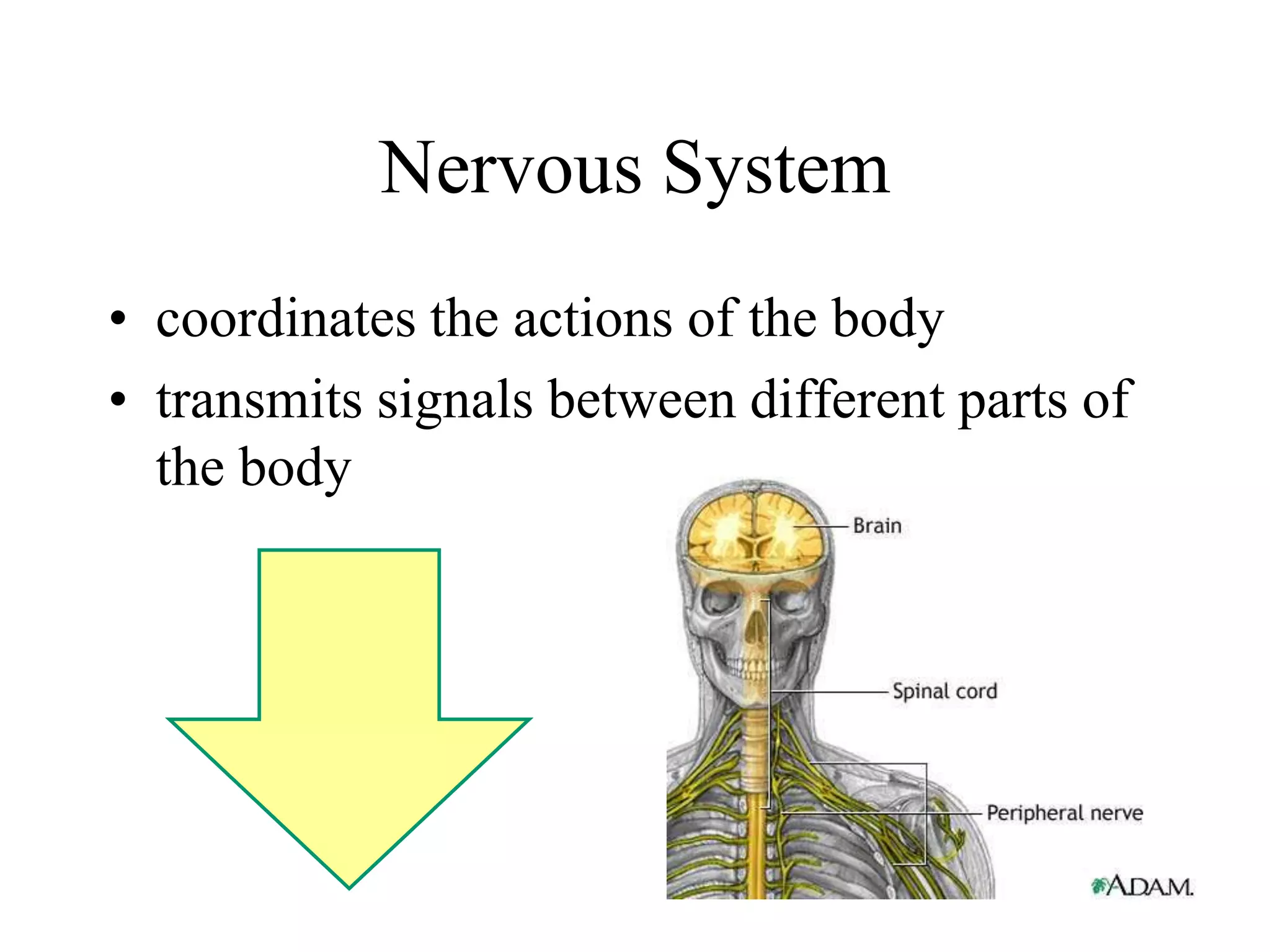
Nervous System
• coordinates the actions of the body
• transmits signals between different parts of
  the body
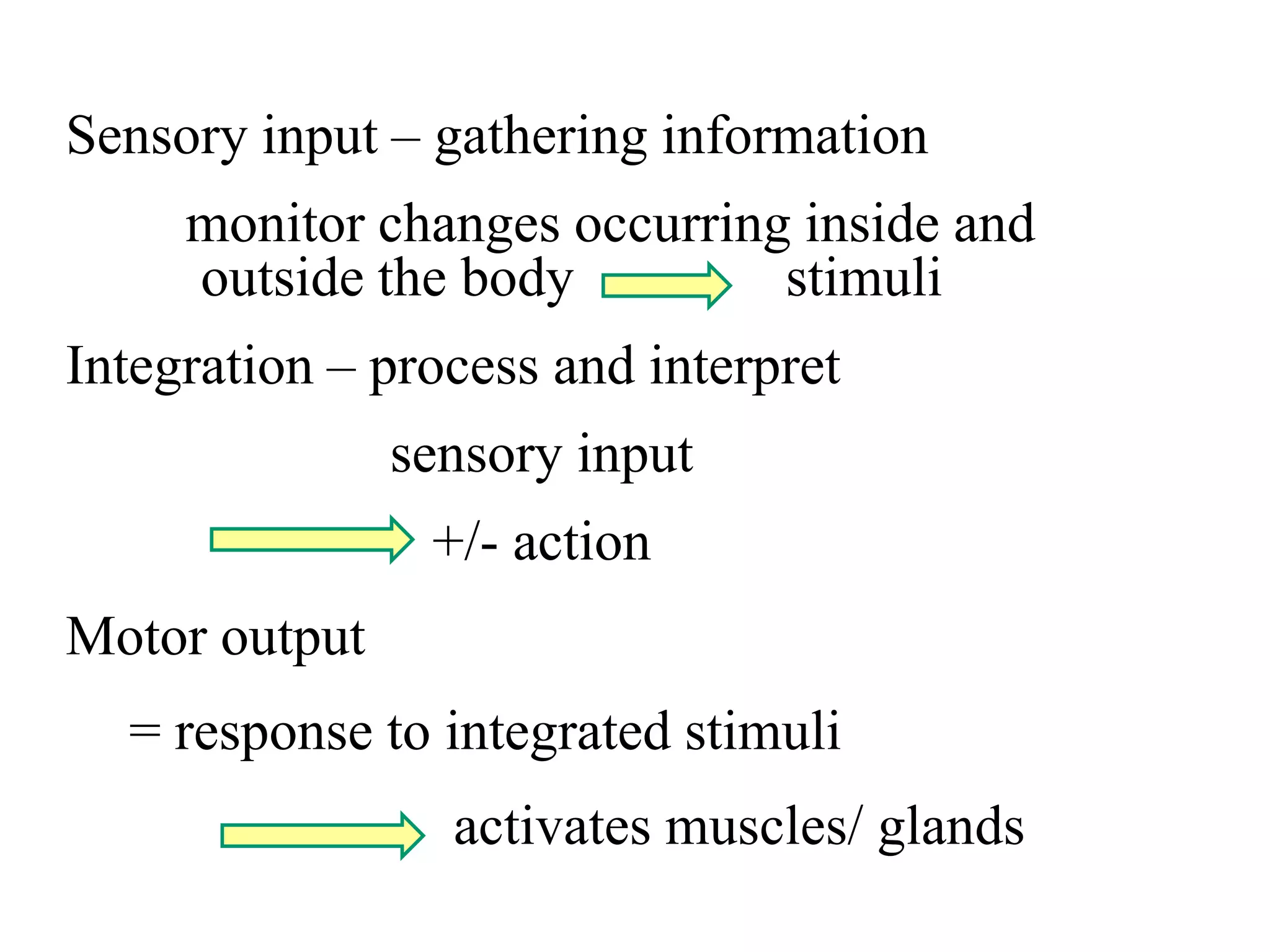
Sensory input – gathering information
     monitor changes occurring inside and
     outside the body         stimuli
Integration – process and interpret
               sensory input
                +/- action
Motor output
  = response to integrated stimuli
                 activates muscles/ glands
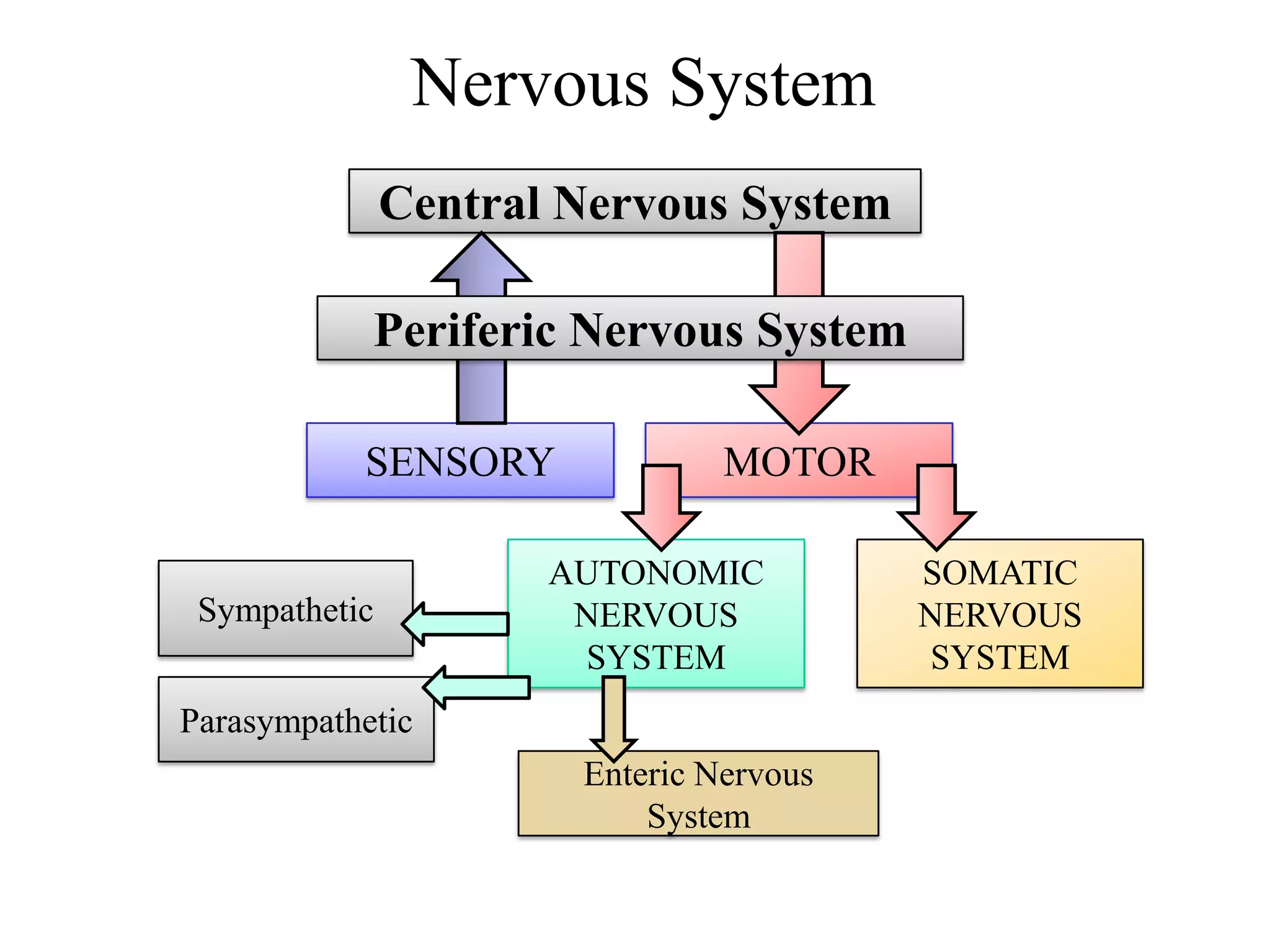
Nervous System
               Central Nervous System

            Periferic Nervous System

           SENSORY              MOTOR

                      AUTONOMIC          SOMATIC
 Sympathetic           NERVOUS           NERVOUS
                       SYSTEM            SYSTEM
Parasympathetic
                       Enteric Nervous
                           System
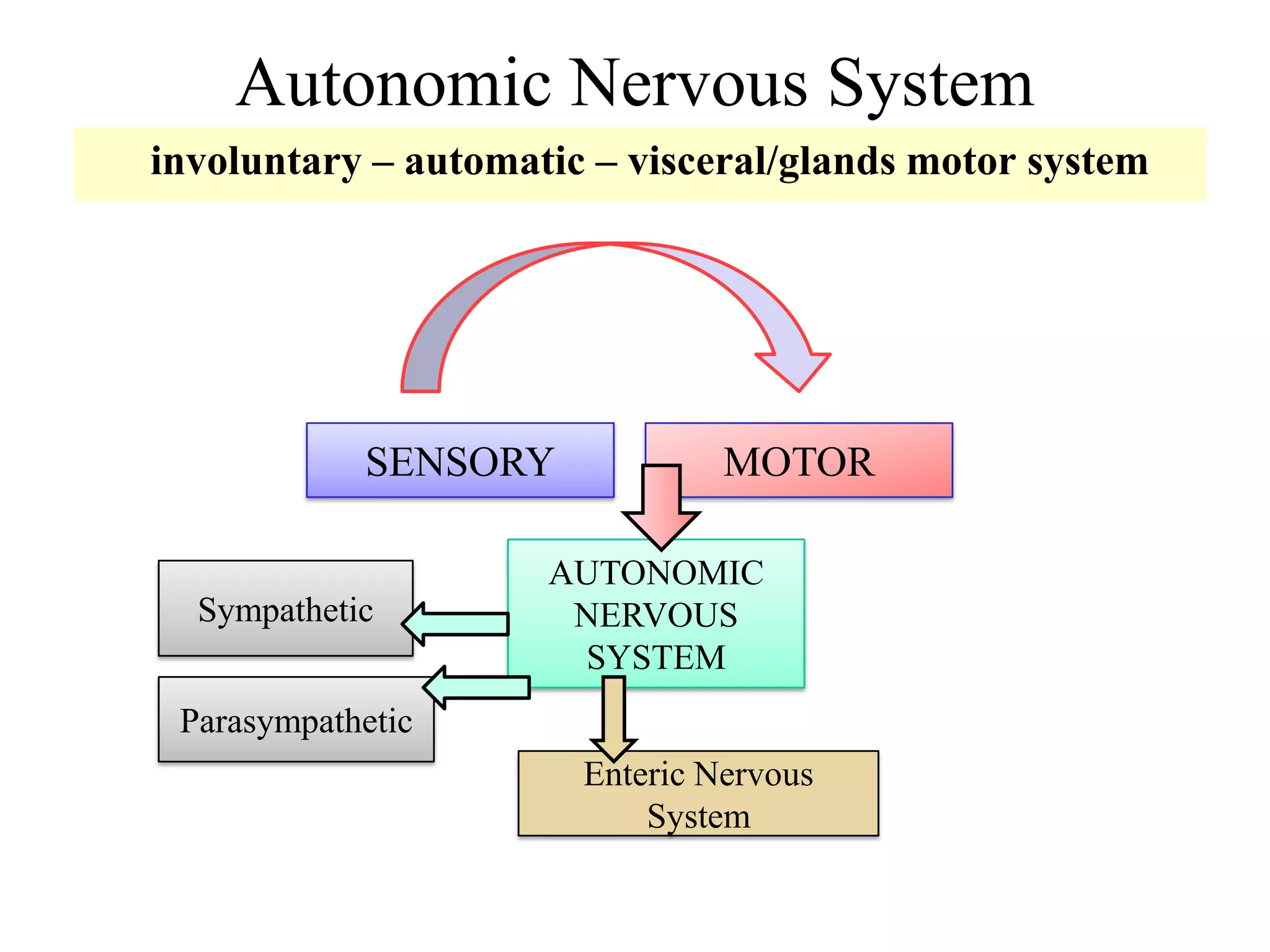
Autonomic Nervous System
involuntary – automatic – visceral/glands motor system


            SENSORY             MOTOR

                     AUTONOMIC
  Sympathetic         NERVOUS
                      SYSTEM
 Parasympathetic
                       Enteric Nervous
                           System
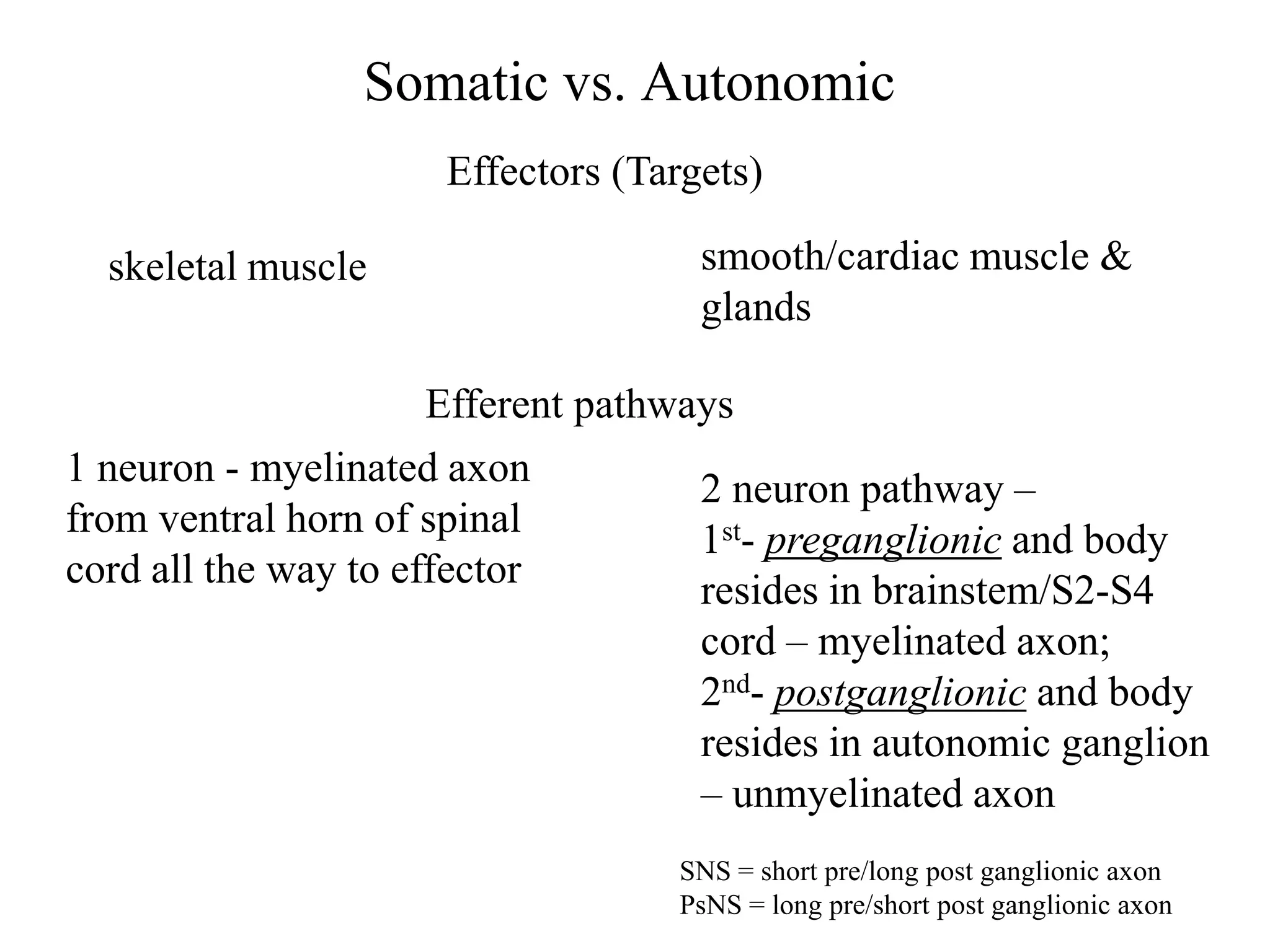
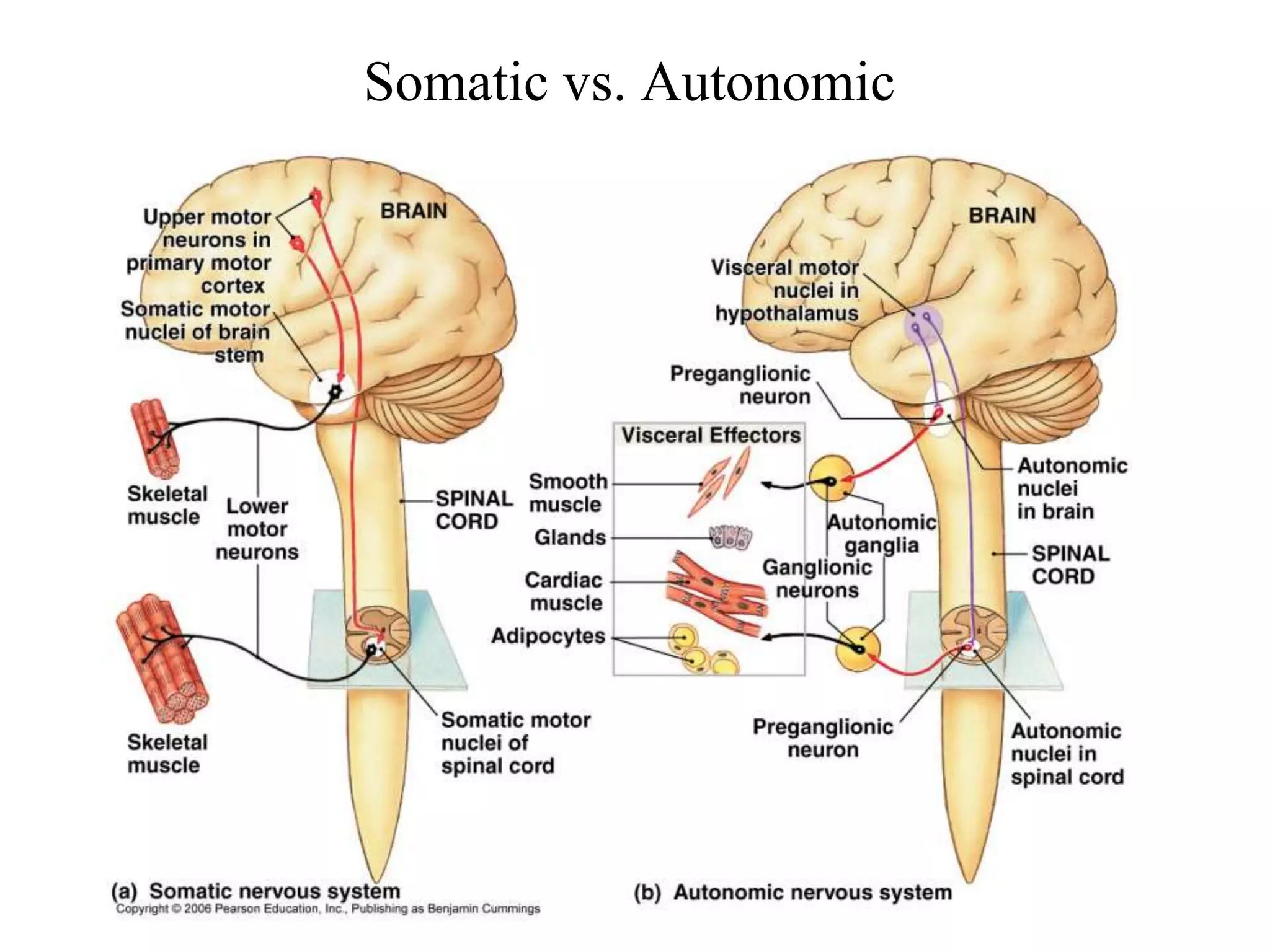
Somatic vs. Autonomic
                      Effectors (Targets)

  skeletal muscle                    smooth/cardiac muscle &
                                     glands

                      Efferent pathways
1 neuron - myelinated axon           2 neuron pathway –
from ventral horn of spinal
                                     1st- preganglionic and body
cord all the way to effector         resides in brainstem/S2-S4
                                     cord – myelinated axon;
                                     2nd- postganglionic and body
                                     resides in autonomic ganglion
                                     – unmyelinated axon
                                   SNS = short pre/long post ganglionic axon
                                   PsNS = long pre/short post ganglionic axon
Somatic vs. Autonomic
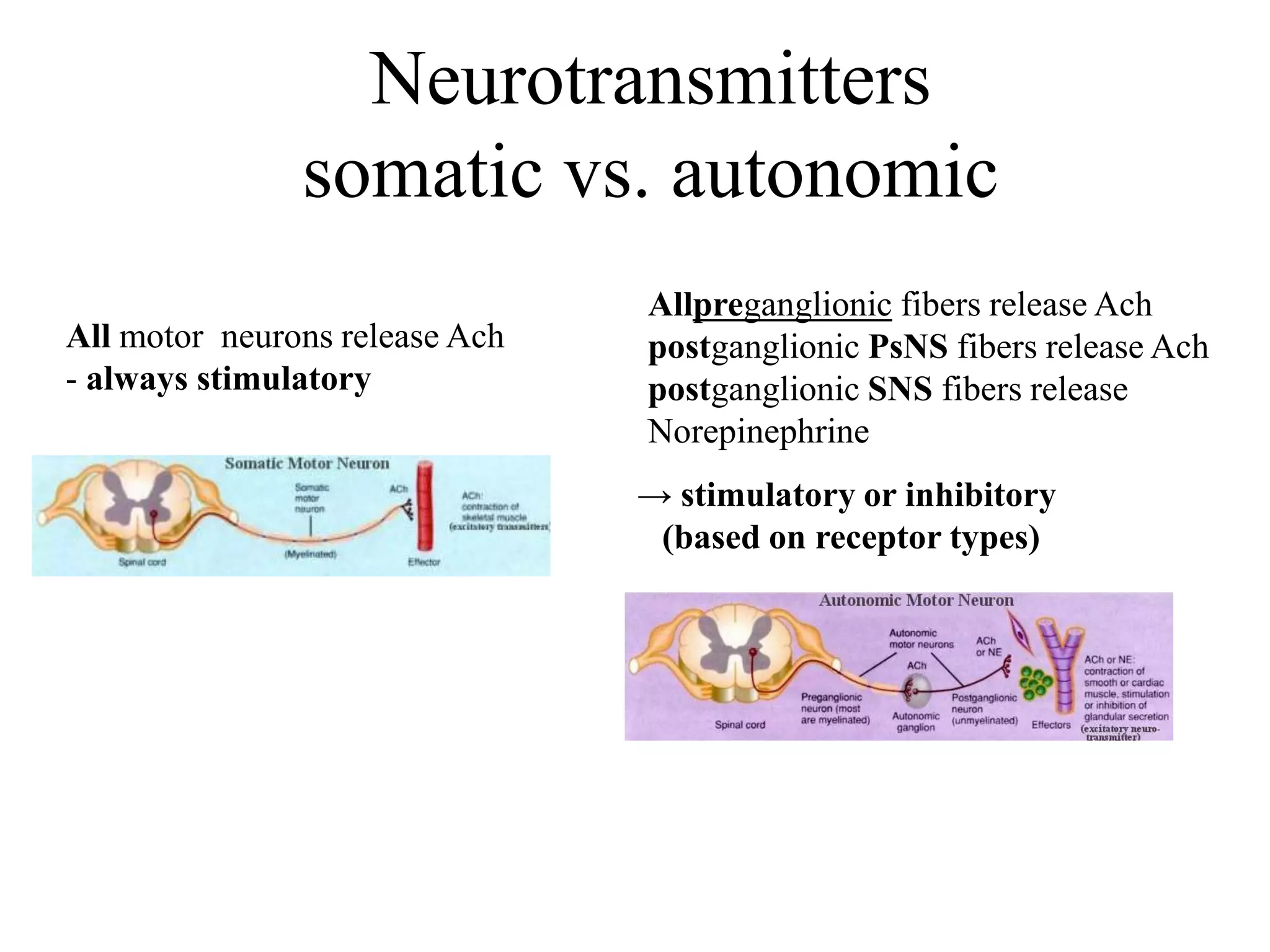
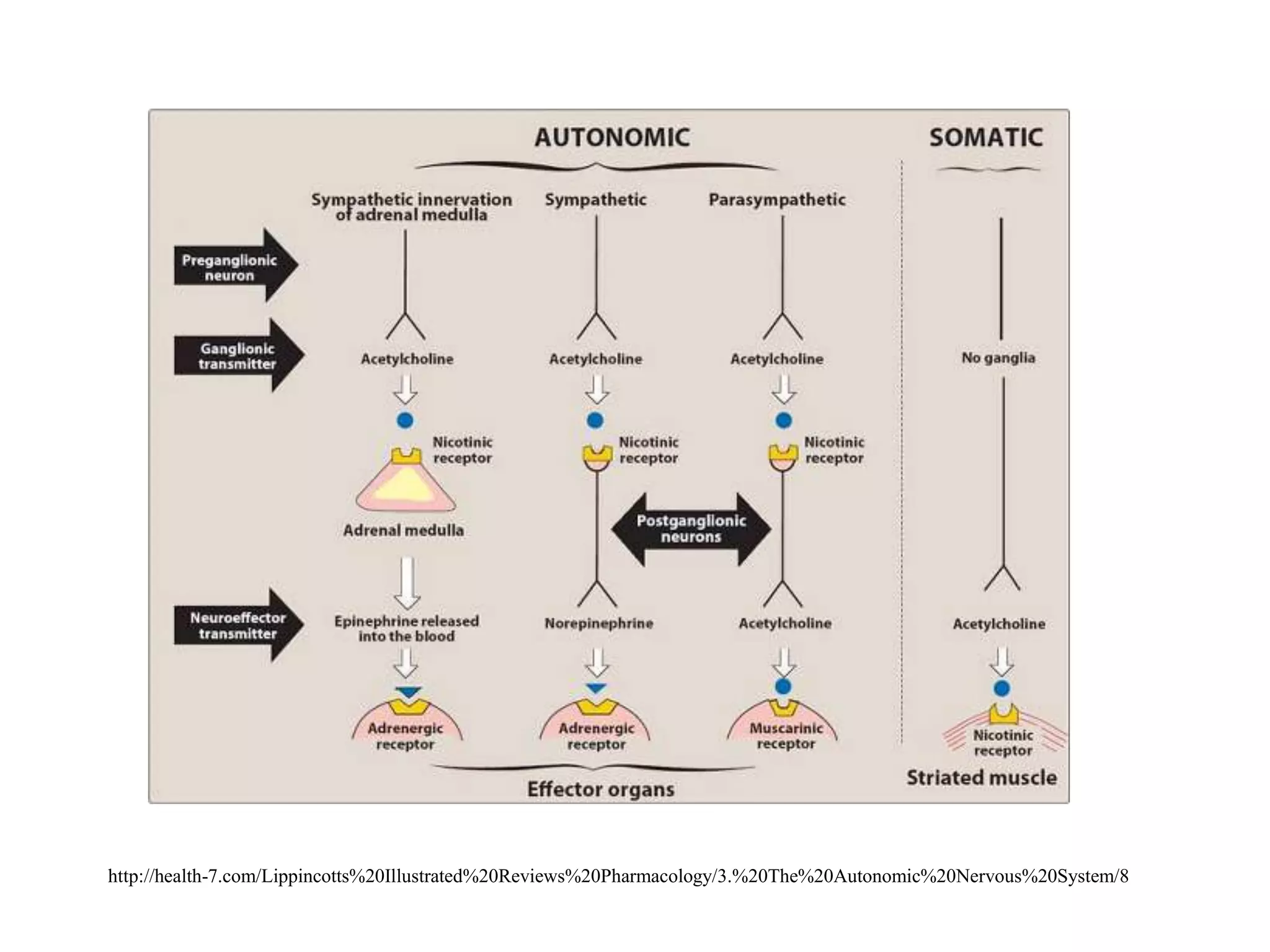
Neurotransmitters
               somatic vs. autonomic
                                Allpreganglionic fibers release Ach
All motor neurons release Ach   postganglionic PsNS fibers release Ach
- always stimulatory            postganglionic SNS fibers release
                                Norepinephrine
                                → stimulatory or inhibitory
                                 (based on receptor types)
http://health-7.com/Lippincotts%20Illustrated%20Reviews%20Pharmacology/3.%20The%20Autonomic%20Nervous%20System/8
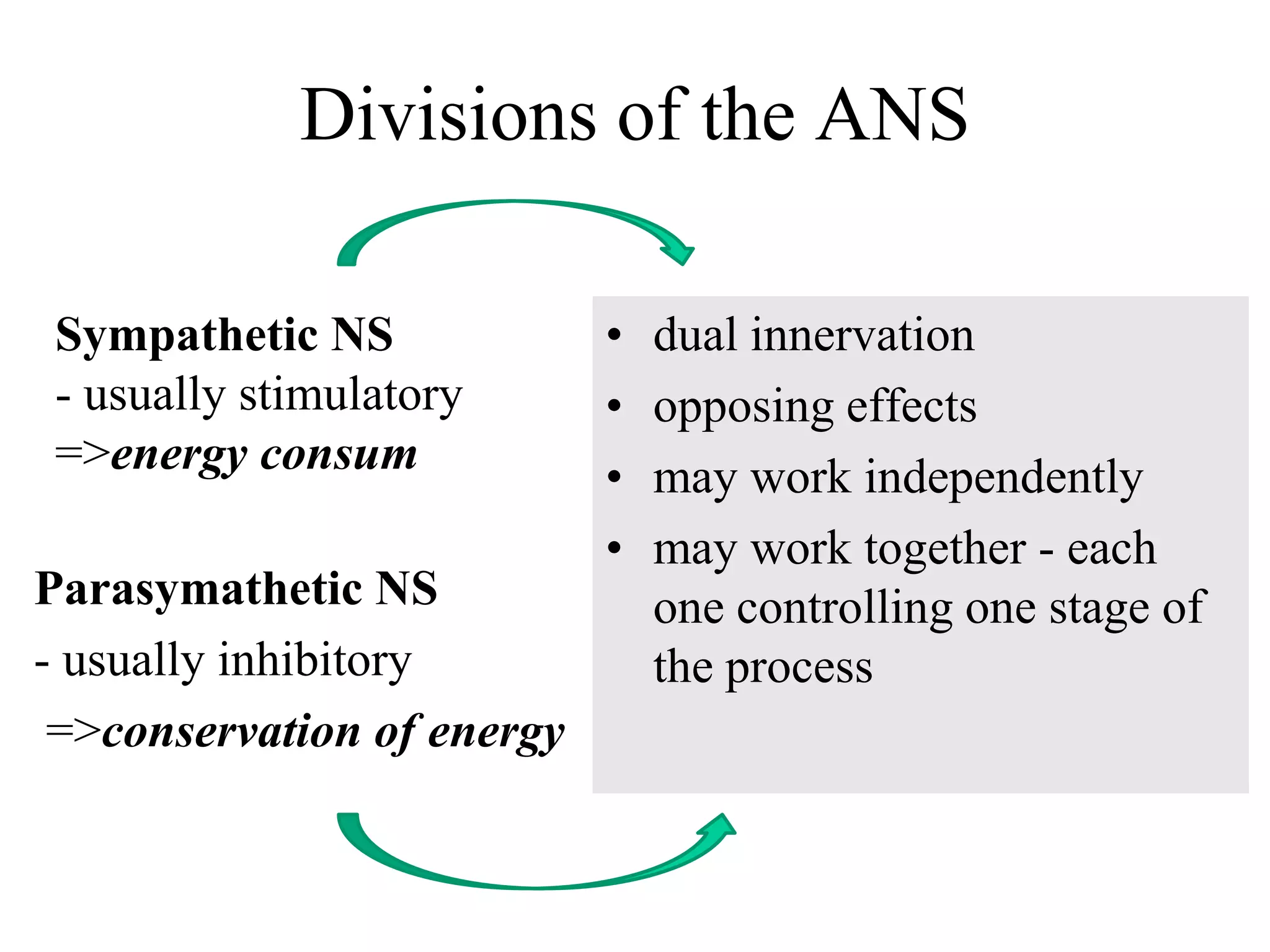
Divisions of the ANS

Sympathetic NS              •   dual innervation
- usually stimulatory       •   opposing effects
=>energy consum             •   may work independently
                            •   may work together - each
Parasymathetic NS               one controlling one stage of
- usually inhibitory            the process
 =>conservation of energy
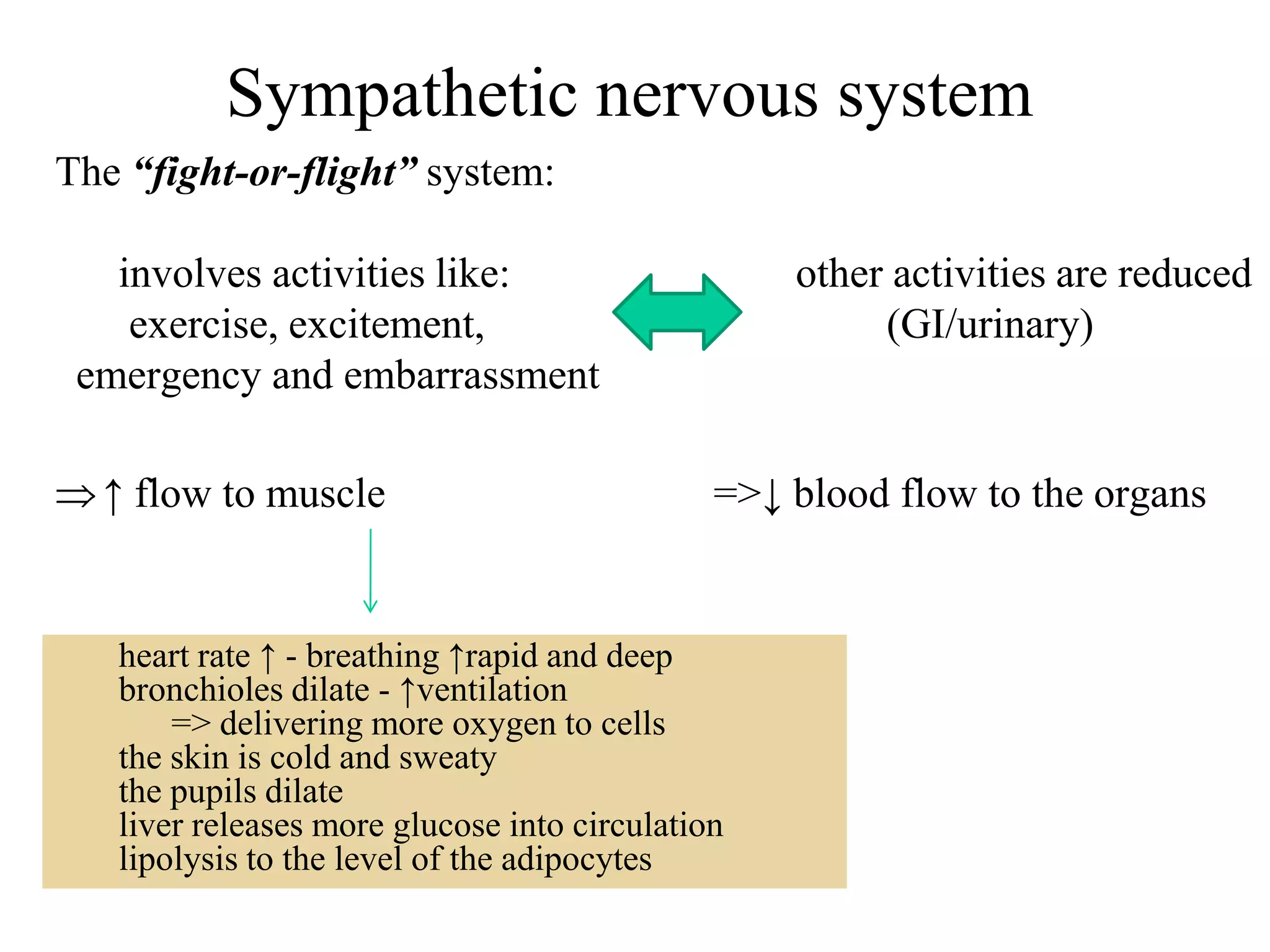
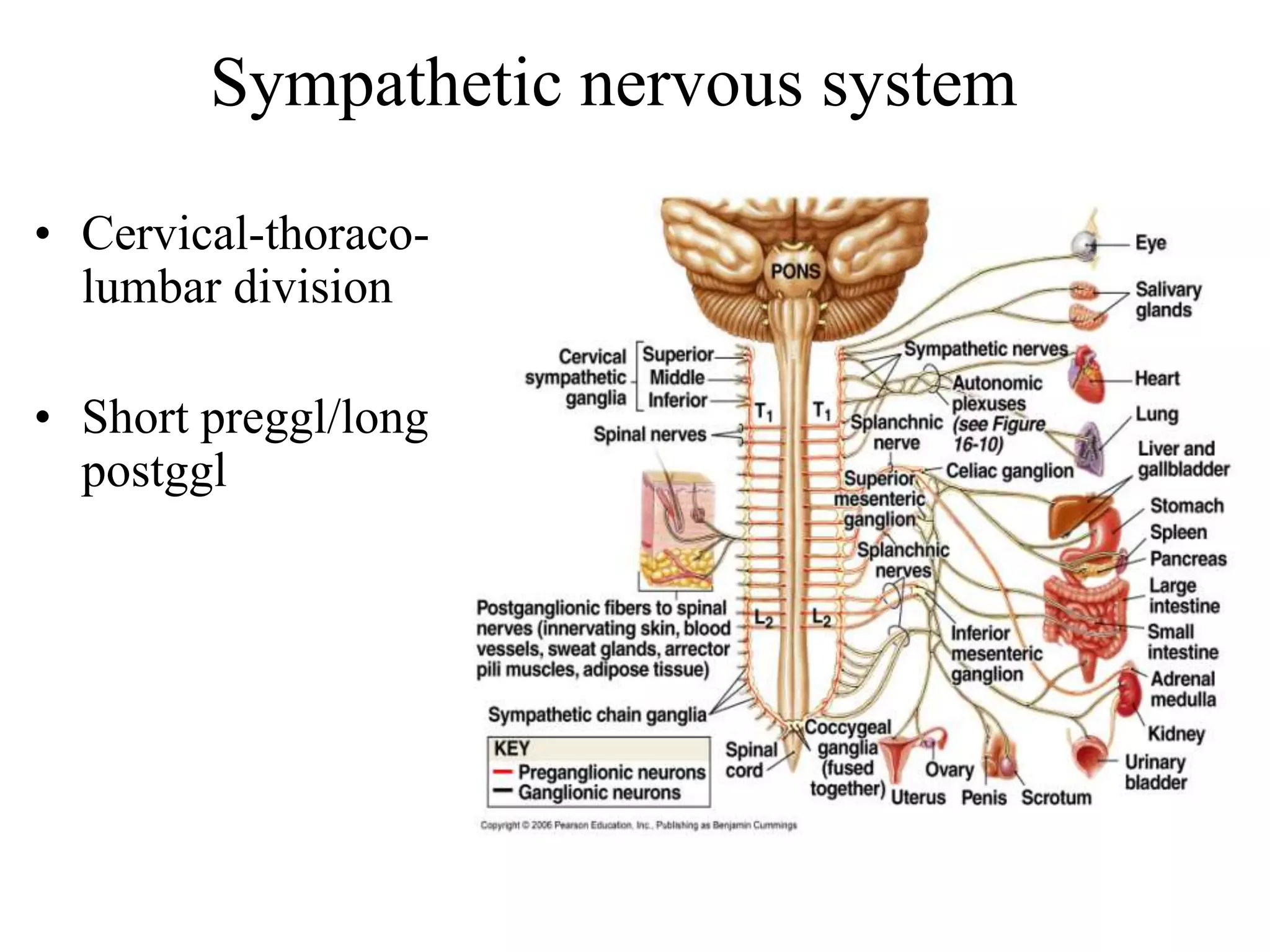
Sympathetic nervous system
The “fight-or-flight” system:

   involves activities like:                      other activities are reduced
    exercise, excitement,                              (GI/urinary)
 emergency and embarrassment

  ↑ flow to muscle                            =>↓ blood flow to the organs


   heart rate ↑ - breathing ↑rapid and deep
   bronchioles dilate - ↑ventilation
       => delivering more oxygen to cells
   the skin is cold and sweaty
   the pupils dilate
   liver releases more glucose into circulation
   lipolysis to the level of the adipocytes
Sympathetic nervous system

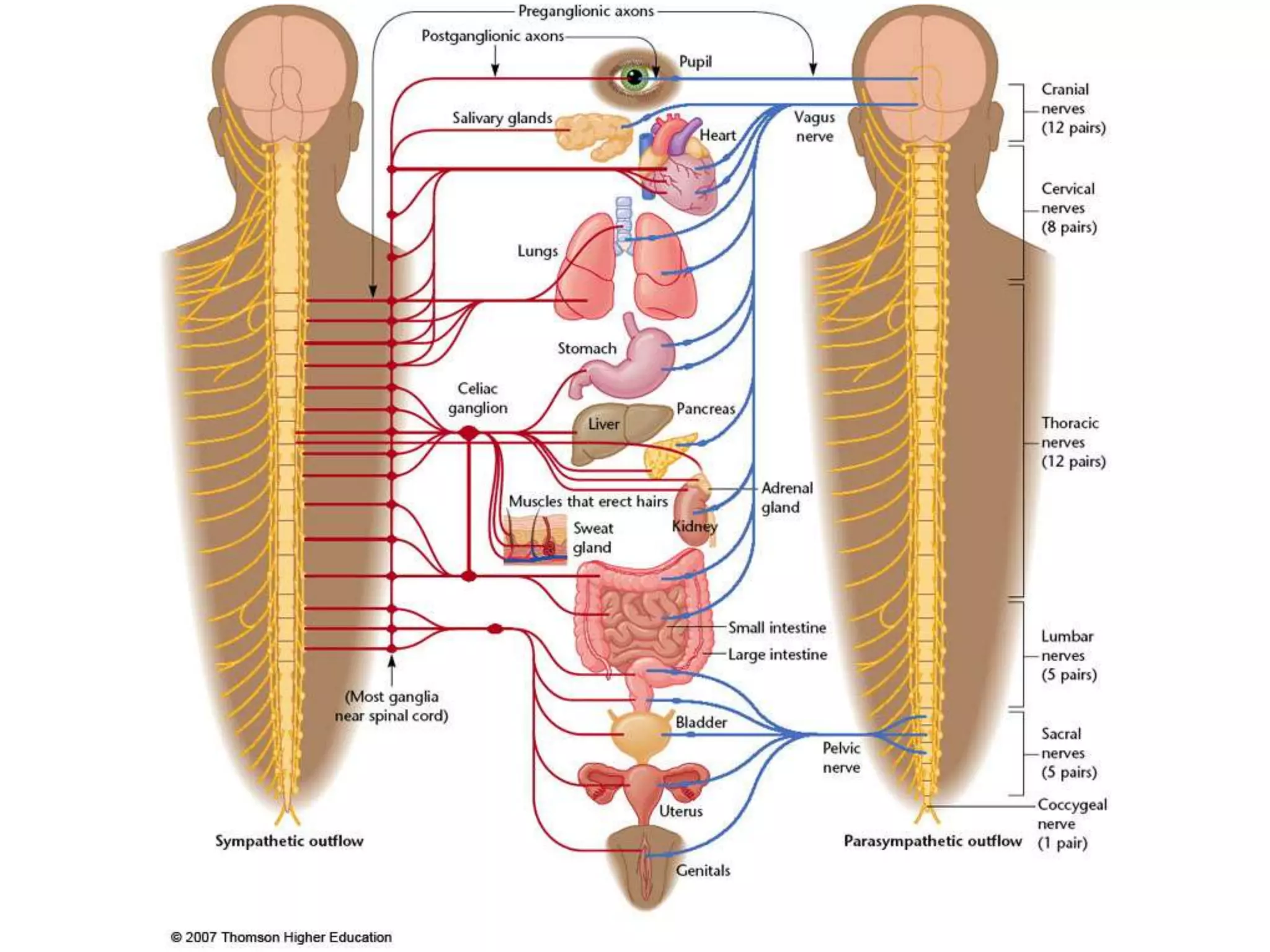
• Cervical-thoraco-
  lumbar division

• Short preggl/long
  postggl
Adrenal medulla
• same embryological origin as
  the sympathetic ganglia
• fibers from the thoracic
  splanchnic nerves
  pass thru the Celiac Ganglion
↓
        terminate in
  the medullary adrenal gland
=> secrete epi- and
  norepinephrine into the Barwick et al. - Embryology of the adrenal glands and its relevance to
                             diagnostic imaging, Clin Rad, 2005, Vol. 60, Issue 9, pag: 953-959
  blood
Parasympathetic nervous system
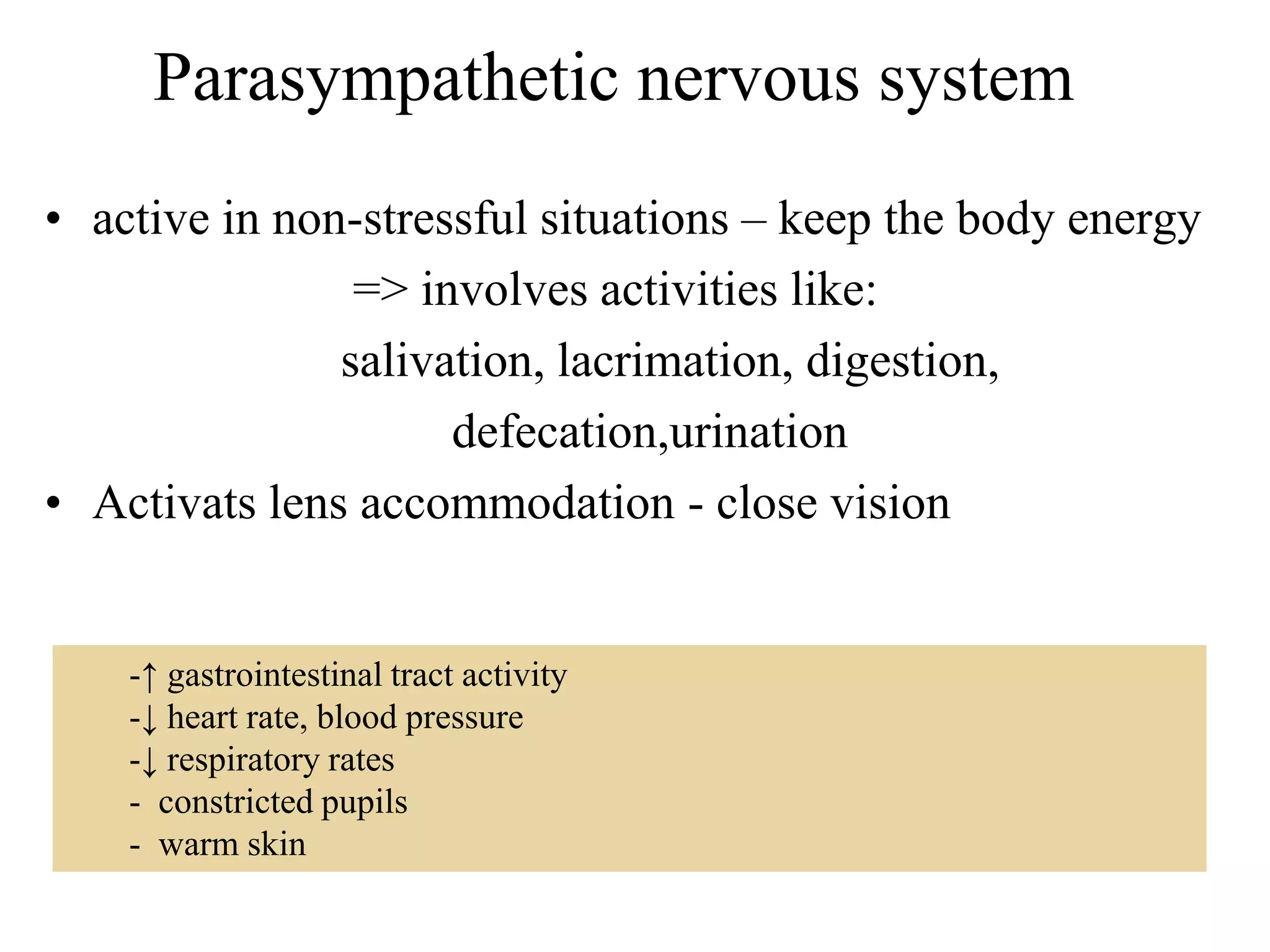
• active in non-stressful situations – keep the body energy
                => involves activities like:
               salivation, lacrimation, digestion,
                     defecation,urination
• Activats lens accommodation - close vision


    -↑ gastrointestinal tract activity
    -↓ heart rate, blood pressure
    -↓ respiratory rates
    - constricted pupils
    - warm skin
Parasympathetic nervous system

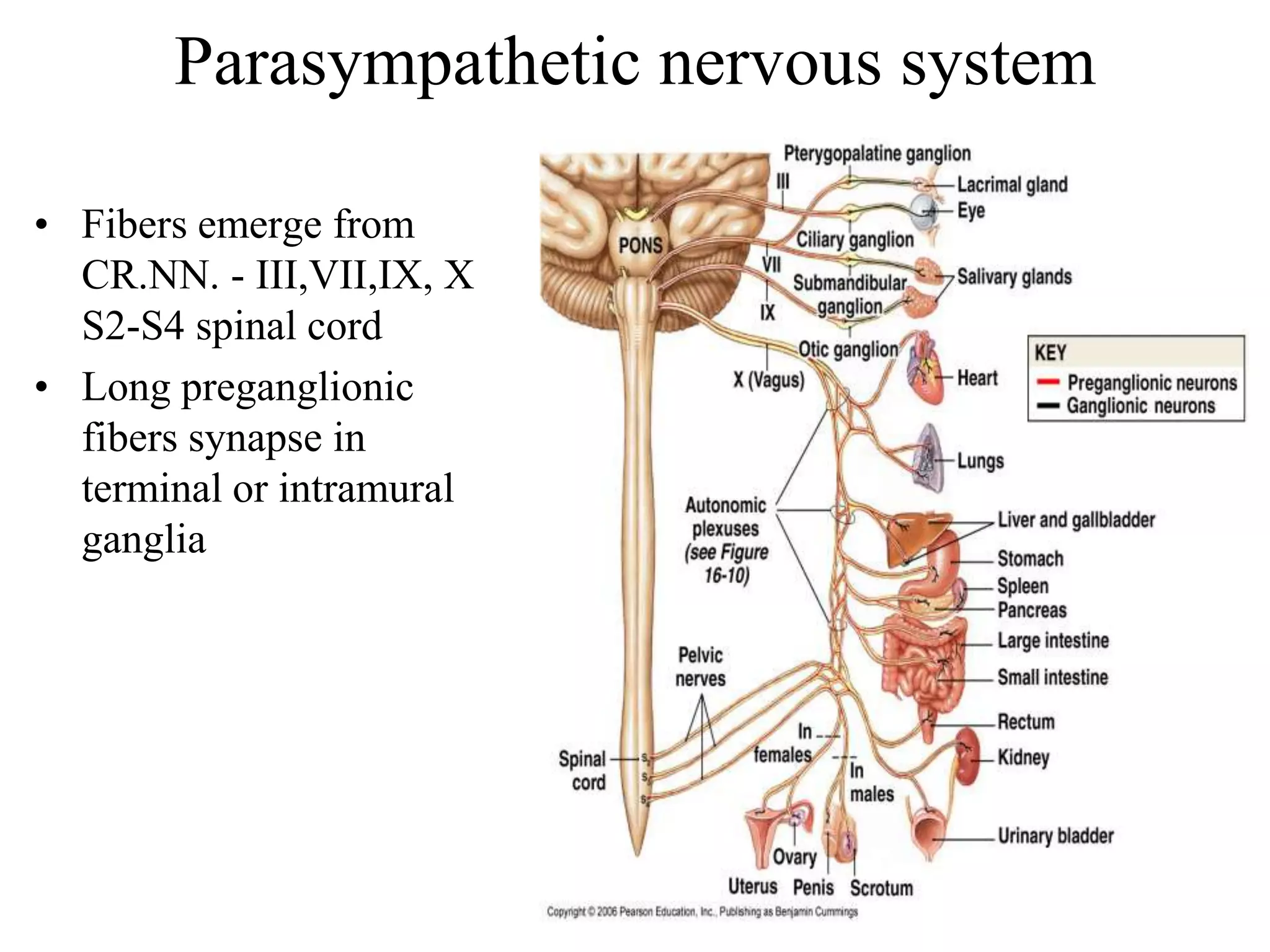
• Fibers emerge from
  CR.NN. - III,VII,IX, X
  S2-S4 spinal cord
• Long preganglionic
  fibers synapse in
  terminal or intramural
  ganglia
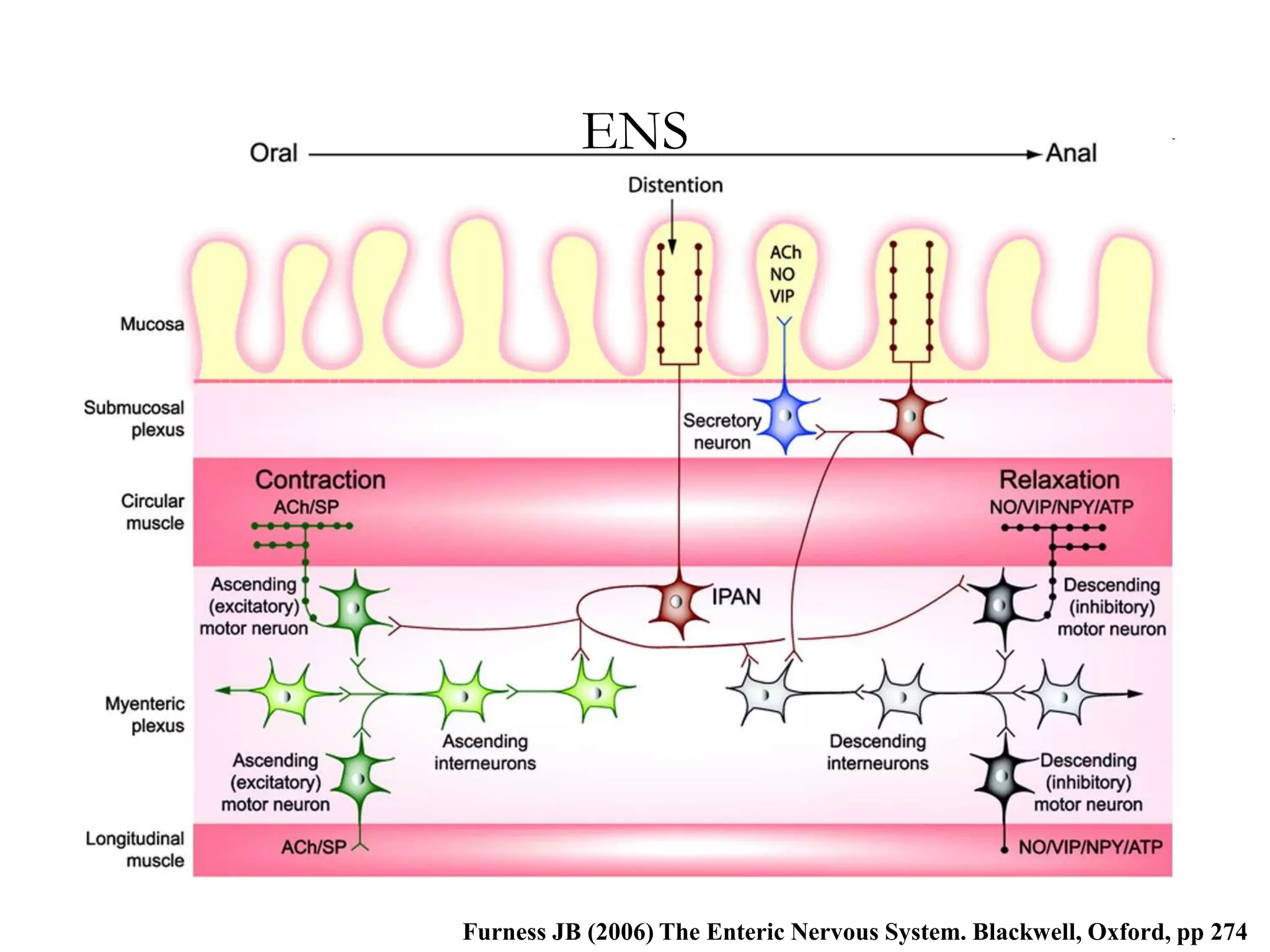
Enteric Nervous
 System
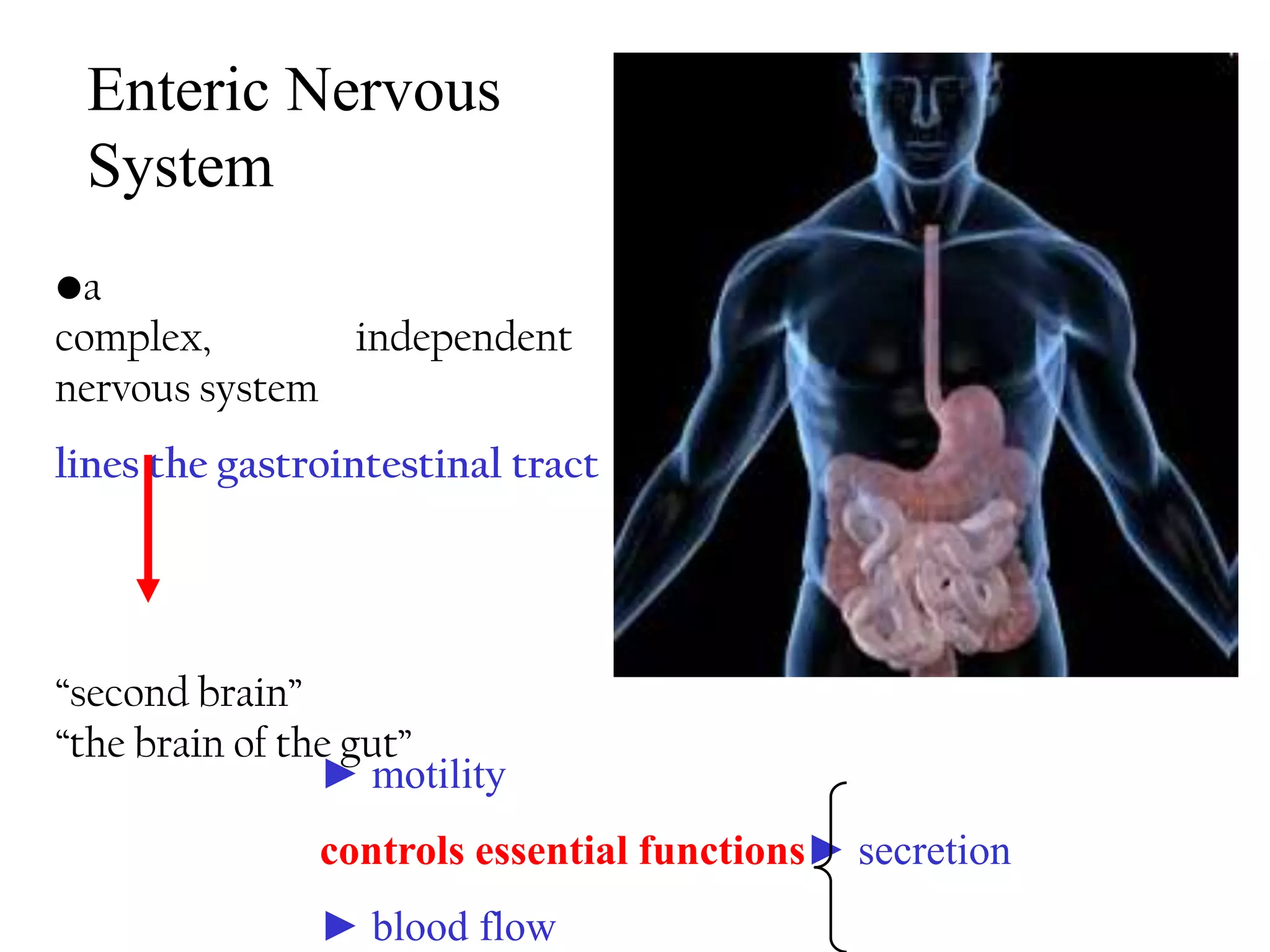
•a
complex,       independent
nervous system
lines the gastrointestinal tract


“second brain”
“the brain of the gut”
                ► motility
               controls essential functions► secretion
               ► blood flow
ENS


Furness JB (2006) The Enteric Nervous System. Blackwell, Oxford, pp 274
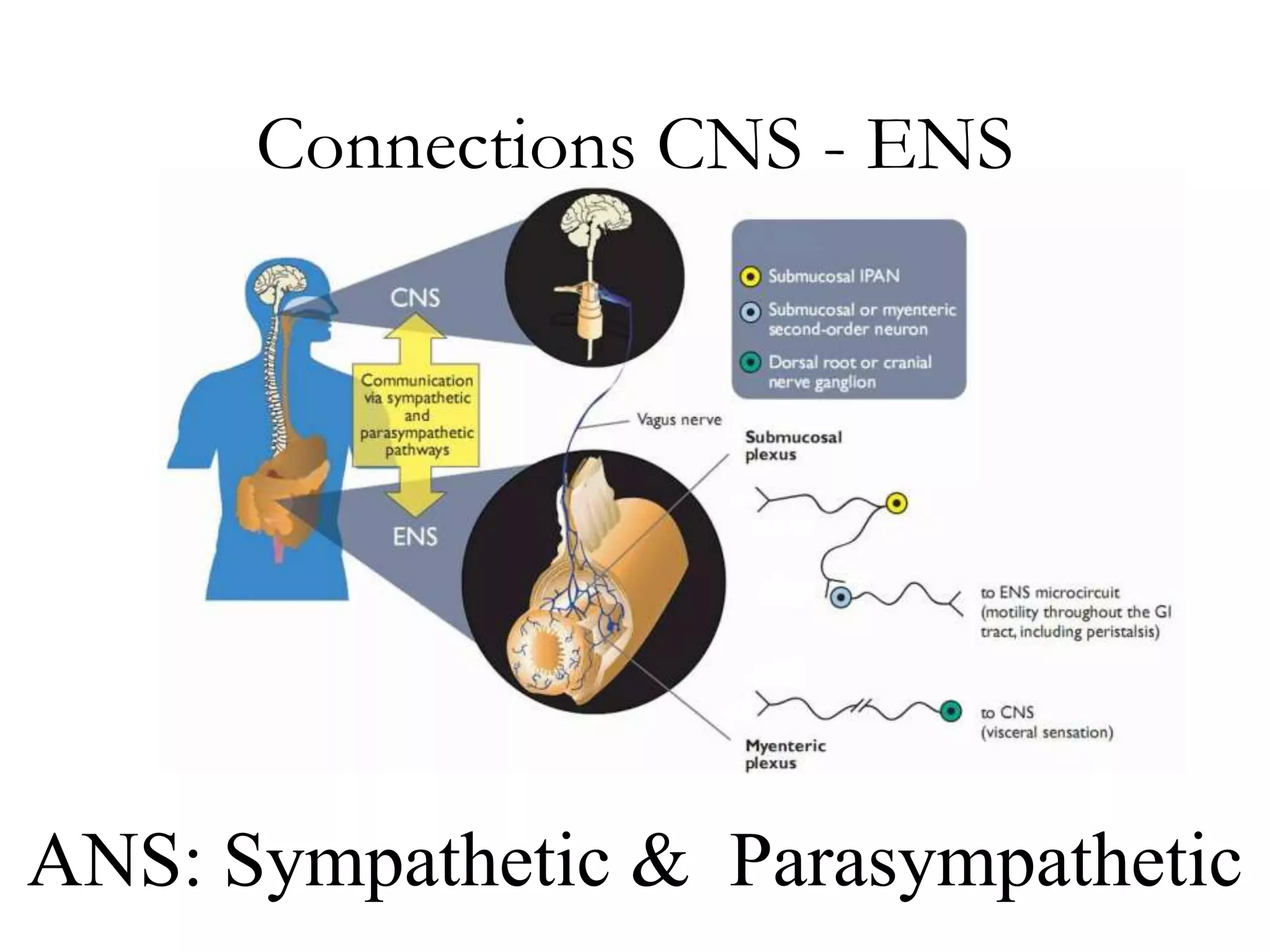
Connections CNS - ENS


ANS: Sympathetic & Parasympathetic
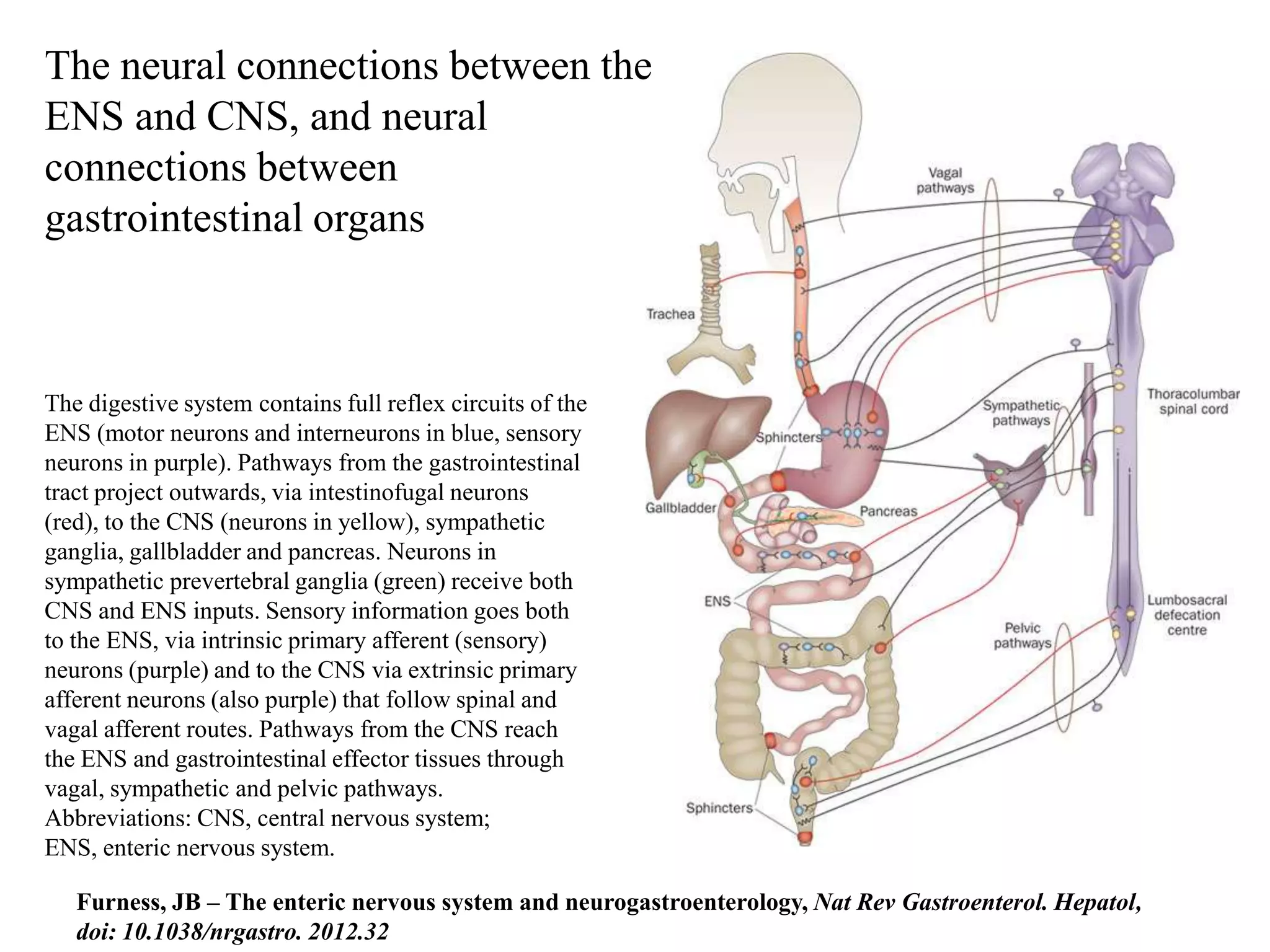
The neural connections between the
ENS and CNS, and neural
connections between
gastrointestinal organs


The digestive system contains full reflex circuits of the
ENS (motor neurons and interneurons in blue, sensory
neurons in purple). Pathways from the gastrointestinal
tract project outwards, via intestinofugal neurons
(red), to the CNS (neurons in yellow), sympathetic
ganglia, gallbladder and pancreas. Neurons in
sympathetic prevertebral ganglia (green) receive both
CNS and ENS inputs. Sensory information goes both
to the ENS, via intrinsic primary afferent (sensory)
neurons (purple) and to the CNS via extrinsic primary
afferent neurons (also purple) that follow spinal and
vagal afferent routes. Pathways from the CNS reach
the ENS and gastrointestinal effector tissues through
vagal, sympathetic and pelvic pathways.
Abbreviations: CNS, central nervous system;
ENS, enteric nervous system.

   Furness, JB – The enteric nervous system and neurogastroenterology, Nat Rev Gastroenterol. Hepatol,
   doi: 10.1038/nrgastro. 2012.32
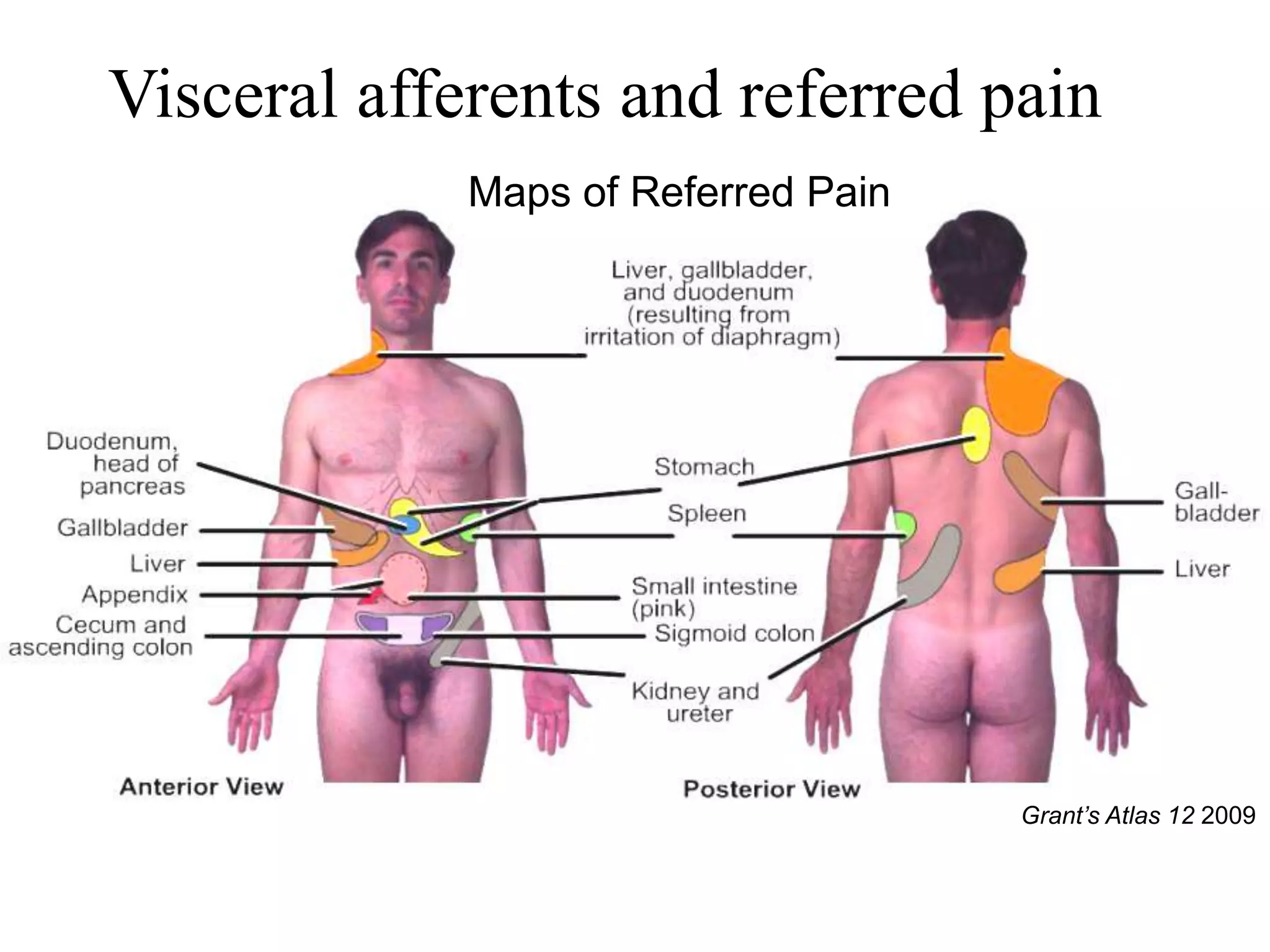
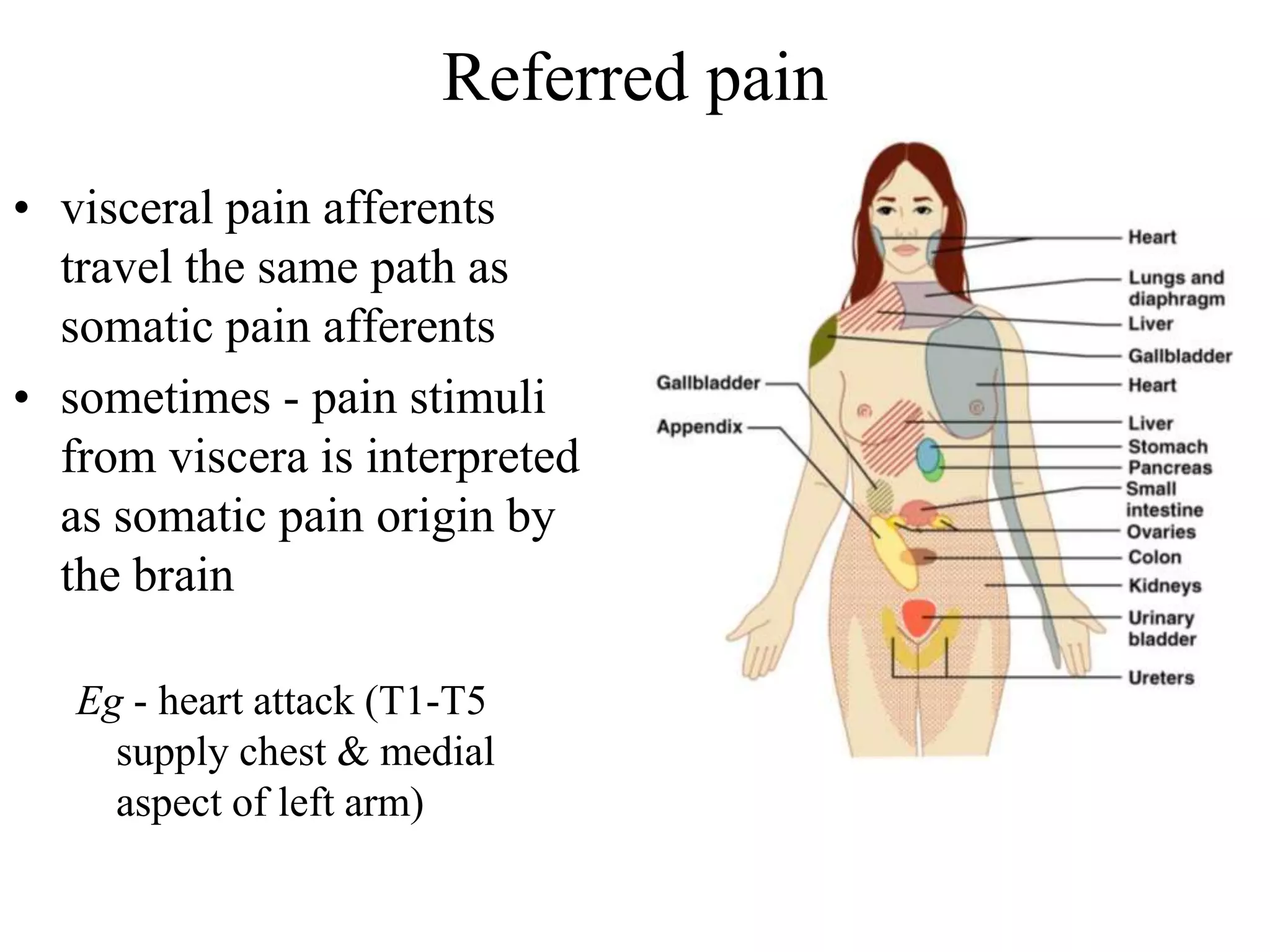
Visceral afferents and referred pain
             Maps of Referred Pain


                                     Grant’s Atlas 12 2009
Referred pain
• visceral pain afferents
  travel the same path as
  somatic pain afferents
• sometimes - pain stimuli
  from viscera is interpreted
  as somatic pain origin by
  the brain

   Eg - heart attack (T1-T5
     supply chest & medial
     aspect of left arm)
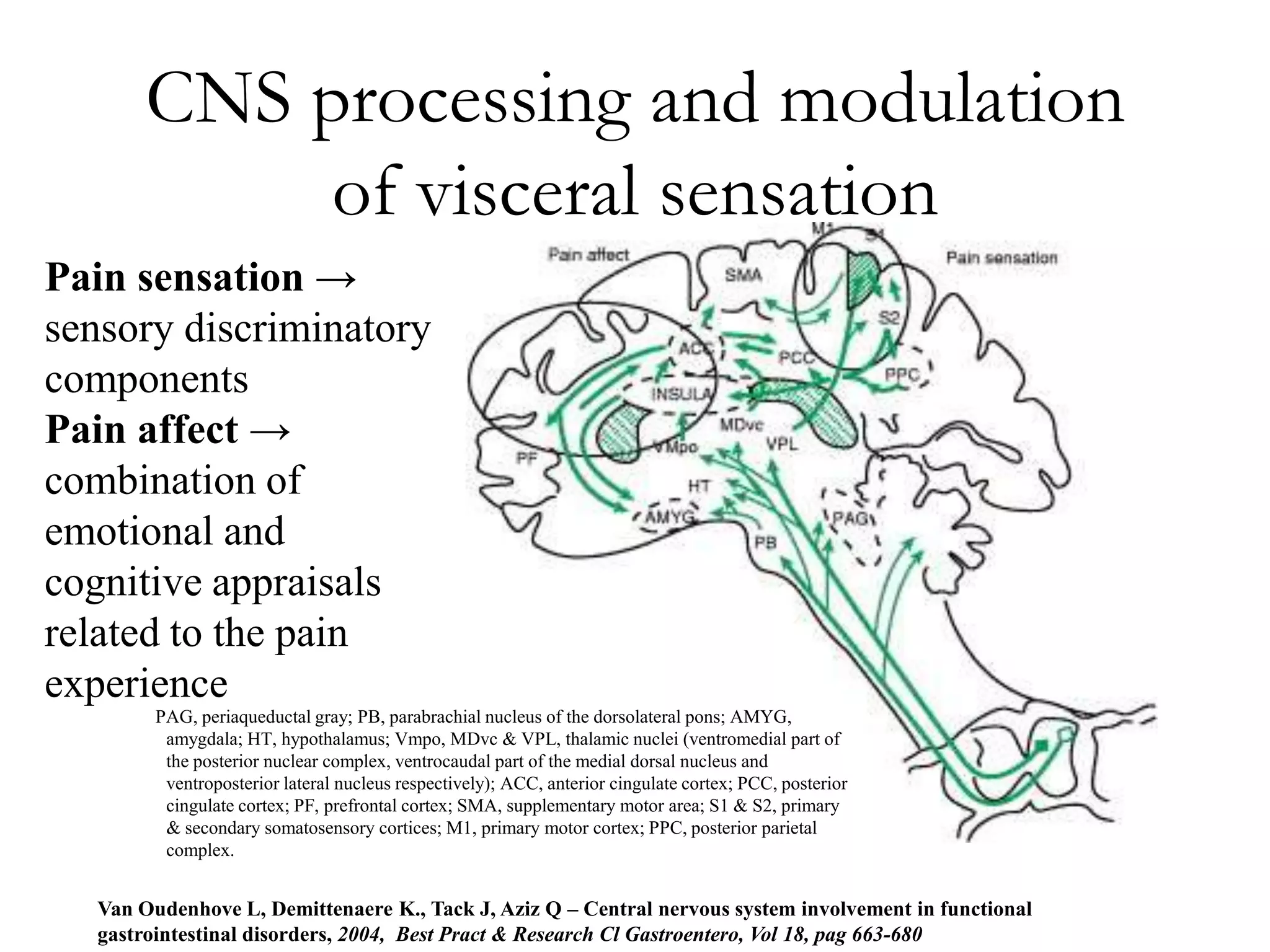
CNS processing and modulation
             of visceral sensation
Pain sensation →
sensory discriminatory
components
Pain affect →
combination of
emotional and
cognitive appraisals
related to the pain
experience
         PAG, periaqueductal gray; PB, parabrachial nucleus of the dorsolateral pons; AMYG,
          amygdala; HT, hypothalamus; Vmpo, MDvc & VPL, thalamic nuclei (ventromedial part of
          the posterior nuclear complex, ventrocaudal part of the medial dorsal nucleus and
          ventroposterior lateral nucleus respectively); ACC, anterior cingulate cortex; PCC, posterior
          cingulate cortex; PF, prefrontal cortex; SMA, supplementary motor area; S1 & S2, primary
          & secondary somatosensory cortices; M1, primary motor cortex; PPC, posterior parietal
          complex.


   Van Oudenhove L, Demittenaere K., Tack J, Aziz Q – Central nervous system involvement in functional
   gastrointestinal disorders, 2004, Best Pract & Research Cl Gastroentero, Vol 18, pag 663-680
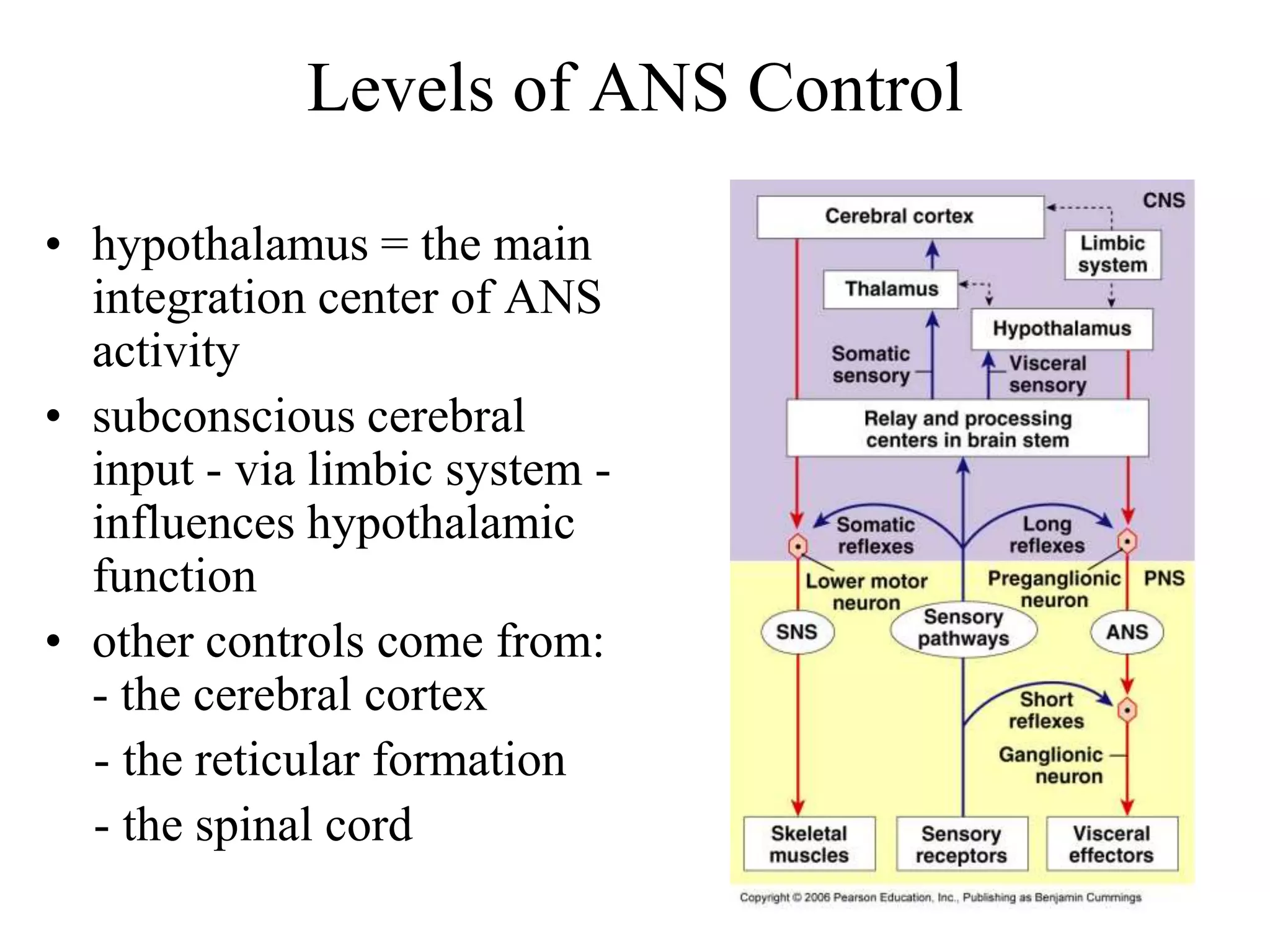
Levels of ANS Control

• hypothalamus = the main
  integration center of ANS
  activity
• subconscious cerebral
  input - via limbic system -
  influences hypothalamic
  function
• other controls come from:
  - the cerebral cortex
  - the reticular formation
  - the spinal cord
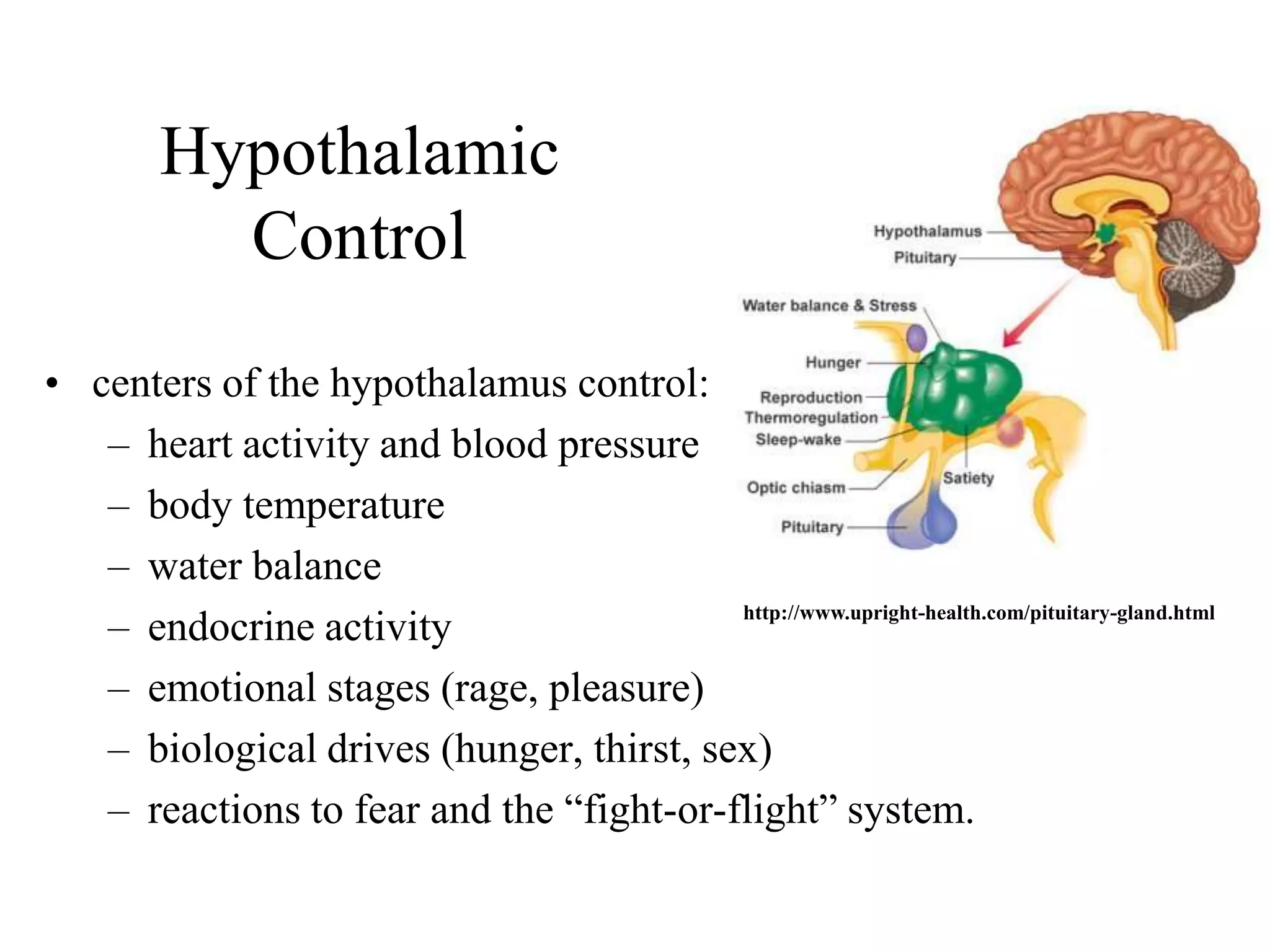
Hypothalamic
           Control
• centers of the hypothalamus control:
   – heart activity and blood pressure
   – body temperature
   – water balance
   – endocrine activity                   http://www.upright-health.com/pituitary-gland.html


   – emotional stages (rage, pleasure)
   – biological drives (hunger, thirst, sex)
   – reactions to fear and the “fight-or-flight” system.
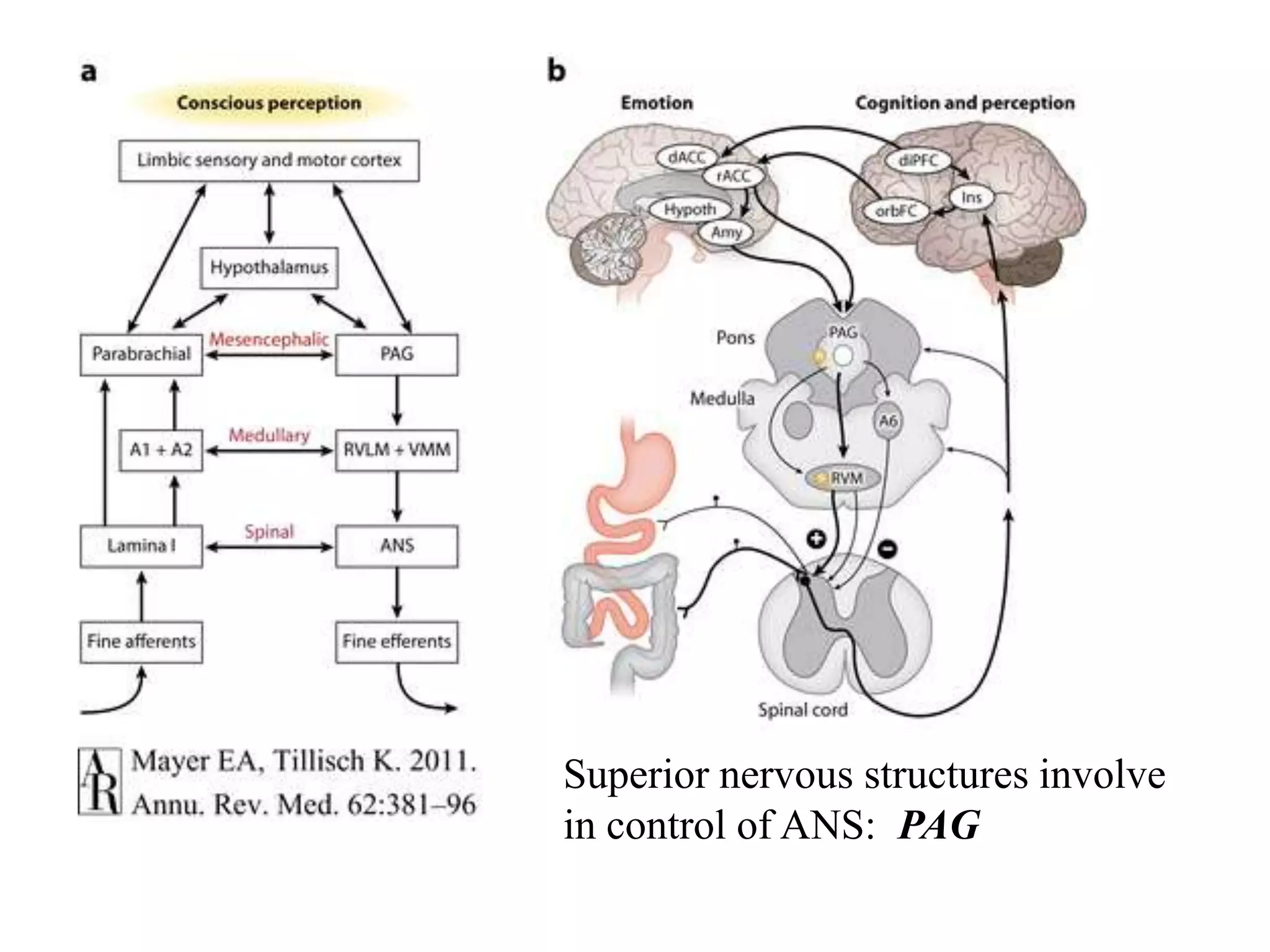
Superior nervous structures involve
in control of ANS: PAG
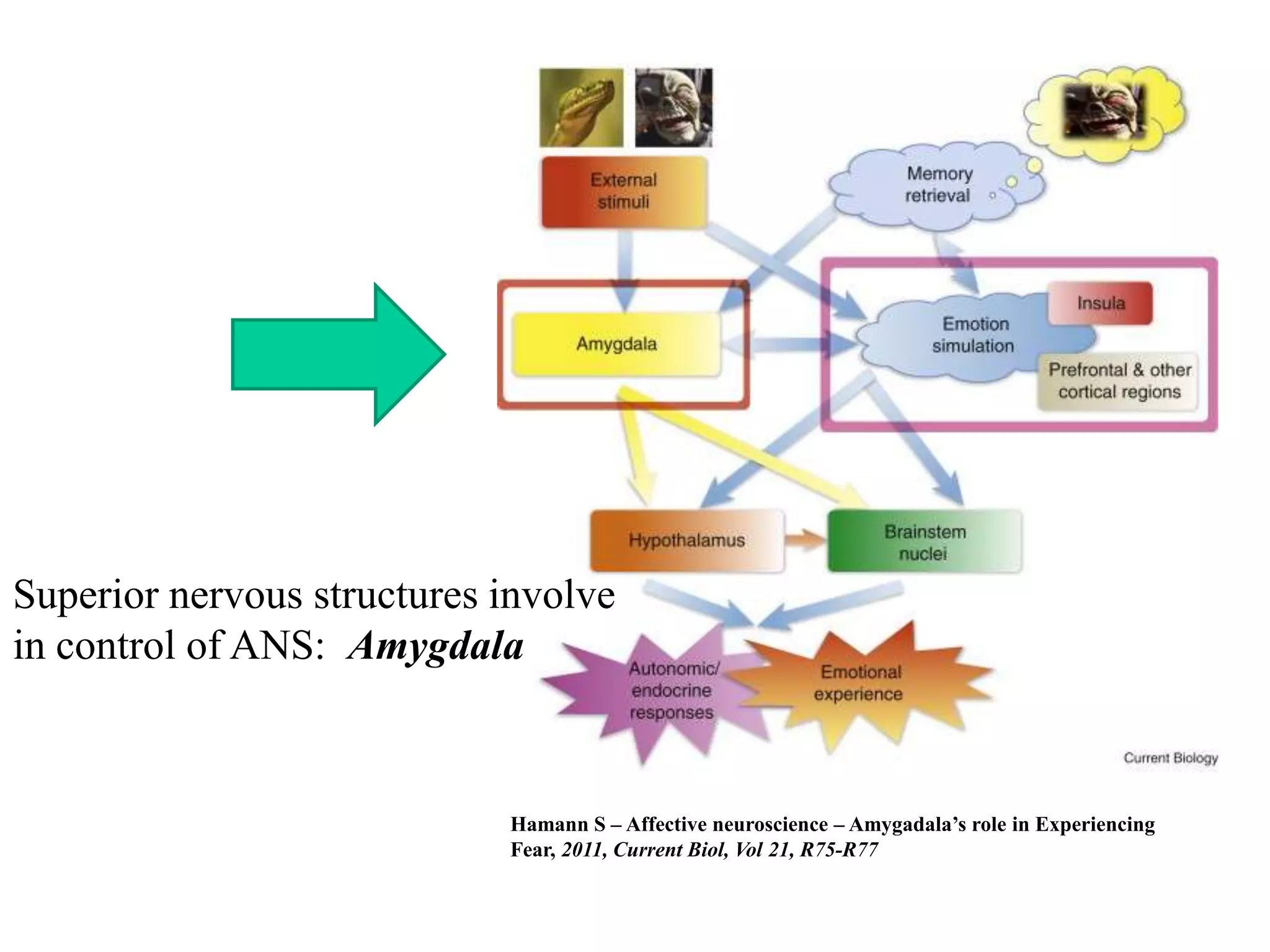
Superior nervous structures involve
in control of ANS: Amygdala


                            Hamann S – Affective neuroscience – Amygadala’s role in Experiencing
                            Fear, 2011, Current Biol, Vol 21, R75-R77
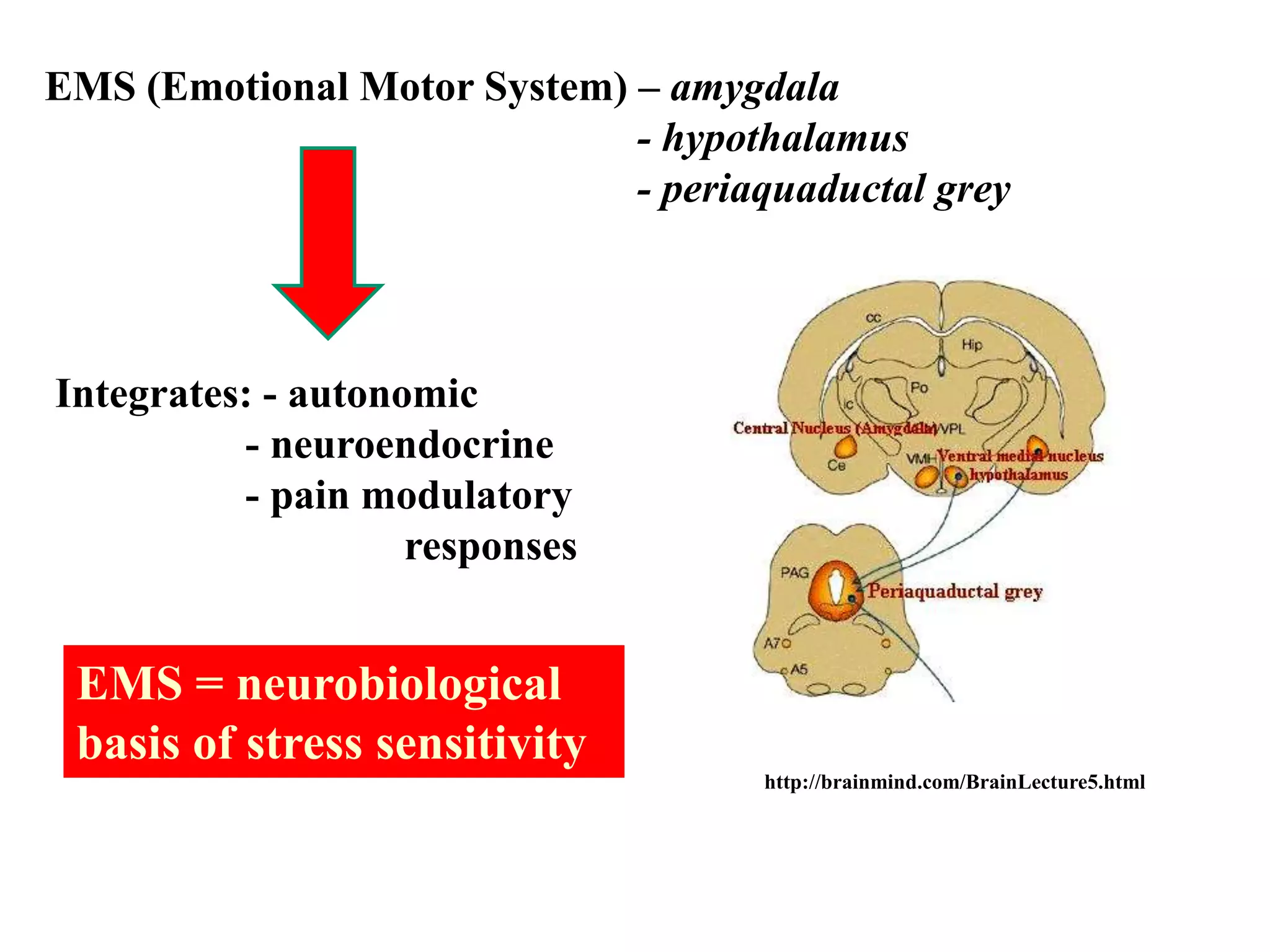
EMS (Emotional Motor System) – amygdala
                             - hypothalamus
                             - periaquaductal grey


Integrates: - autonomic
          - neuroendocrine
          - pain modulatory
                    responses


 EMS = neurobiological
 basis of stress sensitivity
                                     http://brainmind.com/BrainLecture5.html
Central Nervous System, The Autonomic Nervous System

Central Nervous System, The Autonomic Nervous System

  • 1.
    Central Nervous System TheAutonomic Nervous System
  • 2.
    Nervous System • coordinatesthe actions of the body • transmits signals between different parts of the body
  • 3.
    Sensory input –gathering information monitor changes occurring inside and outside the body stimuli Integration – process and interpret sensory input +/- action Motor output = response to integrated stimuli activates muscles/ glands
  • 4.
    Nervous System Central Nervous System Periferic Nervous System SENSORY MOTOR AUTONOMIC SOMATIC Sympathetic NERVOUS NERVOUS SYSTEM SYSTEM Parasympathetic Enteric Nervous System
  • 5.
    Autonomic Nervous System involuntary– automatic – visceral/glands motor system SENSORY MOTOR AUTONOMIC Sympathetic NERVOUS SYSTEM Parasympathetic Enteric Nervous System
  • 6.
    Somatic vs. Autonomic Effectors (Targets) skeletal muscle smooth/cardiac muscle & glands Efferent pathways 1 neuron - myelinated axon 2 neuron pathway – from ventral horn of spinal 1st- preganglionic and body cord all the way to effector resides in brainstem/S2-S4 cord – myelinated axon; 2nd- postganglionic and body resides in autonomic ganglion – unmyelinated axon SNS = short pre/long post ganglionic axon PsNS = long pre/short post ganglionic axon
  • 7.
  • 8.
    Neurotransmitters somatic vs. autonomic Allpreganglionic fibers release Ach All motor neurons release Ach postganglionic PsNS fibers release Ach - always stimulatory postganglionic SNS fibers release Norepinephrine → stimulatory or inhibitory (based on receptor types)
  • 9.
  • 10.
    Divisions of theANS Sympathetic NS • dual innervation - usually stimulatory • opposing effects =>energy consum • may work independently • may work together - each Parasymathetic NS one controlling one stage of - usually inhibitory the process =>conservation of energy
  • 12.
    Sympathetic nervous system The“fight-or-flight” system: involves activities like: other activities are reduced exercise, excitement, (GI/urinary) emergency and embarrassment ↑ flow to muscle =>↓ blood flow to the organs heart rate ↑ - breathing ↑rapid and deep bronchioles dilate - ↑ventilation => delivering more oxygen to cells the skin is cold and sweaty the pupils dilate liver releases more glucose into circulation lipolysis to the level of the adipocytes
  • 13.
    Sympathetic nervous system •Cervical-thoraco- lumbar division • Short preggl/long postggl
  • 14.
    Adrenal medulla • sameembryological origin as the sympathetic ganglia • fibers from the thoracic splanchnic nerves pass thru the Celiac Ganglion ↓ terminate in the medullary adrenal gland => secrete epi- and norepinephrine into the Barwick et al. - Embryology of the adrenal glands and its relevance to diagnostic imaging, Clin Rad, 2005, Vol. 60, Issue 9, pag: 953-959 blood
  • 15.
    Parasympathetic nervous system •active in non-stressful situations – keep the body energy => involves activities like: salivation, lacrimation, digestion, defecation,urination • Activats lens accommodation - close vision -↑ gastrointestinal tract activity -↓ heart rate, blood pressure -↓ respiratory rates - constricted pupils - warm skin
  • 16.
    Parasympathetic nervous system •Fibers emerge from CR.NN. - III,VII,IX, X S2-S4 spinal cord • Long preganglionic fibers synapse in terminal or intramural ganglia
  • 17.
    Enteric Nervous System •a complex, independent nervous system lines the gastrointestinal tract “second brain” “the brain of the gut” ► motility controls essential functions► secretion ► blood flow
  • 18.
    ENS Furness JB (2006)The Enteric Nervous System. Blackwell, Oxford, pp 274
  • 19.
    Connections CNS -ENS ANS: Sympathetic & Parasympathetic
  • 20.
    The neural connectionsbetween the ENS and CNS, and neural connections between gastrointestinal organs The digestive system contains full reflex circuits of the ENS (motor neurons and interneurons in blue, sensory neurons in purple). Pathways from the gastrointestinal tract project outwards, via intestinofugal neurons (red), to the CNS (neurons in yellow), sympathetic ganglia, gallbladder and pancreas. Neurons in sympathetic prevertebral ganglia (green) receive both CNS and ENS inputs. Sensory information goes both to the ENS, via intrinsic primary afferent (sensory) neurons (purple) and to the CNS via extrinsic primary afferent neurons (also purple) that follow spinal and vagal afferent routes. Pathways from the CNS reach the ENS and gastrointestinal effector tissues through vagal, sympathetic and pelvic pathways. Abbreviations: CNS, central nervous system; ENS, enteric nervous system. Furness, JB – The enteric nervous system and neurogastroenterology, Nat Rev Gastroenterol. Hepatol, doi: 10.1038/nrgastro. 2012.32
  • 21.
    Visceral afferents andreferred pain Maps of Referred Pain Grant’s Atlas 12 2009
  • 22.
    Referred pain • visceralpain afferents travel the same path as somatic pain afferents • sometimes - pain stimuli from viscera is interpreted as somatic pain origin by the brain Eg - heart attack (T1-T5 supply chest & medial aspect of left arm)
  • 23.
    CNS processing andmodulation of visceral sensation Pain sensation → sensory discriminatory components Pain affect → combination of emotional and cognitive appraisals related to the pain experience PAG, periaqueductal gray; PB, parabrachial nucleus of the dorsolateral pons; AMYG, amygdala; HT, hypothalamus; Vmpo, MDvc & VPL, thalamic nuclei (ventromedial part of the posterior nuclear complex, ventrocaudal part of the medial dorsal nucleus and ventroposterior lateral nucleus respectively); ACC, anterior cingulate cortex; PCC, posterior cingulate cortex; PF, prefrontal cortex; SMA, supplementary motor area; S1 & S2, primary & secondary somatosensory cortices; M1, primary motor cortex; PPC, posterior parietal complex. Van Oudenhove L, Demittenaere K., Tack J, Aziz Q – Central nervous system involvement in functional gastrointestinal disorders, 2004, Best Pract & Research Cl Gastroentero, Vol 18, pag 663-680
  • 24.
    Levels of ANSControl • hypothalamus = the main integration center of ANS activity • subconscious cerebral input - via limbic system - influences hypothalamic function • other controls come from: - the cerebral cortex - the reticular formation - the spinal cord
  • 25.
    Hypothalamic Control • centers of the hypothalamus control: – heart activity and blood pressure – body temperature – water balance – endocrine activity http://www.upright-health.com/pituitary-gland.html – emotional stages (rage, pleasure) – biological drives (hunger, thirst, sex) – reactions to fear and the “fight-or-flight” system.
  • 26.
    Superior nervous structuresinvolve in control of ANS: PAG
  • 27.
    Superior nervous structuresinvolve in control of ANS: Amygdala Hamann S – Affective neuroscience – Amygadala’s role in Experiencing Fear, 2011, Current Biol, Vol 21, R75-R77
  • 28.
    EMS (Emotional MotorSystem) – amygdala - hypothalamus - periaquaductal grey Integrates: - autonomic - neuroendocrine - pain modulatory responses EMS = neurobiological basis of stress sensitivity http://brainmind.com/BrainLecture5.html