EMBRYOLOGY
By;
RazaRehman, 152
Maria Ilyas, 148
Isfandyar; 156
S p i n a l C o r d
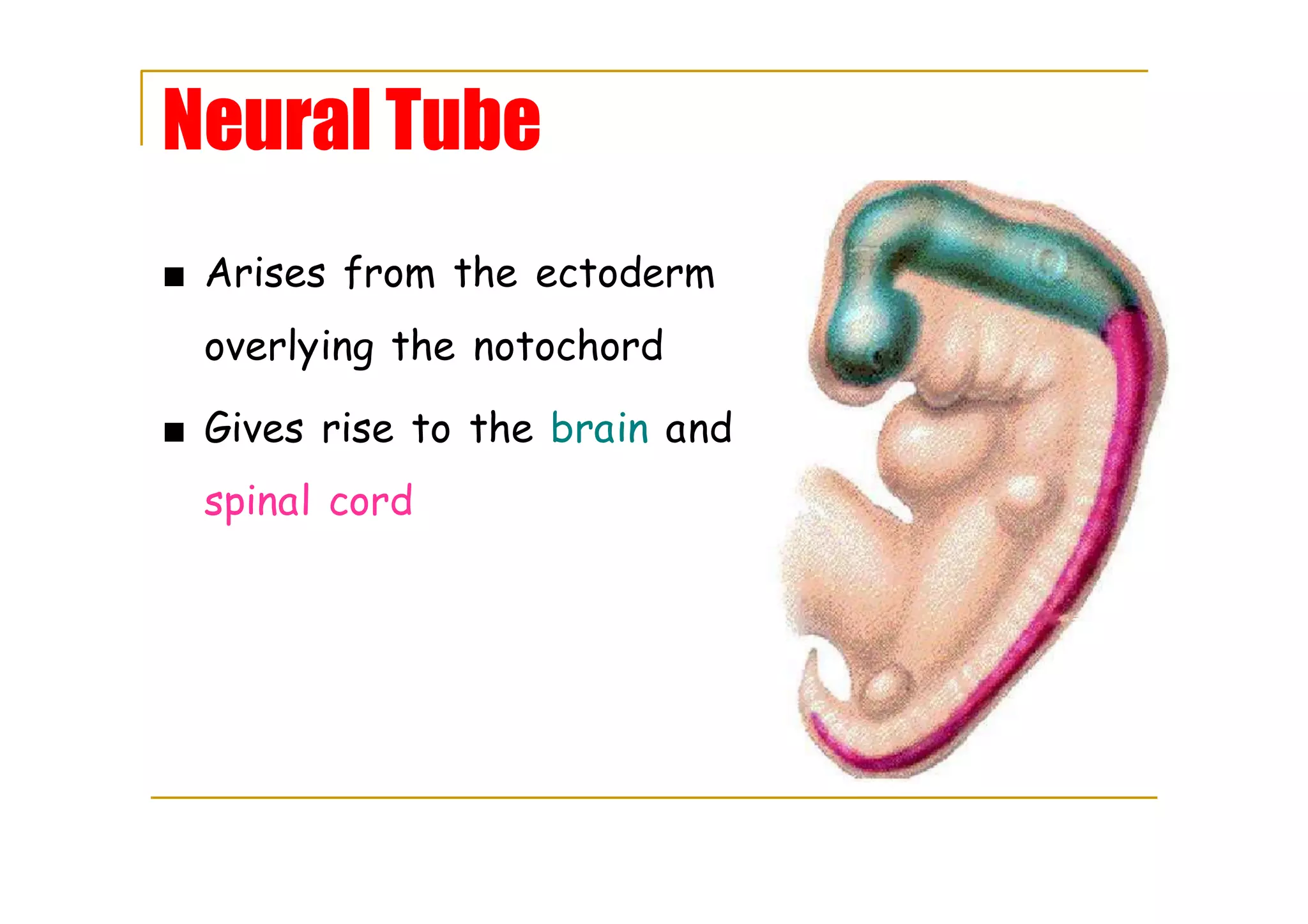
Neural Tube
■ Arises from the ectoderm
overlying the notochord
■ Gives rise to the brain and
spinal cord
Neural Tube Formation
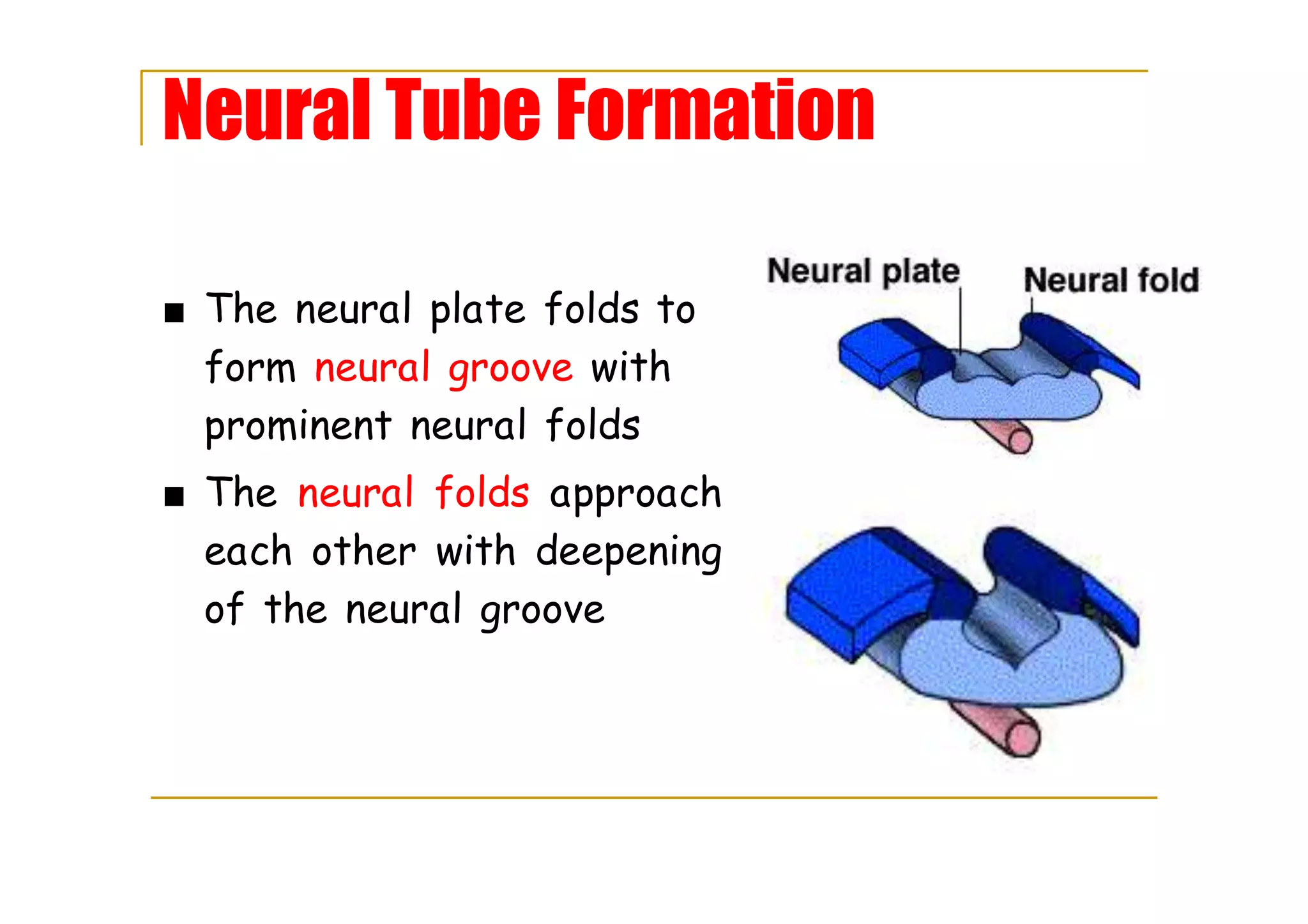
■ The neural plate folds to
form neural groove with
prominent neural folds
■ The neural folds approach
each other with deepening
of the neural groove
Neural Tube Formation
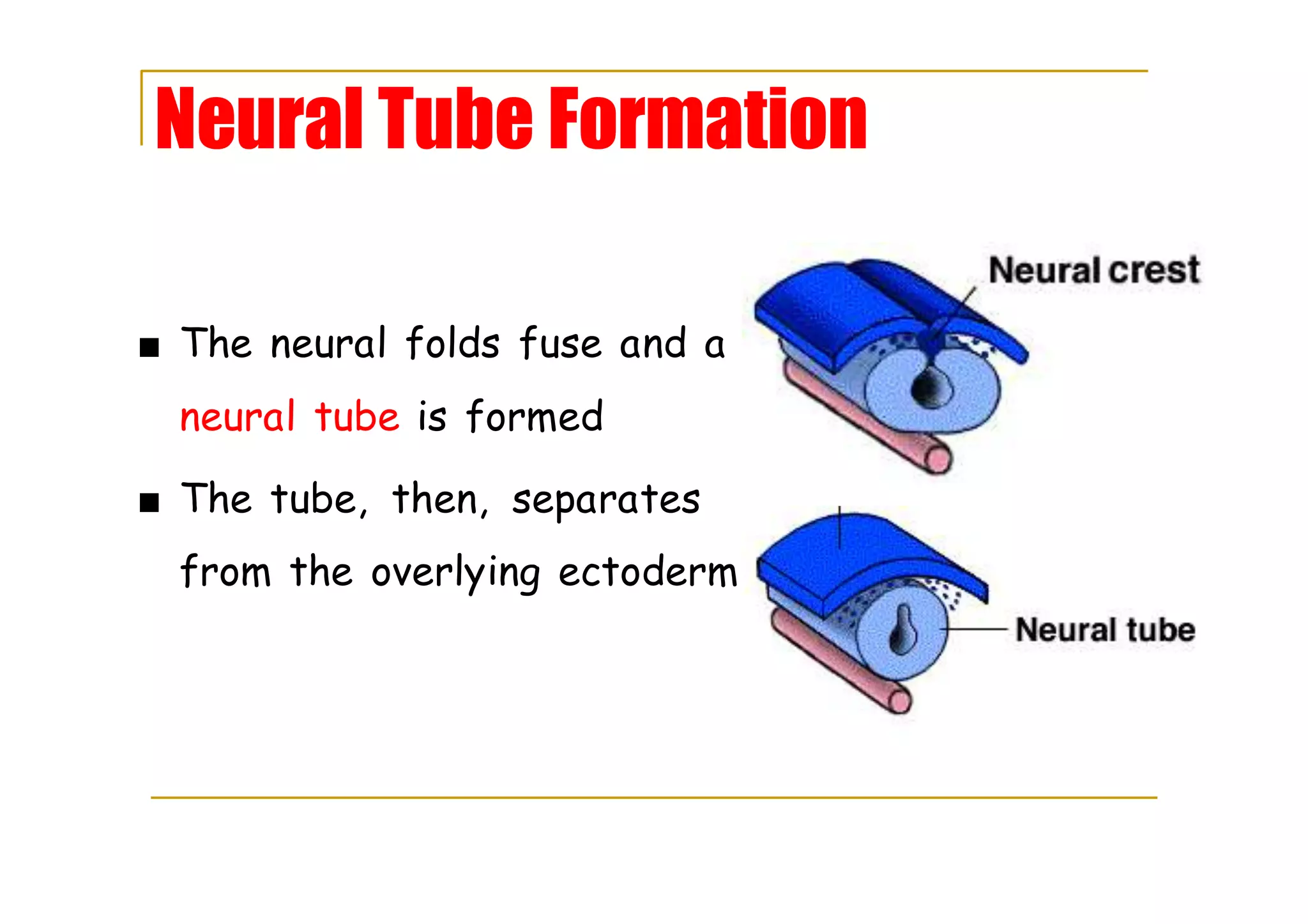
■ The neural folds fuse and a
neural tube is formed
■ The tube, then, separates
from the overlying ectoderm
Development of Spinal Cord
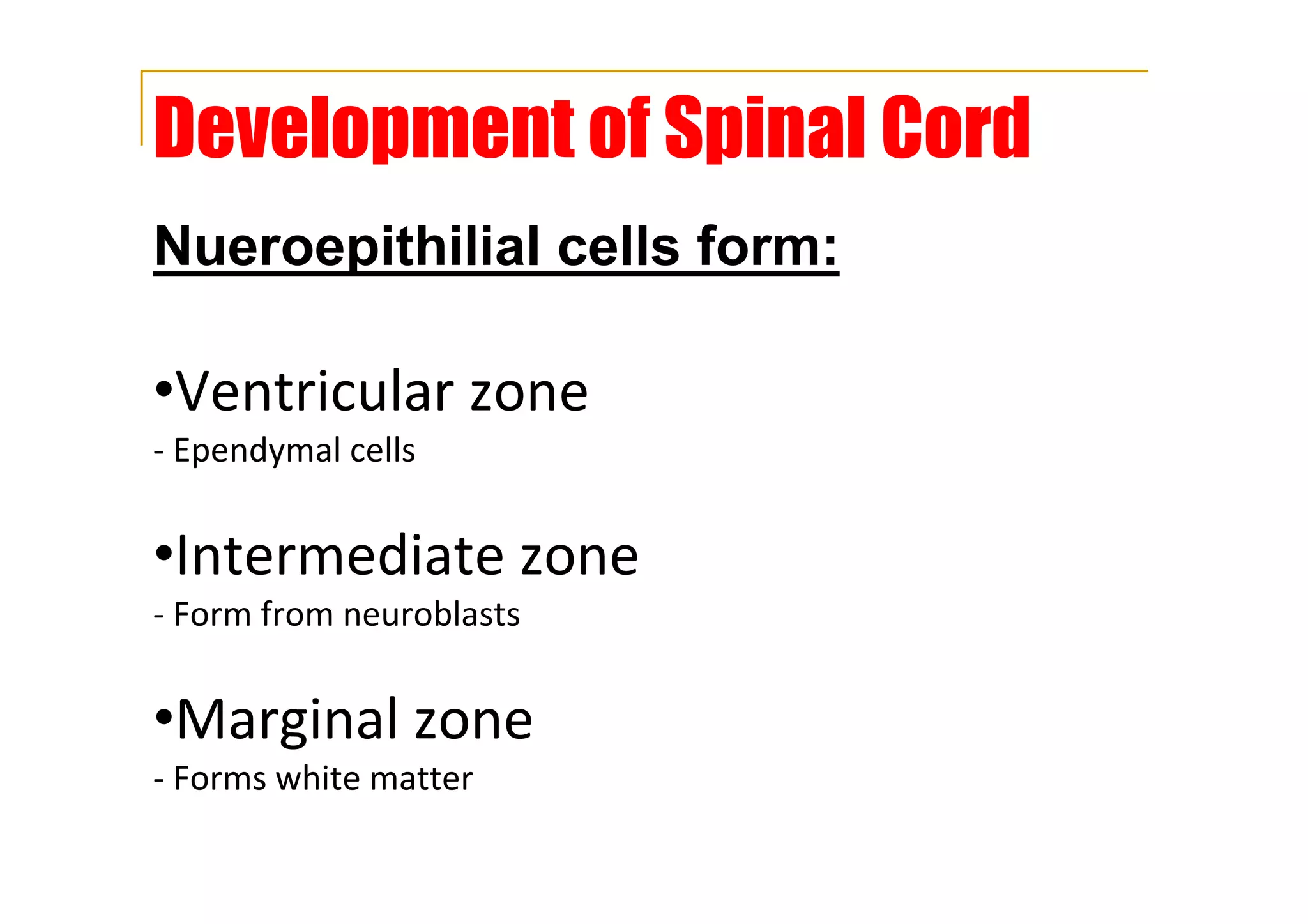
Nueroepithilial cells form:
•Ventricular zone
- Ependymal cells
•Intermediate zone
- Form from neuroblasts
•Marginal zone
- Forms white matter
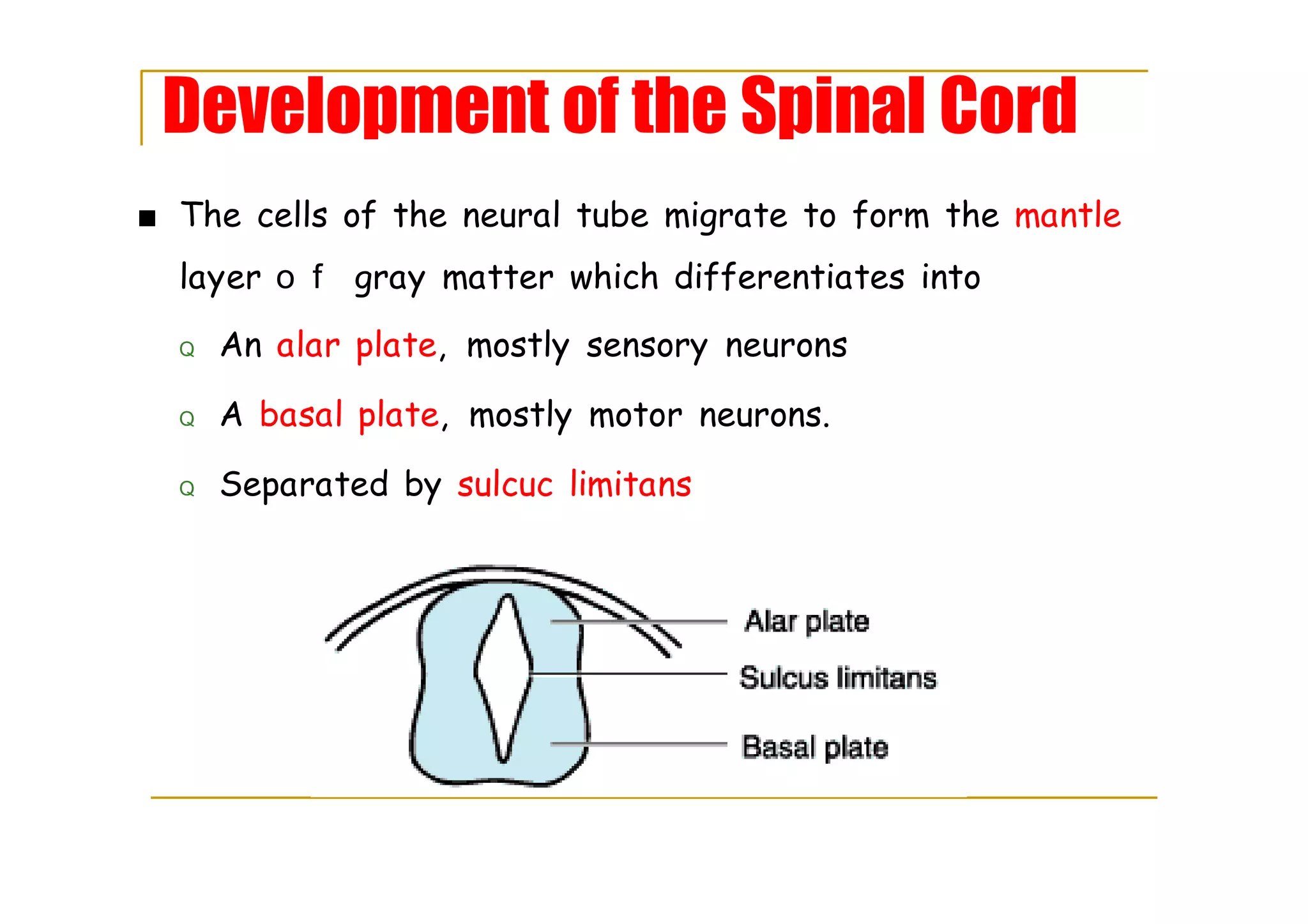
Development of the Spinal Cord
■ The cells of the neural tube migrate to form the mantle
layer o f gray matter which differentiates into
Q An alar plate, mostly sensory neurons
Q A basal plate, mostly motor neurons.
Q Separated by sulcuc limitans
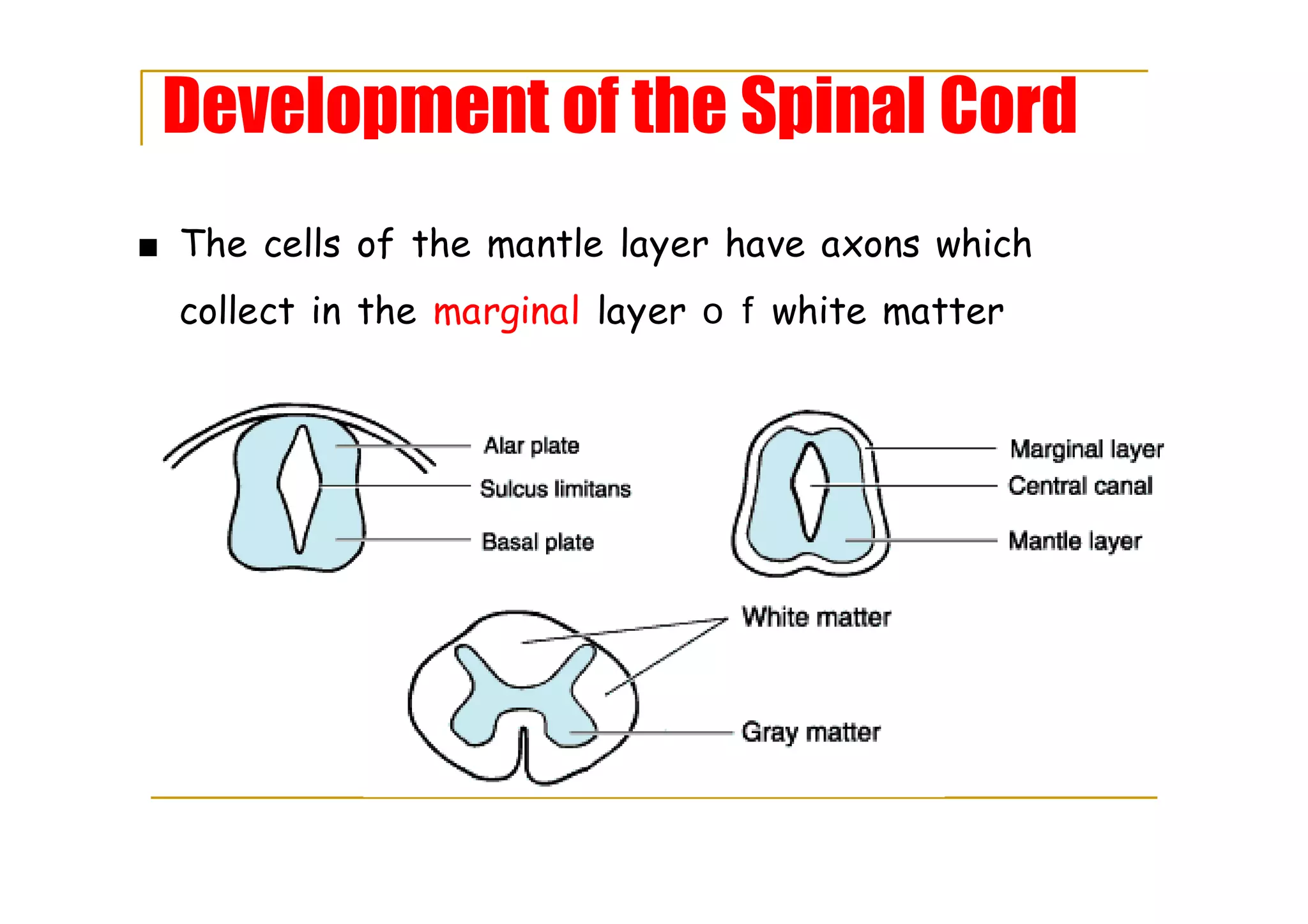
Development of the Spinal Cord
■ The cells of the mantle layer have axons which
collect in the marginal layer o f white matter
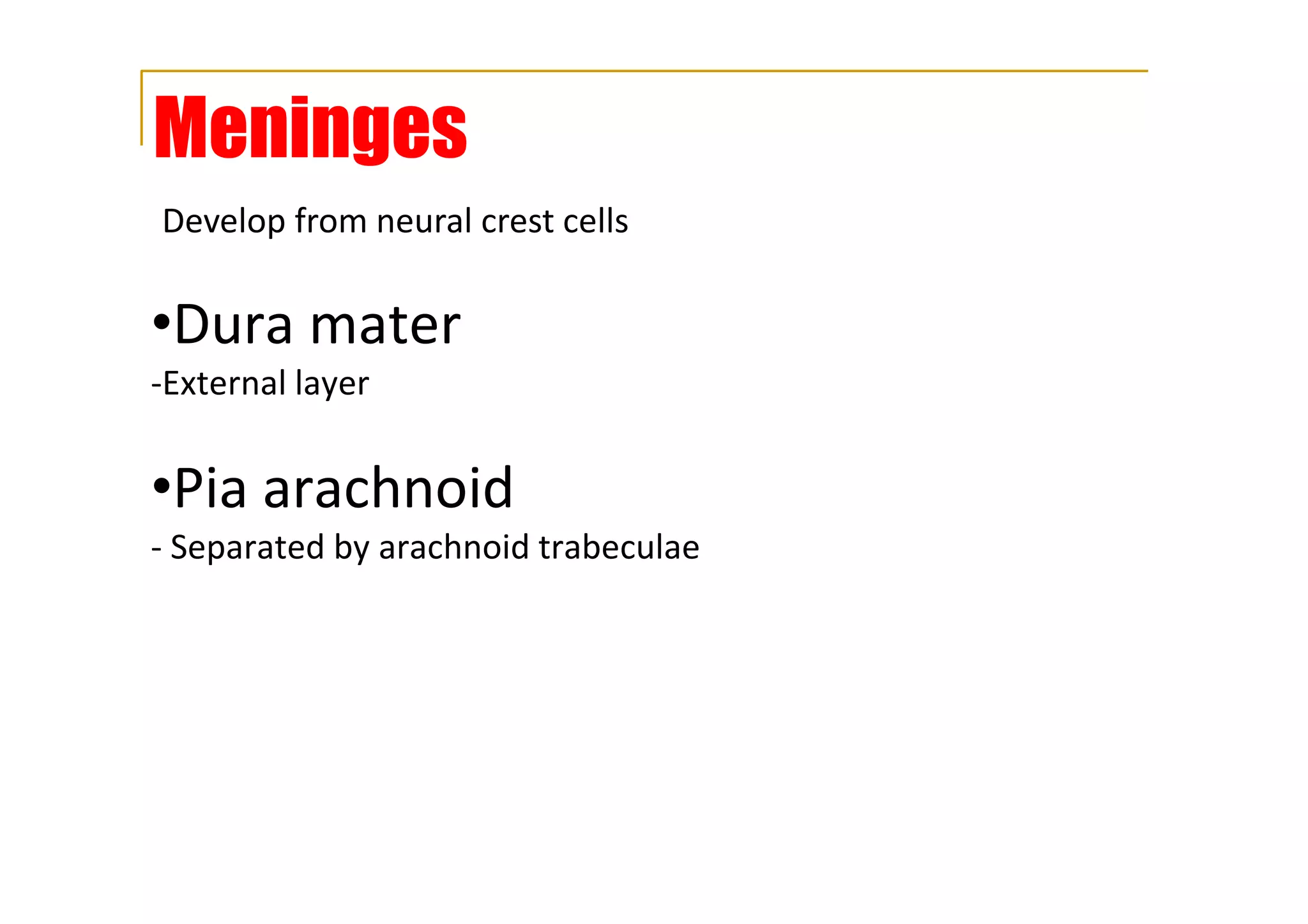
Meninges
•Dura mater
-External layer
•Pia arachnoid
- Separated by arachnoid trabeculae
Develop from neural crest cells
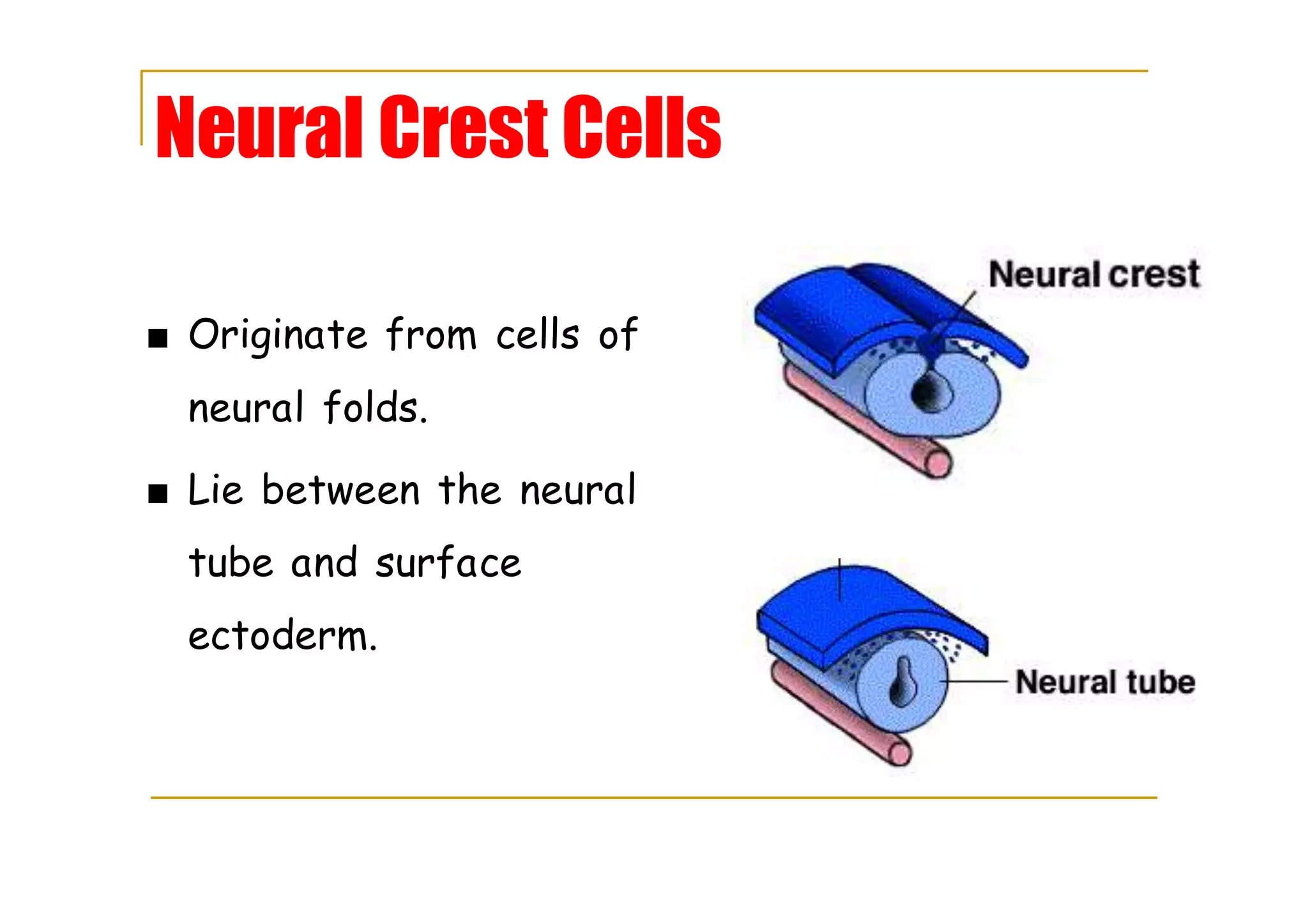
Neural Crest Cells
■ Originate from cells of
neural folds.
■ Lie between the neural
tube and surface
ectoderm.
Neural Crest Cells
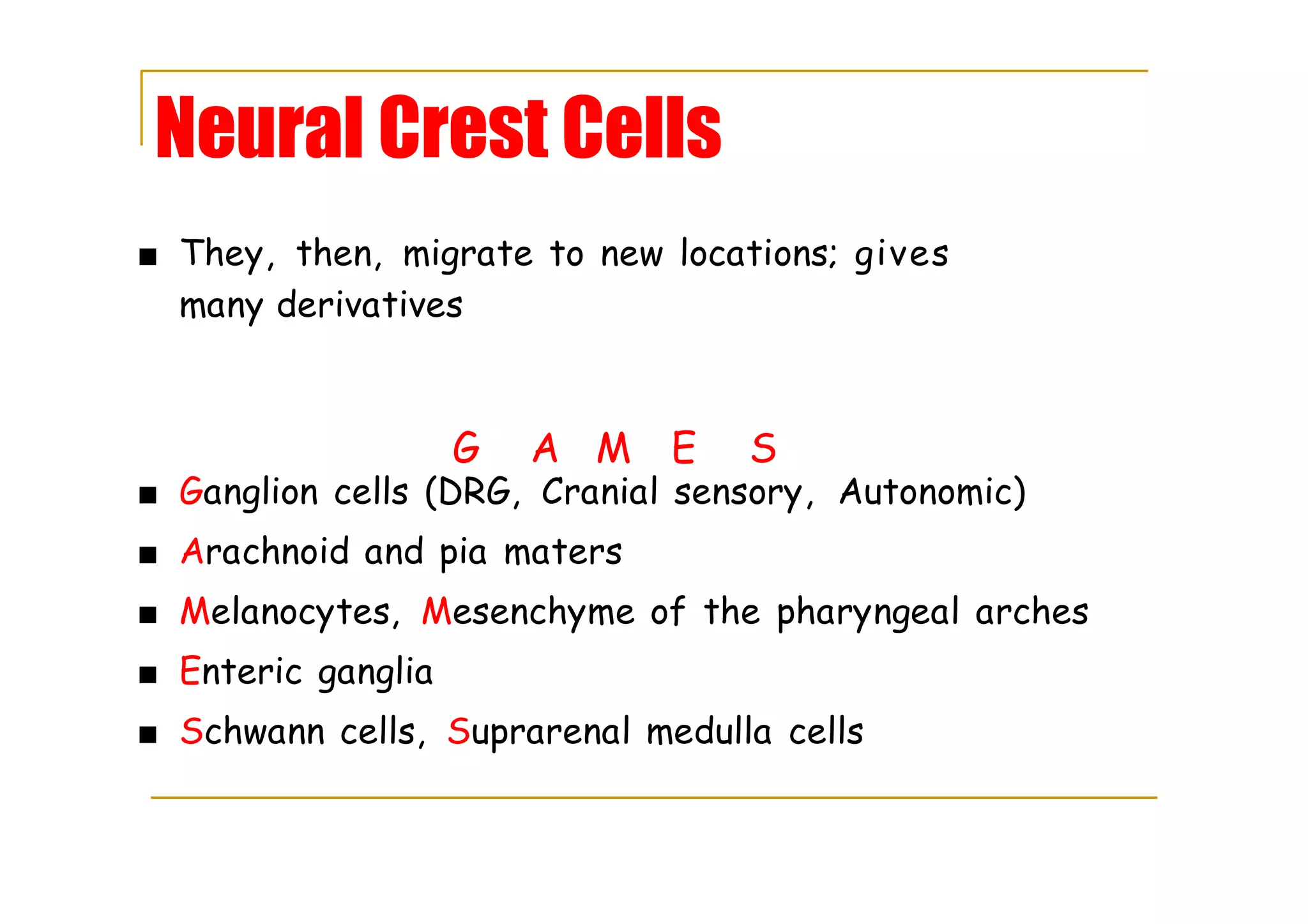
■ They, then, migrate to new locations; gives
many derivatives
G A M E S
■ Ganglion cells (DRG, Cranial sensory, Autonomic)
■ Arachnoid and pia maters
■ Melanocytes, Mesenchyme of the pharyngeal arches
■ Enteric ganglia
■ Schwann cells, Suprarenal medulla cells
Development of spinal cord

Development of spinal cord

  • 1.
    EMBRYOLOGY By; RazaRehman, 152 Maria Ilyas,148 Isfandyar; 156 S p i n a l C o r d
  • 2.
    Neural Tube ■ Arisesfrom the ectoderm overlying the notochord ■ Gives rise to the brain and spinal cord
  • 3.
    Neural Tube Formation ■The neural plate folds to form neural groove with prominent neural folds ■ The neural folds approach each other with deepening of the neural groove
  • 4.
    Neural Tube Formation ■The neural folds fuse and a neural tube is formed ■ The tube, then, separates from the overlying ectoderm
  • 5.
    Development of SpinalCord Nueroepithilial cells form: •Ventricular zone - Ependymal cells •Intermediate zone - Form from neuroblasts •Marginal zone - Forms white matter
  • 6.
    Development of theSpinal Cord ■ The cells of the neural tube migrate to form the mantle layer o f gray matter which differentiates into Q An alar plate, mostly sensory neurons Q A basal plate, mostly motor neurons. Q Separated by sulcuc limitans
  • 7.
    Development of theSpinal Cord ■ The cells of the mantle layer have axons which collect in the marginal layer o f white matter
  • 8.
    Meninges •Dura mater -External layer •Piaarachnoid - Separated by arachnoid trabeculae Develop from neural crest cells
  • 9.
    Neural Crest Cells ■Originate from cells of neural folds. ■ Lie between the neural tube and surface ectoderm.
  • 10.
    Neural Crest Cells ■They, then, migrate to new locations; gives many derivatives G A M E S ■ Ganglion cells (DRG, Cranial sensory, Autonomic) ■ Arachnoid and pia maters ■ Melanocytes, Mesenchyme of the pharyngeal arches ■ Enteric ganglia ■ Schwann cells, Suprarenal medulla cells