The plant, thecaterpillar, and the bird are all living
things. Like any other living things, these organisms need
energy in order to live. You as living thing, also need energy
to power up everything you do. Whether you are running or
sleeping, your body uses energy. In fact, every cell in your
body needs energy to carry out its processes. Where do
organisms get energy? How do different organisms utilize the
energy coming from the sun?
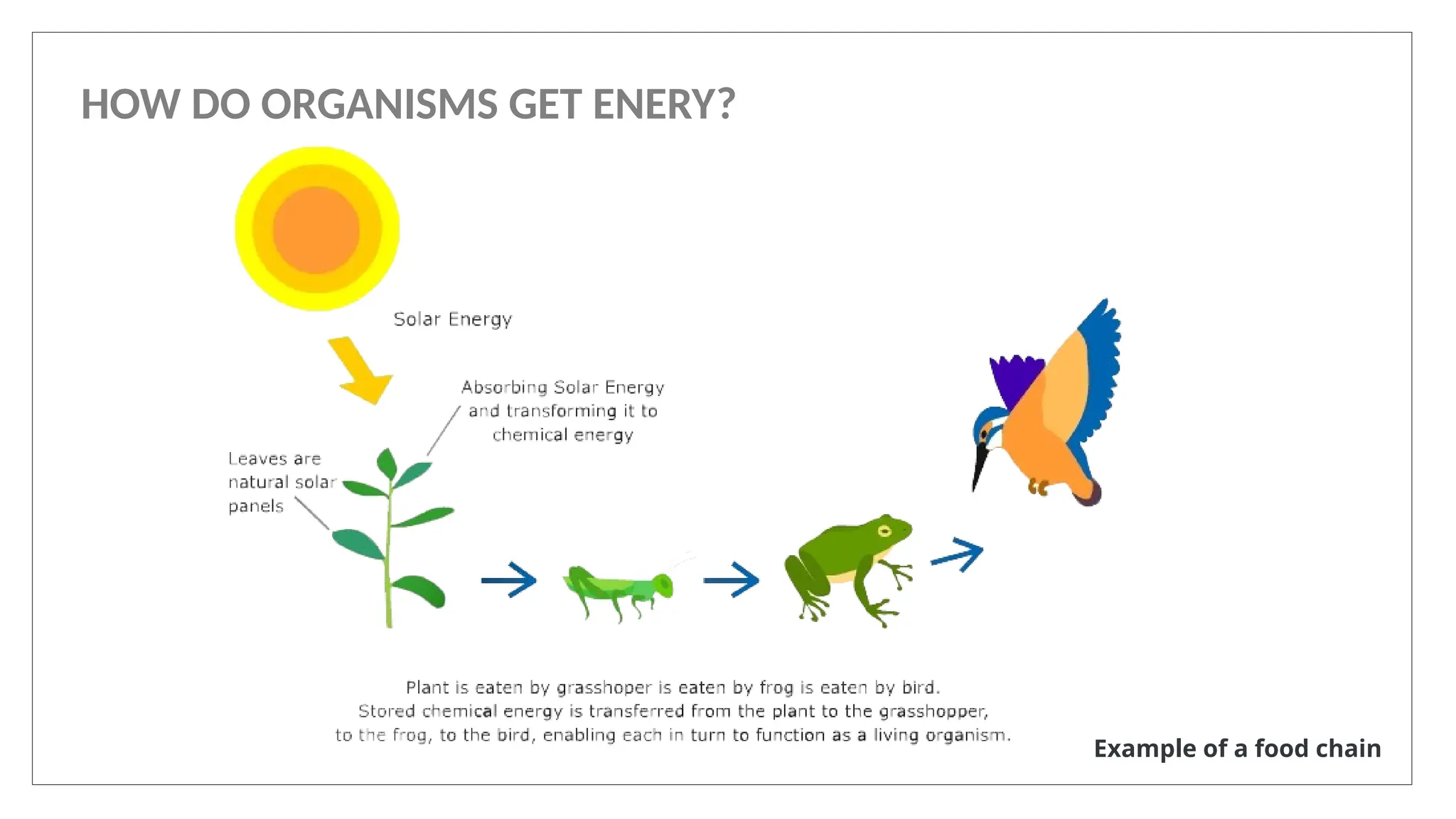
HOW DO ORGANISMSGET ENERY?
• Organisms usually get the chemical energy
they need from food. Food consist of organic
molecules that store energy in the form of
chemical energy.
4.
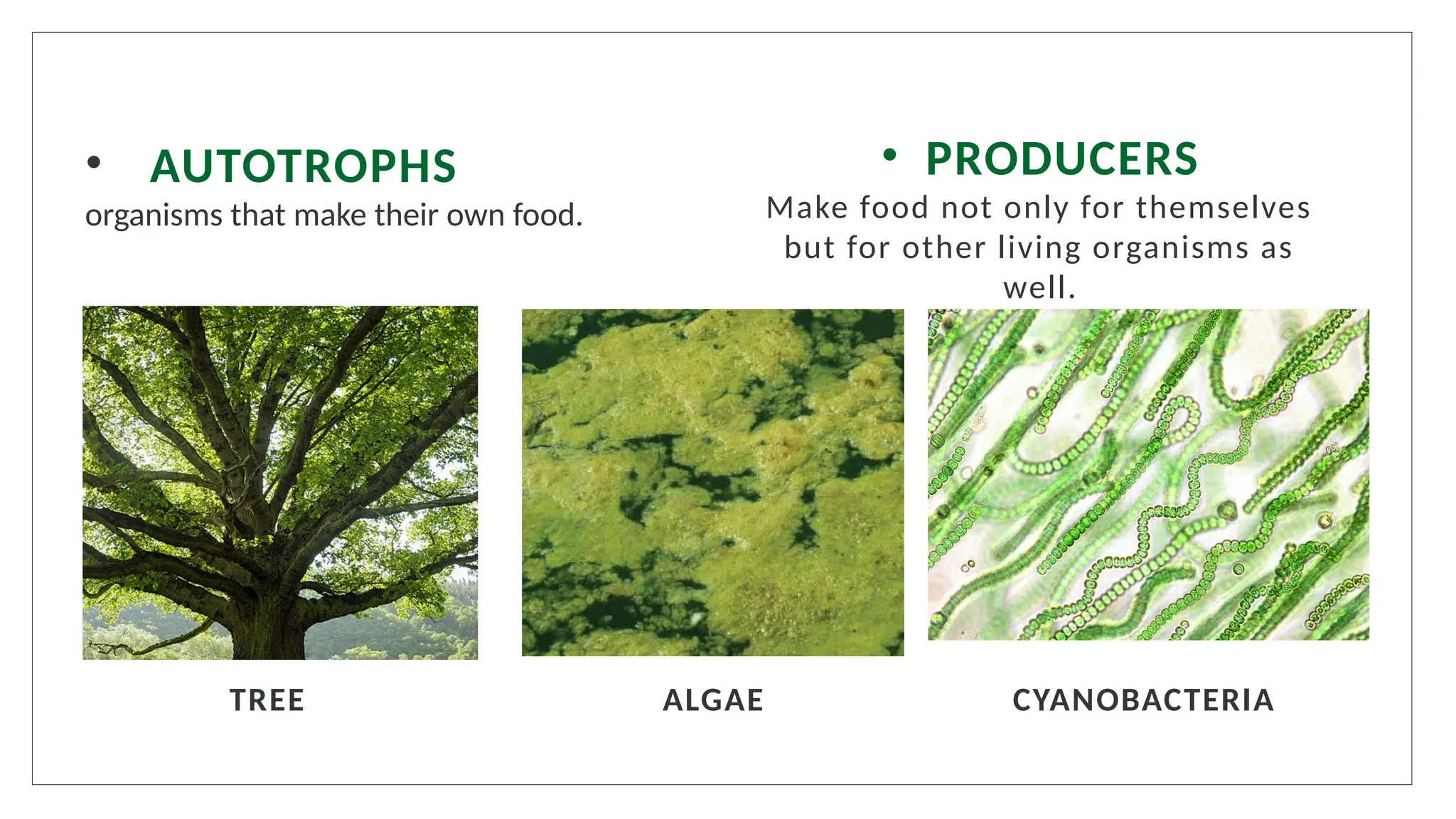
• AUTOTROPHS
organisms thatmake their own food.
CYANOBACTERIA
ALGAE
TREE
• PRODUCERS
Make food not only for themselves
but for other living organisms as
well.
5.
• HETEROTROPHS
Theymay consume autotrophs, other heterotrophs,
or both.
Includes animals, fungi, and some single-celled
organisms
Organisms that cannot make their own.
Food obtain by consuming other organisms.
WHAT ARE THEENERGY-GIVING ENERGY?
2 TYPES OF ENERGY-GIVING MOLECULES:
1.) GLUCOSE
2.) ATP (Adenosine Triphosphate)
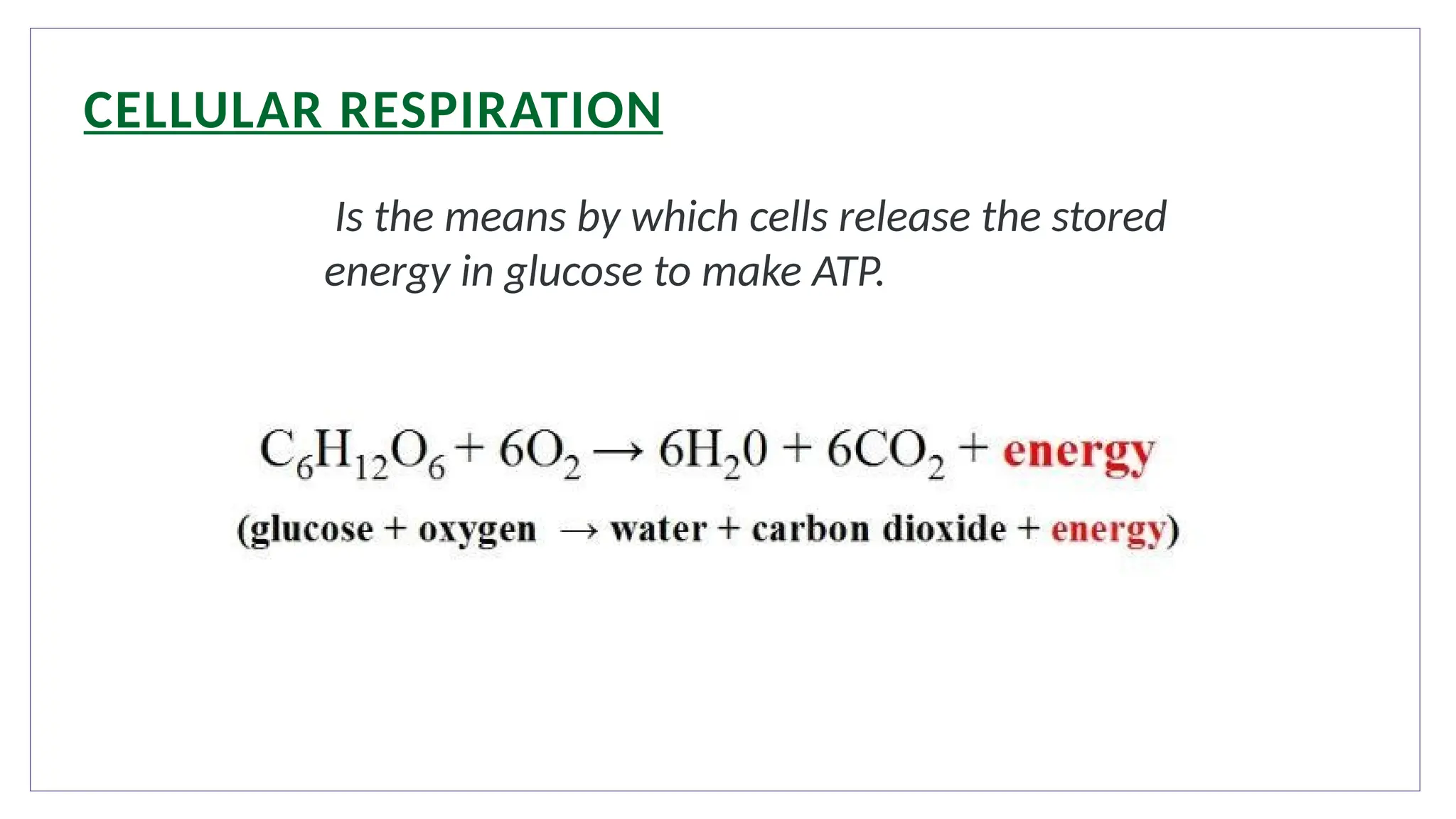
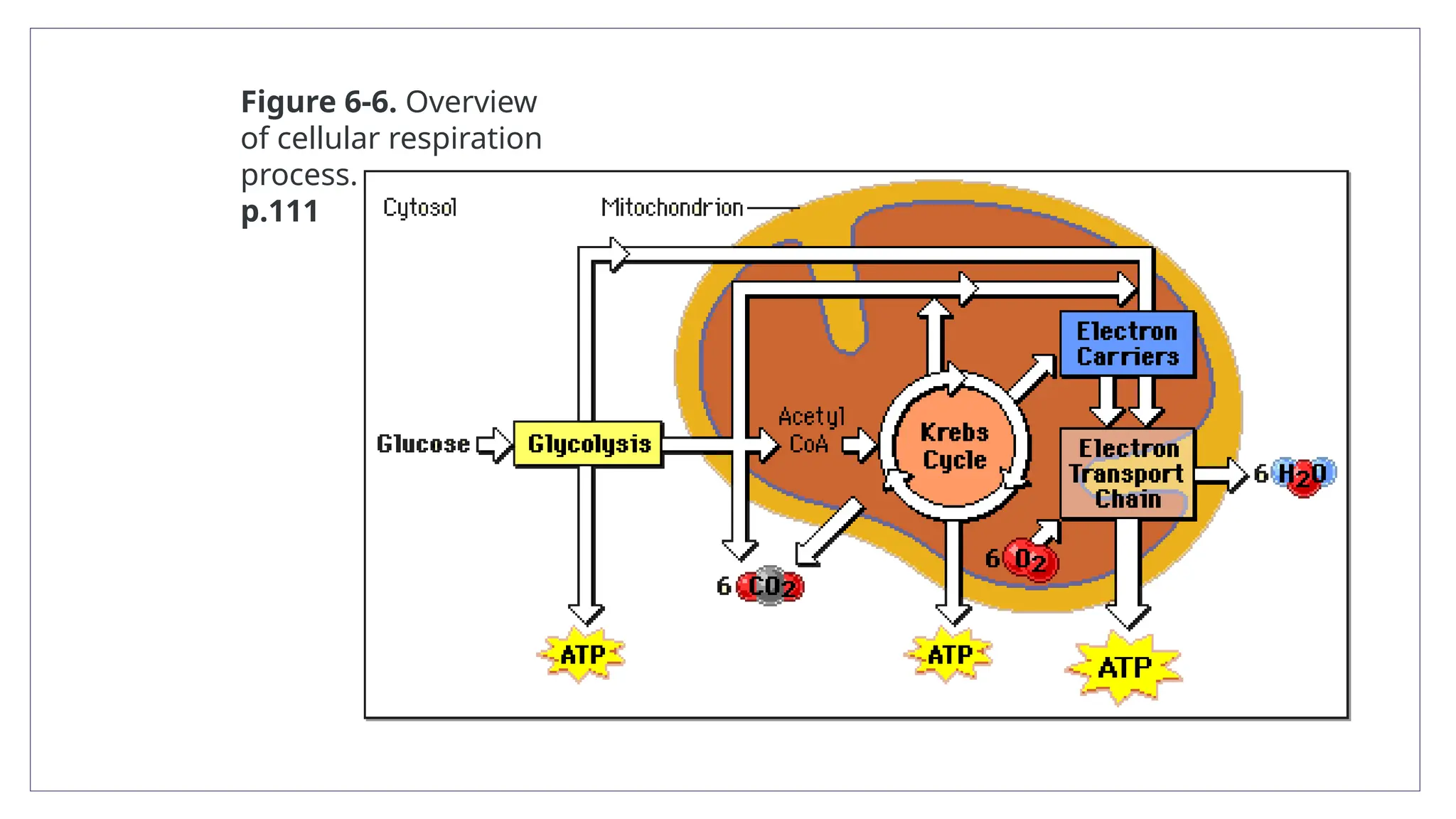
Cellular Respiration – the stored energy in glucose
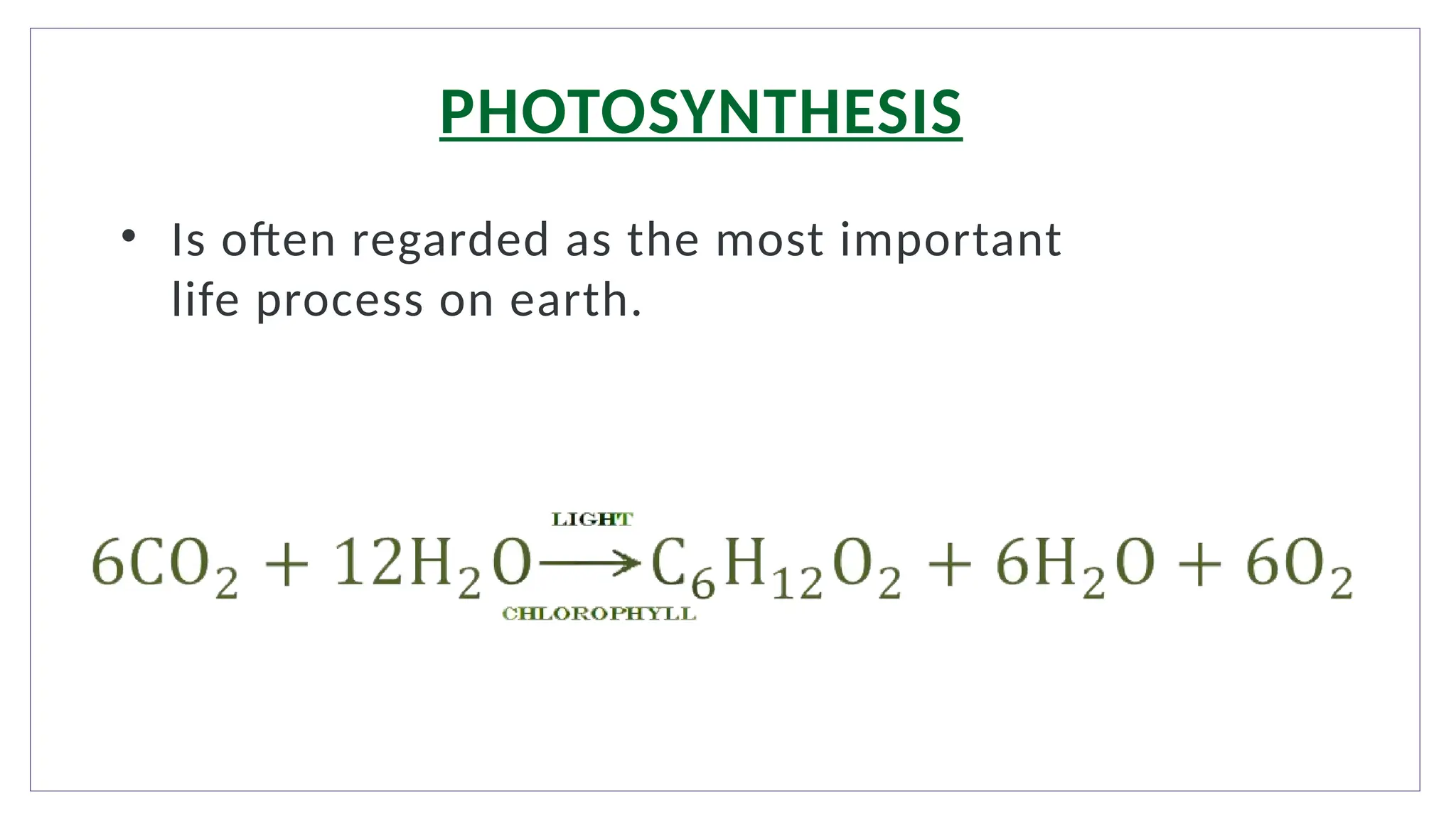
is released in a reverse reaction of photosynthesis.
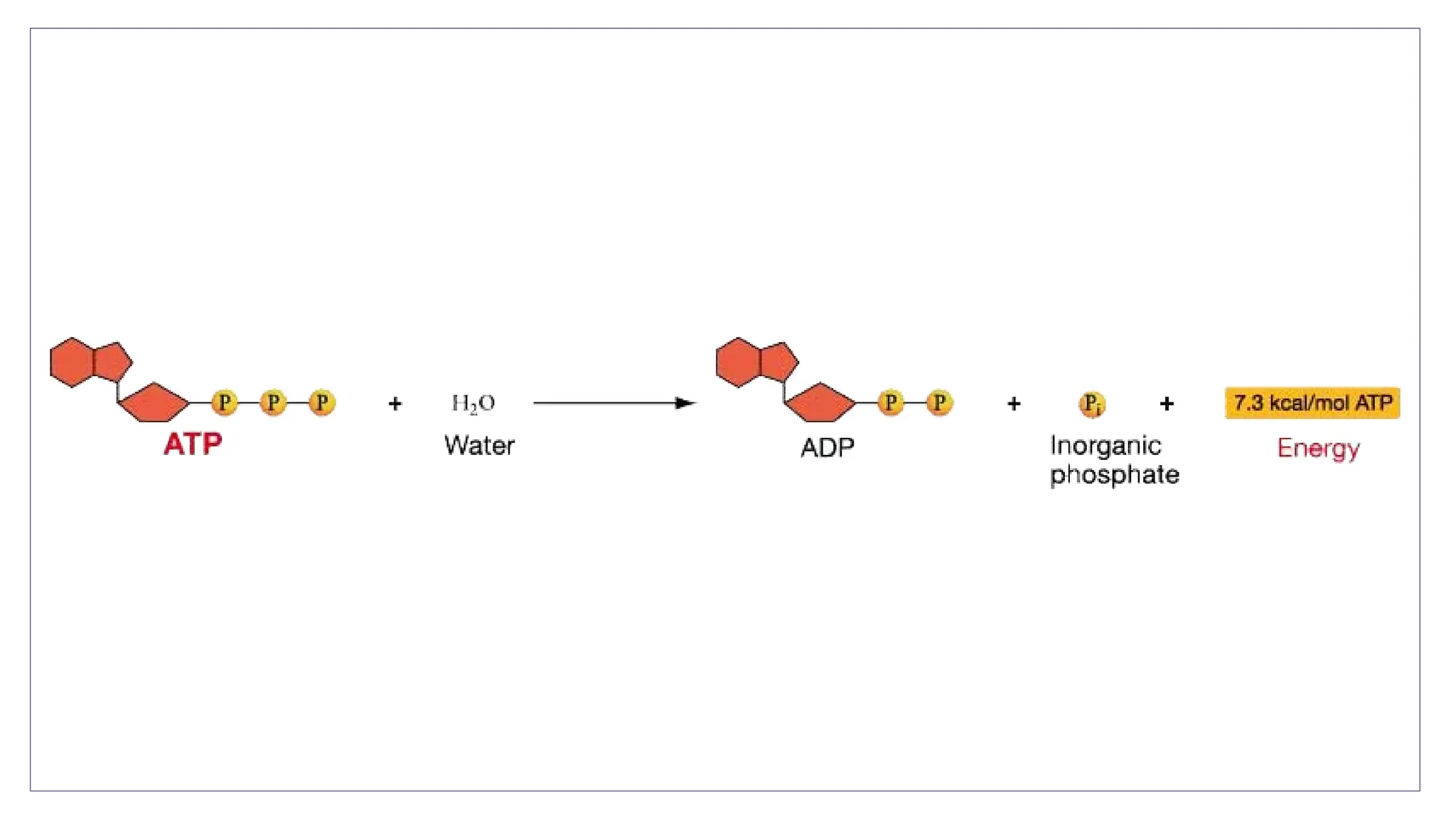
Adenosine Triphosphate (ATP) – molecules store smaller
amount of energy, but each molecule released enough
energy to do the work within the cell.
9.
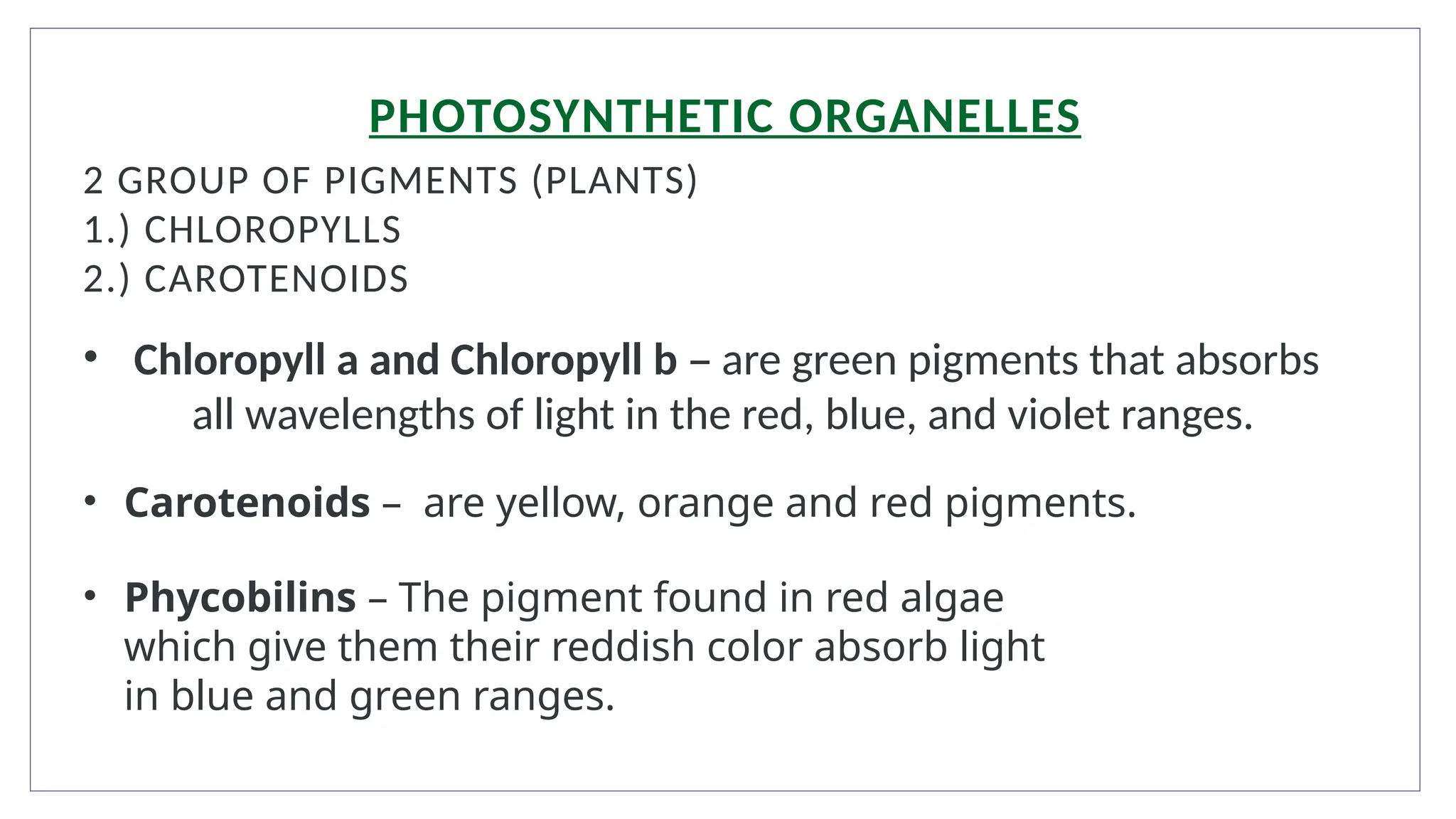
PHOTOSYNTHETIC ORGANELLES
2 GROUPOF PIGMENTS (PLANTS)
1.) CHLOROPYLLS
2.) CAROTENOIDS
• Chloropyll a and Chloropyll b – are green pigments that absorbs
all wavelengths of light in the red, blue, and violet ranges.
• Carotenoids – are yellow, orange and red pigments.
• Phycobilins – The pigment found in red algae
which give them their reddish color absorb light
in blue and green ranges.
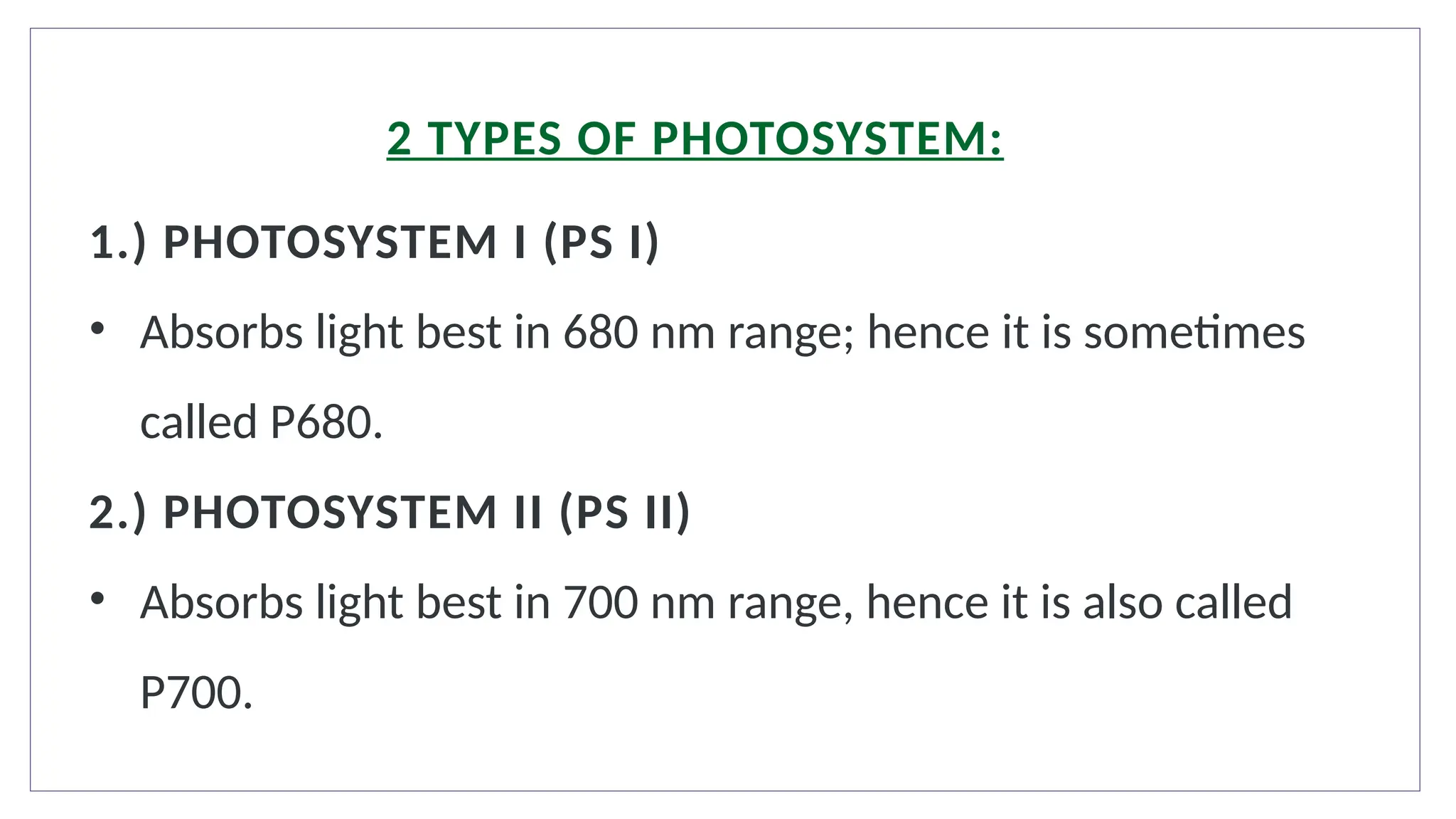
1.) PHOTOSYSTEM I(PS I)
• Absorbs light best in 680 nm range; hence it is sometimes
called P680.
2.) PHOTOSYSTEM II (PS II)
• Absorbs light best in 700 nm range, hence it is also called
P700.
2 TYPES OF PHOTOSYSTEM:
2 STAGES
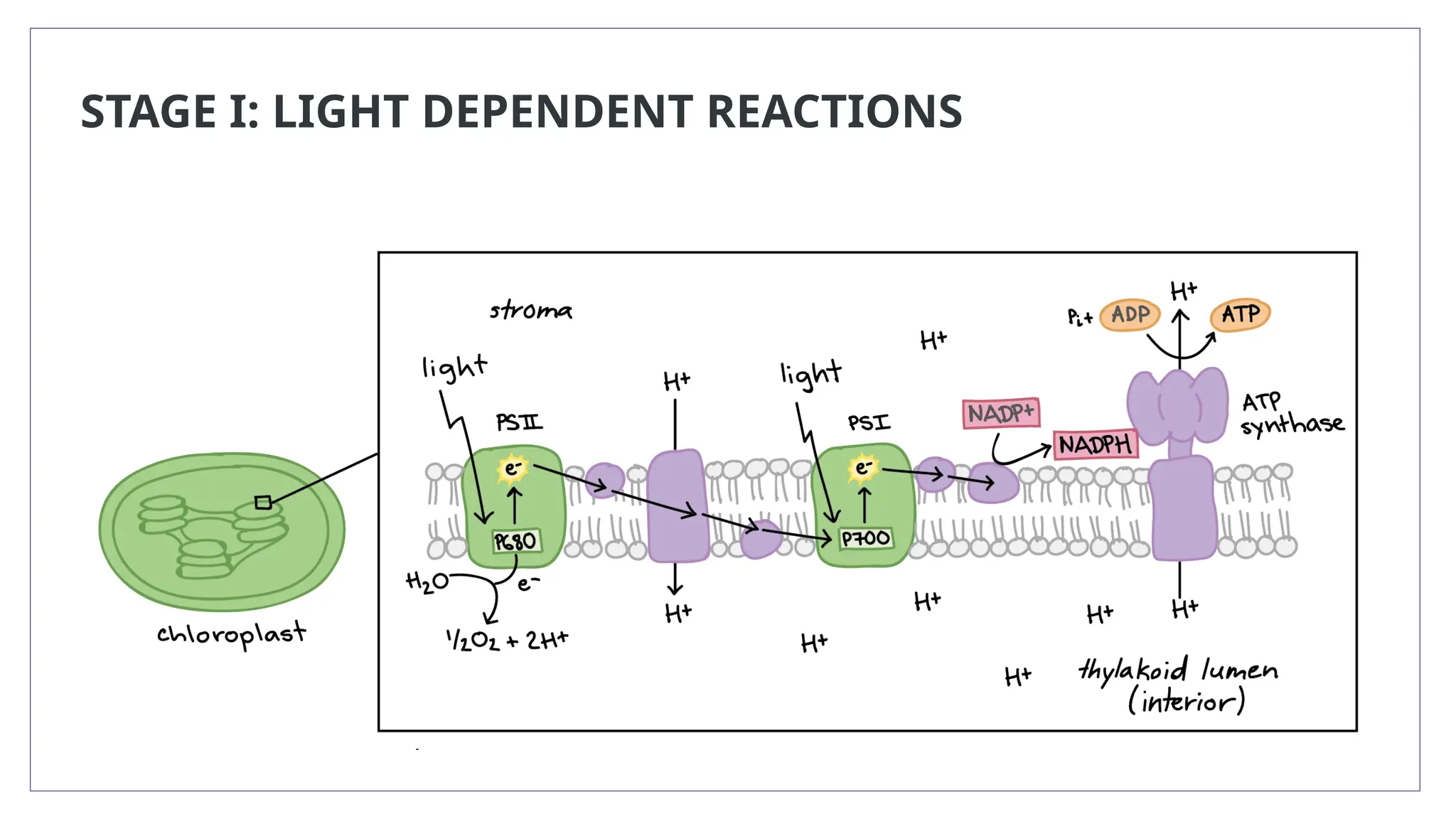
1.) STAGEI includes light-dependent reactions
Directly use the light energy to produce ATP and NADPH.
2.) STAGE II includes the light-independent reactions
Also called CALVIN CYCLE, the ATP and NADPH from light
reactions are used to create glucose.
PHOTOSYNTHESIS
1. Two electrons,which replace the electrons loss of
chloropyll a in PS II during the light absorption.
2. Two Hydrogen ions (2H’), which are positively charged
and are released inside the interior space of the
thylakoid membrane.
3. Oxygen (O) atom tat combines with another oxygen
atom, producing one oxygen molecule (02), which is
released into the atmosphere as a waste product.
Water splits apart and produces the
following:
16.
STAGE II: LIGHT-INDEPENDENTREACTIONS
The Second stage of photosynthesis happens in the
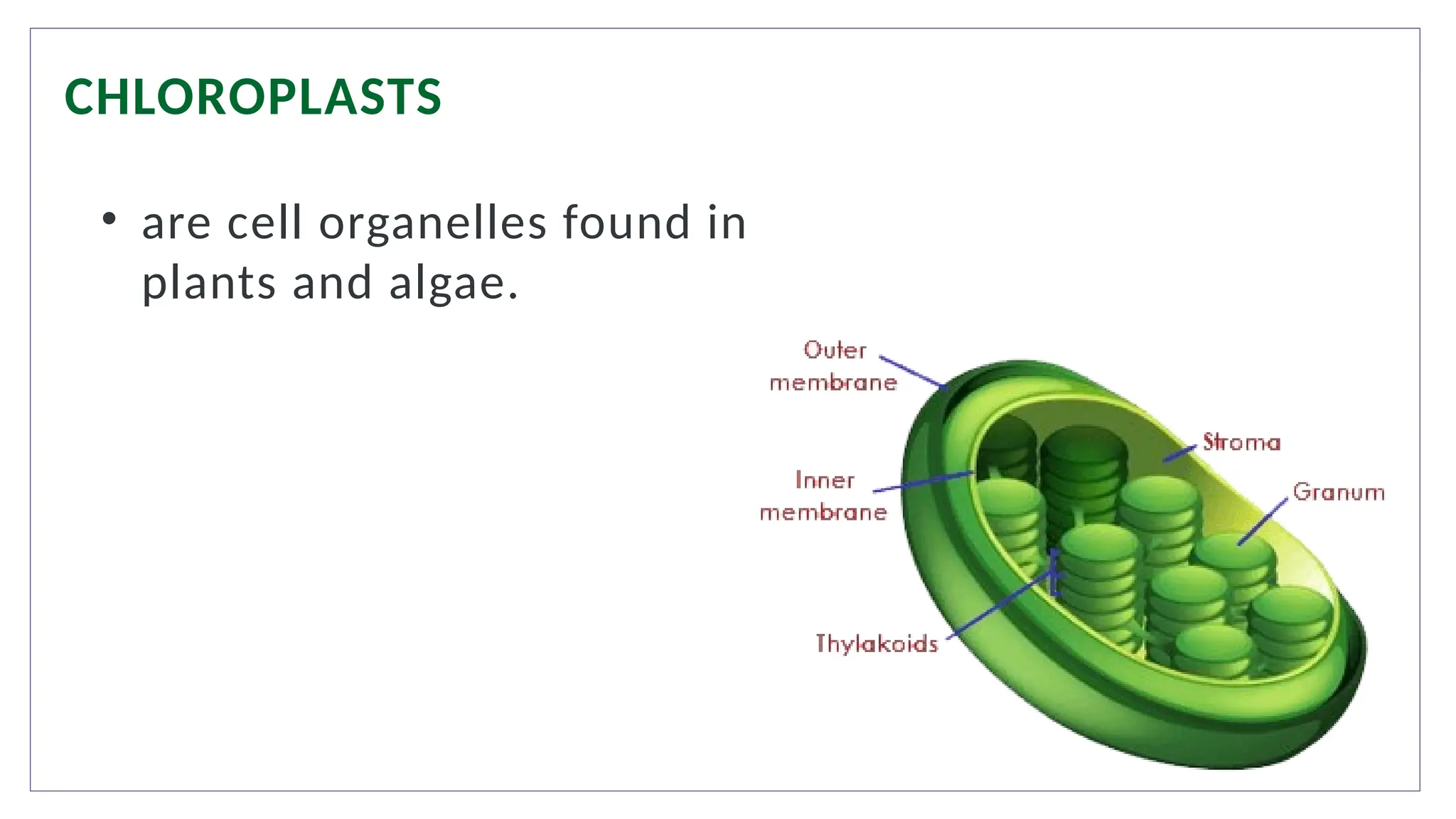
stroma surrounding the thylakoid in the chloroplast.
1. Carbon Fixation - occurs when carbon dioxide from the
atmosphere combines wit a simple five-carbon (5-c) sugar
compound, ribulose biphospate (RuBP), forming an unstable six-
carbon (6-C) molecule.
2. Reduction reactions – The 3-PGA molecules gain energy from the
ATP and NADPH from the light reactions, and rearrange
themselves to from glycerate 3-phosphate (G3O),
3. 3. Regeneration of RuBP – The remaining G3P molecules then
use more ATP to convert back into RuBP, completing the cycle
3 MAJOR STEPS OF CALVIN CYCLE:
STAGE I. GLYCOLYSIS
isthe process that breaks down one molecule
of 6-C glucose into 3-C pyruvates or pyruvic
acids.
• In summary, a single glucose molecule that undergoes
the process of glycolysis produces two molecules of
pyruvic acid, four molecule of ATP, two molecules of
NADPH, and two molecules of H2O. However only two
molecules of ATP are counted as net products since two
molecules of ATP are spent thoughout the process
20.
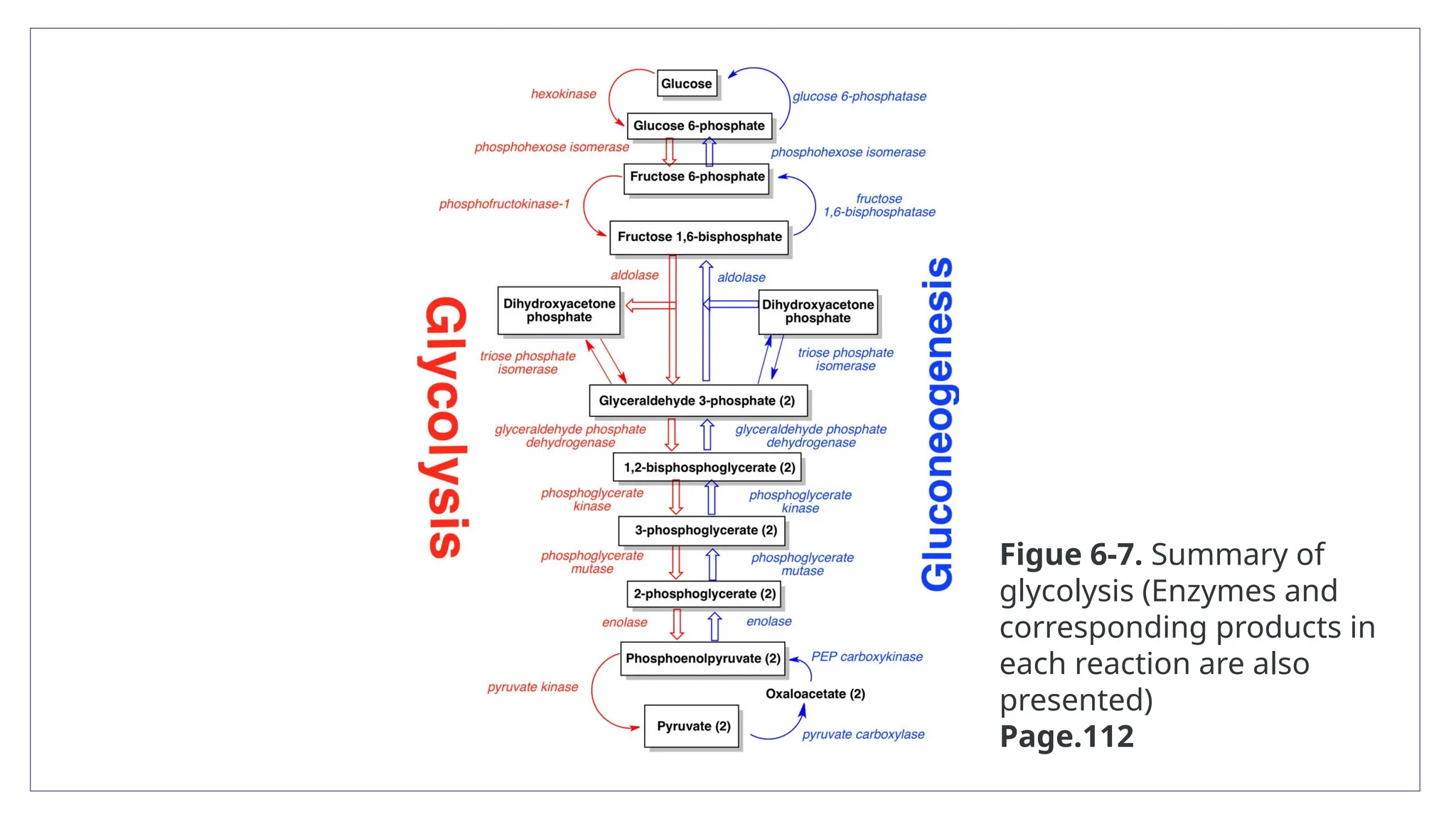
Figue 6-7. Summaryof
glycolysis (Enzymes and
corresponding products in
each reaction are also
presented)
Page.112
21.
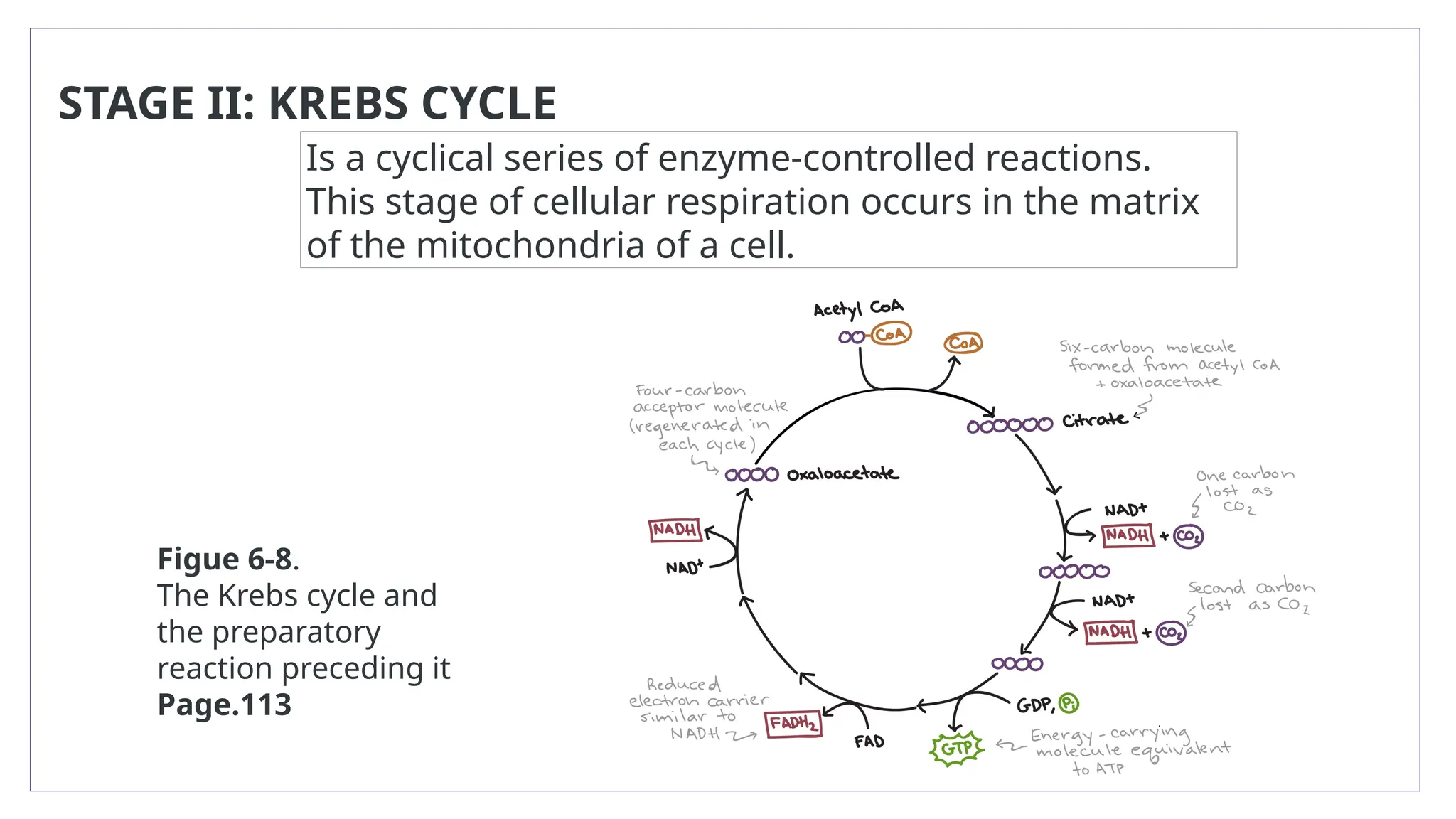
STAGE II: KREBSCYCLE
Is a cyclical series of enzyme-controlled reactions.
This stage of cellular respiration occurs in the matrix
of the mitochondria of a cell.
Figue 6-8.
The Krebs cycle and
the preparatory
reaction preceding it
Page.113
22.
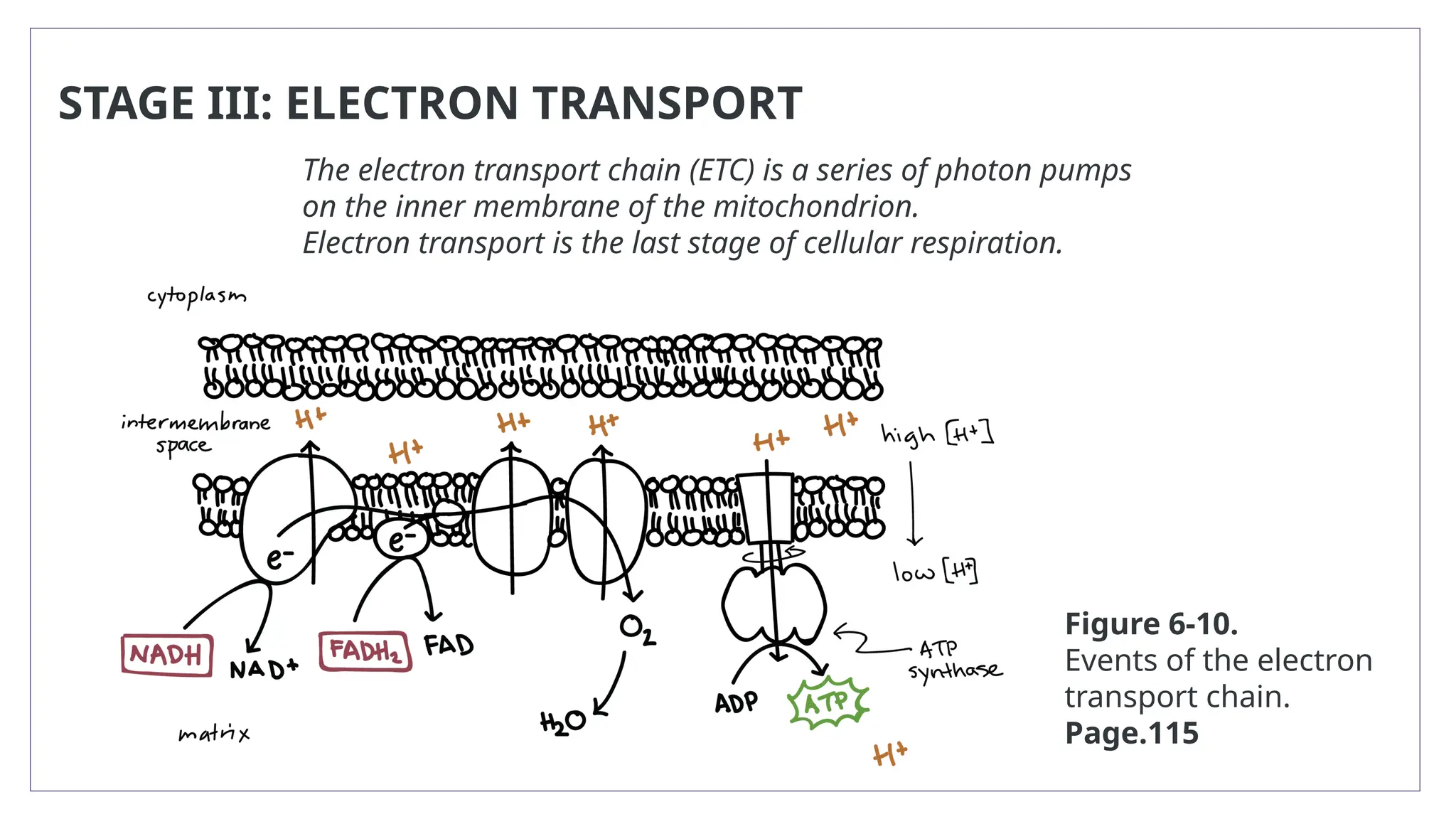
STAGE III: ELECTRONTRANSPORT
The electron transport chain (ETC) is a series of photon pumps
on the inner membrane of the mitochondrion.
Electron transport is the last stage of cellular respiration.
Figure 6-10.
Events of the electron
transport chain.
Page.115
23.
ANAEROBIC RESPIRATION
Most cellscarry out aerobic respiration when oxygen
is present. Aerobic is an efficient process, which yields
a lot of ATP.
Cellular respiration that process without the presence
of oxygen is called anaerobic respiration.
24.
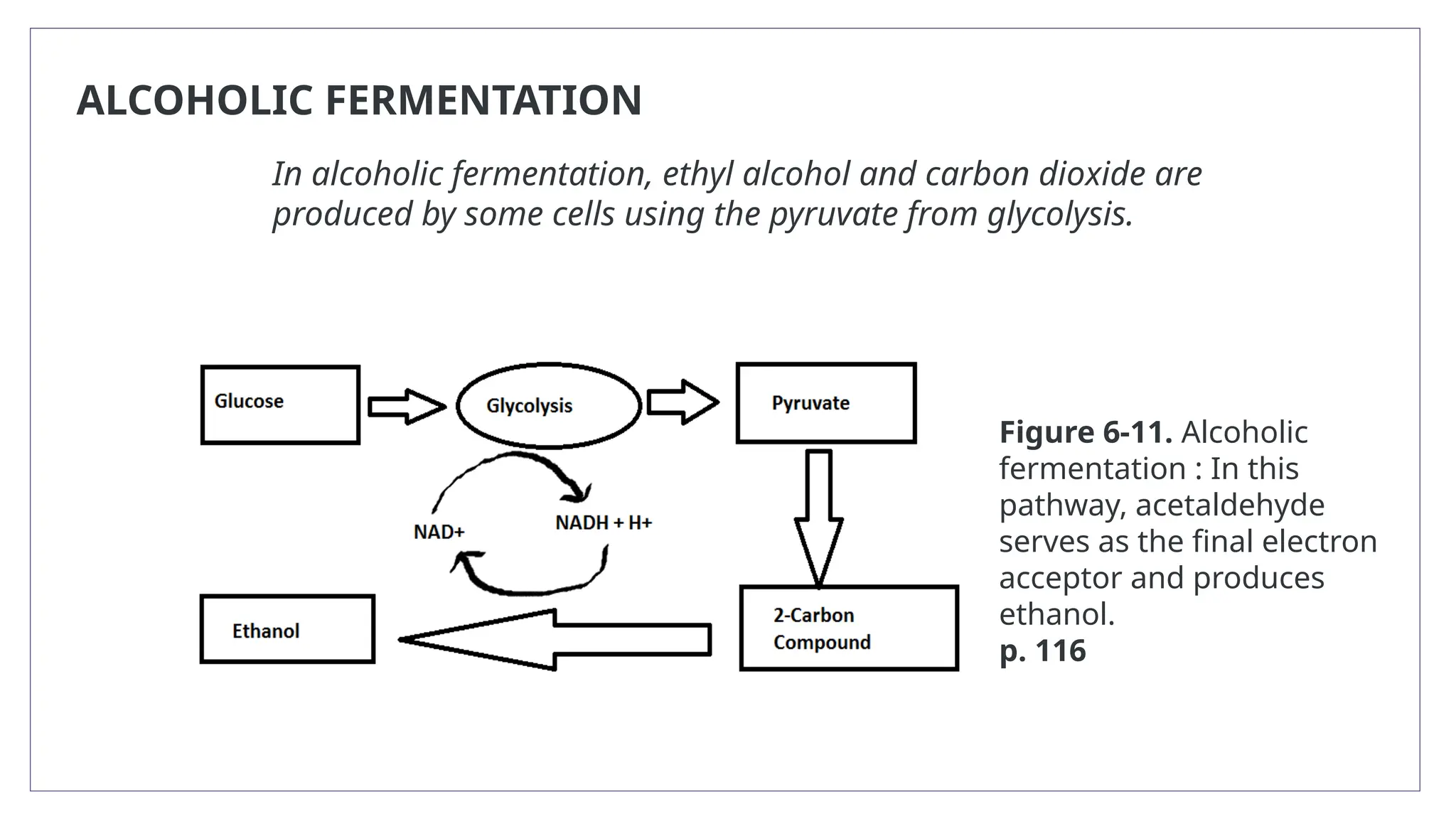
ALCOHOLIC FERMENTATION
In alcoholicfermentation, ethyl alcohol and carbon dioxide are
produced by some cells using the pyruvate from glycolysis.
Figure 6-11. Alcoholic
fermentation : In this
pathway, acetaldehyde
serves as the final electron
acceptor and produces
ethanol.
p. 116
25.
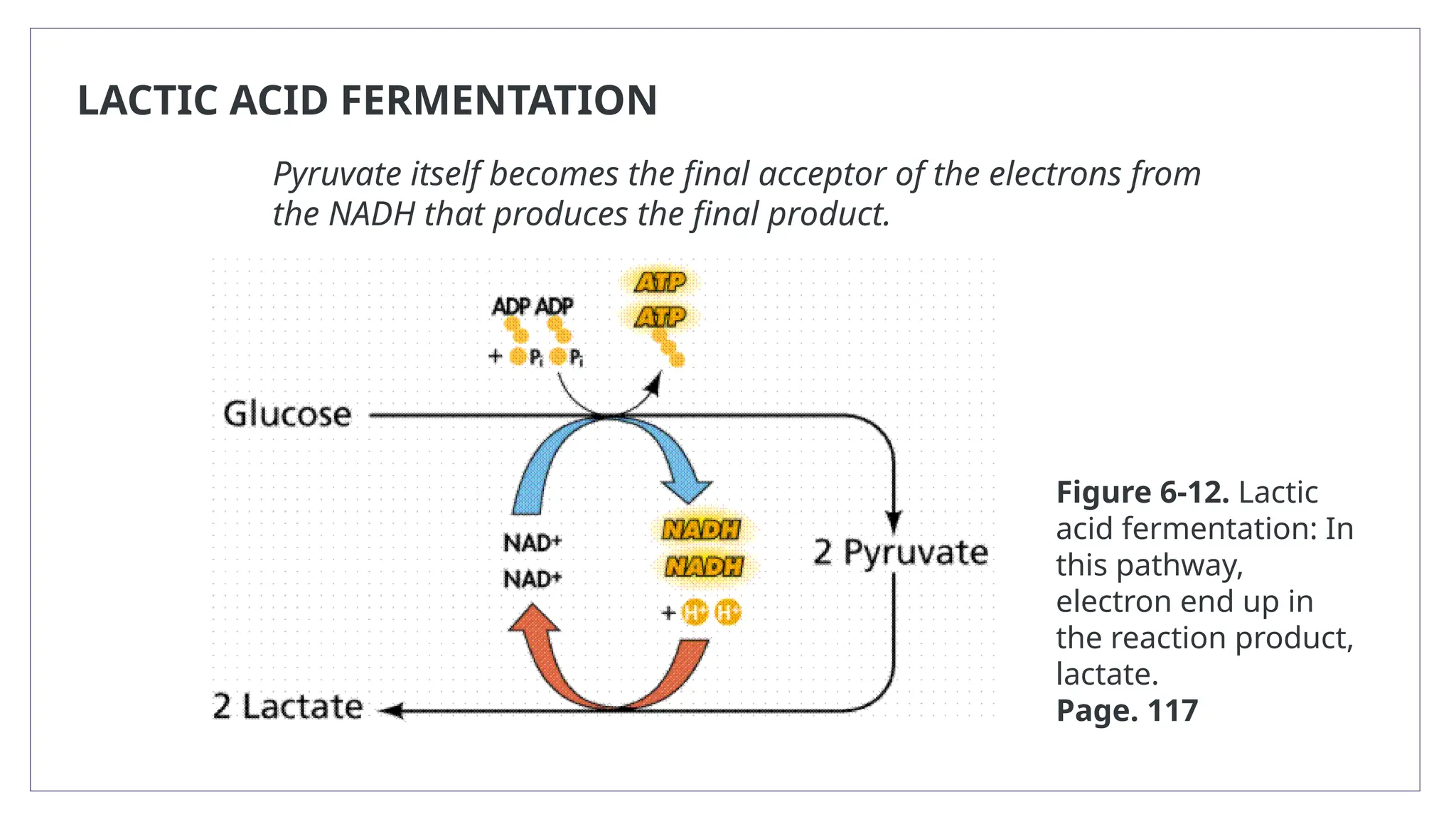
LACTIC ACID FERMENTATION
Pyruvateitself becomes the final acceptor of the electrons from
the NADH that produces the final product.
Figure 6-12. Lactic
acid fermentation: In
this pathway,
electron end up in
the reaction product,
lactate.
Page. 117



![Photosyntehsis PPT [Autosaved] Version two](https://cdn.slidesharecdn.com/ss_thumbnails/photosyntehsispptautosaved-241013005258-1d7c6b45-thumbnail.jpg?width=640&height=640&fit=bounds)


