Metabolism describes the chemical reactions that take place in cells and can be divided into two types:
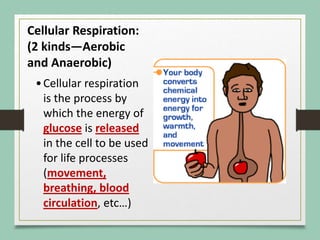
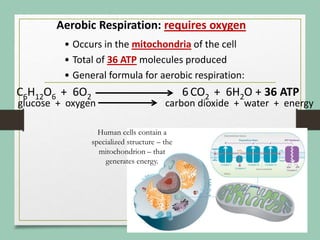
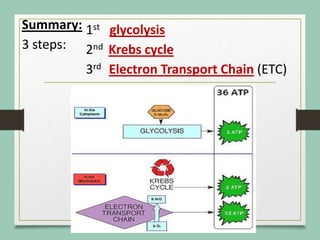
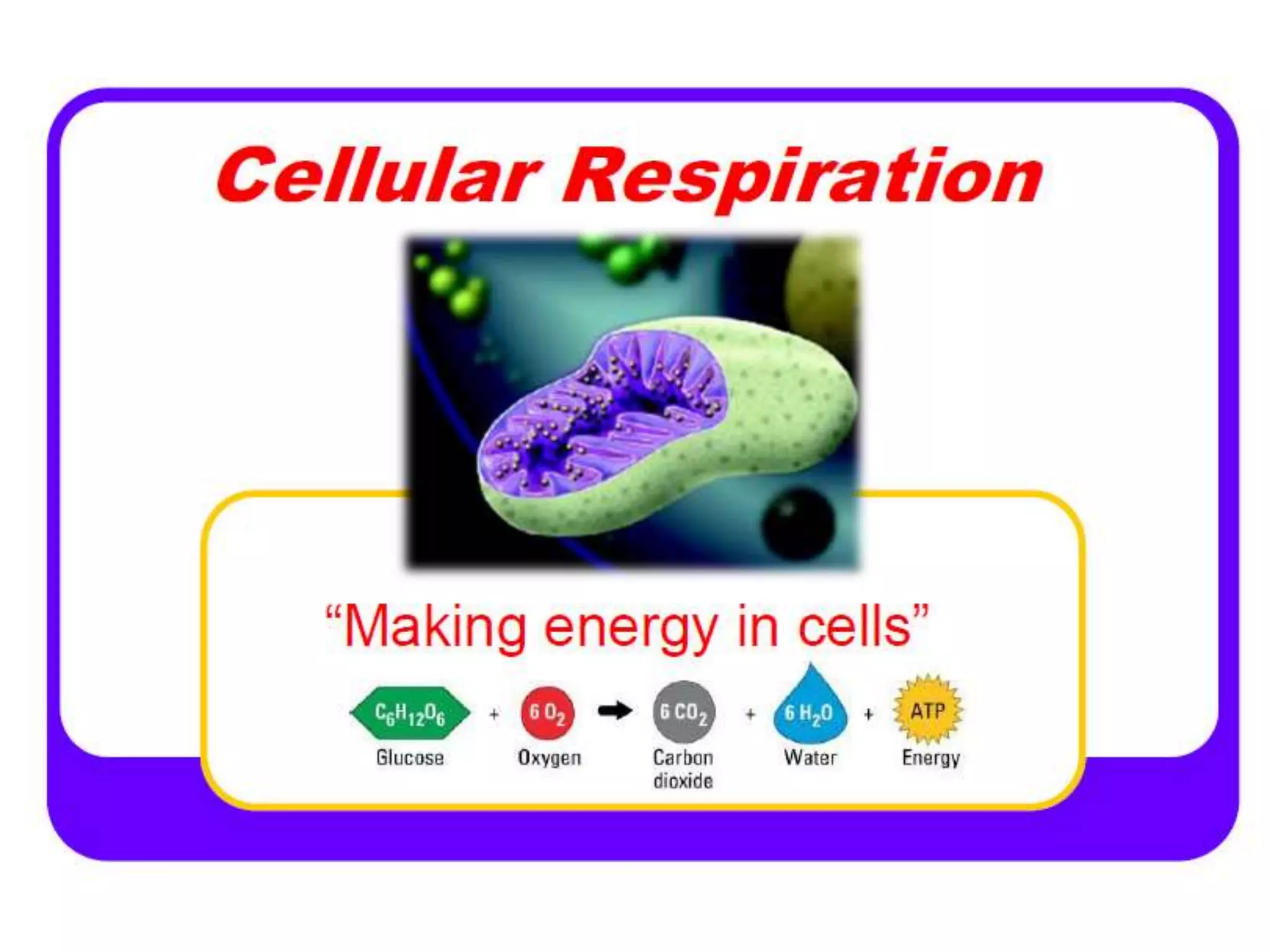
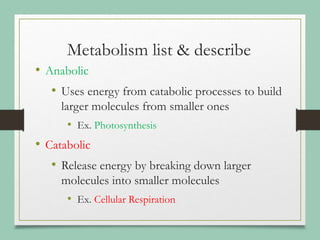
- Catabolic pathways break down molecules to release energy, such as cellular respiration breaking down glucose.
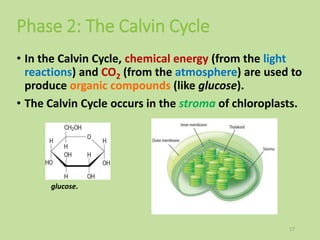
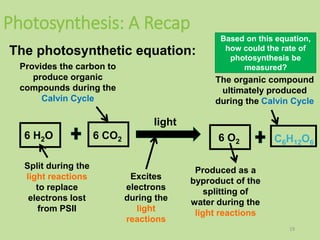
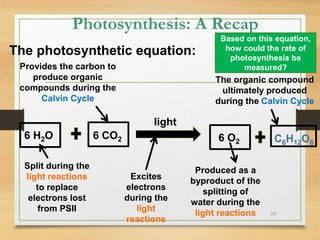
- Anabolic pathways use energy to build molecules, like photosynthesis producing glucose from carbon dioxide and water.
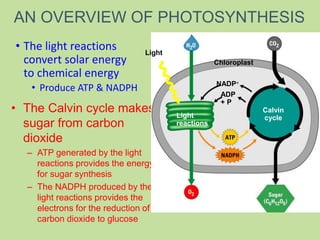
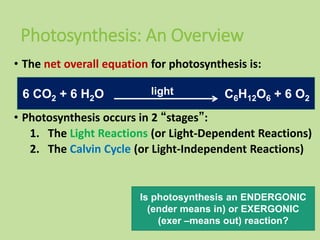
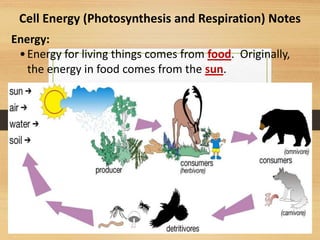
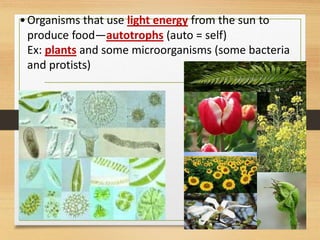
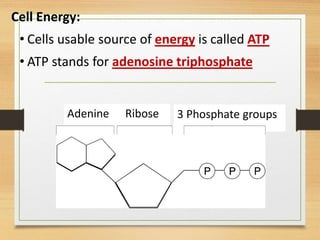
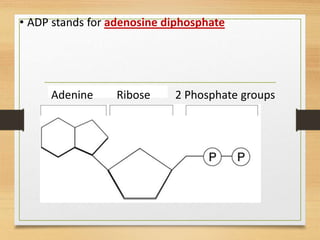
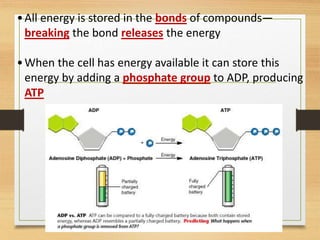
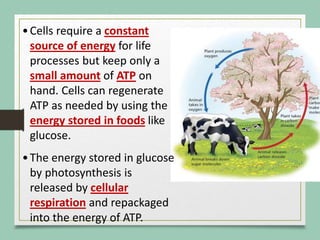
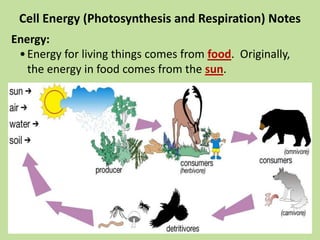
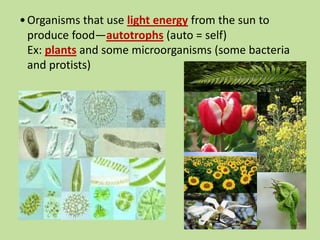
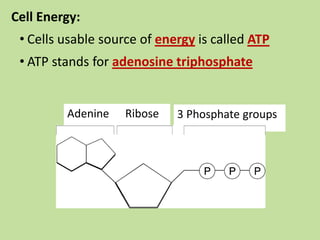
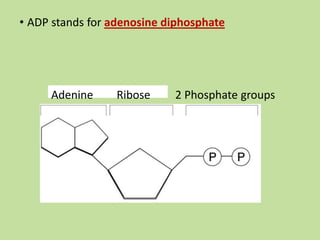
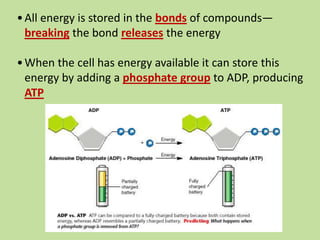
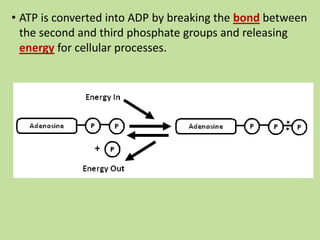
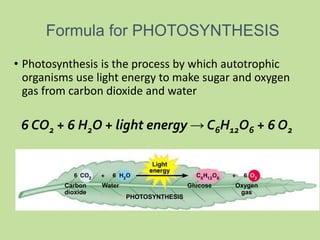
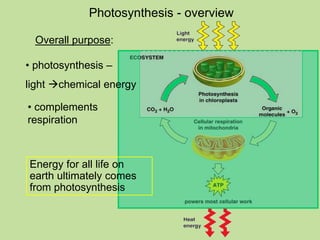
ATP is the cell's usable energy currency and is regenerated through catabolic pathways breaking its phosphate bonds, then replenished through anabolic pathways by adding phosphate to ADP. Photosynthesis uses light energy to produce oxygen and glucose from carbon dioxide and water, capturing solar energy as chemical bonds in glucose. This provides the basis for energy and life on Earth.

![Photosynthesis - overview
– thylakoid membrane
– thylakoid space
– stroma
• light reactions: • dark reactions:
Light
H2O
Chloroplast
Light
Reactions
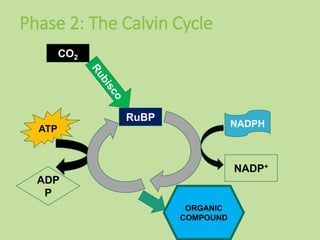
NADP+
P
ADP
+
ATP
NADPH
O2
Calvin
Cycle
CO2
[CH2O]
(sugar)](https://image.slidesharecdn.com/cellular-respiration-0219-02221-230329234241-6b1fa97c/85/Cellular-Respiration-02_19-02_22-1-pptx-14-320.jpg)