By
BANSIL HIRPARA-15BBT0052
PRIYANSHU GUPTA-15BBT0148
 Two fundamental processes occur with each cell
cycle--chromosomes replicate, and then they
segregate equally to two daughter cells.
 The mechanisms by which these processes
occur are similar in all eukaryotic cells.
 Processes occurring during the cell cycle are
highly regulated and coordinated.
 The cell cycle is regulated primarily at the DNA
replication and mitosis steps.
 The master controllers of the cell cycle are
 1) heterodimeric protein kinases composed of a
regulatory subunit (a cyclin) and a catalytic subunit (a
cyclin-dependent kinase, CDK),
 2) two ubiquitin-protein ligases, and
 3) regulatory phosphatases. Cyclin-CDKs
phosphorylate and thereby regulate the activities of
numerous cell proteins that participate in replication
and division.
 The bound cyclins regulate the activities of the CDKs.
Ubiquitin-protein ligases participate in the timed
destruction of cyclins and other key proteins and
thereby ensure passage through the cell cycle is
irreversible. In the absence of regulation, cells replicate
and divide uncontrollably, leading to diseases such as
cancer.
 A cell reproduces by performing an orderly
sequence of events in which it duplicates its
contents and then divides in two.
External Factors that can Influence Cell
Division
1. Chemical factors-
a. Lack of nutrients inhibit cell
division
b. Presence of specific growth
factors are needed for cell
division
 Platelet-derived Growth Factor
(PDGF) is required for division of
fibroblasts used in healing
 Receptors on plasma membrane bind
PDGF and trigger pathway to signal
cell division
2. Physical factors-
a. Density-dependent inhibition
• Cell division limited by quantities of
nutrients and growth regulators
b. Anchorage-dependent inhibition
• Cells must attach to substratum
(surface)
• Anchorage is signaled to cell-cycle
control system by linkage between
membrane proteins and elements of
cytoskeleton
Operates like a timer that triggers the
events in a set sequence
The system of switches is binary
(ON/OFF) and launches events in a
complete, irreversible fashion
The control system is independent of the
events it controls
The system is highly adaptable and can be
modified to suit specific cell types
 Cyclically activated protein kinases control cell
cycle progression
 Cyclin-dependent kinases (Cdks)The “go”system
(or the “engine”)
 Expression is constant through the cell cycle
 Kinase’s activity oscillates in the cell cycle
 Cyclical changes in Cdk activity are controlled
by an array of enzymes and other proteins
 Among these, cyclins are the major molecules
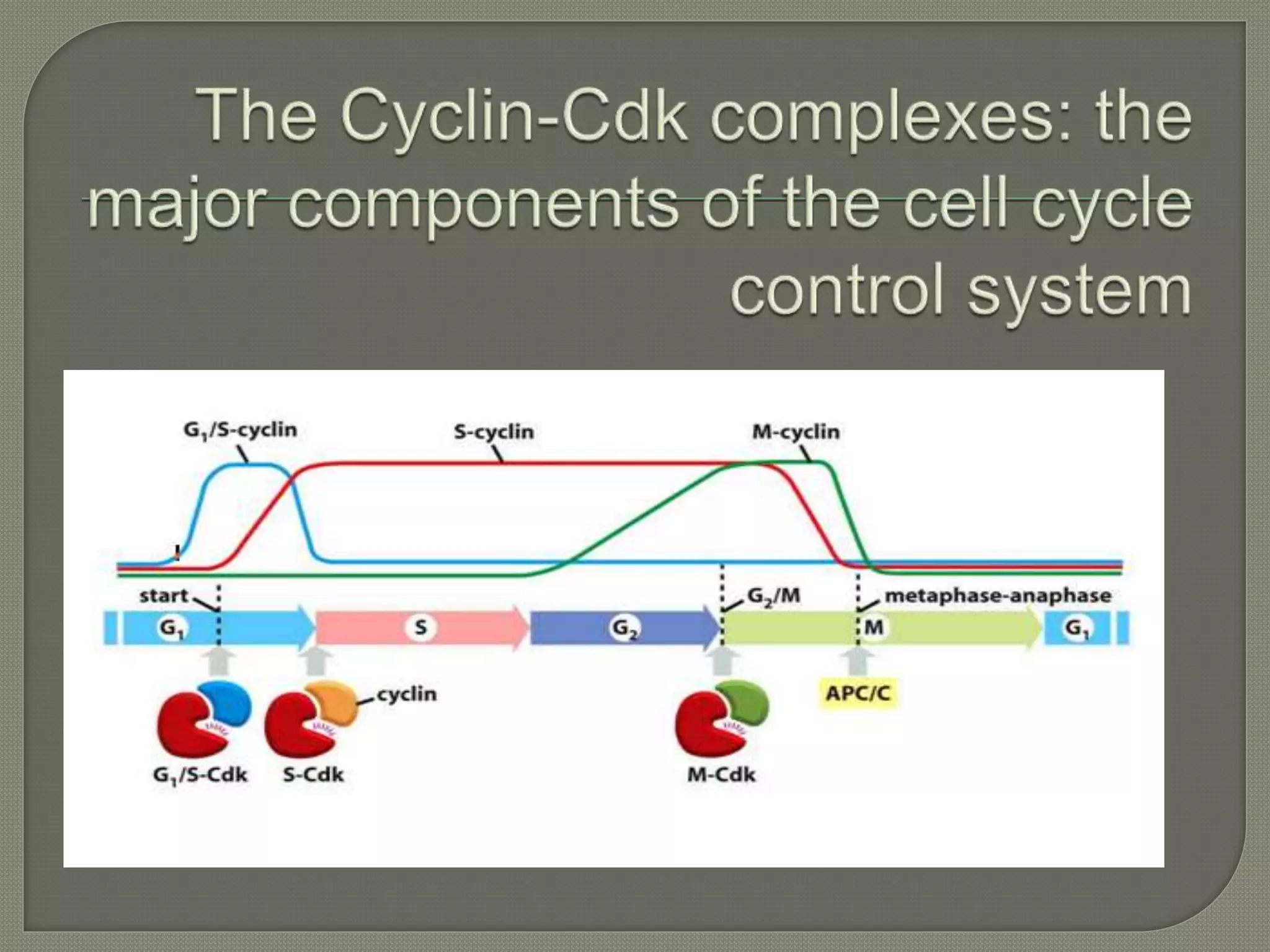
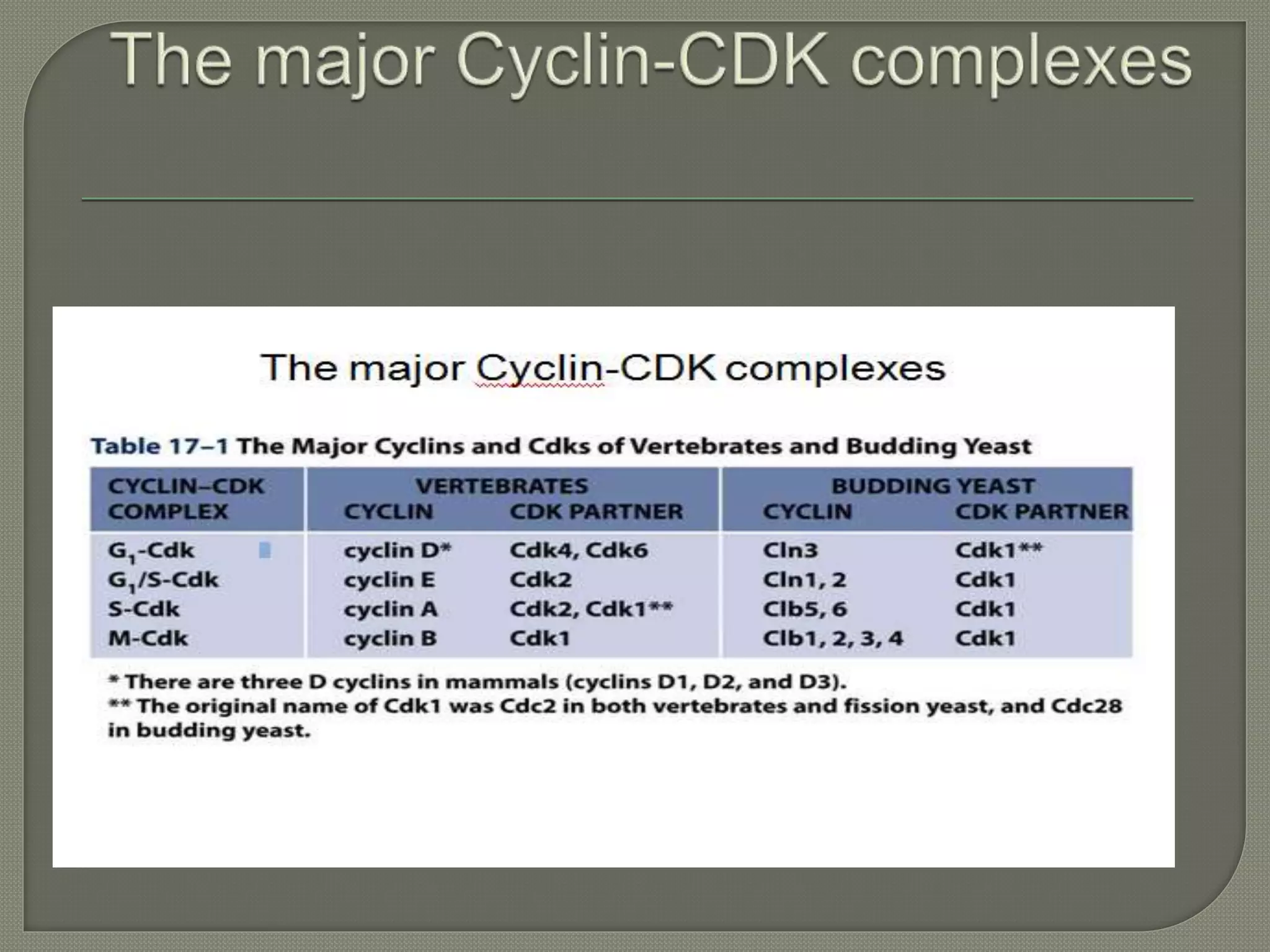
 Four classes of cyclins:
 G1-cyclins—help to promote passage through
“Start”or the restriction point in late G1
 G1/S-cyclins—bind Cdks at the end of G1
and commit the cell to DNA replication
 S-cyclins–binds Cdks during S phase and are
required for the initiation of DNA replication
 M-cyclins—promote the events of mitosis
Mechanism of Cell Cycle
Regulation
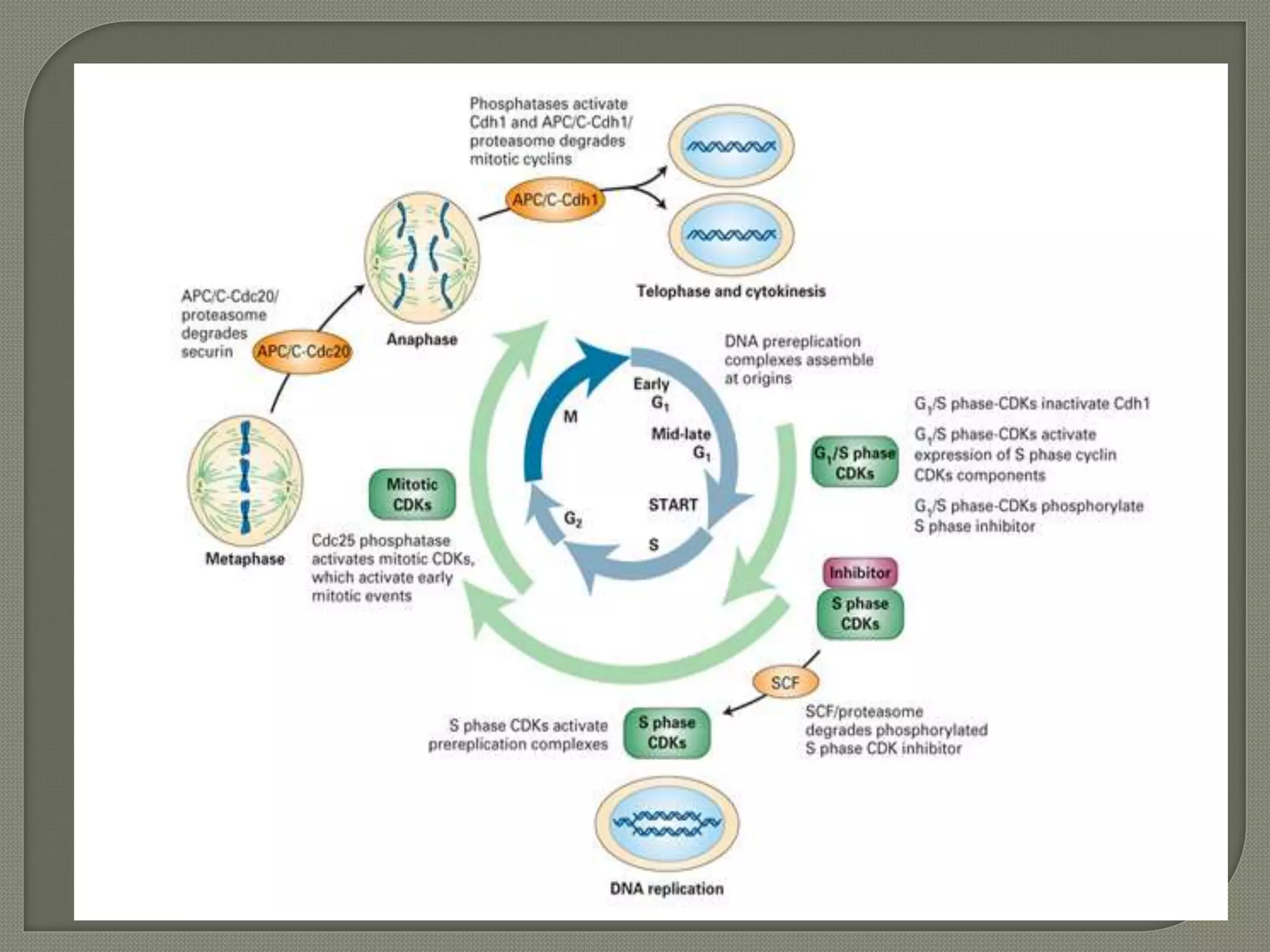
 The initiation of the cell cycle occurs with the receipt of a
signal (e.g., a growth factor ligand) by a cell in G0 or G1.
 The signal induces synthesis of G1 and G1/S phase cyclin-
CDKs, which then activate transcription of genes encoding
DNA synthesis enzymes and S phase cyclin-CDKs.
 S phase cyclin-CDKs initially are held in check by inhibitors
until G1/S phase cyclin-CDKs phosphorylate the inhibitors.
This triggers their polyubiquitination by SCF ubiquitin ligase
and degradation by proteasomes.
 The released S phase cyclin-CDKs then phosphorylate
regulatory proteins bound to chromosomal replication origins,
promoting initiation of DNA synthesis. The synthesis of mitotic
cyclin-CDKs increases in S and G2 phases.
 The activities of these complexes initially are
blocked by phosphorylation of CDK subunits,
and then are activated later by
dephosphorylation.
 Once activated, mitotic cyclin-CDKs
phosphorylate a large number of proteins that
control chromosome condensation, retraction
of the nuclear envelop, formation of the
mitotic spindle, and alignment of
chromosomes at the metaphase plate.
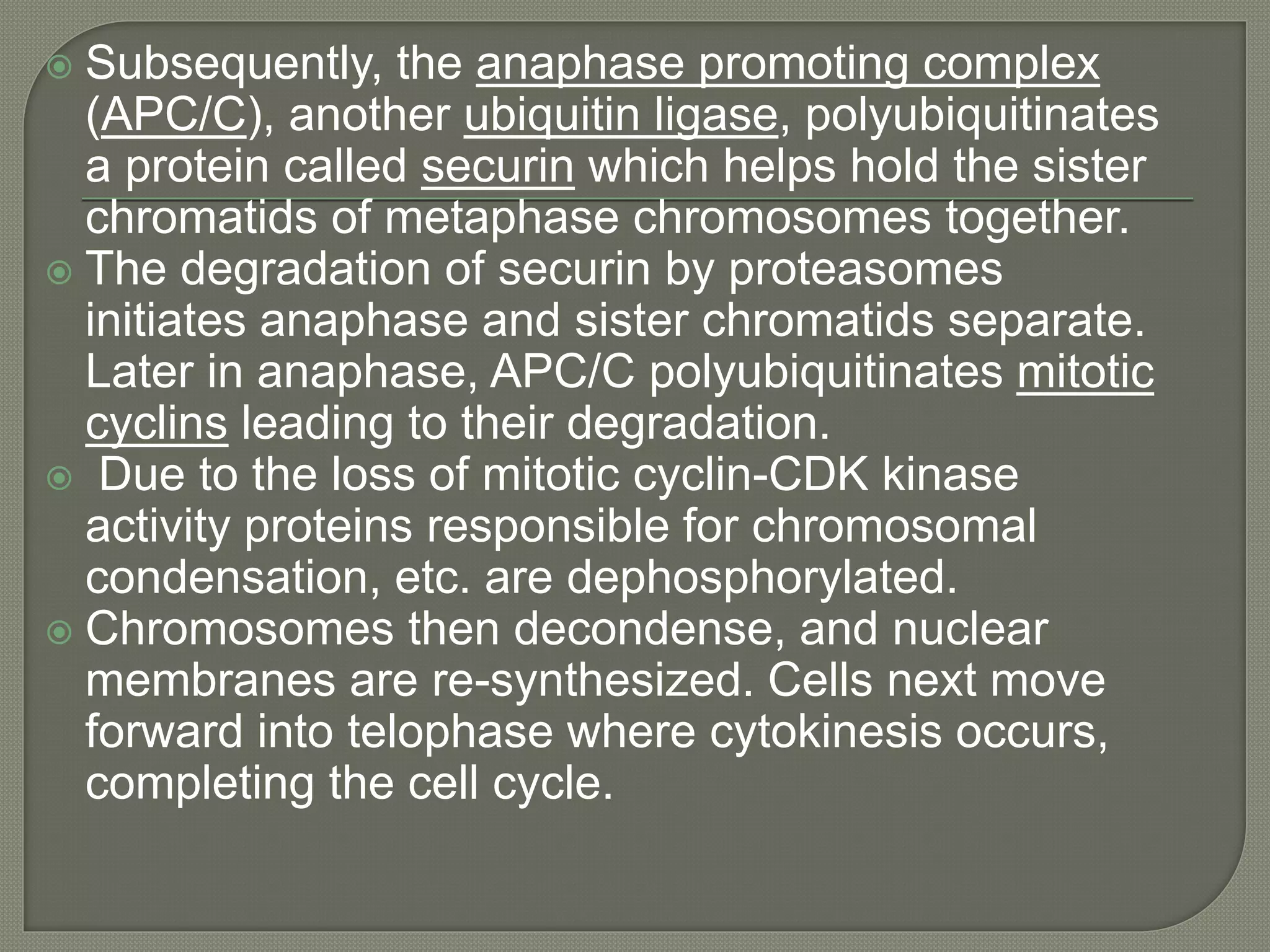
 Subsequently, the anaphase promoting complex
(APC/C), another ubiquitin ligase, polyubiquitinates
a protein called securin which helps hold the sister
chromatids of metaphase chromosomes together.
 The degradation of securin by proteasomes
initiates anaphase and sister chromatids separate.
Later in anaphase, APC/C polyubiquitinates mitotic
cyclins leading to their degradation.
 Due to the loss of mitotic cyclin-CDK kinase
activity proteins responsible for chromosomal
condensation, etc. are dephosphorylated.
 Chromosomes then decondense, and nuclear
membranes are re-synthesized. Cells next move
forward into telophase where cytokinesis occurs,
completing the cell cycle.
 . In the ensuing G1 phase, replication origin
regulators are synthesized and pre-replication
complexes assemble at origins.
 This prepares cells for another round of DNA
synthesis in the next S phase.
 Due to degradation of regulatory proteins at
the G1/S, metaphase/anaphase, and
anaphase/telophase boundaries, the passage
of cells through the cell cycle is irreversible.
 The G1/S transition (“START”) is a major
checkpoint after which passage through the
cycle becomes independent of mitogens
(e.g., growth factors).
Cell cycle and its regulation

Cell cycle and its regulation

  • 1.
  • 2.
     Two fundamentalprocesses occur with each cell cycle--chromosomes replicate, and then they segregate equally to two daughter cells.  The mechanisms by which these processes occur are similar in all eukaryotic cells.  Processes occurring during the cell cycle are highly regulated and coordinated.  The cell cycle is regulated primarily at the DNA replication and mitosis steps.
  • 3.
     The mastercontrollers of the cell cycle are  1) heterodimeric protein kinases composed of a regulatory subunit (a cyclin) and a catalytic subunit (a cyclin-dependent kinase, CDK),  2) two ubiquitin-protein ligases, and  3) regulatory phosphatases. Cyclin-CDKs phosphorylate and thereby regulate the activities of numerous cell proteins that participate in replication and division.  The bound cyclins regulate the activities of the CDKs. Ubiquitin-protein ligases participate in the timed destruction of cyclins and other key proteins and thereby ensure passage through the cell cycle is irreversible. In the absence of regulation, cells replicate and divide uncontrollably, leading to diseases such as cancer.
  • 4.
     A cellreproduces by performing an orderly sequence of events in which it duplicates its contents and then divides in two.
  • 7.
    External Factors thatcan Influence Cell Division
  • 8.
    1. Chemical factors- a.Lack of nutrients inhibit cell division b. Presence of specific growth factors are needed for cell division  Platelet-derived Growth Factor (PDGF) is required for division of fibroblasts used in healing  Receptors on plasma membrane bind PDGF and trigger pathway to signal cell division
  • 9.
    2. Physical factors- a.Density-dependent inhibition • Cell division limited by quantities of nutrients and growth regulators b. Anchorage-dependent inhibition • Cells must attach to substratum (surface) • Anchorage is signaled to cell-cycle control system by linkage between membrane proteins and elements of cytoskeleton
  • 11.
    Operates like atimer that triggers the events in a set sequence The system of switches is binary (ON/OFF) and launches events in a complete, irreversible fashion The control system is independent of the events it controls The system is highly adaptable and can be modified to suit specific cell types
  • 14.
     Cyclically activatedprotein kinases control cell cycle progression  Cyclin-dependent kinases (Cdks)The “go”system (or the “engine”)  Expression is constant through the cell cycle  Kinase’s activity oscillates in the cell cycle  Cyclical changes in Cdk activity are controlled by an array of enzymes and other proteins  Among these, cyclins are the major molecules
  • 15.
     Four classesof cyclins:  G1-cyclins—help to promote passage through “Start”or the restriction point in late G1  G1/S-cyclins—bind Cdks at the end of G1 and commit the cell to DNA replication  S-cyclins–binds Cdks during S phase and are required for the initiation of DNA replication  M-cyclins—promote the events of mitosis
  • 17.
    Mechanism of CellCycle Regulation
  • 18.
     The initiationof the cell cycle occurs with the receipt of a signal (e.g., a growth factor ligand) by a cell in G0 or G1.  The signal induces synthesis of G1 and G1/S phase cyclin- CDKs, which then activate transcription of genes encoding DNA synthesis enzymes and S phase cyclin-CDKs.  S phase cyclin-CDKs initially are held in check by inhibitors until G1/S phase cyclin-CDKs phosphorylate the inhibitors. This triggers their polyubiquitination by SCF ubiquitin ligase and degradation by proteasomes.  The released S phase cyclin-CDKs then phosphorylate regulatory proteins bound to chromosomal replication origins, promoting initiation of DNA synthesis. The synthesis of mitotic cyclin-CDKs increases in S and G2 phases.
  • 19.
     The activitiesof these complexes initially are blocked by phosphorylation of CDK subunits, and then are activated later by dephosphorylation.  Once activated, mitotic cyclin-CDKs phosphorylate a large number of proteins that control chromosome condensation, retraction of the nuclear envelop, formation of the mitotic spindle, and alignment of chromosomes at the metaphase plate.
  • 20.
     Subsequently, theanaphase promoting complex (APC/C), another ubiquitin ligase, polyubiquitinates a protein called securin which helps hold the sister chromatids of metaphase chromosomes together.  The degradation of securin by proteasomes initiates anaphase and sister chromatids separate. Later in anaphase, APC/C polyubiquitinates mitotic cyclins leading to their degradation.  Due to the loss of mitotic cyclin-CDK kinase activity proteins responsible for chromosomal condensation, etc. are dephosphorylated.  Chromosomes then decondense, and nuclear membranes are re-synthesized. Cells next move forward into telophase where cytokinesis occurs, completing the cell cycle.
  • 21.
     . Inthe ensuing G1 phase, replication origin regulators are synthesized and pre-replication complexes assemble at origins.  This prepares cells for another round of DNA synthesis in the next S phase.  Due to degradation of regulatory proteins at the G1/S, metaphase/anaphase, and anaphase/telophase boundaries, the passage of cells through the cell cycle is irreversible.  The G1/S transition (“START”) is a major checkpoint after which passage through the cycle becomes independent of mitogens (e.g., growth factors).