CELL ADHESION MOLECULES
Syed Muhammad Khan (BS Hons. Zoology)
Introduction
 Cell adhesion molecules are present in plasma
membrane.
 They help similar cells to adhere together.
 They help in creating boundaries between different
tissues.
Introduction
 Cells have differential affinity for other cells.
 Cell adhesion molecules help cells in acting upon this
differential affinity.
 Cells adhere to each other and arrange themselves
in the most stable (thermodynamically) form.
Introduction
 The most important type of cell adhesion molecules
are the cadherins.
 Other cell adhesion molecules include:
1. Integrins
2. IgCAMs (Immunoglobulin superfamily members)
3. Selectins
Cadherins
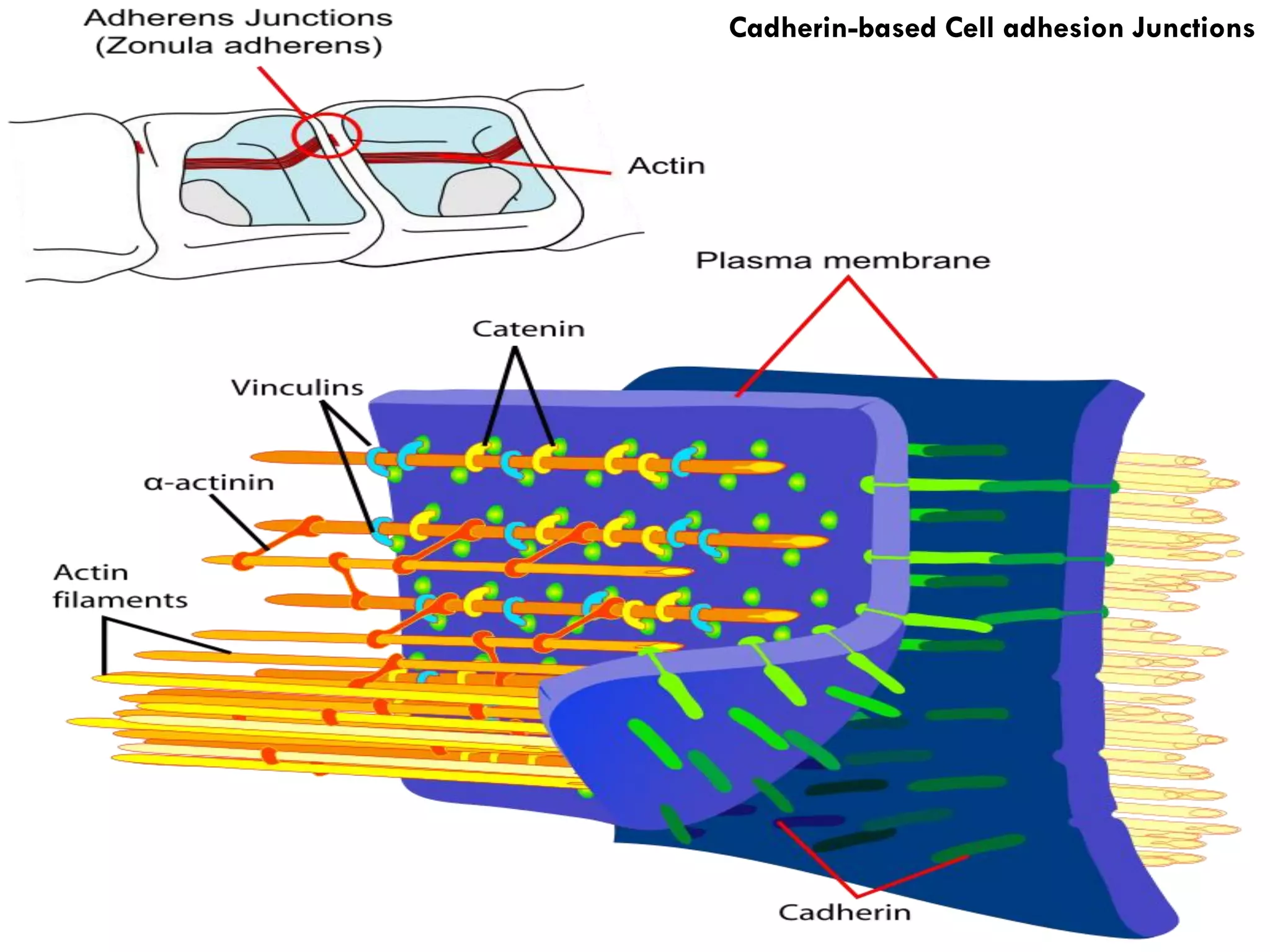
 Cadherins are calcium-dependent adhesion
molecules.
 Cadherins are trans-membrane proteins
 They interact with other cadherins on adjacent cells.
 The cadherins are anchored inside the cell by a
complex of proteins called catenins.
Cadherins
 Cadherin proteins perform several related functions:
1. Their external domains serve to adhere cells together.
2. Cadherins link to and help assemble the actin
cytoskeleton.
3. Cadherins can serve as signaling molecules that
change a cell's gene expression.
Cadherin-based Cell adhesion Junctions
Cadherins (Types)
 Several types of cadherins exist, some of them are:
1. E-cadherins (Embryonic cells & Epithelial cells)
2. P- cadherins (Placenta)
3. N-cadherins (Neural cells)
4. R-cadherins (Retina)
Protocadherins
 Protocadherins lack the attachment to the actin
skeleton through catenins.
 Expressing similar protocadherins allows keeping
migrating epithelial cells together.
 Expressing dissimilar protocadherins allows
separating tissues.
Cadherins
 The action of cadherins is affected in two ways:
1. Quantitative (Ammount)
2. Qualitative (Type) - Expression of N-cadherin
separates the precursors of the neural cells from
the precursors of the epidermal cells.
Cadherins – With Other Systems
 During development, the many cadherins often work
with other adhesion systems.
 After fertilization, the embryo must adhere to and
embed itself in the uterine wall.
 Here, the trophoblast cells (the outer cells that bind
to the uterus) are differentiated from the inner cell
mass (those cells that will generate the embryo and
eventually the mature organism).
Cadherins – With Other Systems
 Trophoblast cells have several adhesion
molecules that anchor the embryo to the uterine wall:
 E- and P-cadherins (these two molecule types
recognize similar cadherins on the uterine cells).
 Integrin proteins (receptors) for the collagen and the
heparan sulfate glycoproteins of the uterine wall.
 Modified glycosyltransferase enzyme that
extends out from the cell membrane and can bind to
specific carbohydrate residues on uterine glycoproteins.
Other Adhesion Molecules
 Calcium Independent:
1. Integrins are transmembrane receptors that facilitate
cell - extracellular matrix (ECM) adhesion.
2. IgCAMs are immunoglobins and adhesion molcules, i.e.
VCAM and NCAM.
 Calcium Dependent:
 Selectins are single-chain trans-membrane
glycoproteins.
Cell Adhesion Molecules

Cell Adhesion Molecules

  • 1.
    CELL ADHESION MOLECULES SyedMuhammad Khan (BS Hons. Zoology)
  • 2.
    Introduction  Cell adhesionmolecules are present in plasma membrane.  They help similar cells to adhere together.  They help in creating boundaries between different tissues.
  • 3.
    Introduction  Cells havedifferential affinity for other cells.  Cell adhesion molecules help cells in acting upon this differential affinity.  Cells adhere to each other and arrange themselves in the most stable (thermodynamically) form.
  • 4.
    Introduction  The mostimportant type of cell adhesion molecules are the cadherins.  Other cell adhesion molecules include: 1. Integrins 2. IgCAMs (Immunoglobulin superfamily members) 3. Selectins
  • 5.
    Cadherins  Cadherins arecalcium-dependent adhesion molecules.  Cadherins are trans-membrane proteins  They interact with other cadherins on adjacent cells.  The cadherins are anchored inside the cell by a complex of proteins called catenins.
  • 6.
    Cadherins  Cadherin proteinsperform several related functions: 1. Their external domains serve to adhere cells together. 2. Cadherins link to and help assemble the actin cytoskeleton. 3. Cadherins can serve as signaling molecules that change a cell's gene expression.
  • 7.
  • 8.
    Cadherins (Types)  Severaltypes of cadherins exist, some of them are: 1. E-cadherins (Embryonic cells & Epithelial cells) 2. P- cadherins (Placenta) 3. N-cadherins (Neural cells) 4. R-cadherins (Retina)
  • 9.
    Protocadherins  Protocadherins lackthe attachment to the actin skeleton through catenins.  Expressing similar protocadherins allows keeping migrating epithelial cells together.  Expressing dissimilar protocadherins allows separating tissues.
  • 10.
    Cadherins  The actionof cadherins is affected in two ways: 1. Quantitative (Ammount) 2. Qualitative (Type) - Expression of N-cadherin separates the precursors of the neural cells from the precursors of the epidermal cells.
  • 11.
    Cadherins – WithOther Systems  During development, the many cadherins often work with other adhesion systems.  After fertilization, the embryo must adhere to and embed itself in the uterine wall.  Here, the trophoblast cells (the outer cells that bind to the uterus) are differentiated from the inner cell mass (those cells that will generate the embryo and eventually the mature organism).
  • 12.
    Cadherins – WithOther Systems  Trophoblast cells have several adhesion molecules that anchor the embryo to the uterine wall:  E- and P-cadherins (these two molecule types recognize similar cadherins on the uterine cells).  Integrin proteins (receptors) for the collagen and the heparan sulfate glycoproteins of the uterine wall.  Modified glycosyltransferase enzyme that extends out from the cell membrane and can bind to specific carbohydrate residues on uterine glycoproteins.
  • 13.
    Other Adhesion Molecules Calcium Independent: 1. Integrins are transmembrane receptors that facilitate cell - extracellular matrix (ECM) adhesion. 2. IgCAMs are immunoglobins and adhesion molcules, i.e. VCAM and NCAM.  Calcium Dependent:  Selectins are single-chain trans-membrane glycoproteins.