CRANIOFACIAL BIOLOGY, CELL ADHESION
MOLECUES AND MECHANISM OF ADHESION
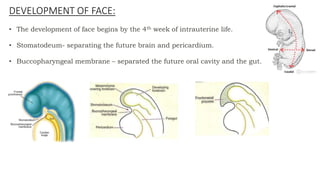
DEVELOPMENT OF FACE:
• The development of face begins by the 4th week of intrauterine life.
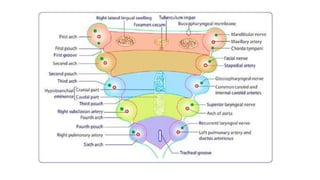
• Stomatodeum- separating the future brain and pericardium.
• Buccopharyngeal membrane – separated the future oral cavity and the gut.
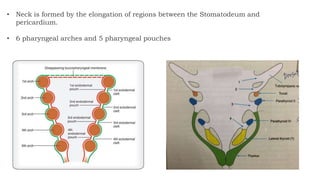
• Neck is formed by the elongation of regions between the Stomatodeum and
pericardium.
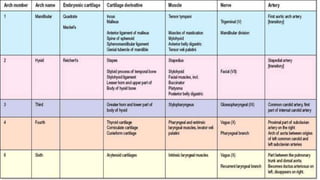
• 6 pharyngeal arches and 5 pharyngeal pouches
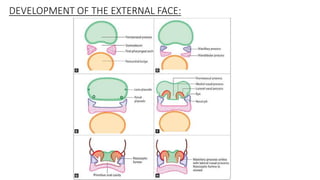
DEVELOPMENT OF THE EXTERNAL FACE:
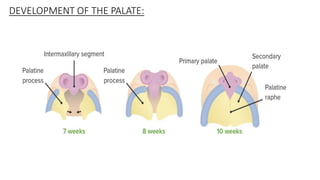
DEVELOPMENT OF THE PALATE:
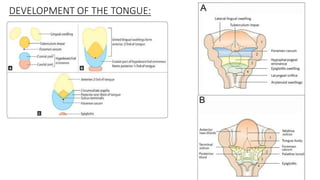
DEVELOPMENT OF THE TONGUE:
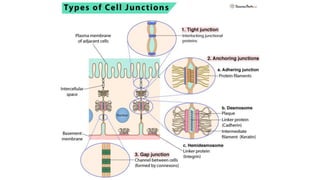
• The connection between the cell or the contact between the cell and the extracellular
matrix is called cell junction.
• also called membrane junction.
• Classified into :
- Occluding junction
- Communicating junction
- Anchoring junction
DEFINITION & CLASSIFICATION:
CELL ADHESION MOLECUES AND MECHANISM OF ADHESION
• Cell adhesion molecules are glycoproteins that is located on the cell surface.
• These proteins are typically trans-membrane receptors and are composed of three domain:
- intracellular domain
- transmembrane domain
- extracellular domain
CELL ADHESION MOLECLES:
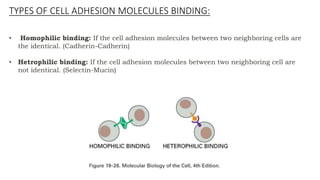
• Homophilic binding: If the cell adhesion molecules between two neighboring cells are
the identical. (Cadherin-Cadherin)
• Hetrophilic binding: If the cell adhesion molecules between two neighboring cell are
not identical. (Selectin-Mucin)
TYPES OF CELL ADHESION MOLECULES BINDING:
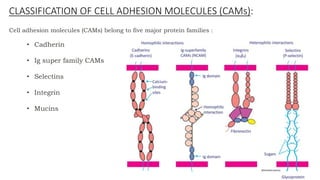
CLASSIFICATION OF CELL ADHESION MOLECULES (CAMs):
Cell adhesion molecules (CAMs) belong to five major protein families :
• Cadherin
• Ig super family CAMs
• Selectins
• Integrin
• Mucins
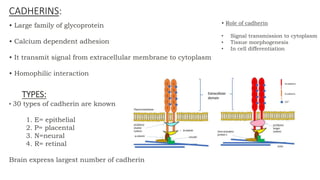
• Large family of glycoprotein
• Calcium dependent adhesion
• It transmit signal from extracellular membrane to cytoplasm
• Homophilic interaction
TYPES:
• 30 types of cadherin are known
1. E= epithelial
2. P= placental
3. N=neural
4. R= retinal
Brain express largest number of cadherin
CADHERINS:
• Role of cadherin
• Signal transmission to cytoplasm
• Tissue morphogenesis
• In cell differentiation
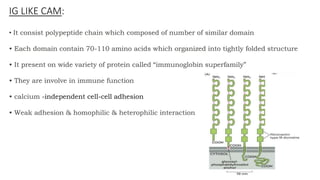
• It consist polypeptide chain which composed of number of similar domain
• Each domain contain 70-110 amino acids which organized into tightly folded structure
• It present on wide variety of protein called “immunoglobin superfamily”
• They are involve in immune function
• calcium -independent cell-cell adhesion
• Weak adhesion & homophilic & heterophilic interaction
IG LIKE CAM:
• Calcium dependent adhesion
• Large family of integral membrane proteins which found only in animals
• Large class of cell surface receptors
• Two major types of activities:
1. adhesion of cells to their substratum
2. transmission of signals from the external environment to the cells interior
( outside to inside)
INTEGRIN:
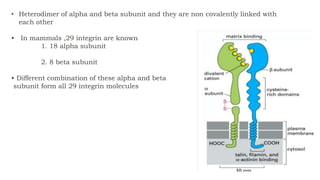
• Heterodimer of alpha and beta subunit and they are non covalently linked with
each other
• In mammals ,29 integrin are known
1. 18 alpha subunit
2. 8 beta subunit
• Different combination of these alpha and beta
subunit form all 29 integrin molecules
• Family of integral membrane glycoprotein
• Binds with particular arrangement of sugar which project from surface of other cell
• Calcium dependent adhesion
Structure:
• Small cytoplasmic domain
• Membrane spanning domain
• Large extracellular domain in which outer most domain act as lectin
SELECTIN:
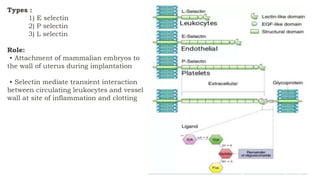
Types :
1) E selectin
2) P selectin
3) L selectin
Role:
• Attachment of mammalian embryos to
the wall of uterus during implantation
• Selectin mediate transient interaction
between circulating leukocytes and vessel
wall at site of inflammation and clotting
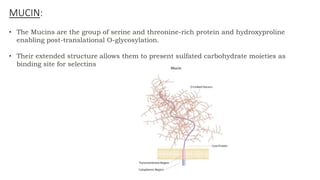
• The Mucins are the group of serine and threonine-rich protein and hydroxyproline
enabling post-translational O-glycosylation.
• Their extended structure allows them to present sulfated carbohydrate moieties as
binding site for selectins
MUCIN:
cell_adhesion.pptx

cell_adhesion.pptx

  • 1.
    CRANIOFACIAL BIOLOGY, CELLADHESION MOLECUES AND MECHANISM OF ADHESION
  • 2.
    DEVELOPMENT OF FACE: •The development of face begins by the 4th week of intrauterine life. • Stomatodeum- separating the future brain and pericardium. • Buccopharyngeal membrane – separated the future oral cavity and the gut.
  • 3.
    • Neck isformed by the elongation of regions between the Stomatodeum and pericardium. • 6 pharyngeal arches and 5 pharyngeal pouches
  • 6.
    DEVELOPMENT OF THEEXTERNAL FACE:
  • 7.
  • 8.
  • 9.
    • The connectionbetween the cell or the contact between the cell and the extracellular matrix is called cell junction. • also called membrane junction. • Classified into : - Occluding junction - Communicating junction - Anchoring junction DEFINITION & CLASSIFICATION: CELL ADHESION MOLECUES AND MECHANISM OF ADHESION
  • 11.
    • Cell adhesionmolecules are glycoproteins that is located on the cell surface. • These proteins are typically trans-membrane receptors and are composed of three domain: - intracellular domain - transmembrane domain - extracellular domain CELL ADHESION MOLECLES:
  • 12.
    • Homophilic binding:If the cell adhesion molecules between two neighboring cells are the identical. (Cadherin-Cadherin) • Hetrophilic binding: If the cell adhesion molecules between two neighboring cell are not identical. (Selectin-Mucin) TYPES OF CELL ADHESION MOLECULES BINDING:
  • 13.
    CLASSIFICATION OF CELLADHESION MOLECULES (CAMs): Cell adhesion molecules (CAMs) belong to five major protein families : • Cadherin • Ig super family CAMs • Selectins • Integrin • Mucins
  • 14.
    • Large familyof glycoprotein • Calcium dependent adhesion • It transmit signal from extracellular membrane to cytoplasm • Homophilic interaction TYPES: • 30 types of cadherin are known 1. E= epithelial 2. P= placental 3. N=neural 4. R= retinal Brain express largest number of cadherin CADHERINS: • Role of cadherin • Signal transmission to cytoplasm • Tissue morphogenesis • In cell differentiation
  • 15.
    • It consistpolypeptide chain which composed of number of similar domain • Each domain contain 70-110 amino acids which organized into tightly folded structure • It present on wide variety of protein called “immunoglobin superfamily” • They are involve in immune function • calcium -independent cell-cell adhesion • Weak adhesion & homophilic & heterophilic interaction IG LIKE CAM:
  • 16.
    • Calcium dependentadhesion • Large family of integral membrane proteins which found only in animals • Large class of cell surface receptors • Two major types of activities: 1. adhesion of cells to their substratum 2. transmission of signals from the external environment to the cells interior ( outside to inside) INTEGRIN:
  • 17.
    • Heterodimer ofalpha and beta subunit and they are non covalently linked with each other • In mammals ,29 integrin are known 1. 18 alpha subunit 2. 8 beta subunit • Different combination of these alpha and beta subunit form all 29 integrin molecules
  • 18.
    • Family ofintegral membrane glycoprotein • Binds with particular arrangement of sugar which project from surface of other cell • Calcium dependent adhesion Structure: • Small cytoplasmic domain • Membrane spanning domain • Large extracellular domain in which outer most domain act as lectin SELECTIN:
  • 19.
    Types : 1) Eselectin 2) P selectin 3) L selectin Role: • Attachment of mammalian embryos to the wall of uterus during implantation • Selectin mediate transient interaction between circulating leukocytes and vessel wall at site of inflammation and clotting
  • 20.
    • The Mucinsare the group of serine and threonine-rich protein and hydroxyproline enabling post-translational O-glycosylation. • Their extended structure allows them to present sulfated carbohydrate moieties as binding site for selectins MUCIN: